Search results for: “non-newtonian fluid”

  • Pressing Non-Newtonian Fluids

    Pressing Non-Newtonian Fluids

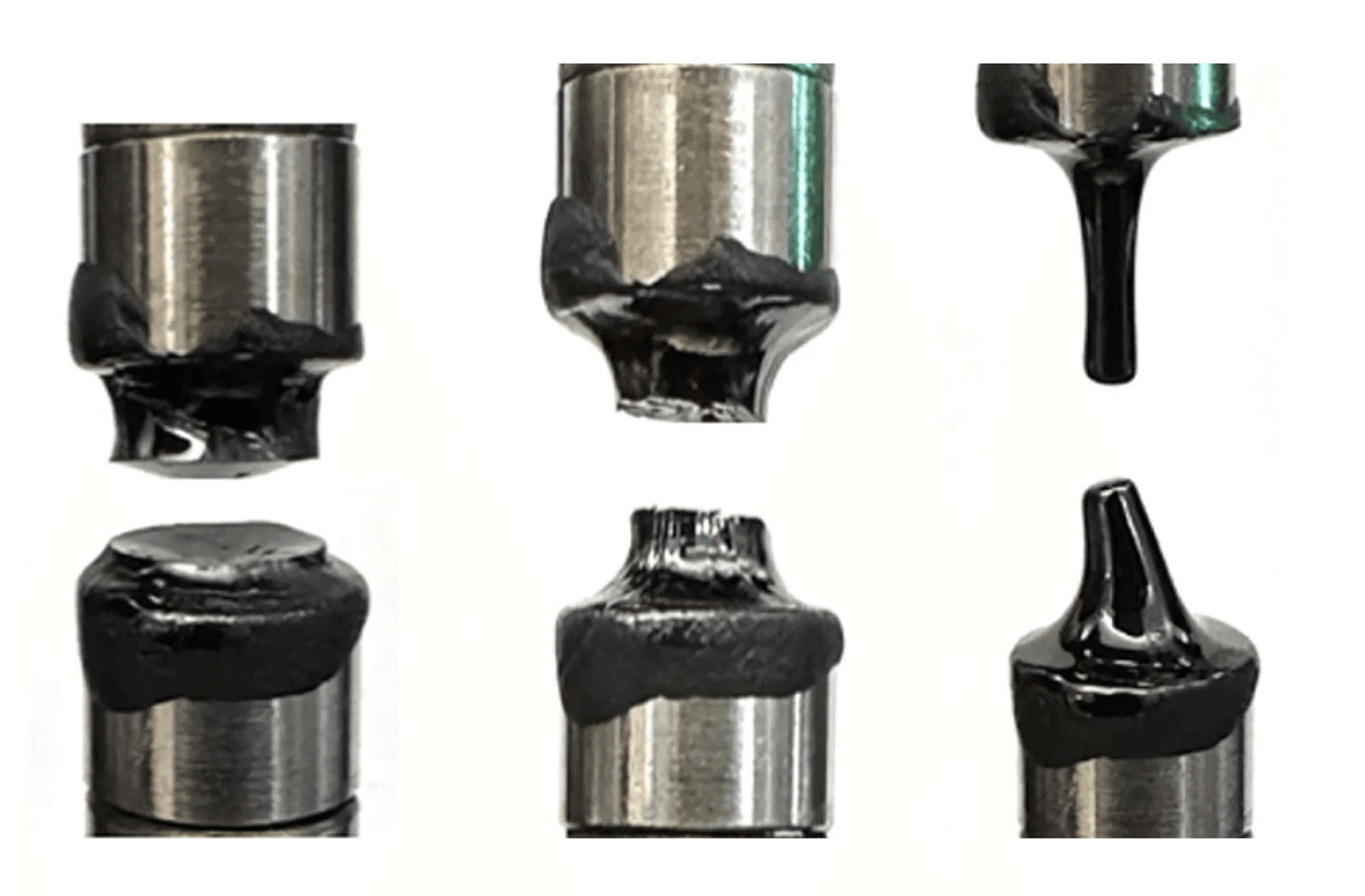
    For many fluids, the relationship between force and deformation is not simple. The catch-all name for these materials is non-Newtonian fluids. In a recent episode, the Hydraulic Press Channel did some experiments extruding a couple non-Newtonian fluids: oobleck and a temperature-sensitive putty. What they demonstrated is that a fluid’s response to the forces it experiences can change depending on the rate at which force is applied.

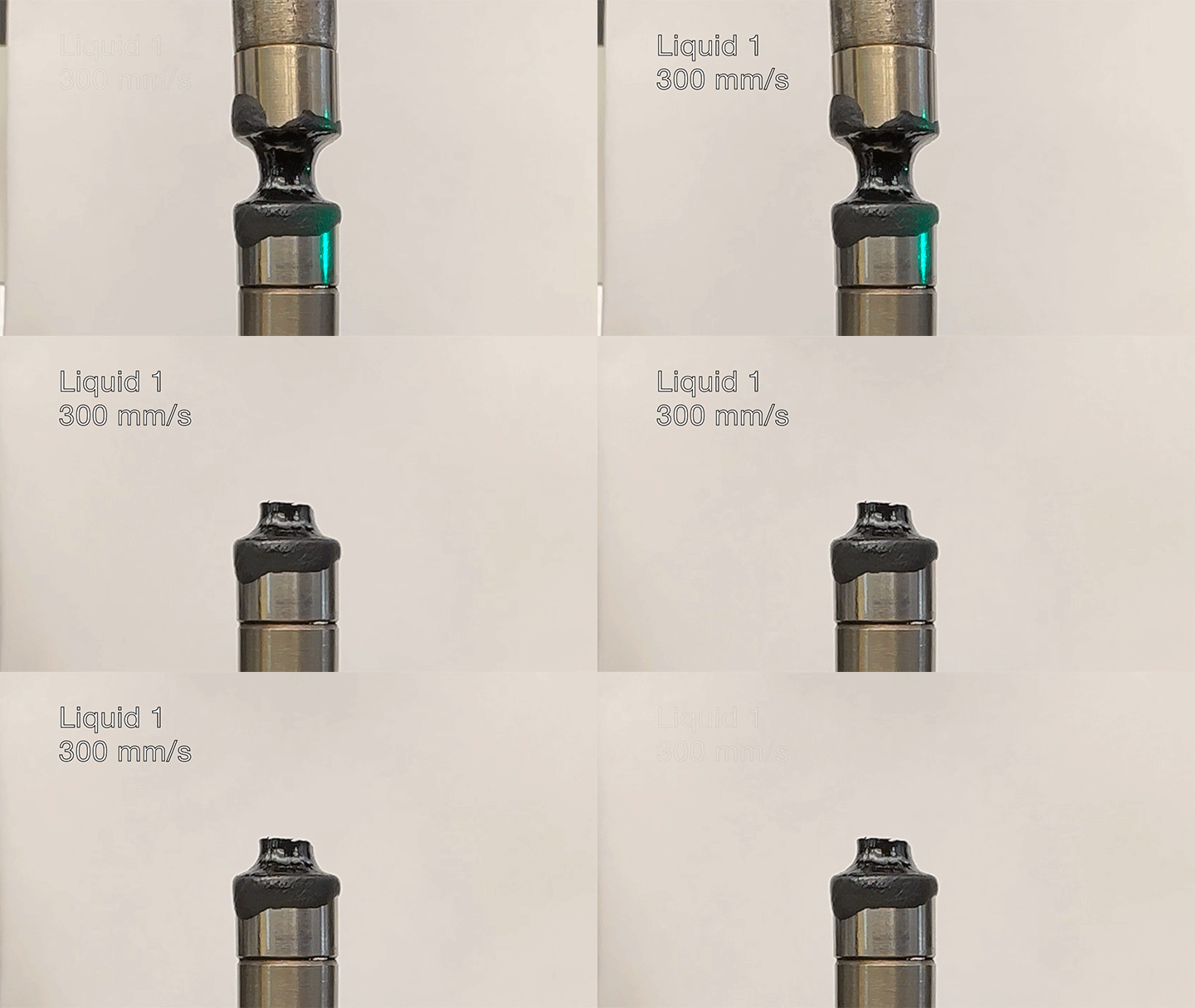
    Take their putty example from the latter half of the video. When the hydraulic press pushes the putty slowly, it extrudes in a smooth, semi-solid string. When they increase the pressure driving the hydraulic press, it pushes the putty more quickly, causing it to spray out of the die in a shredded mess. What they actually did here is surpass a threshold for what’s known in manufacturing as the sharkskin instability. This behavior occurs due to long-chain polymer molecules in the fluid. Inside the die, flow near the walls is slowed down by friction but moves freely in the middle of the pipe. When the walls are suddenly gone, flow at the outside accelerates to match the inside of the stream, which stretches the polymers until they can snap free of the die. The result is the rough, saw-tooth-like pattern seen here. (Video and image credit: Hydraulic Press Channel, source)
  • DIY Non-Newtonian Fluids

    [original media no longer available]

    We’ve featured the non-Newtonian fluid oobleck here before, but it bears repeating as a fun and easy exercise for anyone to do at home or at school, especially with kids. For extra fun, try vibrating it, using it as liquid armor, or filling a pool and walking on it.

  • Non-Newtonian Fluids

    [original media no longer available]

    Non-Newtonian fluids have even made it into pop culture. #

  • Featured Video Play Icon

    Non-Newtonian Raindrops

    Fluids like air and water are called Newtonian because their viscosity does not vary with the force that’s applied to them. But many common fluids — almost everything in your fridge or bathroom drawer, for example — are non-Newtonian, meaning that their viscosity changes depending on how they’re deformed.

    Non-Newtonian droplets can behave very differently than Newtonian ones, as this video demonstrates. Here, their fluid of choice is water with varying amounts of silica particles added. Depending on how many silica particles are in the water, the behavior of an impacting drop varies from liquid-like to completely solid and everything in between. Why such a great variation? It all has to do with how quickly the droplet tries to deform and whether the particles within it can move in that amount of time. Whenever they can’t, they jam together and behave like a solid. (Image, video, and research credit: S. Arora and M. Driscoll)

  • Saving Screens with Shear-Thinning Fluids

    Saving Screens with Shear-Thinning Fluids

    These days glass screens travel with us everywhere, and they can take some big hits on the way. Manufacturers have made tougher glass, but they continue to look for ways to protect our screens. Recently, a study suggested that non-Newtonian fluids are well-suited to the task.

    The team explored the physics of sandwiching a layer of fluid between a glass top layer and an LCD screen bottom layer, mimicking structures found in electronic devices. Through simulation, they searched for the fluid characteristics that would best minimize the forces felt by the solid layers during an impact. They found that shear-thinning fluids — fluids that, like paint or shampoo, get runnier when they’re deformed — provided the best protection. Having the impact energy go into reducing the local viscosity of the fluid stretches the length of time the impact affects the glass, which lowers the bending forces on it and helps avoid breakage. (Image credit: G. Rosenke; research credit: J. Richards et al.; via Physics World)

  • Aging Fluids

    Aging Fluids

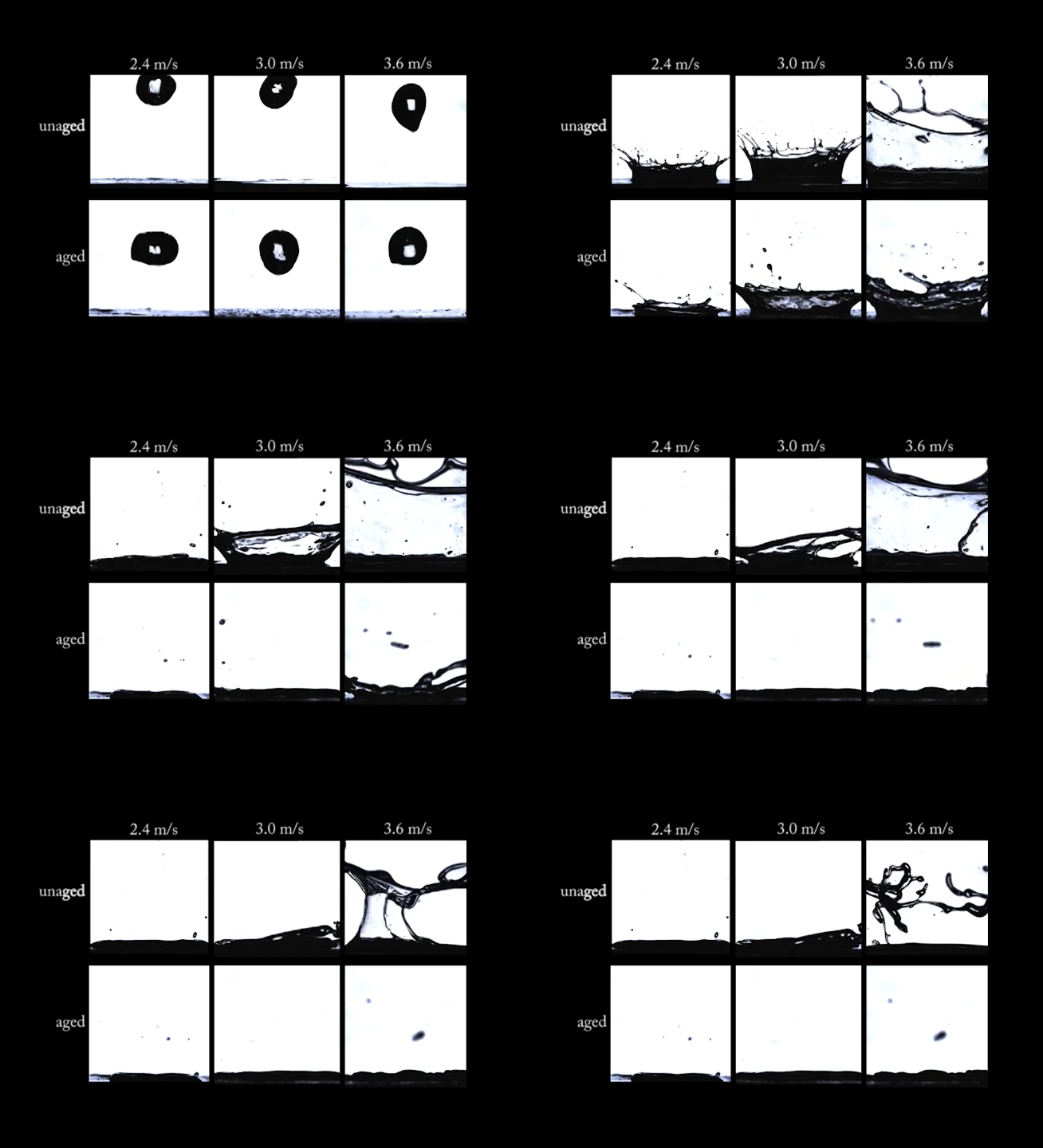
    If you’ve ever left a sealed container of Playdoh untouched for months, you know that there’s a big difference between the fresh stuff and what’s left in that can. Aging can have big effects on non-Newtonian fluids. In this video, we see drops of a synthetic clay impacting at different speeds. In the top row of images, the clay is fresh and unaged; on impact, the clay forms large crown-like splashes. In the bottom row, however, the aged clay behaves quite differently. Instead of a splash, the drops make more of a splat. (Image and video credit: R. Ewoldt et al.)

  • Featured Video Play Icon

    Non-Newtonian Splashes

    What happens when a stream of liquid falls through a screen? As the above video shows, water creates a beautiful flower-like burst of fluid when it hits a screen. Adding a little polymer to the water makes it non-Newtonian and more viscous. When hitting the screen, this slows it down but doesn’t prevent the fluid from flowing.

    Add enough polymer, though, and the fluid becomes what’s known as a yield-stress fluid. These fluids behave much like a solid–they don’t flow–until you apply a certain amount of stress. Then they’ll flow. If you’ve ever tried to get ketchup out of a glass bottle, then you’re familiar with how these yield-stress fluids act. When dropped onto a screen, the yield-stress fluid just forms a pile–unless the impact speed is high enough to create the necessary force to get the fluid to flow! (Video credit: B. Blackwell et al.)

  • Featured Video Play Icon

    Fluids Round-up

    Here’s to another fluids round-up, our look at some of the interesting fluids-related stories around the web:

    – Above is a music video by Roman Hill that relies on mixing and merging different fluids and perturbing ferrofluids for its visuals as it re-imagines the genesis of life.

    – GoPro takes viewers inside a Category 5 typhoon with 112 mph (180 kph; 50 m/s) winds.

    – Astronaut Scott Kelly demonstrates playing ping pong with a ball of water in space. (via Gizmodo)

    – See fluid dynamics on a global scale with Glittering Blue. (via The Atlantic)

    – To make a taller siphon, you have to find a way to avoid cavitation.

    – Speaking of siphons, Randall Munroe tackles the question of siphoning water from Europa over at What If? (submitted by jshoer)

    – The Mythbusters make a giant tanker implode using air pressure.

    – Sixty Symbols explores how tiny things swim.

    – What happens when you bathe in 500 pounds of putty? Let’s just say that bathing in an extremely viscous non-Newtonian fluid is not recommended. (via Gizmodo)

    (Video credit and submission: R. Hill et al.)

    Don’t forget to check out our Patreon page. Please help support FYFD by becoming a patron. 

  • Self-Pouring Fluids

    Self-Pouring Fluids

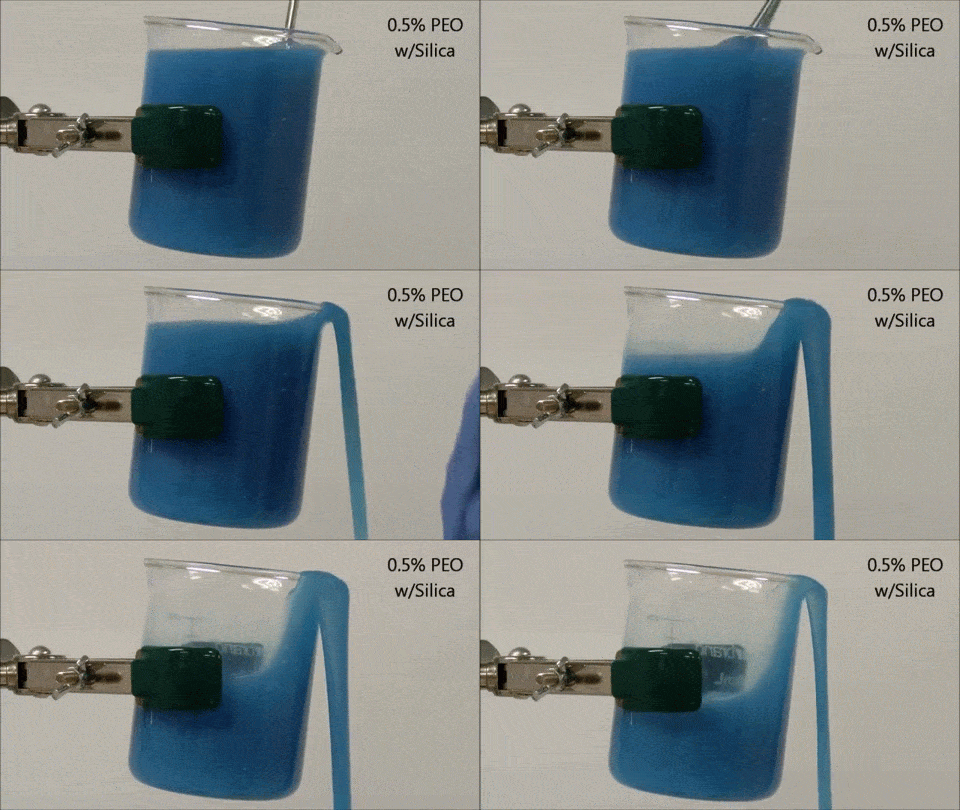
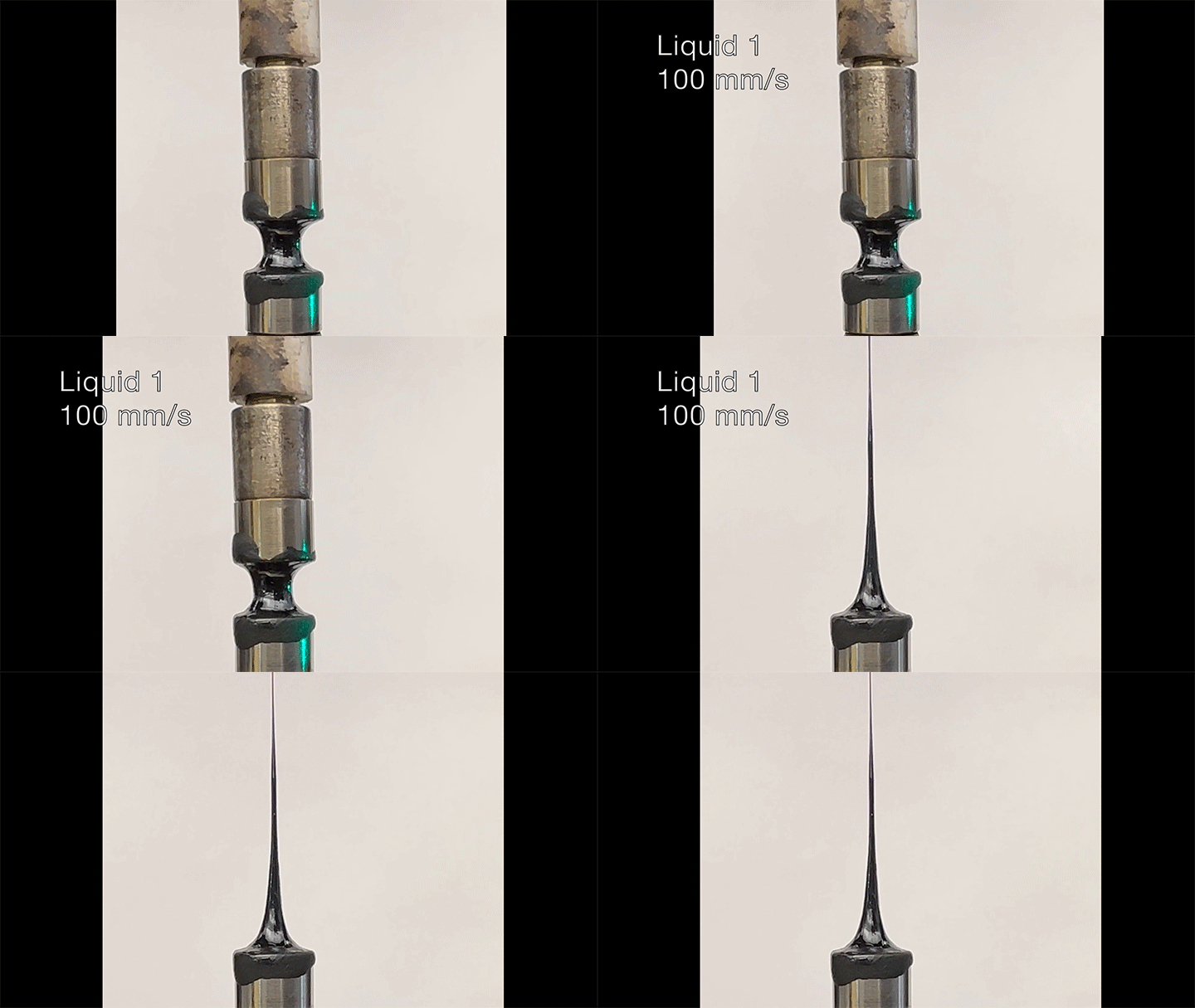
    Non-Newtonian fluids are capable of all kinds of counter-intuitive behaviors. The animations above demonstrate one of them: the tubeless or open siphon. Once the effect is triggered by removing some of the liquid, the fluid quickly pours itself out of the beaker. This is possible thanks to the polymers in the liquid. The falling liquid pulls on the fluid left behind in the beaker, which stretches the polymers in the fluid. When stretched, the polymers provide internal tension that opposes the extensional force being applied. This keeps the fluid in the beaker from simply detaching from the falling liquid. Instead, it flows up and over the side against the force of gravity, behaving rather more like a chain than a fluid!  (Image credit: Ewoldt Research Group, source)

  • Newtonian and Non-Newtonian Vortices

    Newtonian and Non-Newtonian Vortices

    Not all vortex rings are created equal. Despite identical generation mechanisms and Reynolds numbers, the two vortex rings shown above behave very differently. The donut-shaped one, on the top left in green and in the middle row in blue, was formed in a Newtonian fluid, where viscous stress is linearly proportional to deformation. As one would expect, the vortex travels downward and diffuses some as time passes. The mushroom-like vortex ring, on the other hand, is in a viscoelastic fluid, which reacts nonlinearly to deformation. This vortex ring first furls and expands as it travels downward, then stops, contracts, and travels backward! (Image credit: J. Albagnac et al.; via Gallery of Fluid Motion)