Search results for: “jet”

  • Featured Video Play Icon

    Manu Jumping, a.k.a. How to Make a Big Splash

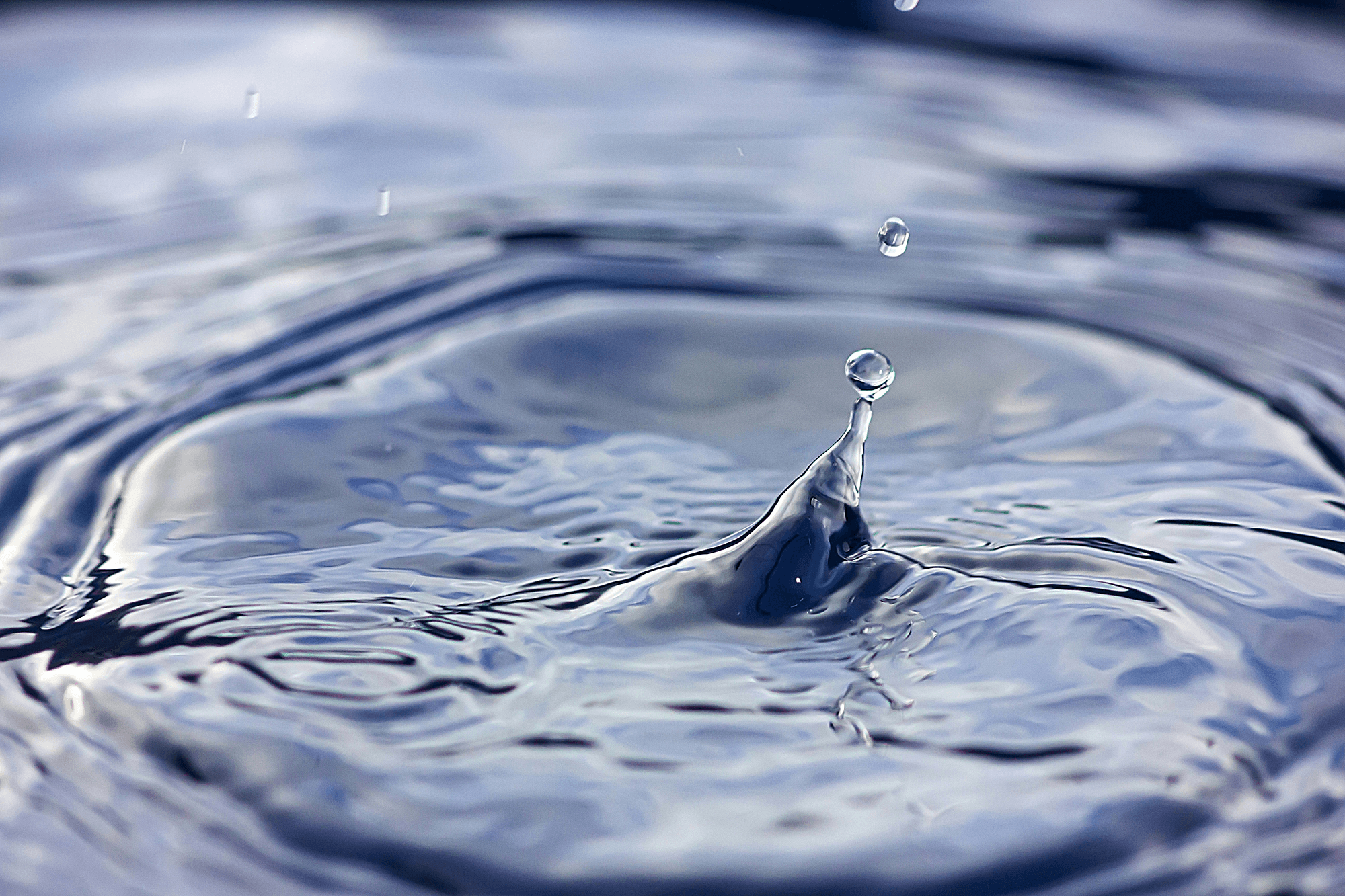
    The Māori people of Aotearoa New Zealand compete in manu jumping to create the biggest splash. Here’s a fun example. In this video, researchers break down the physics of the move and how it creates an enormous splash. There are two main components — the V-shaped tuck and the underwater motion. At impact, jumpers use a relatively tight V-shape; the researchers found that a 45-degree angle works well at high impact speeds. This initiates the jumper’s cavity. Then, as they descend, the jumper unfolds, using their upper body to tear open a larger underwater cavity, which increases the size of the rebounding jet that forms the splash. To really maximize the splash, jumpers can aim to have their cavity pinch-off (or close) as deep underwater as possible. (Video and image credit: P. Rohilla et al.)

    Fediverse Reactions
  • Non-Newtonian Effects in Magma Flows

    Non-Newtonian Effects in Magma Flows

    As magma approaches the surface, it forces its way through new and existing fractures in the crust, forming dikes. When a volcano finally erupts, the magma’s viscosity is a major factor in just how explosive and dangerous the eruption will be, but a new study shows that what we see from the surface is a poor predictor of how magma actually flows within the dike.

    Researchers built their own artificial dike using a clear elastic gelatin, which they injected water and shear-thinning magma-mimics into. By tracking particles in the liquids, they could observe how each liquid followed on its way to the surface. All of the liquids formed similar-looking dikes at a similar speed, but within the dike, the liquids flowed very differently. Water cut a central jet through the gelatin, then showed areas of recirculation along the outer edges. In contrast, the shear-thinning liquids — which are likely more representative of actual magma — showed no recirculation. Instead, they flowed through the dike in a smooth, fan-like shape.

    The team cautions that surface-level observations of developing magma dikes provide little information on the flow going on underneath. Instead, their results suggest that volcanologists modeling magma underground should take care to include the magma’s shear-thinning to properly capture the flow. (Image credit: T. Grypachevska; research credit: J. Kavanagh et al.; via Eos)

    Fediverse Reactions
  • Pour-Over Physics

    Pour-Over Physics

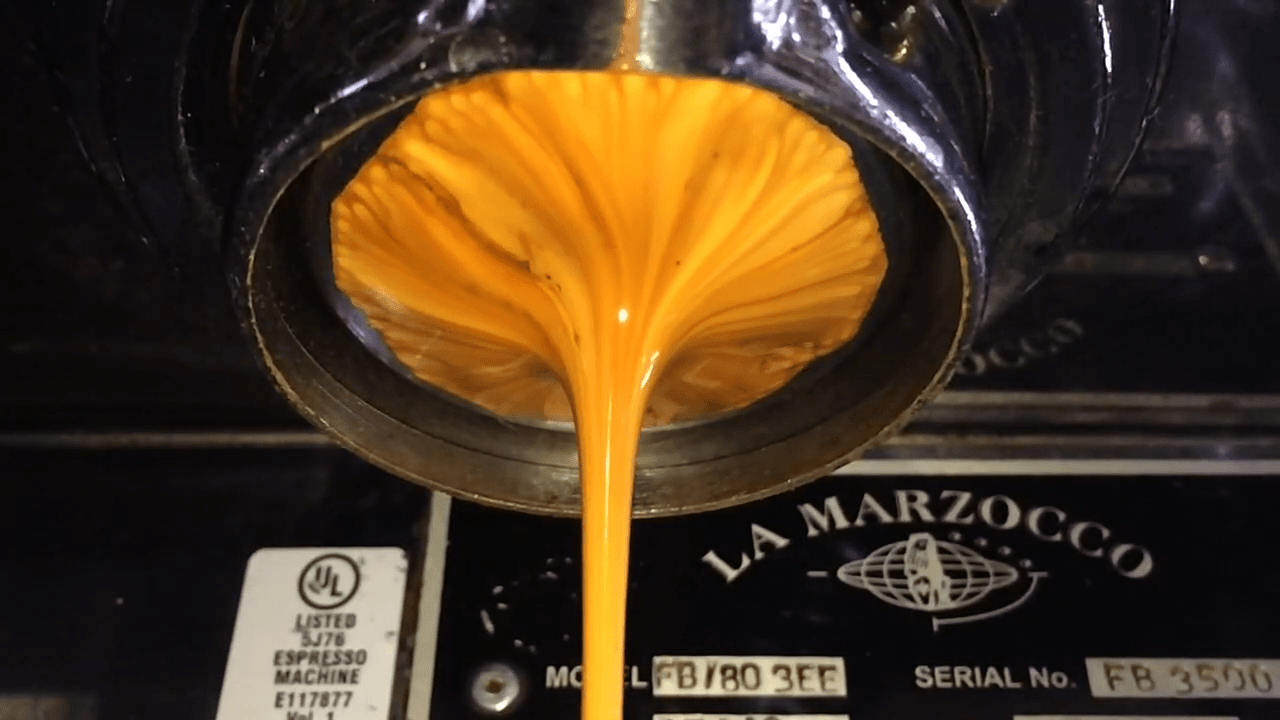
    Fluids labs are filled with many a coffee drinker, and even those (like me) who don’t enjoy coffee, can find plenty of fascinating physics in their labmates’ mugs. Espresso has received the lion’s share of the research in recent years, but a new study looks at the unique characteristics of a pour-over coffee. In this technique, coffee grounds sit in a conical filter and a stream of hot water pours over the top of the grounds. Researchers found that the ideal pour creates a powerful mixing environment in a coffee-studded water layer that sits above a V-shaped bed of grains created by the falling water jet.

    The best mixing, they find, requires a pour height no greater than 50 centimeters (to prevent the jet from breaking into drops) but with enough height that the falling jet stirs up the grounds. You also want to pour slowly enough to give plenty of time for mixing, without letting the jet stick to the kettle’s spout, which (again) causes the jet to break up.

    That ideal pour extracts more coffee flavor from the grounds, allowing you to get the same strength of brew from fewer beans. As climate change makes coffee harder to grow, coffee drinkers will want every trick to stretch their supply. (Image credit: S. Satora; research credit: E. Park et al.; via Ars Technica)

    Fediverse Reactions
  • Mapping the Mozambique Channel

    Mapping the Mozambique Channel

    The Mozambique Channel boasts some of the world’s most turbulent waters, driven by eddies hundreds of kilometers wide. Eddies of this size — known as mesoscale — determine regional flows that influence local biodiversity, sediment mixing, and how plastic pollution moves. To better understand the region, scientists measured a mesoscale dipole from a research vessel.

    Illustration of flows in the Mozambique Channel. The anticyclonic ring in dark blue rotates counterclockwise and consists of largely uniform water (labeled Ring R1). To the south, in green, a cyclonic eddy rotates in a clockwise sense (labeled Cyclone C1). This area is chlorophyll-rich and has varying salinity levels. Between the two is a filament of chlorophyll-rich water being drawn from the near-shore region (labeled Filament F1).
    Illustration of flows in the Mozambique Channel. The anticyclonic ring in dark blue rotates counterclockwise and consists of largely uniform water (labeled Ring: R1). To the south, in green, a cyclonic eddy rotates in a clockwise sense (labeled Cyclone: C1). This area is chlorophyll-rich and has varying salinity levels. Between the two is a filament of chlorophyll-rich water being drawn from the near-shore region (labeled Filament: F1).

    The dipole consisted of a large anticyclonic ring (shown in dark blue) that rotated counterclockwise and a smaller cyclonic eddy (shown in green) that rotated clockwise. Between these eddies lay a central jet moving up to 130 centimeters per second that drew material out from the shoreline. In the anticyclonic ring, researchers found largely uniform waters with little chlorophyll. The cyclonic eddy, in contrast, was high in chlorophyll and had large variations in salinity. Those smaller-scale variations, they found, helped to drive vertical motions of up to 40 meters per day.

    In situ measurements like these help scientists understand how energy flows through different scales in the ocean and how that energy helps transport nutrients, sediment, and pollution regionally. Such measurements also help us to refine ocean models that enable us to predict this transport and how regions will change as climate patterns shift. (Image credit: ship – A. Lamielle/Wikimedia Commons, eddies – P. Penven et al.; research credit: P. Penven et al.; via Eos)

    Fediverse Reactions
  • Charged Drops Don’t Splash

    Charged Drops Don’t Splash

    When a droplet falls on a surface, it spreads itself horizontally into a thin lamella. Sometimes — depending on factors like viscosity, impact speed, and air pressure — that drop splashes, breaking up along its edge into myriad smaller droplets. But a new study finds that a small electrical charge is enough to suppress a drop’s splash, as seen below.

    Video showing three different droplets, each with a different electrical charge, impacting an insulated surface. From left to right, the charges are: 0.0 nC, 0.08 nC, and 0.1 nC. The uncharged drop splashes, the low charge drop splashes less, and the final charged droplet spreads without splashing.

    The drop’s electrical charge builds up along the drop’s surface, providing an attraction that acts somewhat like surface tension. As a result, charged drops don’t lift off the surface as much and they spread less overall; both factors inhibit splashing.* The effect could increase our control of droplets in ink jet printing, allowing for higher resolution printing. (Image and research credit: F. Yu et al.; via APS News)

    *Note that this only works for non-conductive surfaces. If the surface is electrically conductive, the charge simply dissipates, allowing the splash to occur as normal.

    Fediverse Reactions
  • Inside an Alien Atmosphere

    Inside an Alien Atmosphere

    Studying the physics of planetary atmospheres is challenging, not least because we only have a handful of examples to work from in our own solar system. So it’s exciting that researchers have unveiled our first look at the 3D structure of an exoplanet‘s atmosphere.

    Using ground-based observations, researchers studied WASP-121b, also known as Tylos, an ultra-hot Jupiter that circles its star in only 30 Earth hours. One face of the planet always faces its star while the other faces into space. The team found that the exoplanet has a flow deep in the atmosphere that carries iron from the hot daytime side to the colder night side. Higher up, the atmosphere boasts a super-fast jet-stream that doubles in speed (from an estimated 13 kilometers per second to 26 kilometers per second) as it crosses from the morning terminator to the evening. As one researcher observed, the planet’s everyday winds make Earth’s worst hurricanes look tame. (Image credit: ESO/M. Kornmesser; research credit: J. Seidel et al.; via Gizmodo)

    Fediverse Reactions
  • A Stellar Look at NGC 602

    A Stellar Look at NGC 602

    The young star cluster NGC 602 sits some 200,000 light years away in the Small Magellanic Cloud. Seen here in near- and mid-infrared, the cluster is a glowing cradle of star forming conditions similar to the early universe. A large nebula, made up of multicolored dust and gas, surrounds the star cluster. Its dusty finger-like pillars could be an example of Rayleigh-Taylor instabilities or plumes shaped by energetic stellar jets. (Image credit: NASA/ESA/CSA/JWST; via Colossal)

    Fediverse Reactions
  • Imaging a New Era of Supersonic Travel

    Imaging a New Era of Supersonic Travel

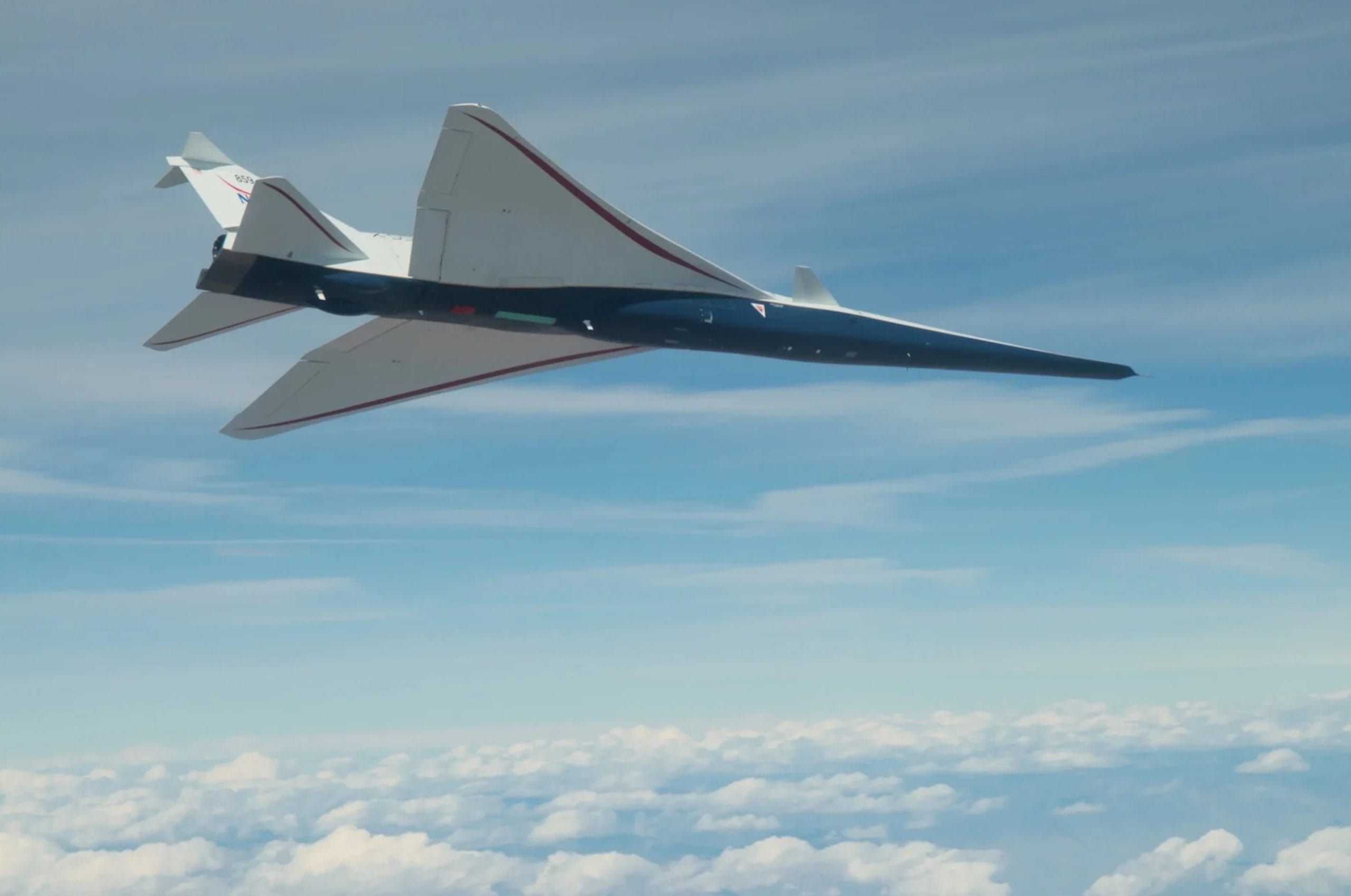
    Supersonic commercial travel was briefly possible in the twentieth century when the Concorde flew. But the window-rattling sonic boom of that aircraft made governments restrict supersonic travel over land. Now a new generation of aviation companies are revisiting the concept of supersonic commercial travel with technologies that help dampen the irritating effects of a plane’s shock waves.

    One such company, Boom Supersonic, partnered with NASA to capture the above schlieren image of their experimental XB-1 aircraft in flight. The diagonal lines spreading from the nose, wings, and tail of the aircraft mark shock waves. It’s those shock waves’ interactions with people and buildings on the ground that causes problems. But the XB-1 is testing out scalable methods for producing weaker shock waves that dissipate before reaching people down below, thus reducing the biggest source of complaints about supersonic flight over land. (Image credit: Boom Supersonic/NASA; via Quartz)

    The XB-1 test aircraft in flight.
    Fediverse Reactions
  • “Kirigami Sun”

    “Kirigami Sun”

    Kirigami is a variation of origami in which paper can be cut as well as folded. Here, researchers look at flow through a cut kirigami sheet and how that flow changes with the cuts’ length. In the top central image, white lines mark the paper boundaries. As the cut gaps get larger, flow through them transitions from a continuous jet to swirling vortex shedding. Along the bottom, we see similar patterns emerge in the wake of uniformly-cut sheets, too. On the right, the flow comes through in jets; moving leftward, it transitions to an unsteady vortex shedding flow. (Image credit: D. Caraeni and Y. Modarres-Sadeghi)

    Fediverse Reactions
  • Instabilities in Competition

    Instabilities in Competition

    When two liquid jets collide, they form a thin liquid sheet with a thicker rim. That rim breaks into threads and then droplets, forming a well-known fishbone pattern as the Plateau-Rayleigh instability breaks up the flow. This poster shows a twist on that set-up: here, the two colliding jets vary slightly in their velocities. That variability adds a second instability to the system, visible as the wavy pattern on the central liquid sheet. The sheet’s rim still breaks apart in the usual fishbone pattern, but the growing waves in the center of the sheet eventually that structure apart as well. (Image credit: S. Dighe et al.)

    Fediverse Reactions