Turn a bottle upside-down to empty it, and you’ll hear a loud glug-glug-glug as the liquid in the bottle empties and air rushes in. In this video, researchers aim a high-speed camera at the very first bubble that forms during the process. Once the bubble reaches the wider area of the bottle, it tends to pinch off in the bottle’s neck. That creates a narrow jet that pierces the bubble and flies all the way to the other side, leaving a column of liquid inside the rising bubble. Increasing the fluid’s viscosity has remarkably little effect, at least until the liquid is extremely viscous. (Image and video credit: H. Mayer et al.)
What do you get when you combine liquid gallium, a blender, and a special probe lens? Some pretty wild slow-mo video of a liquid metal vortex, courtesy of the Slow Mo Guys. This video is almost as notable for its set-up as it is for the high-speed footage, given the lengths Gav and Dan go to in order to get the shot! (Image and video credit: The Slow Mo Guys)
A year ago I observed what a strange year 2020 had been, and in many ways, I could say the same of 2021. Before the pandemic, I spent quite a lot of time traveling. In 2021, the only nights I slept outside my own bed came on a long weekend up to the mountains with my family. But 2021 also saw a bit of a return to normalcy – I was giving keynote addresses and workshops again, albeit virtually. What will 2022 hold? Who knows?!
As per tradition, here are the top FYFD posts of 2021:
It’s an eclectic mix of topics this year: bizarre phenomena, stunning art, archaeological exploration, and a touch of biophysics!
If you enjoy FYFD, please remember that it’s primarily reader-supported. You can help support the site by becoming a patron, making a one-time donation, buying some merch, or simply by sharing on social media. And if you find yourself struggling to remember to check the website, remember you can get FYFD in your inbox every two weeks with our newsletter. Happy New Year!
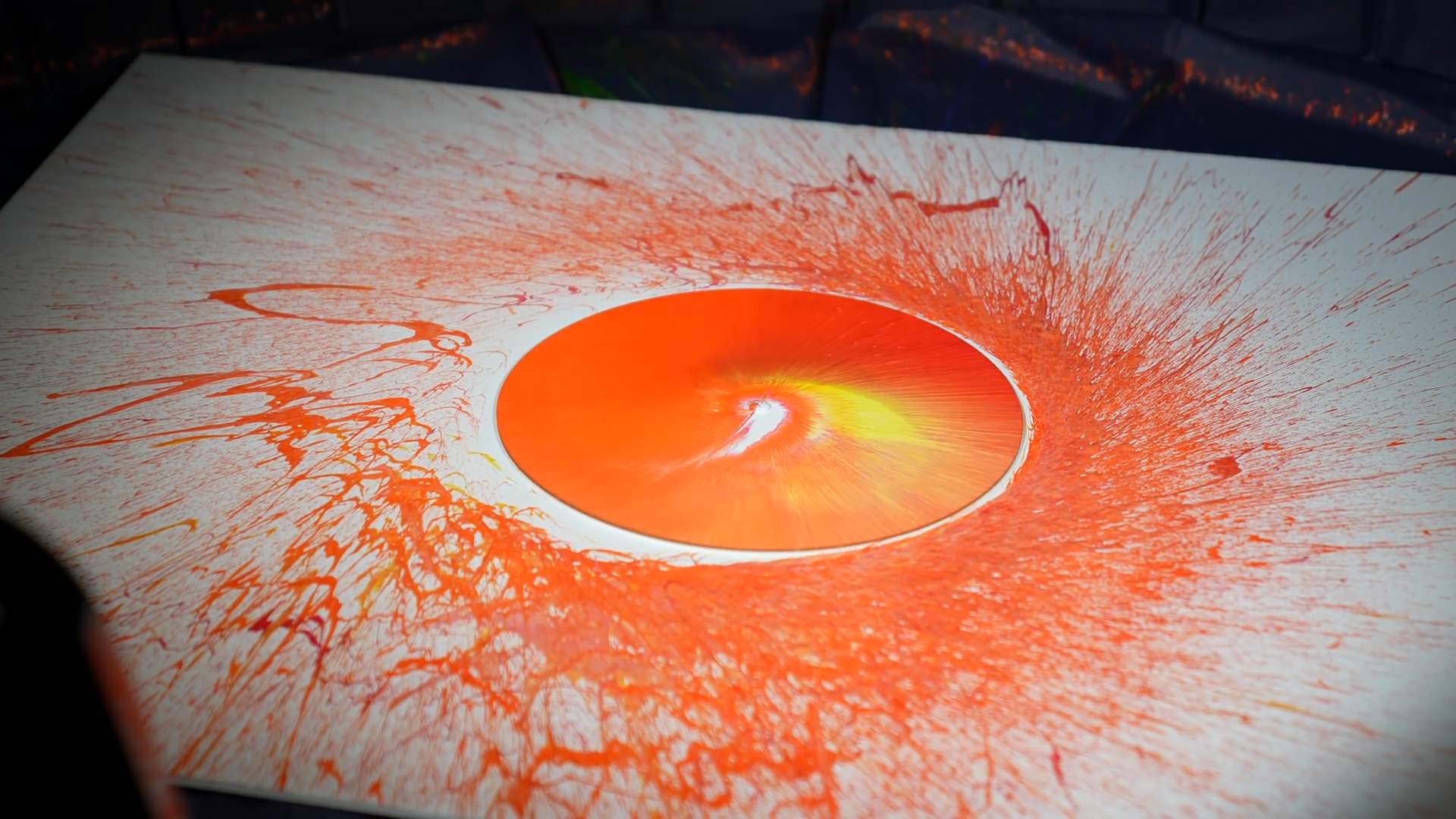
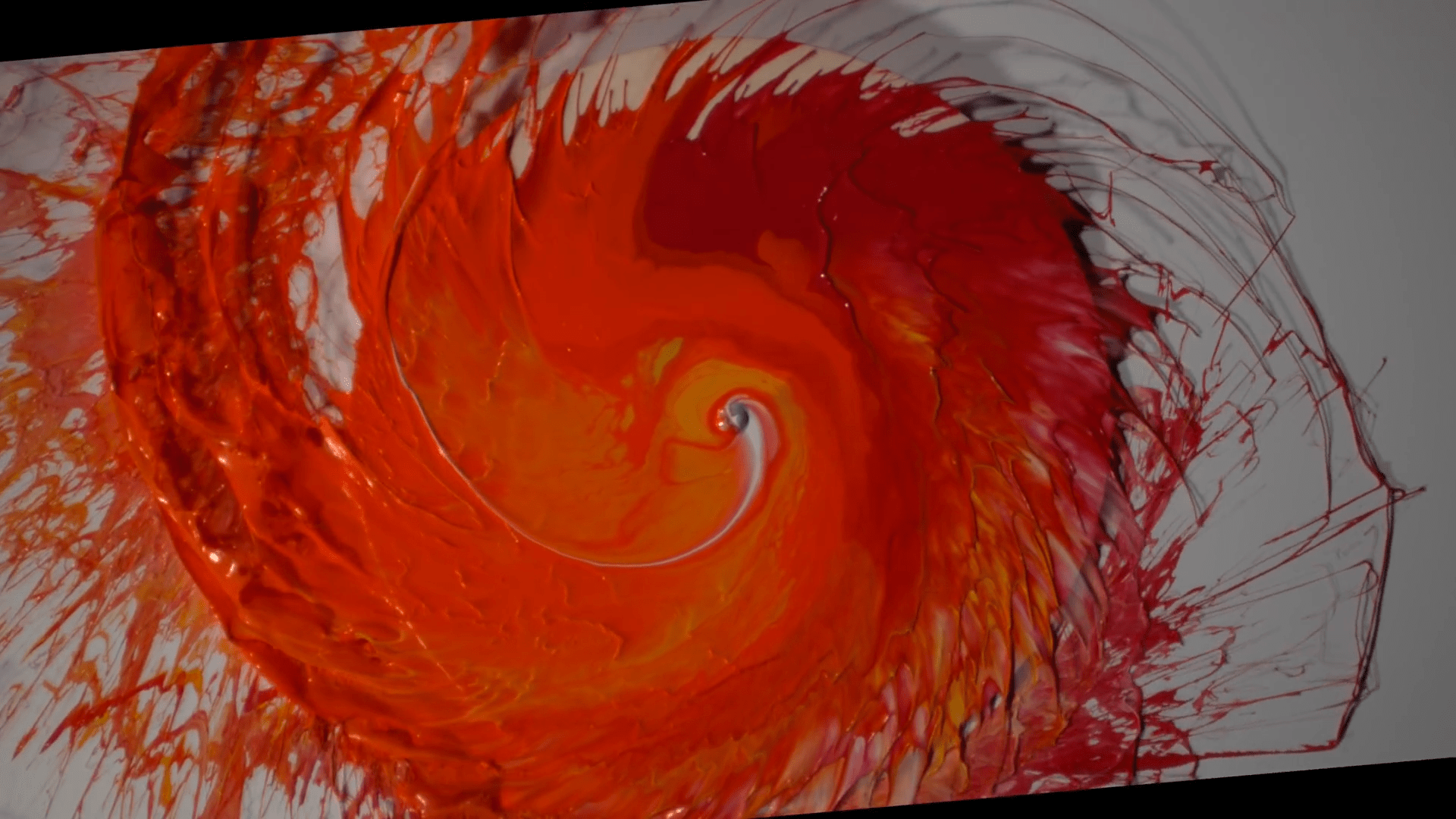
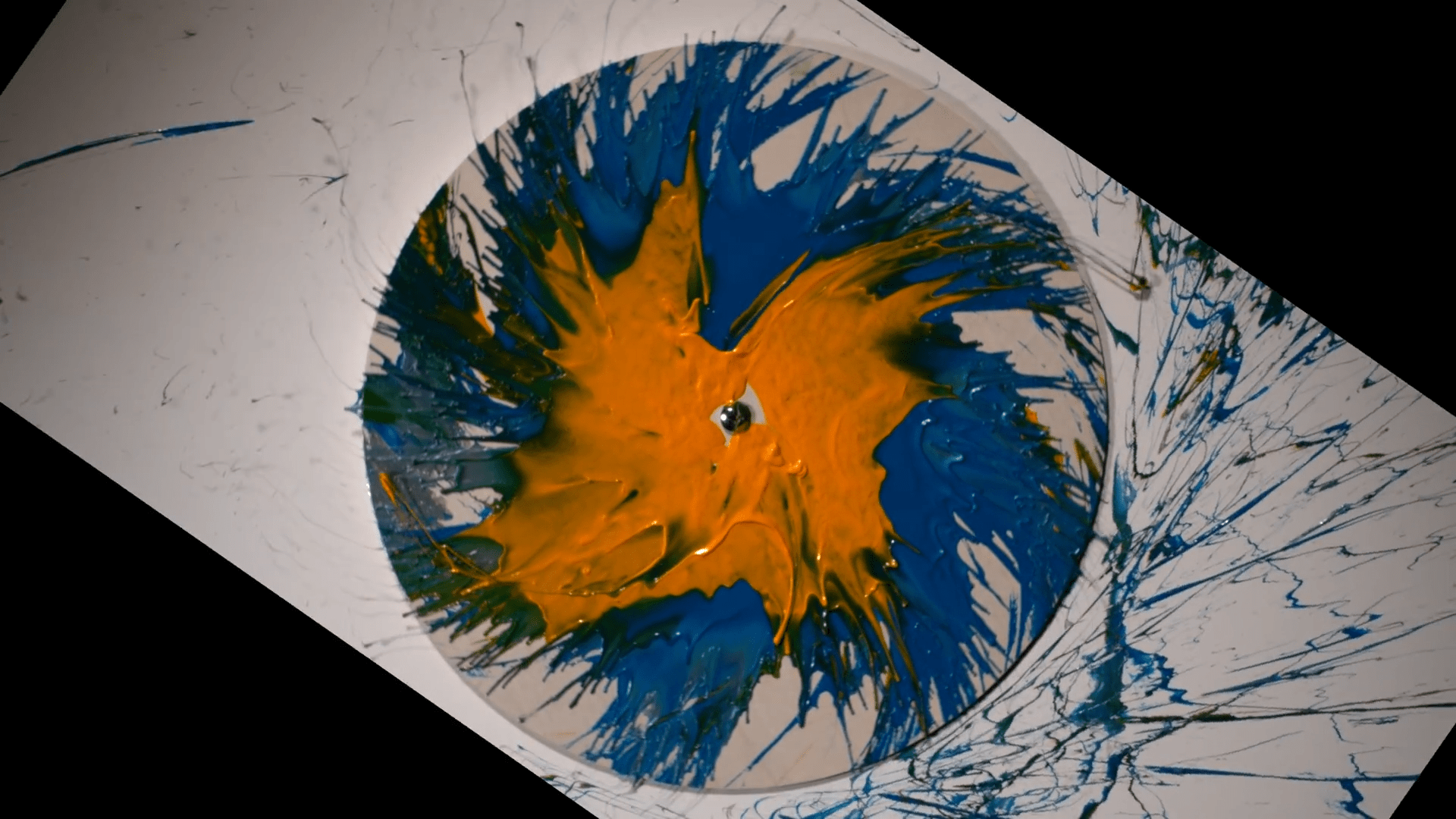
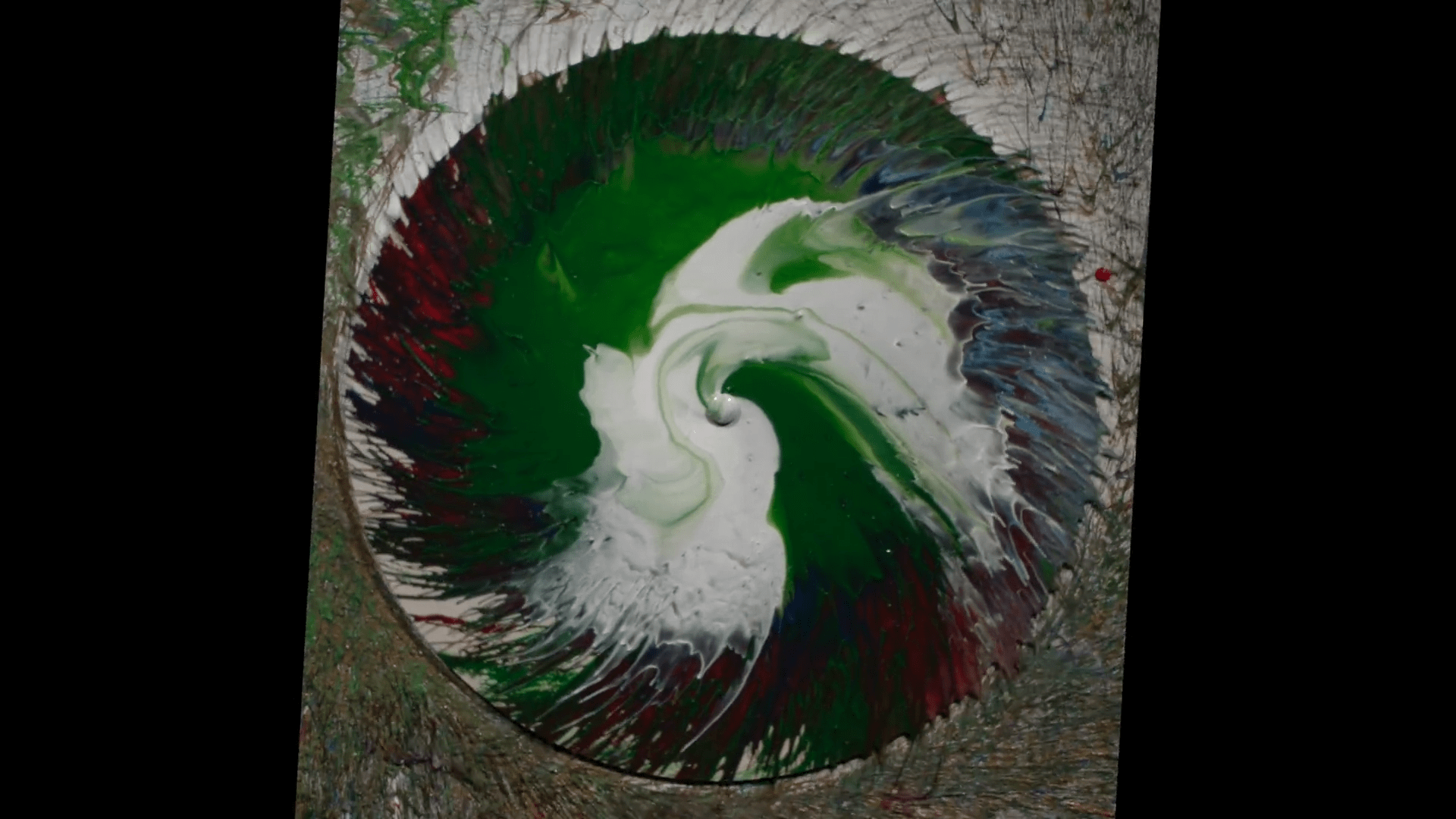
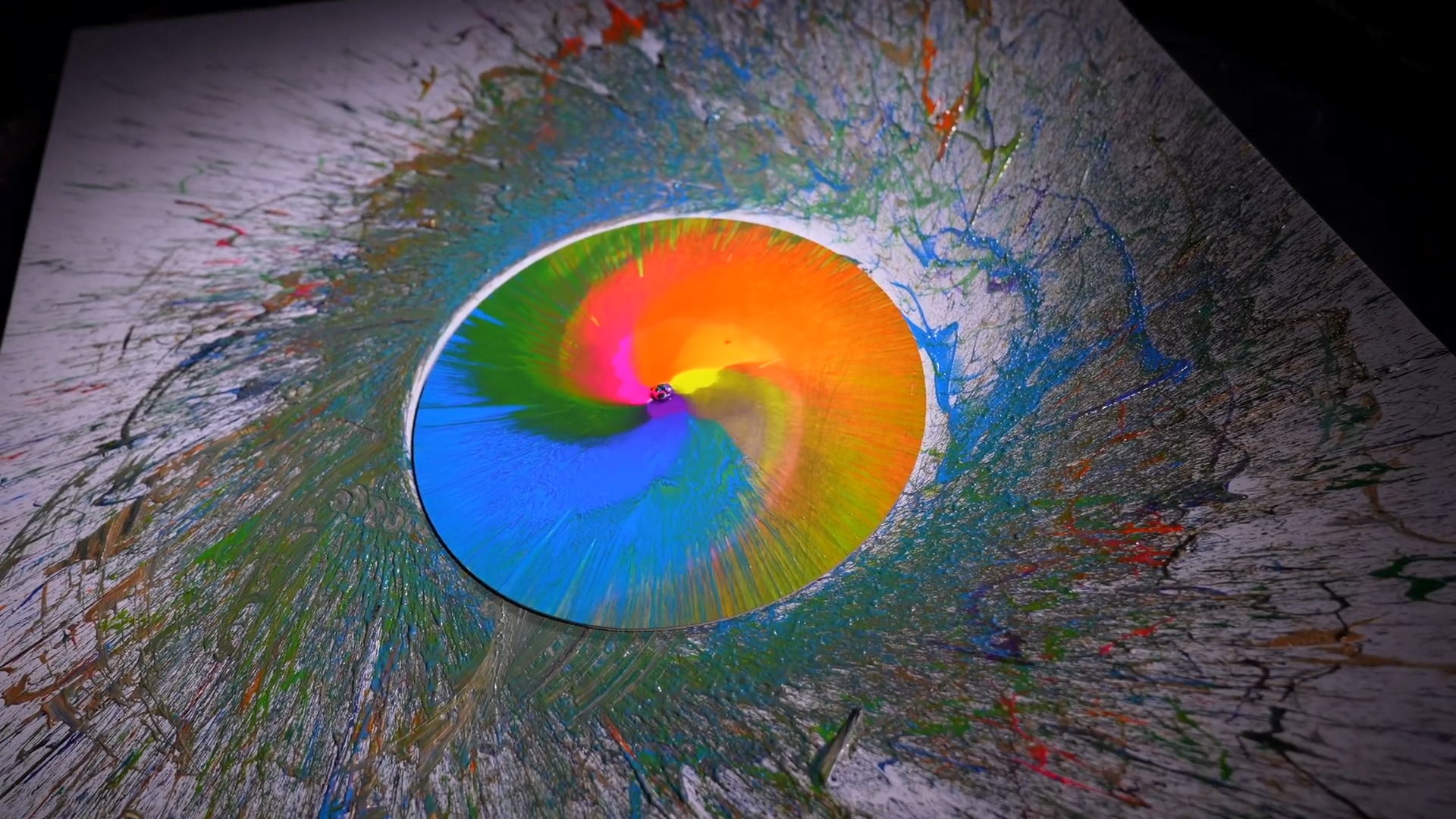
In a return to their roots, this Slow Mo Guys video features paint flowing on (and off!) a spinning disk. To help us see what’s going on, Gav uses a trick that’s familiar to many fluid dynamicists: he rotates the high-speed footage at the same speed that the disk rotates. This transformation places the viewer into a reference frame where the disk appears stationary, so that small changes in the flow are apparent.
It makes for a gorgeous view as centrifugal force flings the paint outward and eventually breaks it into drops. The rotation speed is unfortunately so high that the spinning completely dominates all other forces. The few runs with more viscous acrylic paint show some hints of more interesting behaviors that might be visible with a slower rotation rate (which would make the tug of war between inertia/viscosity/surface tension and centrifugal force less one-sided). Anyone got a high-speed camera, some speed control, and a willingness to get messy? (Image and video credit: The Slow Mo Guys)
Without full cheeks, cats, dogs, and many other animals cannot use suction to drink. Instead, these animals press their tongue against a fluid and lift it rapidly to draw up a column of liquid. They then close their mouth on the liquid before it breaks up and falls down. (Cats are a bit neater about it, but as the high-speed images above show, dogs use the same method.)
A new study takes a look at the mathematics behind this feat, specifically how long it takes for the liquid column to break up. Normally, we describe that problem using the Plateau-Rayleigh instability, but in its usual form, the PR instability doesn’t account for the kind of acceleration drinking animals apply to the fluid. This new study modifies the equations to account for acceleration and finds that the predicted time it takes for breakup is consistent with the timing of animals closing their mouths on the water. In other words, cats and dogs are likely timing their lapping to maximize the amount of water they catch with each bite. (Image credits: top – C. van Oijen, others – S. Jung et al. 1, 2; research credit: S. Jung)
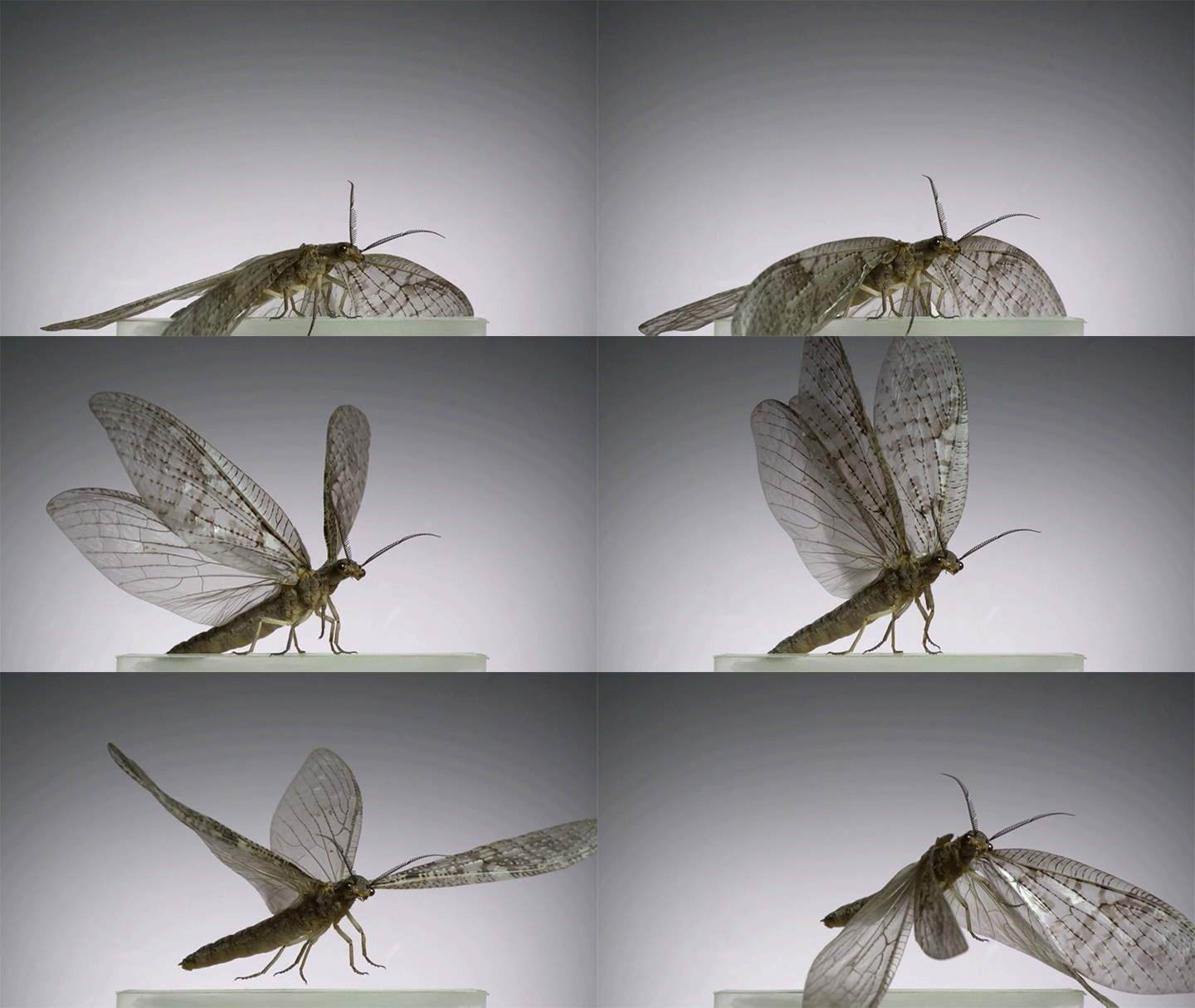
What do you do when you’re an insect researcher with a high-speed camera? Why, film all sorts of unusual insects from your backyard as they take off and fly! Here Dr. Adrian Smith of Ant Lab shows us a slew of insects that are not unusual for their rarity — you can probably find many of these in your own yard — but they are rarely seen in insect flight research. Like many of the species we’ve seen before, lots of these fliers use a figure-8 wingstroke to stay aloft. But one feature that really struck me as I watched was how amazingly flexible many of their wings were. For many of them, parts of their wings actually curl back on themselves during parts of the stroke. As engineers, our first instinct would be to avoid that kind of complexity, but I expect that it must give the insects some kind of benefit — otherwise nature would have eliminated it. (Image and video credit: Ant Lab/A. Smith; via Colossal)
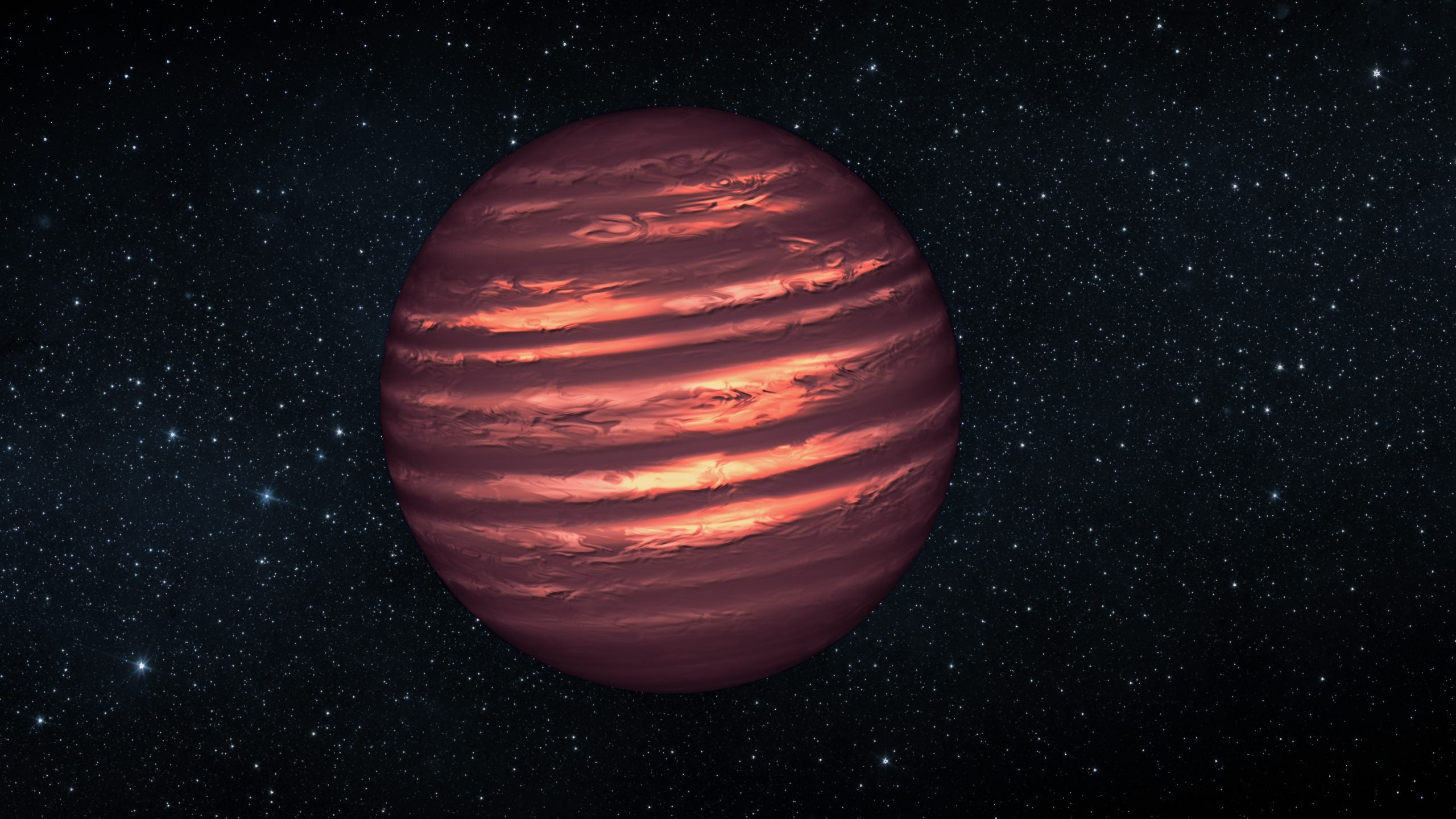
Brown dwarfs are neither stars nor gas giants but something in between. Our two nearest brown dwarf neighbors are roughly equivalent to Jupiter in size but about 30 times more massive. Since these objects are so dim, little is known about their structure. Do they resemble stars in their atmospheric patterns or gas giants like Jupiter?
To find out, a team of researchers studied two nearby brown dwarfs with the Transiting Exoplanet Survey Satellite. They were able to map the objects’ varying lightcurves and model an upper atmosphere consistent with those observations. They found that both dwarfs have high-speed winds running parallel to their equators, meaning that they likely have stripes like Jupiter. The similarities even extended to the brown dwarfs’ poles, where — like on Jupiter — the atmosphere became dominated by local vortices. (Image credit: NASA/JPL; video credit: Steward Observatory; research credit: D. Apai et al.; via Gizmodo)
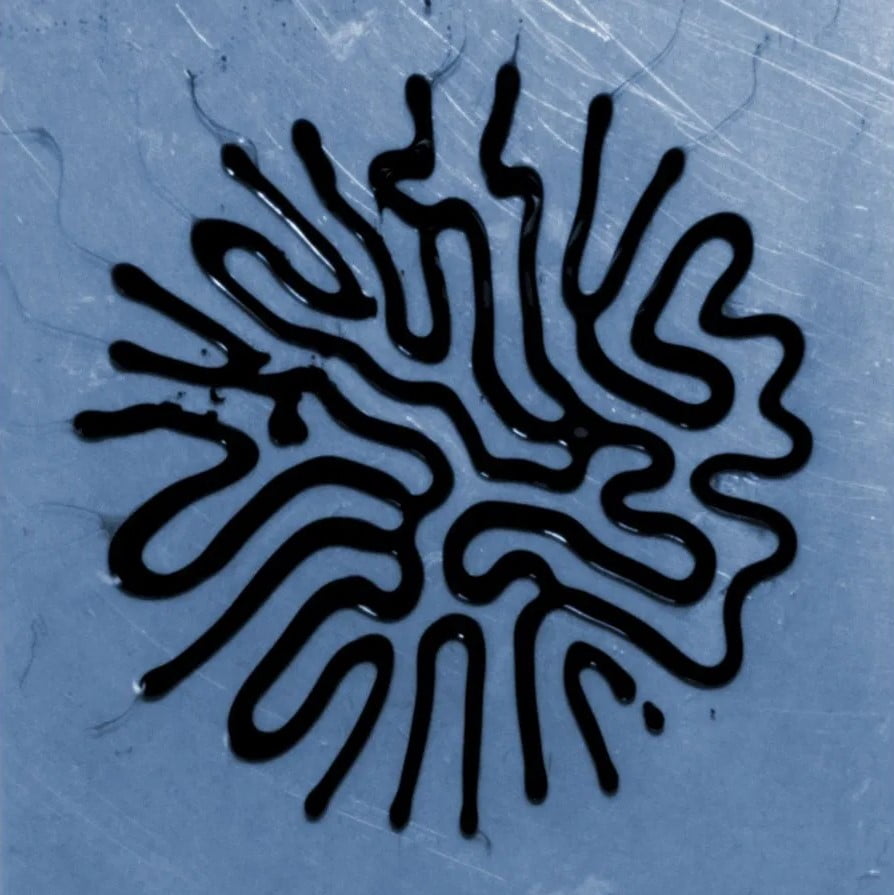
We’re used to seeing ferrofluids — with their suspended iron nanoparticles — as spiky fluids when exposed to a magnetic field. But this is not always the case. Here, the ferrofluid is immersed in a thin liquid layer — window cleaner, in this case — and when a magnet is brought near, it forms snake-like, labyrinthine lines. (Image credit: M. Carter et al.)
High-speed photography gives us an alternate glimpse of reality. Here it provides an all-new perspective on making espresso. Surface tension plays a starring role, first in pulling together the film that forms over the exit, then in creating the drips and drops that follow. The break-up of espresso into individual droplets is an example of the Plateau-Rayleigh instability, where surface tension drives any wobble in the falling jet to pinch off. For more slow-motion espresso, you can also check out this behind-the-scenes video. (Video and image credit: J. Hoffmann; submitted by Jerrod H.)
Right now people around the world are experiencing daily disruptions as a result of the recently declared coronavirus pandemic. There is a lot we don’t know yet about coronavirus, though researchers are working around the clock to report new information. Today’s video, though a couple years old, focuses on an area of medical knowledge that’s historically lacking but extremely relevant to our current situation: the mechanics behind disease transmission through sneezing or coughing.
Lydia Bourouiba is a leader in this area of research. Her studies have focused not on the size range of droplets produced but on the dynamics of the turbulent clouds that carry these droplets and what allows them to persist and spread. If you’ve wondered just why healthcare providers are recommending masks for sick people, keeping large distances between individuals, and frequent hand-washing, the image above hopefully helps explain why. Droplets carried in these turbulent clouds can travel several meters, and the buoyancy of the cloud’s gas components can help lift droplets toward ceiling ventilation. Right now, social distancing is one of our best tools against this disease transmission.
My goal in posting this is not to panic anyone. Rather, I hope you leave better informed as to why these precautions are needed. With coronavirus, our detailed knowledge of its characteristics — how long it remains viable in the air or on surfaces, how much is needed for an infection to take hold, etc. — is limited. But from research like Bourouiba’s, we know that coughing and sneezing are remarkably efficient ways to deliver respiratory pathogens, and that’s why caution is warranted. Stay safe, readers. (Video credit: TEDMED; image credit: Bourouiba Research Group, source; research credit: L. Bourouiba et al., see also S. Poulain and L. Bourouiba, pdf)