This high-speed video shows the apparatus often used by photographers for fluid sculptures created from droplet collisions. As amazing as these formations are in still images, seeing their evolution at 5,000 fps is even more lovely.
Search results for: “high-speed video”

High-Speed Ferrofluid
High-speed video captures the behavior of a ferrofluid trapped between two magnets. Ferrofluids contain tiny ferromagnetic particles suspended in a carrier fluid like oil or water. The distinctive peaks and valleys of a ferrofluid subject to a strong magnetic field is due to the normal-field instability and is a result of the fluid minimizing its magnetic energy.
High-Speed Leidenfrost Levitation
The Leidenfrost effect occurs when a liquid encounters a surface with a temperature much higher than its boiling point. Some of the liquid is instantly vaporized and then a droplet will skate across the surface on that vapor. This video shows the process at 3000 frames per second.
Oil-Slicked Bubble Bursts
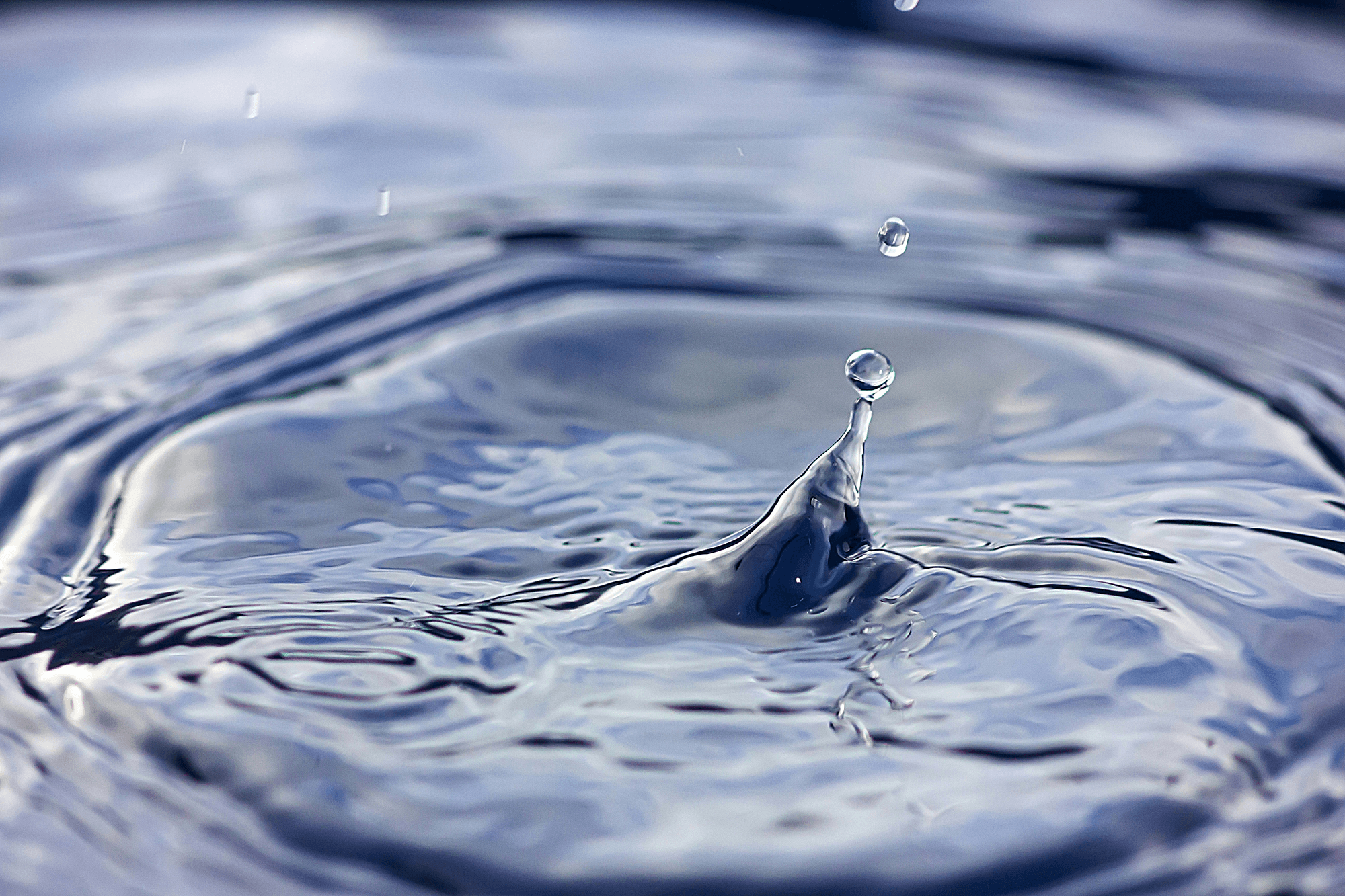
When bubbles at the surface of the ocean pop, they can send up a spray of tiny droplets that carry salt, biomass, microplastics, and other contaminants into the atmosphere. Teratons of such materials enter the atmosphere from the ocean each year. To better understand how contaminants can cross from the ocean to the atmosphere, researchers studied what happens when a oil-coated water bubble pops.
The team looked at bubbles about 2 millimeters across, coated in varying amounts of oil, and observed their demise via high-speed video. When the bubble pops, capillary waves ripple down into its crater-like cavity and meet at the bottom. That collision creates a rebounding Worthington jet, like the one above, which can eject droplets from its tip.
The team found that the oil layer’s thickness affected the capillary waves and changed the width of the resulting jet. They were able to build a mathematical model that predicts how wide a jet will be, though a prediction of the jet’s velocity is still a work-in-progress. (Image credit: Р. Морозов; research credit: Z. Yang et al.; via APS)
Fediverse Reactions
-
“Droplet on a Plucked Wire”
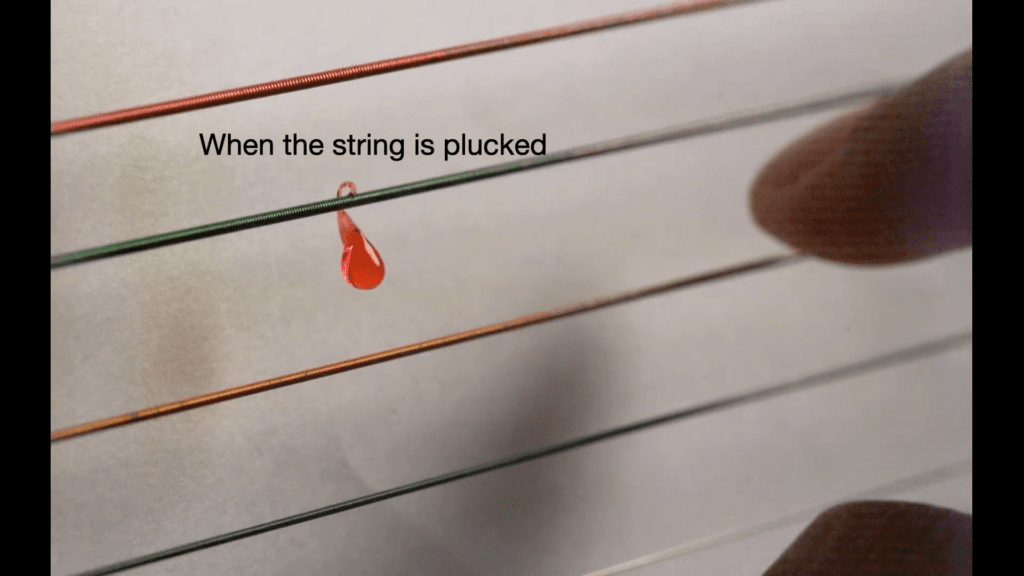
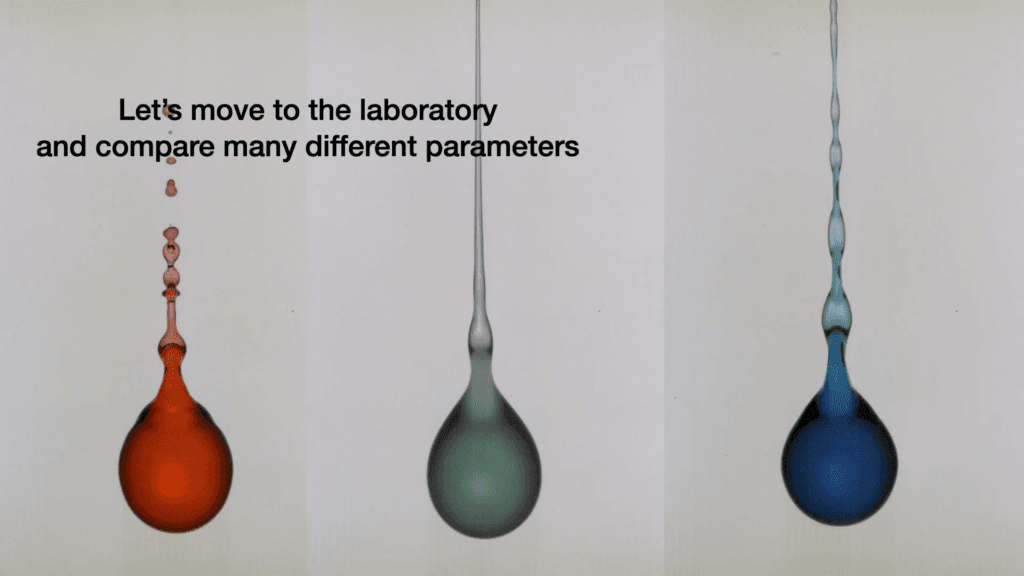
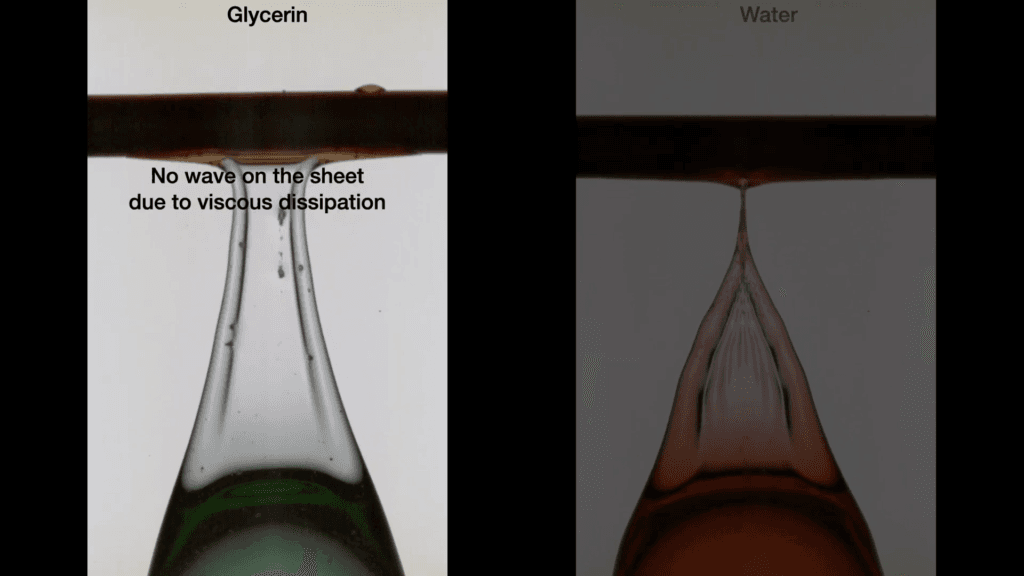
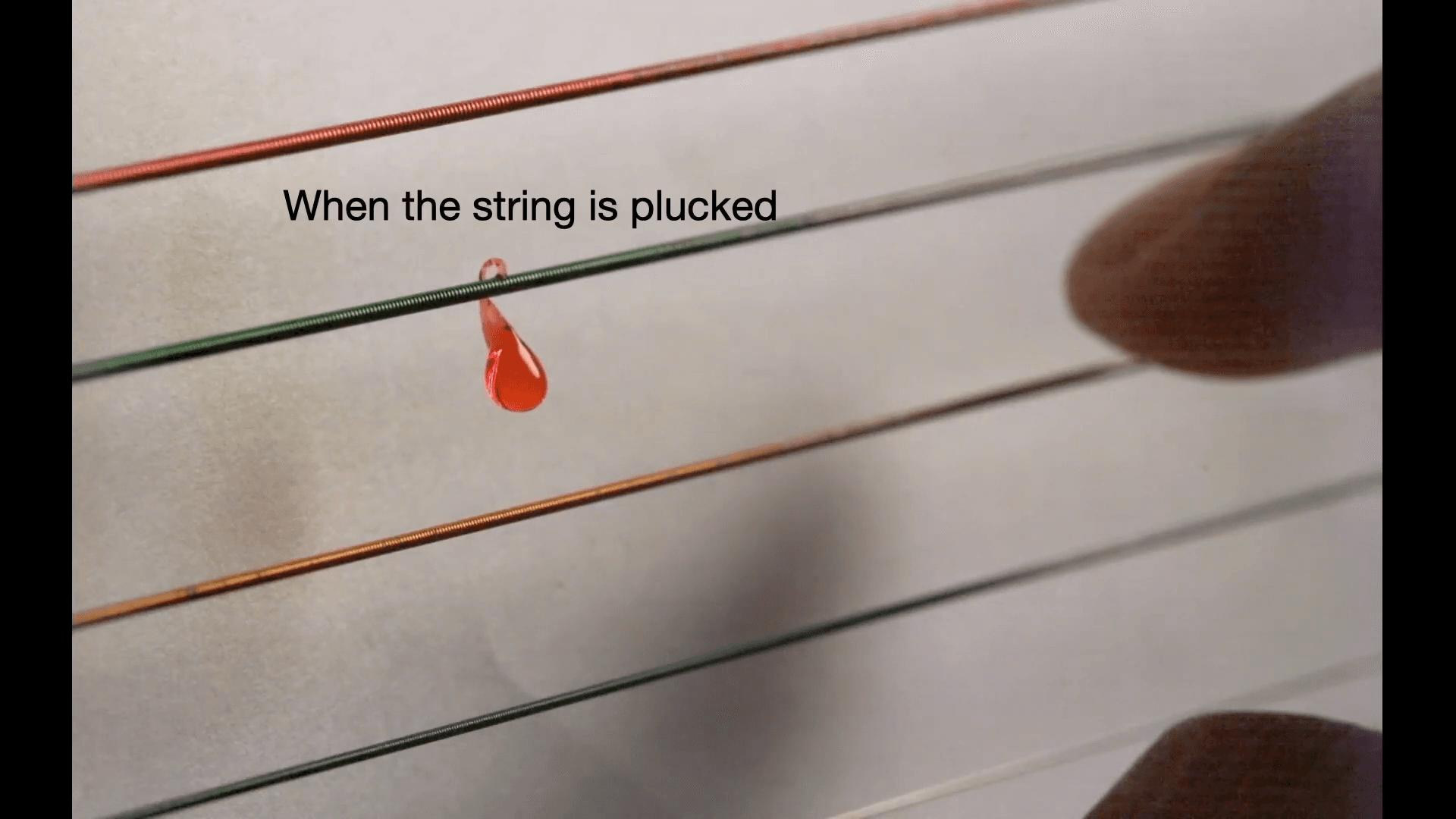


What happens to a droplet hanging on a wire when the wire gets plucked? That’s the fundamental question behind this video, which shows the effects of wire speed, viscosity, and viscoelasticity on a drop’s detachment. With lovely high-speed video and close-up views, you get to appreciate even subtle differences between each drop. Capillary waves, viscoelastic waves, and Plateau-Rayleigh instabilities abound! (Video and image credit: D. Maity et al.)
Fediverse Reactions
-
“Soap Bubble Bonanza


This video offers an artistic look at a soap bubble bursting. The process is captured with high-speed video combined with schlieren photography, a technique that makes visible subtle density variations in the air. The bubbles all pop spontaneously, once enough of their cap drains or evaporates away for a hole to form. That hole retracts quickly; the acceleration of the liquid around the bubble’s spherical shape makes the retracting film break into droplets, seen as falling streaks near the bottom of the bubble. The retraction also affects air inside the bubble, making the air that touched the film curl up on itself, creating turbulence. Then, as the film completes its retraction, it pushes a plume of the once-interior air upward, as if the interior of the bubble is turning itself inside out. (Video and image credit: D. van Gils)

Inside the Squirting Cucumber
Though only 5 cm long, the squirting cucumber can spray its seeds up to 10 meters away. The little fruit does so through a clever combination of preparation and ballistic maneuvers. Ahead of launch, the plant actually moves water from the fruit into the stem; this reorients the cucumber so that its long axis sits close to 45 degrees. It also makes the stem thicker and stiffer.
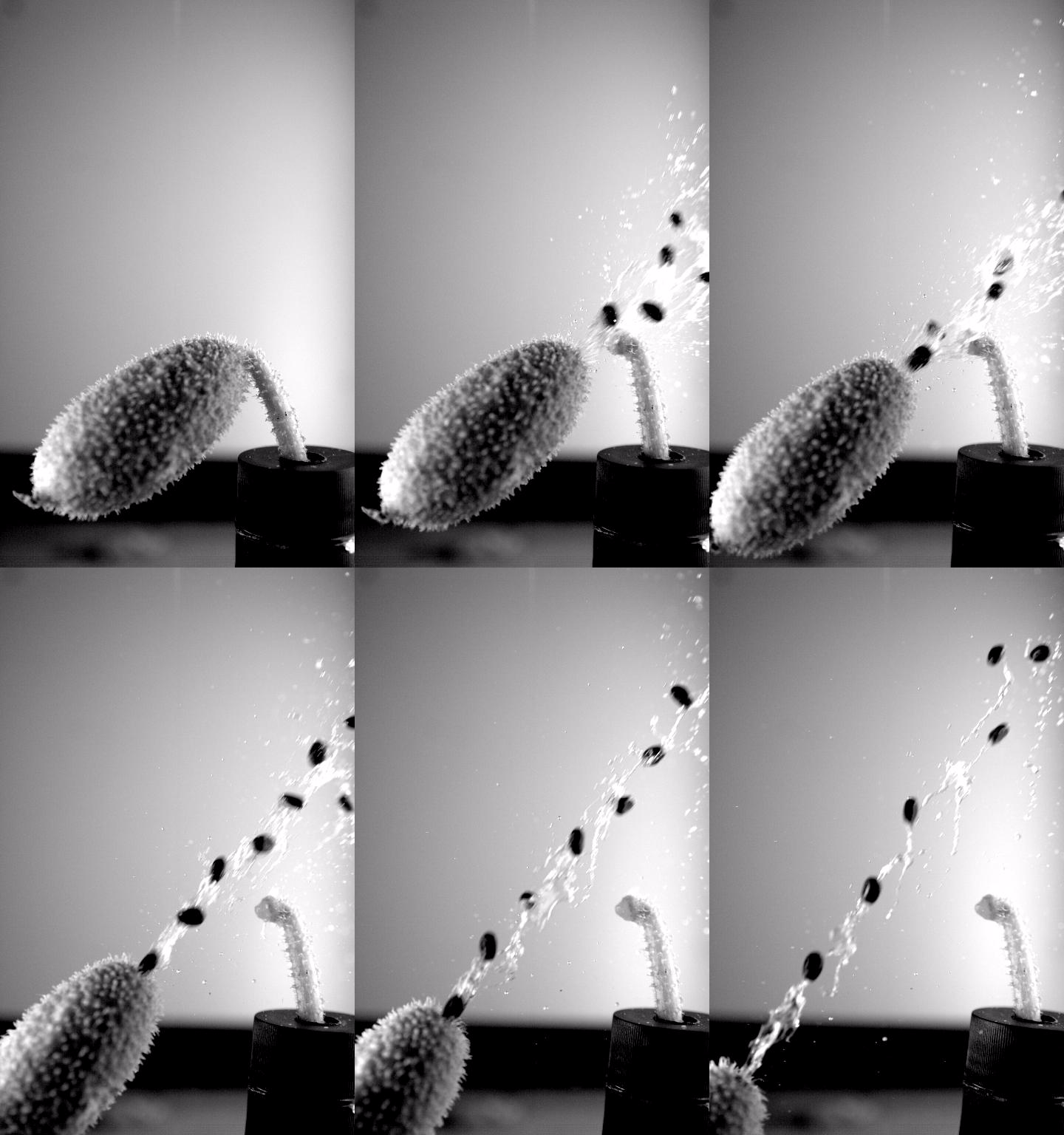
This high-speed video shows the explosive release of the squirting cucumber’s seeds. When the burst happens, fruit spews out a jet of mucus that propels the seeds at up to 20 m/s. The initial seeds move the fastest — thanks to the fruit’s high-pressure reservoir — and fly the furthest. As the pressure drops, the jet slows and the fruit’s rotation sends the seeds higher, causing them to land closer to the original plant. With multiple fruits in different orientations, a single plant can spread its seeds in a fairly even ring around itself. (Research and image credit: F. Box et al.; via Gizmodo)
Fediverse Reactions
-
Wasps in Flight

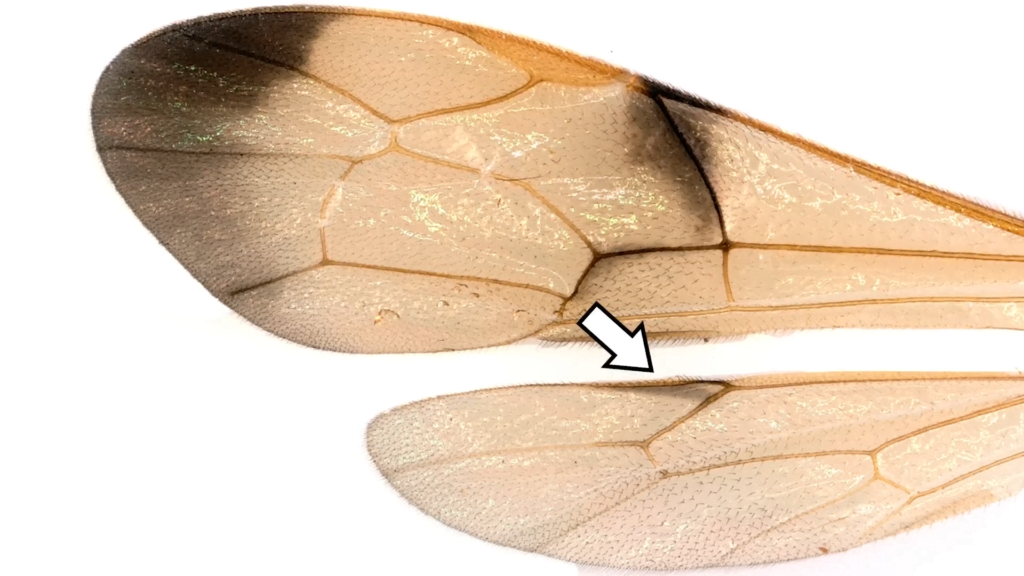
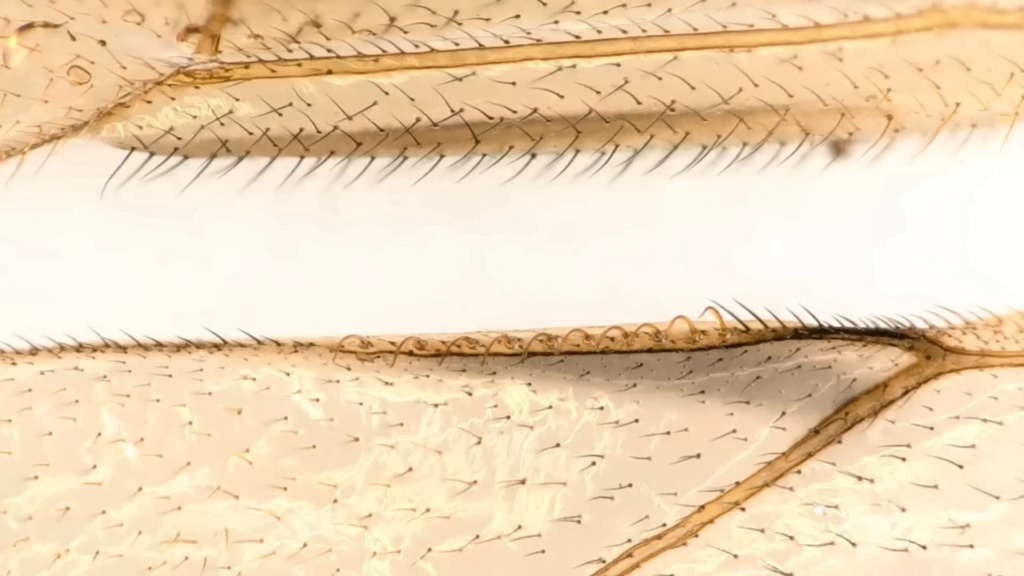


Personally, I’ve had some bad encounters with wasps, but Dr. Adrian Smith of Ant Lab feels the insects receive short shrift. In this video, he shows many species in the order — most of which are venomless and stingless. In high-speed video, their flight is mesmerizing. Wasps have separate fore- and hindwings, but during flight, they move them like a single wing. Velcro-like hooks on the edges of the wings hold the two together.
From a mechanics perspective, I find this fascinating. Aerodynamically, I’d expect much greater benefits from one large wing over two small ones, but outside of flight, separate wings are more easily tucked away. It’s so neat that wasps have a way to enjoy the benefits of both, enabled by a simple but secure line of hooks. (Video and image credit: Ant Lab/A. Smith)
Moths in Flight

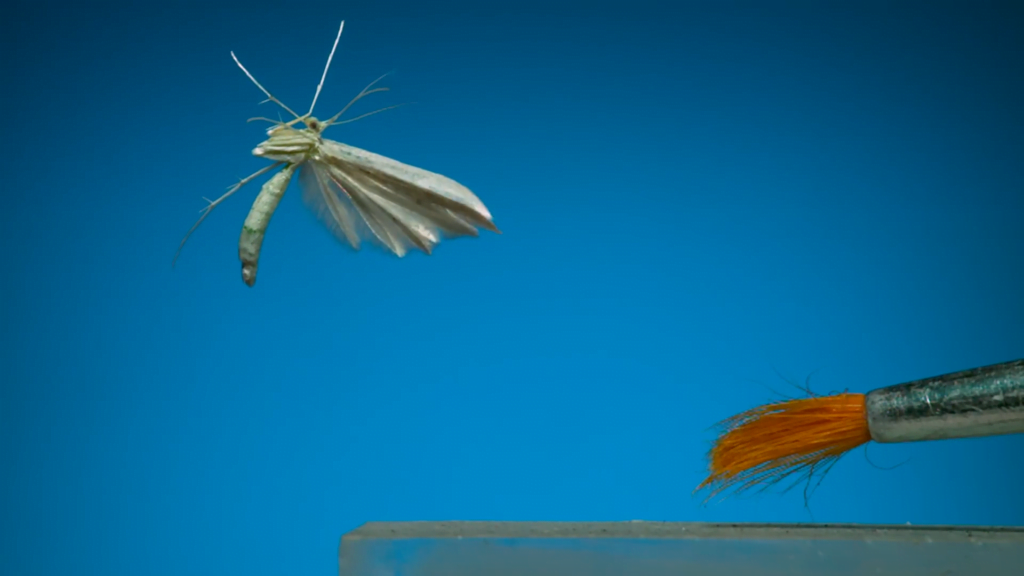
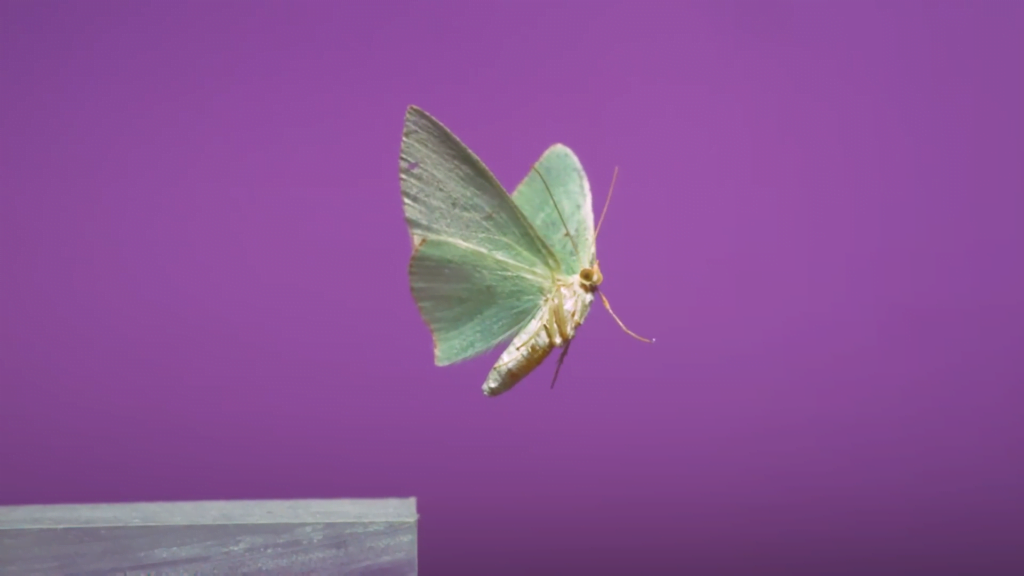


Moths and butterflies are such unique fliers among insects. Compared to their bodies, their wings are often enormous. High-speed video reveals the complex motions of their wing strokes. Some species have wings that flex dramatically, bringing sections of the opposite wing close enough to clap together. Other species, like the plume moth, have porous wings that resemble feathers. For these fliers, viscosity provides some resistance to keep air from simply flowing through the wing. But the little bit of air that does get through may help the moth aerodynamically. (Image and video credit: A. Smith/Ant Lab)

Imitating a Cough
Coughing and sneezing create violent air flows in and around our bodies. As that fast air rushes over mucus layers in our lungs, throat, and sinuses, the resulting flow breaks up the mucus into droplets. To explore the details of that process, researchers built a “cough machine” that sends a rush of air over a thin film of water mixed with glycerol. The setup allows them to observe the physics in a way that’s nearly impossible in a human cough or sneeze.

Imitating a cough: high-speed video shows how a thin film made of water and glycerol breaks down in a strong airflow. Parts of the film inflate into hollow bags that form thinner weak spots. When the film breaks in those places, it forms rims and ligaments that create a spray of droplets. As seen above, air flowing past shears the viscous fluid, stretching it out. The leading edge of the film destabilizes and breaks into large drops, but it’s what comes next that really gets things going. Areas of the film inflate to form hollow bags. When sections of the bag thin to about 1 micron, the film ruptures and the bags burst. This triggers a cascade of instabilities in the film’s rim that ultimately rip the film into a spray of tiny aerosol droplets. The researchers found that, despite their tiny size, these droplets collectively carry a large volume of liquid, making them all the more important for understanding transmission of respiratory illnesses. (Image credit: top – A. Piacquadio, experiment – P. Kant et al.; research credit: P. Kant et al.)








![[!38C3] ~/phranck :antifa:](https://fyfluiddynamics.com/wp-content/uploads/activitypub/actors/25626/bb2e03be7f44a4ae4c68f74211c886ba.webp)