Search results for: “high-speed video”

  • Featured Video Play Icon

    Water-Jumping Springtails

    Springtails are small, jumping insects. Semiaquatic varieties use their tails to jump off water in order to move around and escape predation. Among these water jumpers, results vary; some, like in the third image, have little to no control over their landings and will frequently faceplant or land on their backs. But some species in the family have a better technique.

    These springtails grab a water droplet with their hydrophilic ventral tube (seen in the second image with a red identifying arrow) during take-off. This tiny water droplet serves several purposes. First, it adds extra weight to the insect, allowing it to better orient its body to land belly-down. Second, the drop gives the insect a way to adhere to the water during landing, preventing it from bouncing. Check out the video to see lots of high-speed video of these tiny acrobats! (Video and image credit: A. Smith/Ant Lab; research credit: V. Ortega-Jimenez et al.)
  • Exploding a Bubble

    Exploding a Bubble

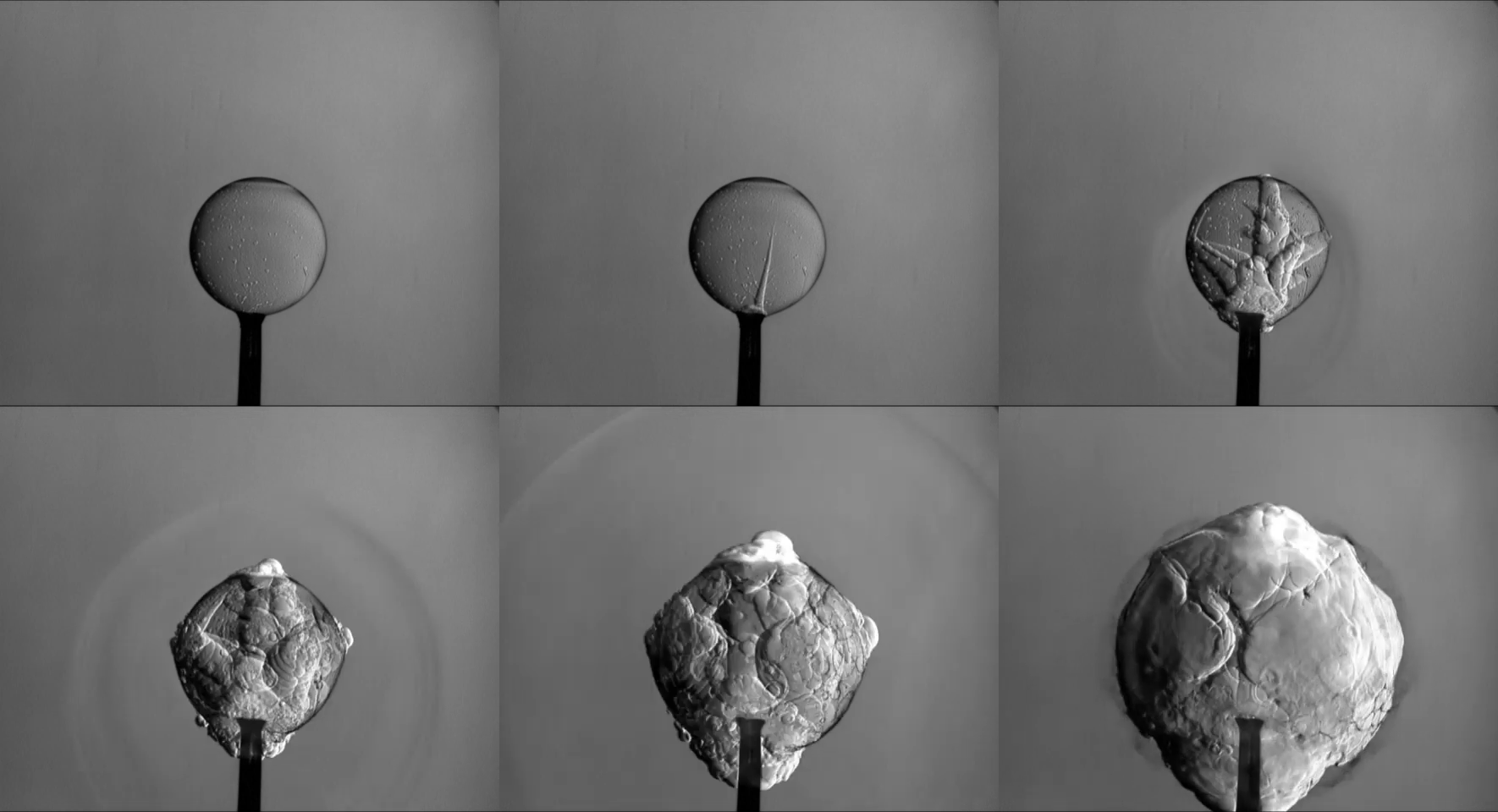
    In this high-speed video, artist Linden Gledhill ignites a mixture of oxygen and hydrogen contained within a soap bubble. As neat as the video is, I decided to take a closer look at the initial detonation with this animation:

    The ignition sequence within the bubble, slowed down further.
    The ignition sequence within the bubble, slowed down further.

    Even here, it’s hard to appreciate just how fast ignition is; it lasts only a handful of frames, despite filming at 40,000 frames per second. But we can still pick out some very neat physics. The ignition begins with a spike-like jet but immediately forks into three ignition fronts that pierce the soap bubble. You can see the shadowy mist of the bubble bursting as the flame front expands. Watch the background carefully, and you can see a shock wave flying away from that moment of detonation.

    Once the soap bubble is gone, the expanding flames begin to wrinkle and deform. Turbulence takes shape, eddying through the flames at a much slower speed than the initial detonation. This is where most of combustion takes place, with turbulence mixing the hydrogen and oxygen together to better enable burning. (Image and video credit: L. Gledhill)

  • Featured Video Play Icon

    Moths and Beetles in Flight

    Watching insects take flight in high-speed video is always mesmerizing. So often their wings look too small and fragile to lift their bulbous bodies, but they manage the feat easily. I especially like to watch how much their wings flex during each up- and downstroke. So often we think that stiffer wings — like those on airplanes — are better for flight, yet nature demonstrates at so many sizes that flexibility is better, especially in flapping flight. A flexible wing can maximize lift in the downstroke and curl to minimize drag on the upstroke. Even wings that fold away, as many beetle wings do, can do the job of lifting an insect once shaken out. (Image and video credit: Ant Lab)

  • Listening to the Sizzle

    Listening to the Sizzle

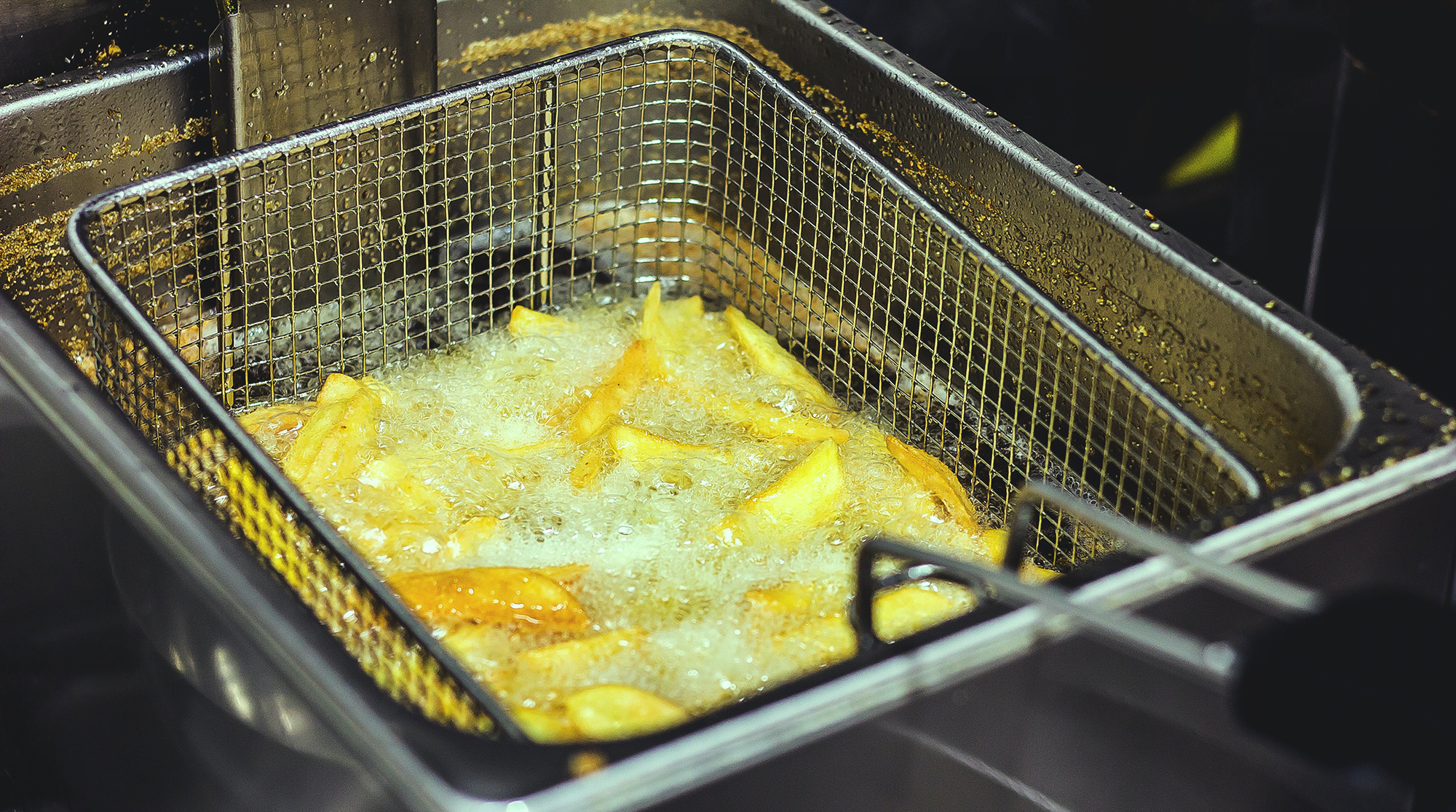
    The sizzle of frying food is familiar to many a cook, and that sound actually conveys a surprising amount of information. In this study, researchers suspended water droplets in hot oil and observed their behavior, both with high-speed video and with microphones. They found that these vaporizing drops created three types of cavities in the oil: an exploding cavity that breaks the surface, an elongated cavity that remains submerged, and an oscillating cavity that breaks up well below the surface. All three cavities flung oil droplets upward, and all three were acoustically distinct from one another. That means, as the authors suggest, that it might be possible to measure the aerosol droplets generated during frying simply by listening! (Image credit: fries – W. Dharma, others – A. Kiyama et al.; research credit: A. Kiyama et al.; via Cosmos; submitted by Kam-Yung Soh)

  • Featured Video Play Icon

    Within the Bubble’s Pop

    To our eyes, a soap bubble appears to pop instantly, but when observed in high-speed video, the process is far more complex. In this video, the Slow Mo Guys pop human-sized bubbles, giving us an opportunity to appreciate the rupture process at speeds up to 50,000 frames per second.

    Once the rupture starts, the hole spreads very symmetrically. But as the hole grows, the remaining soap film starts distorting. As Gav and Dan observe, the far side of the bubble actually wrinkles up before the rupture front arrives and tears the remaining fluid into droplets! (Image and video credit: The Slow Mo Guys)

  • Liquid Bridges

    Liquid Bridges

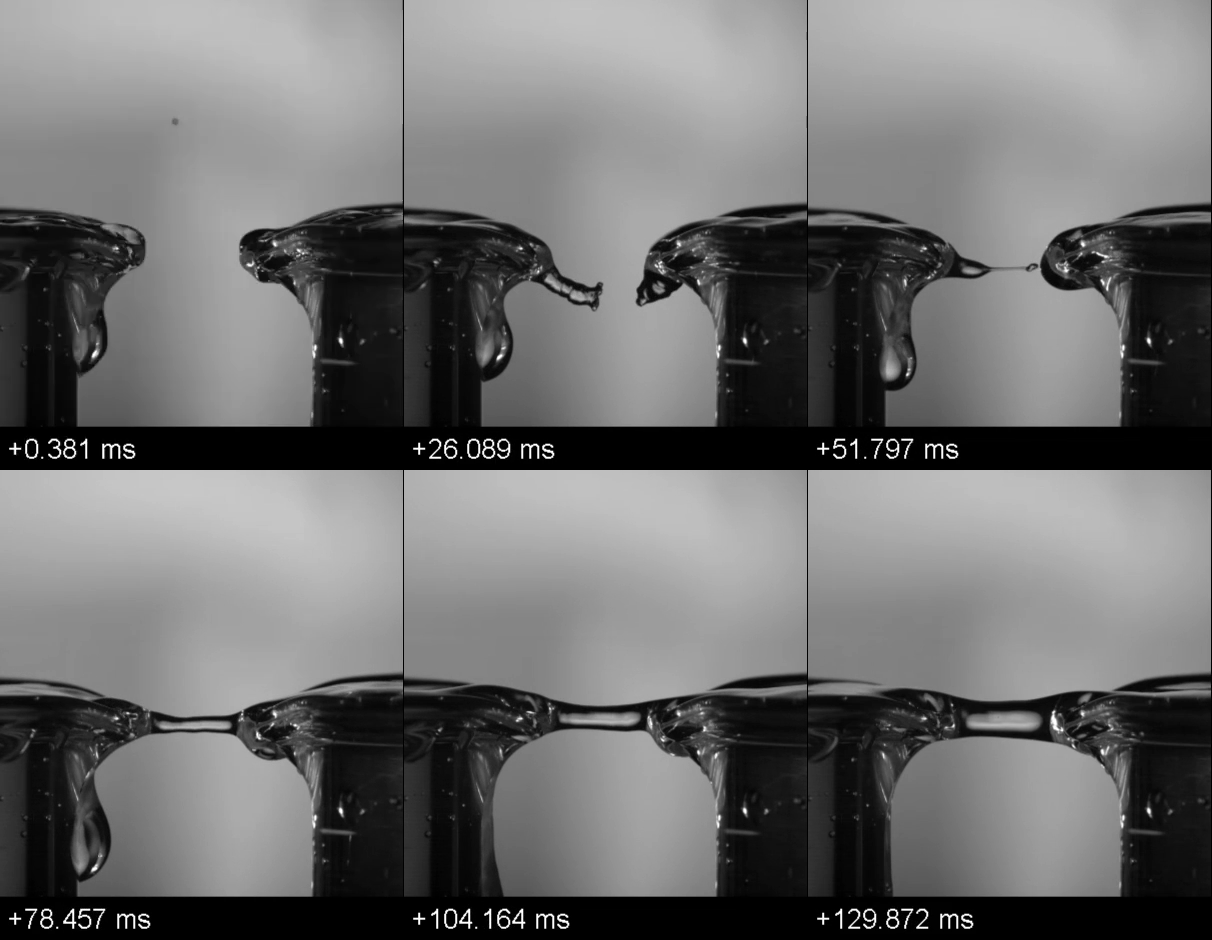
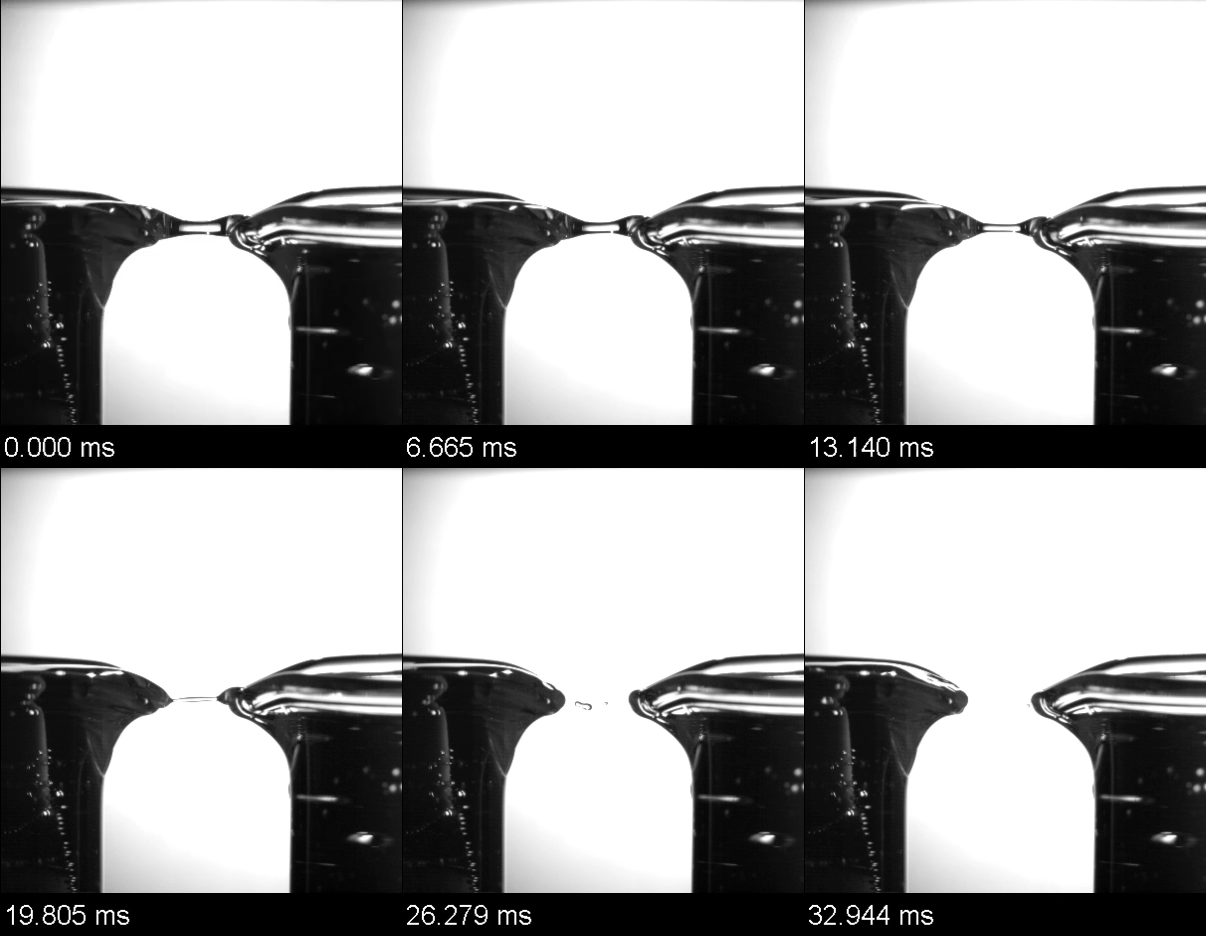
    In 1893, Baron Armstrong demonstrated a peculiar phenomenon — a liquid bridge of water suspended between two beakers with a strong electric charge between them (Image 1). More than a century later, the details of the mechanism remain challenging to pin down thanks to the setup’s combination of electohydrodynamics, heat transfer (Image 2), evaporation, and chemistry (the electrodes can split water).

    Researchers have pinned down a few details, though, like that the break-up of the liquid bridge (Image 3) depends on its effective length and that the effective length grows as applied voltage increases. Researchers also found that inducing an external flow can extend the bridge’s lifetime, though it does not affect the length at which it breaks up. Interestingly, the phenomenon is not limited to water (and its odd chemistry); ethanol and glycerol have been used for liquid bridges, too! (Image and research credit: X. Pan et al.)

  • Solving the Teapot Effect

    Solving the Teapot Effect

    The teapot effect — that tendency for liquid to dribble down the outside of the spout when pouring — is a frustration to many tea drinkers. Unraveling the fluid dynamics of this phenomenon has taken various researchers decades, but a team now believe they’ve captured the problem fully. Their full mathematical description is quite dense, but it boils down to a subtle interplay of capillary, viscous, and inertial forces.

    Essentially, they found that droplets will always form just under the lip of the spout, thereby keeping that area wetted. The flow rate of the pour (along with the geometry and surface characteristics of the spout) determines how large those droplets can grow. At low flow rates, the droplets can grow large enough to redirect the entire stream around the spout’s edge, creating a hugely frustrating mess. You can see this flow rate effect in the high-speed video below. (Image credit: S. Ferrari; video and research credit: B. Scheichl et al.; via Ars Technica; submitted by Kam-Yung Soh)

  • Featured Video Play Icon

    Really, Really Slow Mo Fluids

    Fluid dynamics is a perfect subject for high-speed video. So much goes on at speeds that are far too quick for our eyes and brains to perceive. But there is such a thing as too slow – a concept explored in this Slow Mo Guys video, which takes everyday activities like turning on a faucet or splashing into a pool and slows them down a speed where one second lasts an hour. The video I’ve embedded here isn’t nearly that long; it speeds up and slows down. But if you really want to, you can watch Gav fall into a pool for a full hour. (Image and video credit: The Slow Mo Guys)

  • Featured Video Play Icon

    Moths in Flight

    As student engineers, we often use fixed-wing aircraft to build our intuition for flight, but nature has so many other incredible examples to offer. Here we see high-speed video of seven different moth species taking off, and understanding fixed-wing flight won’t help you here at all! These moths have small, rough, and incredibly flexible wings — all characteristics an aircraft designer typically avoids. Yet these insects are agile, fast, and capable fliers at a scale that continues to thwart engineers. Some of the earliest pioneers of flight watched birds for inspiration; for small crafts, there’s no better teacher than insects. (Image and video credit: A. Smith/AntLab)

  • Programmable Capillary Action

    Programmable Capillary Action

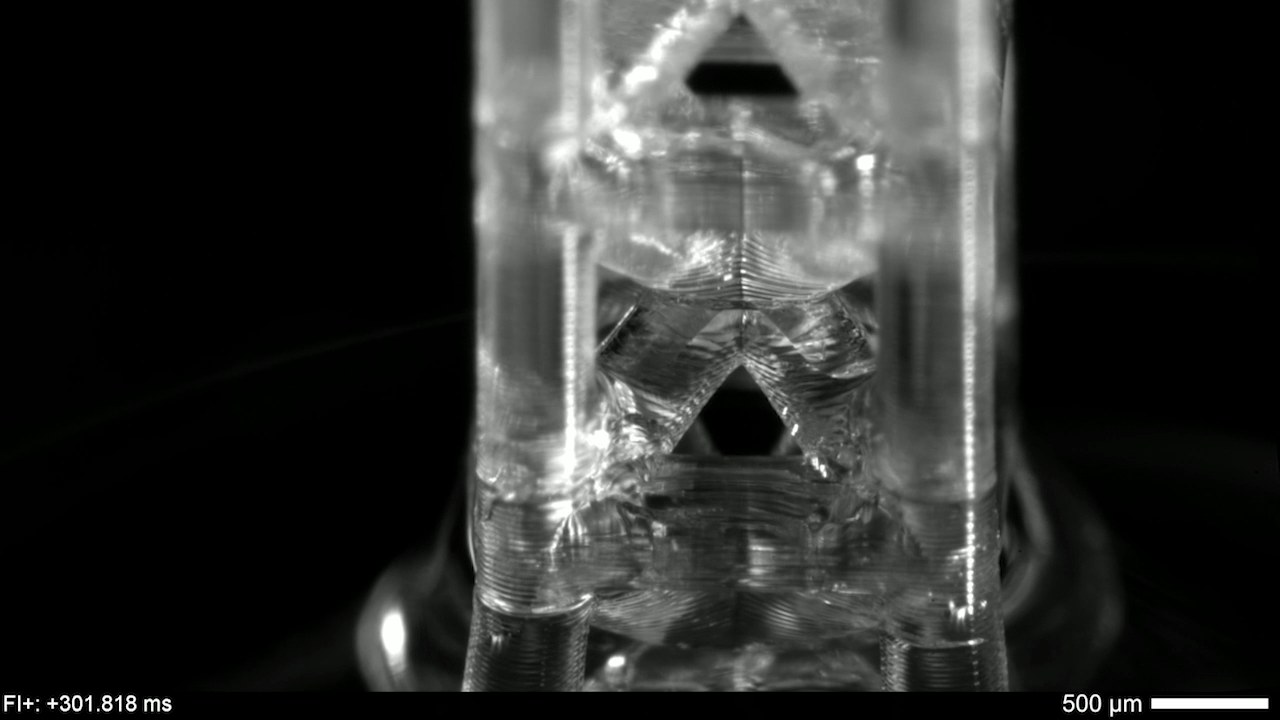
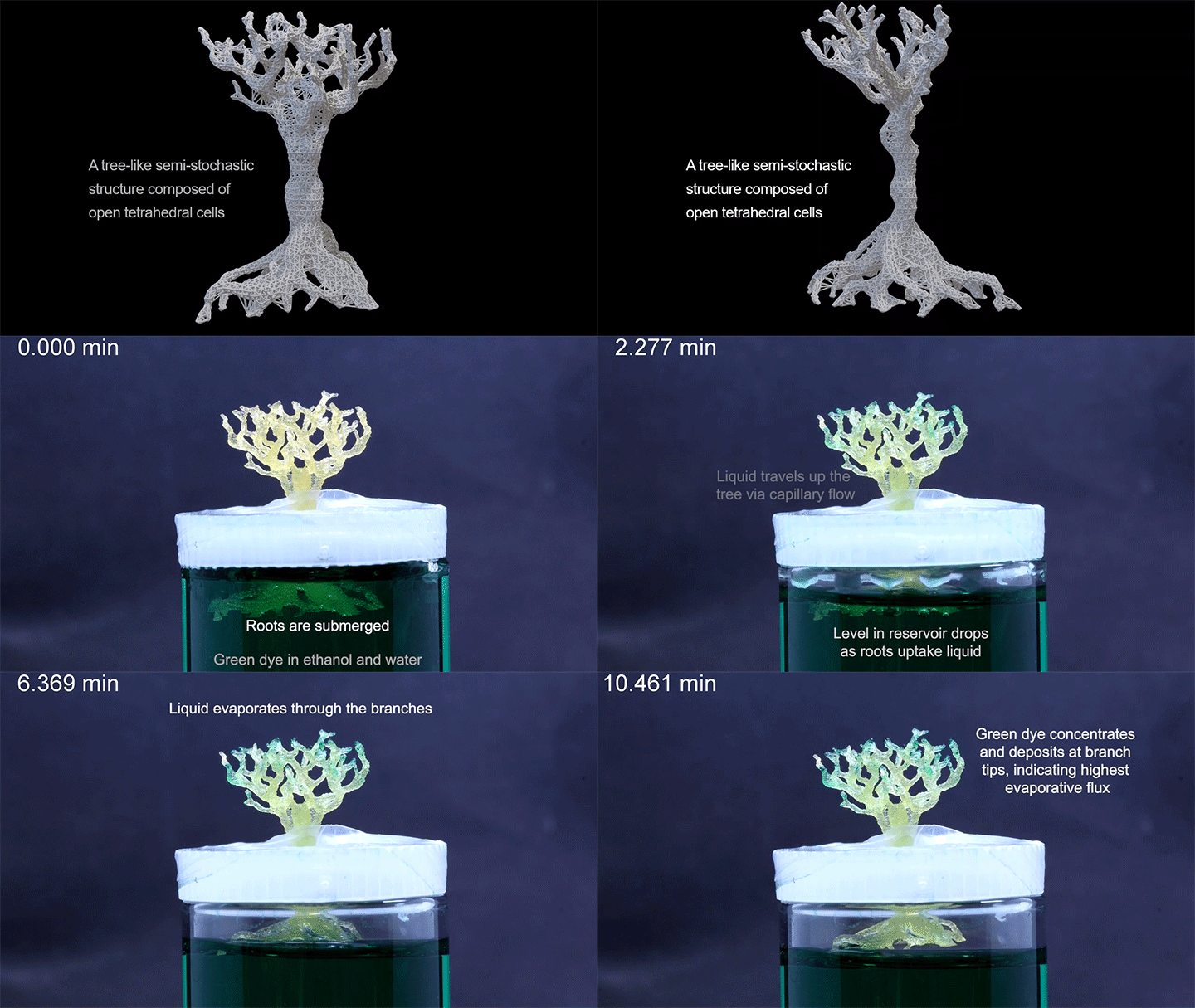
    Capillary action combines the cohesive forces within a liquid and the adhesive forces between a liquid and solid to enable a liquid to fill narrow spaces, even against the force of gravity. To control capillary action, researchers are 3D-printing what they call “unit cells,” tiny structures that water and other liquids can climb. There’s no pump raising the liquid through these structures, just capillary action.

    In a particularly neat demonstration of the technology, the researchers built a tree-like structure out of many open-walled unit cells and placed the “root” system in a closed reservoir. Capillary action drew liquid up the structure to the tips of its branches, where the dyed water evaporated. The process is similar to transpiration in trees, though in trees, capillary action provides much less of the lift. (Image and research credit: N. Dudukovic et al.; via Nature; submitted by Kam-Yung Soh)