Tag: streaklines

  • “Arctic Fox in Blizzard”

    “Arctic Fox in Blizzard”

    A blue arctic fox bears the wind and snow of a Norwegian blizzard in this image by photographer Klaus Hellmich. The wind is strong enough to move snowflakes several centimeters in the time the camera’s shutter is open. This leaves the image full of streaklines that reveal the paths taken by the wind and snow. This visualization technique is useful in the lab, too. (Image credit: K. Hellmich; via Colossal)

    "Arctic Fox in Blizzard" by Klaus Hellmich.
    Fediverse Reactions
  • Portraits of Flight

    Portraits of Flight

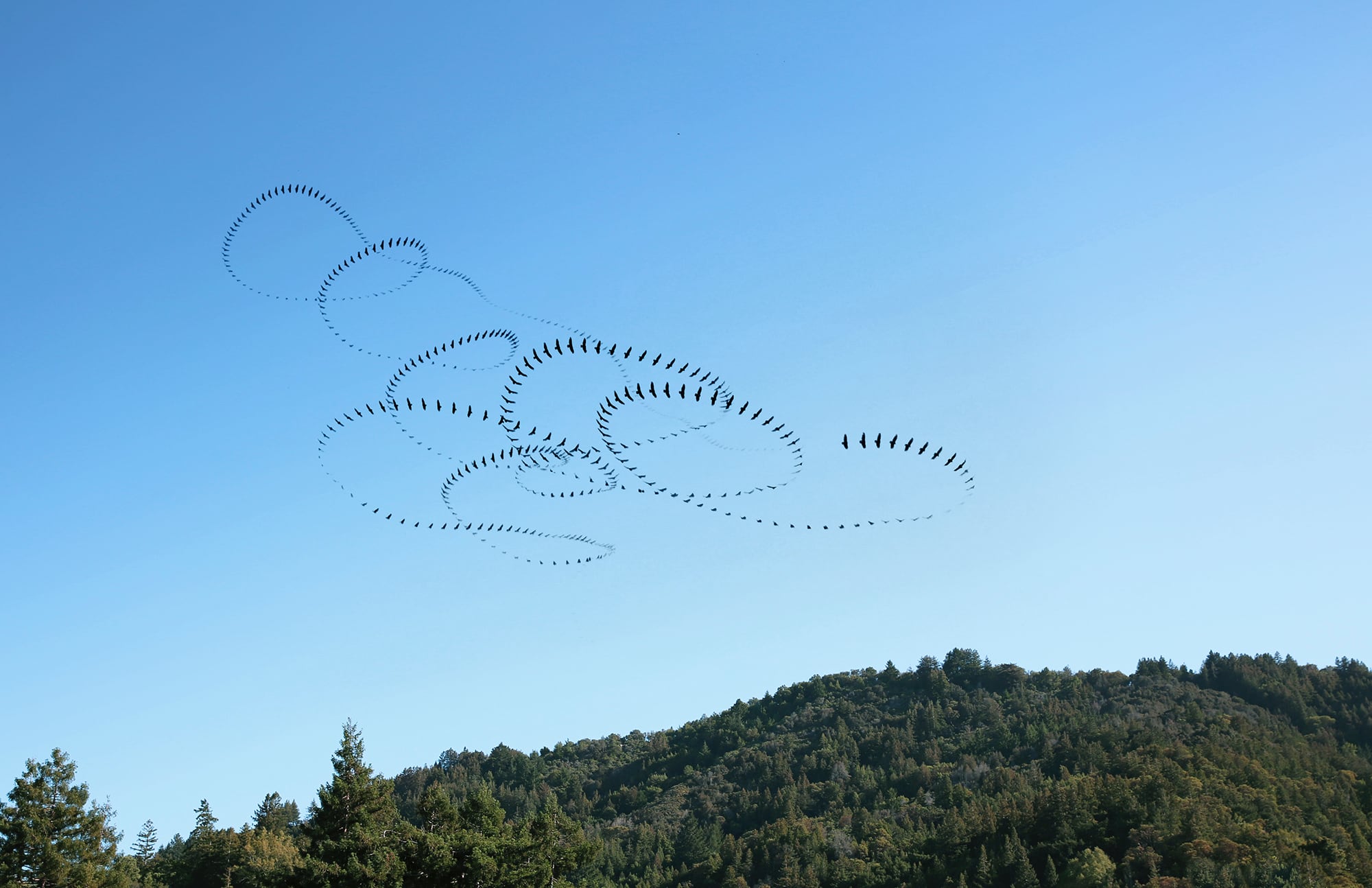
    During lockdown, photographer Doris Mitsch turned her eyes to the sky and began capturing these mesmerizing composite images of animals in flight. Vultures, crows, starlings, gulls, and bats all feature in her series. Some images, like “Lockdown Vulture (Signature)”, feature a single bird’s movement over a minute. Others show entire flocks over extended periods.

    I love how the images capture a sense of speed. Given equal timing between images, the lines with more space between each snapshot of a bird indicate a faster speed. It’s a bit like having particle image velociometry frames stacked atop one another! (Image credit: D. Mitsch; via Colossal)

  • “Ornitographies”

    “Ornitographies”

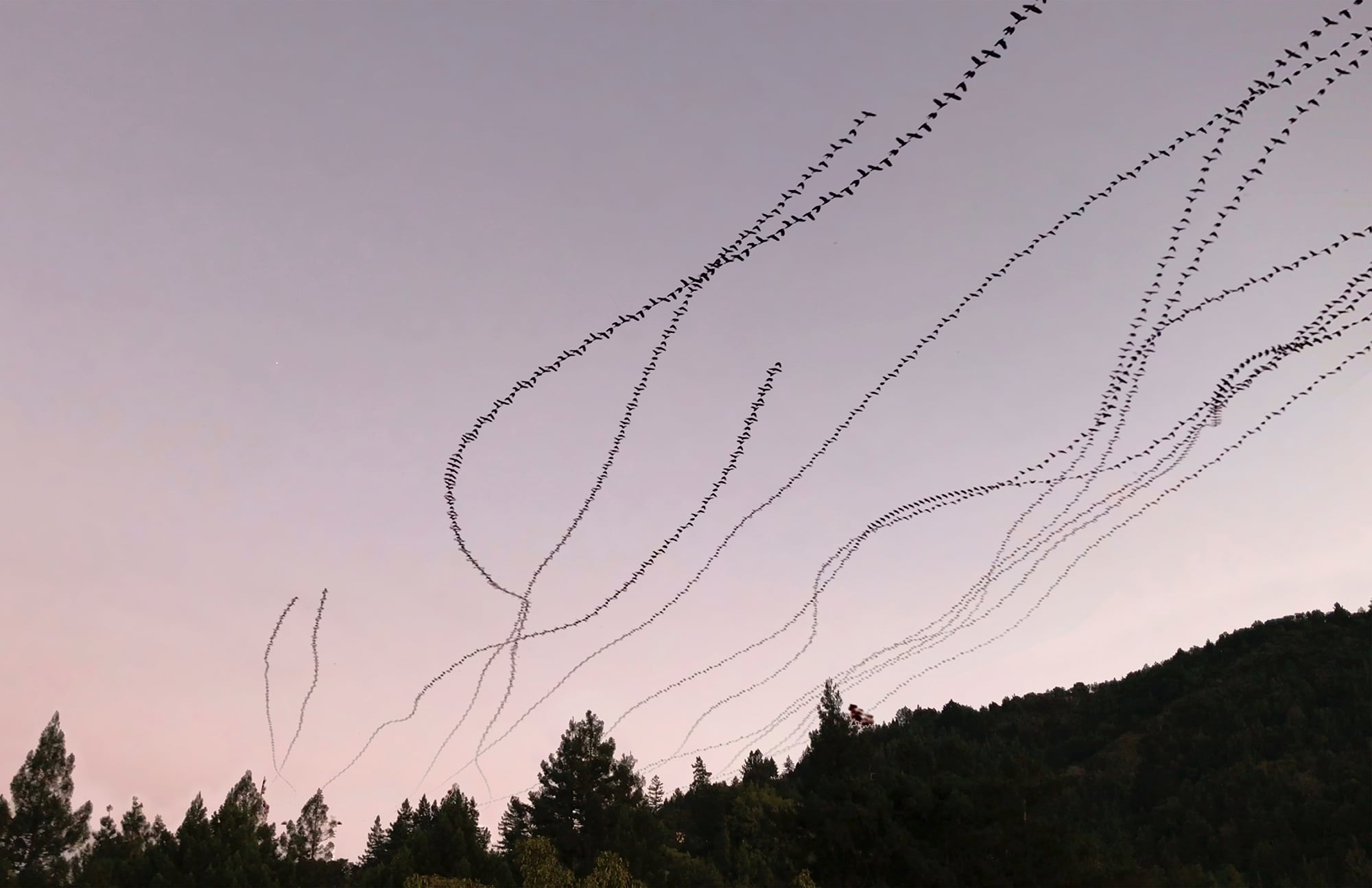
    If birds left trails in the sky, what would they look like? This is the question that haunted photographer Xavi Bou and inspired him to create his “Ornitographies” series. Using video of birds in flight, he combines frames to construct these snapshots of flight. In them, birds become streaklines feathered with wingbeats.

    I love how the technique highlights the patterns of flapping flight. A bird flying steadily over a lake becomes a wavy line with consistent, perfectly matched up- and downstrokes, whereas a bird just taking off has short, fast wingbeats that slowly lengthen and steady out as the bird gets aloft. Flocks of birds turn into a tornado of swirling lines as they land or take-off en mass. (Image credit: X. Bou; via Flow Vis)