Search results for: “droplet”

  • Featured Video Play Icon

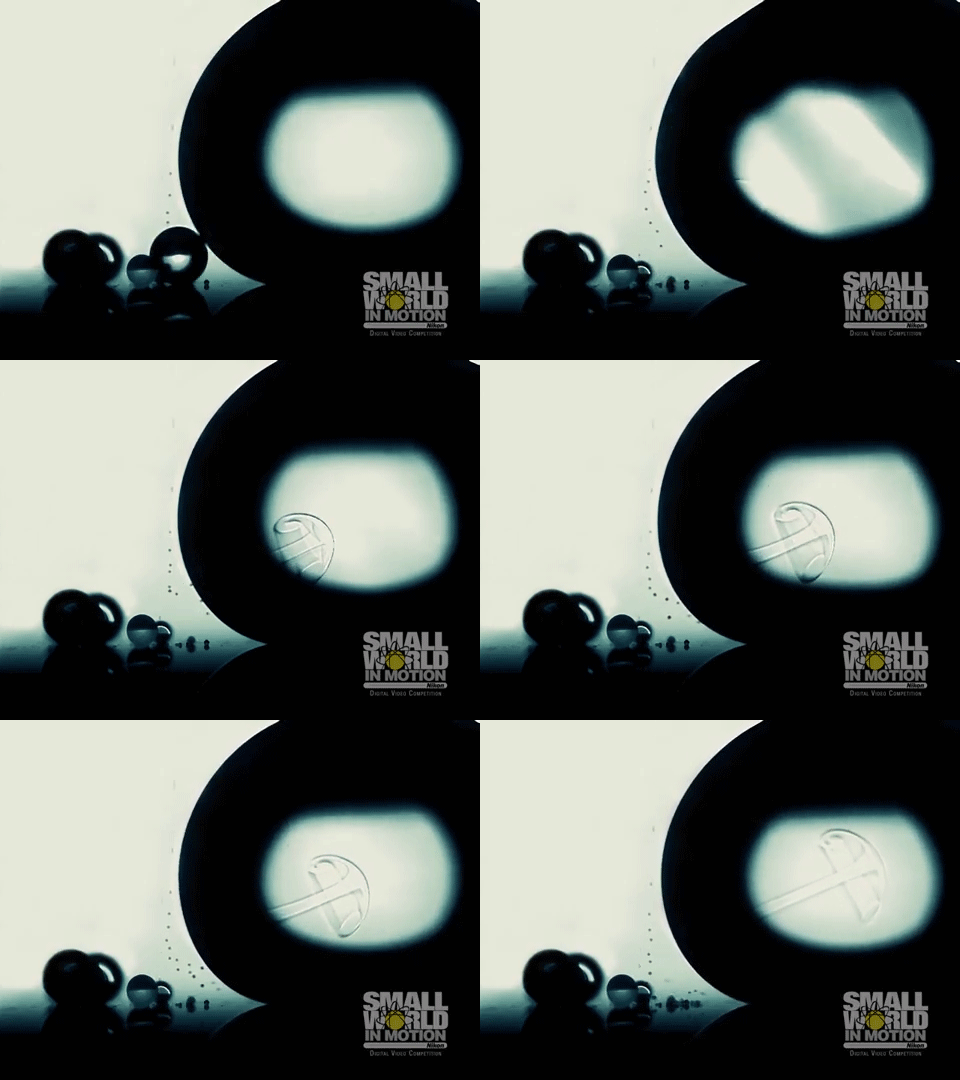
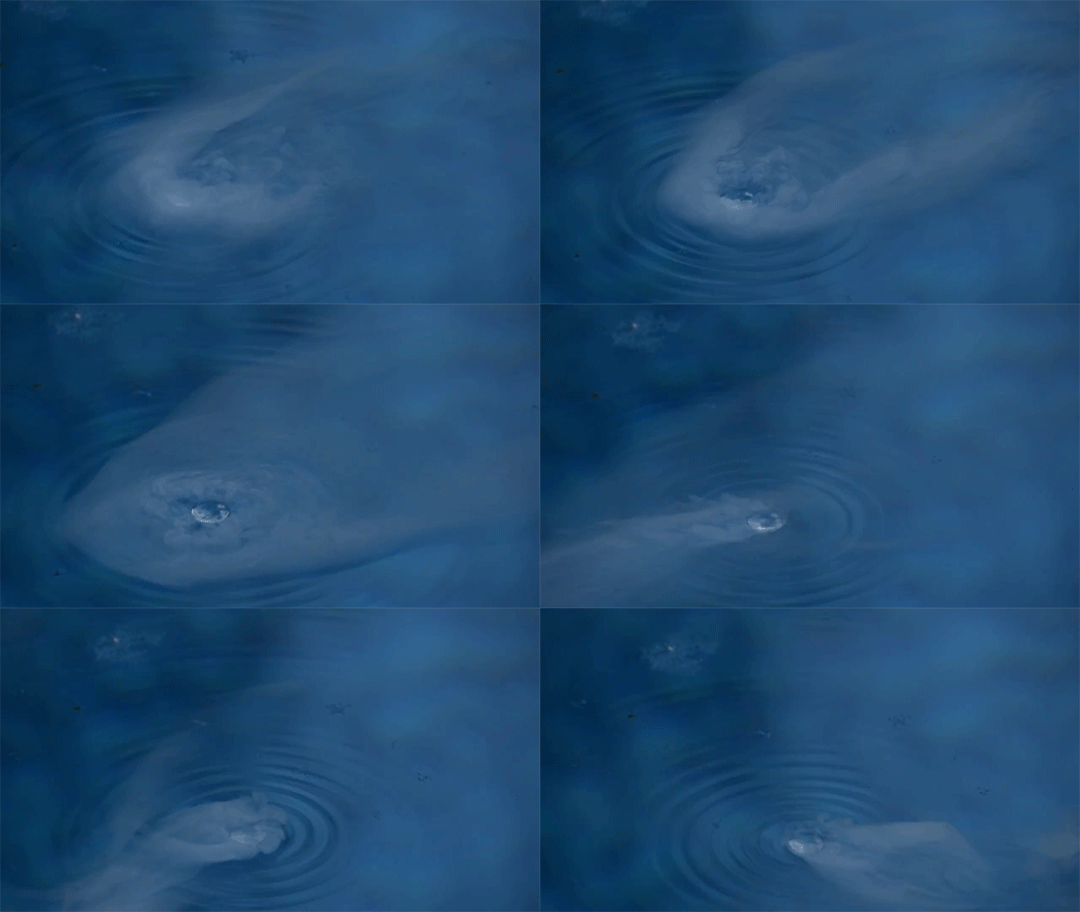
    Popping an Oil Balloon

    Oil and water don’t mix — or at least they won’t without a lot of effort! In this video, we get to admire just how immiscible these fluids are as oil-filled balloons get burst underwater.

    Visually, the two bursts are quite spectacular. In the first image, the initial balloon has a sizeable air bubble at the top, which rises even more rapidly than the buoyant oil, creating a miniature, jelly-fish-like plume that reaches the surface first. The large oil plume follows, behaving similarly to the balloon burst without an added air bubble.

    The last of the oil in both cases comes from a cloud of smaller droplets formed near the bottom of the balloon. Being smaller and less buoyant, these drops take a lot longer to rise to the surface and remain much closer to spherical as they do. I suspect these smaller droplets form due to the forces created by the fast-moving elastic as it tears away. (Video and image credit: Warped Perception)

  • Featured Video Play Icon

    A Hand in Hot Oil

    In this video, Dianna from Physics Girl demonstrates a feat no one should try at home: dipping her hand into boiling oil. To stay safe, she’s relying on the Leidenfrost effect, the tendency of liquids exposed to temperatures well above their boiling point to vaporize and create a layer of gas that insulates against further heat transfer.

    We’ve seen a lot of cool behaviors from Leidenfrost droplets, like surfing on herringbone surfaces, digging through sand, vibrating like a star, and, well, violently exploding. We know a lot about what can happen in this Leidenfrost state, but there are also some major unknowns, like exactly what the Leidenfrost temperature is for many liquids. That’s part of what makes Dianna’s demo so dangerous; the temperature needed to see the Leidenfrost effect — even just for water — varies wildly depending on the experimental set-up. (Video and image credit: Physics Girl)

  • Featured Video Play Icon

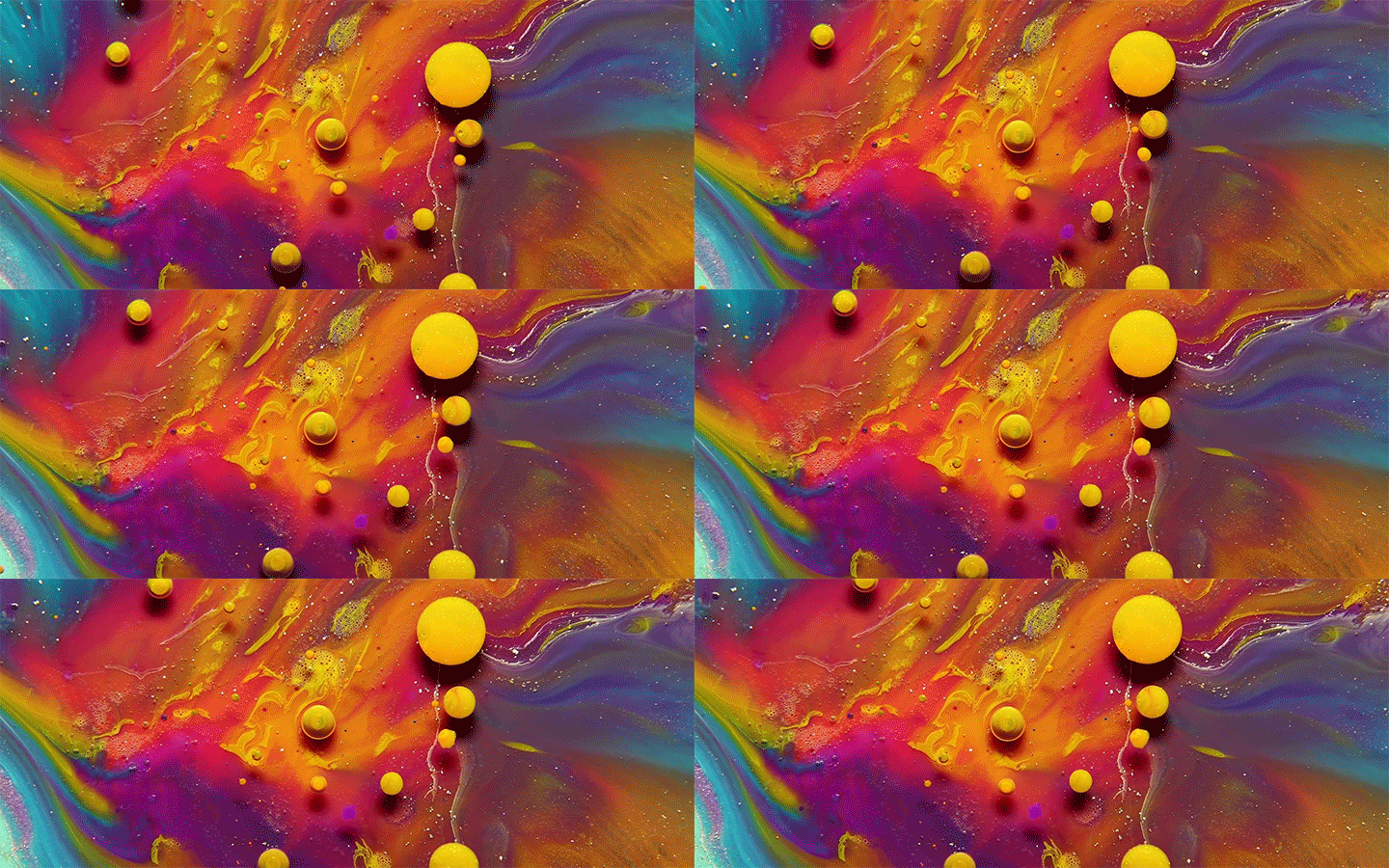
    “Oooh !! My Delicious Coffee”

    I’m not a coffee person, but Thomas Blanchard’s “Oooh !! My Delicious Coffee” manages to capture my favorite part of the beverage – watching cream and coffee mix. From feathery flows driven by surface tension to droplets floating like miniature cappuccinos, the short film features many of the fantastical landscapes we find when staring into a coffee cup. But don’t get too eager to drink it; Blanchard used a combination of coffee, oil, and paint to achieve those effects! (Image and video credit: T. Blanchard)

  • Featured Video Play Icon

    How Well Do Masks Work?

    Many mixed messages have been spread about the efficacy of masks in preventing transmission of COVID-19. Nevertheless, there is good evidence that they help, as discussed in this video from It’s Okay to Be Smart. Much of the video shows schlieren imaging of a (healthy) individual engaging in regular activities – like talking, breathing, and coughing — with and without a cloth mask.

    Now, it’s important to note that what you see in these images is airflow, not the droplets that can carry the virus. However, research has shown that these airflows play a significant role in transporting droplets. It follows that disrupting those airflows can disrupt transmission of diseases passed via droplet. This is one of the key reasons to wear a mask.

    Notice how far jets and plumes of air fly from a maskless person’s mouth and nose. We cannot even observe how far momentum carries that air because the area visualized in this schlieren set-up is smaller than the full distance the air moves! But wearing a mask breaks up that flow structure. It reduces the air’s momentum, and it forces any air that does escape to move in smaller, less efficient structures. Even without considering any filtering effects or the fact that masks catch large droplets coming out of the wearer’s mouth, it’s clear that mask-wearing keeps others nearby safer. (Video and image credit: It’s Okay to Be Smart; references)

  • Shake It!

    Shake It!

    Vibrate a pool of water, and you’ll get Faraday waves, ripple-like excitations that form their own distinctive pattern compared to the driving vibration. But you don’t have to vibrate a pure liquid to see Faraday waves. A recent study observed them in vibrated earthworms!

    Odd as this may sound, the results make sense. When anesthetized (as they were in the experiments), earthworms are essentially a liquid wrapped in an elastic membrane, which is not so different from a droplet held together by surface tension.

    But why vibrate earthworms in the first place? It turns out earthworms are a good model organism for studies of vertebrate neural systems, so observing how vibrations propagate through them can provide insight into how our own nervous systems transmit information. (Image, research, and submission credit: I. Maksymov and A. Pototsky)

  • Featured Video Play Icon

    Ejecting Water from a Smartwatch

    Making electronics water-resistant can be a challenge, but as this Slow Mo Guys video demonstrates, engineers have some clever ways to deal with unwanted liquids. The Apple Watch, for example, uses its speakers to eject water that gets into the watch during immersion. As seen above, the vibration of the speakers ejects most of the water as tiny droplets. Occasionally, surface tension makes this tough and drops instead coalesce on the watch’s surface. To counter this tendency, the speakers sometimes pause, allowing water to collect before they begin vibrating again. (Video and image credit: The Slow Mo Guys)

  • Branching Sparks from Senko-hanabi

    Branching Sparks from Senko-hanabi

    Senko-hanabi are a Japanese firework, somewhat similar to a sparkler. But instead of being driven by burning powder, the senko-hanabi’s sparks come from bursting liquid droplets undergoing an exothermic reaction with air.

    Chemistry aside, the effect is similar to what goes on in soda water. As bubbles within the liquid nucleate and move to the surface, they burst, generating smaller droplets. As the researchers explain, the same cascade carries on in the smaller drops, creating the branching sparks the firework is known for.

    For more slow motion views of the fireworks and sparks, check out the video below or those produced by the researchers. (Image and research credit: C. Inoue et al. and C. Inoue et al.; video credit: NightHawkInLight; submitted by Jason C.)

  • The Vortex Beneath a Drop

    The Vortex Beneath a Drop

    While we’re most used to seeing levitating Leidenfrost droplets on a solid surface, such drops can also form above a liquid bath. In fact, the smoothness of the bath’s surface, combined with mechanisms discussed in a new study, means that drops will levitate at a cooler temperature over a liquid than they will over a solid surface.

    Researchers found that a donut-shaped vortex forms in the bath beneath a levitating droplet, but the direction of the vortex’s circulation is not always the same. For some liquids, the flow moves radially outward from beneath the drop. In this case, researchers found that the dominant force was shear stress caused by the vapor escaping from under the droplet.

    With other droplet liquids, the flow direction instead moved inward, forming a sinking plume beneath the center of the drop. In this situation, researchers found that evaporative cooling dominated. As the liquid beneath the droplet cooled, it became denser and sank. At the same time, the lower temperature changed the bath’s local surface tension, creating the inward surface flow through the Marangoni effect. (Image credit: F. Cavagnon; research credit: B. Sobac et al.)

  • Featured Video Play Icon

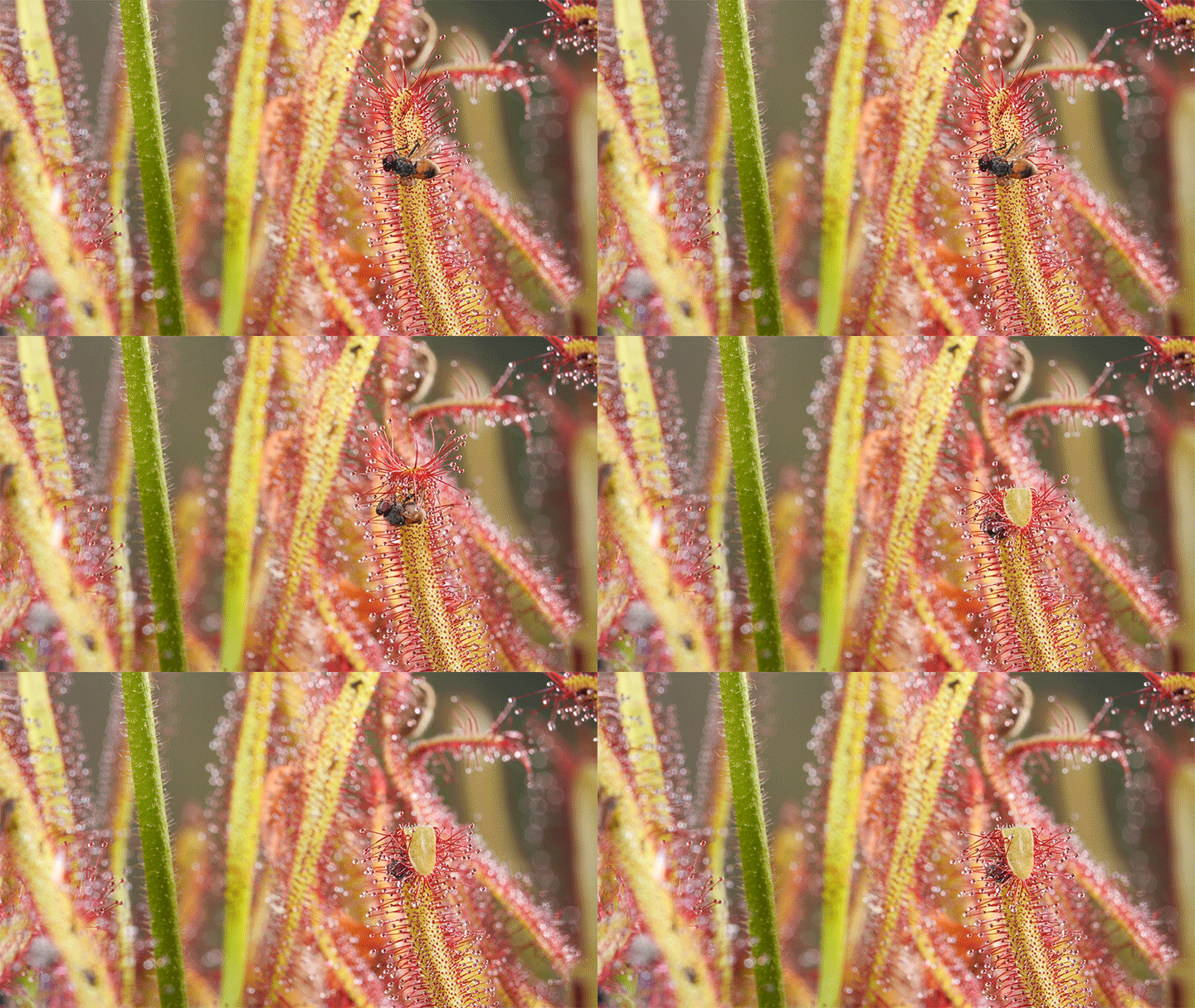
    How Animals Stay Dry in the Rain

    Getting wet can be a problem for many animals. A wet insect could quickly become too heavy to fly, and a wet bird can struggle to stay warm. But these animals have a secret weapon: tiny, multi-scale roughness on their wings, scales, and feathers that helps them shed water. Watch the latest FYFD video to learn how! (Image and video credit: N. Sharp; research credit: S. Kim et al.)

  • Measuring Contaminants in Drops and Bubbles

    Measuring Contaminants in Drops and Bubbles

    Rising bubbles and droplets are common in many chemical and industrial applications. But just a tiny concentration of contaminants on their surface can completely alter their behavior, disrupting coalescence and slowing down chemical reactions.

    Historically, it’s been hard to measure the level of contamination in these some drops and bubbles, but a new study outlines a way to measure these small concentrations by perturbing the drops and watching how they deform. By analyzing how the drop shimmies and shakes, they’re able to measure its surface tension and, ultimately, the concentration of contaminants. (Image credit: S. Sørensen; research credit: B. Lalanne et al.; via APS Physics)