Search results for: “aerodynamics”

  • Paris 2024: Tennis Racket Physics

    Paris 2024: Tennis Racket Physics

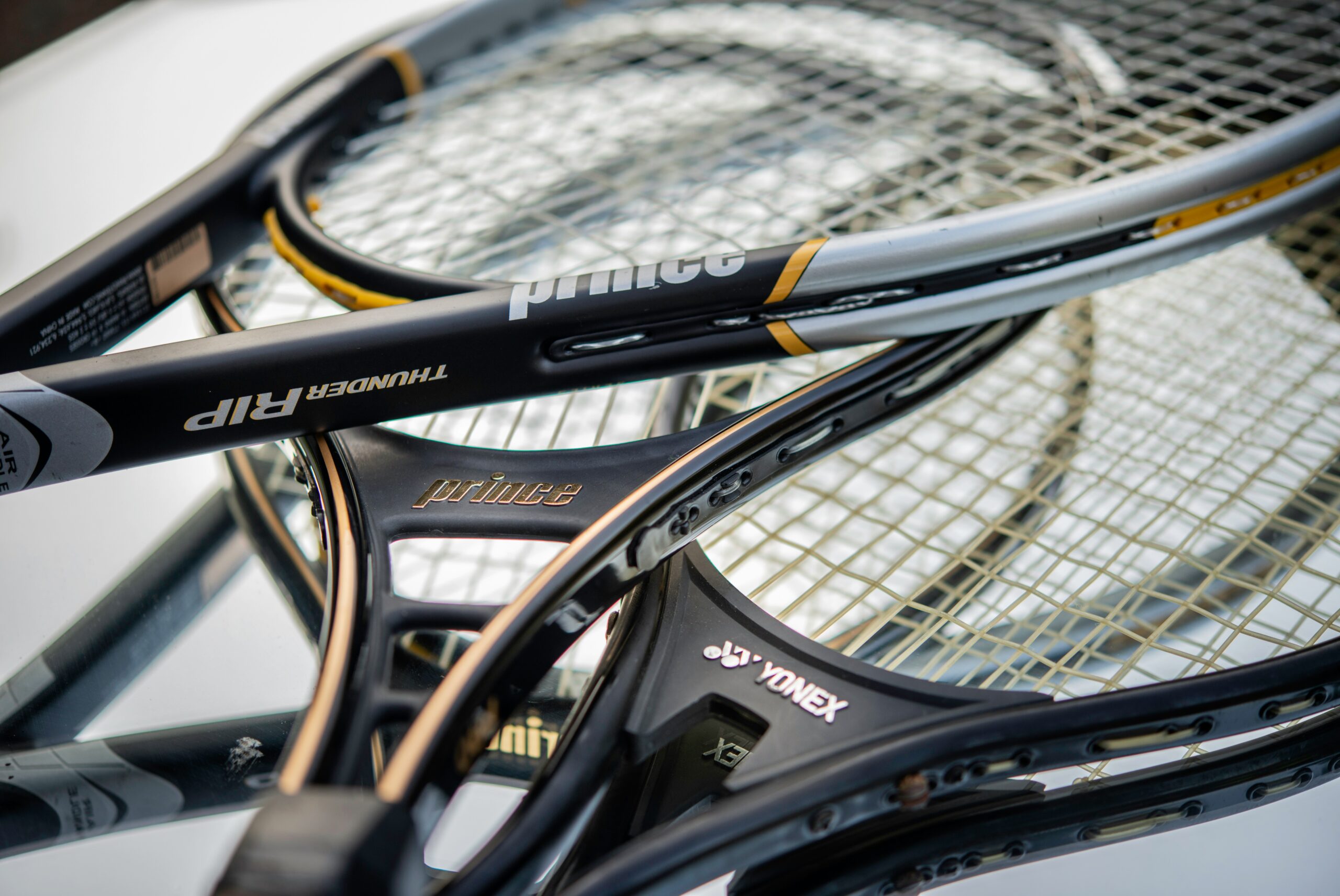
    Like many sports that feature balls, spin plays a big role in tennis. By imparting a topspin or backspin to a tennis ball, players can alter the ball’s trajectory after a bounce and, using the Magnus effect to alter lift around the ball, change how it travels through the air. For example, a ball hit with backspin can dive just after the net, forcing an opponent to scramble after it. How much spin a player can impart depends on the speed of the racket’s head. Competitive rackets are carefully engineered — in terms of weight, string tension, and frame stiffness — to translate the kinetic energy of a player’s swing into the ball. But aerodynamics also play a role: new rackets designed to minimize drag hit the market 15-20 years ago, promising drag reductions up to 24% compared to previous rackets. That gives a player more swing speed and higher spins at a lower energy cost. (Image credit: C. Costello)

    Related topics: The Magnus effect in table tennis and in golf; the reverse Magnus effect

    Check out more of our ongoing and past Olympic coverage here.

  • Paris 2024: Beach Versus Indoor Volleyballs

    Paris 2024: Beach Versus Indoor Volleyballs

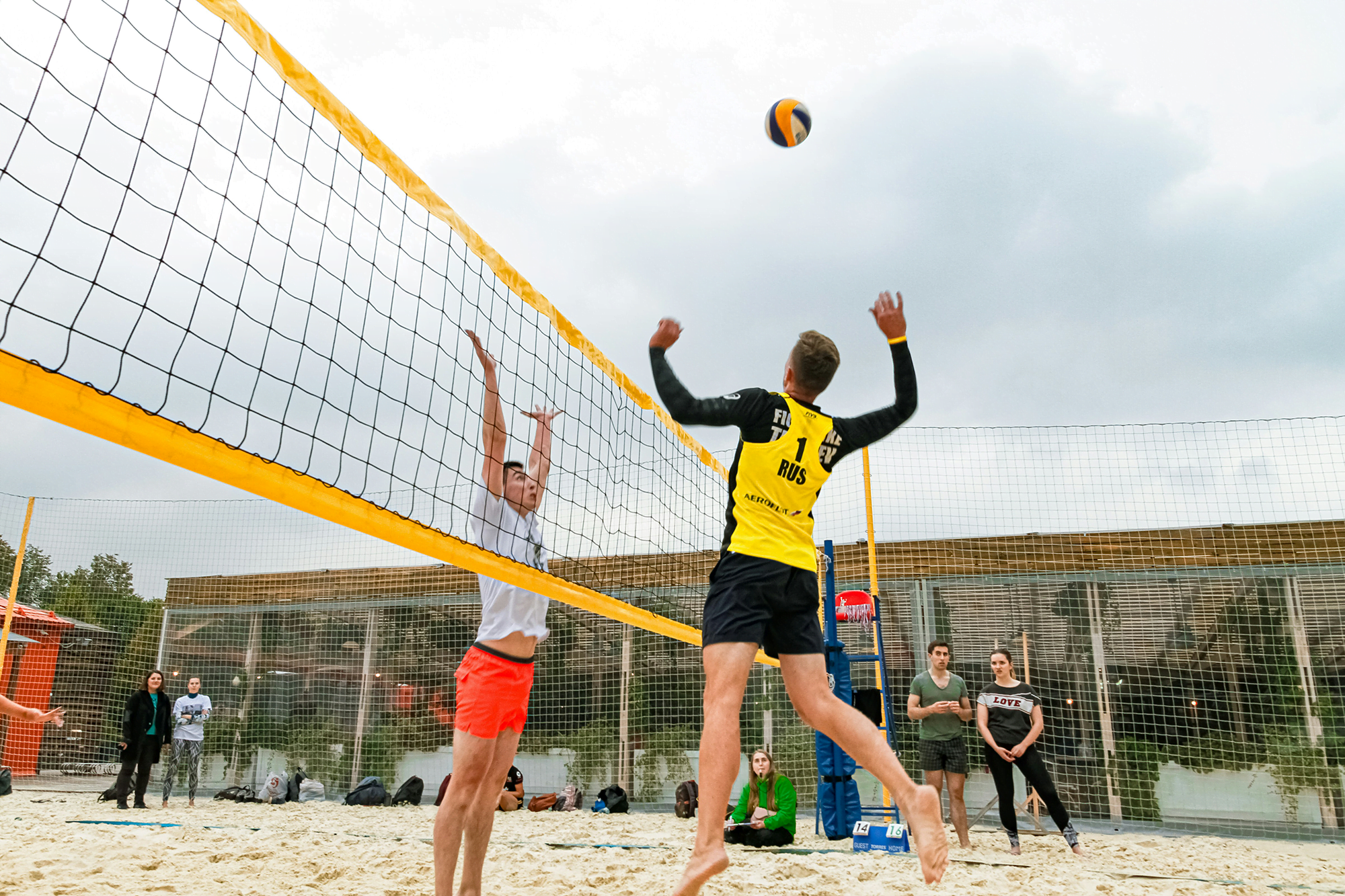
    Some of the differences between beach volleyball and indoor volleyball are obvious, like the number of players allowed — two versus six — and the courts — a smaller sand court versus a bigger indoor court. But there are subtle and significant differences in the balls themselves. Both beach and indoor volleyballs used for competition are required to weigh between 260 and 280 grams, but the expected diameter of the balls differs by about 1 centimeter, with beach volleyballs coming out slightly larger. The balls differ in their surface roughness, too, with indoor models being smoother, even before in-game wear.

    Although these differences seem minor, they can make a significant impact in the game. Volleyball regulations don’t specify a ball’s expected surface roughness or how many panels they should be made with. As in football, these seemingly cosmetic changes can strongly affect airflow around the ball and change its trajectory. Regulations require that all balls used in a given match be uniform, but that still requires athletes to potentially adjust to the behavior of a new ball at each competition. (Image credits: I. Garifullin, C. Chaurasia, C. Oskay, and M. Teirlinck)

    Related topics: How smoothness and panel design affect a football, volleyball aerodynamics, and vortex generators on cycling skinsuits

    For more ongoing and past Olympic coverage, click here.

  • Paris 2024: Bouncing and Spinning

    Paris 2024: Bouncing and Spinning

    Spin, or the lack thereof, plays a major role in many sports — including tennis, golf, football, baseball, volleyball, and table tennis — because it affects whether flow stays attached around a ball, as well as how much lift or side force a ball gets. A ball’s spin doesn’t stay constant, however. During flight, a ball’s spin decays at a rate proportional to its initial spin and velocity. Researchers have found that a ball’s moment of inertia, flow regime, and surface roughness all affect that decay, but which factor is the most significant varies by ball and by sport.

    Whether a ball bounces while spinning also matters. For compliant balls on a non-compliant surface — think tennis balls on a court — a bounce can actually change how much a ball spins. During impact, a tennis ball can: slide, decreasing its tangential velocity while increasing its topspin; roll, where the ball’s tangential velocity matches the tangential velocity of the surface; or over-spin, where the ball spins faster than it rolls. For a given impact angle and velocity, researchers found that stiffer and/or lighter balls were more likely to over-spin. Within tennis’s allowable range of ball stiffness and mass, manufacturers could create tennis balls that over-spin far more than conventional ones, creating another opportunity for deceptive tactics in the sport. (Image credit: J. Calabrese; research credit: T. Allen et al.)

    Related topics: How flow separates from a surface, and why turbulence is sometimes preferable

    Find all of our Olympics coverage — past and ongoing — here and every sports post here.

  • Featured Video Play Icon

    Wasps in Flight

    Personally, I’ve had some bad encounters with wasps, but Dr. Adrian Smith of Ant Lab feels the insects receive short shrift. In this video, he shows many species in the order — most of which are venomless and stingless. In high-speed video, their flight is mesmerizing. Wasps have separate fore- and hindwings, but during flight, they move them like a single wing. Velcro-like hooks on the edges of the wings hold the two together.

    From a mechanics perspective, I find this fascinating. Aerodynamically, I’d expect much greater benefits from one large wing over two small ones, but outside of flight, separate wings are more easily tucked away. It’s so neat that wasps have a way to enjoy the benefits of both, enabled by a simple but secure line of hooks. (Video and image credit: Ant Lab/A. Smith)

  • Lasers and Soap Films

    Lasers and Soap Films

    Soap films are a great system for visualizing fluid flows. Researchers use them to look at flags, fish schooling and drafting, and even wind turbines. In this work, researchers explore the soap film’s reaction to lasers. When surfactant concentrations in the soap film are low, laser pulses create shock waves (above) in the film that resemble those seen in aerodynamics. The laser raises the temperature at its point of impact, lowering the local surface tension. That temperature difference triggers a Marangoni flow that draws the heated fluid outward. The low surfactant concentration gives the soap film relatively high elasticity, and that allows the shock waves to form.

    In contrast, a soap film with a high concentration of surfactants has relatively little elasticity. In these films (below), the laser creates a mark that stays visible on the flowing soap film. This “engraving” technique could be used to visualize flow in the soap film without using tracer particles. (Image and research credit: Y. Zhao and H. Xu)

    When surfactant concentrations are high, a laser pulse "engraves" spots onto a flowing soap film. Shown in terms of interference (left) and Schlieren (right) imaging.
    When surfactant concentrations are high, a laser pulse “engraves” spots onto a flowing soap film. Shown in terms of interference (left) and Schlieren (right) imaging.
  • Open Call for the Traveling Gallery of Fluid Motion

    Open Call for the Traveling Gallery of Fluid Motion

    This year’s Traveling Gallery of Fluid Motion will be hosted in Salt Lake City. There’s currently an open call to scientists and artists for submissions inspired by Leonardo Da Vinci. From the organizer:

    This particular exhibition aims to showcase the historical interplay between art and science, with Da Vinci serving as a guiding luminary whose multifaceted genius continues to inspire innovation and creativity.

    Artists and scientists from diverse backgrounds and disciplines are invited to submit their works, whether new creations or existing pieces, that delve into the fascinating themes of fluid dynamics, aerodynamics, and flight. The exhibition will take place at The Leonardo Museum in Salt Lake City, Utah, during the Fall/Winter season of 2024.

    We welcome submissions in any medium, size, or stage of production, including, but not limited to video, photography, painting, 3D printed models, sculpture, installation, mixed media, and beyond. Although not a requirement, artists and scientists are encouraged to explore the intersections between art and science by drawing inspiration from Da Vinci’s legacy while infusing their unique perspectives and interpretations.

    Submission Deadline: April 1, 2024

    You can find out more on Instagram and apply for consideration here. (Image credit: L. Da Vinci; submitted by Azar P.)

  • Stabilizing Paper Airplanes

    Stabilizing Paper Airplanes

    Making a good paper airplane is tough. Drop a simple sheet of paper and it will tumble and flip its way to the floor instead of gliding. The folds of a proper paper airplane add weight in just the right spots to stabilize its flight and let it glide smoothly through the air. To better understand what makes paper fly, researchers looked at how sheets of paper flew when weighted (with metallic tape) in different spots.

    Trajectories of pieces of paper with different weighting.
    Trajectories of pieces of paper with different weighting.

    An unweighted sheet of paper tumbled end-over-end. Shifting the center-of-mass too far forward or backwards also resulted in tumbles and nosedives. But when the weighting placed the center of mass between these two extremes, there was a sweet spot where the paper glided smoothly. In this situation, the aerodynamic forces on the paper could correct for changes in flight angle; if the paper tilted too far upward, the forces pushed it back down — and vice versa. This ability of the thin wing to self-stabilize is different than most large-scale aircraft, which need tails and other structures to provide stability to the main wing. (Image credit: paper airplane – K. Eliason, paper trajectories – H. Li et al.; research credit: H. Li et al.; via Ars Technica; submitted by Kam-Yung Soh)

  • Measuring Drag

    Measuring Drag

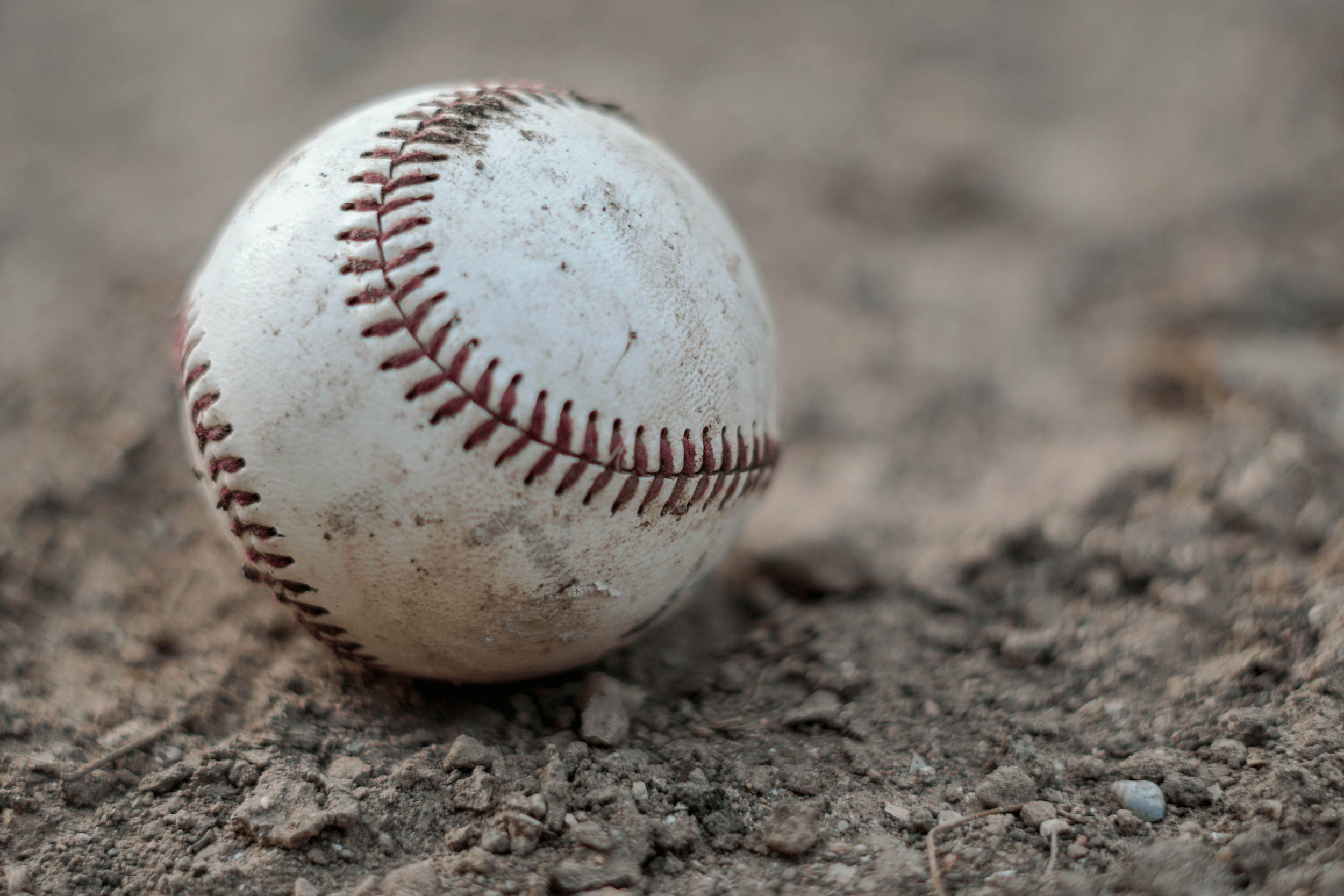
    After a noticeable rise in the prevalence of home runs beginning in 2015, Major League Baseball commissioned a report that found the increase was caused by a small 3% reduction in drag on the league’s baseballs. When such small differences have a big effect on the game, it’s important to be able to measure a baseball’s drag in flight accurately.

    In the past, that measurement has often been done in a wind tunnel, but the mounting mechanisms used there result in drag measurements that are a little higher than what’s seen from video tracking in actual games. Now researchers have developed a new free-flight method for measuring a baseball’s drag. The drag measurements from their new method are lower than those for wind-tunnel-mounted baseballs and in better agreement with video-based methods. The authors’ method should be adaptable to other sports like cricket and tennis, which will hopefully provide new insight into the subtleties of their aerodynamics. (Image credit: T. Park; research credit: L. Smith and A. Sciacchitano; via Ars Technica; submitted by Kam-Yung Soh)

  • Beijing 2022: Ski Jumping

    Beijing 2022: Ski Jumping

    In ski jumping, aerodynamics are paramount. Each jump consists of four segments: the in-run, take-off, flight, and landing. Of these, aerodynamics dominates in the in-run — where jumpers streamline themselves to minimize drag and maximize their take-off speed — and in flight. During flight, ski jumpers spread their skis in a V-shape and lift their arms to the sides to turn themselves into a glider. Their goal is to maximize their lift-to-drag ratio, so that the air keeps them aloft as long as possible. Because of the short flight time and high risk of taking jump after jump, many elite ski jumpers use wind tunnel time to practice and hone their flight positioning, as seen in the video below.

    Weather also plays a significant role in ski jumping; it’s one of the few sports where a headwind is an advantage to athletes. To try to adjust for wind effects, scoring for the sport uses a wind factor. (Image credit: T. Trapani; video credit: NBC News)

  • Tokyo 2020: Kasai Canoe Slalom Course

    Tokyo 2020: Kasai Canoe Slalom Course

    The Kasai Canoe Slalom Course is Japan’s first man-made whitewater venue. To test the design and its multiple configurations, engineers at CTU in Prague built this large-scale hydraulic model. Check out the video below to see it under construction and in action.

    The course is adaptable so that it can be used for high-level competitions like the Olympics, then reconfigured for recreational use. You can even see what it’s like to run part of the course in a multi-person raft, thanks to a miniature, GoPro-equipped boat! (Image credit: top – M. Trizuliak, others – CTU Prague; video credit: CTU Prague)

    Missed our previous Olympics coverage? Check out how sailboats outrace the wind, the future of swim tech, and how surface roughness affects volleyball aerodynamics.