Schlieren photography is actually a pretty commonly used system in high-speed experimental aerodynamics. A typical schlieren system will shine a collimated light source on the target (a wind tunnel test section or, above, a candle), bounce that light off a mirror, block half the light with a knife-edge at the focal point, and then record the subsequent images with a camera (high-speed or otherwise). The density of air is closely related to its index of refraction, so light that hits air of a different density will be bent more or less than a neighboring ray. This uneven bending of the light rays due to density gradients is what causes the light and dark areas on the schlieren images. Since the density of air changes drastically across a shock wave, the schlieren system is perfect for visualizing shock waves and has, in fact, been used for that purpose since 1864!
Search results for: “aerodynamics”

Fluidized Sand
What’s shown in this video are some pretty spectacular demonstrations of fluidization, where a gas is introduced at the bottom of a bed of granular particles–like sand. At the critical gas velocity, the aerodynamic forces exerted on each particle by the gas will balance the gravitational force on the particle and it will become suspended. All of a sudden, the macroscopic behavior of the solid particles will be like that of a fluid; you can even make it “boil”!

How to Grow Straight Icicles
New research suggests that icicles grow straighter when exposed to moving air while exposure to still air can cause icicles to sprout at their tips. To grow icicles, the researchers built a refrigerated box that dripped water from the top while the growing icicle rotated. Understanding ice growth is important for flight aerodynamics and icing on airplane wings. For videos and more on icicle growth, see the article at Wired Science. #
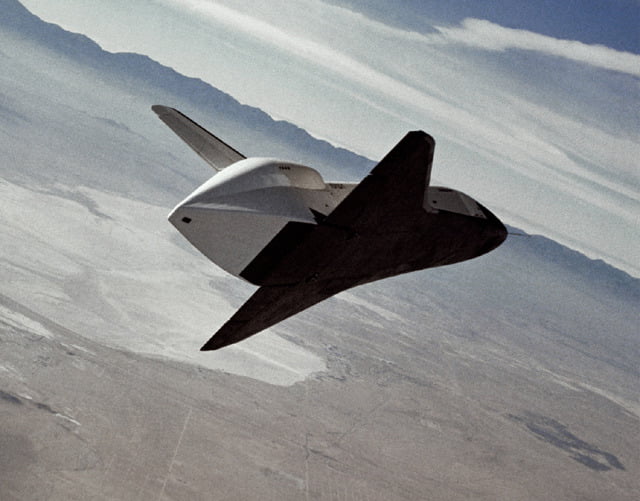
Happy Anniversary, Enterprise!
Wind tunnels are great, but there’s nothing like a flight test to learn about the aerodynamics of a new vehicle. Today in 1977, the space shuttle prototype Enterprise flew on its own for the first time. Enterprise was built purely to test the shuttle’s aerodynamic behavior during gliding and landing. Check out this video of one of Enterprise’s gliding and landing tests.

Automotive Wind Tunnels
Wind tunnels have been a staple of aerodynamics since the Wright brothers built one to help them test wing shapes for their gliders and airplanes. The GM Aerodynamics Laboratory’s much larger wind tunnel, pictured above, tests full-sized vehicles’ aerodynamics. It is the largest automotive wind tunnel and has been in operation since August 1980. GM estimates that it has cut the coefficient of drag on vehicles by approximately 25% in that time. The tunnel can reach speeds near 125 mph, as one hapless reporter discovered firsthand. (Submitted by @Vinnchan)
