Category: Research

  • Sliding Along

    Sliding Along

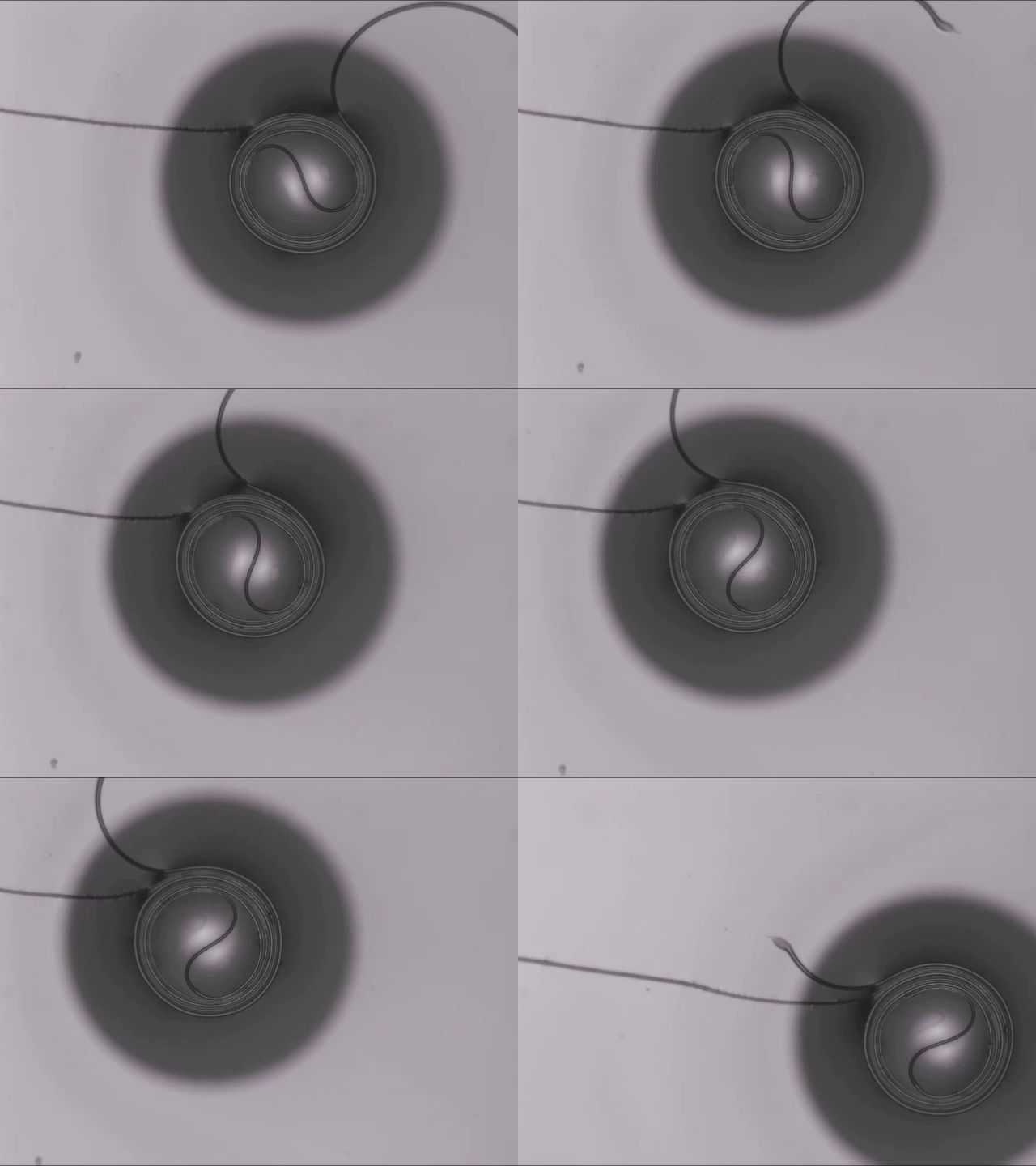
    Robust, self-cleaning surfaces are a holy grail for many engineers, but they’re tough to achieve. One necessary ingredient for a self-cleaning surface is the ability to shed water, which is why superhydrophobic coatings and surface treatments are popular. Here, researchers prompt their droplets to move at speeds up to 16 cm/s by dropping them onto a thin layer of heated oil.

    Longtime readers will no doubt be reminded of self-propelling Leidenfrost drops, but this situation is not quite the same. In general, the oil layer suppresses the Leidenfrost effect. Instead, the oil heats the drop, evaporating its vapor. A bubble of vapor will nucleate at a random location in the droplet and eject itself, pushing the drop in the opposite direction. Because of the disruption caused by that ejection, new bubbles will preferentially form at the same spot, providing an ongoing supply of vapor that keeps the drop sliding in the same direction. It’s like a miniature rocket zooming along the oil film! (Image and research credit: V. Leon and K. Varanasi; via APS Physics)

  • Probing Saturn’s Interior

    Probing Saturn’s Interior

    Saturn’s rings are one of the most iconic sights in our solar system, and scientists are using them to learn more about the planet they surround. Until recently, scientists believed that gas giants like Saturn and Jupiter have dense, rocky cores buried beneath their gassy atmospheres. But a new study of Saturn’s rings suggests that Saturn’s core is far larger and more fluid than assumed.

    When the interior of Saturn wobbles, it causes gravitational shifts that affect the material making up its rings. By studying disturbances in the ring system — a technique known as ring seismology — researchers can deduce what motions took place inside the planet to cause the changes in the rings.

    Using data from the Cassini spacecraft, the authors determined that Saturn’s core likely spreads to nearly 60% of its radius, and, rather than being dense and rocky, the core is a relatively fluid mixture of ice, rock, and metallic fluids. The core diffuses gradually into the gaseous atmosphere, and it’s stably stratified against convection, so its wobbles are quite small for the planet’s size. (Image credit: rings – NASA; illustration – Caltech/R. Hurt; research credit: C. Mankovich and J. Fuller; via Gizmodo)

    Illustration of Saturn's interior showing a large, wobbly core composed of a mixture of ice, rock and metallic fluid.
  • Taking A Turn

    Taking A Turn

    Water droplets immersed in a mixture of oil and surfactants will move about, propelled by the Marangoni effect. Surfactant molecules congregate along the interface between the water and oil, but they do not do so uniformly. This uneven grouping causes variations in the surface tension, which in turn creates flows inside the droplet from areas of low surface tension to ones with higher surface tension. Those internal flows then dictate how the droplet as a whole moves.

    Researchers found that droplet trajectories in these systems depend on the droplet’s size. Small droplets move in relatively straight lines, whereas larger droplets take highly curved paths. The difference comes from the way surfactants get distributed around the drop’s interface. Larger drops are more sensitive to shifts in surfactant location, making them more prone to take changeable, curving paths. (Image credits: top – P. Godfrey, others – S. Suda et al.; research credit: S. Suda et al.; via APS Physics)

  • Stingray Eyes

    Stingray Eyes

    With their flexible, flattened shape, rays are some of the most efficient swimmers in the ocean. But, at first glance, it seems as if their protruding eyes and mouth would interfere with that streamlining. A new study uses computational fluid dynamics to tackle the effects of these protrusions on stingray hydrodynamics.

    With their digital stingrays, the team found that the animal’s eyes and mouth created vortices that accelerated flow over the front of the ray and increased the pressure difference across its top and bottom surfaces. The result was better thrust and the ability to cruise at higher speeds. Overall, the ray’s eyes and mouth increased its hydrodynamic efficiency by more than 20.5% and 10.6%, respectively. The lesson here: looks can be deceiving when it comes to hydrodynamics! (Image credit: D. Clode; research credit: Q. Mao et al.)

  • Twisting Free

    Twisting Free

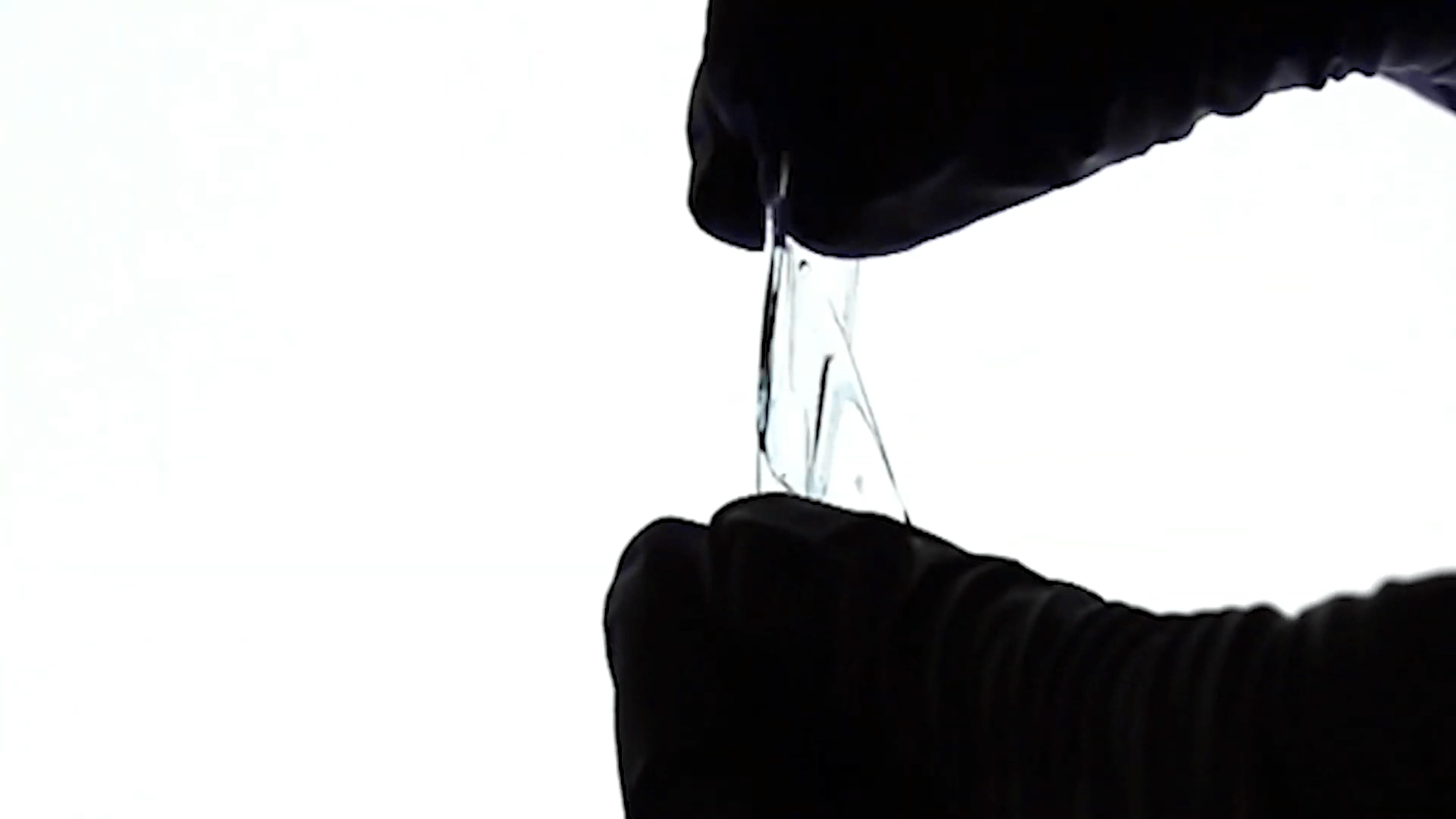
    Anyone who’s dealt with hot glue guns is familiar with the long, thin tails of glue they leave behind. 3D printers suffer from a similar problem with the nozzle pulls away from viscoelastic materials like plastics and polymers. Little tails, like the ones seen above, are left behind on the part and must be cleaned away by hand. The source of the trouble is the elasticity of the fluid. Pulling on these liquids stretches them into long thin strands as the molecules inside the fluid resist. But researchers have found an alternate method to break the liquid cleanly: twisting.

    When a viscoelastic liquid bridge gets twisted, the liquid undergoes what’s known as edge fracture, an elastic effect that creates an indentation that forces its way inward and breaks the bridge’s connection cleanly. Since the technique only requires spinning the 3D printer’s nozzle when detaching, it should be relatively easy for printer manufacturers to implement! (Image credit: 3D-print – T. Claes, illustration – H. Hill/Physics Today, animation – S. Chan et al.; research credit: S. Chan et al.; via Physics Today)

  • Animals Lapping

    Animals Lapping

    Without full cheeks, cats, dogs, and many other animals cannot use suction to drink. Instead, these animals press their tongue against a fluid and lift it rapidly to draw up a column of liquid. They then close their mouth on the liquid before it breaks up and falls down. (Cats are a bit neater about it, but as the high-speed images above show, dogs use the same method.)

    A new study takes a look at the mathematics behind this feat, specifically how long it takes for the liquid column to break up. Normally, we describe that problem using the Plateau-Rayleigh instability, but in its usual form, the PR instability doesn’t account for the kind of acceleration drinking animals apply to the fluid. This new study modifies the equations to account for acceleration and finds that the predicted time it takes for breakup is consistent with the timing of animals closing their mouths on the water. In other words, cats and dogs are likely timing their lapping to maximize the amount of water they catch with each bite. (Image credits: top – C. van Oijen, others – S. Jung et al. 1, 2; research credit: S. Jung)

  • Why Creases Don’t Disappear

    Why Creases Don’t Disappear

    Flex your fingers and you’ll see your skin fold into well-defined creases. Many soft solids (including old apples) fold this way, and like your skin, the creases never fully disappear, even when the stress is removed. A recent study finds that surface tension and contact-line-pinning are critical to the irreversibility of these creases.

    The authors studied sticky polymer gel layers under a confocal microscope as the gel folded. In doing so, they found that surface tension dictates the microscopic geometry of a fold, causing the two sides of a surface to touch. They also found that completely unfolding a creased surface requires more energy than folding it in the first place did because the folded surfaces adhere to one another.

    When unfolded, the crease behaves somewhat like a droplet on a rough surface. Such droplets move in fits; their contact line stays pinned to the rough microscopic peaks of the surface until there’s enough energy to overcome that attachment and the contact line jumps to another position. Similarly, a creased surface cannot simply unfold smoothly. Adhesion ensures that part of the crease remains, serving as a starting point for the next fold-unfold cycle. (Image credit: C. Rainer; research credit: M. van Limbeek et al.; via APS Physics; submitted by Kam-Yung Soh)

  • Spiral Shark Intestines

    Spiral Shark Intestines

    We’ve seen previously just how fluid dynamically impressive sharks are on the outside, but today’s study demonstrates that they’re just as incredible on the inside. Researchers used CT scans of more than 20 shark species to examine the structure of their intestines. Sharks have spiral intestines that come in four different varieties; two of those types look like a stacked series of funnels (either pointing upstream or downstream). These funnel-filled spirals, the researchers found, are incredibly good at creating uni-directional flow without any moving parts, much like a Tesla valve does. The spiral structure also seems to slow down digestion, which may factor into the shark’s ability to go long periods between meals. Incredibly, the fossil record indicates that spiral intestines — in some form — evolved in sharks about 450 million years ago — before mammals even existed! Clearly we engineers are way behind sharks when it comes to controlling flows!

    Animation of a 3D scan of a shark's intestine, showing the spiral internal structure.

    (Image credit: top – D. Torobekov, scan – S. Leigh; research credit: S. Leigh et al.; via NYTimes; submitted by Kam-Yung Soh)

  • Megaripples Beneath Louisiana

    Megaripples Beneath Louisiana

    Approximately 66 million years ago, a 10-km asteroid struck our planet near Chicxulub on the Yucatán Peninsula. The impact was globally catastrophic, causing tsunamis, wildfires, earthquakes, and so much atmosphere-clogging sediment that about 75% of all species on the planet — including the non-avian dinosaurs — died out. A new study points to another remnant of the impact: giant ripples buried in the sediment of Louisiana.

    Seismic data shows giant ripples left behind by the tsunami following the Chicxulub impact.

    Using seismic data collected by petroleum companies, the researchers describe the ripples as approximately 16 meters tall with a spacing around 600 meters, making them the largest known ripples on the planet. Currently, they are buried about 1500 meters underground, just below a layer of fine debris associated with the impact. The ripples show no evidence of erosion from storms or wind, leading the authors to conclude that they were deposited by an impact-associated tsunami and remained unaffected by smaller natural disasters before their burial. It’s very likely, according to the authors, that many other such megaripples exist, hidden away in proprietary petroleum data sets. (Image credits: top – D. Davis/SWRI, ripples – G. Kinsland et al.; research credit: G. Kinsland et al.; via Gizmodo)

  • Hydrodynamic Spin Lattices

    Hydrodynamic Spin Lattices

    Droplets bouncing on a fluid bath display some strikingly quantum-like behaviors thanks to the interactions between a drop and its guiding surface wave. Here, researchers use submerged wells beneath the drop to confine each droplet into a space where it bounces in a clockwise or anticlockwise trajectory.

    (a) An illustration of the experimental set-up and (b) top-down image of the spin lattice.

    With an array of these wells, the droplets form a lattice. Each drop remains in its well, but its wave travels beyond and interacts with nearby wells. Through this interaction, the researchers found that lattices tended to synchronize, similar to the way groups of fireflies will synchronize their flashing. This sort of behavior is also observed in quantum systems, and the researchers hope that further studying their bouncing droplets will give insight into quantum spin systems and their behaviors. (Image and research credit: P. Saenz et al.; via Nature; submitted by Kam-Yung Soh)