Beluga whales and dolphins in captivity have taken to blowing bubble rings to entertain themselves. You can learn how to do the same in the pool. #
Category: Phenomena

Droplet Impact
As a droplet impacts a pool, it deforms the surface before rebounding in a Worthington jet and releasing secondary droplets as ejecta. Although we witness this act dozens of times a day, seeing it at 5,000 fps drastically alters one’s perspective.

Cloud Wakes Off Islands
This satellite image shows the cloud wakes of two small, volcanic islands off the coast of Chile. The disruption in airflow caused by the islands results in 100 km long cloud-free V-shaped wakes, even though the islands themselves are barely visible in the image. Such variation in the size of the obstacle compared to its effect is not unusual in fluid mechanics, but the scale, in this case, is impressive. #
Ground Effect Vehicles
Ground effect vehicles (a.k.a. wing-in-ground-effect vehicles) rely on their proximity to a flat surface to inhibit the wingtip vortices that create lift-induced drag. This effectively increases the lifting capabilities of the vehicle in comparison to regular flight, but only so long as the vehicle remains close enough to the ground. This video features many model gliders that rely on ground effect.

River Jumps

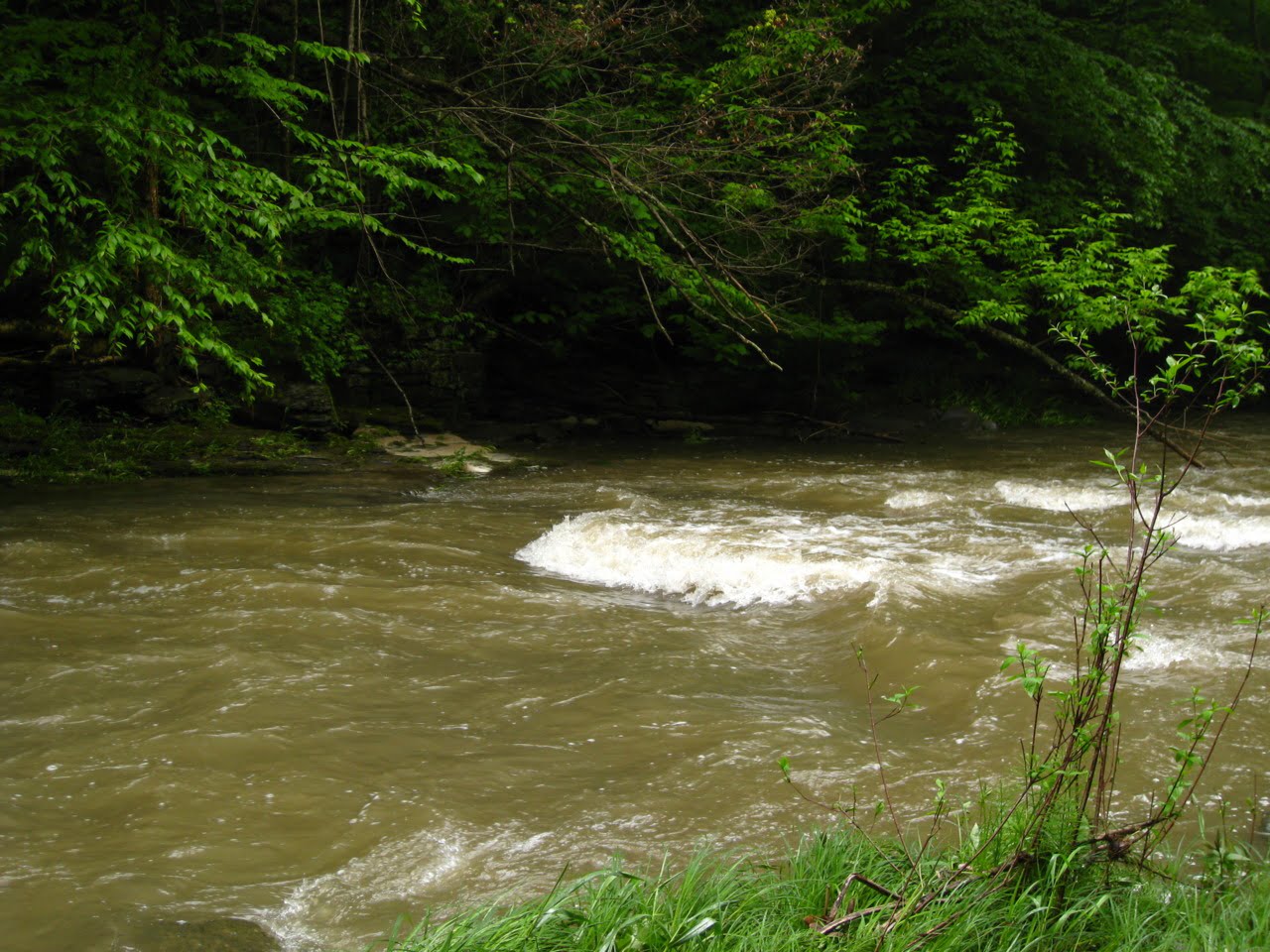
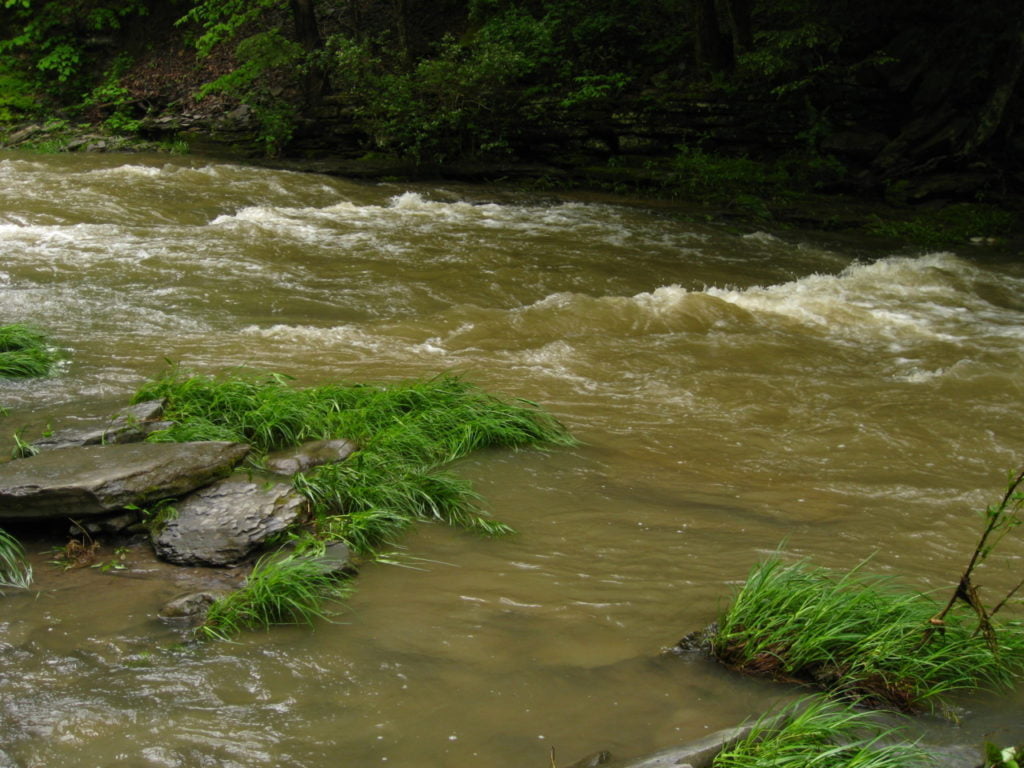
Hydraulic jumps occur when a high velocity liquid runs into an area of low velocity liquid. The faster moving liquid decelerates rapidly and increases in height, effectively trading kinetic energy for potential energy. The phenomenon is frequently observed in open channel flow, like in spillways or along rivers, as in the photos above. In nature, the hydraulic jump will often be laminar upstream and turbulent downstream. #

Brazilian Barrier Islands
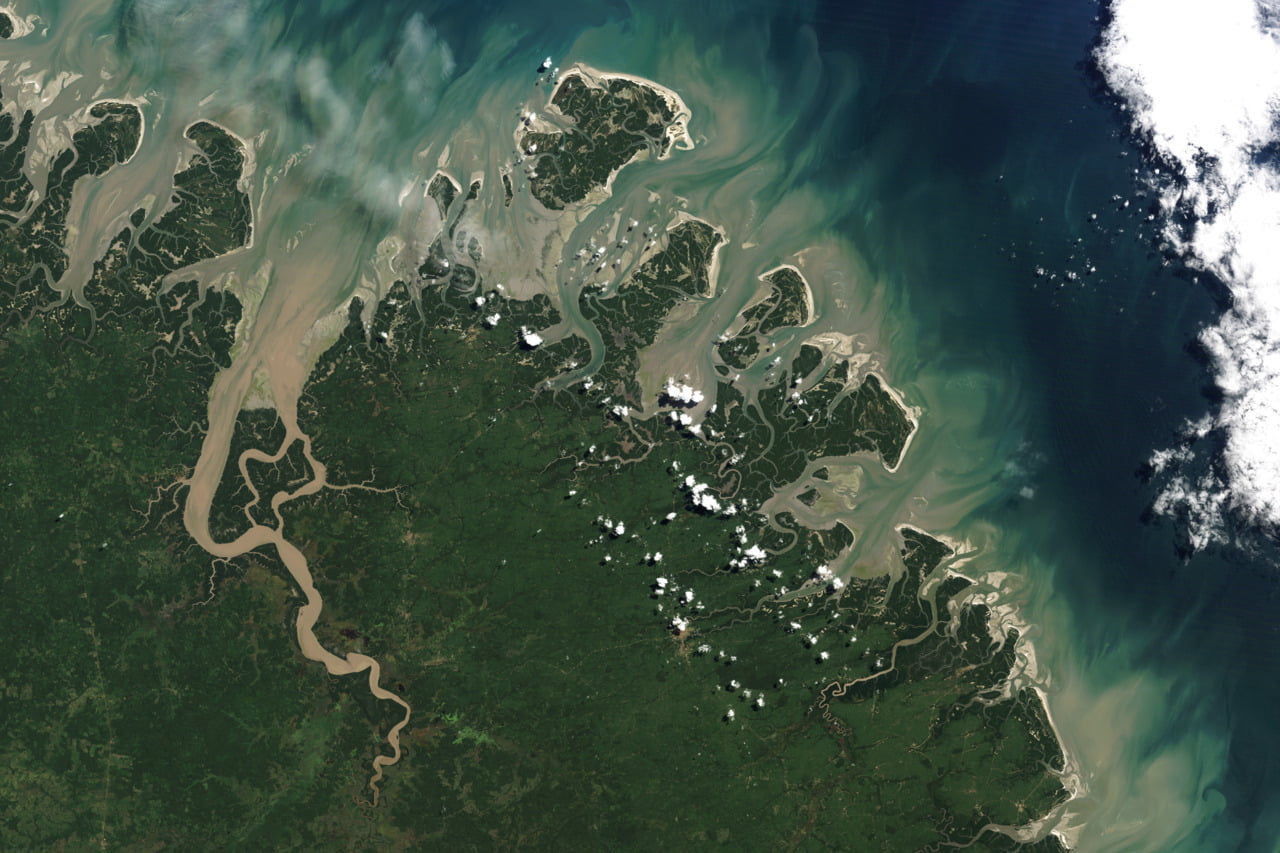
Barrier islands are in a constant state of flux due to the currents, tides, and winds that surround and shape them. This satellite image of islands off the Brazilian coast shows meandering waterways and the mixing of sediment from the land into the sea. Often, secondary flows are responsible for shaping of these sorts of geographic features. #
Landslide
Landslides, despite their inclusion of solid materials, function essentially as gravity-driven fluid flows. This timelapse video shows a recent earthflow in Wyoming near the Snake River. Rapid snowmelt and heavy rainfall combined to cause a seven day landslide over the highway and into the river. # (via Bad Astronomy)

Space Shuttle Flow Viz
When a space shuttle lands, a lucky few will hear twin sonic booms as it passes overhead. The double boom occurs due to the shock waves from in front of the shuttle and just behind it passing the observer on the ground. The colorized schlieren photograph above shows shock waves on a model of an early shuttle prototype. The fore and aft shocks that run from the craft to the ground are even clearer on this photo of a T-38 in flight. (Photo credit: Gary Settles)
Shock Waves from a Trombone
Shock waves emanating from a trombone have been captured on video for the first time using schlieren photography. With a harsh blast from the mouthpiece, it’s possible for pressure waves inside the trombone to build into a weak shock wave traveling about 1% faster than the speed of sound. It’s possible that musicians sitting in front of the trombones could receive hearing damage from these shock waves or similar ones from trumpets. # (submitted by jessecaps)
Viscous Fingers
The Saffman-Taylor instability occurs when a less viscous fluid is injected into a more viscous one, usually in a Hele-Shaw cell. Here oil paint and mineral spirits were painted onto flat surfaces that were pressed together before being pulled apart. The result is viscous fingering of the fluids. #