Tag: biology

  • Featured Video Play Icon

    Moths Taking Flight

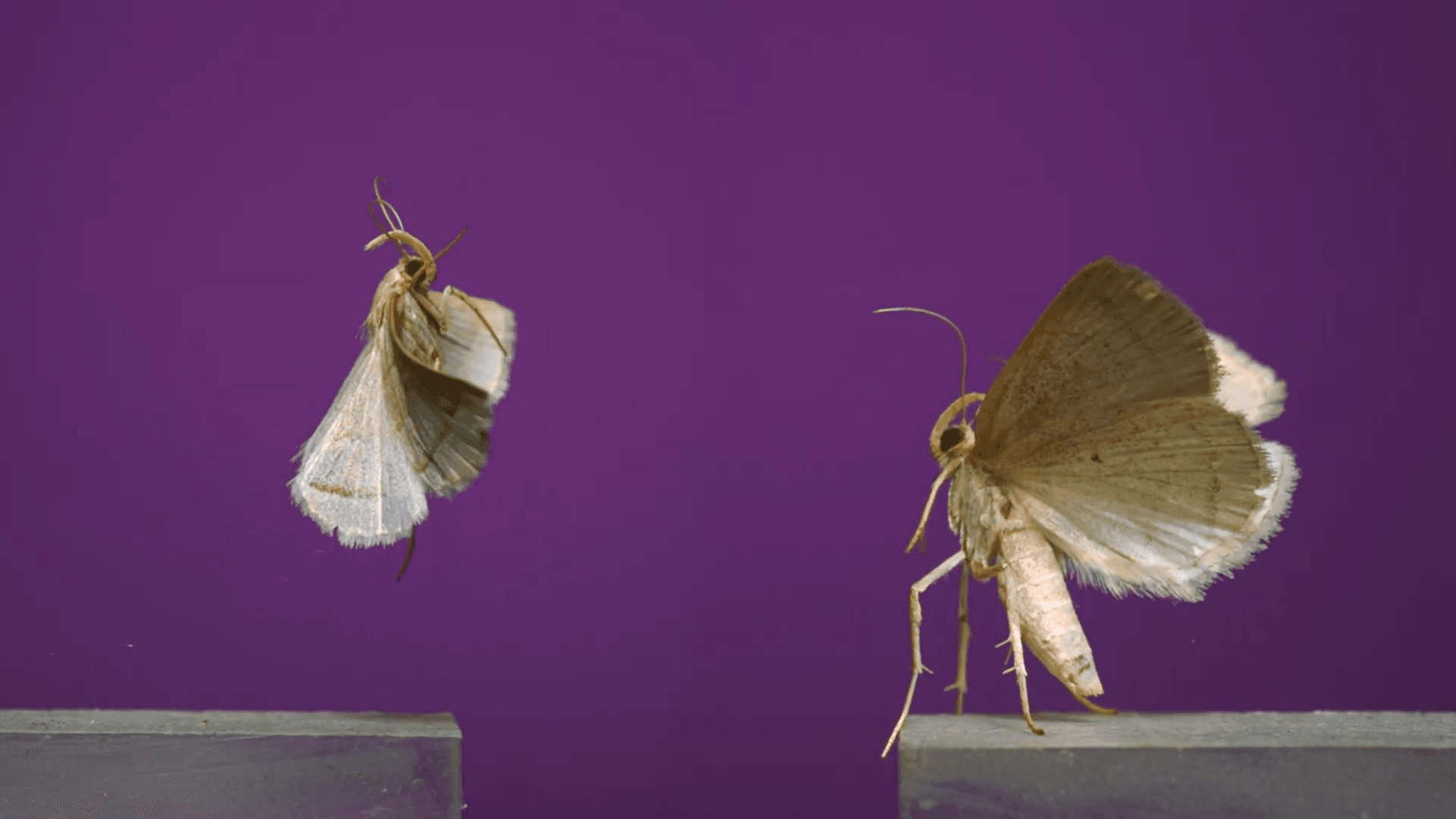
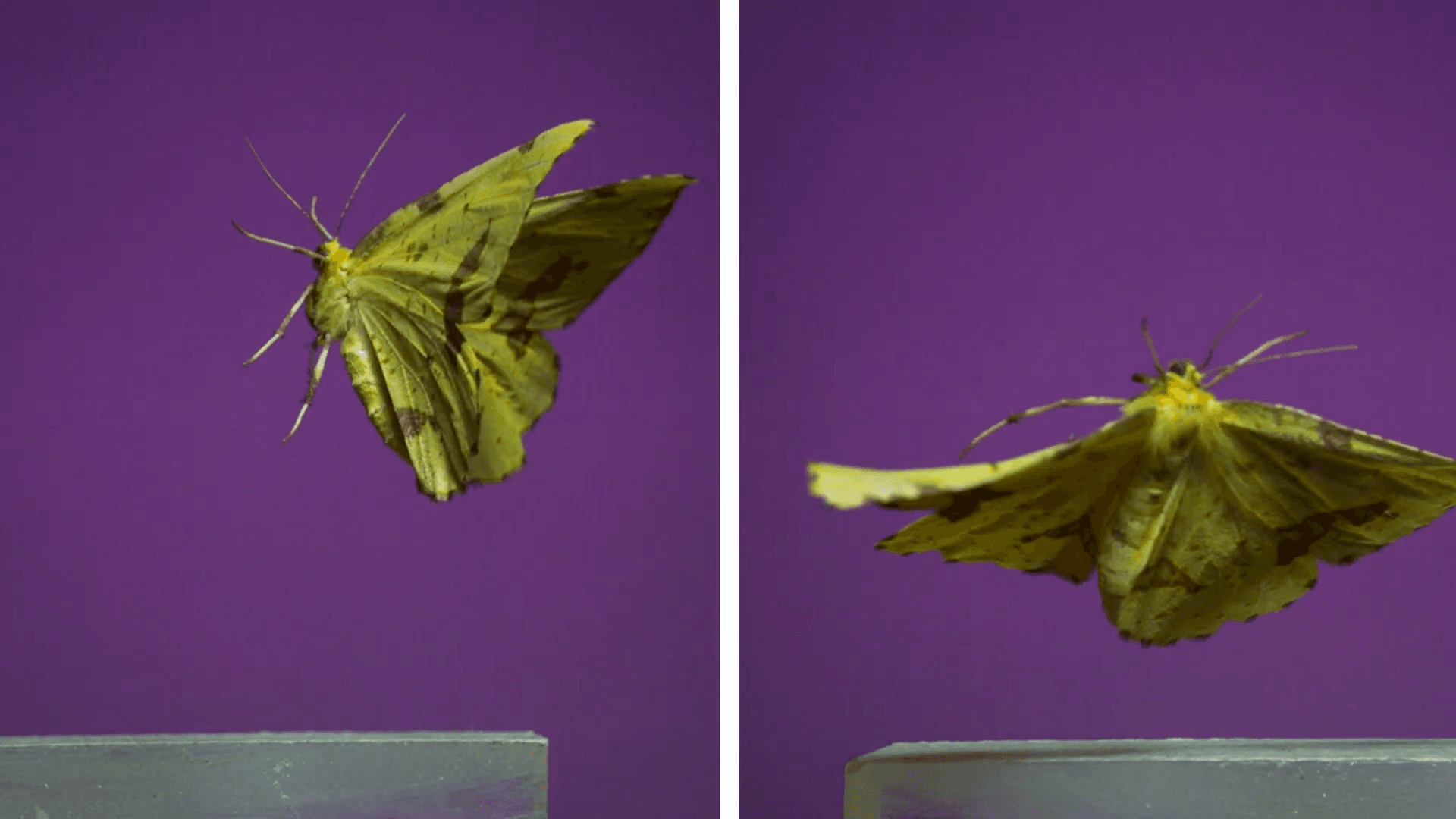
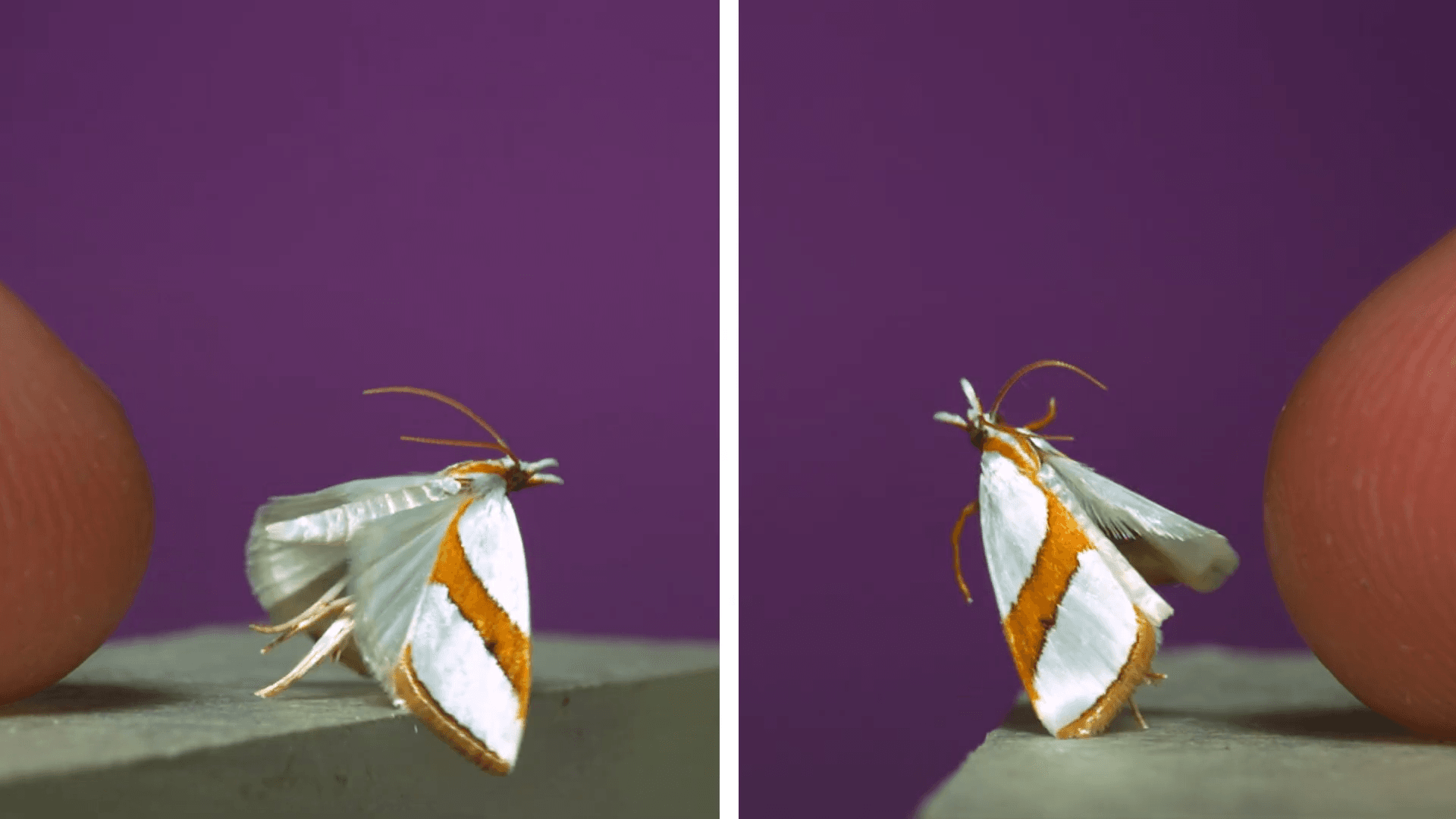
    Insect flight is vastly different than the aerodynamics engineers learn around aircraft. That’s particularly apparent looking at these tiny moths taking off and flying in slow motion. Almost every feature seems, at first glance, aerodynamically wasteful. Hairy, scaly surfaces instead of smooth ones? Relatively small wings for their body size? Moths break our engineering intuition.

    For moths, flight is an inherently unsteady process. Every stroke of its wings cups and flings fluid away in an effort to generate enough lift to stay aloft. Notice how the wings flex with each stroke. Part of the moth’s efficiency comes from that flexibility, even though keeping wings relatively stiff is the norm for engineering larger fixed-wing craft. And those hairy surfaces? Not only can they help camouflage insects; they keep them hydrophobic so that water bounces off them. (Video and image credit: Ant Lab/A. Smith)

    Fediverse Reactions
  • Featured Video Play Icon

    Drying Out Microbe-Filled Droplets

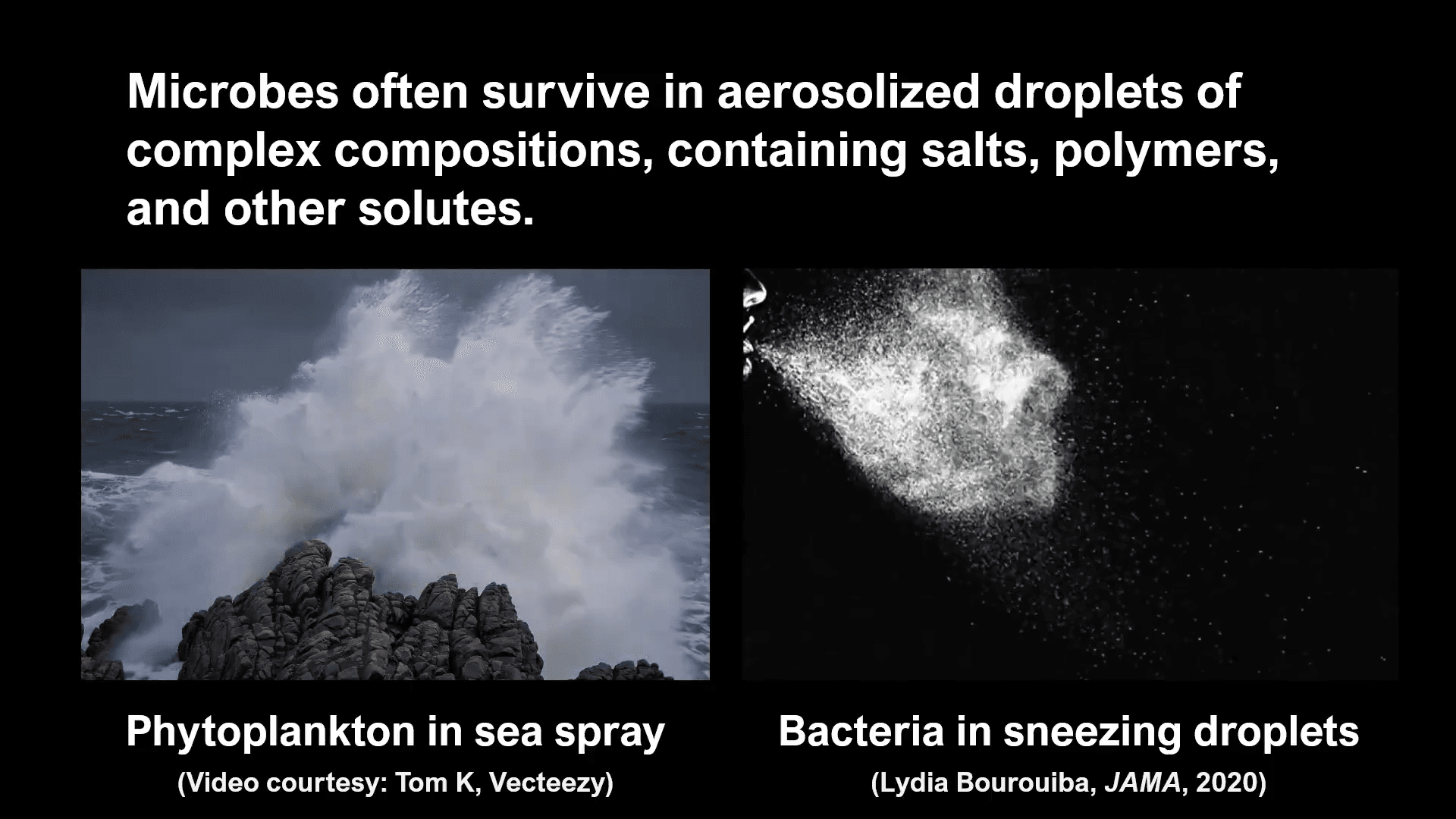
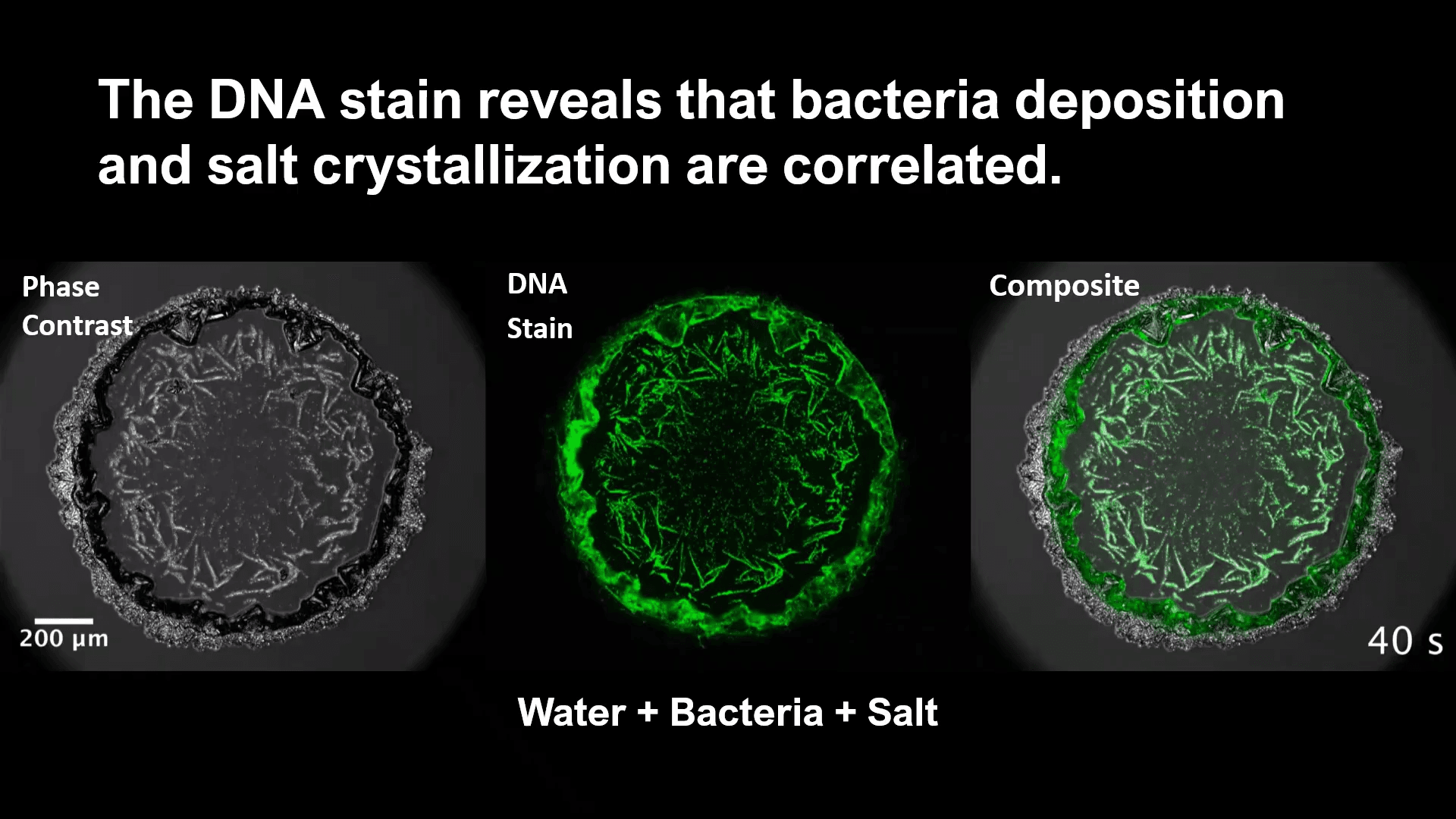
    Ocean sprays, coughs, and sneezes are just a few of the ways that droplets full of bacteria and salt can get aloft on a breeze. How do these bacteria stay viable even as their droplet evaporates? That’s the question behind this video’s research.

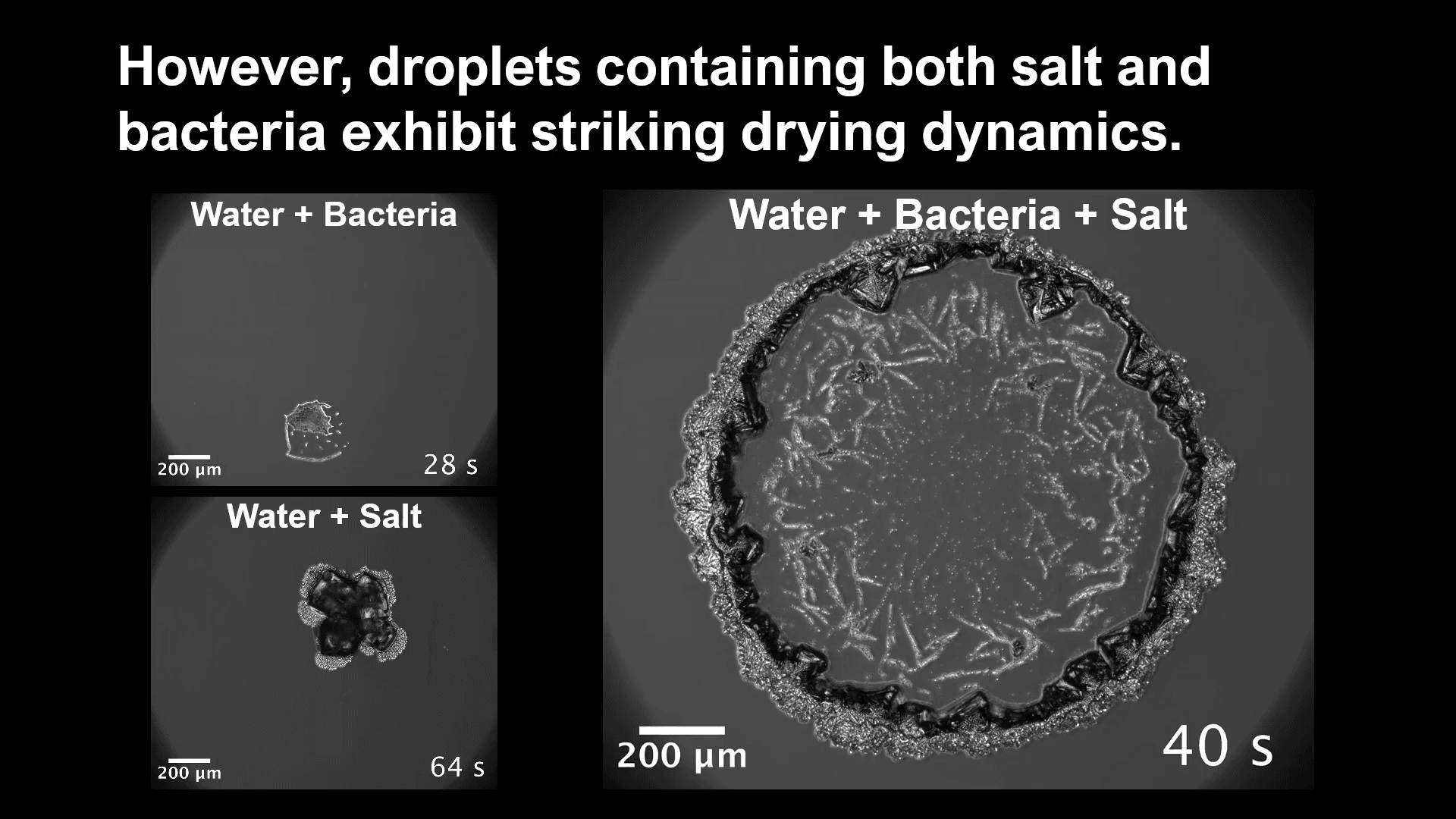
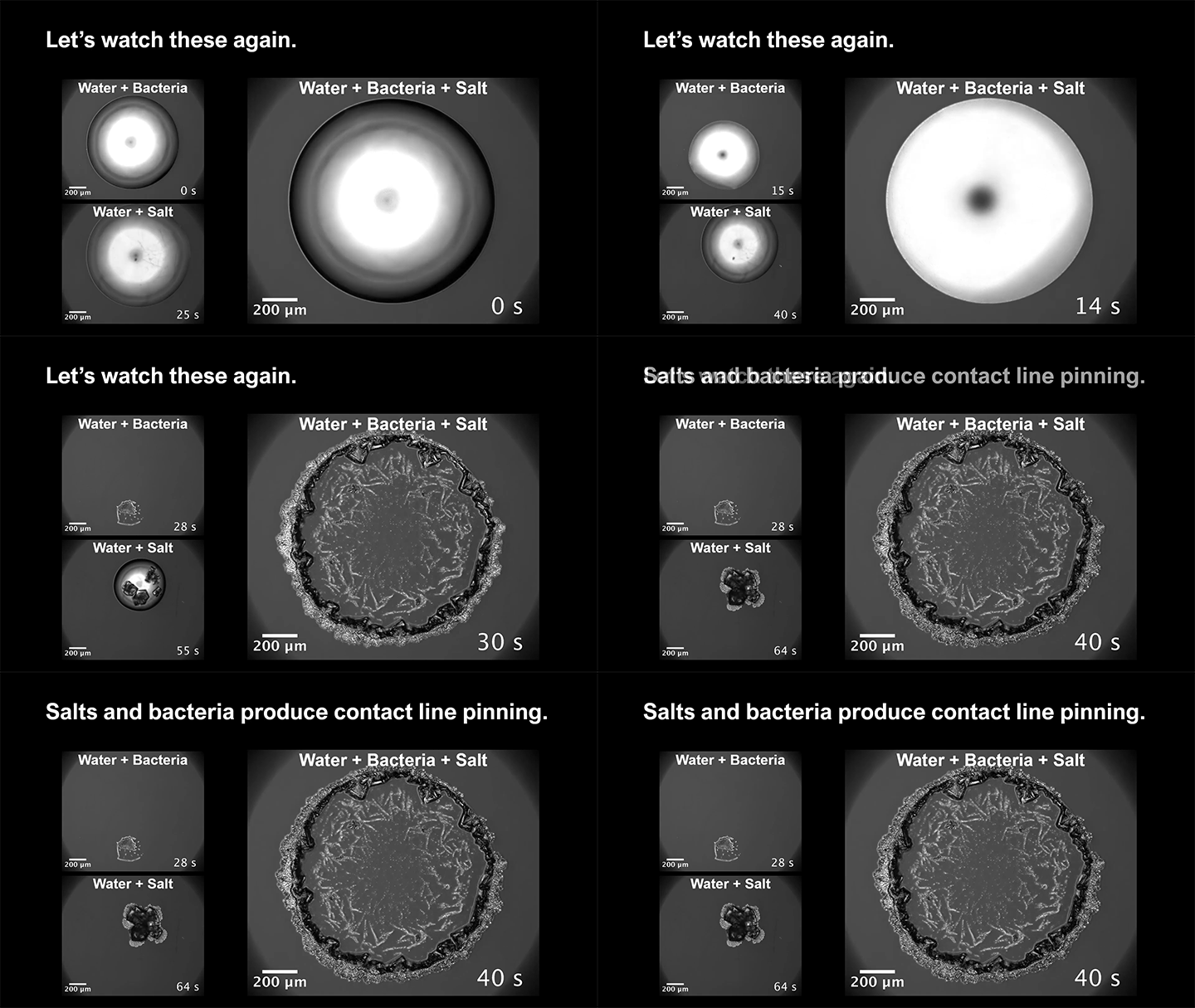
    When a bacteria-laden droplet or a salt-laden droplet dries, the evaporating droplet’s contact area shrinks, leaving behind only a concentrated lump of bacteria or salt. But when droplets contain both salt and bacteria, the drying droplet’s contact line gets pinned, leaving a larger area stain. The bacteria’s presence seems to promote crystallization of the salt, which–in turn–traps water in isolated spaces, perhaps helping the bacteria stay viable longer. (Video and image credit: R. Ran et al.)

    Animation of three droplets drying out. When all three components–water, salt, and bacteria–are in a droplet, the drying process looks very different.
    Fediverse Reactions
  • On Dolphin Turbulence

    On Dolphin Turbulence

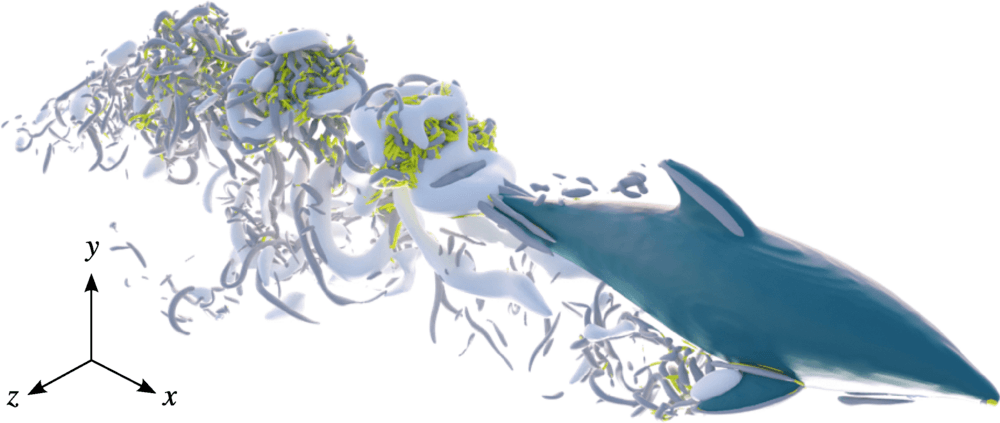
    Dolphins are such fast and agile swimmers that, naturally, scientists have long wanted to understand how they swim so well. A recent study draws on numerical simulation to analyze the flow a dolphin creates when flapping its tail.

    The resulting flow is highly turbulent–researchers were only able to simulate up to a fraction of a dolphin’s actual Reynolds number–with both large-scale vortices and a cascade of smaller ones. The largest vortices, shown here in white, form on the upper and lower surface of the dolphin’s tail, then slide off the tail in a vortex ring. It’s these vortex rings, the researchers found, that provide the bulk of a dolphin’s thrust.

    The smaller-scale vortices, in contrast, get formed by the large vortices, and they make little to no contribution to the dolphin’s propulsion. Interestingly, these results suggest that we might be able to describe the propulsion of dolphins and other highly turbulent swimmers by focusing only on the largest scales in the flow. (Video, image, and research credit: Y. Motoori et al.; via Ars Technica)

    Animation of the simulated flow from a swimming dolphin.
    Animation of the simulated flow from a swimming dolphin.
    Fediverse Reactions
  • Herring Spawn

    Herring Spawn

    From mid-February to early May, tiny silvery Pacific herring gather along the shallow coastlines of Vancouver Island off British Columbia, Canada. In these sheltered waters, they spawn; female fish produce sticky eggs and males flood the area with milt, which turns the water a milky turquoise or green. The colors can be so vivid that the spawn is visible to satellites.

    Barkley Sound, on the island’s southwestern side, frequently hosts spawning, as its rocky shoreline provides protection and the pockets of lower salinity that the fish favor. After spawning, the fish migrate back to their feeding grounds in deeper, nutrient-rich waters. (Image credit: R. Cutler; via NASA Earth Observatory)

    A herring spawn clouding the waters along Vancouver Island on February 16, 2026.
    A herring spawn clouding the waters along Vancouver Island on February 16, 2026.
    A herring spawn event near Forbes Island in Barkley Sound turns the shoreline green.
    A herring spawn event near Forbes Island in Barkley Sound turns the shoreline green.
    Fediverse Reactions
  • Understanding Pollen Dispersal

    Understanding Pollen Dispersal

    When the wind blows, trees shift and sway, reconfiguring their shape and their leaves in response. For parts of the year, that flow can also pluck pollen grains off the tree, carrying them on the winds. A new computational simulation models this pollen dispersal from a tree, with the aim of eventually integrating into a tool for urban planners.

    Trees are an important component to fighting climate change, especially in cities, because they cool their surroundings in addition to providing fresh oxygen. But urban planners recognize the downsides to trees, too–allergies, anyone?–and, with the right tools, they could maximize the trees’ advantages while minimizing pollen spread for allergy-sufferers. (Image credit: M. KΓΆles; research credit: T. Dbouk et al.; via Physics World)

    Fediverse Reactions
  • “Spiralling Textures”

    “Spiralling Textures”

    Wet fur forms a spiral of spiky hairs in this image by photographer Ben Dalgleish. For thin and flexible fibers like hair, a little moisture lets them clump together, forming stiffer (but still flexible) shapes. The technical term for this water-meets-flexible-solid phenomenon is elastocapillarity, and it lets you do things like wind a wire with a bubble. It also makes a big difference when washing hair, including in space. (Image credit: B. Dalgleish/BWPA; via Colossal)

    "Spiralling Textures" by Ben Dalgleish
    Fediverse Reactions
  • Inside an Ear

    Inside an Ear

    Our ears, like those of many other animals, convert mechanical signals to electrical ones, through a Rube-Goldberg-esque series of transformations. External sound waves make their way down the soft tube of the ear canal, which funnels them to a thin-walled cone, the eardrum, that’s about half as large as a dime. Here, the vibrating air pushes against the cone’s membrane, and those vibrations travel onward through a linked trio of small bones that amplify the vibration’s amplitude.

    The last of these bones presses against an even smaller, oval-shaped membrane. As the bone moves, it shakes the membrane, sending waves through the liquid on its other side. Those waves travel down the spirals of the tiny, pea-sized cochlea, named for a snail shell’s shape. As the waves move through the liquid, they bend bundles of hair-like strands back and forth, like tall grass waving in a breeze. The bending triggers a chemical that binds to nerves at the base of the bundles, sending an electrical signal through the nerve and into the brain.

    But the hair-like bundles, known as stereocilia, are also able to amplify incoming vibrations. In this case, the bundles in the outer portion of the cochlea expend energy to bend more than the incoming vibrations naturally make them move. This bending amplifies the fluid motion that gets transmitted to stereocilia further down the line; it’s those bundles that will make the final conversion to an electrical signal the brain receives. (Image credit: B. Kachar; research credit: Y. Thipmaungprom et al.; via APS)

    Scanning electron microscope view of the stereocilia "hair bundles" inside a frog's inner ear.
    Scanning electron microscope view of the stereocilia “hair bundles” inside a frog’s inner ear.
  • Featured Video Play Icon

    Understanding Fish and Turbines

    Fish detect turbulence in the water around them; among other things, this helps them avoid colliding with objects. Here, researchers are looking to understand how fish interact with underwater turbines. Experiments give them a set of trajectories that actual fish follow when dealing with the experimental turbine. But to understand what the fish is detecting, the researchers build a digital facsimile of the turbine and use Large Eddy Simulation (LES) to calculate the turbine’s wake.

    By overlaying the fish trajectories onto the simulated flow structures, they can better understand what flows the fish is and is not comfortable with. That knowledge helps engineers design turbines with smaller ecological impact. (Video and image credit: H. Seyedzadeh et al.)

  • A Fungus That Freezes Water

    A Fungus That Freezes Water

    Although water can freeze below 0 degrees Celsius, it requires a little help–in the form of a nucleation site–to do so. Often temperatures must dip well below 0 degrees Celsius for droplets to become ice. But a new study shows that at least one fungus forms proteins that help the process along.

    The proteins come from the MortierellaceaeΒ  fungal family, by way of a bacterial species some hundreds of thousands of years ago or more. In experiments, adding the fungal protein helped water freeze 10 or more degrees Celsius sooner than it otherwise would.

    The authors note that there are many possible applications for this freezing additive; it could help preserve food or cells without requiring lower freezing temperatures that could damage delicate tissues. It could also serve as a cloud seeding chemical in place of toxic silver iodide particles. (Image and research credit: R. Eufemio et al.; via Gizmodo; see also V. Tech)

    Fediverse Reactions
  • Insect Wings in Extreme Macro

    Insect Wings in Extreme Macro

    Photographer Chris Perani is fascinated by the microstructures of insect wings, which he captures in “extreme macro” through focus stacking–letting us see wings in glorious micron-scale detail. In addition to giving insects their brilliant colors and irridescence, these structures serve another key role: they help insects stay dry. In a world where contact with water is unavoidable, insects have instead evolved to trap air in the gaps of their wings, letting water slide off instead of sticking. (Image credit: C. Perani; via Colossal)

    Fediverse Reactions