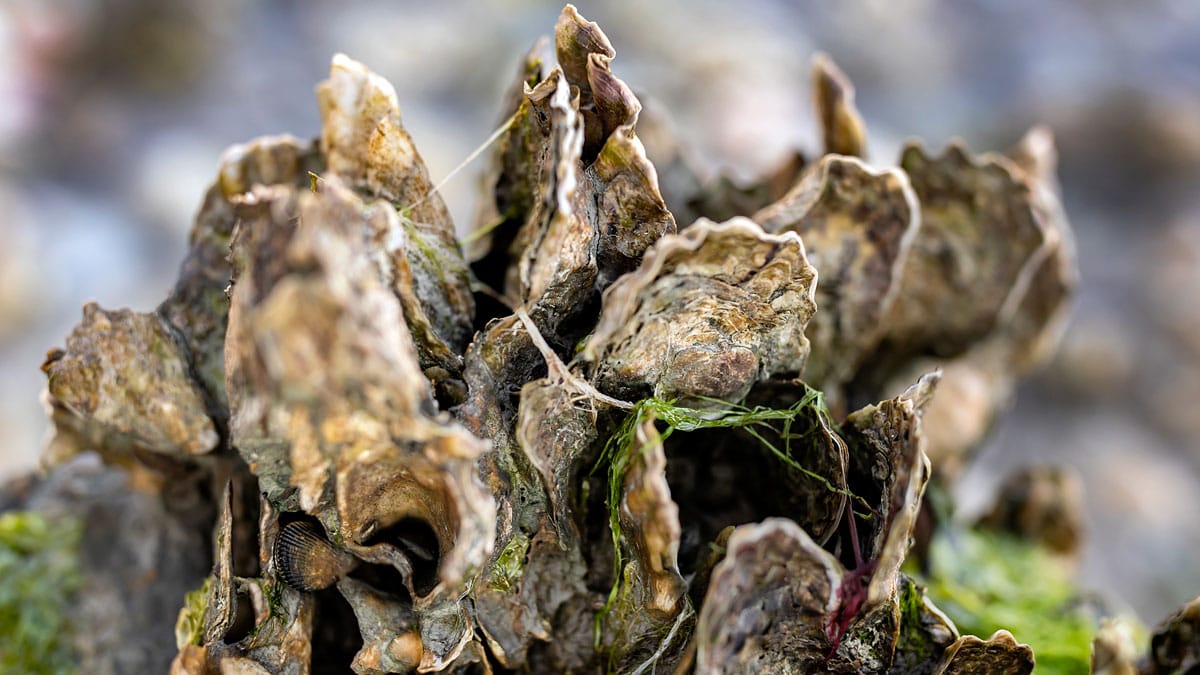
The US eastern seaboard was once blanketed with oyster beds, but overharvesting, pollution, and habitat destruction decimated the population. As filter-feeders, oysters are naturally good at cleaning intertidal zones, and the reefs they build by cementing themselves to one another provide valuable habitat for many species of fish. A new study shows that oysters are even more economically valuable than we knew, thanks to their ability to sequester nitrogen.
Agricultural and industrial run-off carries nitrates into the ocean in high concentrations that trigger deadly phytoplankton blooms, which choke off oxygen levels for larger species like fish. One way to reduce nitrogen levels in the water is denitrification, a process where microbes break down the nitrate into, among other things, inert nitrogen gas. The surface of oyster reefs is one place where this happens. But nitrates that evade these microbes can also get trapped and buried by a growing oyster reef.
To understand how much nitrogen an oyster reef can bury, researchers studied cores removed from restored oyster beds. Below the top ten centimeters (where microbes do their denitrification), nitrogen levels in the oysters increased, with a square meter of oyster reef, on average, sequestering 6 grams of nitrogen per year, comparable to the amount that microbes removed. But some oyster reefs outperformed others. In particular, intertidal flat reefs–which grow faster–buried more than twice the nitrogen of subtidal reefs.
The team estimated that, in North Carolina’s Carteret County, oyster reefs sequester some 120,000 kilograms of nitrogen annually, at an economic value of over $3 million. (Image credit: J. Andrews/UNC-Chapel Hill; research credit: A. Smiley et al.; via Eos)












Leave a Reply