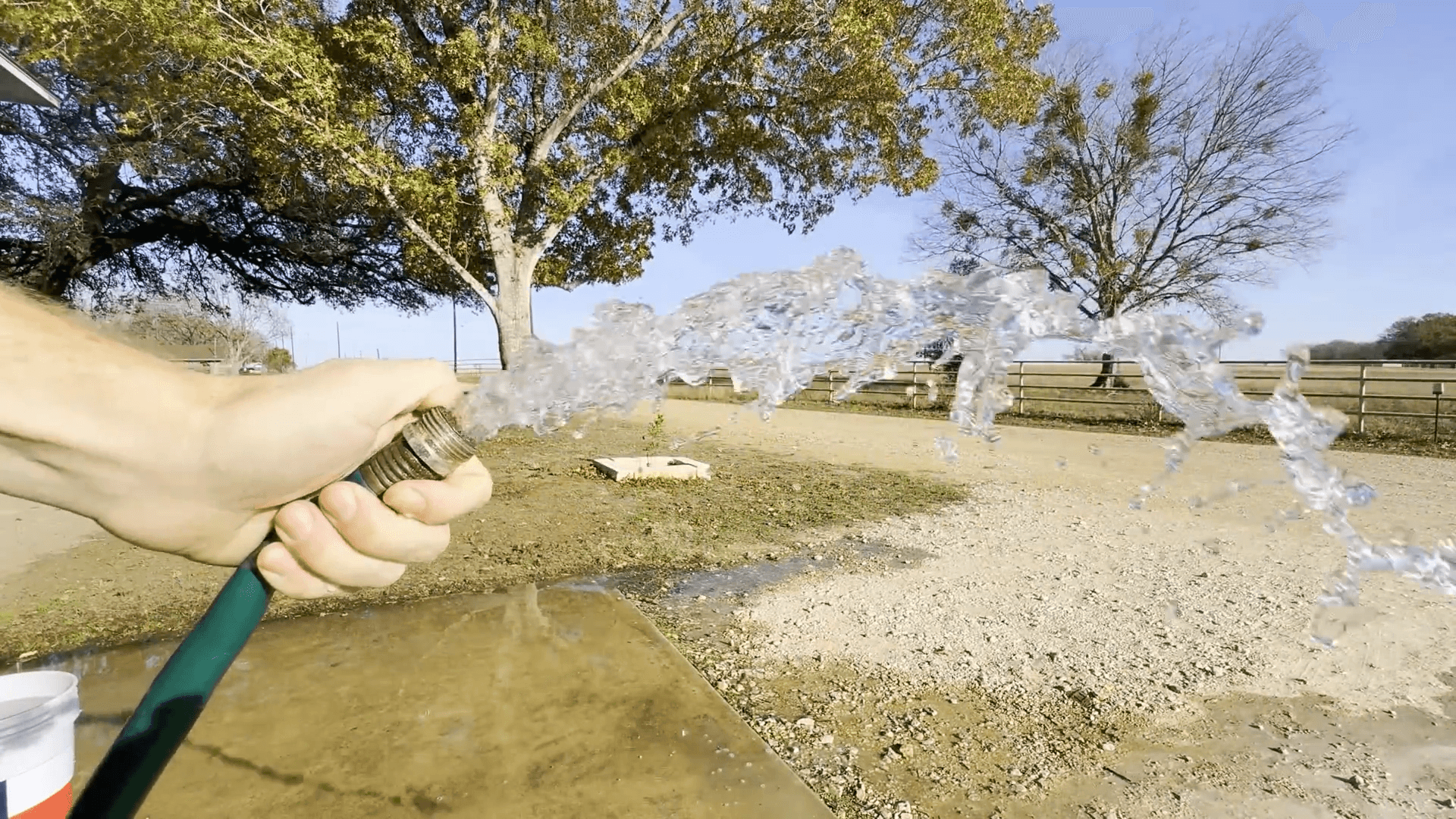
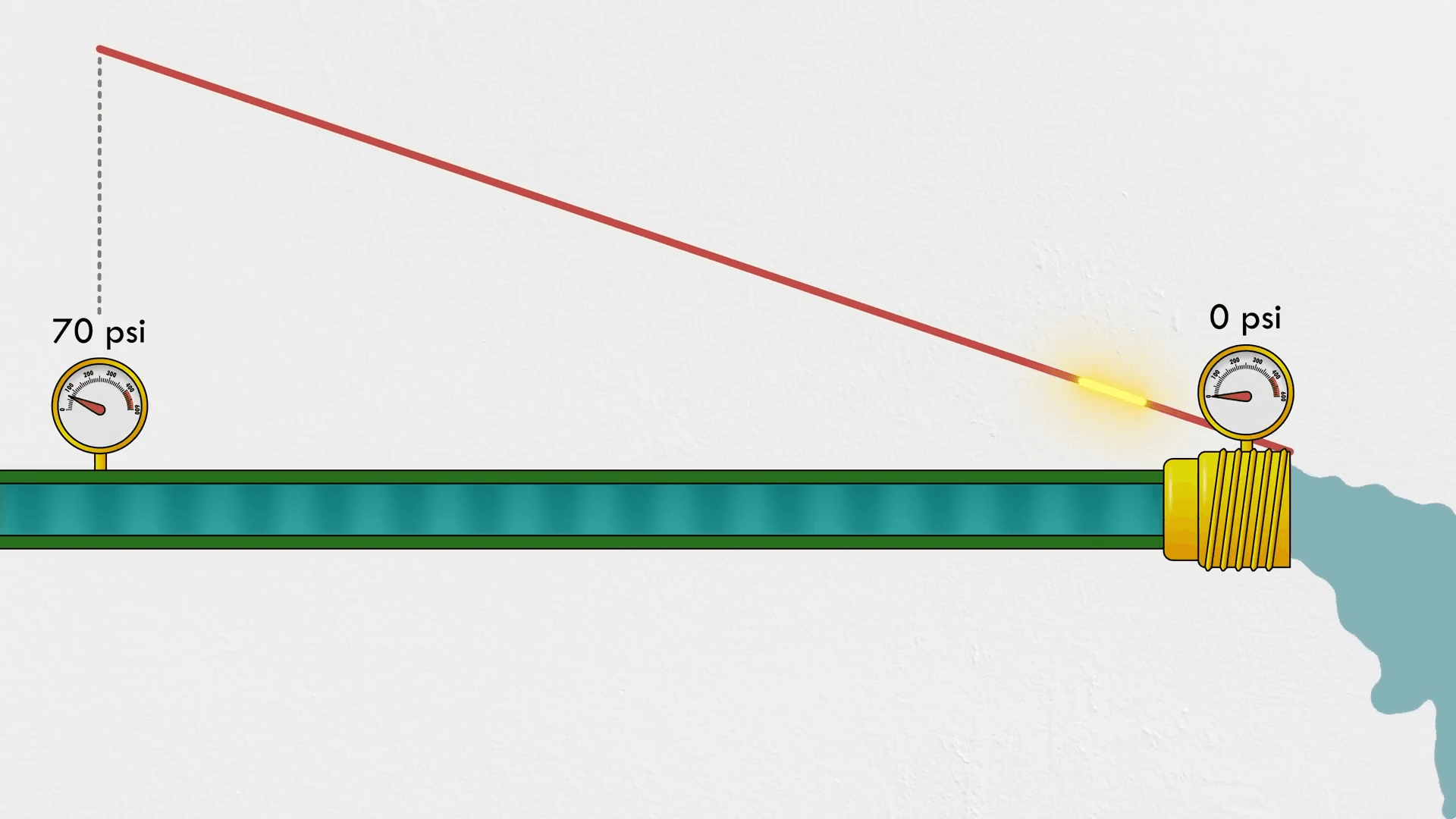
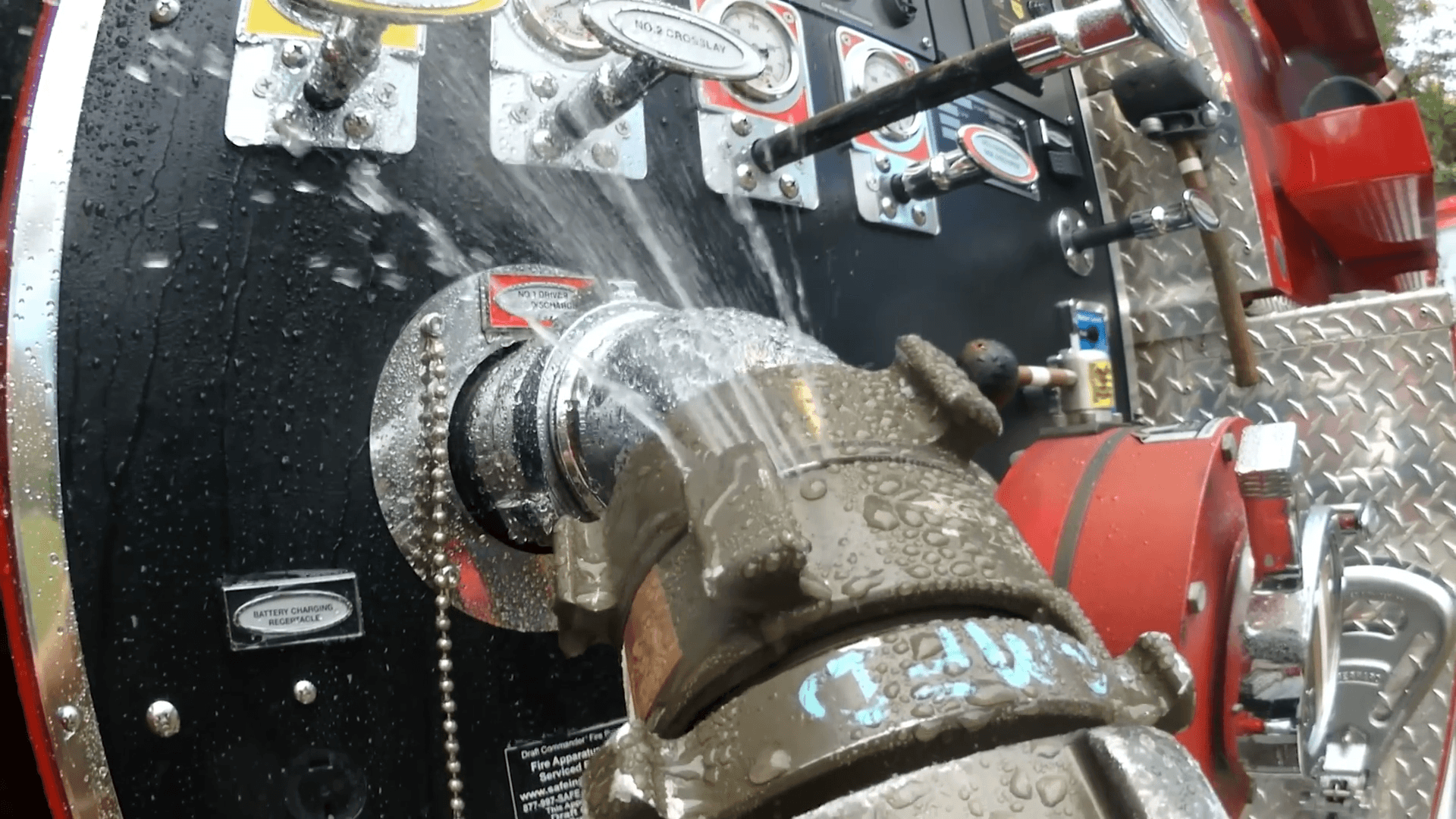
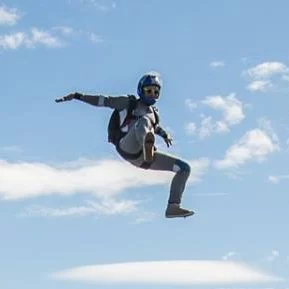
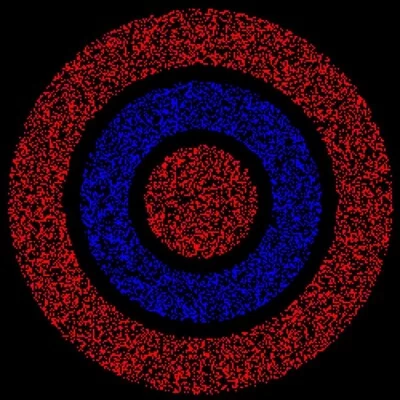
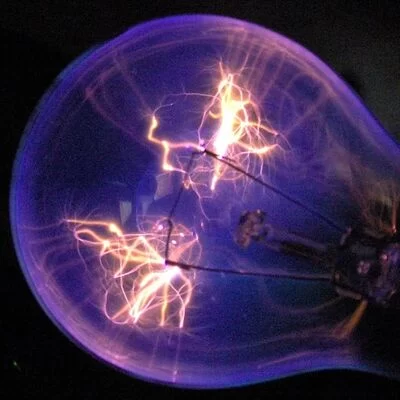
If you put a thumb over your hose’s outlet, you get a faster jet, but how does that affect the flow rate? That’s the question Grady starts from in this Practical Engineering video exploring pipe flow physics. From continuity and control volumes to practical losses, he touches on both the theory and practice behind this all-important aspect of engineering. Pipe flow is often where engineering students begin their studies of fluids, but that doesn’t mean it’s easy! (Video and image credit: Practical Engineering)
Of the more than 9 billion metric tons of plastic that’s been produced, a mere 9% has been recycled. About 12% has been incinerated, and the remainder is just out there–in our homes, our landfills, and, unfortunately, in our oceans. Exactly where all the plastic is continues to be an active question of research.
Plastic’s density is similar to that of water; some versions are a little denser than water, and some are a little lighter. So whether a piece of plastic floats at the ocean surface or sinks to the bottom depends on several factors, including its density, size, and shape. A large, dense plastic–think laundry detergent bottles–can float if it displaces enough water; after all, metal ships float!
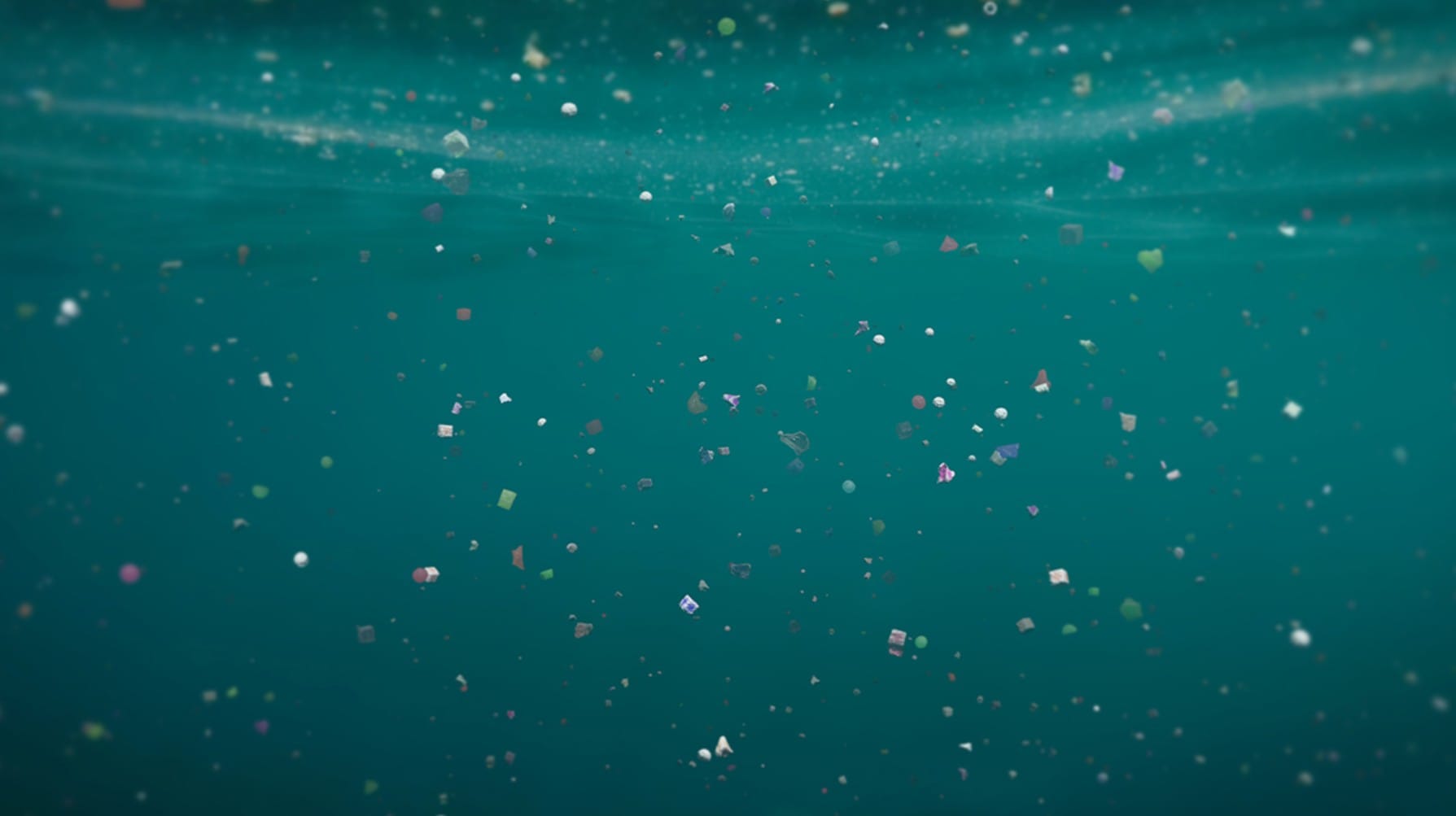
But as sunlight and abrasion breaks that big container into smaller fragments, their buoyancy shrinks. Eventually, these small, millimetric pieces sink, carrying our pollution to ecosystems we once thought remote. Some of the highest rates of microplastic ingestion are found in nonmigratory species living between 1200 and 1500 meters below the surface. We may never visit those depths, but our garbage does. (Image credit: iStock/dottedhippo; via Eos)
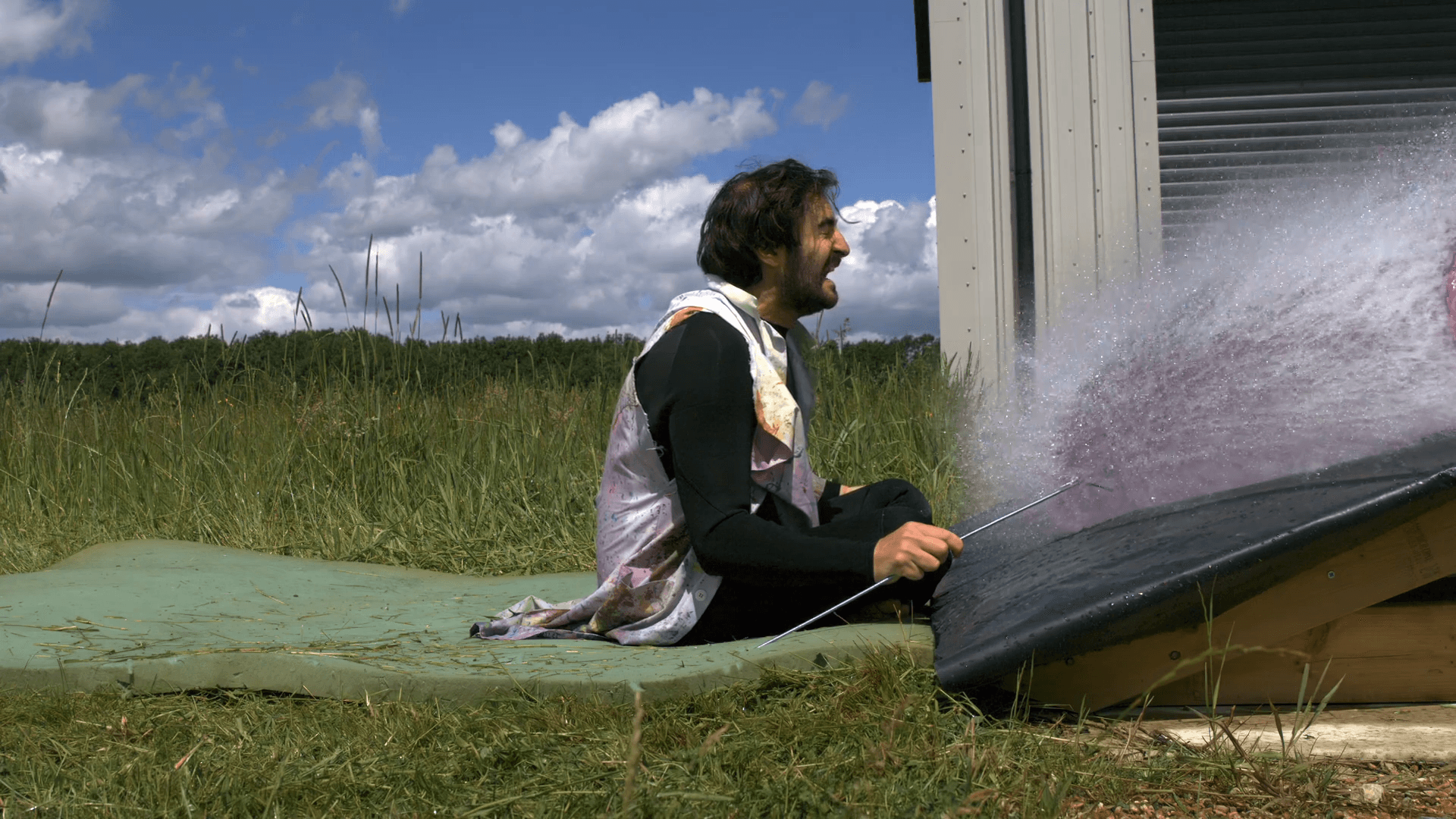
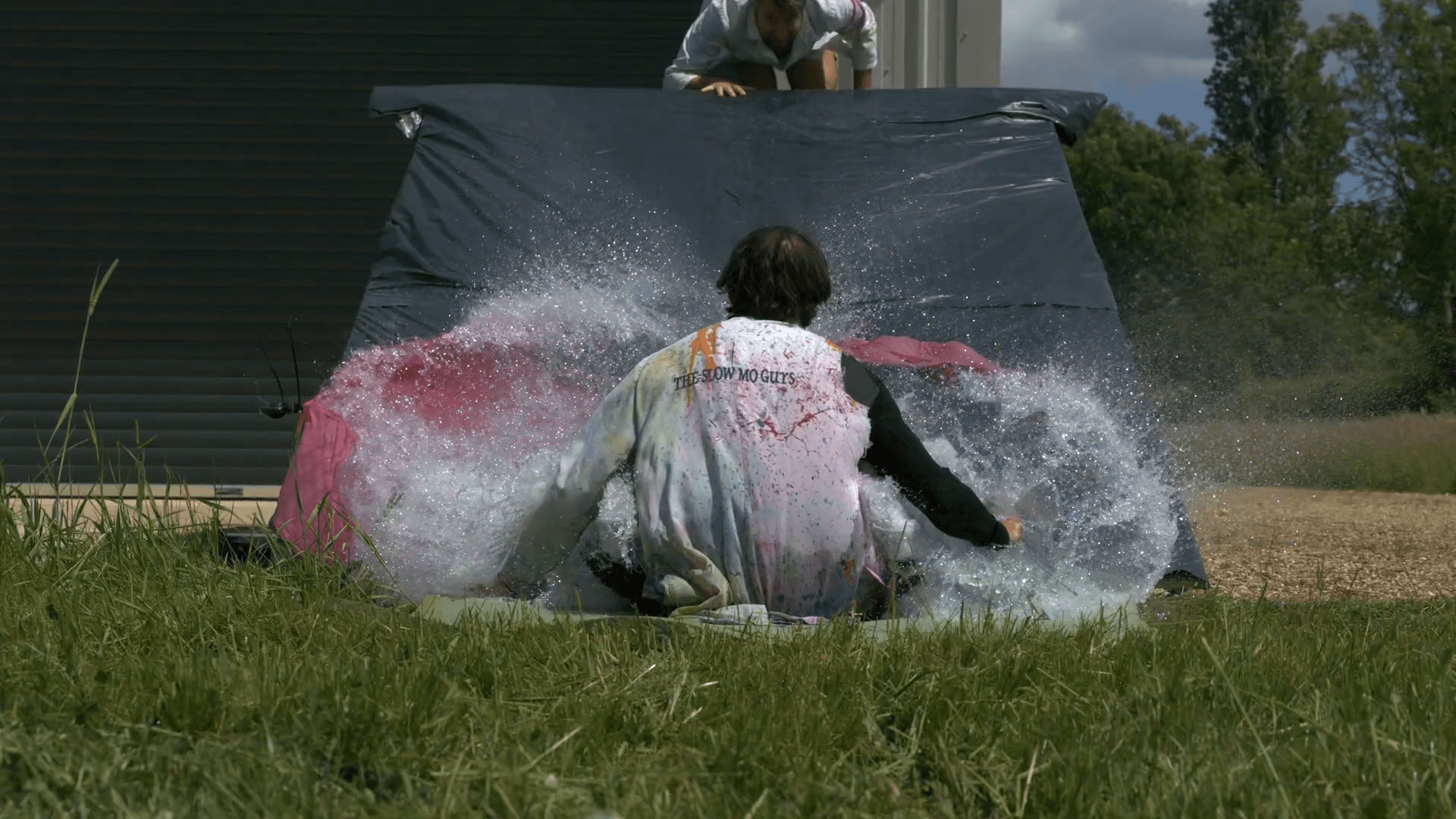
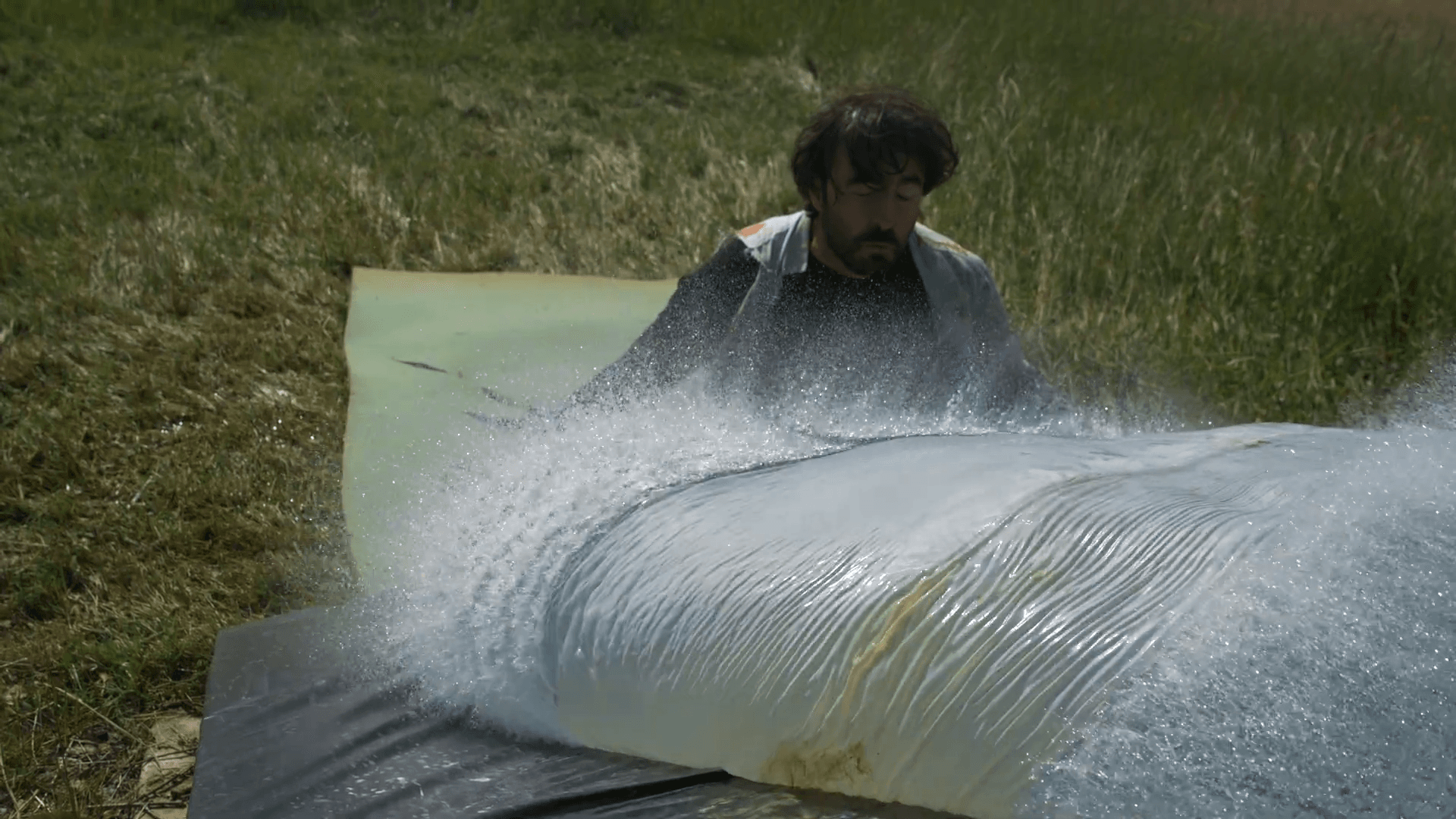
It’s the summertime, so Gav and Dan of the Slow Mo Guys are back to experimenting with giant water balloons. In this video, they send several careening down a slope into Dan’s face. Watching the balloons descend and pop is (unsurprisingly) my favorite part. It’s neat to see how the elasticity of the balloon acts like a beefed-up surface tension to make this enormous blob of water act like an oversized droplet. (Video and image credit: The Slow Mo Guys)
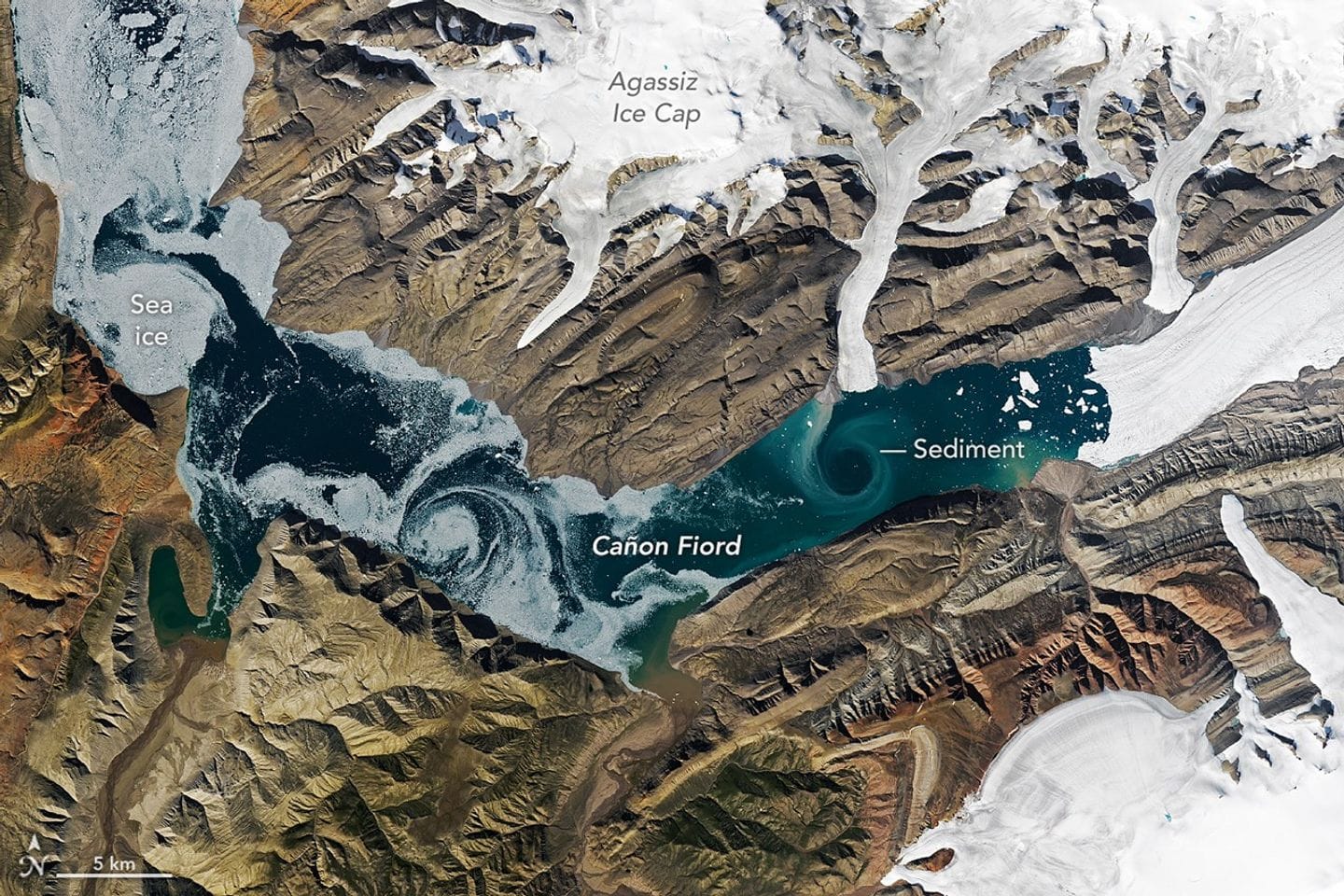
For much of the year, Cañon Fiord in the Canadian Arctic lies under ice and snow, but in the summer melt season, colors peek out. Here sea ice and sediment swirl in the fjord in eddies that are kilometers wide. The sediment is largely glacial flour–rock that’s been ground into dust by glaciers. It provides critical nutrients for the marine ecosystem. (Image credit: L. Dauphin; via NASA Earth Observatory)
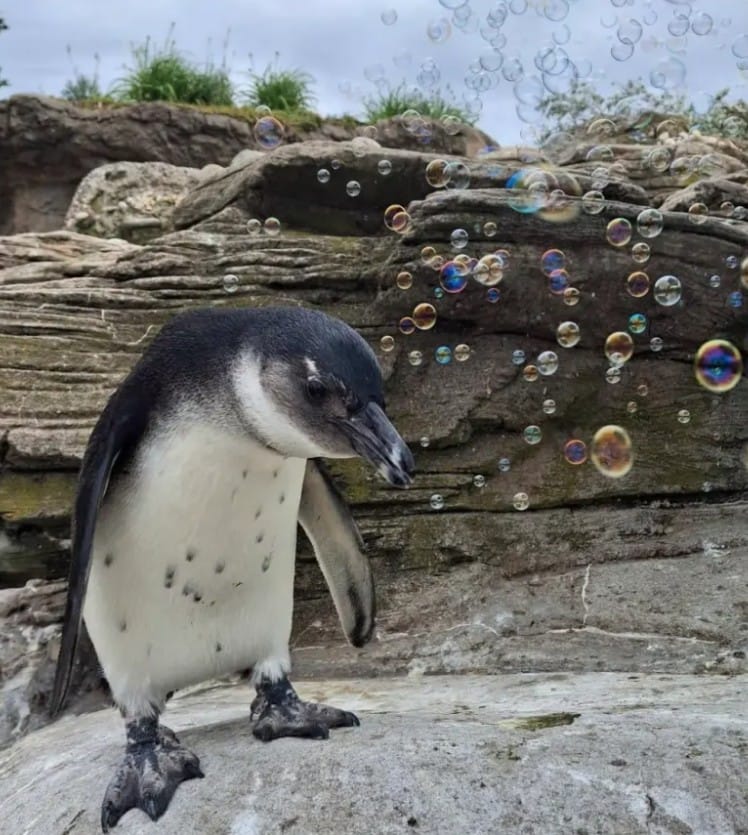
Walter, a young African penguin at the New York Aquarium, loves soap bubbles. In fairness to Walter, so do most people I’ve met. There’s just something that feels a bit magical about these ephemeral rainbow spheres that pop at a (dry) touch.
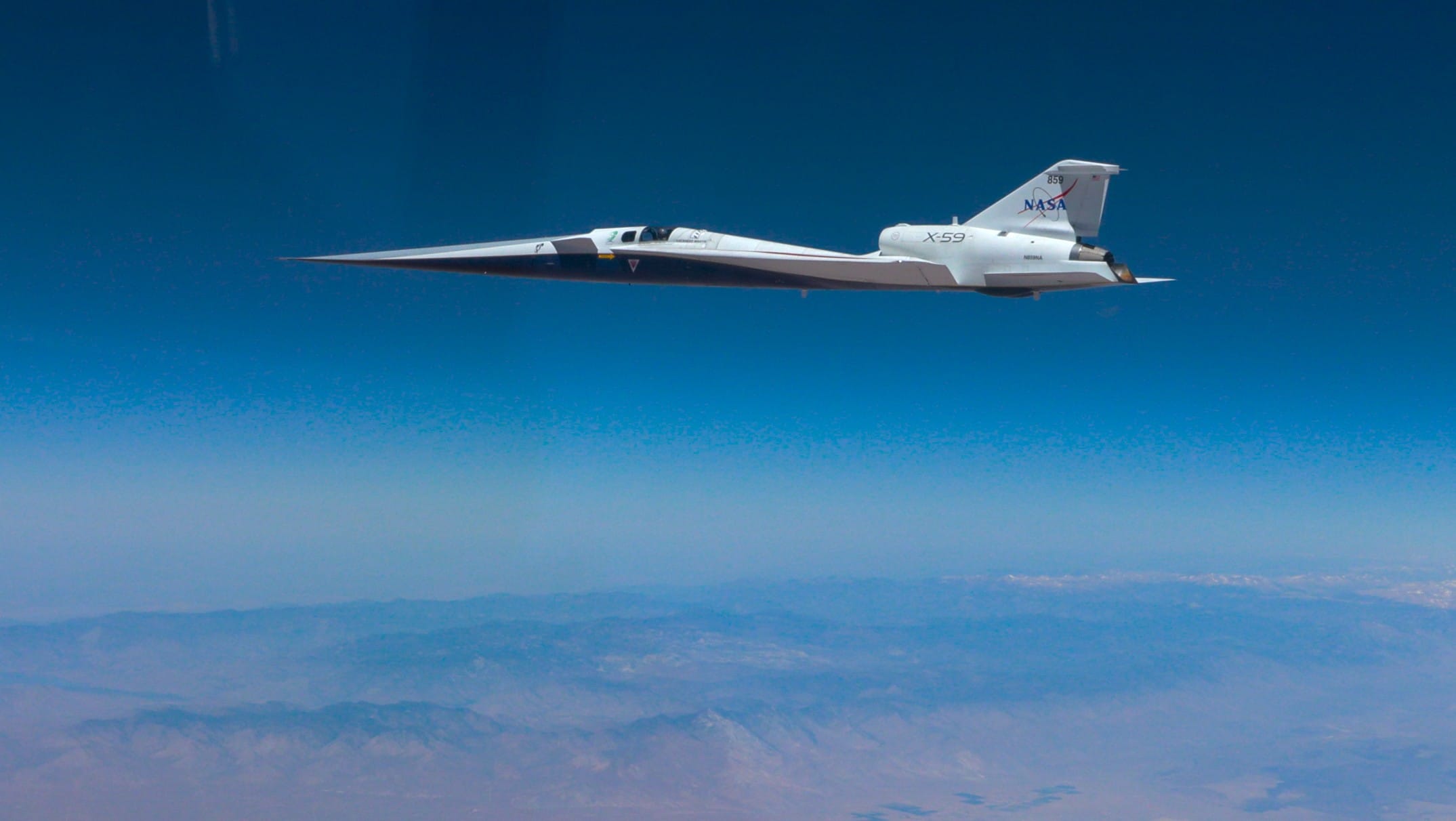
NASA’s X-59 aircraft is intended to demonstrate supersonic flight without the boom. Although it’s broken into supersonic speeds, we haven’t yet heard its “sonic thump” because, so far, it’s been accompanied by conventional supersonic aircraft, which are louder.
The idea behind the long, skinny X-59 is to create weaker, widely-spaced shocks along the aircraft body. Weaker shocks are easier for atmospheric effects to damp out before they reach the ground, and spacing them out makes it harder for them to “pile up” at the nose and tail to create the strong double shocks that merge into a sonic boom.
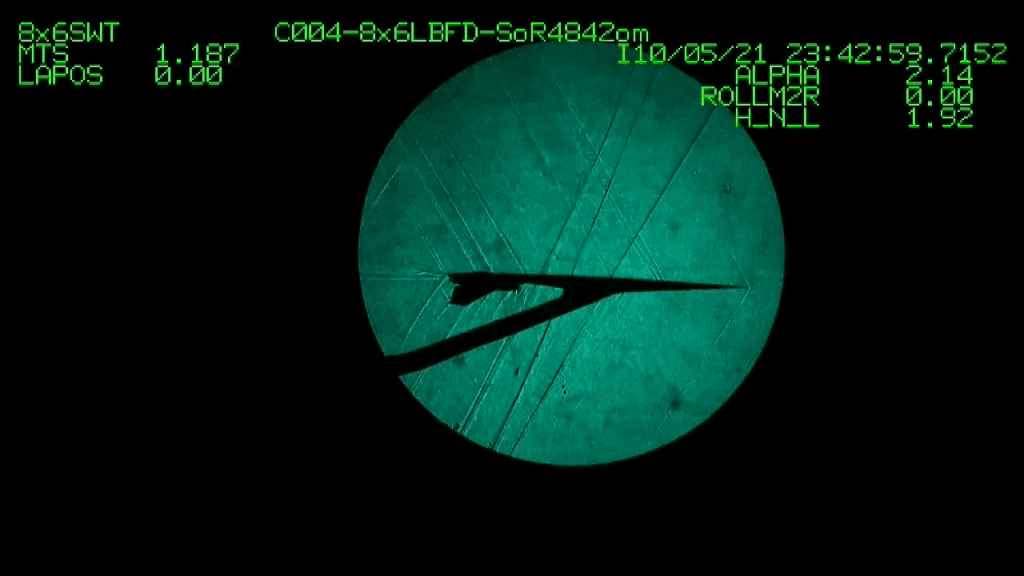
Schlieren image of a model X-59 tested at supersonic conditions in a wind tunnel. The model is mounted upside-down. The three dark diagonal lines are shock waves originating from the wind tunnel and can be ignored. The fainter lines coming off parts of the aircraft model are the plane’s shock waves.
NASA is preparing to test the X-59’s in-flight shocks soon, including with in-air schlieren photography like they’ve done in the past for other aircraft. But we’ve already have a glimpse of what to expect, thanks to wind tunnel testing, shown above. Ignore the three dark diagonal lines in the middle of the image (those are from the wind tunnel, not the model aircraft), and focus instead on the thin bright lines coming off the plane. Those are some impressively subtle shock waves!
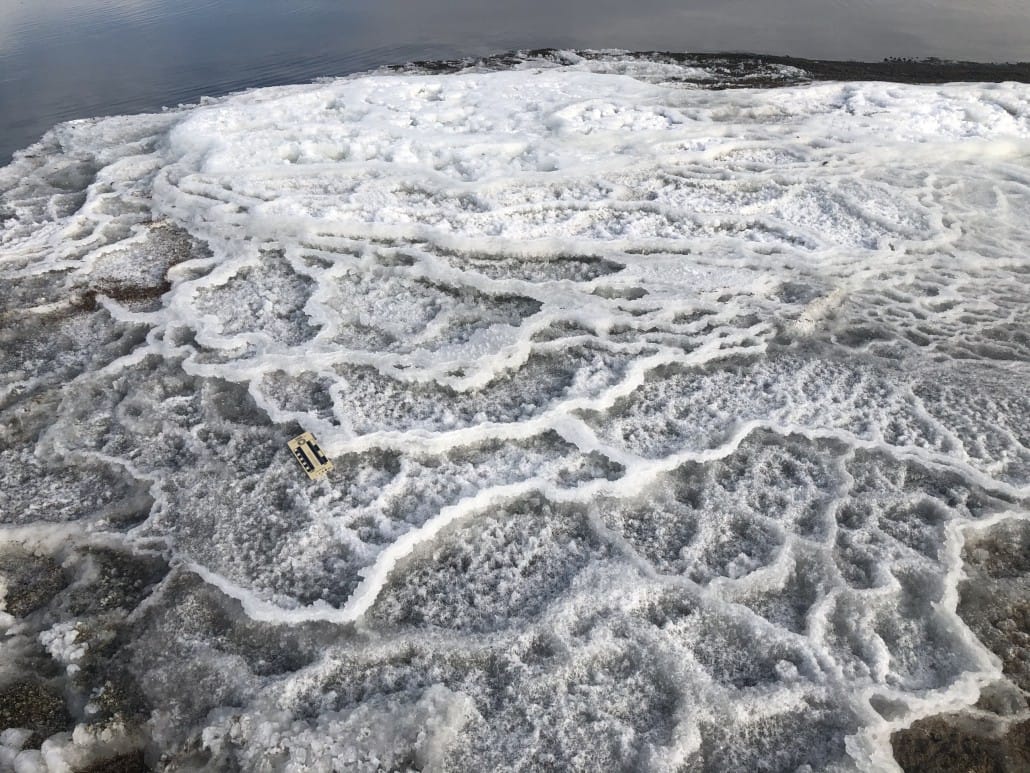
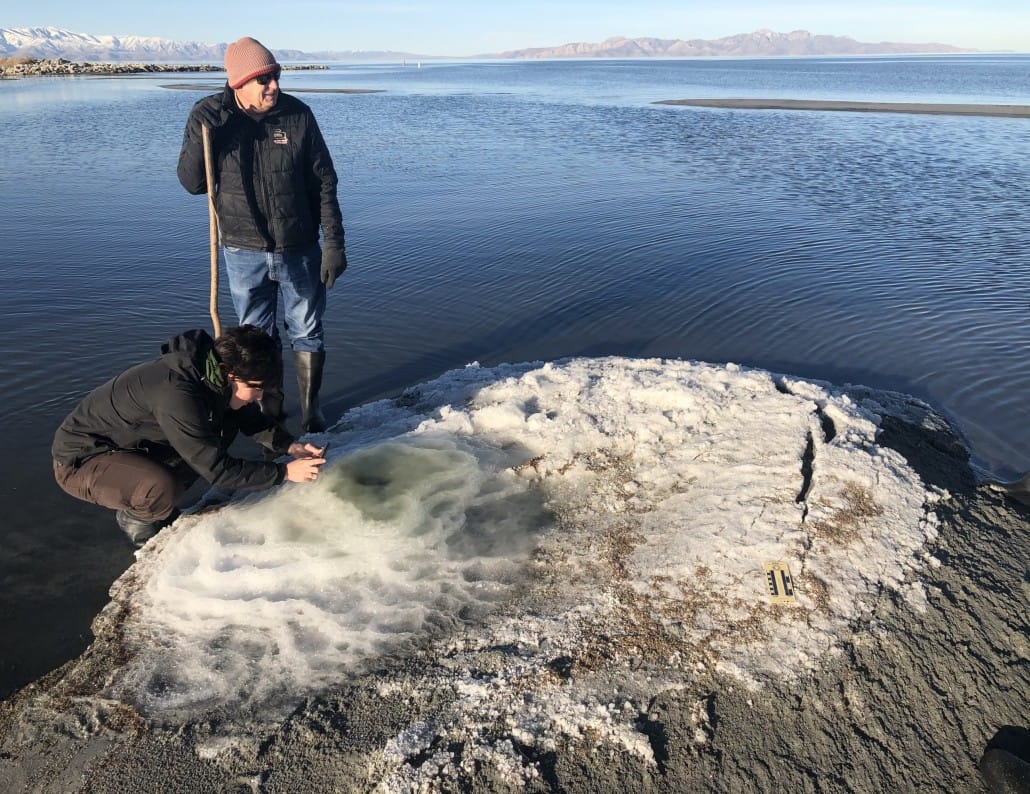
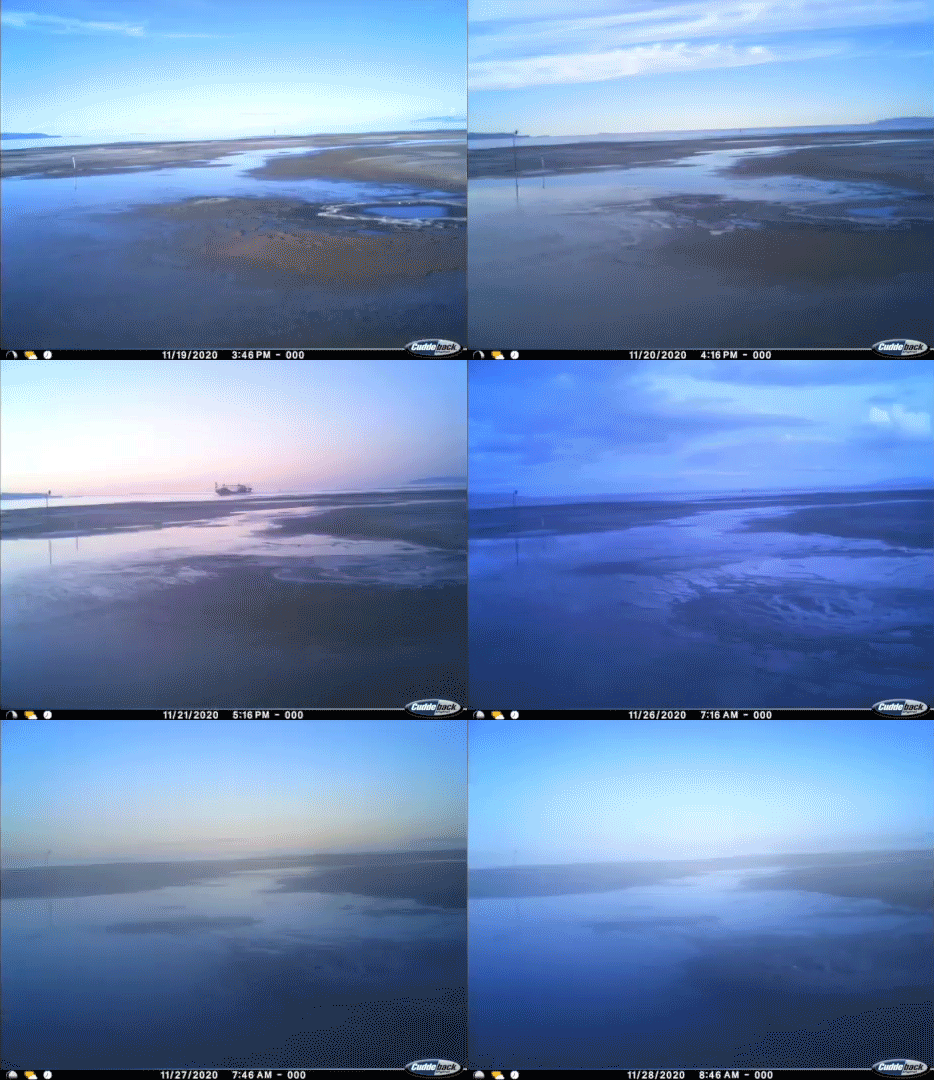
In cold weather, a new geological feature has shown up at Utah’s Great Salt Lake in the last decade. These salty mirabilite mounds form terraced crystals that resemble Yellowstone’s Mammoth Hot Springs.
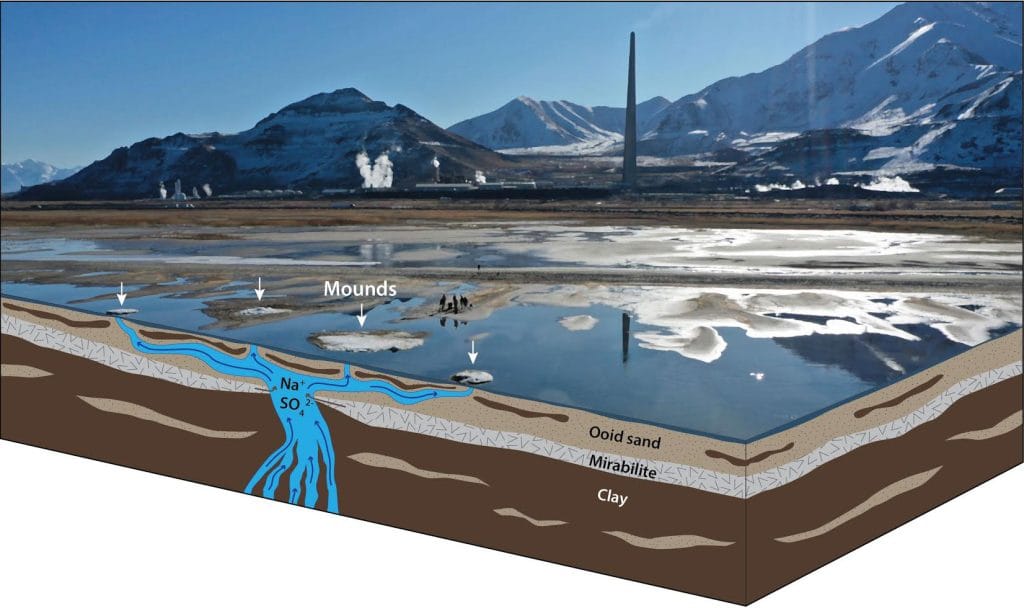
Diagram showing how a salt-laden spring pushing upward through the mirabilite layer can then form mounds at the surface when the dissolved mirabilite recrystallizes after the water evaporates.
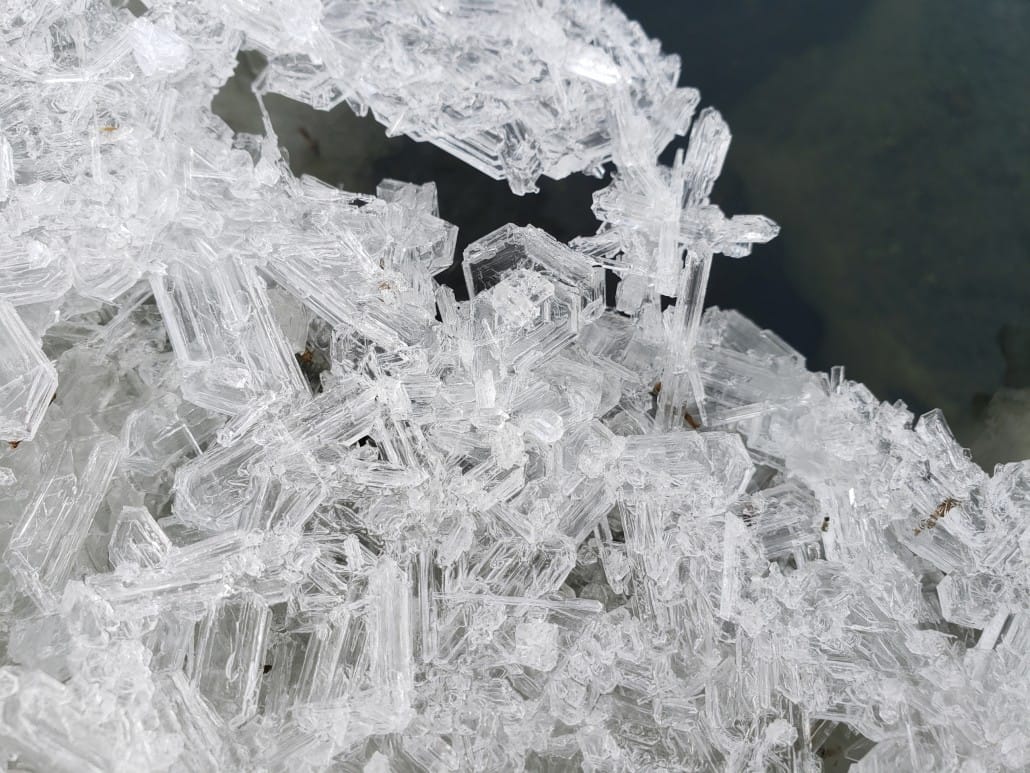
Mirabilite is hydrated sodium sulfate (as opposed to the sodium chloride of table salt). The structures form when upwelling spring water partially dissolves the layer of mirabilite found beneath the lake bed. That sulfate-laden water rises to the surface, where it freezes into the crystals seen here.
A timelapse showing the formation of mirabilite mounds.
When temperatures rise above freezing, the water in the mirabilite evaporates, leaving behind white, powdery thenardite. (Video credit: Great Salt Lake Institute; image credit: Utah Geological Survey)
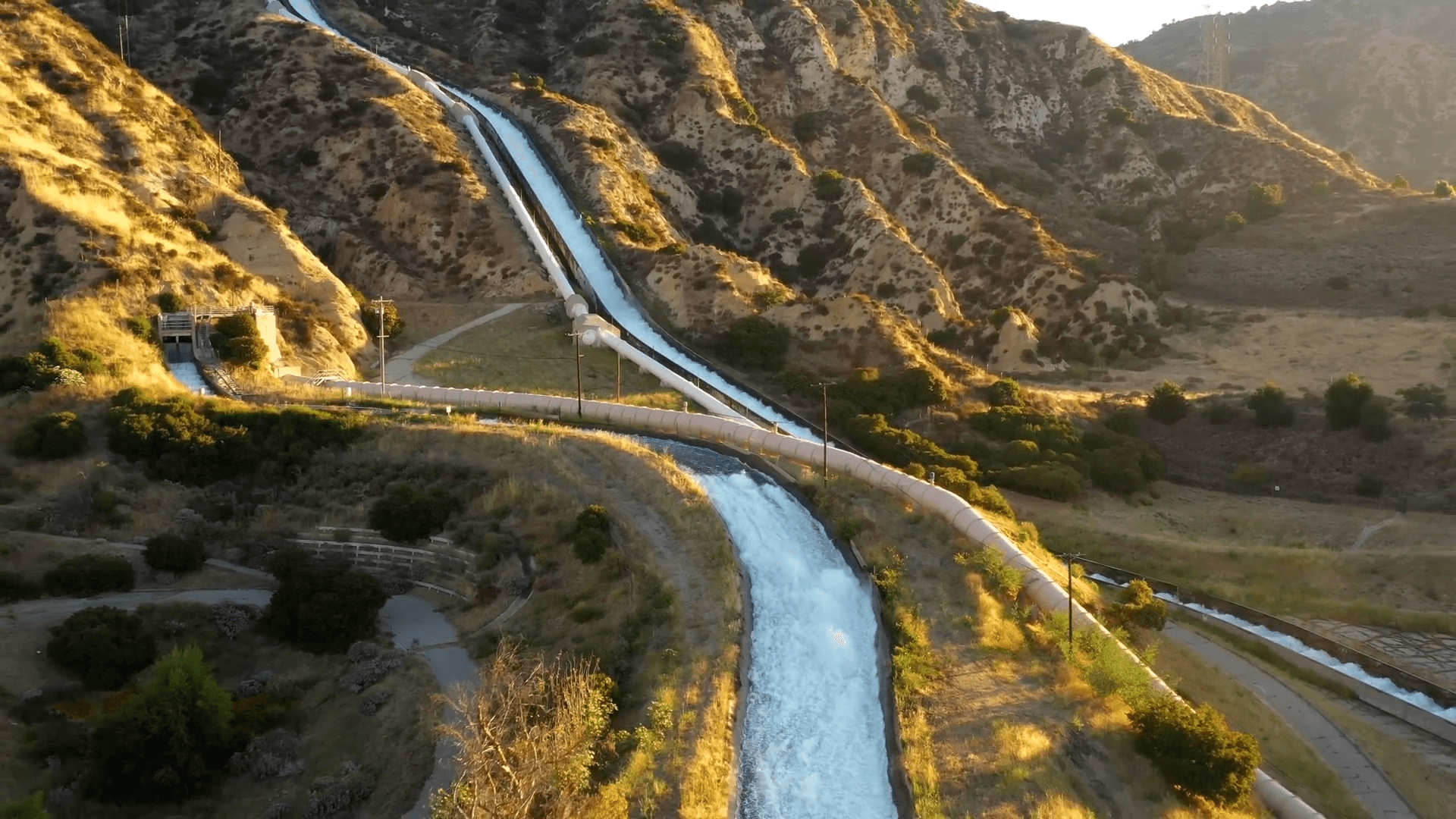
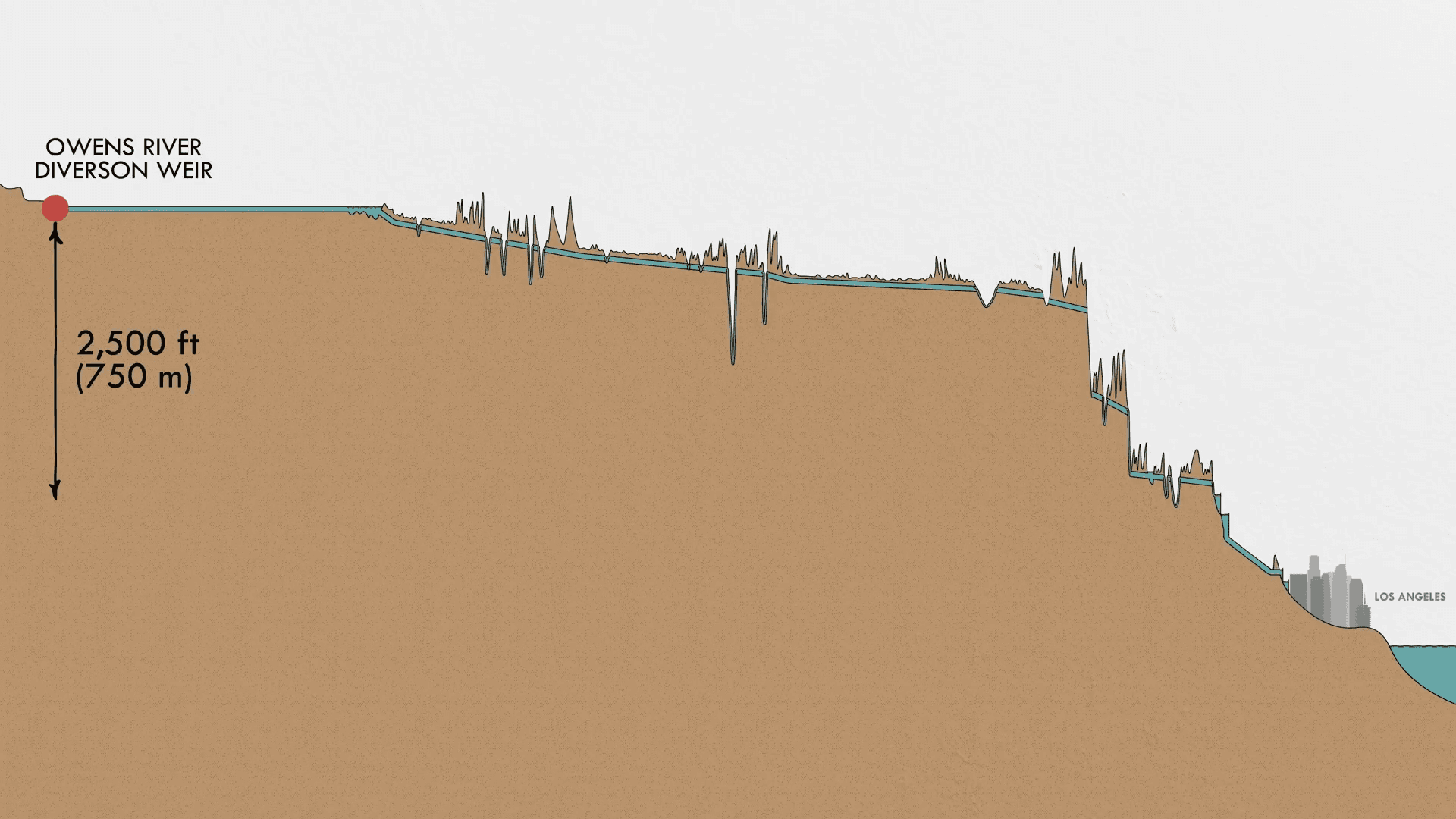
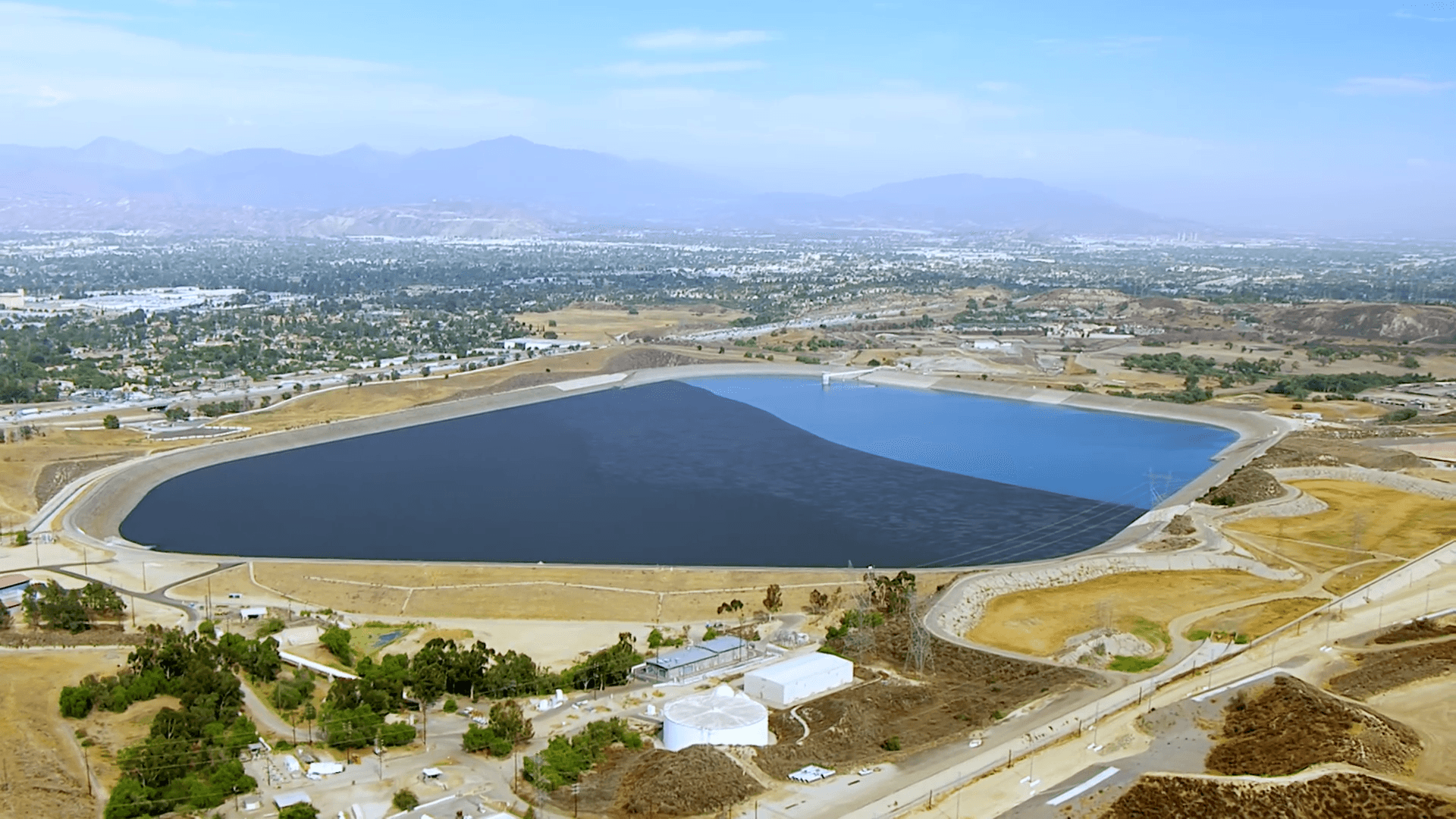
In the early twentieth century, Los Angeles had capital and political willpower, but not water. So it built an engineering marvel, the LA Aquaduct, to guide water from the Sierra Nevadas down to the growing city. Grady gets into the literal (and figurative) ups and downs of the project in this Practical Engineering video.
Although the engineering prowess of the aquaduct system is impressive, as Grady points out, the LA Aquaduct’s story is much more complicated than the engineering needed to move water between two points. It’s a story where greed, corruption, politics, cultural impact, environment effects, and climate change all intersect. (Video and image credit: Practical Engineering)
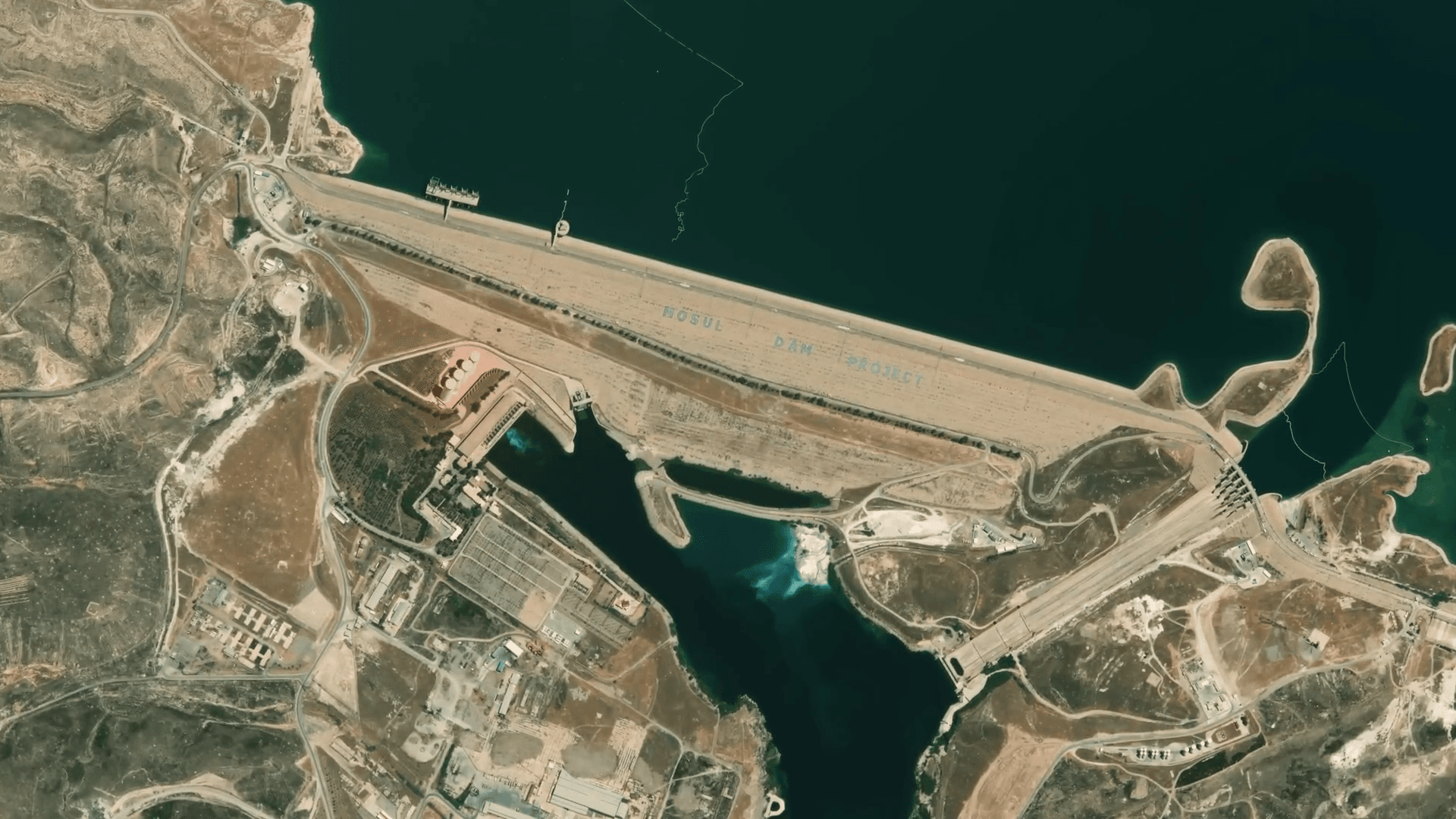
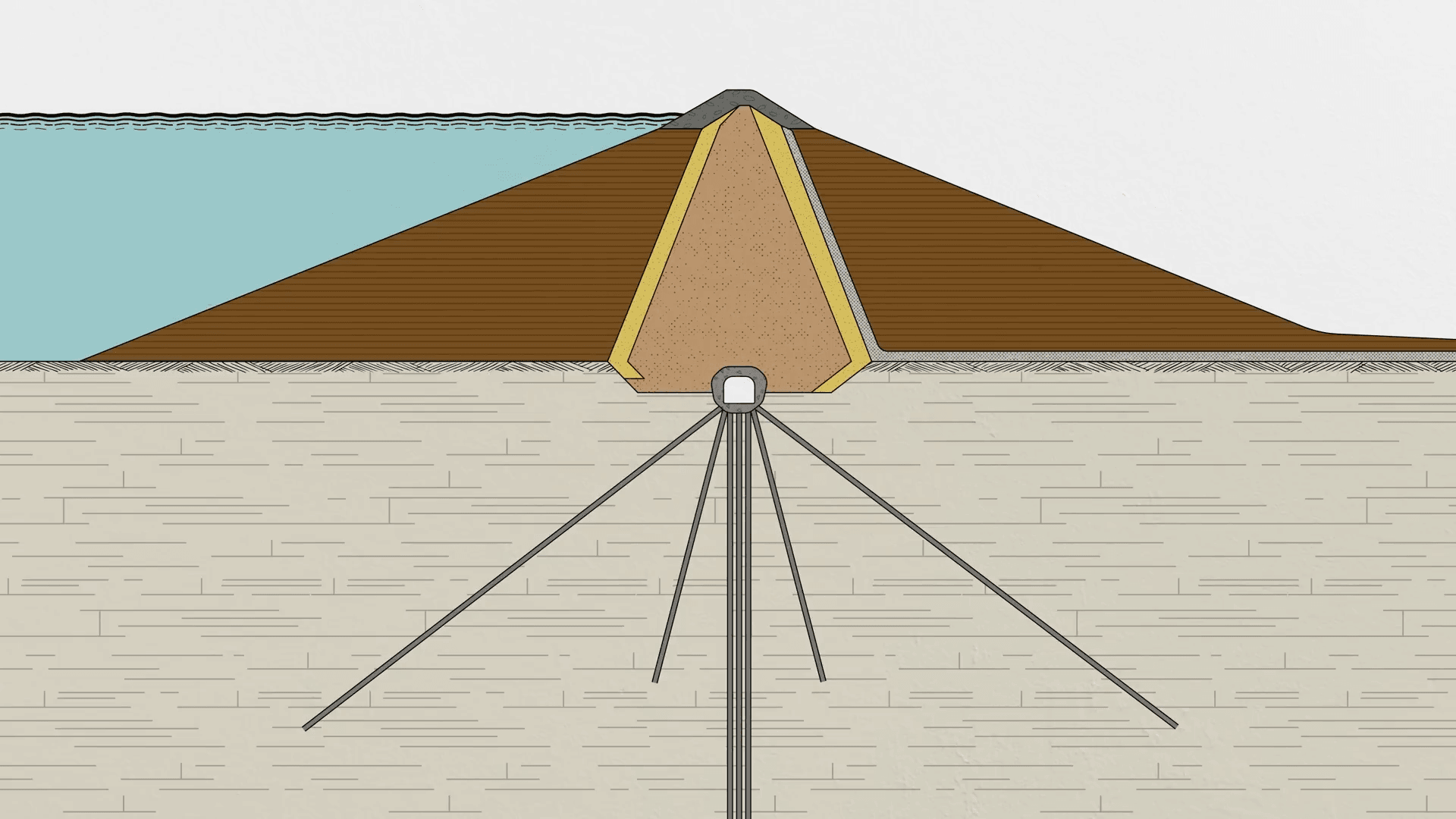
Keeping the water in a reservoir is an obvious challenge for any dam. But for Iraq’s Mosul Dam, it’s especially challenging because the dam was built on a foundation of gypsum, a highly water-soluble mineral. Since it was built, Mosul Dam’s water has been eating away at the underlying bedrock, making sinkholes, forcing gaps, and generally working its way out. That, obviously, creates a huge risk for dam failure and massive downstream flooding.
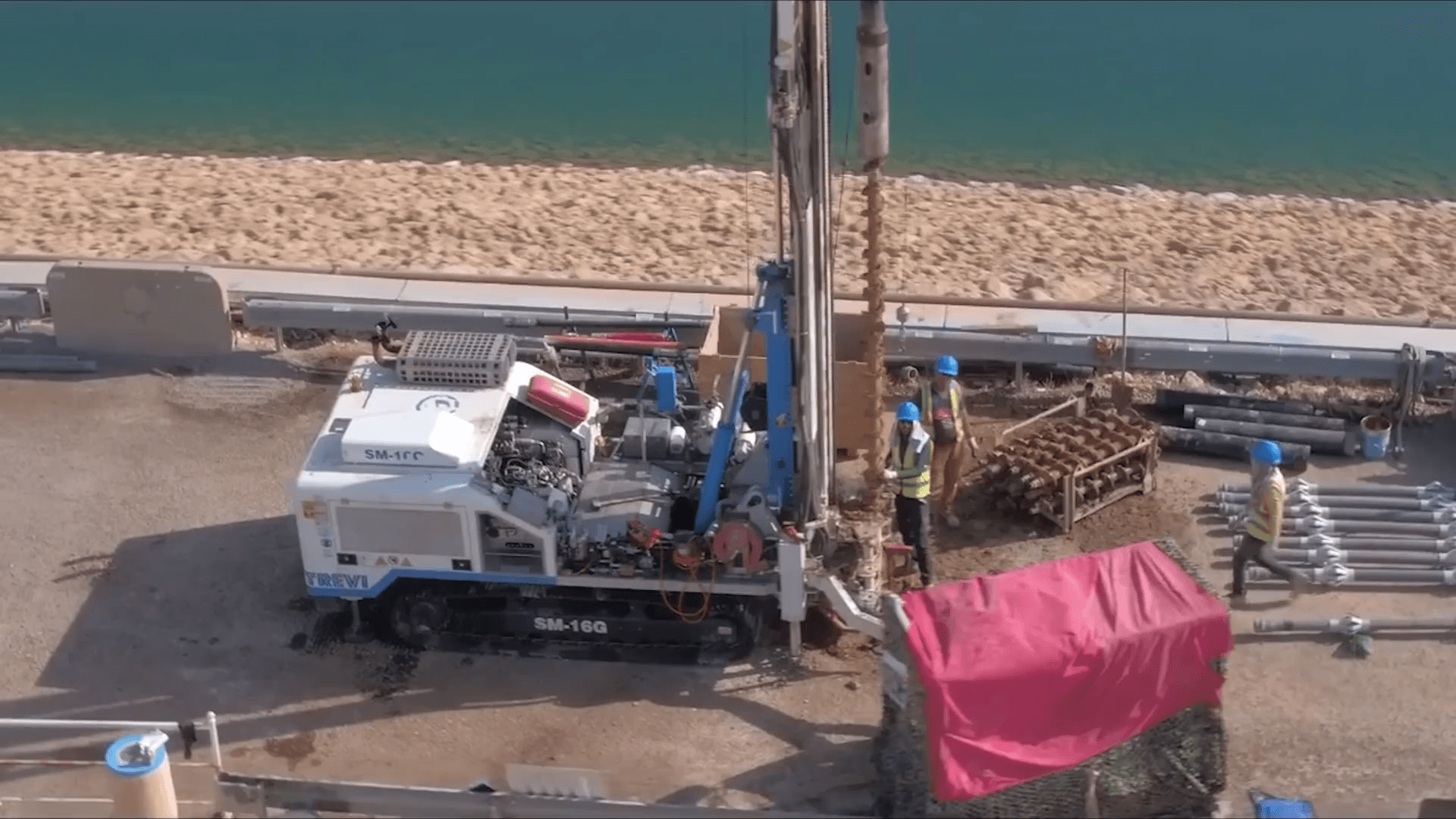
To get the dam stabilized–at least to a point where Iraqi engineers could keep up with filling the holes as they form–took a massive international engineering project, carried out in the shadow of armed conflict. (Video and image credit: Practical Engineering)
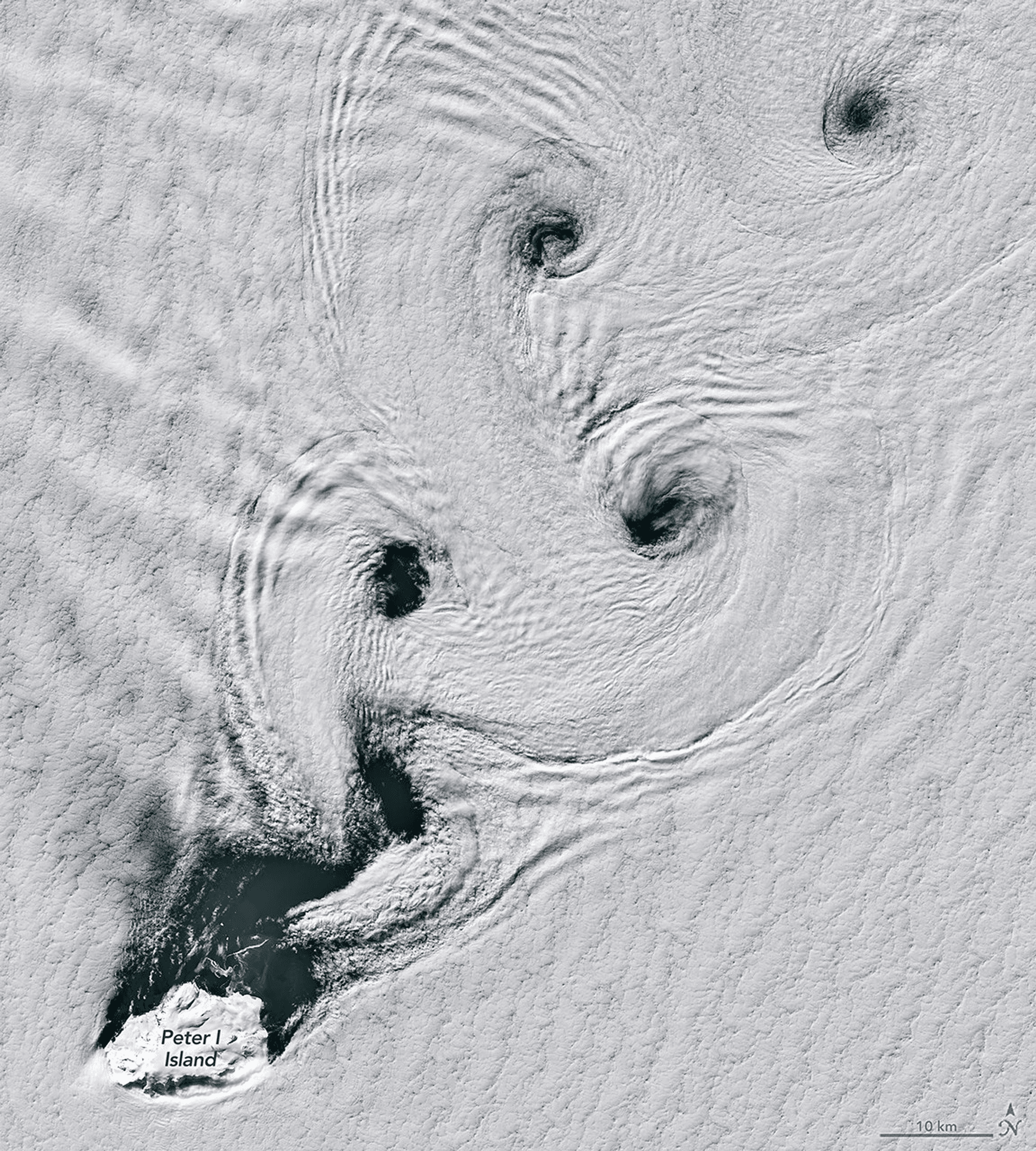
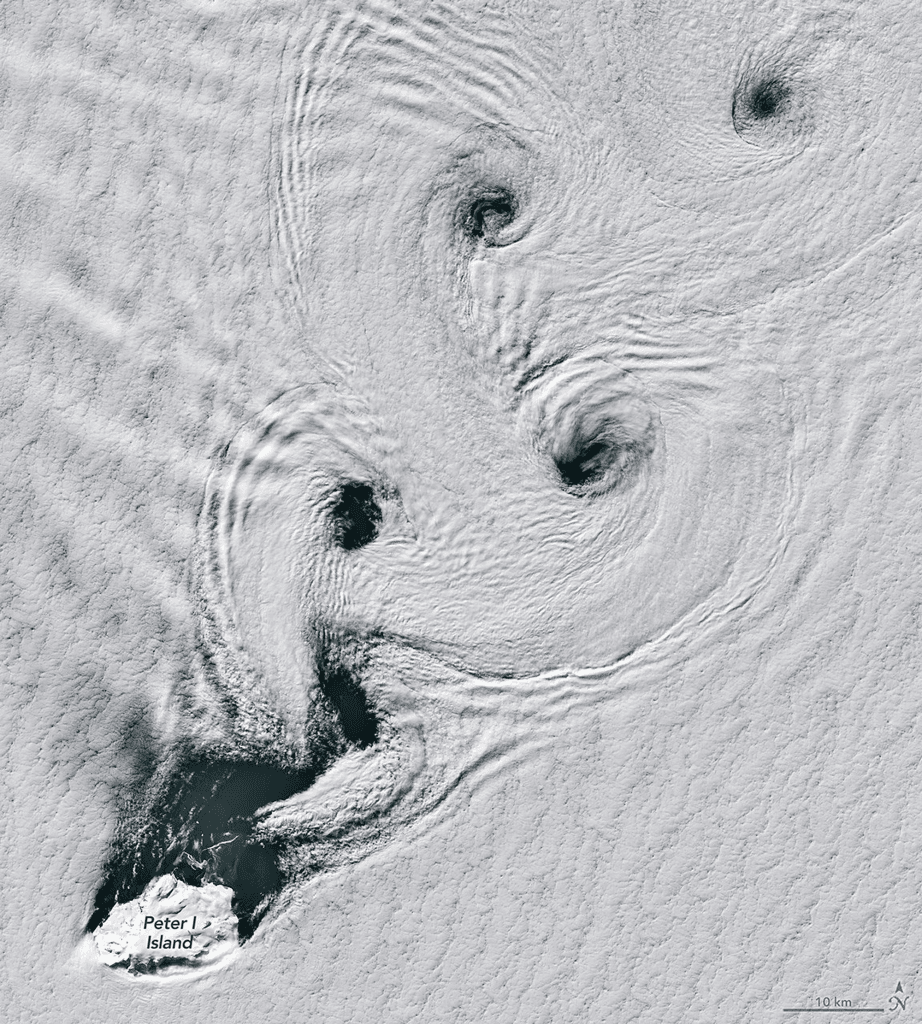
In the Southern Ocean, obstacles are sparse. But the ice-cloaked volcano of Peter I Island is tall enough at over 1600 meters to disrupt the wind. At steady wind speeds between about 18 to 54 kilometers per hour, flowing past the island creates vortices that shed from one side and then the other. The result is a von Karman vortex street like the one seen here, flowing toward the upper right.
The overlaid ripple structures in the cloud layer are reminiscent of gravity waves. Perhaps, the wind’s passage made some lee waves that the vortices distorted? (Image credit: M. Garrison; via NASA Earth Observatory)