
This numerical simulation shows a von Karman vortex street in the wake of a bluff body. As flow moves over the object, vortices are periodically shed off the object’s upper and lower surfaces at a steady frequency related to the velocity of the flow. The simulation takes place in a channel; note how the thickness of the boundary layers on the walls increases with downstream distance, forcing a slight constriction on the vortex street in the freestream.
Tag: wake

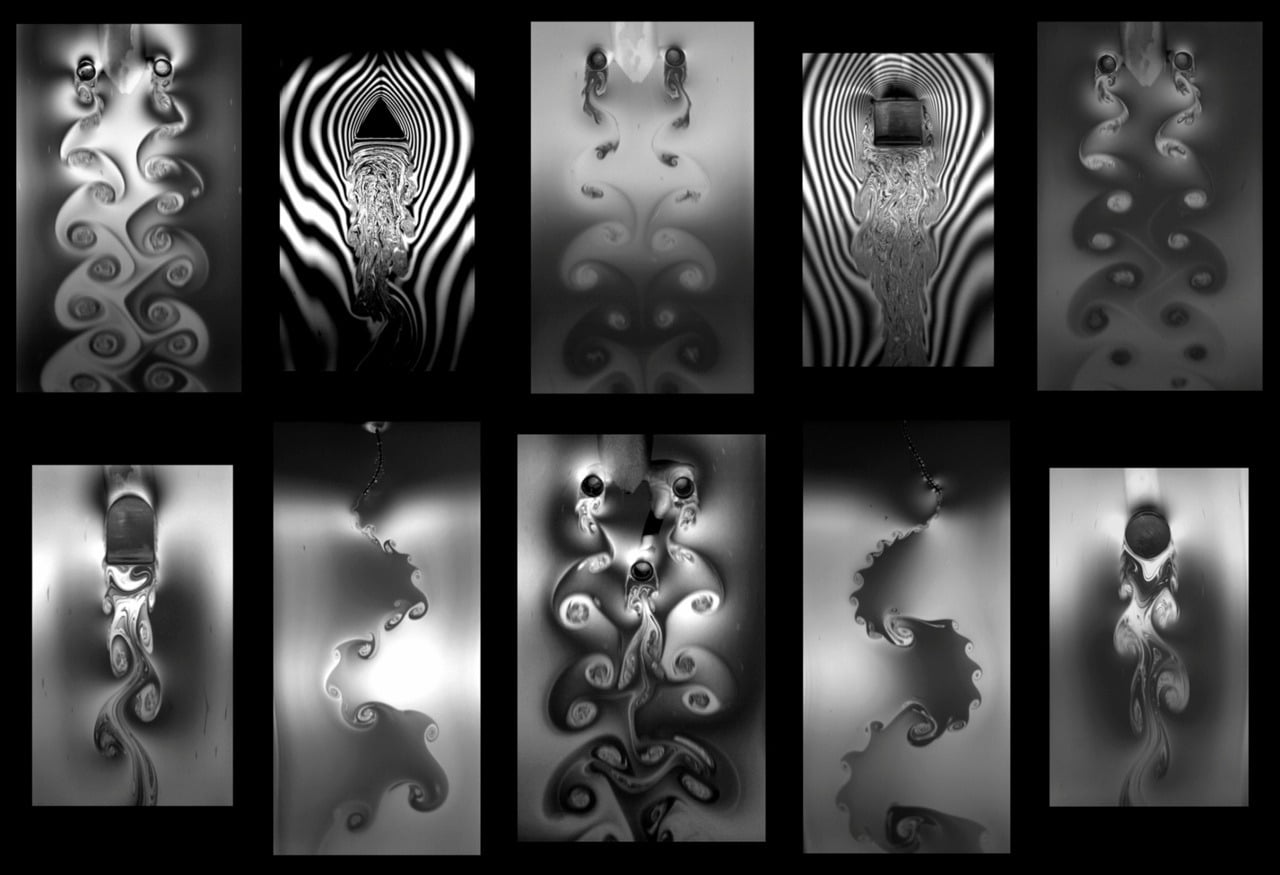
Soap Film Flow Viz
Flowing soap films provide an educational and beautiful method for visualizing the wakes of objects in two-dimensional flows. High-speed photography highlights the interference patterns on the soap film, providing detail without the necessity for the particulate tracking of other flow visualization methods. Highlights here include wakes behind bluff bodies, interacting cylinders, and flapping flags. (pdf) #

Underwater Cloaking
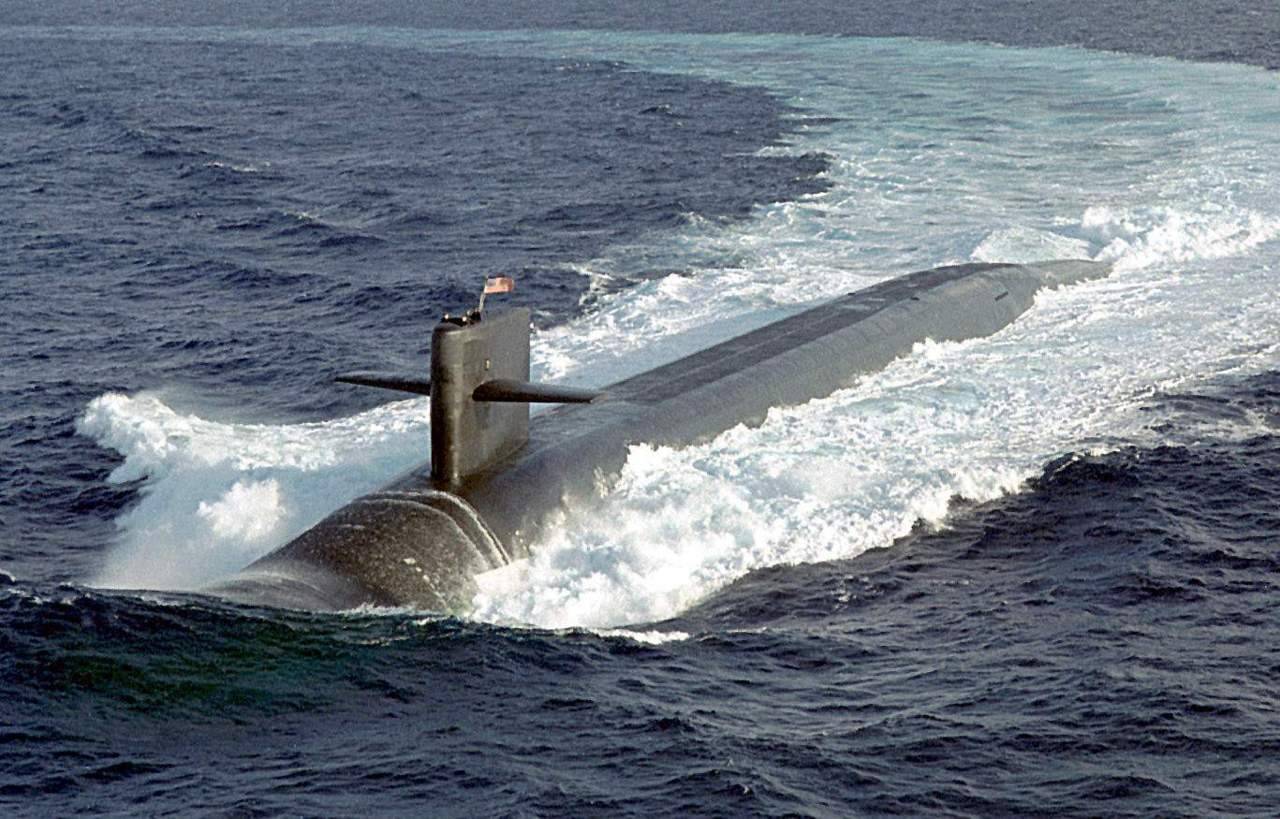
Researchers have suggested that it may be possible to cloak submerged objects as they move through a fluid using layers of mesh and micro-pumps. By redirecting the fluid so that it enters and leaves the mesh surrounding the object in the same speed and direction that it entered, it is theoretically possible to have zero drag and no wake. So far researchers have only simulated this set-up computationally using a sphere with 10 layers of mesh. It’s also unfortunately limited in size and speed: a vehicle 1 cm across could only remain wake-free at speeds below 1 cm/s. (Photo credit: Michael J Rinaldi) #

To Splash or Not to Splash?
Hydrophobic surfaces tend to repel water while hydrophilic ones attract it. This video explores the effects that hydrophobic and hydrophilic surface coatings can have on spheres when dropped in water. There are noticeable differences in splash formation and wake shape. For more, see this research paper.
Starting Vortices
Whenever a wing stops or starts in a fluid, it produces a vortex. This 2D numerical simulation shows an airfoil repeatedly starting and stopping, shedding a vortex each time. Note how the line of vortices drifts downward in the wake; this is an indication of downwash. (submitted by jessecaps)
Vertical Axis Wind Turbines
Conventional wind turbines feature horizontal axis propellers which must be placed far apart from one another to avoid wake interference. Researchers have found that using vertical axis wind turbines specially arranged to utilize the wake of one turbine to improve the efficiency of its neighbor can produce far more energy per square meter of land. The inspiration for this arrangement came from fish, which also derive benefits from the drafting that occurs in their schools. #
Tour de France Physics: Lead-Out Trains
[original media no longer available]
One of the most impressive cycling techniques for drag reduction on a rider is the lead-out train that delivers a sprinter to the finish line. No current team is better at this than HTC-Highroad. Watch for them in the white and yellow from about ~4:00 in the above video.
The lead-out train begins 5 km or so before the line, with the entire team in a line at the front of the peloton with the sprinter in the final position. The rider at the front will ride for as long and hard as he can, ensuring that the pace is such that no riders from the main field are able to pull ahead. This accelerates the sprinter to higher speeds while sheltering him in the wake of the rest of the team.
One by one, the riders of the team will do their time at the front, expending their energy while protecting the sprinter. The final lead-out rider will be sprinting a few hundred meters from the finishing line; at this point the sprinter in the back may be riding 70 kph while enjoying protection from the wind. Finally, with the finish line in sight, he will swing out around his lead-out man and go all out for the line. Sprinters can hit speeds of nearly 80 kph in these short bursts.
FYFD is celebrating the Tour de France with a weeklong exploration of the fluid dynamics of cycling. See previous posts on drafting in the peloton, and pacelining and echelons.
Tour de France Physics: Breakaways
In cycling, a small group of riders often leave the protection of the peloton in a breakaway. These riders will often spend 80% or more of a stage or race outside of the peloton, trying to reach the finish line before they’re caught. Because the pressure drag is so draining on a lone cyclist, it’s vital that breakaway riders work together. When the wind comes predominantly from the front or back, riders will form one or two lines, riding with their wheels within a foot of one another (see ~0:23). This paceline rotates so that every rider takes a turn at the front, bearing the brunt of the effort while other cyclists recover in their wake, where they experience less drag.
If the wind blows predominantly across the riders, they will form a diagonal line with the frontmost rider rotating behind for shelter from the wind after a pull. This drag reduction technique is called an echelon (see ~1:40). As seen above, for experienced riders the echelon can protect individuals even in bike-stealingly high winds.
FYFD is celebrating the Tour de France with a weeklong exploration of the fluid dynamics of cycling. See part one on drafting in the peloton.

Tour de France Physics: Pelotons
July is well underway and for cycling fans around the world that means it’s time for the Tour de France. This week at FYFD we’re going to do something a little different: in honor of cycling’s biggest race, every post this week will focus on some of the fluid dynamics involved in the sport.
On a bicycle, except when climbing, the majority of a rider’s energy goes toward overcoming aerodynamic drag. Riders wear close-fitting clothes to reduce skin friction and loss to flapping fabric, but most of their drag is pressure-based. A blunt object disturbs the airflow around it, usually resulting in separated flow in its wake. A high pressure region forms in front of the rider and a low pressure region forms in the separated flow behind them. This pressure difference literally pulls the rider backwards. Since drag goes roughly as speed squared, adding a headwind makes matters even worse for a cyclist.
In races, especially on flat stages, the majority of the riders will stay in a large group called a peloton in order to counteract these aerodynamics. By riding in the wakes of those in the front, riders in the peloton experience a much smaller front-to-back pressure difference and thus much less drag. For a rider in the midst of the peloton, the drag reduction can be as great as 40% (#). This allows riders to conserve energy for solo efforts near the end of the race or stage, like breaking away from the peloton in the final kilometers or winning a sprint for the finish line. (Photo credit: Wade Wallace)

.jpg)
