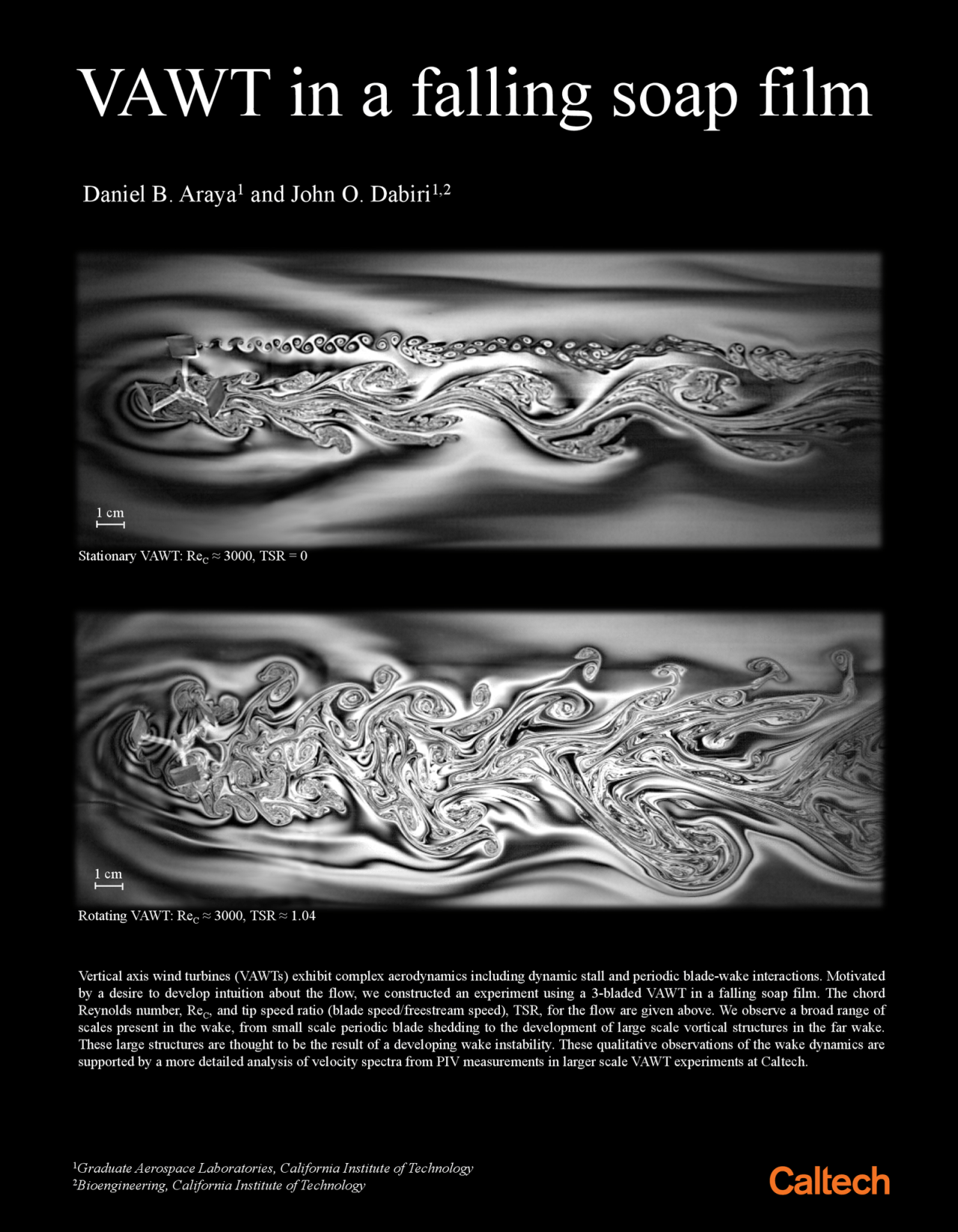
Vertical-axis wind turbines (VAWT) are an alternative to traditional wind turbine designs. Unlike their more common cousins, VAWTs rotate about a vertical axis and are omni-directional, meaning that they do not have to be pointed into the wind to produce power. While their size allows VAWTs to be packed much closer to one another than traditional turbines, a clear understanding of the flow around the turbines is needed in order to place the turbines for effective and efficient operation. The images above show the complicated and turbulent wake of a three-bladed VAWT when stationary (top) or rotating (bottom). The flow is visualized using a gravity-driven soap film (flowing left to right in the images) pierced by a model VAWT (seen at the left). The wakes contain many scales from simple, periodically-shed vortices off a blade to very large-scale vortical structures forming downstream of the turbine. This work originally appeared as a poster in the Gallery of Fluid Motion at the 2014 APS DFD Annual Meeting. (Image credit: D. Araya and J. Dabiri)
Tag: turbulence

Van Gogh and Turbulence
Turbulence is one of the great unsolved mysteries of classical mechanics. Many physicists and engineers have spent their careers trying to further our understanding of the subject and find the mathematical pattern that underlies its complex motions. But understanding turbulence and representing it artistically may be two different things. This video discusses some neat research that found that some of Vincent van Gogh’s paintings, like “The Starry Night”, display mathematical patterns like those of turbulence. (Video credit: TED Ed)

Piazza del Popolo
The lions of the fountain in Rome’s Piazza del Popolo eject a turbulent sheet of water. Random fluctuations in the water sheet cause holes to form. Driven by surface tension, these holes grow and merge, leaving behind ligaments of water which quickly break up into a spray of unevenly-sized drops. (Image credit: E. Villermaux)
The Rayleigh-Taylor Instability
What’s this? An FYFD video?! Yes, at long last, I’ve begun filming some videos of my own. This first one takes a look at the Rayleigh-Taylor instability and all that action that goes on in your coffee cup. I hope to bring you more FYFD-produced videos in the future, including some videos from the American Physical Society Division of Fluid Dynamics conference in San Francisco next week. What kind of topics would you guys be interested in for the future? (Video credit: N. Sharp)

Turbulence and Star Formation
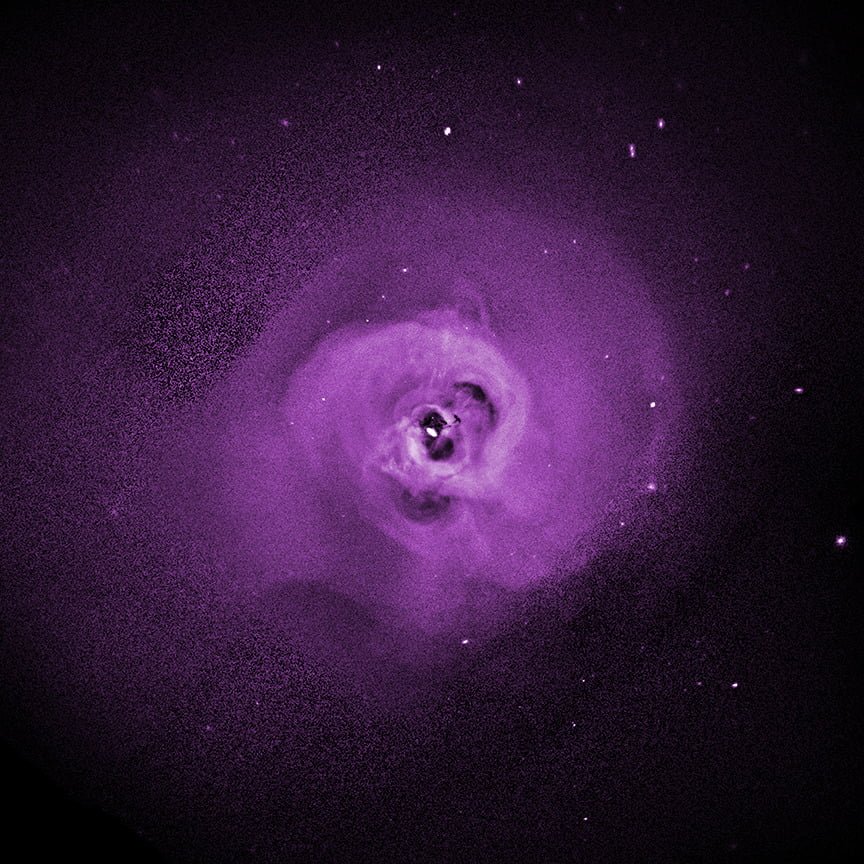
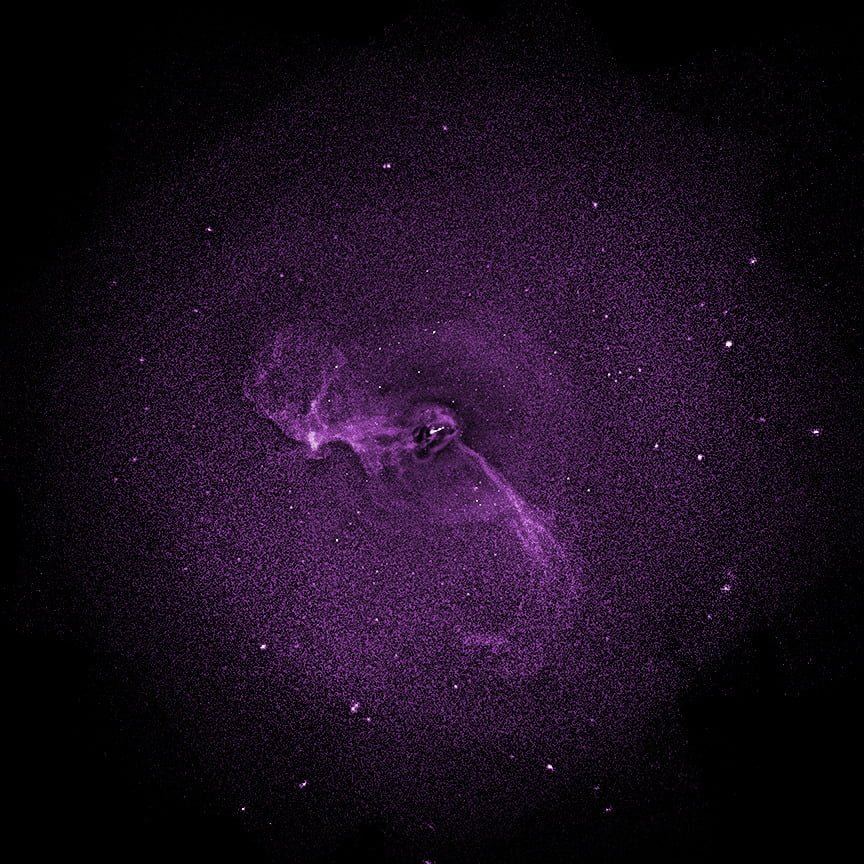
Galaxy clusters are objects containing hundreds or thousands of galaxies immersed in hot gas. This gas glows brightly in X-ray, as seen in the Perseus (top) and Virgo (bottom) clusters above. Over time, the gas near the center of the clusters should cool, generating many new stars, but this is not what astronomers observe. New research suggests turbulence may prevent this star formation. The supermassive black holes near the center of these galaxy clusters pump enormous amounts of energy into their surroundings through jets of particles. Those jets churn the gas of the cluster, generating turbulence, which ultimately dissipates as heat. It is this turbulent heating astronomers think counters the radiative cooling of the gas, thereby keeping the gas hot enough to prevent star formation. You can read more about the findings in the research paper. (Image credits: NASA/Chandra/I. Zhuravleva et al.; via io9)
The Hidden Complexities of the Simple Match
Striking a match and blowing it out seems rather simple to the naked eye. But with high-speed video and schlieren photography, the act takes on new complexity. Schlieren photography is an optical technique that is incredibly sensitive to changes in density, which makes it a prime choice for visualizing flows with temperatures variations or shock waves. Here it shows the hot gases generated as the match is lit. Once the match ignites, the flow calms somewhat into a gently rising plume of exhaust and hot air. When someone enters the frame to blow out the match, the frame rate increases to capture what happens next. The flow field around the match becomes very complex as the air and flame interact. The range of length scales in the flow increases, from scales of several centimeters down to those less than a millimeter. This complexity and range of sizes is a hallmark of turbulence. (Video credit: V. Miller et al.)

Phytoplankton Bloom
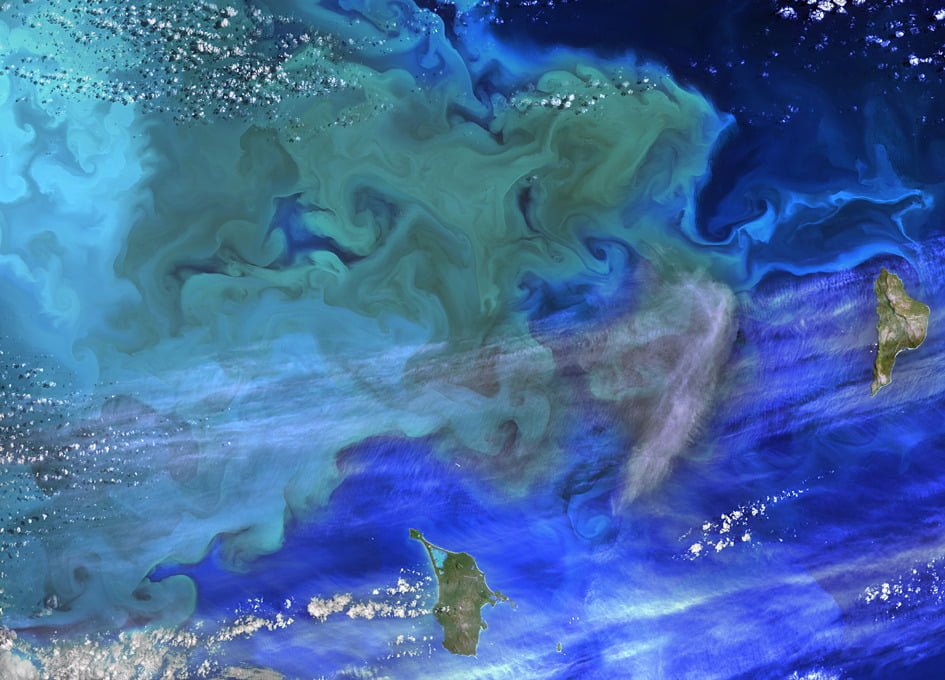
In satellite imagery the blue and green whorls of massive phytoplankton blooms stand out against the ocean backdrop. These microscopic organisms are part of a delicate predator-prey balance and can be very sensitive to nutrient concentrations and other environmental conditions. Their individual size is negligible, but in a bloom phytoplankton are numerous enough that they act as seed particles for the flow. As a result, differing concentrations of phytoplankton reveal the swirling, turbulent mixing of ocean waters. (Image credit: NASA/USGS; via SpaceRef; submitted by jshoer)

Pyroclastic Flow

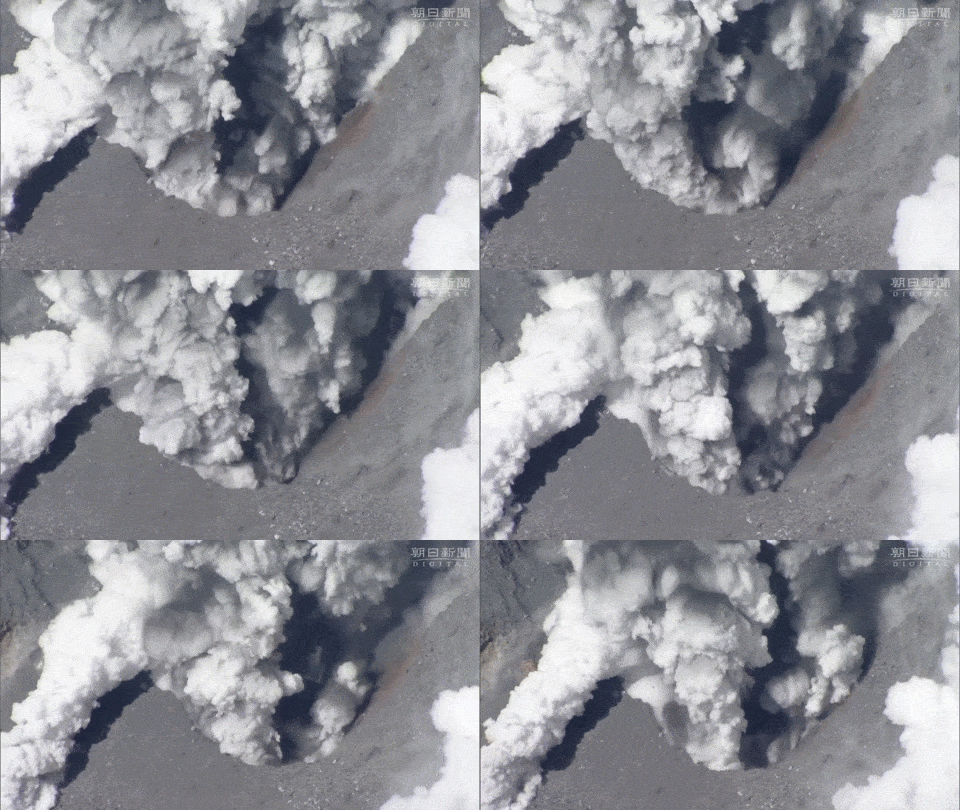
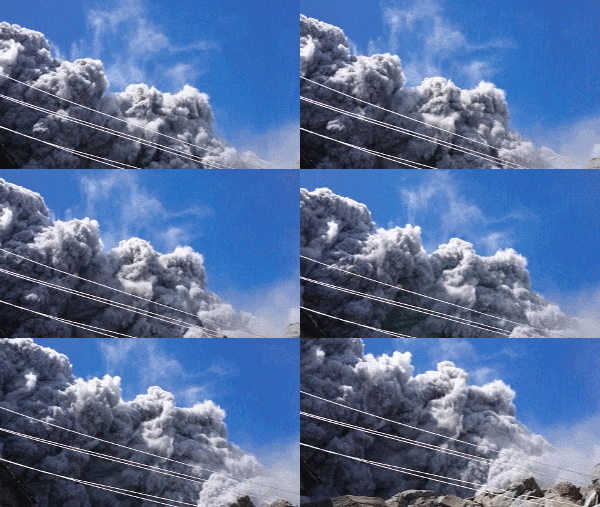
Saturday morning Japan’s Mount Ontake erupted unexpectedly, sending a pyroclastic flow streaming down the mountain. Many, though sadly not all, of the volcano’s hikers and visitors survived the eruption. Pyroclastic flows are fast-moving turbulent and often super-heated clouds filled with ash and poisonous gases. They can reach speeds of 700 kph and temperatures of 1000 degrees C. The usual gases released in a pyroclastic flow are denser than air, causing the cloud to remain near the ground. This is problematic for those trying to escape because the poisonous gases can fill the same low-lying areas in which survivors shelter. Heavy ashfall from the flow can destroy buildings or cause mudslides, and the fine volcanic glass particles in the ash are dangerous to inhale. The sheer power and scale of these geophysical flows is stunning to behold. Those who have witnessed it firsthand and survived are incredibly fortunate. For more on the science and history of Mount Ontake, see this detailed write-up at io9. (Image credits: A. Shimbun, source video; K. Terutoshi, source video; via io9)
City Winds Simulated
Anyone who has spent much time in an urban environment is familiar with the gusty turbulence that can be generated by steady winds interacting with tall buildings. To the atmospheric boundary layer–the first few hundred meters of atmosphere just above the ground–cities, forests, and other terrain changes act like sudden patches of roughness that disturb the flow and generate turbulence. The video above shows a numerical simulation of flow over an urban environment. The incoming flow off the ocean is relatively calm due to the smoothness of the water. But the roughness of an artificial island just off the coast acts like a trip, creating a new and more turbulent boundary layer within the atmospheric boundary layer. It’s this growing internal boundary layer whose turbulence we see visualized in greens and reds. (Video credit: H. Knoop et al.)
The Physics of Sneezing
Sneezing can be a major factor in the spread of some illnesses. Not only does sneezing spew out a cloud of tiny pathogen-bearing droplets, but it also releases a warm, moist jet of air. Flows like this that combine both liquid and gas phases are called multiphase flows, and they can be a challenge to study because of the interactions between the phases. For example, the buoyancy of the air jet helps keep smaller droplets aloft, allowing them to travel further or even get picked up and spread by environmental systems. Researchers hope that studying the fluid dynamics and mathematics of these turbulent multiphase clouds will help predict and control the spread of pathogens. Check out the Bourouiba research group for more. (Video credit: Science Friday)