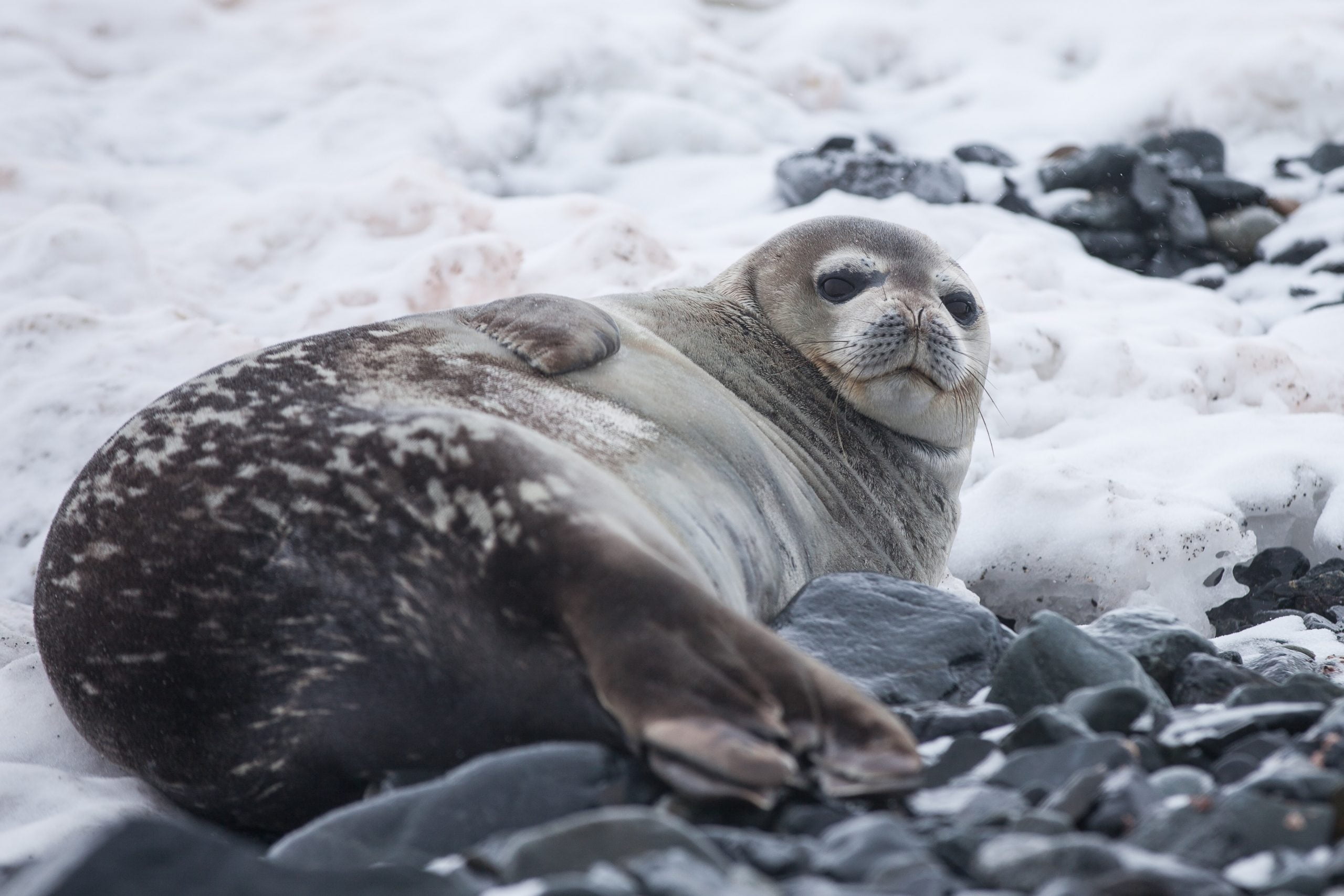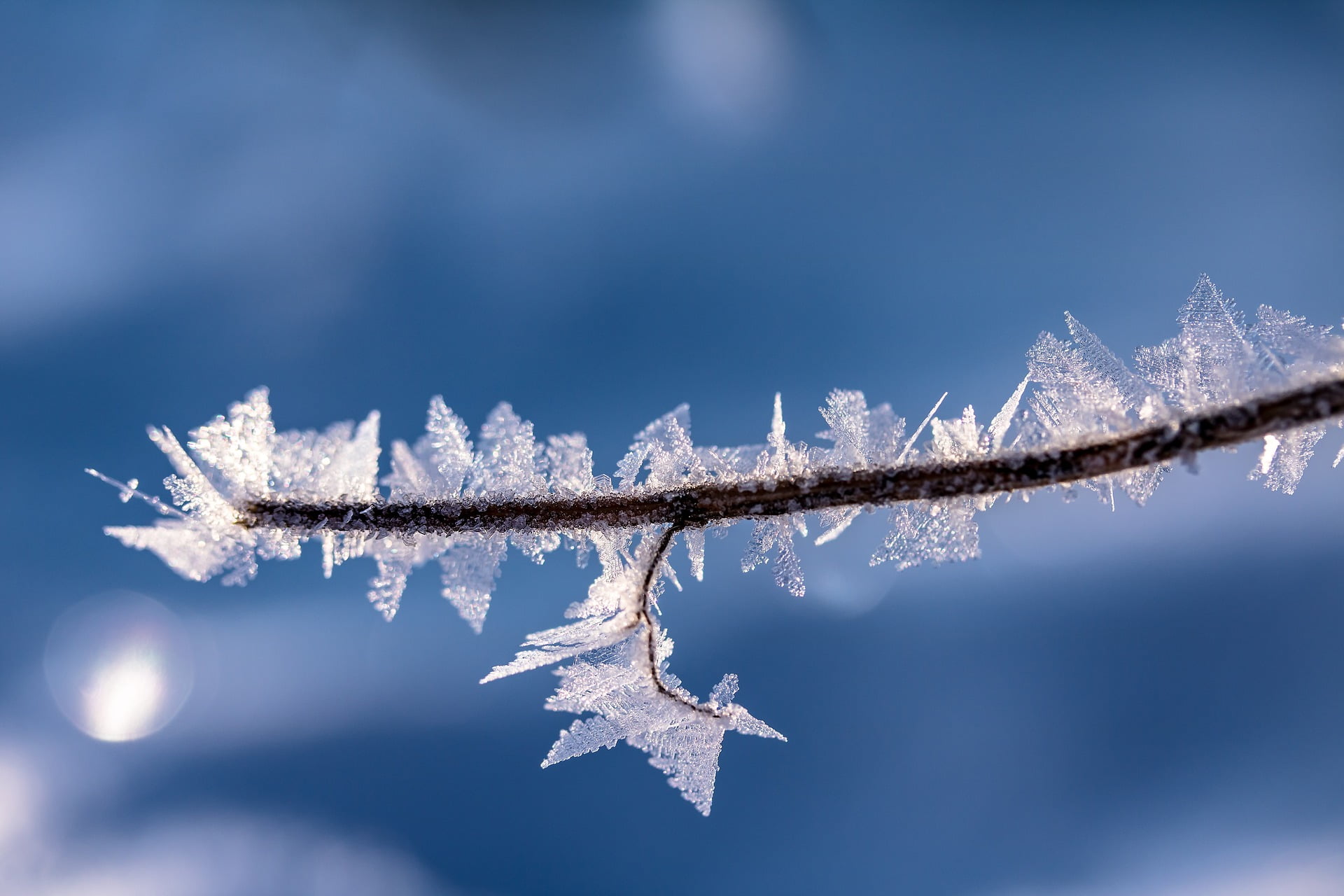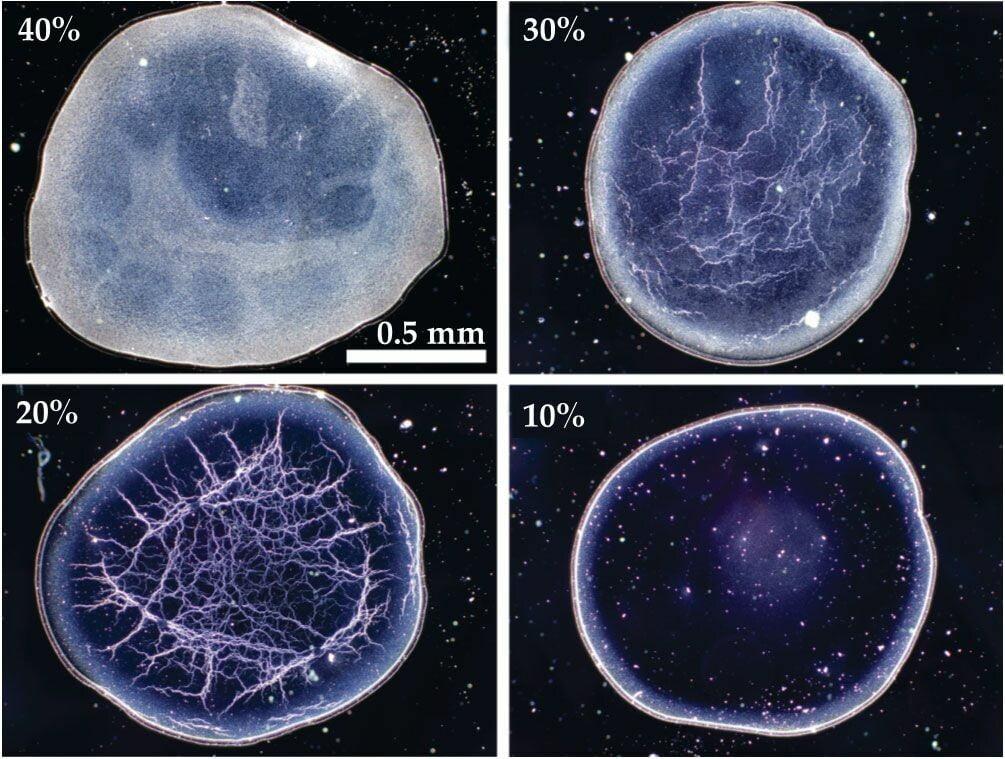
This 1936 promotional film by Chevrolet explains the concept of streamlining objects to reduce their drag. And it actually does a pretty nice job of it, including some wind tunnel footage and table-top demonstrations. It’s also an amazing snapshot of the era, both in terms of engineering and the vision they had for the future. Just check out that City of the Future and its torpedo cars! (Video and image credit: Chevrolet; submitted by Larry S.)
Tag: science

The Colors of a Thin Film
Soap bubbles and other thin films are colorful thanks to wave interference across their tiny thickness, but you may have noticed that only some colors appear. Others, like red, seem to be missing. In this video, Dianna digs into the details of wave interference and color theory to explain why we don’t see pure colors in a bubble.
As she points out near the end of the video, the way to make a red bubble is to shine purely red light on the bubble, but even then, you’ll see stripes on it related to the light’s wavelength. Scientists actually use this property to measure the thickness of tiny air gaps between a droplet and a surface. (Image and video credit: Physics Girl)

Jets Beneath Leidenfrost Drops
When a droplet impacts, it’s not unusual for converging ripples to form an upward jet, like the one seen here. But under the right circumstances, jets can form downward, too. This study looks at the ultrafast jets that can form beneath an impacting Leidenfrost drop.
These Leidenfrost drops are striking a surface much hotter than their boiling point, so a large vapor cavity forms quickly beneath them. Using x-ray imaging, the researchers were able to capture the dynamics of this cavity’s formation and collapse (Image 2). The field of view in the animation shows only a portion of the drop’s cavity, so Image 3 may help you orient relative to the drop at large.
Initially, we see the center of the droplet hitting the surface, followed by the fast growth of a vapor cavity. Rippling capillary waves converge on top of the cavity, creating a pinch-off. From there, a bubble rises up while a fast jet shoots downward. (Image credit: water jet – A. Min, others – S. Lee et al.; research credit: S. Lee et al.)

“Monsoon 6”
The stunning power and beauty of our atmosphere comes to life in Mike Olbinski’s latest short film, “Monsoon 6”. Over the years, I’ve probably watched dozens of Olbinski’s videos, yet he still captures sequences that make me exclaim aloud as I watch. In this one, some of my favorites are the microburst at 2:17 and the development of mammatus clouds at 3:20. How mammatus clouds form is still very much an area of active research; I don’t know if Olbinski’s footage sheds light on their formation, but it is supremely awesome to watch! (Image and video credit: M. Olbinski)

Why Masks Cut COVID-19 Transmission So Well
Face masks are an important tool for curtailing disease transmission, and this video explains how even imperfect masks do a much better job of protecting people than you may think. Strictly speaking, this video is not fluid dynamical — fluid dynamics plays more of a role in the details of what makes a mask effective — but the video is so good and so timely that I just have to share it. Given it a watch and then go explore the interactive essay to get an even better handle on mask mathematics. (Image and video credit: Minute Physics; see also The Multiplicative Power of Masks)

An Intro to Liquid Crystals
There’s a good chance that the screen you’re using to read this uses liquid crystals, but how much do you know about this ubiquitous technology? Liquid crystals are fluids made up of molecules that orient into crystalline structures. Their usefulness for displays comes from the way they interact with light, changing the polarization of light based on their orientation. This Lutetium Project video is a great introduction to liquid crystals and some of their important properties, and, as always with LP videos, the journey is a beautiful one. (Image and video credit: The Lutetium Project)
Want to learn how to promote your research in traditional media and online? This Friday Tom Crawford and I are presenting a free webinar on the topic as part of the Fluid Mechanics Webinar Series. Be sure to register ahead of time for the link and tune in at 4pm GMT (11am EST) on Friday. See you there!

Sensing Obstacles Through Flow
Mosquitoes, bats, and even eels use non-visual means to sense their environments. For mosquitoes, part of their obstacle avoidance comes from the exquisite sensitivity of their antennae, which are able to sense subtle changes in the air flow around them as they approach a wall or the ground. Researchers used this same technique to help a quadcopter avoid crashing by adding air pressure sensors that respond to the changes in the copter’s wake as it approaches the ground. (Image and research credit: T. Nakata et al.; via Science)

Meandering
The banks of rivers are in constant flux, a pattern most easily captured from above. This satellite image shows a section of the Ivalo River in Finland, swollen with snowmelt after a winter of historic snowfalls. From above we see some of the river’s previous paths. This meandering is a natural result of secondary flows where rivers bend. The water carves away sediment from the outer bank and deposits it on the inner one, exaggerating every curve until the river cuts itself off, leaving behind a sinuous lake detached from the river’s new course. For an interesting (though non-physical) look at meandering, check out this procedural system for generating maps of rivers (thanks to Kam-Yung Soh for sharing). (Image credit: J. Stevens; via NASA Earth Observatory)

Freezing Waves
Vibrate a liquid, and you’ll get a pattern of standing waves known as Faraday waves. In this project, artist Linden Gledhill adds a twist to the usual view of these waves by capturing them in plastic. As the polymer liquid vibrates, Gledhill uses a flash of UV light to cure the polymer, freezing the wave pattern. Check out the original video for an even better look. (Image, video, and submission credit: L. Gledhill, 1, 2, 3, 4)

Shear and Convection in Turbulence
In nature, we often find turbulence mixed with convection, meaning that part of the flow is driven by temperature variation. Think thunderstorms, wildfires, or even the hot, desiccating winds of a desert. To better understand the physics of these phenomena, researchers simulated turbulence between two moving boundaries: one hot and one cold. This provides a combination of shear (from the opposing motion of the two boundaries) and convection (from the temperature-driven density differences).
Please note that, despite the visual similarity, these simulations are not showing fire. There’s no actual combustion or chemistry here. Instead, the meandering orange streaks you see are simply warmer areas of turbulent flow, just as the blue ones are cooler areas. The shape and number of streaks are important, though, because they help researchers understand similar structures that occur in our planet’s atmosphere — and which might, under the wrong circumstances, help drive wildfires and other convective flows. (Image, research, and video credit: A. Blass et al.)