Handmade kinetic sculptures by artists Marion Pinaffo and Raphaël Pluvinage spin and paint the sky in colorful smoke in “Sfumato”. Named for an artistic technique in which shading gradually changes tone and hue, the installation was built, the artists note, “without motors, electronics, computer generated images, or artificial intelligence”. Just pure hands-on engineering and physics. Watch the short video of the installation in action for the full effect. You can find more of their work on their website, Vimeo, and Instagram. (Image and video credit: M. Pinaffo and R. Pluvinage; via Colossal)
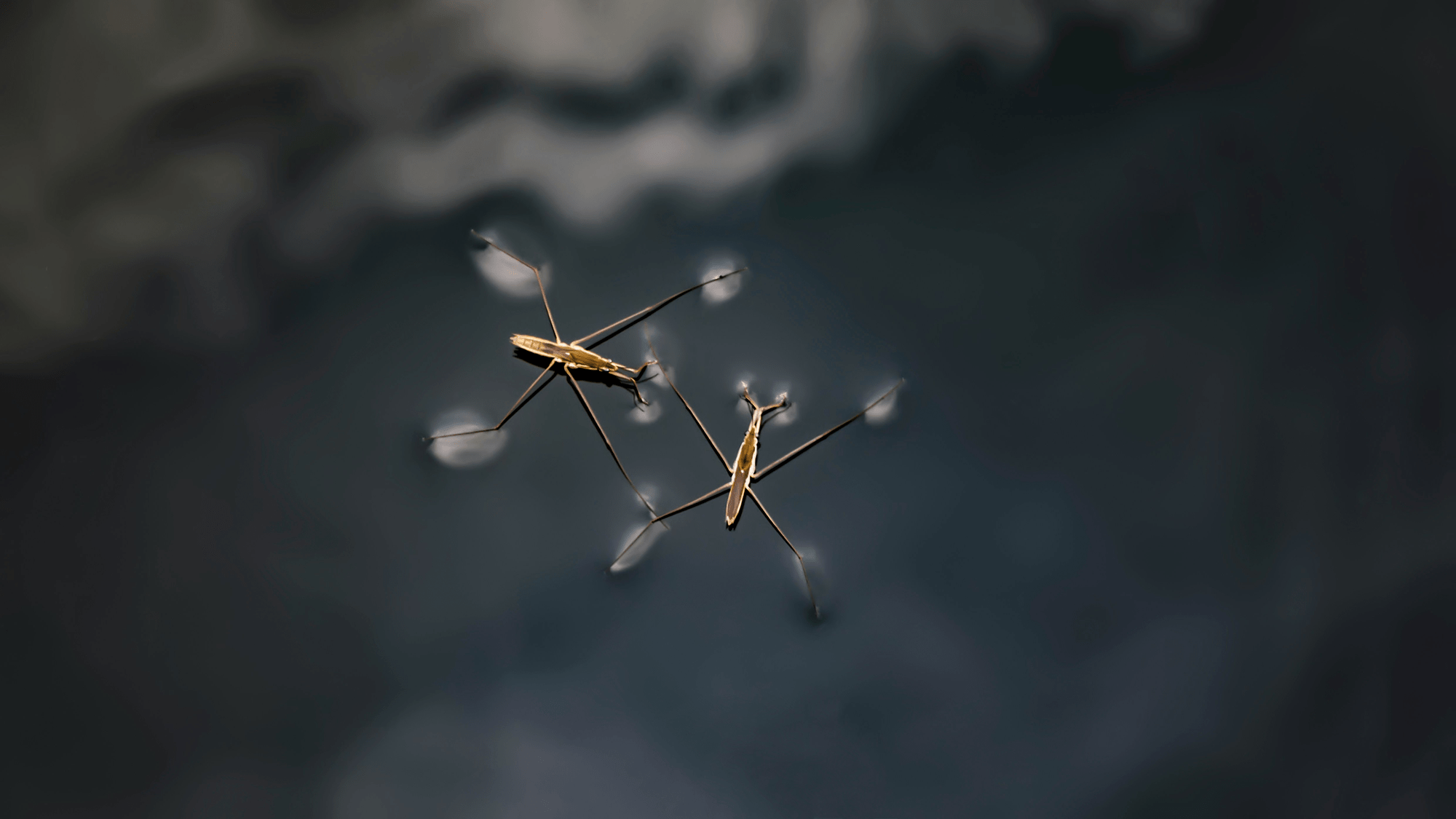
Water striders spend their lives at the air-water boundary, skittering along this interfacial world. But what happens when falling rain destroys their flat existence? That’s the question that motivated today’s research study, which looks water striders subjected to artificial rain.
Although the water drops themselves are far heavier than the insects, the water doesn’t strike hard enough to injure the insects. Neither a direct impact nor the forces from a neighboring impact, the researchers found, were enough to pose a problem for the water strider’s exoskeleton. Instead, they’re more likely to get flung or submerged, as follows:
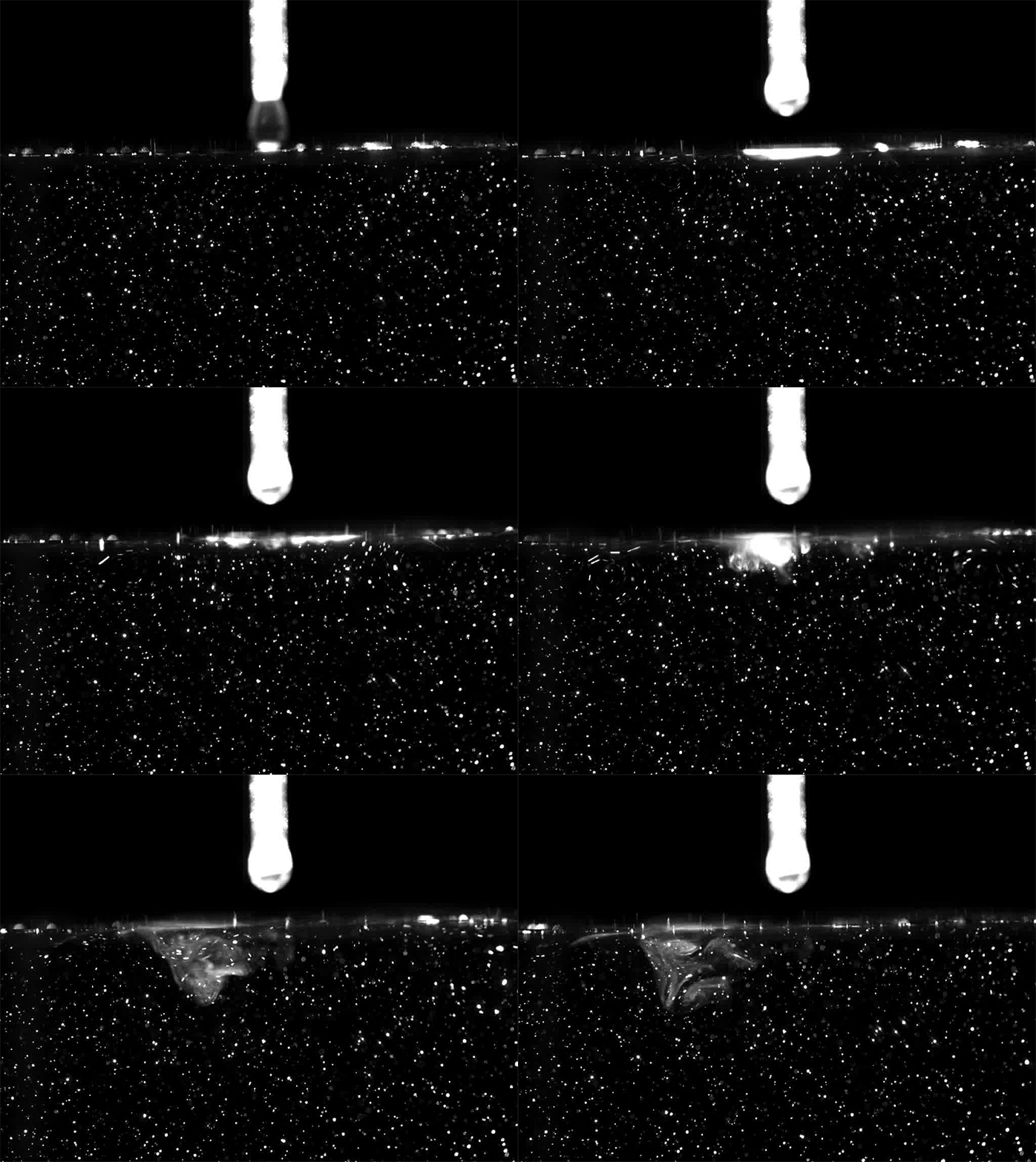
The initial impact of a raindrop creates a large crater. Depending on the position of the insect relative to the point of impact, this may fling the insect away or pull it down into the cavity.
When the drop hits, it creates a big crater in the water’s surface. Insects to the outside of the splash get flung outward, while those closer to the point of impact ride the crater wall downward. As the crater collapses, it forms a thick jet that pushes nearby water striders up with it.
As the initial cavity collapses, it creates a large jet that can push the strider into the air.
As that initial jet collapses, it forms a second crater, which — being smaller and narrower — collapses much faster than the first one. That action, researchers found, often submerges a water strider caught in the crater.
The first jet’s collapse creates a second crater, and it’s this one that tends to trap and submerge the water strider underwater.
Fortunately for the insect, their water-repellent nature means they’re covered in a thin bubble of air that lets them survive several minutes underwater. That’s time enough for the water strider to rescue itself. (Image credit: top – H. Wang, animations – D. Watson et al.; research credit: D. Watson et al.; via APS Physics)
No matter your cleaning habits, it’s possible to get some unexpected roommates. This variety is the drain fly, a species well-adapted to the moist environment of our pipes. As larvae, they slither and squirm in the biofilms that form from the hair, saliva, and food that make their way down our drains. Being fully immersed is no problem for them, since they carry their own air bubble like a mini scuba tank. In adulthood, these tiny flies are incredibly hairy, all the better to escape from water. All those little hairs trap air near the fly, making it hydrophobic so that water just slides off. It takes a serious dowsing to immerse them enough to drown. (Image and video credit: Deep Look)
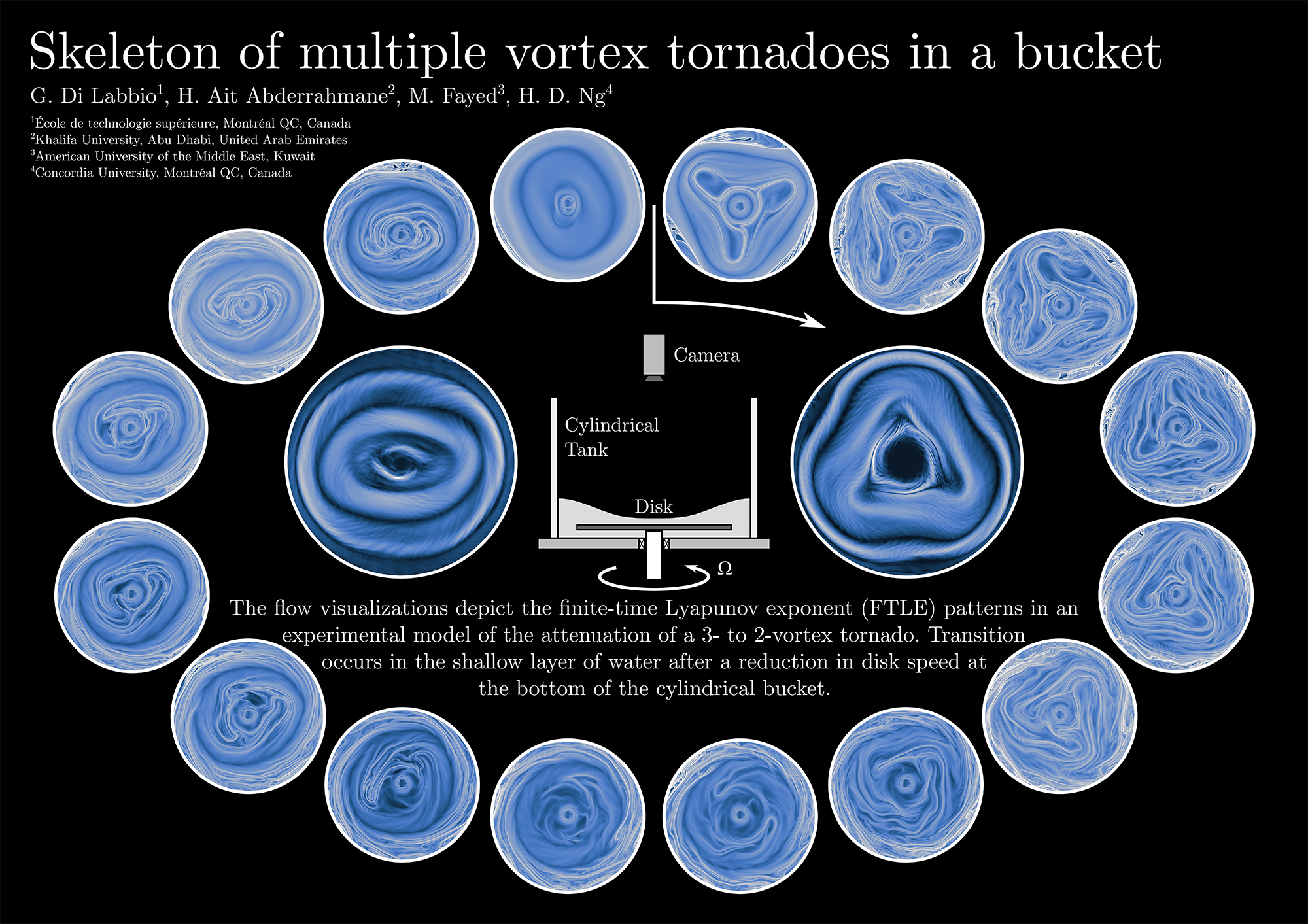
In nature, some powerful tornadoes form additional tornadoes within their shear layer. These subvortices revolve around the main tornado, causing massive destruction in their wake. In the laboratory, researchers create a similar multi-tornado system with a spinning disk at the bottom of a shallow, cylindrical layer of water. Depending on how fast the disk spins, different numbers of subvortices form around the main vortex.
In this poster, researchers show the transition from a 3-subvortex system to a 2-subvortex one. Starting at the 12 o’clock position and moving clockwise, we see 3 subvortices arranged in a triangle. A sudden change in the disk’s rotation speed destabilizes the system, causing the subvortices to break down and shift into a new 2-subvortex configuration. As this happens, material that was isolated in each subvortex (darker blue regions) is suddenly able to mix. That suggests that a real-world multiple vortex tornado might suddenly shed debris if it lost enough angular momentum. Back in the lab, though, the shift to a stable 2-subvortex system once again isolates material in individual subvortices and prevents it from mixing with the rest of the flow. (Image and research credit: G. Di Labbio et al. 1, 2)
After eight years and six flight tests, NASA said a fiery farewell to the Spacecraft Fire Safety Experiment, or Saffire, mission. Each Saffire test took place on an uncrewed Cygnus supply vehicle after undocking from the space station. Cygnus craft burn up during atmospheric re-entry, so using them as a platform guaranteed safety for the station’s crew.
A Plexiglass sample burns as part of Saffire-V’s experiments. In this experiment, researchers found that flames grew and spread faster on thin ribs of Plexiglass (left) than on thicker samples (right).
Saffire itself used a small wind tunnel to push air past its burning materials. The tests included materials like plexiglass, cotton, Nomex, and other fabrics that might be found on a spacecraft or its occupants. The goal, of course, is to understand how fires grow and spread in a spacecraft in order to protect the crew. To that end, Saffire experiments recorded not only what went on inside their test unit, but also what the conditions were in the spacecraft as Saffire burned. (Image and video credit: NASA; via Gizmodo and NASA Glenn)
Billowing turbulence, mushroom-like Rayleigh-Taylor instabilities, and spreading flows abound in Vadim Sherbakov’s “Origin.” The short film takes a macro looks at fluids — inks, alcohols, soaps, and other household liquids. It was filmed entirely on a DJI Pocket 2, a rather small, stabilized pocket camera. It’s a testament to what you can achieve with some experimentation and relatively inexpensive equipment. (Video and image credit: V. Sherbakov)
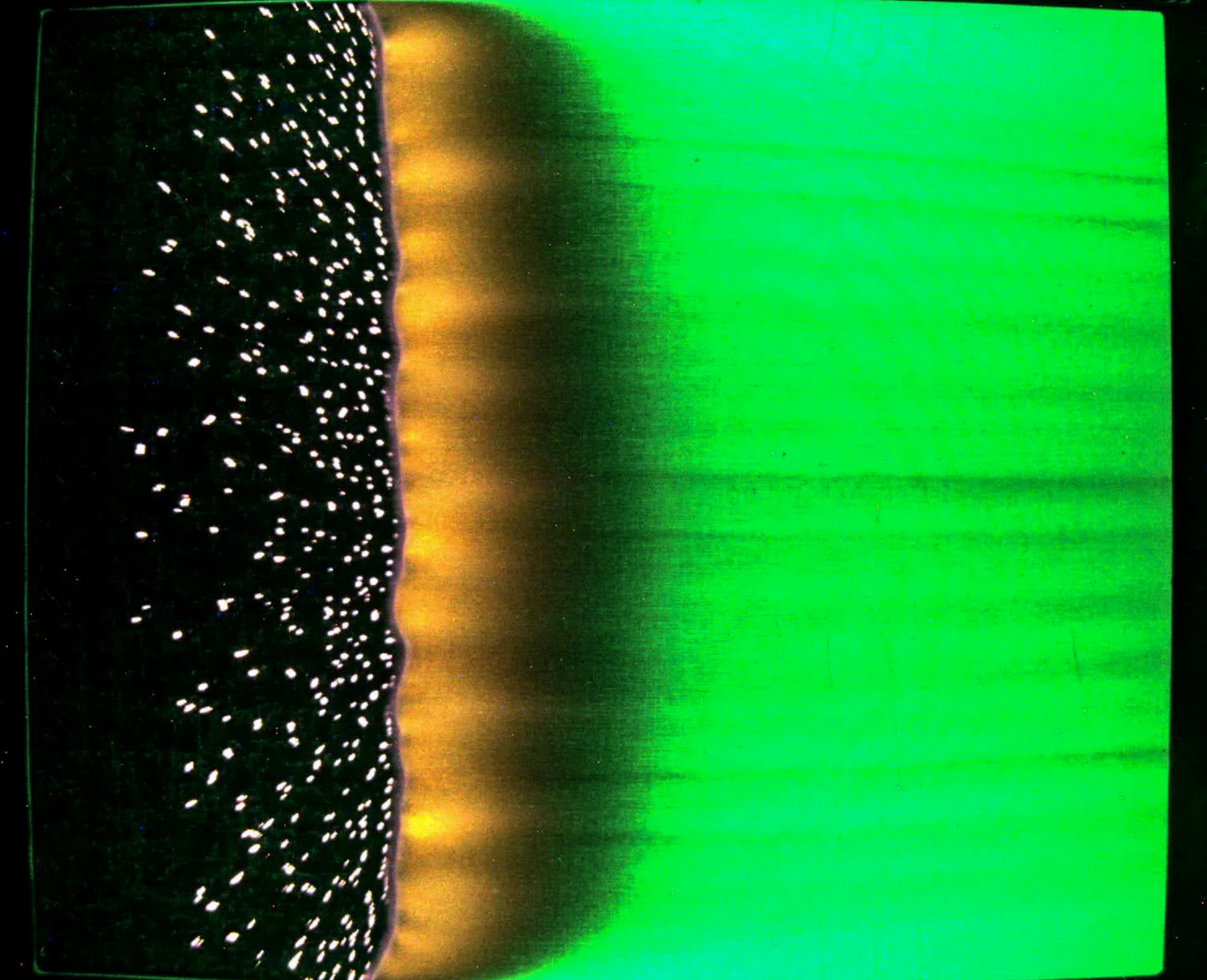
When a drop of ethanol lands on a pool of water, surface tension forces draw it into a fast-spreading film. Evenly-spaced plumes form at the edges of the film, then the film stops spreading and instead retracts. All of this takes place in about 0.6 seconds. But, as the image above shows, there’s more that goes on beneath the surface. A vortex ring forms and spreads under the film, driven by the shear layer under the edge of the plumes. Here, the vortex ring is visible in the swirling particles near the water surface. (Image and research credit: A. Pant and B. Puthenveettil)
Strands of green and brown mix in Langebaan Lagoon on the South African coast in this astronaut photograph. The shallow tidal estuary has a sandy floor and, since no river flows into it, the deeper green sections seen here are channels carved solely by the back-and-forth flow of the tides. To the north of the lagoon, Saldanha Bay is a busy hub for fishing and industry. The long reddish line extending into the water is a railroad pier responsible for loading 96 percent of South Africa’s iron ore gets loaded onto ships. (Image credit: NASA; via NASA Earth Observatory)
Just as prairie dogs bark to warn the colony of danger, many plants can signal their neighbors when they’re under attack. This thale cress releases calcium when caterpillars eat it; neighboring plants pick up the chemical signal and pass it along. To better understand how the signal gets passed, researchers genetically modified this plant to fluoresce when extra calcium is on the move. It’s incredible to watch the flow from one side of a leaf to another. (Image and research credit: Y. Aratani et al.; via Colossal)
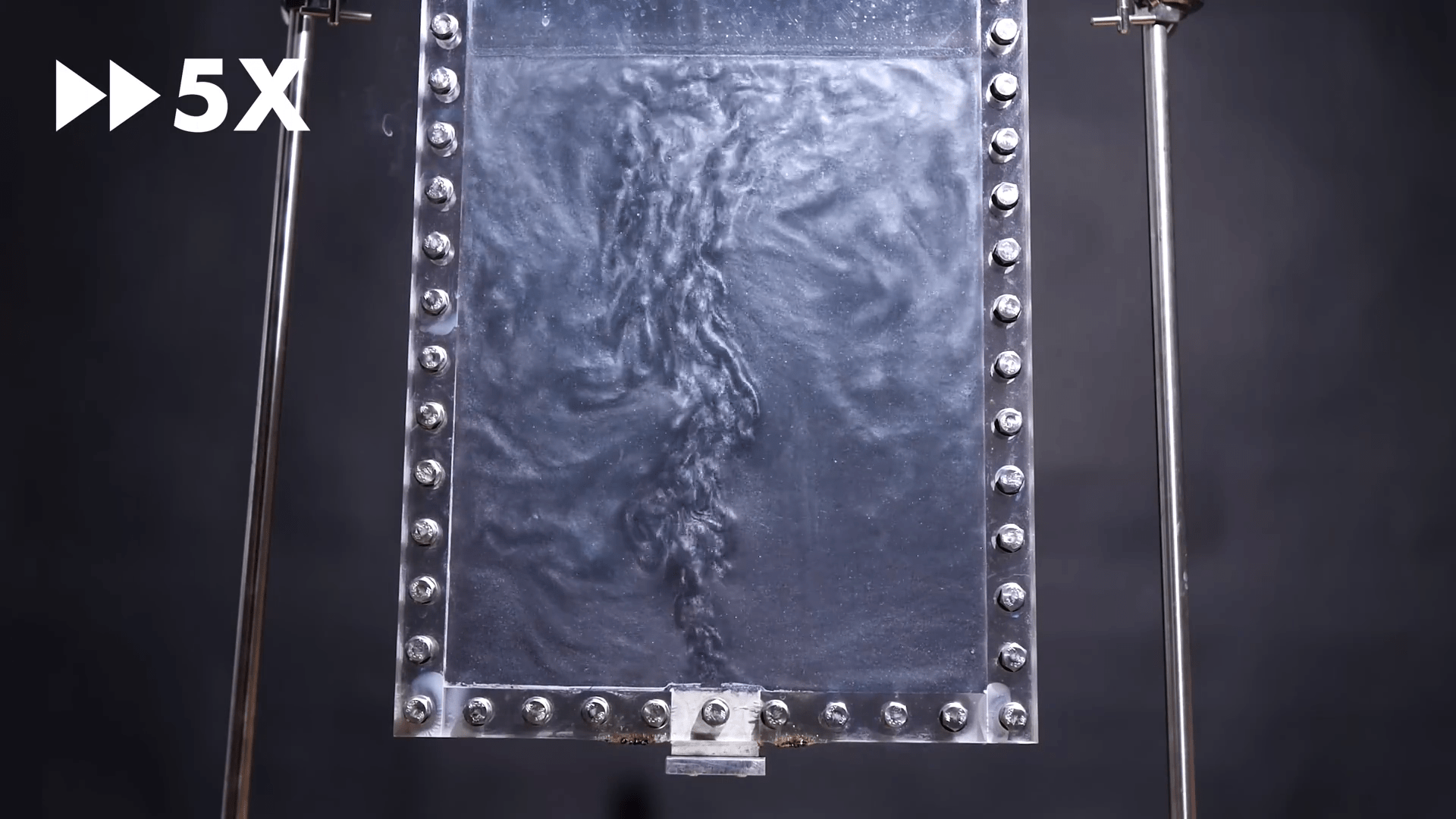
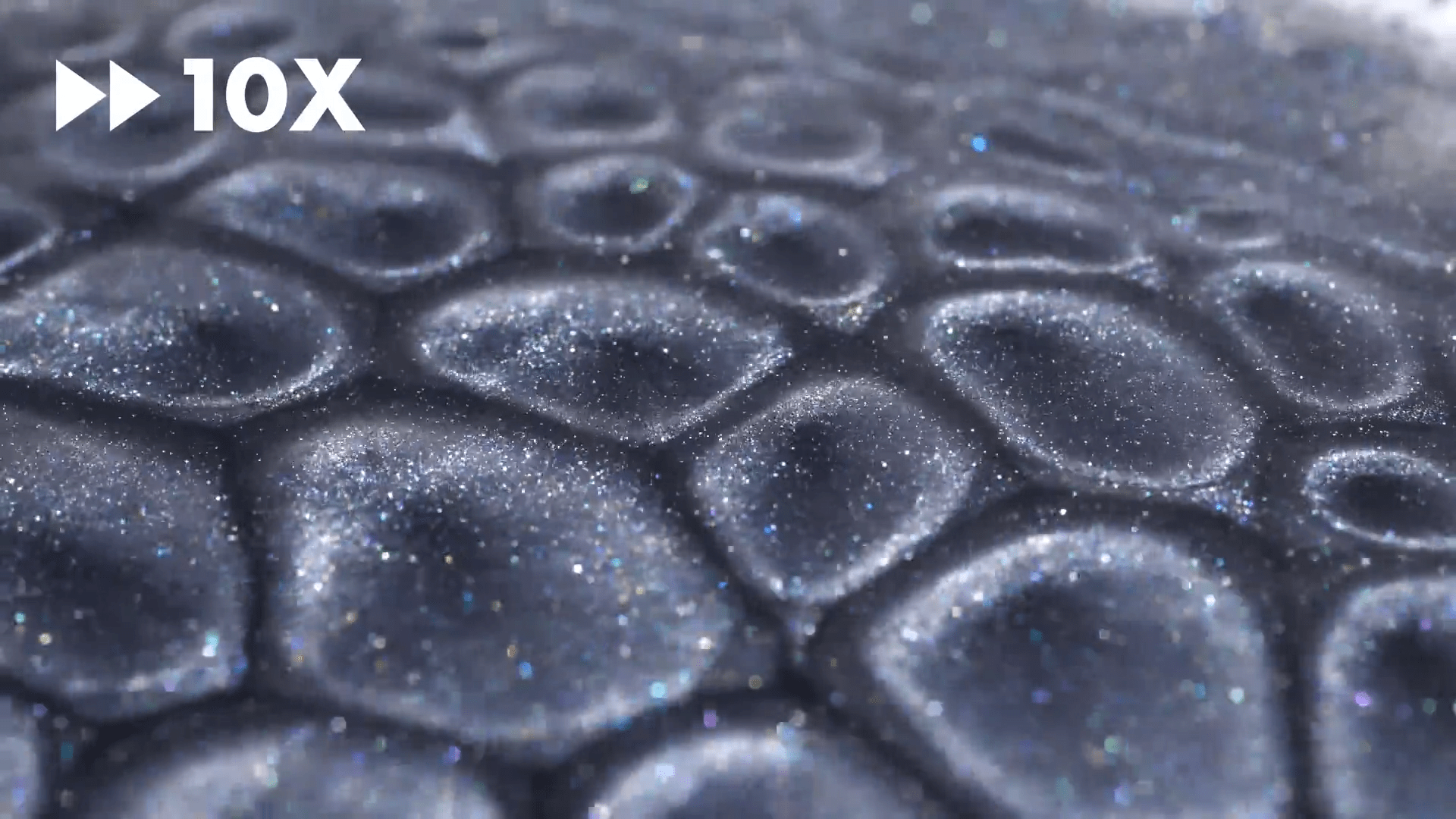
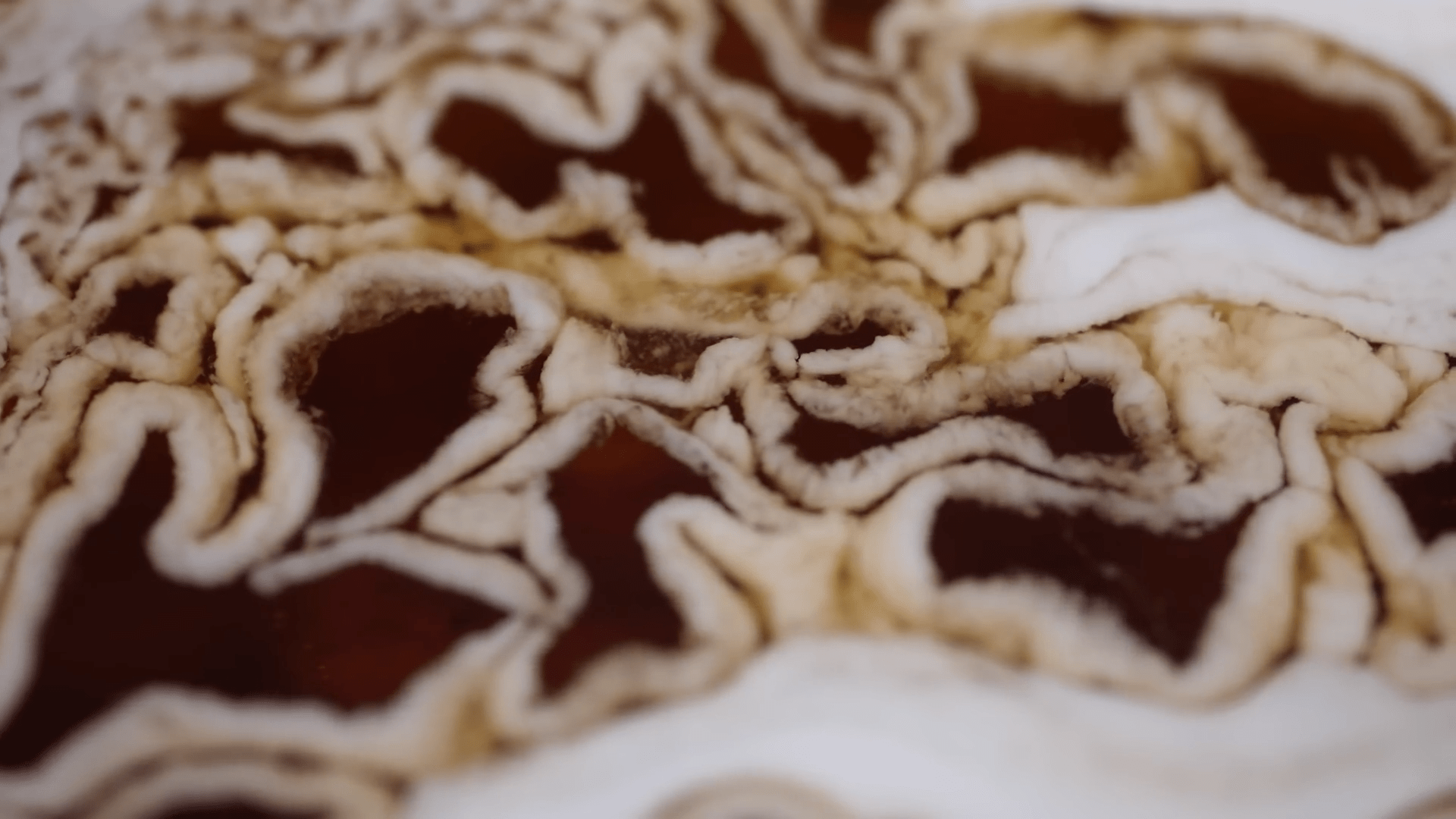
We’re surrounded daily by convection — a buoyancy-driven flow — but most of the time it’s invisible to us. In this video, Steve Mould shows off what convection really looks like with some of his excellent tabletop demos. The first half of the video gives profile views of turbulent convection, with chaotic and unsteady patterns. When he switches to oil instead of water, the higher viscosity (and lower Reynolds number) offer a more structured, laminar look. And finally, he shows a little non-temperature-dependent convection with a mixture of Tia Maria and cream, which convects due to evaporation changing the density. (Image and video credit: S. Mould; submitted by Eric W.)