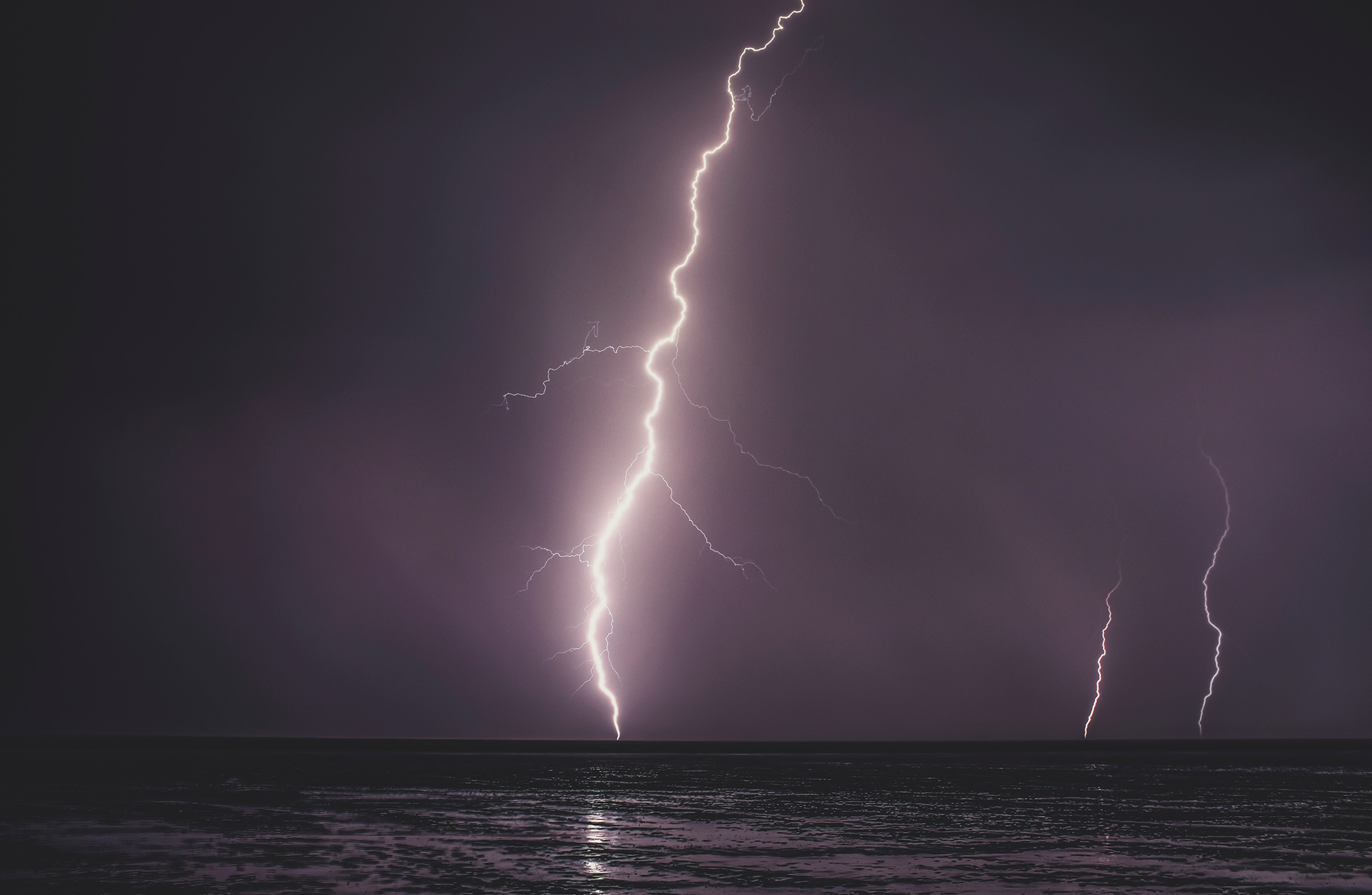
Thunderstorms over the ocean have substantially less lightning than a similar storm over land. Scientists wondered whether this difference could be due to lower cloud bases over the ocean or differences in the cloud droplets’ nuclei. But a new study instead implicates coarse sea spray as the deciding factor. By tracking the full lifetime of storm systems through remote sensing, the team found that fine aerosols can increase lightning activity over both land and ocean. But adding coarse sea salt from sea spray reduced lightning by 90% regardless of fine aerosols. With sea salt in the mix, clouds seem to develop fewer but larger condensation droplets, providing less opportunity for the electrification necessary to generate lightning. (Image credit: Z. Tasi; research credit: Z. Pan et al.)
Tag: ocean

Seismic Events Reveal Ocean Temperatures
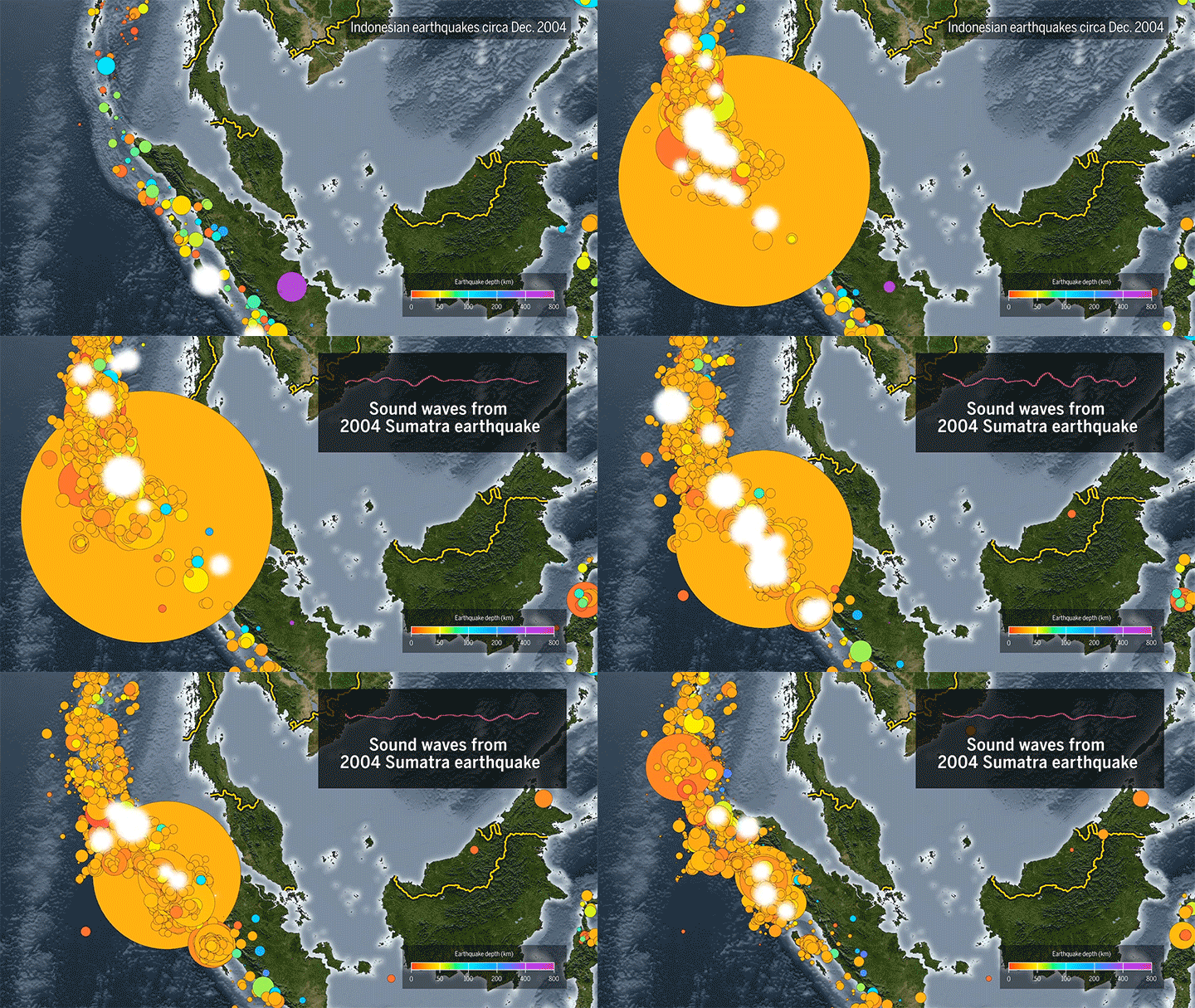
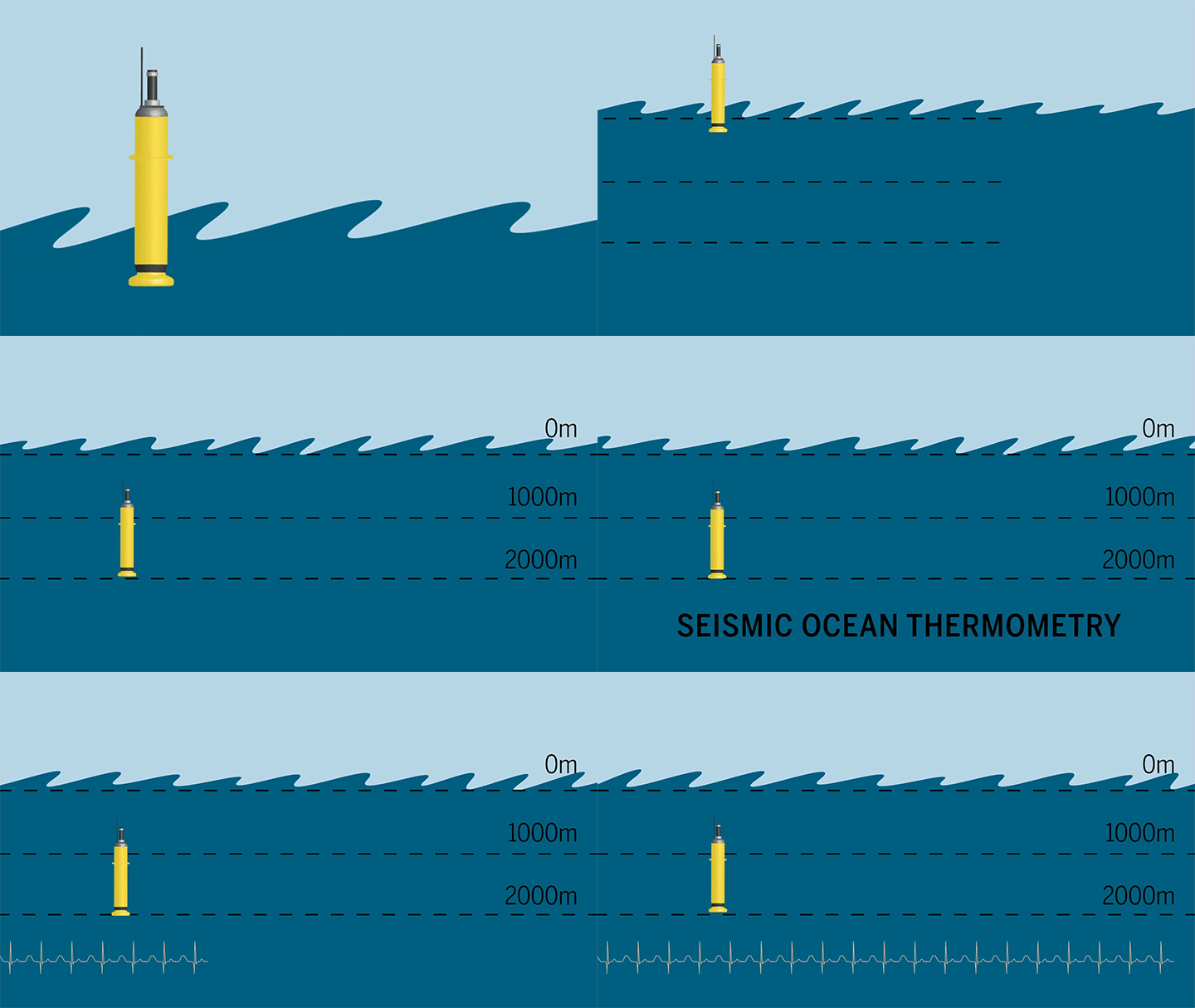
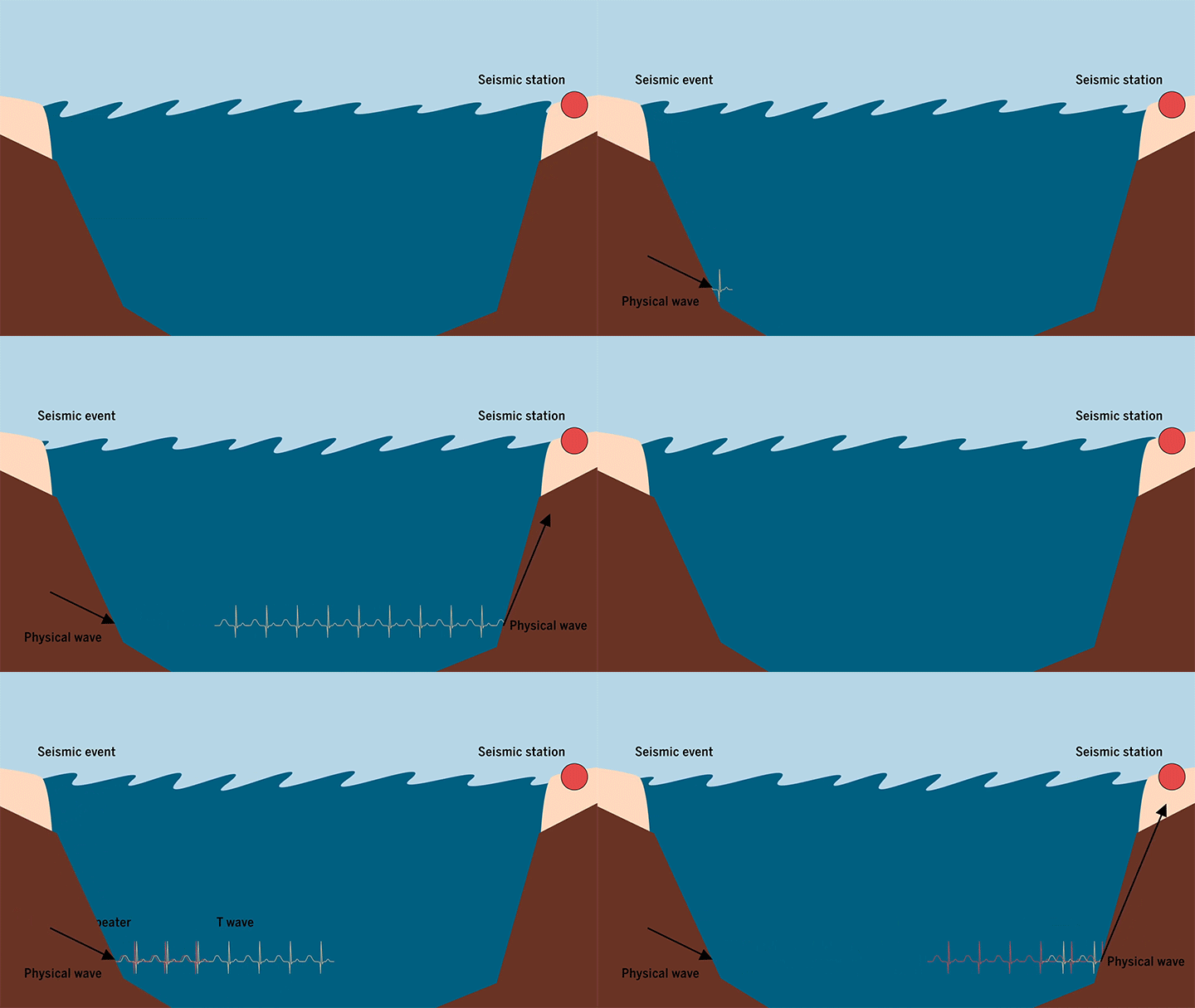
Decades ago, researchers proposed sending sound waves through the ocean to measure its temperature. Although the technique worked, it ran into noise pollution issues, but now it’s back, using naturally-occurring seismic events as the sound source.
When fault lines shift, they generate seismic waves that travel through the ocean as sound. When they reach a land mass, the waves get converted back into seismic energy that’s then picked up by a receiver. Knowing the distance from the source to the receiver and the time necessary for the wave to travel, scientists can then determine the average temperature of the water based on the speed of sound.
The technique can track temperature changes down to thousandths of a degree. Based on more than a decade of seismic data from the Indian Ocean, researchers found almost double the temperature increase measured by a different sensor network. (Image and video credit: Science; research credit: W. Wu et al.; submitted by Kam-Yung Soh)

Two Views of Ocean Eddies
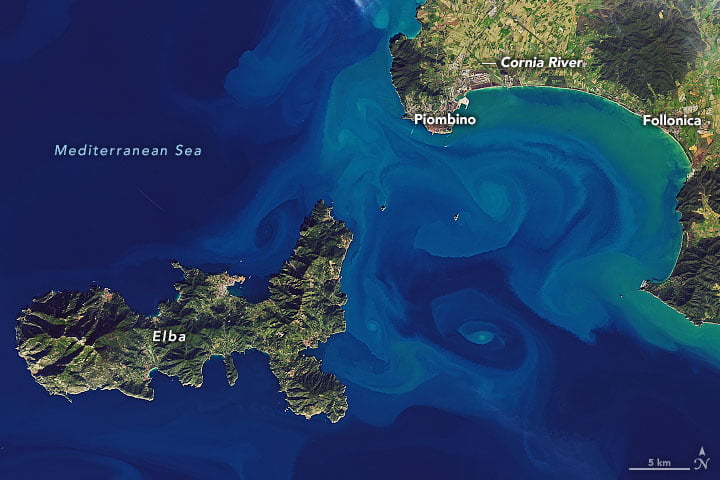
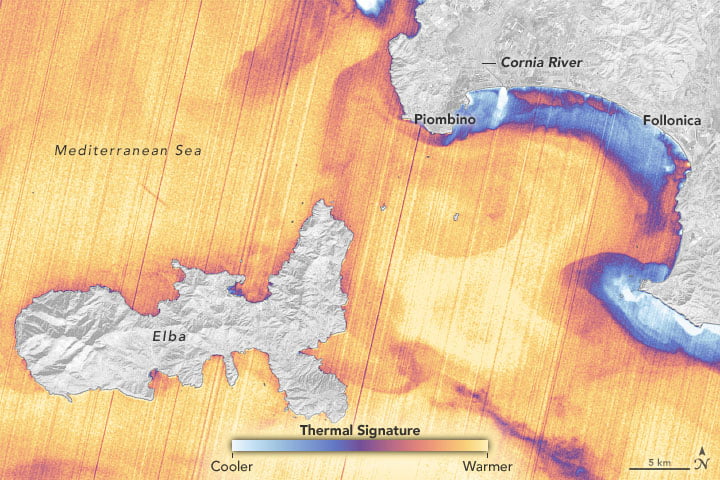
Colorful, sediment-laden eddies swirl off the Italian coast in this satellite image. These small-scale eddies — less than 10 km in diameter — can be short-lived and are often difficult to capture in numerical models, but remote sensing can help scientists better understand their impact on oceanic mixing, especially when we capture more than one view of the same event.
The image below shows the same eddies in an infrared (thermal) view. The resolution on this instrument is not as fine as the natural color one, but we can still make out some of the same swirling motions. It’s also worth comparing the features we don’t see in both images. For example, the Cornia River discharges in infrared as a bright, white plume of cooler water, but it’s barely visible in the color-image, suggesting that the river is not contributing much sediment to the bay. (Image credit: USGS; via NASA Earth Observatory)


Droplets From Jets
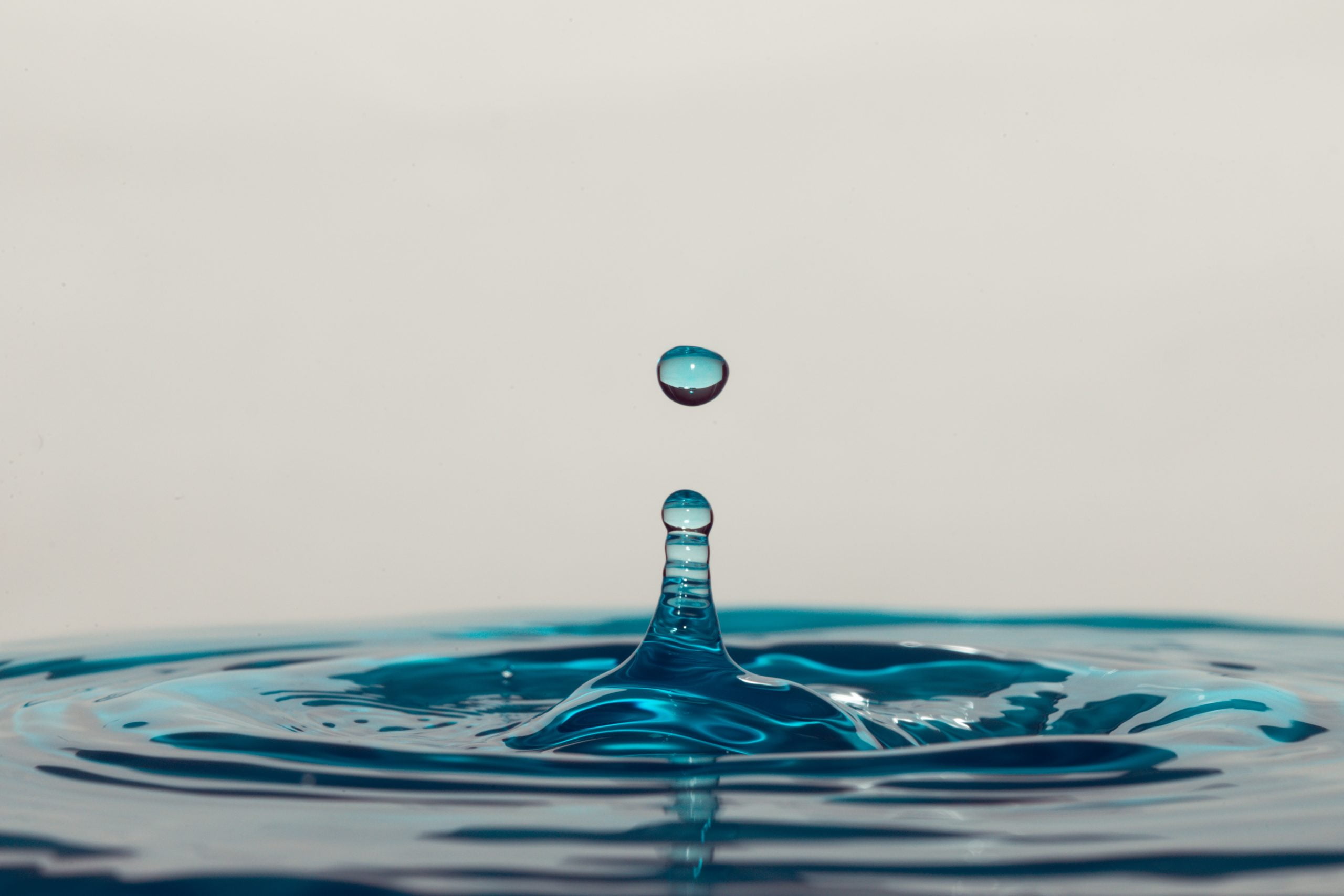
On the ocean, countless crashing waves are creating bubbles. When they burst, those bubbles generate jets and droplets that spray into the sky, carrying sea salt, dust, and biological material into the atmosphere. Researchers know these droplets and their evaporation are important for understanding environmental processes, but figuring out how to capture that importance in models continues to be a challenge.
In a new study, researchers concentrated on a simplified problem: the bursting of a single bubble in pure water. By studying a wide range of conditions, the team found that jets from these bubbles could eject as many as 14 droplets apiece. And though existing models have mostly ignored all but the first droplet, their work showed that all of the droplets should be accounted for in any evaporation models. (Image credit: C. Couto; research credit: A. Berny et al.)

The Naruto Whirlpools
Enormous whirlpools are not simply the work of overactive imaginations. There are several spots in the world, including Japan’s Naruto Strait, that regularly see these spectacular vortices.
Naruto’s whirlpools are formed through the interaction of tidal currents with the local topography. Spring tides funneled through the vee-shaped strait can reach speeds of 20 kph as they rush between the Pacific Ocean and the Inland Sea. Below the surface, there’s also a deep depression that helps bring the tides together in such a way that it generates vortices 20 meters in diameter.
In normal times, the whirlpools are a significant tourist attraction during the springtime. Travelers can view them from tour boats, helicopters, and from the Onaruto Bridge. (Image credits: whirlpools – Mainichi/N. Yamada, Discover Tokushima; artwork: Hiroshige; via Mainichi; submitted by Alan M.)

Pluto’s Subsurface Ocean
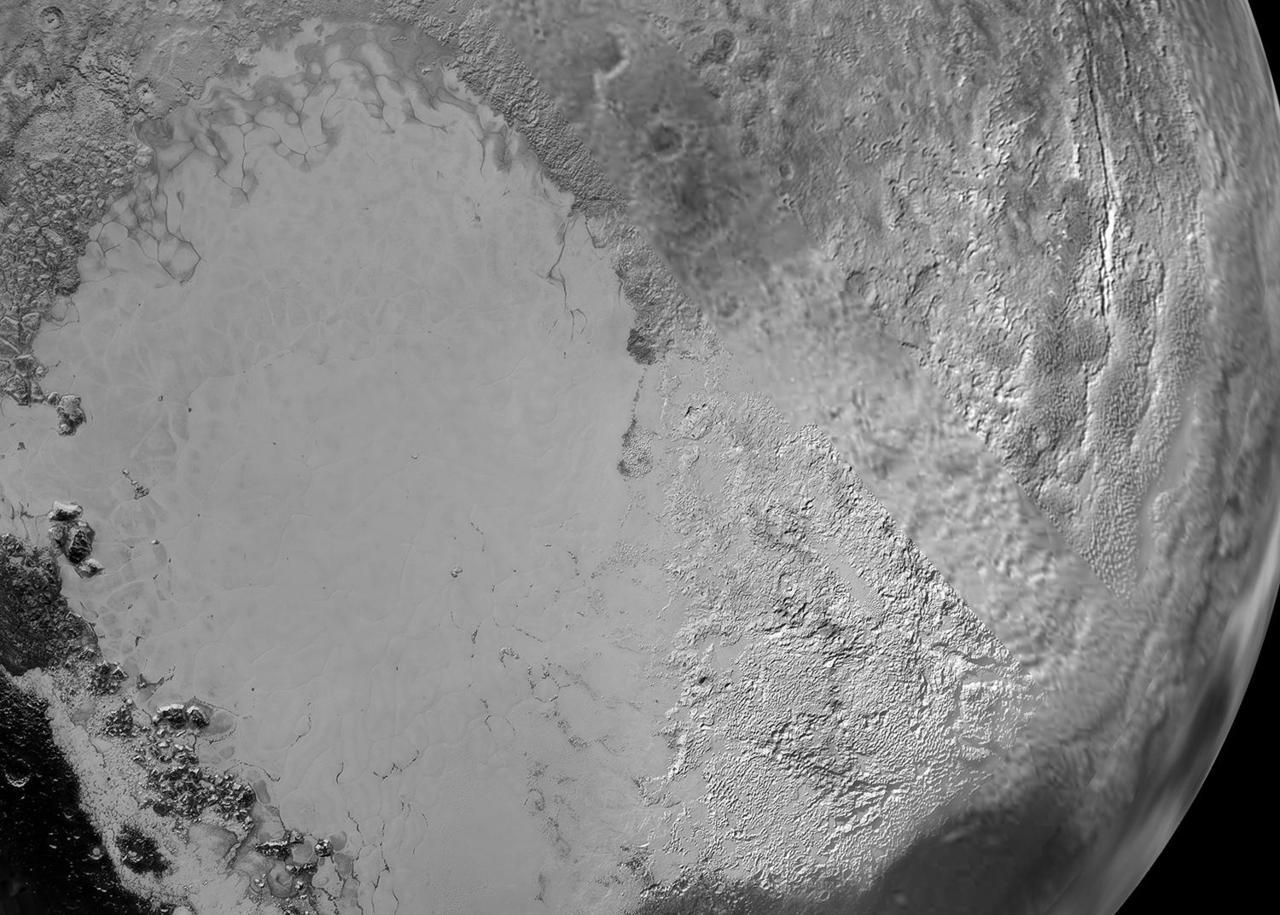
Since the New Horizons probe visited Pluto in 2015, scientists have suspected that Sputnik Planitia (a.k.a. Pluto’s Heart), shown above, may hide a subsurface ocean. But it’s tough to explain how that ocean could stay warm enough to be liquid while the surface ice remains cold and viscous enough to support the variations in thickness we see. One theory cites the possibility of ammonia in the ocean, essentially serving as anti-freeze, but that would require much higher concentrations of ammonia than have been observed in comets – which, like Pluto, spend most of their time in the icy, frigid regions of the Kuiper Belt.
A new study suggests another theory: a layer of gas-trapping hydrates between the liquid ocean and its icy cap. A thin layer of clathrate hydrates, as proposed by the authors, would trap gases like methane and create a thermally-insulating layer between a warm ocean and much colder ice cap. Because heat would struggle to cross the insulation layer, the water beneath would stay above the freezing point without the cold ice above leeching all of its warmth away.
It would likely require future missions to Pluto or other potential ocean worlds to confirm the presence of such a hydrate layer, but, for now, the theory provides a possible new explanation for how icy objects like Pluto maintain liquids. (Image credit: NASA/JHU Applied Physics Laboratory/SwRI; research credit: S. Kamata et al.; via Gizmodo)

Massive Worthington Jet
The FloWave facility in Scotland is one of the coolest ocean simulators out there. Equipped with 168 individual wave makers and 28 submerged flow-drive units, it’s capable of recreating almost any ocean conditions imaginable. So naturally the Slow Mo Guys used it to create a giant spike wave.
Essentially, this is an oversized Worthington jet, the same as the ones you see after a droplet hits the surface. But with several thousand tonnes of crystalline clear water, the effect of that wave focusing is pretty spectacular. When you’re watching the high-speed footage, be sure to pay attention to the details, like the glassy surface of the collapsing jet, or the way holes open and expand as the splash curtain comes down around Dan’s head (above). Longtime readers will recognize many familiar features. (Image and video credit: The Slow Mo Guys)

Tornadoes, Fire, and Ice
It’s time for another look at breaking fluid dynamics research with the latest FYFD/JFM video! This time around, we tackle some geophysical fluid dynamics, like listening to the sounds newborn tornadoes make below the range of human hearing; studying how melting ice affects burning oil spills; and how salt sinking from sea ice affects the ocean circulation. Check out the full video below for much more! If you’ve missed any of the previous videos in the series, you can check them out here. (Image and video credit: T. Crawford and N. Sharp)

Waves Below the Surface
Even a seemingly calm ocean can have a lot going on beneath the surface. Many layers of water at different temperatures and salinities make up the ocean. Both of those variables affect density, and one stable orientation for the layers is with lighter layers sitting atop denser ones. Any motion underwater can disturb the interface between those two layers, creating internal waves like the ones in this demo. In the actual ocean, these internal waves can be enormous – 800 meters or more in height! In regions like the Strait of Gibraltar where flowing tides encounter underwater topography, large internal waves are a daily occurrence. Internal waves can also show up in the atmosphere and are sometimes visible as long striped clouds. (Video and image credit: Cal Poly)


Can Zooplankton Mix Oceans?
Krill and other tiny marine zooplankton make daily migrations to and from the ocean surface. Previously, models of ocean mixing ignored these migrations; these animals are tiny, researchers argued, so any effects they could have would be too small to matter. But zooplankton make these migrations in huge swarms, and studies of a laboratory analog of their migrations (using brine shrimp rather than krill) reveal that, when moving en masse, these tiny swimmers create turbulent jets and eddies far larger than an individual. Their collective motion is enough to mix salty water layers 1000 times faster than molecular diffusion alone! Learn more in the latest FYFD video, embedded below. (Image and video credit: N. Sharp; research credit: I. Houghton et al.; h/t to Kam-Yung Soh)