Tag: ocean waves

  • “Surfing on the Other Side”

    “Surfing on the Other Side”

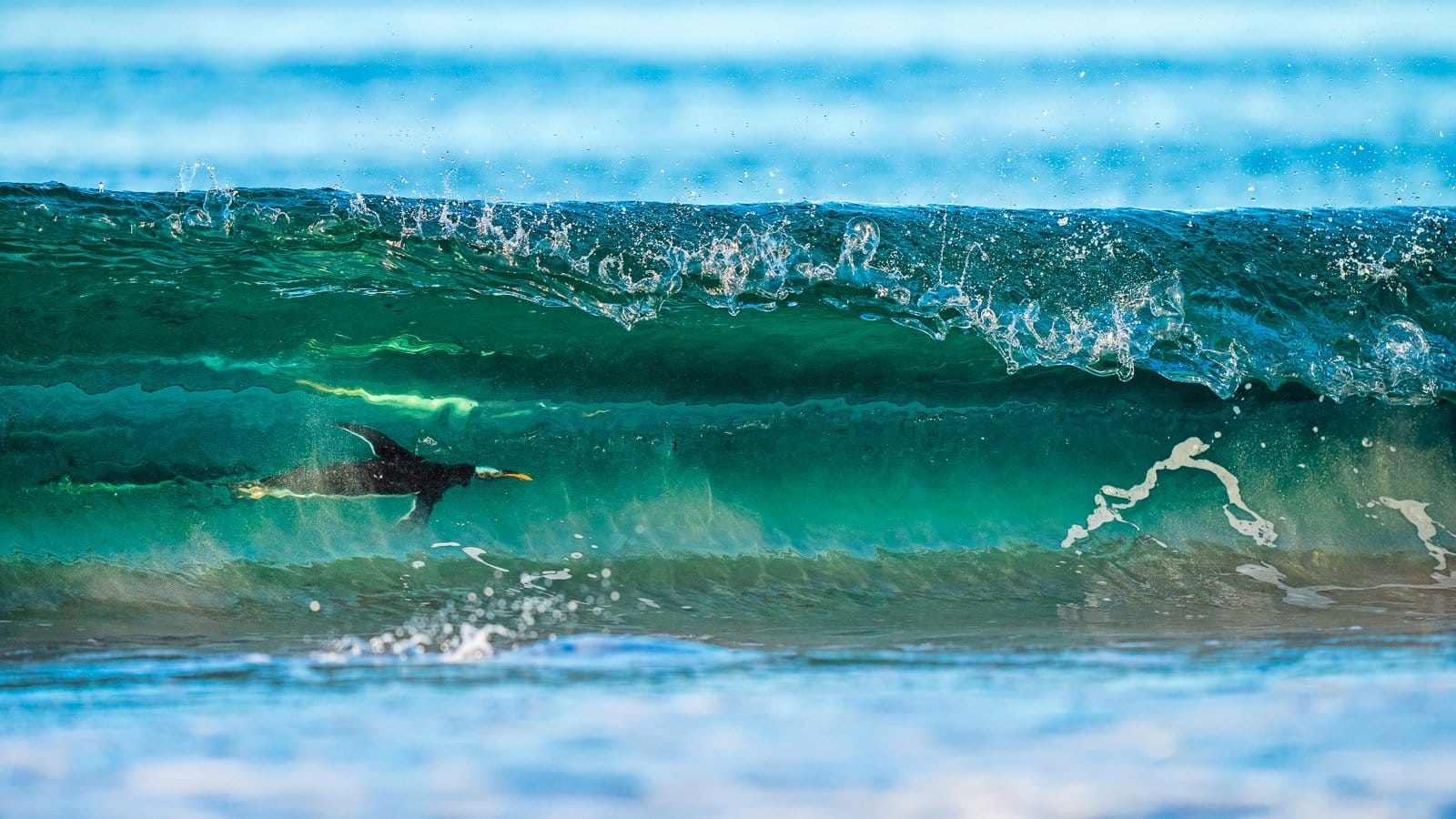
    Surfers come in many forms — humans, robots, birds, and even honeybees. Most of the time, though, we see surfers above the water. In this award-winning photo, on the other hand, the surfing penguin shoots by beneath the water, riding beneath the wave’s crest. Keeping pace with the breaking wave should be no trouble for a penguin. They waddle awkwardly on land, but they have incredible speed in the water. Years ago, a penguin streaked past me in the water like a rocket to my paper airplane. (Image credit: L. Fitze/BPOTY)

  • Waves Break Up Floating Rafts

    Waves Break Up Floating Rafts

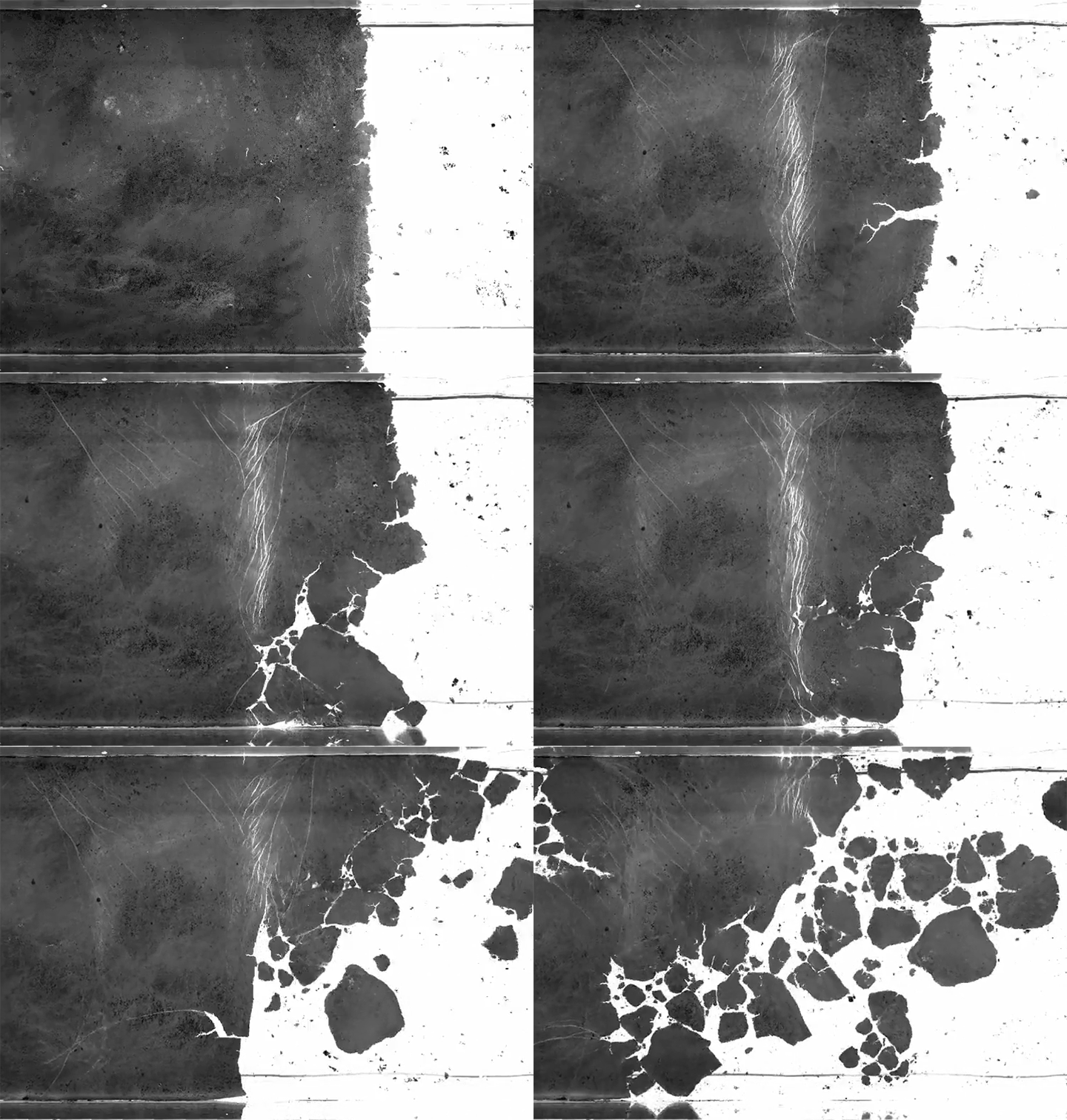
    Small particles can float on a liquid, held together as a raft through capillary action. But those rafts — like the tea skin below — break up when waves jostle them. In this study, researchers looked at how standing waves broke up a raft of graphite powder. Although the raft’s break-up resembles fields of sea ice breaking apart, the researchers found that different mechanisms were responsible. In their experiment, waves pushed and pulled horizontally at the raft, causing it to fracture. But that push-and-pull is negligible in sea ice, where sheets instead break from the up-and-down motion of waves vertically bending the ice. Nevertheless, the new insights are valuable for various biofilms and some ice floes. (Image and research credit: L. Saddier et al.; via APS Physics)

    The skin atop a cup of tea breaks up into polygons after stirring with a spoon.
    The skin atop a cup of tea breaks up into polygons after stirring with a spoon. Although the effect resembles sea ice breakup, the specific wave mechanism differs.
  • Breaking in Rogue Seas

    Breaking in Rogue Seas

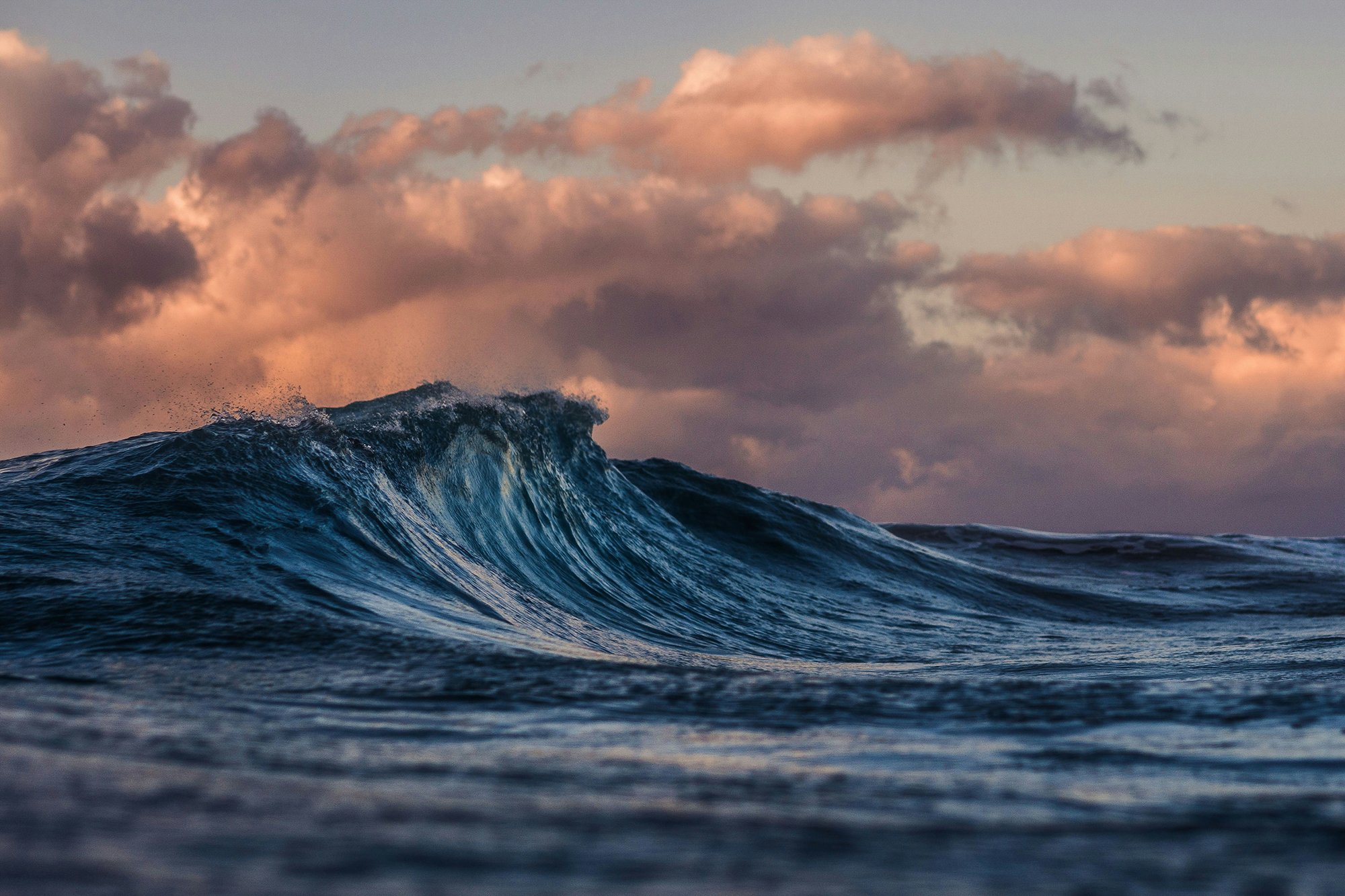
    Many models for forecasting ocean waves simplify the physics by assuming that waves are essentially two-dimensional, like a long breaker heading toward shore. But in the open ocean, waves often come from more than one direction; crossing seas are a good example. When waves from different directions combine, a recent study shows, the resulting wave can grow far larger and steeper than expected. These monstrous rogue waves are especially dangerous for offshore infrastructure like oil rigs and wind turbines, which must be built to withstand rare but extreme waves. (Image credit: O. Мороз; research credit: M. McAllister et al.; via Gizmodo)

  • The Crashing Waves of French Polynesia

    The Crashing Waves of French Polynesia

    Surfer and photographer Tim McKenna lives in the village of Teahupo’o on Tahiti’s southeastern coast. The area’s shallow coral reef system creates some of the world’s biggest barreling waves, which attract surfers from around the world. McKenna captures the majestic power of these surges in these black-and-white photographs; you can find more of his work on his website and Instagram. (Image credit: T. McKenna; via Colossal)

  • Beneath the Surf

    Beneath the Surf

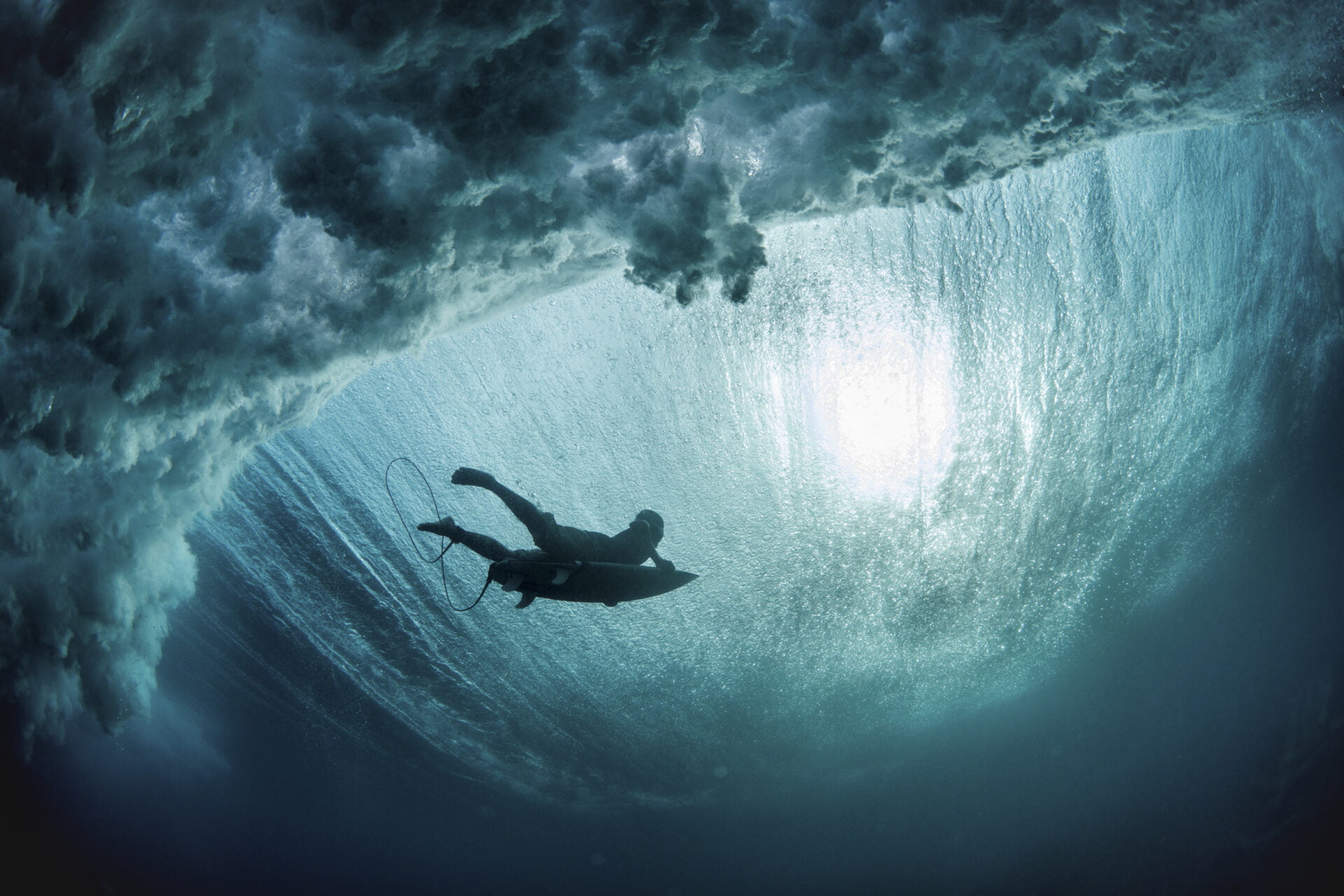
    A surfer duck-dives beneath a passing wave in this image from photographer John Barton. I always love seeing big waves from this underwater perspective. The turbulent surf looks like storm clouds, and sometimes you see features that are invisible from the surface. Barton’s shot captures the dichotomy of serenity and chaos in the breaking surf. (Image credit: J. Barton/OPOTY; via Colossal)

  • Seeking Rogue Wave Origins

    Seeking Rogue Wave Origins

    Rogue waves — rare waves much larger than any surrounding waves — have long been a part of sailors’ tales, but their existence has only been confirmed relatively recently. The exact mechanisms behind them are still a matter of debate. Laboratory experiments with mechanically-produced waves have created miniature rogue waves, but we still lack real-world observations of their formation.

    To that end, researchers sailed the Southern Ocean, known for its rough waves, during austral winter and observed the state of the wind and waves nearby using stereo cameras. They found that young wind-driven waves tend to be steeper, and they move slower than the wind, as they’re still drawing energy from it. Older waves, in contrast, were shorter, less steep, and less likely have white caps from breaking. Overall, they found that strong winds could more easily drive young waves into the nonlinear growth that leads to rogue waves. (Image credit: S. Baisch; research credit: A. Toffoli et al.; via APS Physics)

  • Banzai Pipeline From Above

    Banzai Pipeline From Above

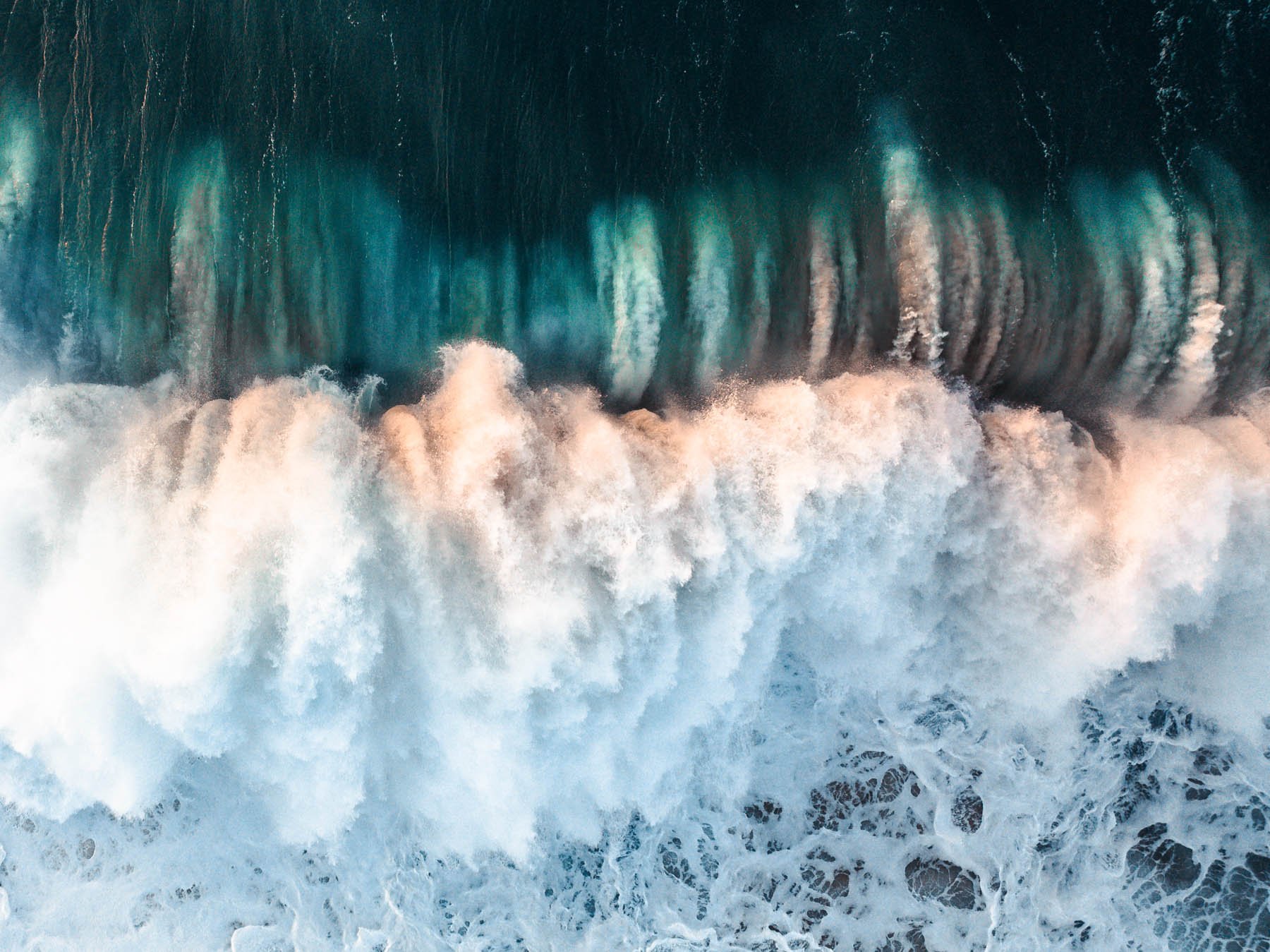
    On the north shore of O’ahu, Hawaii, Banzai Pipeline is known for some of the most thrilling and deadly surfing in the world. The area’s barrel rolls are triggered when incoming waves break over the shallow reef. Photographer Kevin Krautgartner captures the waves from above, showcasing the incredible energy inherent in the ocean. The motion and texture of the water is mesmerizing. I feel like I could stare at these all day long! (Image credit: K. Krautgartner; via Colossal)

  • Featured Video Play Icon

    Surfactants and Waves

    In the ocean, waves often curl over and trap air, becoming plunging breakers. How do surfactants like soap or oil affect this process? That’s the question behind this video, where researchers visualize breaking waves with differing amounts of added surfactant. In the case of pure water, the wave forms a smooth jet that curls over and traps air when the wave breaks. As more and more surfactant gets added, the shape of that jet and cavity change. In one case, they become irregular. In another, they disappear entirely, and with the most surfactant added, the wave suddenly looks just like the water-only case.

    The key to these behaviors, it turns out, is not how much surfactant there is, but how much the concentration of surfactant varies along the length of the wave. When there are significant changes in the surfactant concentration along the wave, local Marangoni flows try to even out the surface tension, causing the wave to break up in an irregular fashion. (Image and video credit: M. Erinin et al.)

  • Beneath the Waves

    Beneath the Waves

    Surfing looks entirely different from below the wave. Photographer Ben Thouard captures his images by freediving and observing what goes on overhead. Whether the surfers nearby ride a barrel roll or bail into the churn, the results are incredible. You can find more of Thouard’s artwork on his website and Instagram. (Image credit: B. Thouard; via Oceanographic Magazine)

  • Featured Video Play Icon

    Classifying Waves

    In a lab, researchers create their waves in a long, clear-sided tank, where they can observe how the waves form, travel, and interact. To generate the wave, they use a plate, attached to a piston. Push the water at one end, and a wave forms. The type of wave that forms depends on both the velocity and the stroke length of the piston, as shown in this video. By mapping out these two variables, researchers can observe all different sorts of waves, from peaceful solitary waves to wild, plunging breakers. (Image and video credit: W. Sarlin et al.)