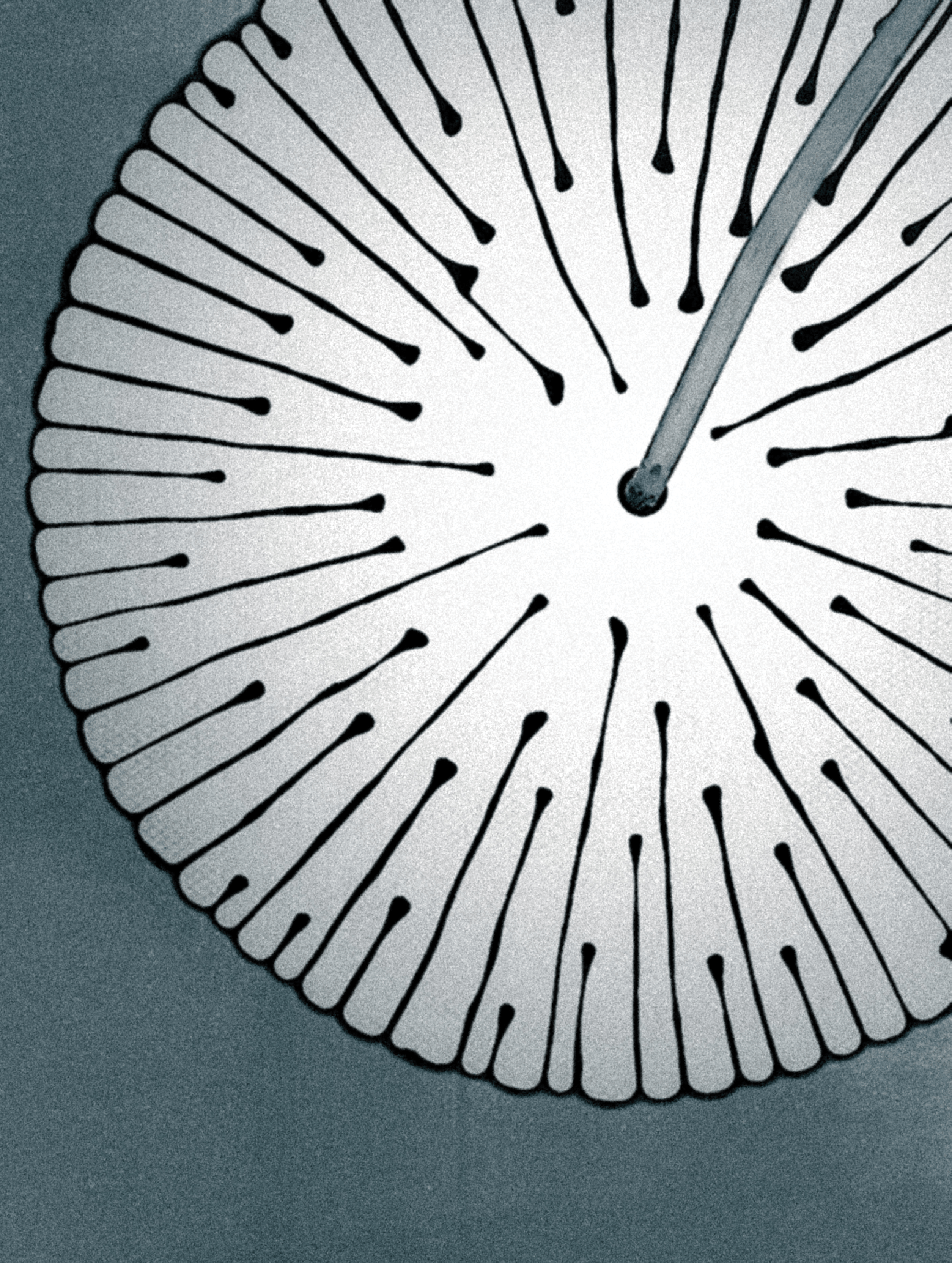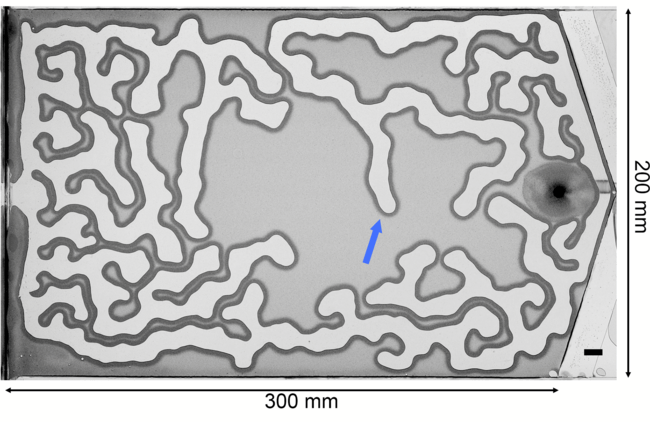
Air pushes into a thin gap filled with water and granular particles in the labyrinth-like image above. The encroaching air pushes grains like a bulldozer’s blade, building up a compacted wall. The invasion continues until the pressure of the air is countered by the combined capillary and frictional forces of the wet grains. Researchers built an analytical model that explains how these frictional fingers form and grow. Unlike Saffman-Taylor fingering patterns, which depend on long-range viscous forces, these patterns depend entirely on short-range forces from surface tension and friction. (Image and research credit: E. Flekkøy et al.)
Tag: granular material

Granular Gaps
Push air into a gap filled with a viscous fluid, and you’ll get the branching, dendritic pattern of a Saffman-Taylor instability. Here, researchers use a similar set-up: injection into a narrow gap between transparent planes to explore something quite different. In this experiment, the gap was initially filled with a mixture of air and tiny hydrophobic glass beads. When the team injected a viscous mixture of water and glycerol, new patterns emerged. At low injection rates, a single finger structure formed. But at high injection rates, a whole spoke-like pattern formed. (Image and research credit: D. Zhang et al.; via Physics Today)

“Emerald Roots”
As charged particles from the solar wind bombard the upper atmosphere, a glowing plasma forms and dances in the sky. The green light of the plasma reflects off moistened sand, rippled by the passage of wind and tide. Each component seems simple, but this striking image contains hidden depths of fluid dynamics. Magnetohydrodynamics govern the aurora’s dance; the sand’s self-organization mirrors dune physics; and even the rocky outcropping in the background was carefully shaped by erosive forces from wind and water. Truly, fluid dynamics are found everywhere. (Image credit: L. Tenti; via 2023 Astronomy POTY)

Shifting Sands
Qinghai Lake sits in western China, where a warmer and wetter climate has been raising the lake’s water level in recent years. These two satellite images, from 2010 and 2022, show the effects of those changes. Sand spits that once separated the smaller Shadao Lake from the surrounding lake have worn away and sunk, rejoining the two bodies of water.
Why is the area’s warmer climate also wetter? The lake has risen due to increased precipitation and river run-off feeding it, but it’s also seen less evaporation. So far the area’s temperature increases have been most notable in winter months, when the lake is covered in ice. In contrast, the summers have been wetter, which means more cloudy days and less chance for evaporation. (Image credit: A. Nussbaum, modified by N. Sharp; via NASA Earth Observatory)

Swimming Through Mud
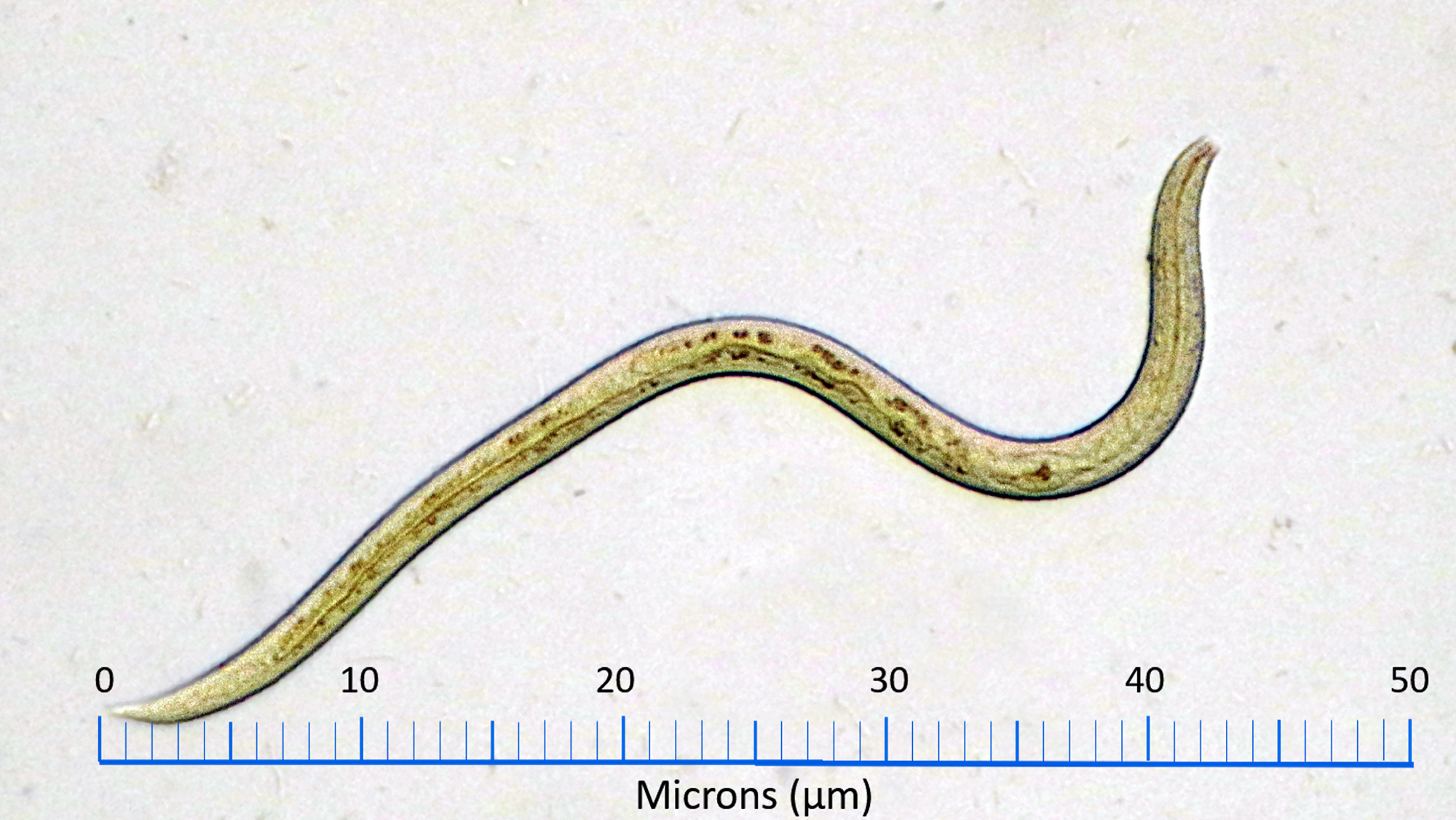
At the bottom of ponds, nematodes and other creatures swim in a world of mud. They squirm their way through a sediment of dirt particles suspended in water. Mud, of course, is notoriously impossible to see through, so to understand these creatures’ movements, scientists turn instead to biorobotics. Here, a team uses a magnetic head attached to an elastic tail to mimic these tiny creatures.
To drive the robot’s motion, they use an oscillating magnetic field, which forces the magnetic head to rotate. Combined with the elastic tail and the drag caused by surrounding materials, this causes the robot to swim in a fashion similar to its biological inspirations.

A biomimetic robot swims through immersed grains. The robot’s magnetic head is forced with an oscillating magnetic field. It swims through an underwater bed of hydrogel beads, with diameters smaller than that of the robot’s head. To mimic the muddy environment of a pond’s bottom, scientists used a bed of hydrogel beads immersed in water. Looking at the experimental video above, you’ll see no sign of the beads. That’s because the hydrogel beads have nearly the same index of refraction as water. Once you pour water in, they seem to disappear. That allows the researchers to focus instead on the robot’s motion. In other experiments, they added dye to the beads so that they could see how they moved around the robot.
They found that the robot’s motion fluidizes the grains around it. Effectively, the robot’s motion creates an area with fewer grains and more water for it to move through. Once it’s passed, however, more grains settle in, and the bed returns to a denser packing. (Image credit: nematode – P. Garcelon, experiment – A. Biswas et al.; research credit: A. Biswas et al.)

Snake Tracks
Moving across sand is quite challenging for bipedal creatures like us, but other animals have their ways. Photographer Paul Lennart Schmid caught this snake on the move, with impressions of its passage still in the sand. X-ray observations of snakes moving in sand show that they swim through the granular medium. Snakes are quite efficient in their swimming, moving most of their body through the tunnel created by their head, thereby reducing their overall effort. (Image credit: P. Schmid; via Nature TTL POTY)

Packing Disks
Liquid crystals, bottles of pills, and hoppers of grains can all involve disk-shaped particles. To better understand how disks pack together, researchers studied how disks in a box orient themselves after shaking. They used MRI to observe the disks’ interior packing.

These reconstructions show the packing found in the experiment. The disks are color-coded by orientation; horizontal disks are redder and vertical ones are bluer. Initially, the packing has many horizontal disks (left), but after shaking, the disks get more compacted (right). The disks form short stacks that are randomly oriented. This increases the overall density but the random orientations reduce the total alignment of disks. The team found that shaking increases the disks’ density, but that increase does not come from disks orienting in the same direction. Instead, the disks form short stacks of similarly-oriented disks. The stacks themselves took on many different orientations, which reduced the system’s overall alignment in orientation. (Image credit: coins – M. Blan, packing – Y. Ding et al.; research credit: Y. Ding et al.; via APS Physics)

Forests Slow Avalanches
In snowy mountainous regions, avalanches are a dangerous and destructive problem. Researchers studying the mechanisms of these flows have a suggestion: plant more trees. A group of researchers found that a “forest” of regularly spaced pillars slowed avalanches by as much as two-thirds. On an empty slope, the avalanche picked up speed as its thickness grew. But with regularly-spaced pillars the slower flow rate became almost completely independent of avalanche thickness.

The researchers with their avalanche set-up, which releases glass beads through a forest of pillars. For now, the researchers suggest placing trees every 3 meters on steep, avalanche-prone slopes — a technique that, admittedly, only works for slopes below the treeline. In their next round of experiments, the researchers plan to see how a randomly arranged forest affects an avalanche. (Image credit: top – N. Cool, apparatus – Université Paris-Saclay/FAST; research credit: B. Texier et al.; via Physics World)
Complex Dunes
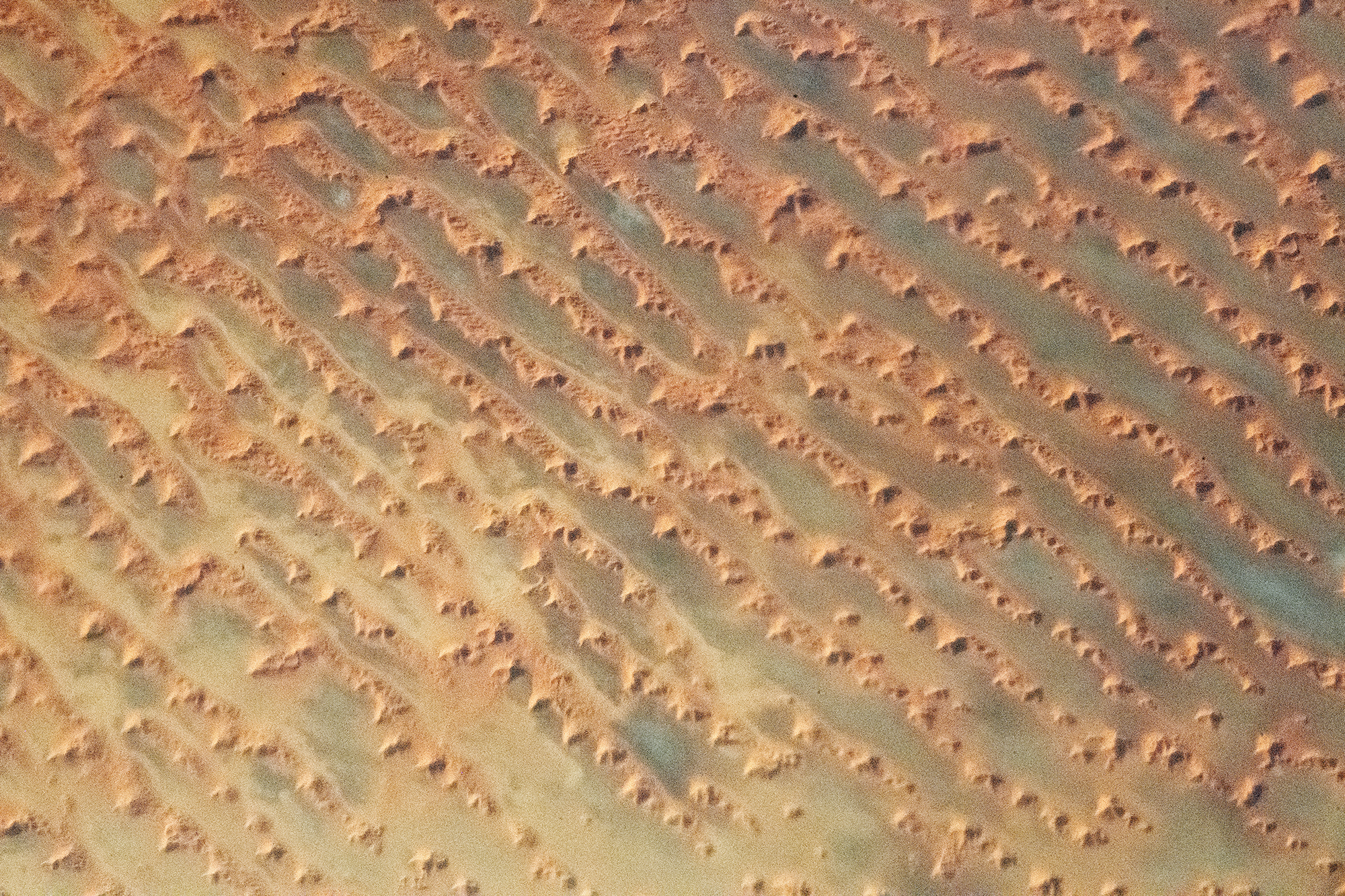
Sometimes landscapes have a beauty that’s hard to see from the ground. This astronaut’s photo shows a dune field in the sand seas of Saudi Arabia. Vast linear dunes line up along the direction of prevailing winds. Atop these dunes are more complex formations, star dunes, that are built up in the wake of changing winds. Built from three or more intersecting arms, the star dunes are steeper than the linear dunes they sit atop. Such complex dune fields — with multiple types of dunes — form in areas with especially abundant sands. (Image credit: NASA; via NASA Earth Observatory)

To Clog or Not to Clog?


The clear plastic disks use to study clogging appear rather plain — at least until you look at them through polarizers. Then the disks light up with a web of lines that reveal the unseen forces between the particles. In this video, researchers use this trick to explore how spontaneous clogs occur. If particles jam together into an arch, that bridge can be strong enough to hold the weight of all the particles above it, bringing the flow to a halt. Some arches aren’t strong enough to hold for long; they can break in moments. Other more stable arches persist. By watching the flow through polarizers and carefully tracking the ebb and flow of the forces between particles, researchers can predict which clogs will have staying power. (Video credit: B. McMillan et al.)