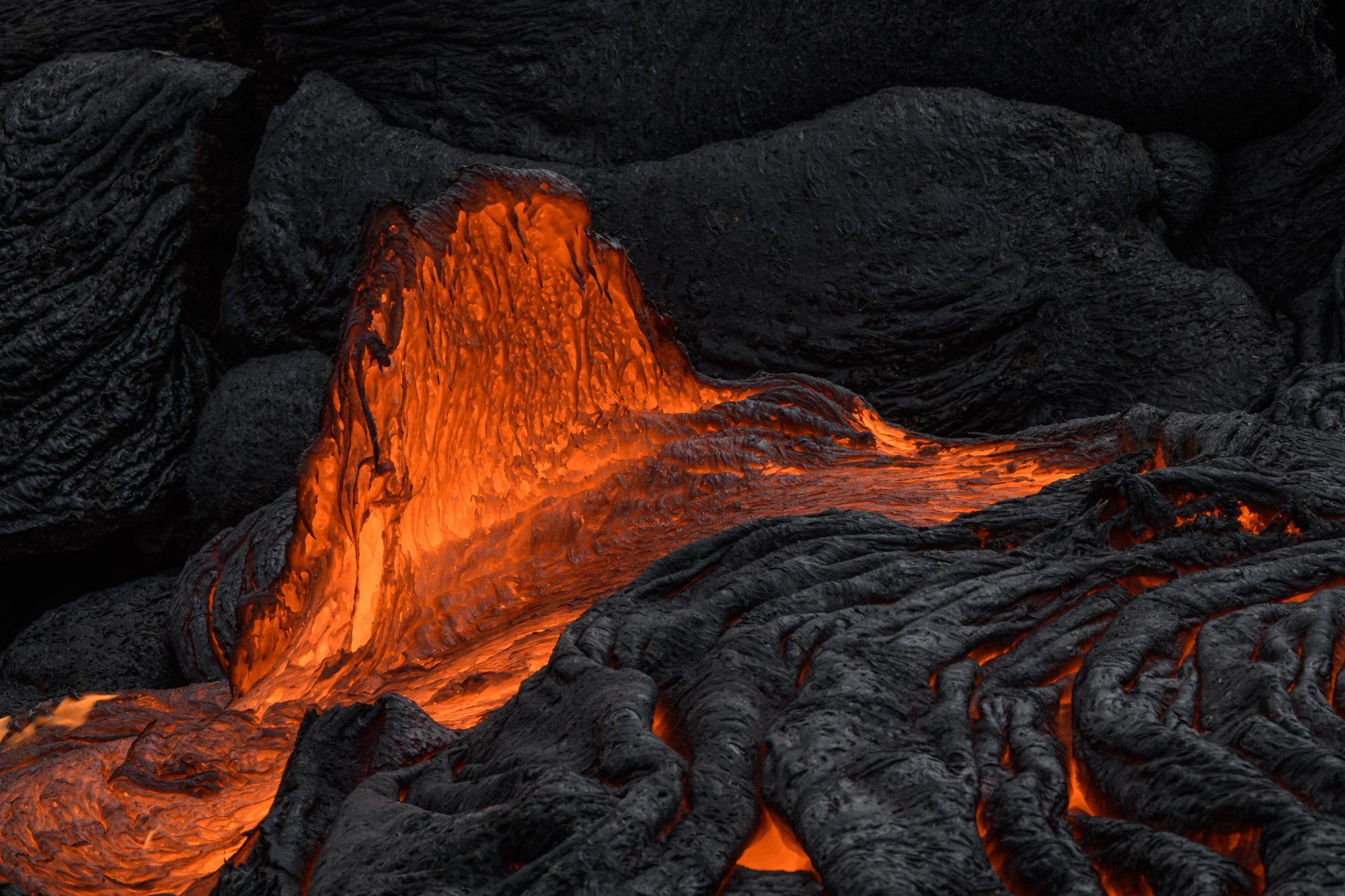
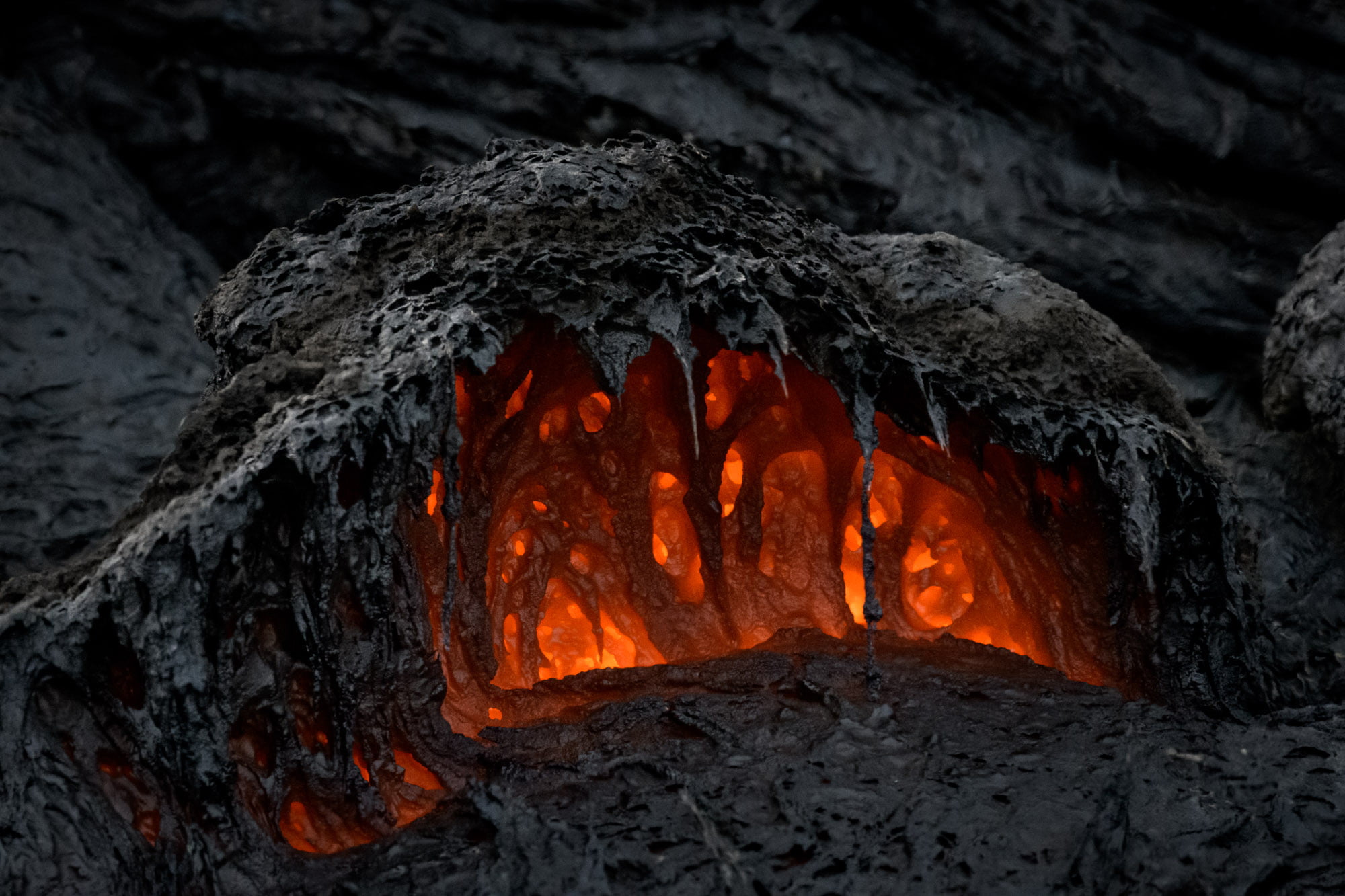
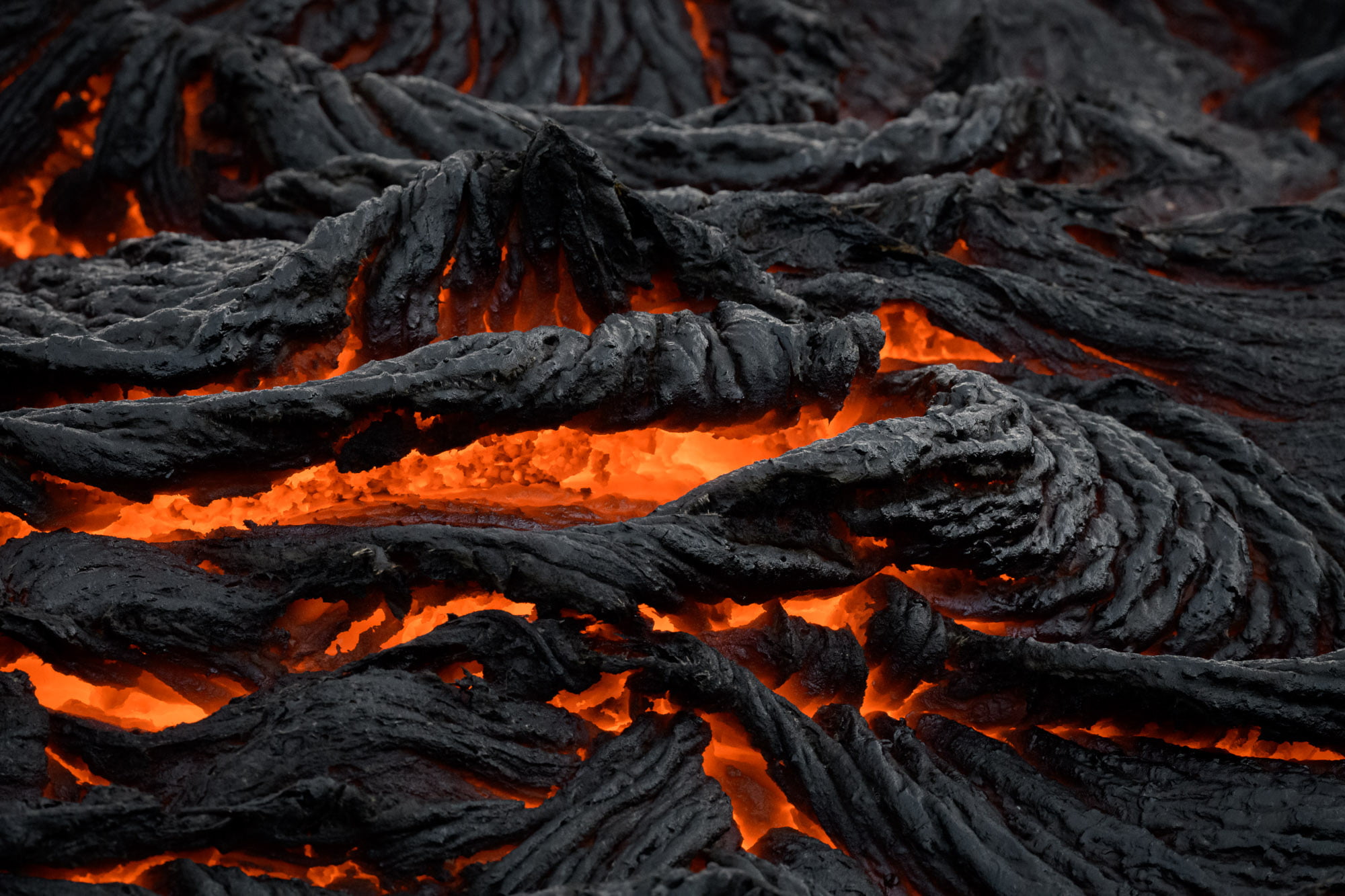
Lava flows are, by definition, transient. In his LAVA series, photographer Jan Erik Waider explores the changing vistas and textures of Iceland’s Fagradalsfjall volcano eruption. Using a telephoto lens, he captures incredible details of the charred, cooling outer crust of the lava and the glowing molten interior. Only minutes later, fresh lava tore through, destroying these natural sculptures. You can find prints of his images on his website. (Image credit: J. Waider; via Colossal)
On the cold, wind-swept beaches of Lake Michigan, the sands sometimes turn into a landscape of miniature hoodoos. Strong winds erode the frozen sand into these shapes, which last only days before wearing away or falling over. This photographic series by Joshua Nowicki immortalizes the ephemeral winter sculptures. You can see more of his photography on his Instagram. (Image credit: J. Nowicki; via Colossal; see also)
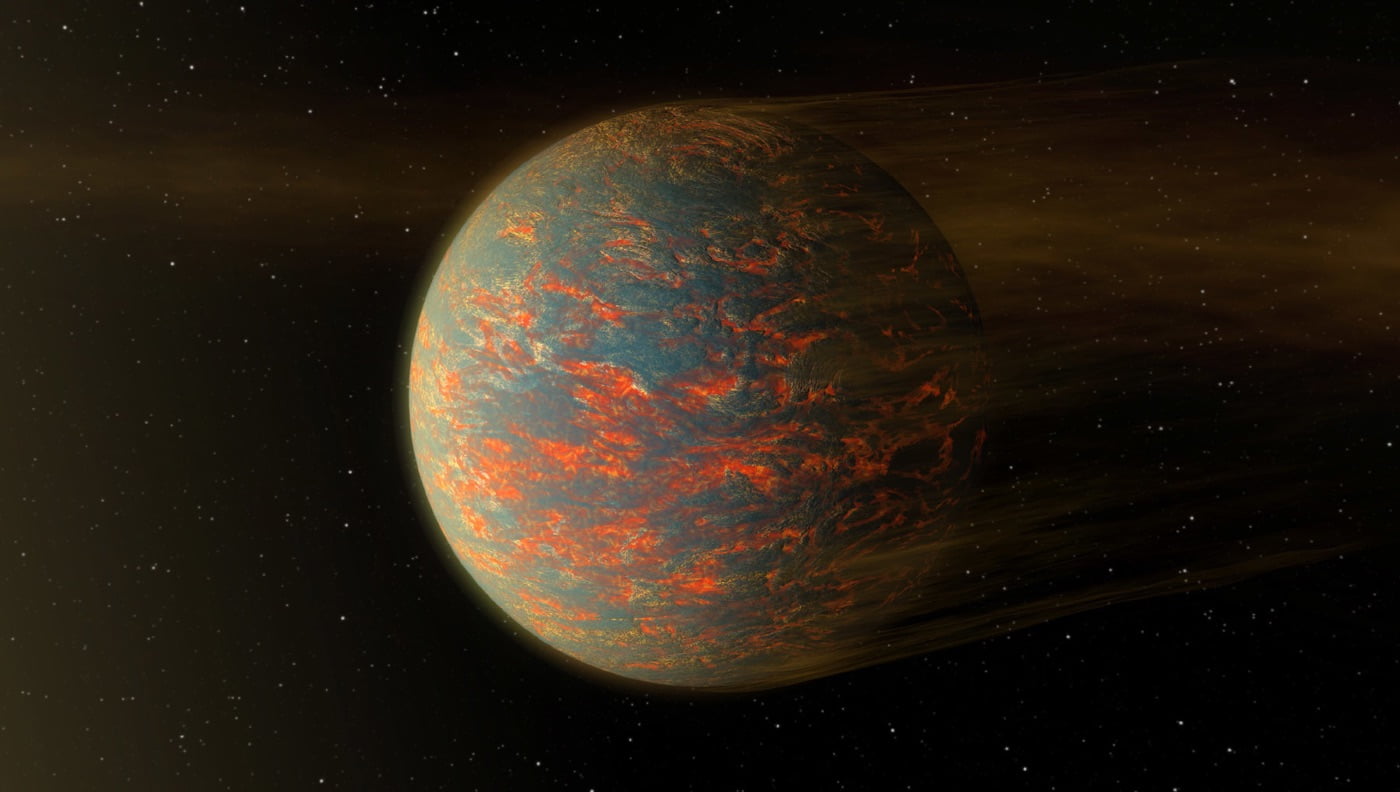
When studying exoplanets, scientists often judge habitability by the possibility of liquid water on the planet’s surface. But there is more to Earth’s habitability than water. The liquid iron dynamo within our planet is critical for life here because it generates magnetic fields that protect the planet from harmful solar radiation. It’s been difficult to predict what the interiors of a bigger and more massive planet like a super-Earth would look like, but a recent study changes that.
Researchers at the National Ignition Facility used its high-powered lasers to subject liquid iron to conditions similar to those expected in a super-Earth’s core, including pressures as high as ~1000 GPa. That’s more than 3 times higher than pressures at the boundary where Earth’s liquid iron meets its solid core. Based on their findings, the team concluded that super-Earths likely have a similar interior structure to our planet, with a solid iron-heavy core surrounded by churning liquid iron capable of generating a protective magnetosphere. (Image credit: NASA; research credit: R. Kraus et al.; via Science)
Migrating sand dunes can encounter obstacles both natural and manmade as they move. Dunes — both above ground and under water — have been known to bury roads, pipelines, and even buildings. A recent experimental study looks at which obstacles a dune will cross and which will trap it in place. Their set-up consists of a narrow channel built in a ring, essentially a racetrack for dunes. Flow is driven by a series of paddles that rotate opposite the tank’s rotation.
The team studied obstacles of different shapes and sizes relative to their dunes, and they found that dunes were generally able to cross obstacles that were smaller than the dune. Obstacles larger than the dune would trap it in place, and, for obstacles close to the same size as the dune, round obstacles were easier to cross whereas sharp-angled ones tended to trap the dune.
The idealized nature of their experiment means that their results aren’t immediately applicable to the complex dunes of the outside world, but the study will be an important touchstone for those predicting dune behavior through numerical simulation. Studies like those require experimental cases to validate their baseline simulations. (Image credit: top – J. Bezanger, figure – K. Bacik et al.; research credit: K. Bacik et al.; via APS Physics)
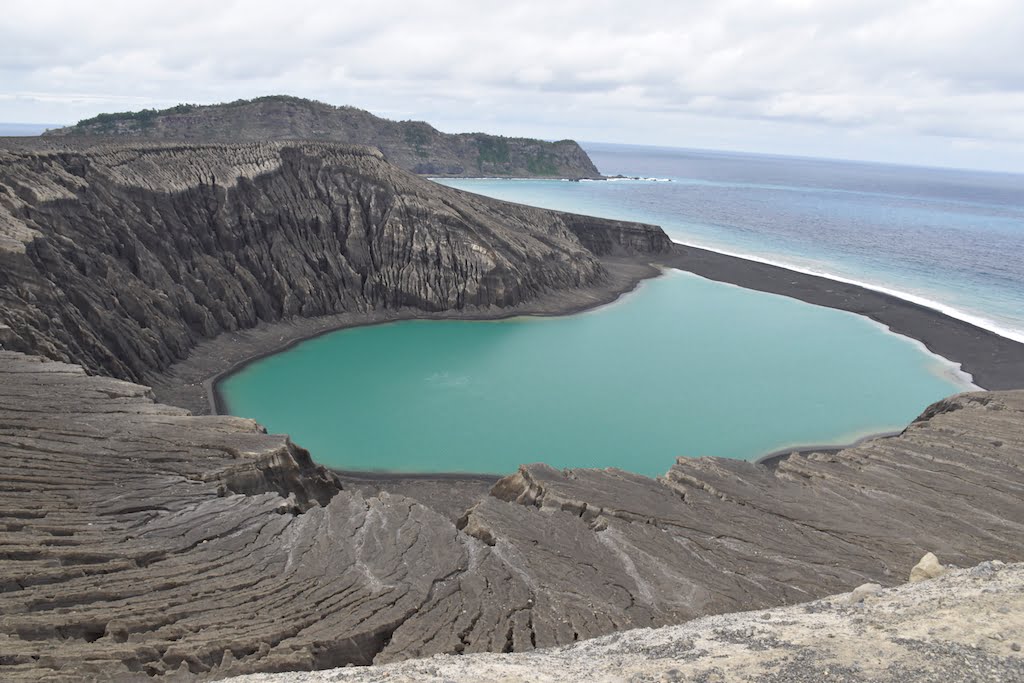
When magma meets water on its journey to the surface, the two form a large, partially molten chunk known as a volcanic bomb. As you would expect from their name, these bombs can often be explosive, either in the air or upon impact. But a surprising number of these bombs never explode. Since catching volcanic bombs in action is far too dangerous, researchers modeled them instead to determine what makes a dud.
The type of volcanic bomb they were most interested in comes from Surtseyan eruptions, where the bombs travel through shallow sea or lake water, collecting moisture along the way. When the water reaches the molten interior of the volcanic bomb, it flashes into steam. That’s where the pressure to explode the bombs comes from. But the team found that the bombs are also extremely porous, thanks to bubbles created as the magma depressurizes on its trip to the surface. If the bomb is porous enough, steam escapes the rock before it can build to explosive pressures. (Image credit: top – NASA, others – E. Greenbank et al.; research credit: E. Greenbank et al.; via NYTimes; submitted by Kam-Yung Soh)
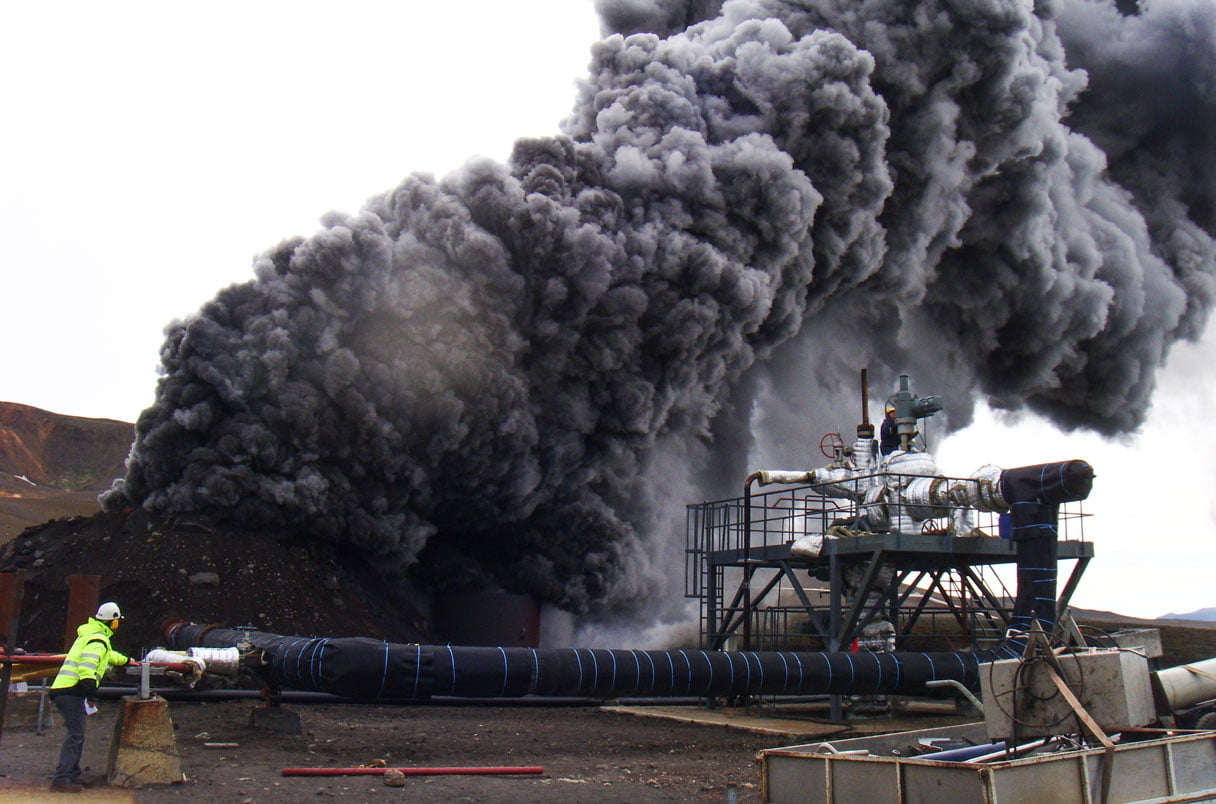
In 2009, drillers seeking geothermal energy in Iceland accidentally pierced a hidden magma chamber. After a billowing pillar of steam and glass shards poured out from the hole, it created the hottest geothermal well ever, until the casing failed. Now drillers are preparing to return to the area, this time with the intention of reaching magma. Capturing a sample of magma before it rises to the surface (thereby losing its trapped gases) is something of a holy grail for geophysicists, who otherwise rely on seismic wave detections and observations of magma that’s reached the surface. Building a long-term magma observatory will be an enormous engineering challenge, but the technologies developed may help us explore other hellish environments like the surface of Venus. (Image credit: G. Fridleifsson/IDDP; via Science)
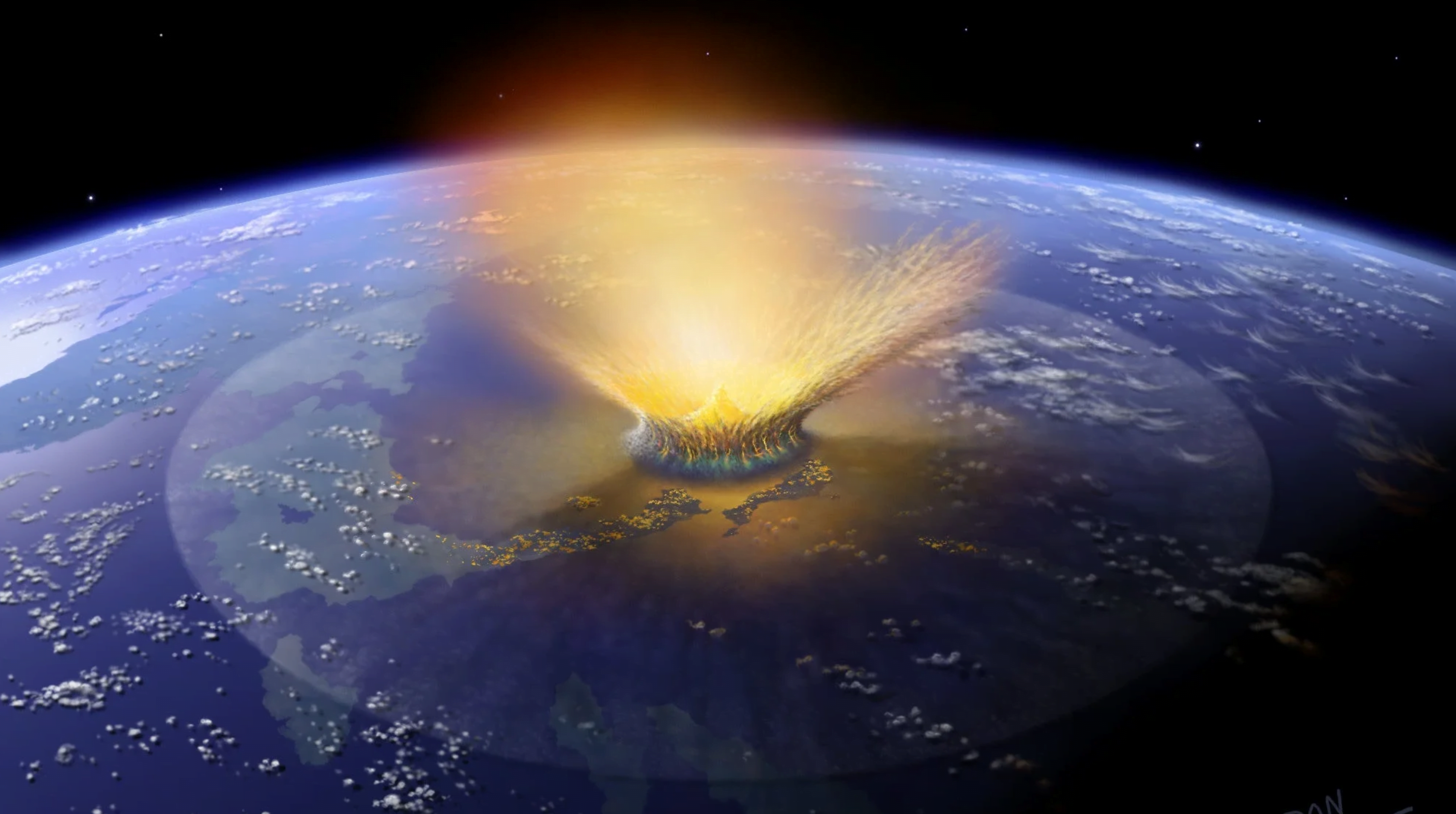
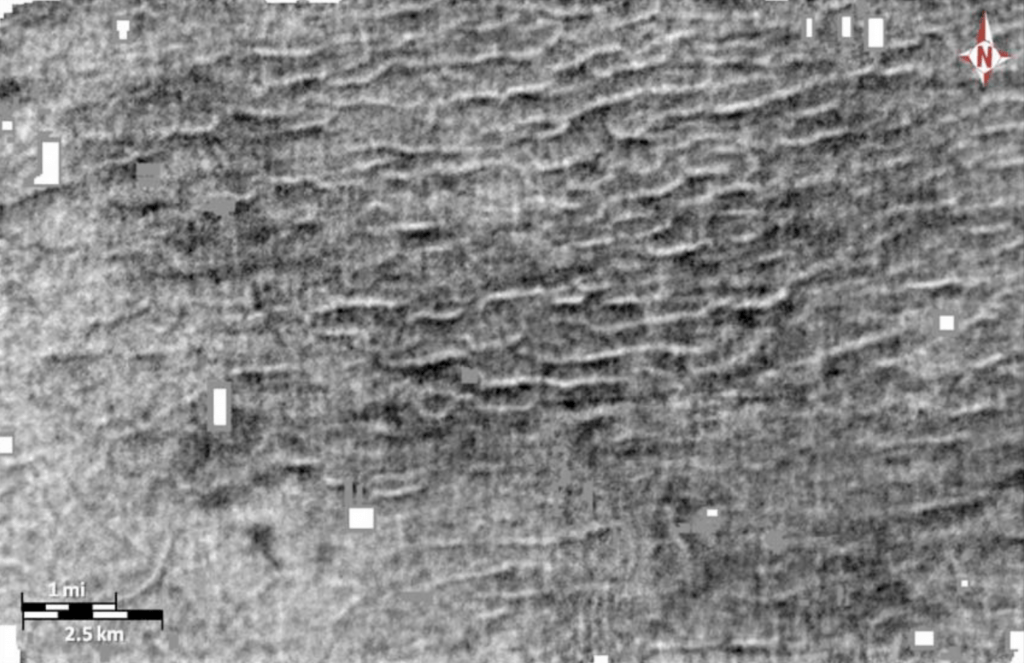
Approximately 66 million years ago, a 10-km asteroid struck our planet near Chicxulub on the Yucatán Peninsula. The impact was globally catastrophic, causing tsunamis, wildfires, earthquakes, and so much atmosphere-clogging sediment that about 75% of all species on the planet — including the non-avian dinosaurs — died out. A new study points to another remnant of the impact: giant ripples buried in the sediment of Louisiana.
Using seismic data collected by petroleum companies, the researchers describe the ripples as approximately 16 meters tall with a spacing around 600 meters, making them the largest known ripples on the planet. Currently, they are buried about 1500 meters underground, just below a layer of fine debris associated with the impact. The ripples show no evidence of erosion from storms or wind, leading the authors to conclude that they were deposited by an impact-associated tsunami and remained unaffected by smaller natural disasters before their burial. It’s very likely, according to the authors, that many other such megaripples exist, hidden away in proprietary petroleum data sets. (Image credits: top – D. Davis/SWRI, ripples – G. Kinsland et al.; research credit: G. Kinsland et al.; via Gizmodo)
Mud pots, or mud volcanoes, form when volcanic gases escape underlying magma and rise through water and earth to form bubbling mud pits. I had the chance to watch some at Yellowstone National Park a few years ago and they are bizarrely fascinating. In this Physics Girl video, Dianna recounts her adventures in trying to locate some mud pots in southern California and explains the geology that enables them there. And if you haven’t seen it yet, check out her related video on the only known moving mud puddle! (Image and video credit: Physics Girl)
Beyond Earth, scientists expect to find objects formed by a volcanism much different than what we typically see here. Researchers used Syracuse University’s Lava Project apparatus to simulate ferrovolcanism — in this case with a mixture containing both metallic lava and silicate lava. Interestingly, the team found that the two types of lava flow largely independently of one another. The silicate lava is much more viscous but less dense and flows relatively slowly. The metallic lava is far less viscous and flows about 10 times faster, but it’s also denser, so most of it flows beneath the silicate lava, with only a few fingers that burst out atop the other lava or erupt in braided flows from the leading edge of the flow.
The upcoming Psyche mission will explore a metal asteroid (of the same name) that’s thought to be the remains of an early planet’s nickel-iron core. Studies like this one are giving planetary physicists new insight into the kinds of geological features await us there. (Video and research credit: A. Soldati et al.; via AGU Eos; submitted by Kam-Yung Soh)
What’s part geyser, part mud pot, and all creeping, unstoppable natural disaster? The Niland Geyser, known as the world’s only moving mud spring. Dianna explores this geological mystery in the video above. Although the mud spring has been known for years, it was only in 2016 that it started moving toward railroad tracks and a state highway. So far engineering efforts to stop it have failed, so engineers are instead working to mitigate its effects on infrastructure.
That’s a tall order when dealing with a pit of unknown depth that’s constantly bubbling with deadly carbon dioxide. The spring managed to move past a 75-foot-deep wall and, on another occasion, sent heavy drilling mud flying skyward from its built-up pressure. Check out the full video to learn more. (Image and video credit: Physics Girl)