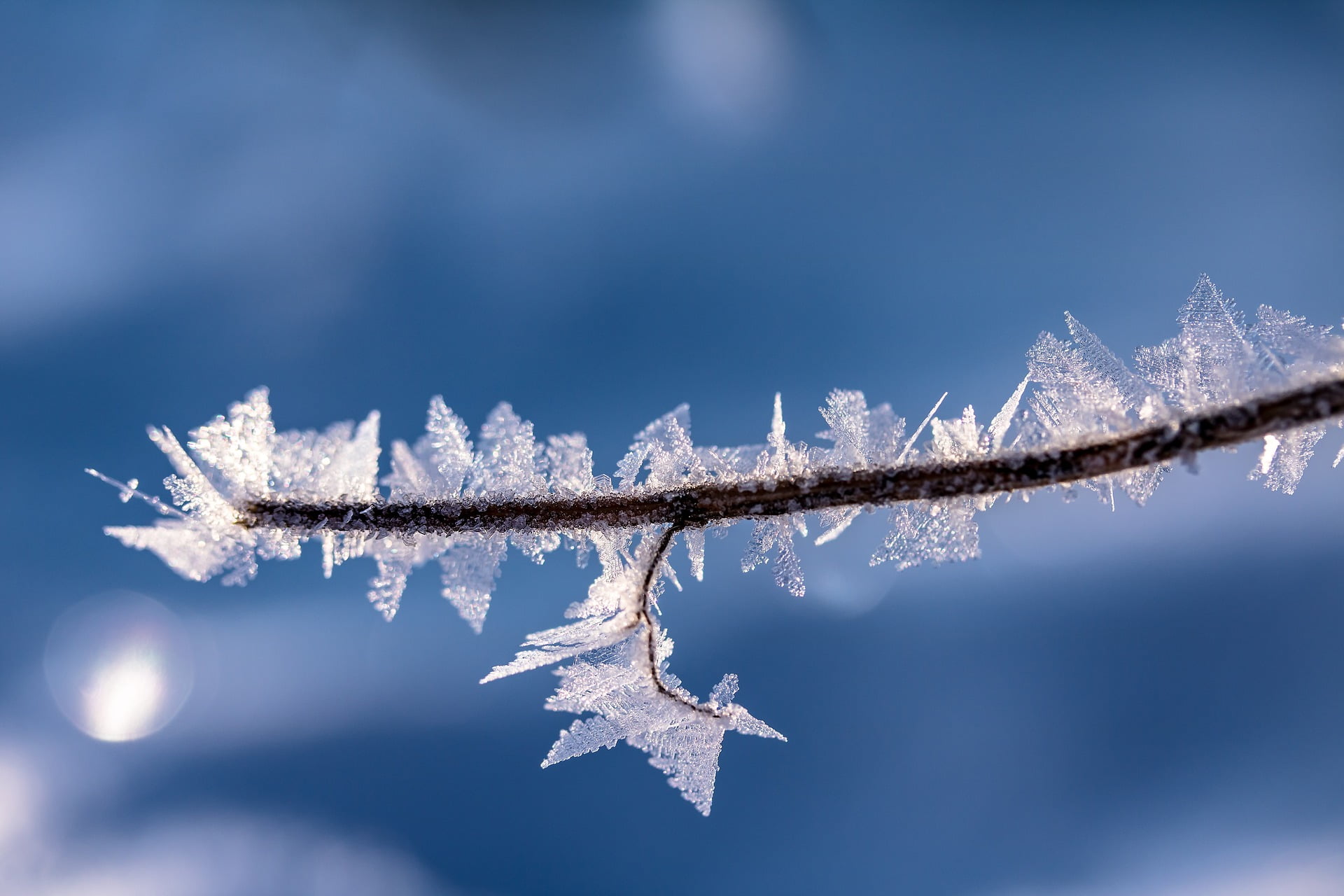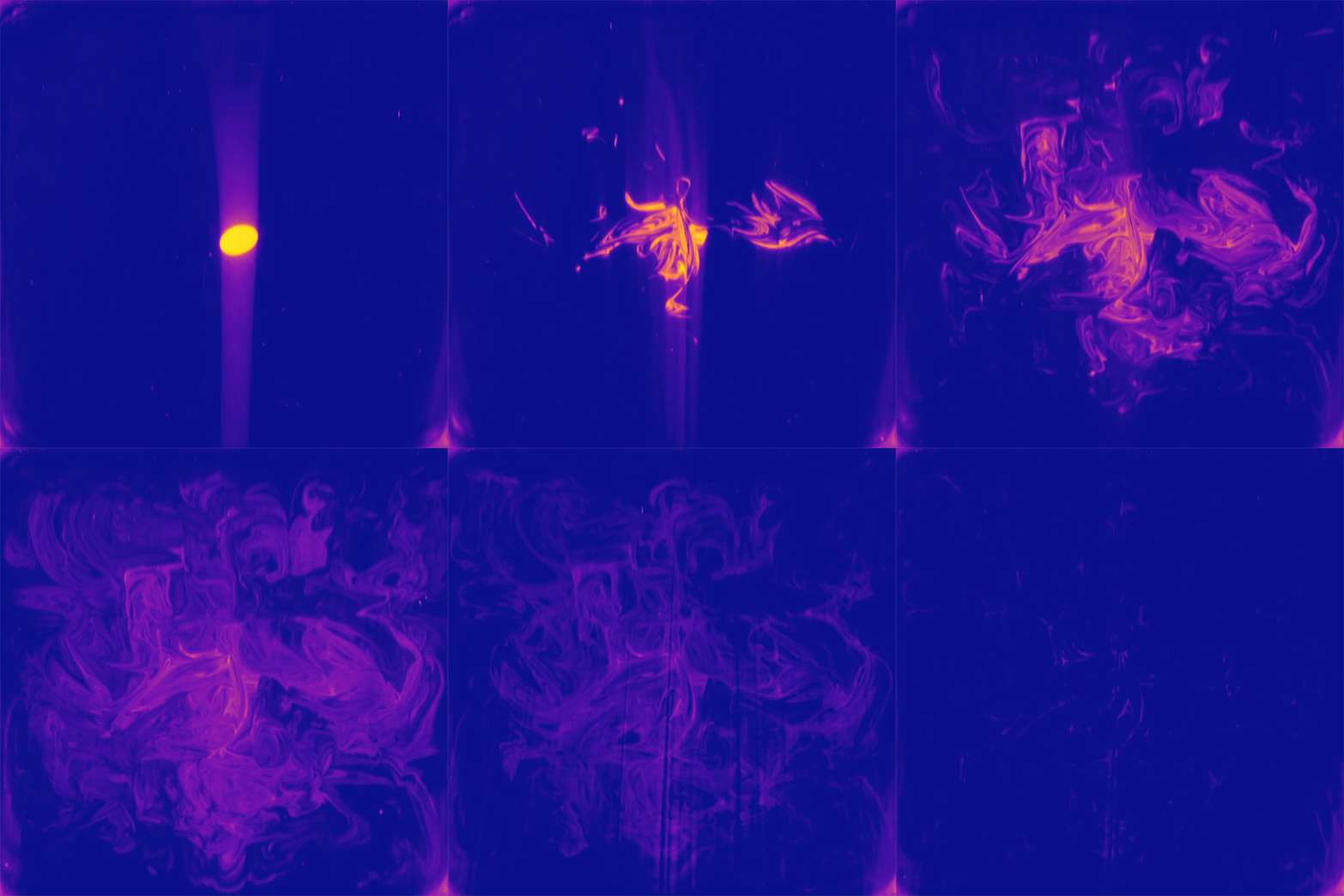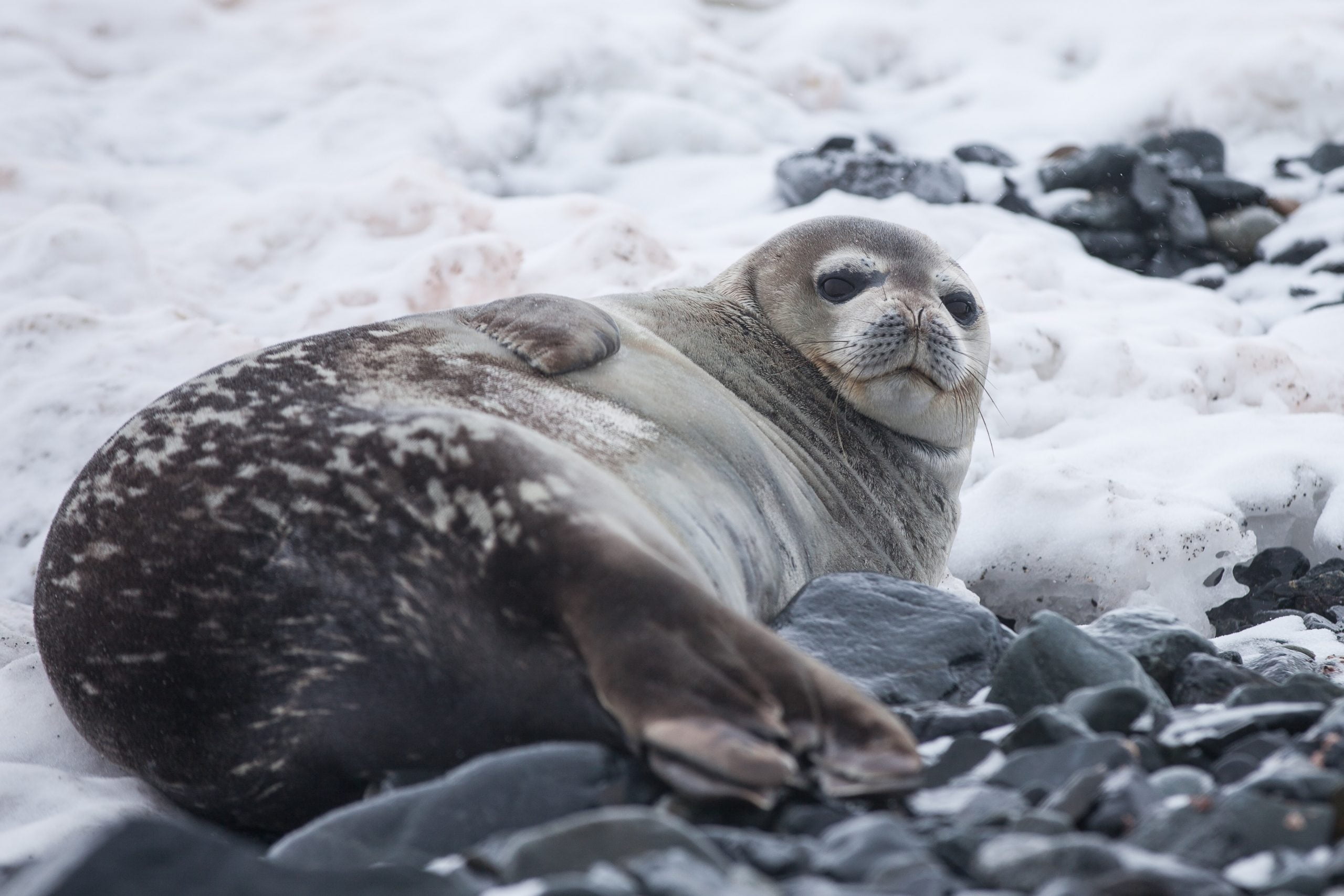
Monitoring meltwater from Antarctic glaciers is critical for understanding our changing climate, but such remote and inaccessible regions are tough to collect data in. So researchers are turning to local workers to help them gather data. By collecting and analyzing data from seal tags, researchers have mapped new seasonal variations in meltwater flows around Pine Island Glacier. Although the seals are somewhat tough collaborators — they rarely swim exactly where the researchers would like them to — their winter activities are revealing data researchers could never have collected on their own. (Image credit: Y. Rzhemovskiy; research credit: Y. Zheng et al.; via Gizmodo)
Tag: fluid dynamics

Superior Mirage
This photograph of a ship seemingly floating far above the water is not some Photoshop fakery; it’s physics creating the illusion. It’s an example of what’s known as a superior mirage — superior because the mirage appears above the object’s actual location, unlike the mirages you see above the road on a hot day.
In this case, the air layer near the water is cold — colder than the air above it, thanks to a temperature inversion. Cold air is denser and has a higher index of refraction, so light traveling through it gets bent downward. To a far off observer, this downward bend makes objects appear higher in altitude than they actually are. The effect is most common in polar regions, where the right conditions can actually allow images of objects completely below the horizon! (Image credit: D. Morris; via The Guardian; submitted by Alec)

“Dancing With Danger”


Filmmaker Chris Bryan captures surfer Kipp Caddy as he rides an enormous wave in “Dancing With Danger.” Nothing quite captures the majesty of these powerful flows like high-speed videography. Enjoy the break, the spray, and those awesome rib vortices. (Image and video credit: C. Bryan)

Jumping Frost
Liquid water is easily electrically charged, due to its polar nature. That’s why rubbing a comb is enough to deflect a stream of water. Ice is harder to charge, but it can happen, especially when there are temperature gradients across the ice.
That’s the key behind this study of jumping frost. When ice crystals grow on a surface much colder than their surroundings, positive charges gather in the colder region, leaving the dendritic branches of the ice negatively charged. When researchers brought liquid water near the charged ice crystals, the water became charged, too. Positive charges in the water attracted the negatively-charged dendrites, causing the ice crystals to jump off the surface.
Studies like this help us better understand cloud and rain formation and may one day lead to new ways of de-icing surfaces. (Image credit: frost – Miriams-Fotos, figure – R. Mukherjee et al.; research credit: R. Mukherjee et al.; via ChemBites; submitted by Kam-Yung Soh)

Taylor Columns


When rotating, fluids often act very differently than we expect. For example, an obstacle in a rotating flow will deflect flow around it at all heights. This is known as a Taylor column.
In this video, we see the phenomenon recreated in a simple rotating tank (that’s easy to build yourself). Once all the water in the tank is rotating at the same rate, there is very little variation in flow with height. Food coloring dropped into the tank forms tight vertical columns. Even with a short obstacle in place and induced flow in the tank from a change in rotation rate, the dye continues to move uniformly in height. Because the dye cannot travel through the obstacle, it goes around and does so at every height, leaving the space above the obstacle dye-free.
The same phenomenon occurs in planetary atmospheres; this rotating tank is basically a mini-version of our own atmosphere. Where there are obstacles — like mountains — on our planet, air has an easier time flowing around the mountain instead of over it! (Image and video credit: DIYnamics)

Freezing Splats


In fluid physics, there’s often a tug of war between different effects. For droplets falling onto a surface colder than their freezing point, the hydrodynamics of impact, sudden heat transfer, and solidification processes all compete to determine how quickly and in what form droplets freeze.
The images above form a series based on changing the height from which the droplet falls. Each image is divided into two synchronized parts. On the left, we see a visible light, top-down view of the freezing droplet; on the right, we see an infrared view of freezing. As the height of impact increases, the shape of the frozen drop becomes more elaborate, moving from a flat splat with a small conical tip all the way to one with a concentric double-ring in its center. (Image and research credit: M. Hu et al.)

Fallstreak Holes


Occasionally clouds appear to have a hole in them; these are known as fallstreak holes or hole-punch clouds. To form, the water droplets in the cloud must be supercooled; in other words, they must be colder than their freezing point but still in liquid form. When disturbed — say, by the temperature drop caused by flowing over an airplane wing — the supercooled water droplets will suddenly freeze. This typically kicks off a chain reaction in which many droplets freeze and the heavy ice crystals fall out of the sky, leaving behind a void in the cloud. Because airplanes are particularly good at creating these fallstreak holes, they’re often seen near busy airports. (Image credit: J. Stevens/NASA; via NASA Earth Observatory)
“Radiolarians”


“Radiolarians” is a short film by artist Roman De Giuli using ink, alcohol, and oil. Much of the fluid motion involves break-up into droplets. The effects appear to rely heavily on Marangoni bursting, the physics of which you can learn about in this previous post. (Image and video credit: R. De Giuli)

Chaotic Mixing in Porous Media
One of the peculiar characteristics of viscous, laminar flows is that they are reversible. Squirt dye into glycerin, stir it one way, then the opposite direction, and the dye returns to its initial position. But this neat trick only works in simple geometries; in a more complex environment, like the pores between packed gravel, flows cannot make their way back to their initial state.
That’s the idea at the heart of this new study of mixing in porous media. Researchers took a bed of packed beads and pushed a slow, steady flow of dye into the bed. Then they steadily withdrew fluid to reverse the flow and observed how the dye they’d injected appeared at the surface of the bed (top image). If the flow were perfectly reversible, we’d expect the dye to return to its injection point. But instead the dye is spread chaotically across the surface, giving researchers a snapshot of the chaotic mixing taking place between beads. (Image and research credit: J. Heyman et al.; via APS Physics)
Wind Turbine Physics


Over the years, wind turbines have gotten tall with long, thin blades. This MinutePhysics video delves into the reasons for those changes. They’re all aimed at generating more wind power and doing so with greater efficiency.
I’ll add one caveat to the video, though, because you may wonder how modern wind turbines can be fast when they appear to rotate so slowly. That’s a trick of the reference frame. The power a turbine blade generates depends on the flow speed over it, and the relative air speed is greatest near the tip of the turbine blades.
Think of the circle the blade tip traces. For a given rotation rate – say once revolution a minute – the blade tip has a much larger distance to travel than the blade’s base does. Divide that large distance by the rotation time and you get a large velocity. So even though the wind turbine appears to be rotating slowly, the flow the blade sees is quite fast. And the longer the wind turbine’s blades, the larger this effect. (Image and video credit: H. Reich/MinutePhysics)