Tag: erosion

  • Calming the Waves

    Calming the Waves

    Wave action can be a major source of erosion along riverbanks and shorelines. But in a recent study, scientists were able to perfectly absorb incoming waves to create a downstream region with calm, wave-free waters.

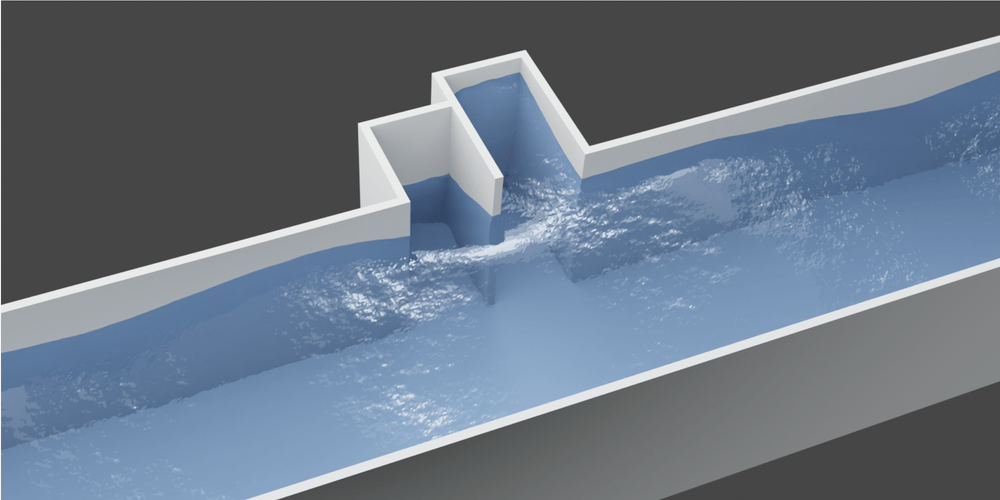
    Experimental data shows that waves approaching from the left interact with the resonant chambers and get perfectly absorbed, leaving the water on the right side still.
    Experimental data shows that waves approaching from the left interact with the resonant chambers and get perfectly absorbed, leaving the water on the right side still.

    The group began with a narrow channel that waves could move down. They added two small, side-by-side cavities perpendicular to the channel; as waves travel down the channel, they resonate with the cavities, which reflect and transmit their own waves back into the channel. With the right tuning to the size and spacing of the cavities, the team was able to make the cavities’ waves perfectly cancel the channel’s waves. The group demonstrated this absorption theoretically, numerically, and experimentally.

    Currently, they’ve only managed perfect absorption with a single wave frequency, but an array of cavities should be able to absorb a range of incoming waves. The authors hope their work will one day help protect coastal structures and prevent erosion by countering incoming waves. (Image and research credit: L-P. Euvé et al.; via APS Physics)

  • The Best of FYFD 2023

    The Best of FYFD 2023

    A fresh year means a look back at what was popular last year on FYFD. Usually, I give a numeric list of the top 10 posts, but this year the analytics weren’t as clear. So, instead, I’m combining from a few different sources and presenting an unordered list of some of the site’s most popular content. Here you go:

    I’m really pleased with the mix of topics this year; many of these topics are straight from research papers, and others are artists’ works. At least one is both. From swimming bacteria to star-birthing nebulas, fluid dynamics are everywhere!

    If you enjoy FYFD, please remember that it’s a reader-supported website. I don’t run ads and it’s been years since my last sponsored post. You can help support the site by becoming a patronmaking a one-time donationbuying some merch, or simply by sharing on social media. And if you find yourself struggling to remember to check the website, remember you can get FYFD in your inbox every two weeks with our newsletter. Happy New Year!

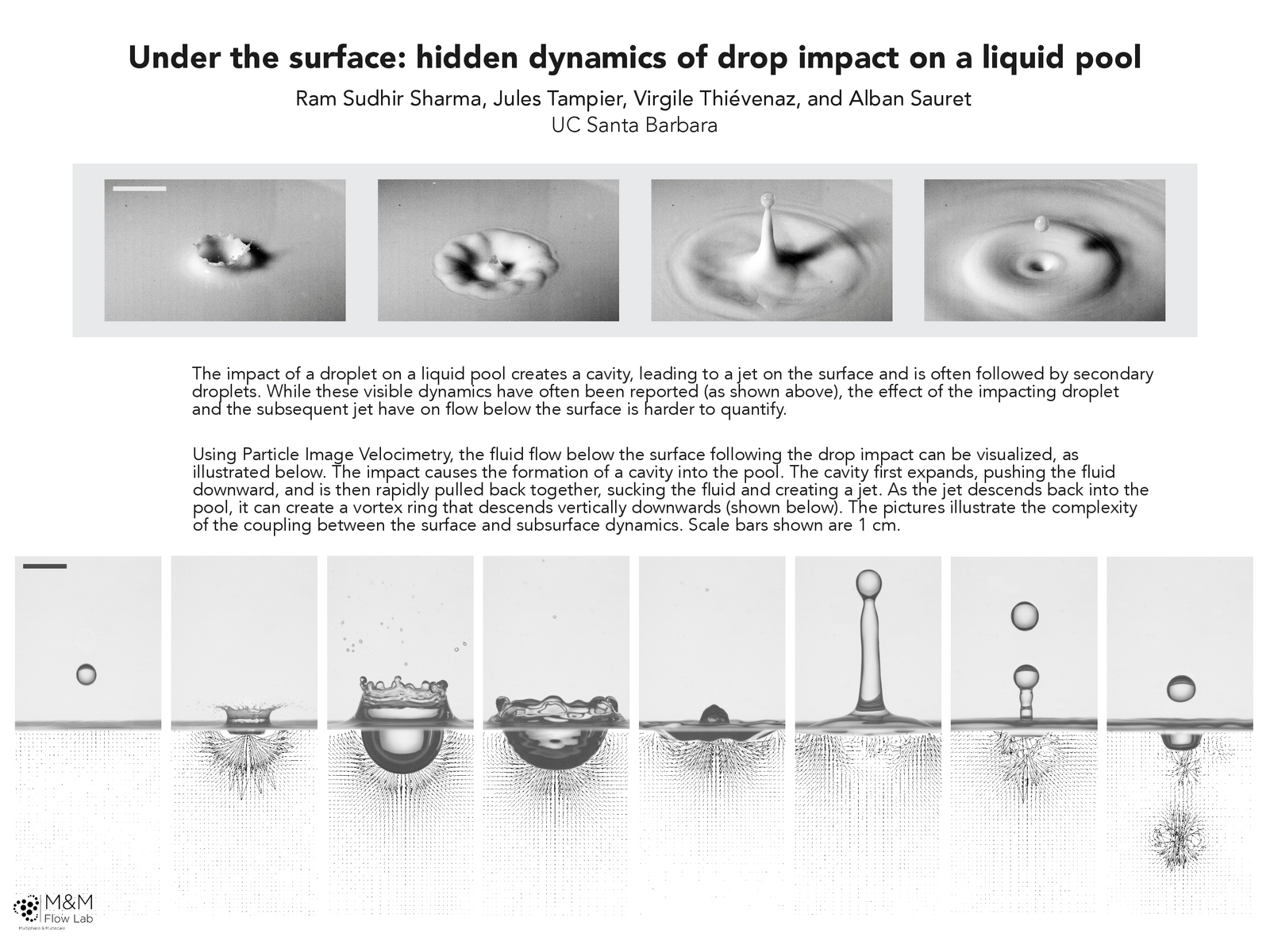
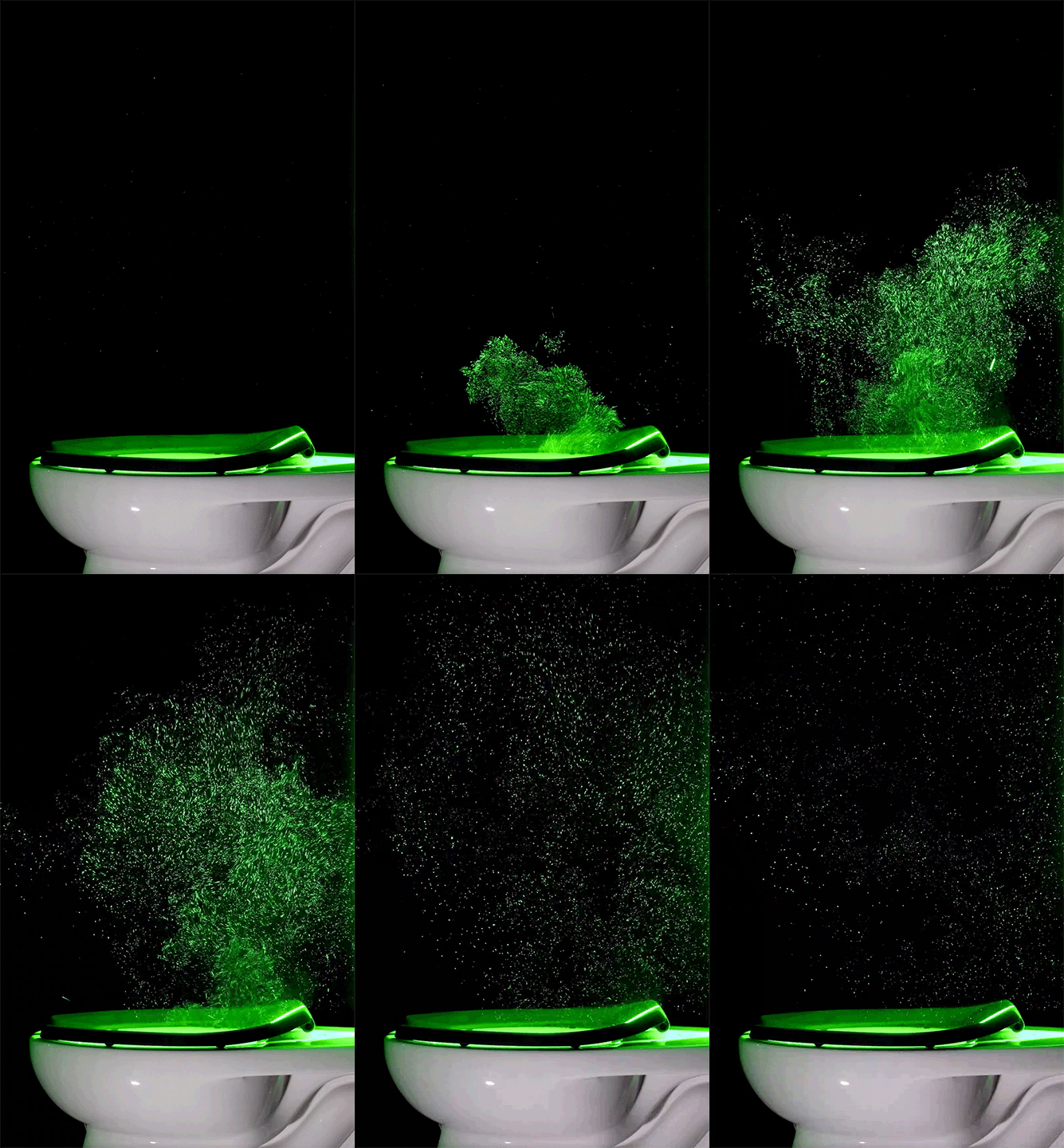
    (Image credits: sphinx – S. Boury et al., ear model – S. Kim et al., maze – S. Mould, dandelion – S. Chaudhry, water tank – P. Ammon, e. coli – R. Ran et al., drop impact – R. Sharma et al., Leidenfrost – L. Gledhill, toilet – J. Crimaldi et al., engine sim – N. Wimer et al., rivers – D. Coe, fin – F. Weston, snake – P. Schmid, nebula – J. Drudis and C. Sasse, flames – C. Almarcha et al.)

  • “Emerald Roots”

    “Emerald Roots”

    As charged particles from the solar wind bombard the upper atmosphere, a glowing plasma forms and dances in the sky. The green light of the plasma reflects off moistened sand, rippled by the passage of wind and tide. Each component seems simple, but this striking image contains hidden depths of fluid dynamics. Magnetohydrodynamics govern the aurora’s dance; the sand’s self-organization mirrors dune physics; and even the rocky outcropping in the background was carefully shaped by erosive forces from wind and water. Truly, fluid dynamics are found everywhere. (Image credit: L. Tenti; via 2023 Astronomy POTY)

  • Eroding the Sphinx

    Eroding the Sphinx

    One theory suggests that the Great Sphinx of Giza formed — in part — naturally as a result of erosion, and ancient Egyptians added features to the bedrock formation. To test the plausibility of the theory, researchers made a miniature sphinx, consisting of a clay mound with a single, harder inclusion to represent the Sphinx’s head, and placed their construction in a water tunnel. As the water eroded away the clay, the head appeared, and flow around this harder-to-erode region formed some of the body and paws of the reclining Sphinx.

    The experiment suggests that it is plausible for part of the Sphinx to have formed naturally, as a result of erosion. But plausibility is not proof, and given the lack of a contemporary inscription explaining the statue’s origin, the goals and methods of the people who built it around 2500 B.C.E. will remain a matter of archaeological debate. (Image credit: S. Boury et al.)

  • Painting in Sediment

    Painting in Sediment

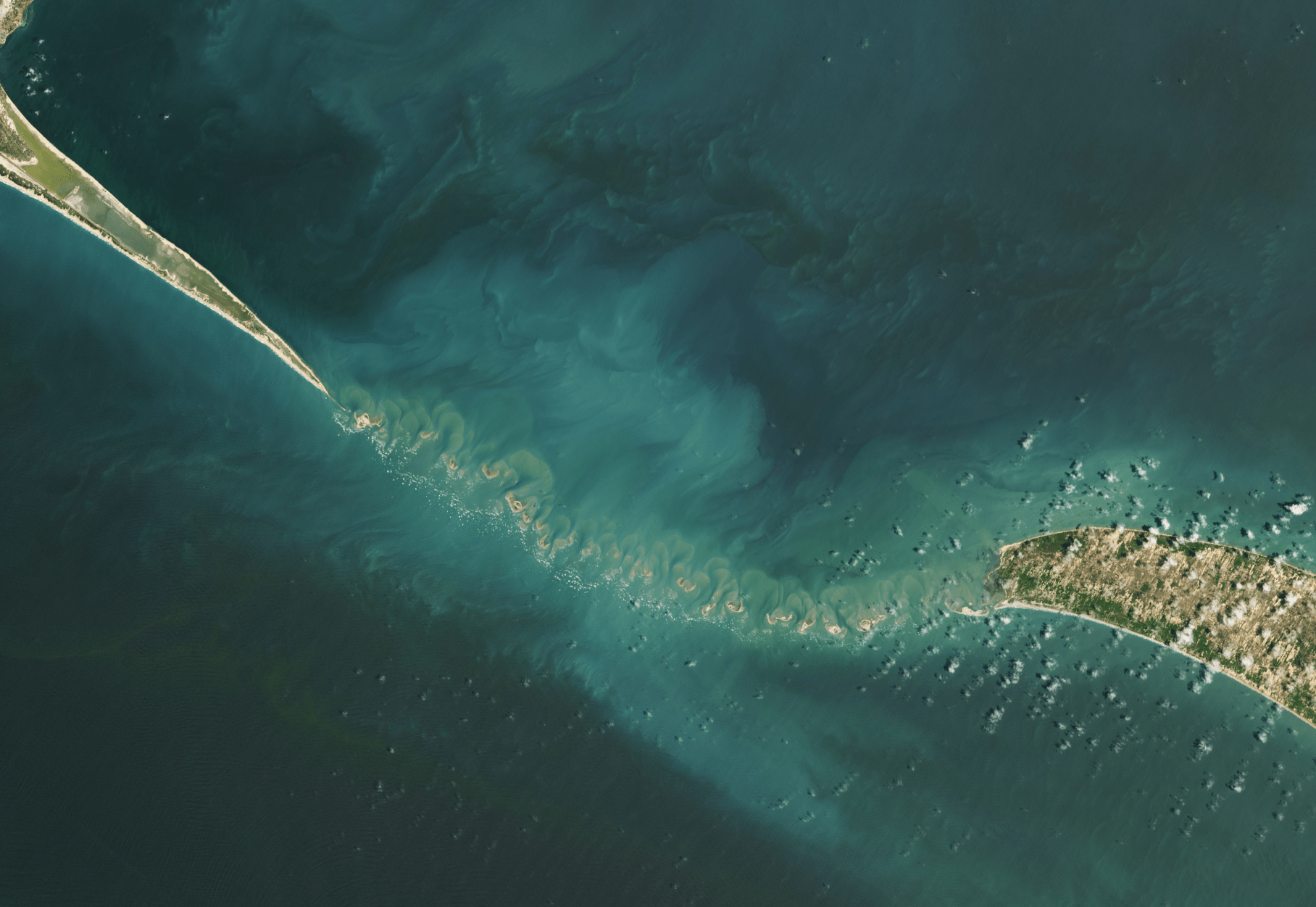
    Pale plumes of sediment flow off these islands in the Gulf of Mannar between India and Sri Lanka. As waves erode the land, currents and tides carry the sediment outward, shaping it into swirls and eddies. I rarely tire of satellite images like these because there are always subtle new details of flow to notice. The photos are much like paintings, with layer after layer to decipher the closer you look. (Image credit: A. Nussbaum; via NASA Earth Observatory)

  • Featured Video Play Icon

    Why We Can’t Control Rivers

    Rivers are systems in a constant state of change, balancing flow speeds, path length, sediment deposition, and erosion, as seen in this previous Practical Engineering video. The next video in this mini-series considers what human interventions do to rivers. As convenient as it is for humanity to force a river into a straight and constant course, the long-term effects can be incredibly destructive both upstream and downstream.

    In this video, Grady takes a look at several types of interventions: stream straightening, dams, river crossings, and more. With the help of a stream table, he demonstrates just how these efforts shift the river’s balance and what effects — in terms of erosion, deposition, and flooding — each can cause. These disadvantages, along with habitat destruction, are part of why stream remediation projects are on the rise. (Video and image credit: Practical Engineering)

  • Snow-Covered Trees

    Snow-Covered Trees

    In the Hakkōda Mountains of Japan, snow encases the trees, transforming the ski slopes into a hoodoo-filled winter wonderland. Photographer Sho Shibata captured these images while journeying through the area a few years ago. The combination of wind and snow sculpts the trees into surprisingly similar shapes! (Image credit: S. Shibata; via Colossal)

  • Featured Video Play Icon

    Why Rivers Shift

    In their natural state, rivers are variable in their course, shifting and meandering. Sometimes they deposit sediment, and sometimes they erode it. In this video, Grady from Practical Engineering digs into the principles behind these changes. With help from Emriver‘s stream tables, which demonstrate years of changes in a river over minutes, Grady shows how changing the sediment load, flow rate, and other factors in a river affect its course. (Video credit: Practical Engineering)

  • Sedimentation After Flooding

    Sedimentation After Flooding

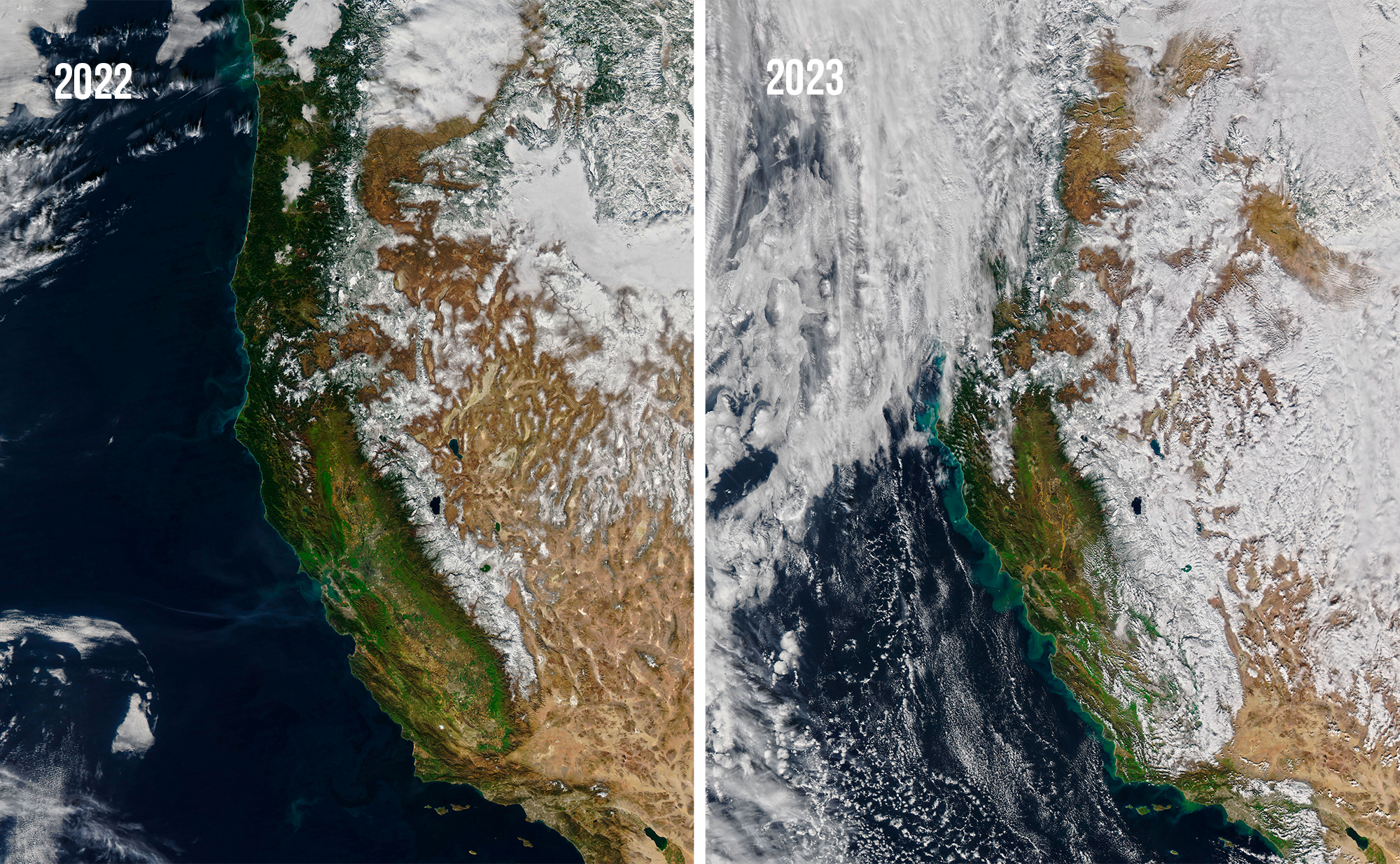
    The new year brought California a series of atmospheric rivers that poured record amounts of water onto drought-stricken lands. While the precipitation refreshed snowpacks and reservoirs, much of it washed away as soils oversaturated. Those flows carried sediment with them, creating swirls of brown and green along the coastline.

    Compare the two satellite images above to see how different January 2022 looked from January 2023, post-deluge. The snow levels in January 2023 were about 248 percent of their average level for that part of the season. But the sediment levels in the ocean are also drastically increased, indicating high levels of erosion. (Image credit: J. Stevens; via NASA Earth Observatory)

  • The Delta Series

    The Delta Series

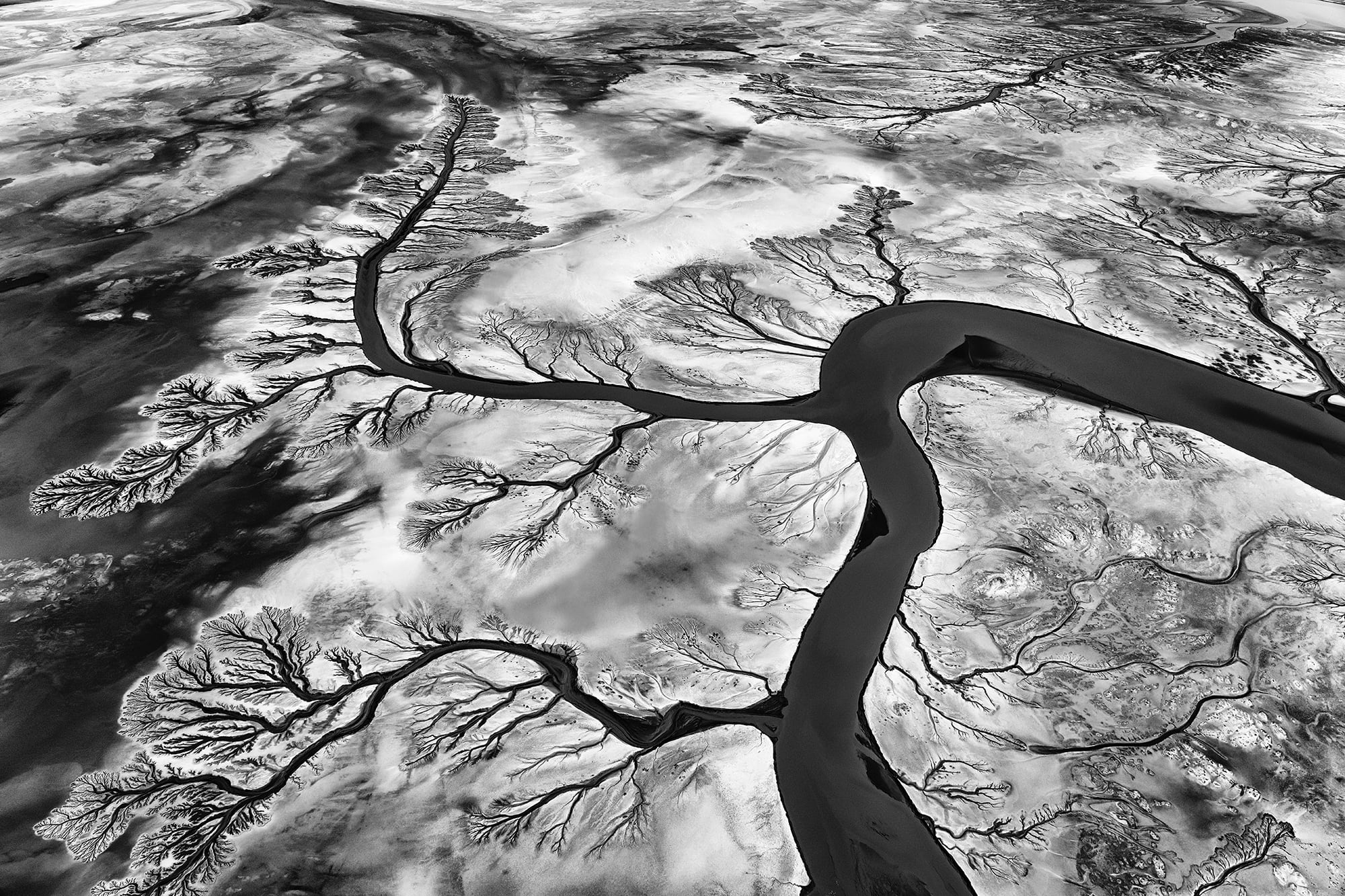
    It’s easy in the rush of our daily lives to forget just how dynamic rivers are. In his “Delta Series” conservation photographer Paul Nicklen explores that ever-changing nature from above the Colorado River delta. With the ongoing megadrought in this region and ever-increasing demands for more water, the Colorado no longer flows to the ocean. It trickles its way to a tired end near Baja, Mexico, where its last gasp is not enough to sustain ecosystems that relied on the river’s irrigation long before us. Nicklen’s work is a beautiful portrait of the fractal, tree-like patterns of a slowing river. Find more of Nicklen’s work on his website and Instagram. (Image credit: P. Nicklen; via Colossal)