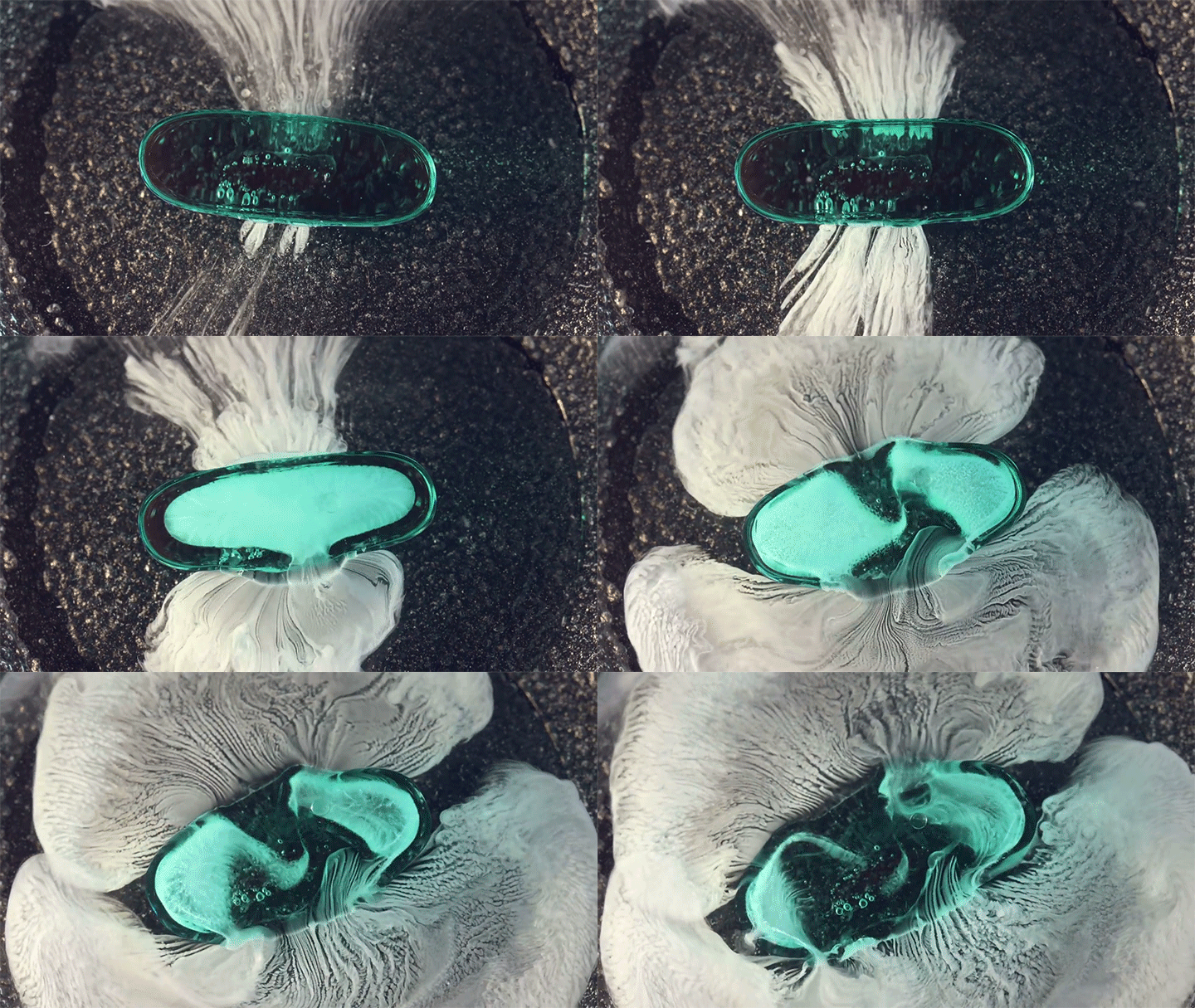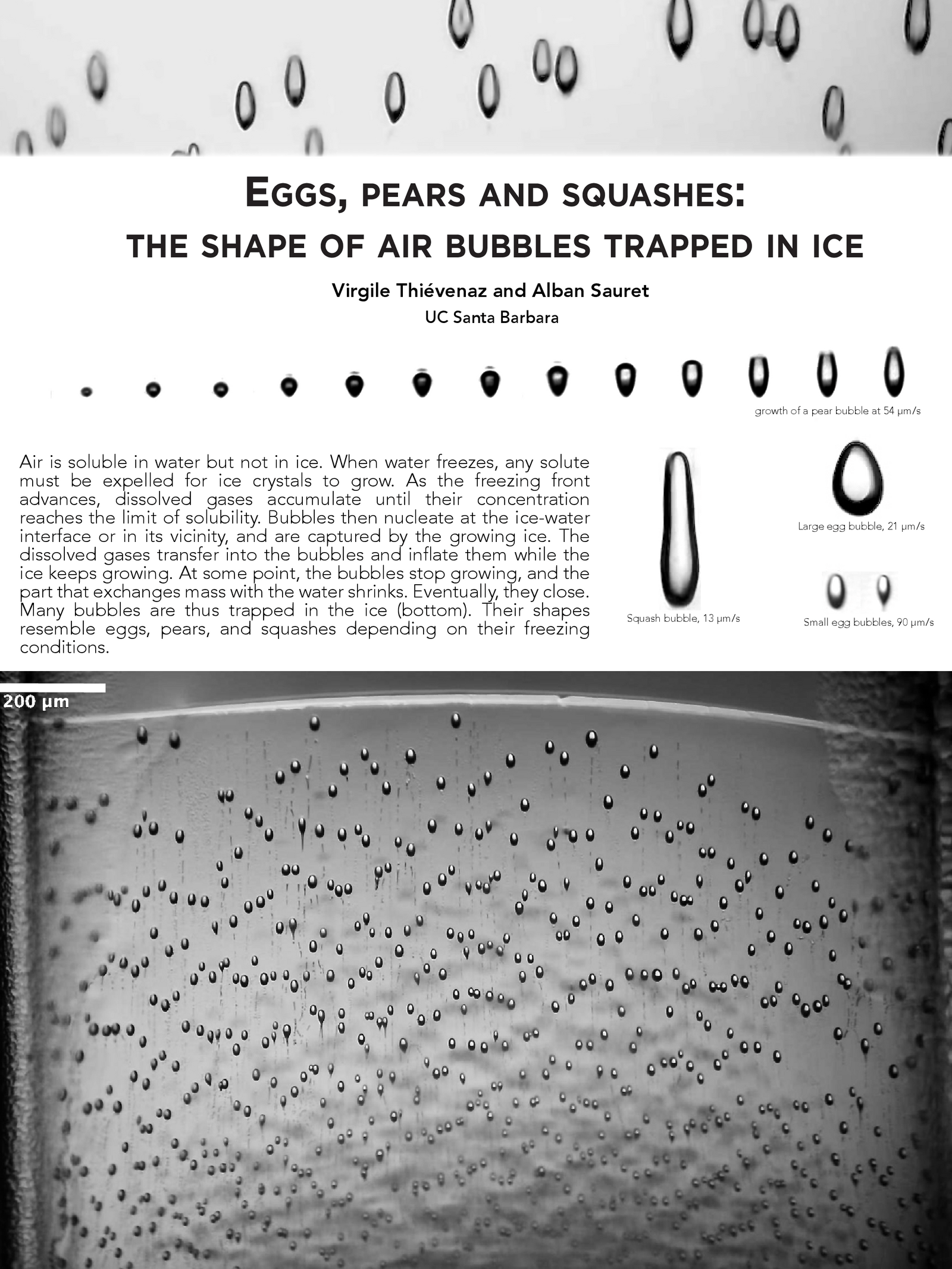
Air can dissolve in water, but not in ice. So as water freezes, any dissolved gases have to get squeezed out in order for the ice crystals to grow. Once the concentration of gases is high enough, a bubble nucleates and gets captured by the growing ice around it. The shape of the final bubble depends on its freezing conditions. As seen here, bubbles take on all kinds of shapes, ranging from egg-like to a long and skinny squash-like shape. (Image credit: V. Thiévenaz and A. Sauret)
Tag: dissolution

Snowing in the Core


Some rocky planetary bodies, like Jupiter‘s moon Ganymede, generate magnetic fields through snow-like, solid precipitation that falls in their liquid metal cores. To study this peculiar and complex arrangement, researchers look at sugar grains falling through — and dissolving into — water. The solid sugar grains mimic the iron snowflakes that fall in Ganymede’s core. As they sink, they drag fluid with them. But the grains can also dissolve, making the fluid around them denser and prone to sinking even faster. The dense, sinking flows trigger buoyant convection inside the surrounding fluid.
As seen in the experiments, there are many factors competing here. Large grains dissolve more slowly and are able to drag more fluid with them as they fall. Small grains, on the other hand, dissolve quickly, causing more buoyancy-driven flows. Laboratory analogs like these help scientists unravel the complexities of situations we cannot observe otherwise. (Image and video credit: Q. Kriaa et al.)

Vietnam’s Emerald Isles
Vietnam’s Hạ Long Bay is home to more than 1,600 islands, many of them made up of mountainous limestone. The area is famous for its karst features, a type of terrain formed from highly porous, water-soluble rock. Over time, water dissolves and fractures the limestone, creating karst landscapes full of caves, springs, sinkholes, and fluted rock outcroppings. The area’s erosion also produces highly fertile soil, leading to a verdant ecosystem with many unique and endemic species. (Image credit: N. Kuring/NASA/USGS; via NASA Earth Observatory)

Watery Salt Flats
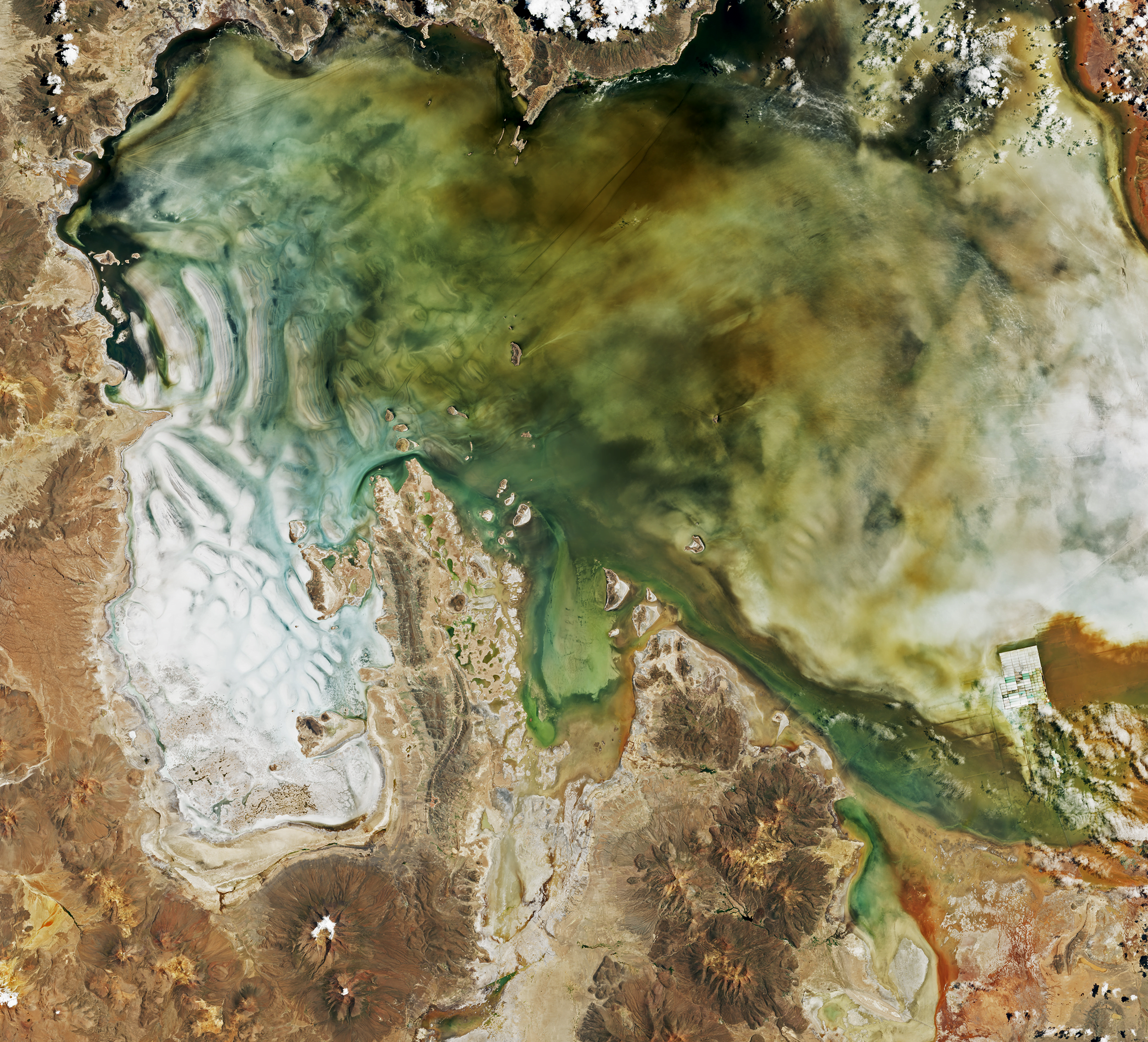
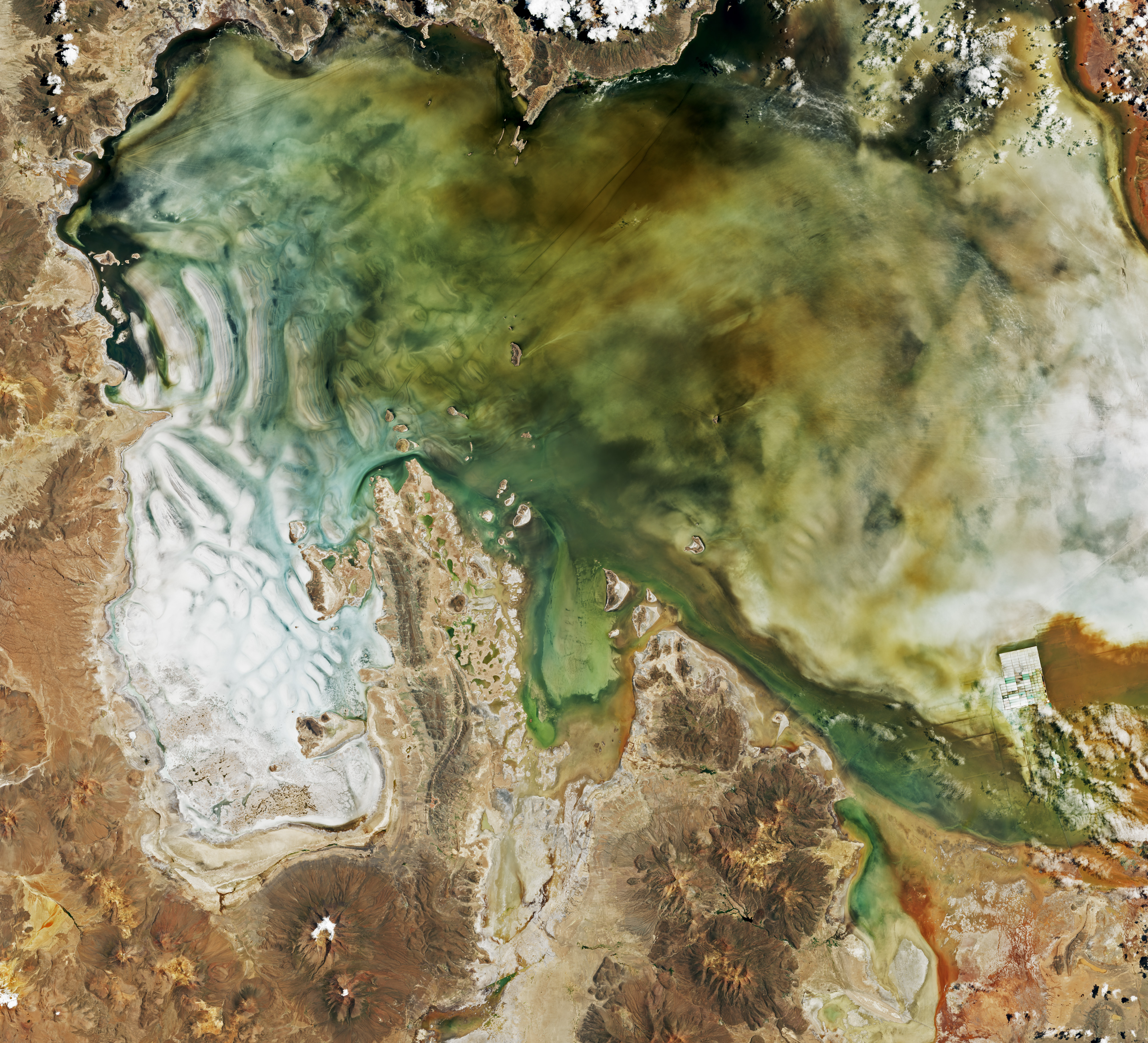
Unusually high rainfall in Bolivia’s Salar de Uyuni turned the world’s largest salt flat into a shallow salt lake. These natural-color satellite images show the area in late January 2022. If you zoom in on the full resolution image, there are incredible detailed swirls in the water. It’s like peering at an abstract or Impressionist painting. The many colors are attributable to several sources, including volcanic sediments, runoff, and a variety of microbes and algae thriving in the mineral-filled waters. (Image credit: L. Dauphin; via NASA Earth Observatory)

Dissolving Pinnacles
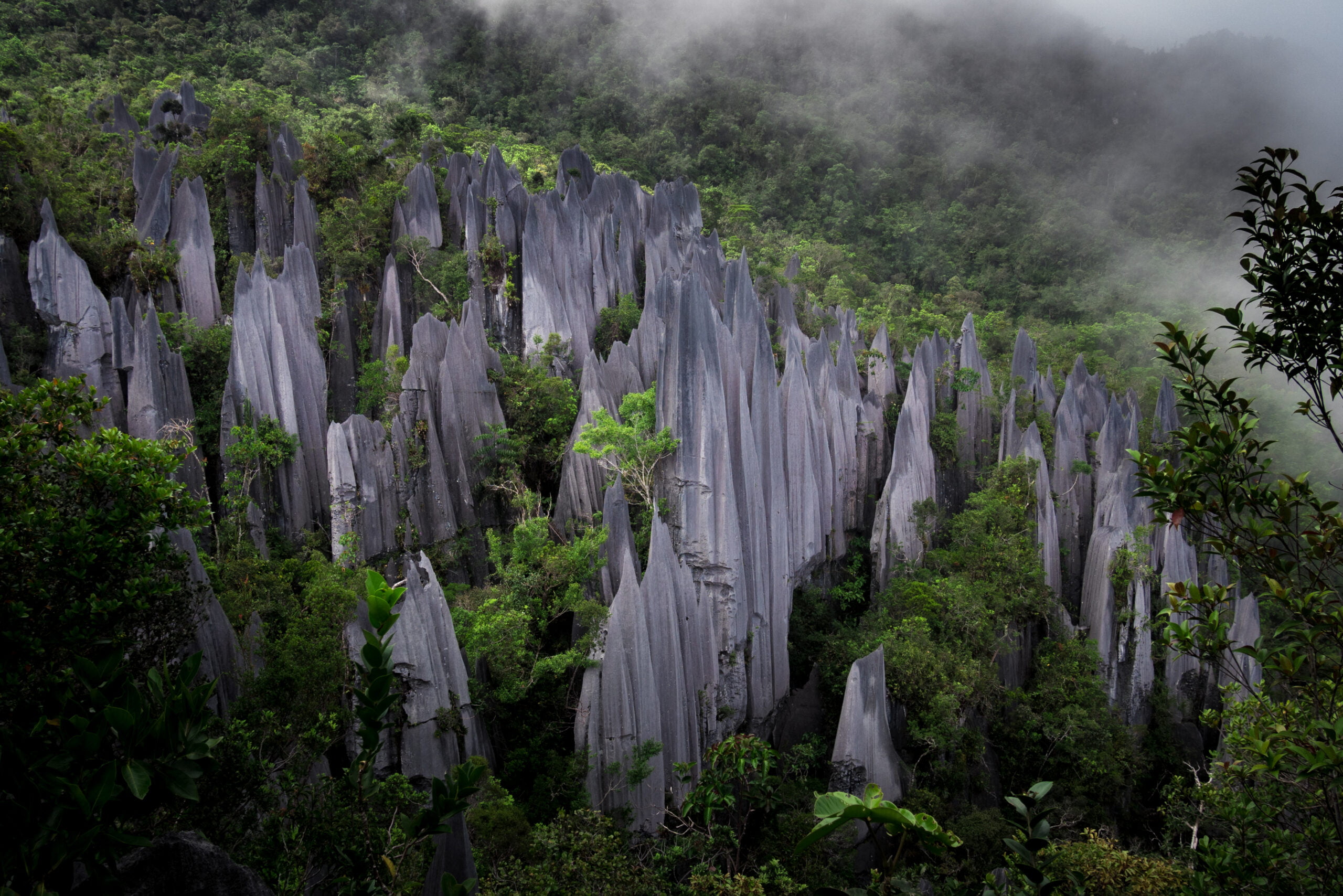
Limestone and other water-soluble rocks sometimes form sharp stone pinnacles like the ones seen here in Borneo. Scientists have recreated these structures in the laboratory simply by immersing water-soluble substances (essentially blocks of candy) into water. Without any background flow, the blocks will slowly form these pinnacle forests as material dissolves into the nearby water, creating a heavy solute-rich fluid that sinks down the exterior of the block. The convection generated by this dissolution drives the material into these sharp shapes, as shown mathematically in this recent study. (Image credit: N. Naim; research credit: J. Huang and N. Moore; via APS Physics)
Conserving the Hill House


In 1904, Scottish architect Charles Rennie Mackintosh created the Hill House, a masterpiece of modern design decades ahead of its time. Unfortunately, the Portland cement used for the house’s exterior has not held up well to a century of Scottish rains. As water saturated the cement, it began to dissolve and crumble. So to save the property, conservators commissioned the giant chainmail Box that currently surrounds the house. It protects the house from rain while allowing ventilation that dries the house out slowly. As an added bonus, the superstructure allows visitors to appreciate the house from new angles. (Video credit: T. Scott; via Colossal)
How Sinkholes Form


Growing up in the Ozarks, I explored my fair share of caves and sinkholes. These geological features form when flowing groundwater erodes soil, sand, and even rock underground. The Ozark Plateau consists largely of limestone, which is water soluble, making it very prone to this internal erosion. As bedrock dissolves away, it is eventually unable to hold up the weight of ground above it, causing a catastrophic collapse into a sinkhole. Although my childhood sinkholes were naturally occurring, they can also form in spots where leaking pipes and infrastructure help wash underlying soil away. Unfortunately for engineers, this internal erosion can take place for years without any visible sign above ground. (Image and video credit: Practical Engineering)

Uncovering Erosion Patterns
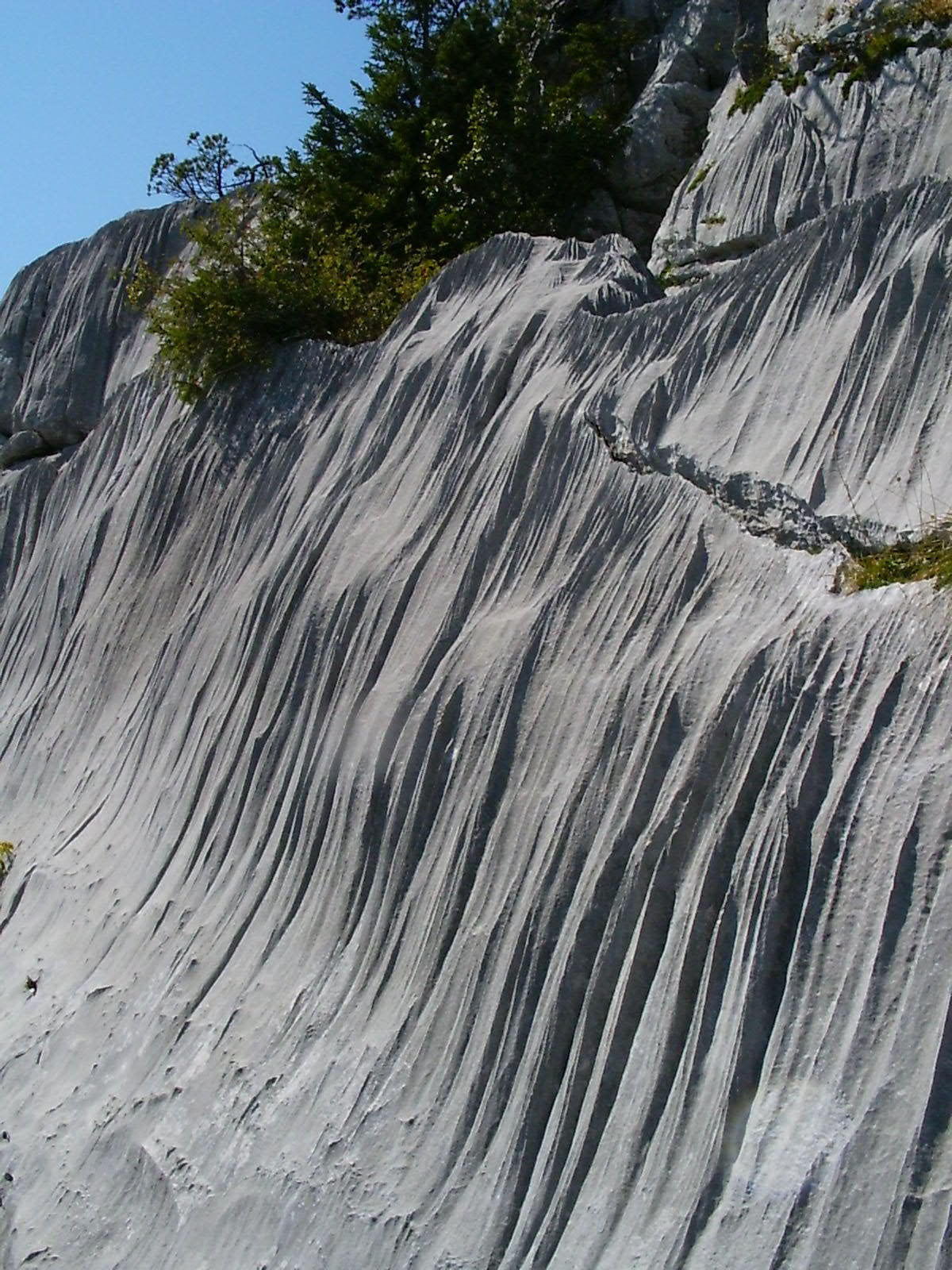
Gypsum and limestone cliffs sometimes form patterns of long, parallel grooves known as rillenkarren. Recent research shows that these patterns form when a thin layer of water flows over a dissolvable surface. As the running water picks up solute, its concentration increases, causing changes in the local hydrodynamics. What begins as a small perturbation in an otherwise flat surface grows into a groove with walls that eventually rise out of the water layer. At that point, the growth mechanism shifts because the flow is restricted to channels in the rock. (Image credit: Ymaup/Wikimedia Commons; research credit: A. Guérin et al.; via APS Physics; submitted by Kam-Yung Soh)

Dissolving Caramel


In nature, erosion patterns are driven by the interactions of flow and topography. Here, researchers study that process in the lab by placing an inclined block of caramel in quiescent syrup and watching as it dissolves. Initially, the bottom surface of the block develops regularly-spaced plumes — the dark lines seen in the first image. But because the caramel-laden plumes are heavier than the surrounding fluid, the flow quickly becomes unstable. The plumes cross one another and begin to carve chevrons into the caramel.
The chevrons appear to march their way upward in the video. They slowly grow and change into a distinctly scalloped pattern. Scallops like these are often seen by geologists in caves and icebergs, and the authors argue that their results and modeling indicate the importance of buoyant flow effects on such natural formations. (Image and research credit: C. Cohen et al.)

Replacing Injections With Pills
In medicine, many medications contain molecules too large to be easily absorbed through the intestinal wall, so these so-called biologics — like the insulin administered to diabetics — are injected into the body. Researchers are studying ways that such injections could eventually be replaced with pills, but there are plenty of challenges involved.
Some substances, known as transient permeability enhancers, allow the intestines to absorb larger molecules, but they work for only tens of minutes, which means researchers must understand how and when to administer them relative to the medication they help patients absorb. To do so, researchers are building computational fluid dynamics models of the human digestive system so that they can better understand how and when different kinds of pills break down in the body. (Image credit: Macro Room, source; via CU Engineering; submitted by Jenny B.)