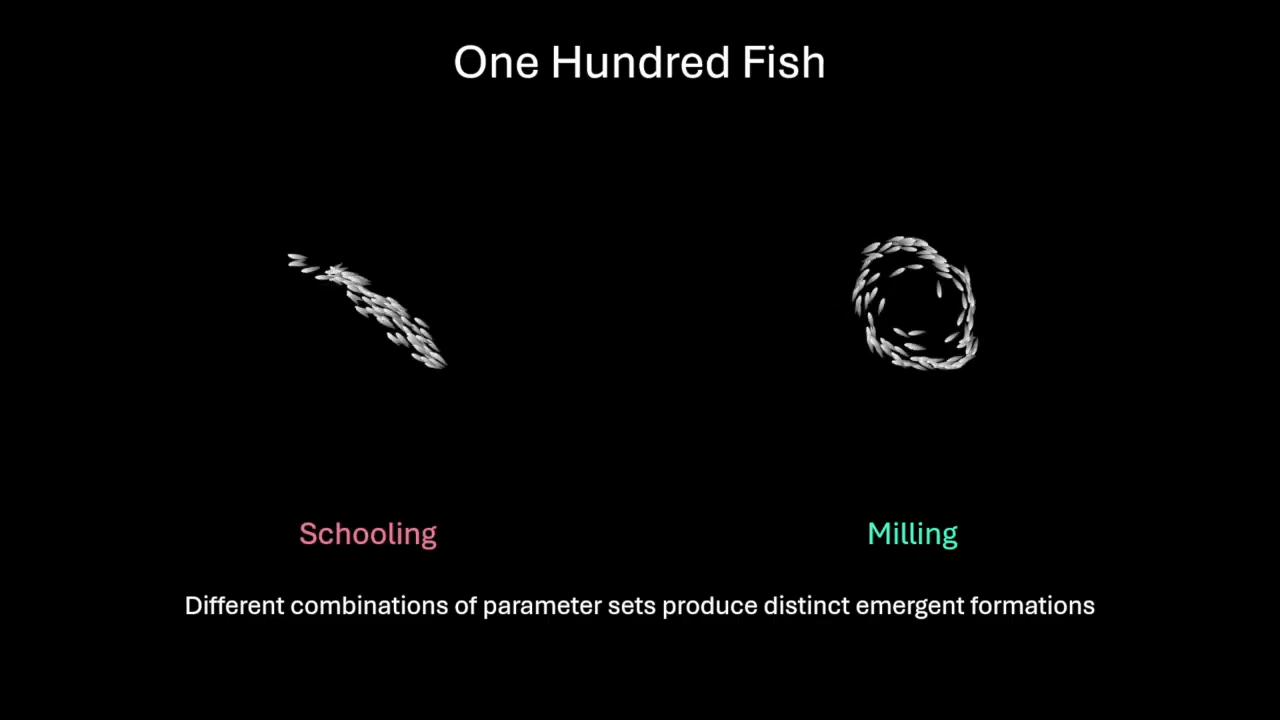
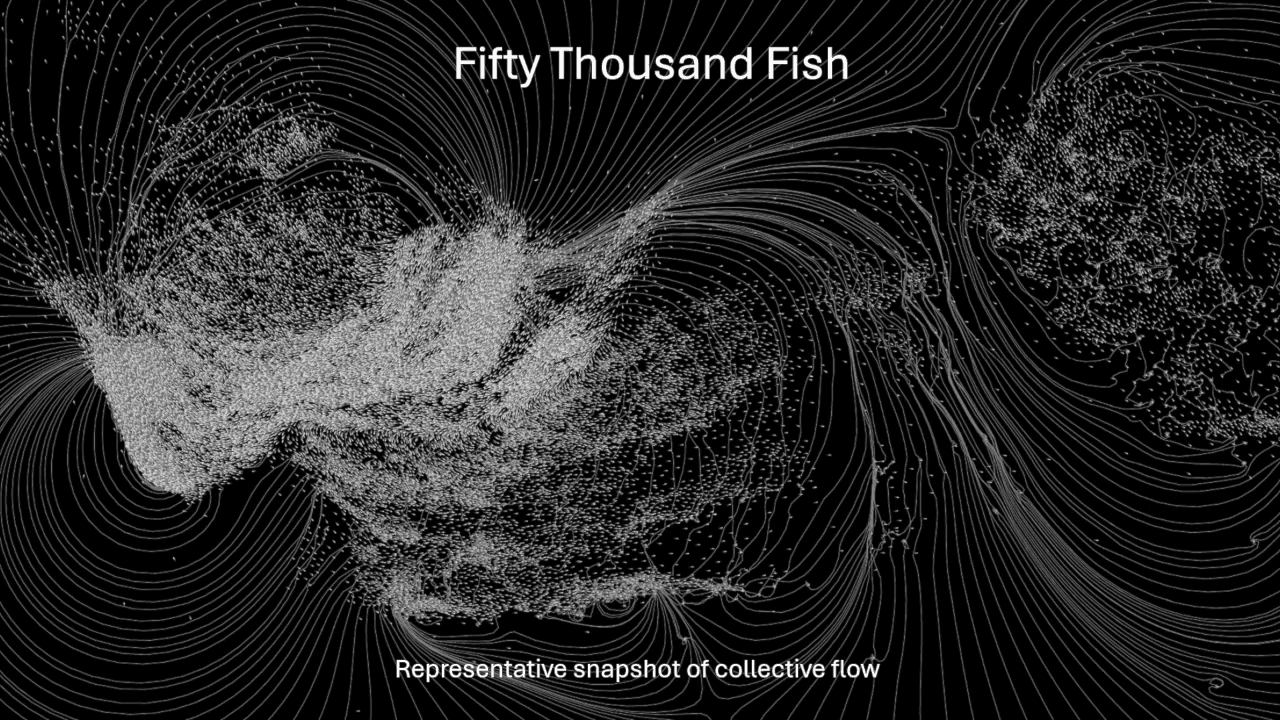
Relatively simple visual and hydrodynamic signals are enough to make digital fish school in ways that resemble living ones. Here, researchers look at what happens when well-behaved schools of fish get too big. The researchers first demonstrate that their schools behave reasonably at one hundred members, either in a schooling configuration or a group milling around a central region.
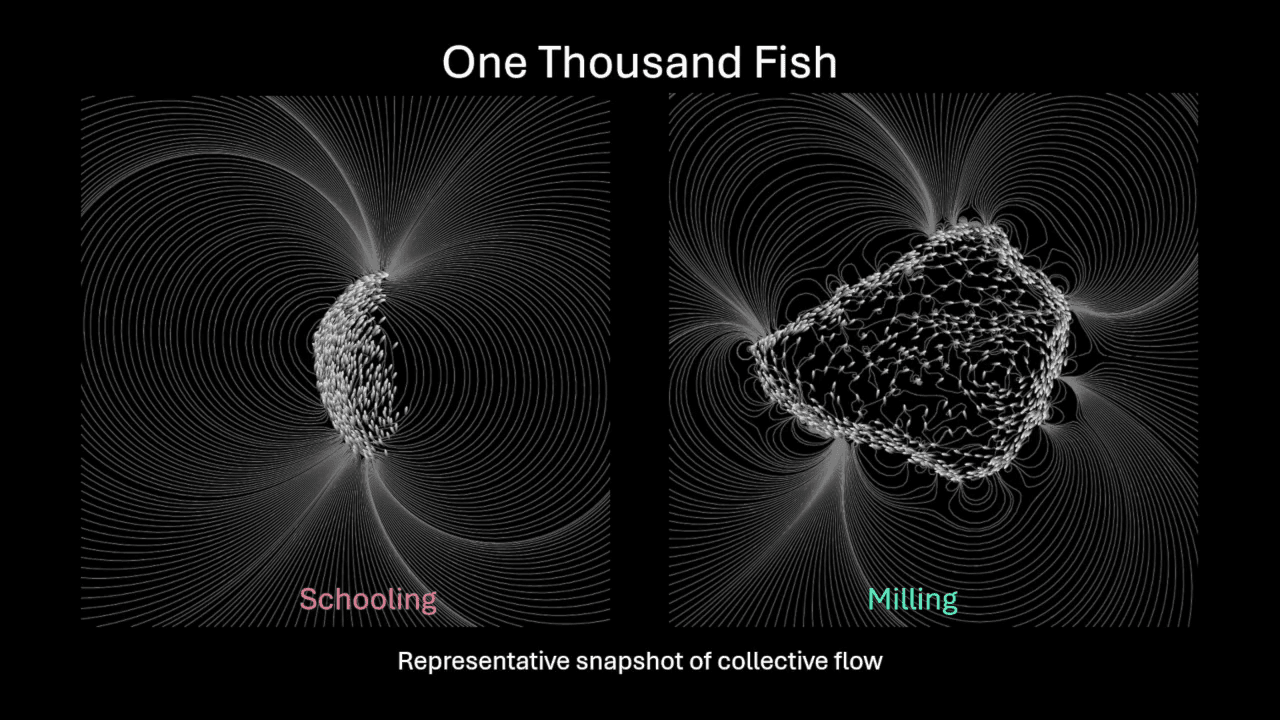
At one thousand fish, the schools are still reasonably coherent and sensible. But at fifty thousand fish, the picture is drastically different. Neither schooling nor milling groups are able to remain together. They fracture and scatter into smaller groupings. (Video and image credit: H. Hang et al.)