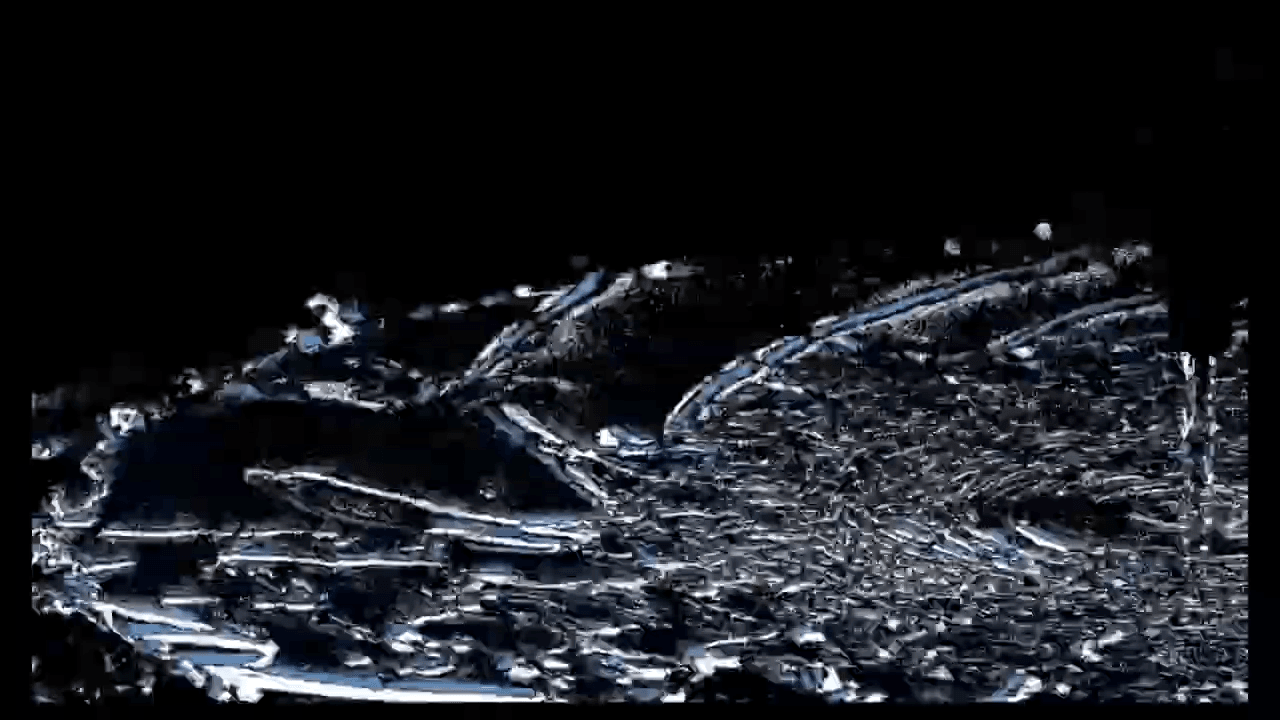
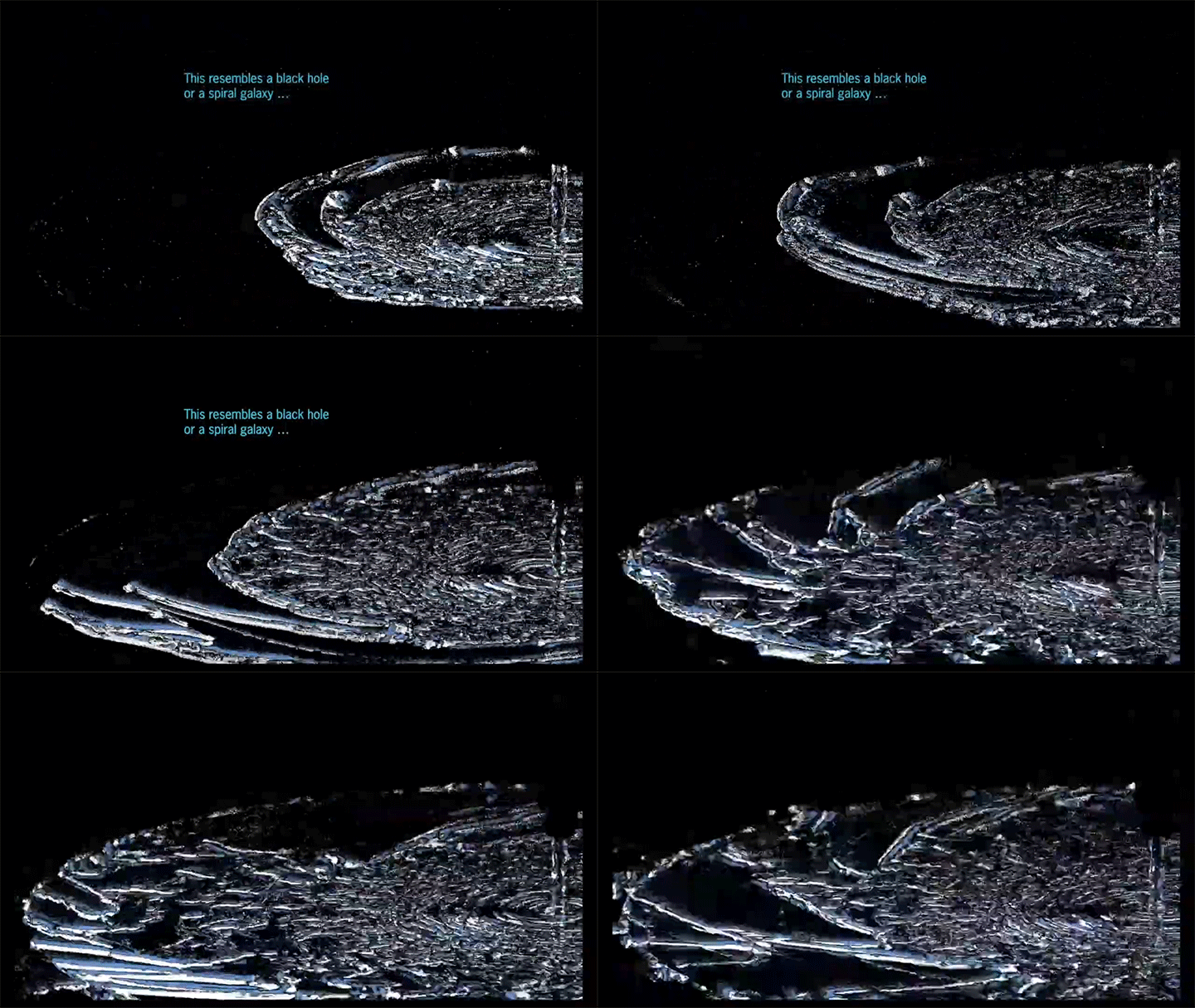
How can you break water? By accelerating it so quickly that the pressure drop forms cavitation bubbles. Here, a steel piston rests against a transparent plate, all underwater. When a hammer strike accelerates the piston away at around 1000g, the severe pressure drop tears the water into bubbles (bottom, left). As the bubbles expand, the nearby piston squishes them into pancakes (bottom, center). As they continue growing, the bubbles press into one another, squeezing thin ridges of water between them. The result (center) resembles broken glass. (Image credit: J. da Silva et al.)






![Composite image of bed layers for 4 different particle density ratios. Text reads, "The wave amplitude and growth rate increase with particle density ratio but only if [the density of large particles is greater than the smaller particle density]."](https://fyfluiddynamics.com/wp-content/uploads/KHbed3.png "Composite image of bed layers for 4 different particle density ratios. Text reads, \"The wave amplitude and growth rate increase with particle density ratio but only if [the density of large particles is greater than the smaller particle density].\"")