In raindrops, ink-jet printing, and spray painting, droplets get broken apart by the air flowing around them. Here, researchers investigate how a jet of fluid can push a droplet from its perch, or–with enough momentum–shatter the droplet. There are some lovely flow visualizations here; it’s especially cool to see the starting vortex ring of the jet push and deform the droplet. (Video and image credit: S. Jain et al.)
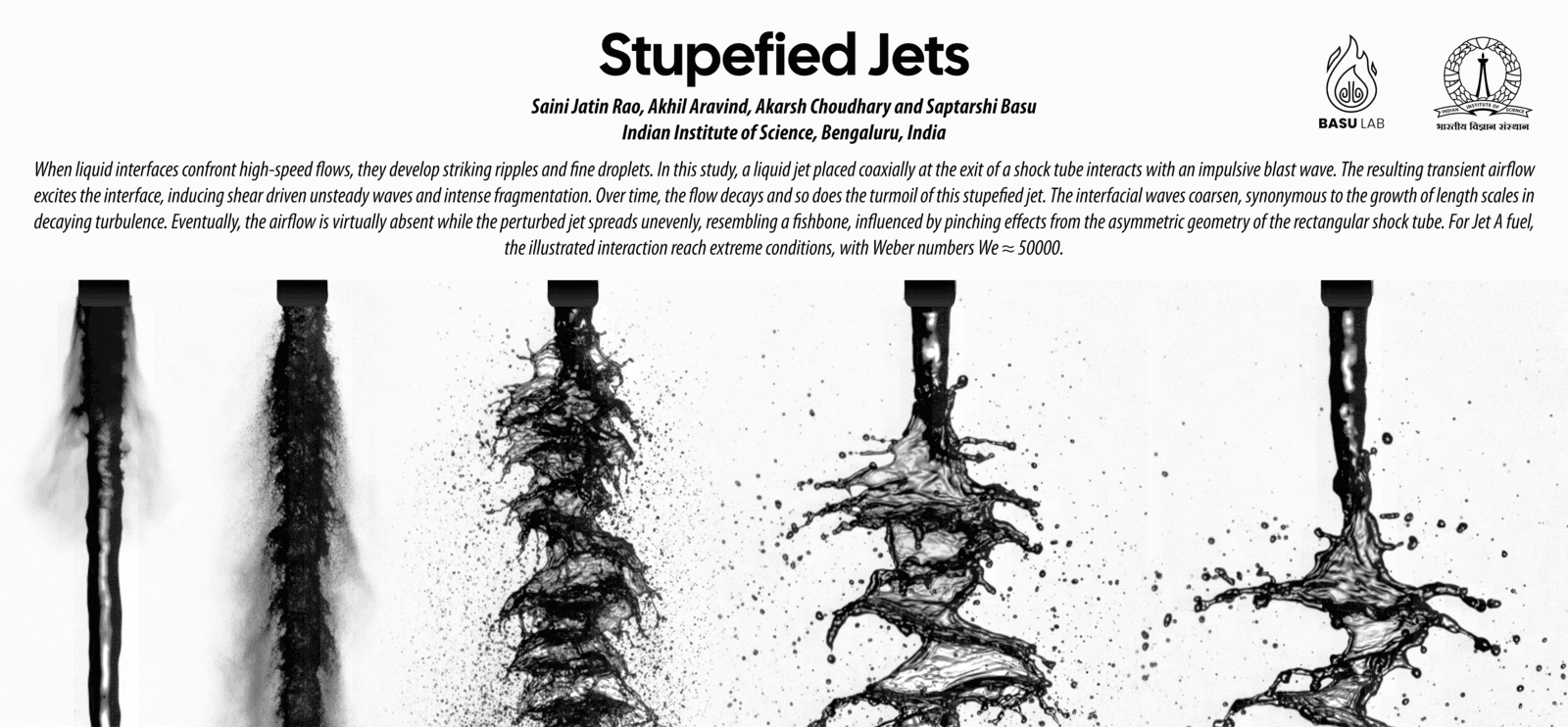
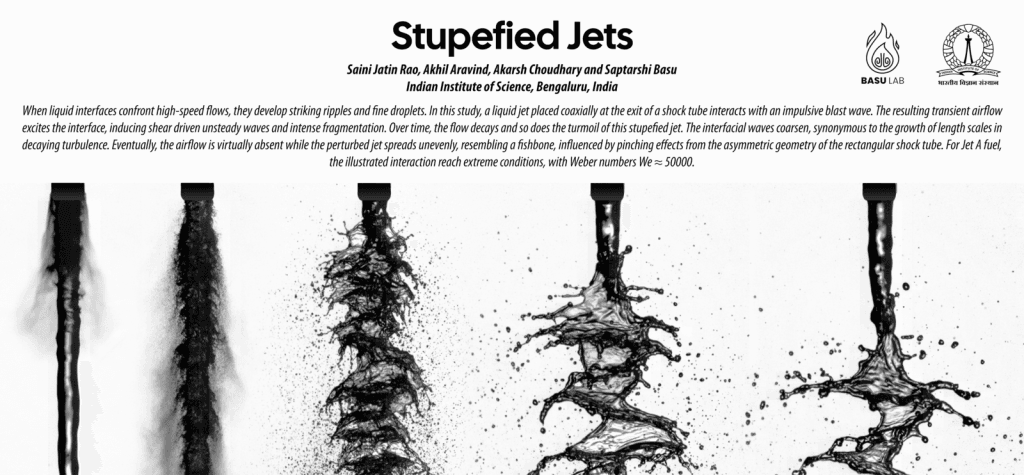
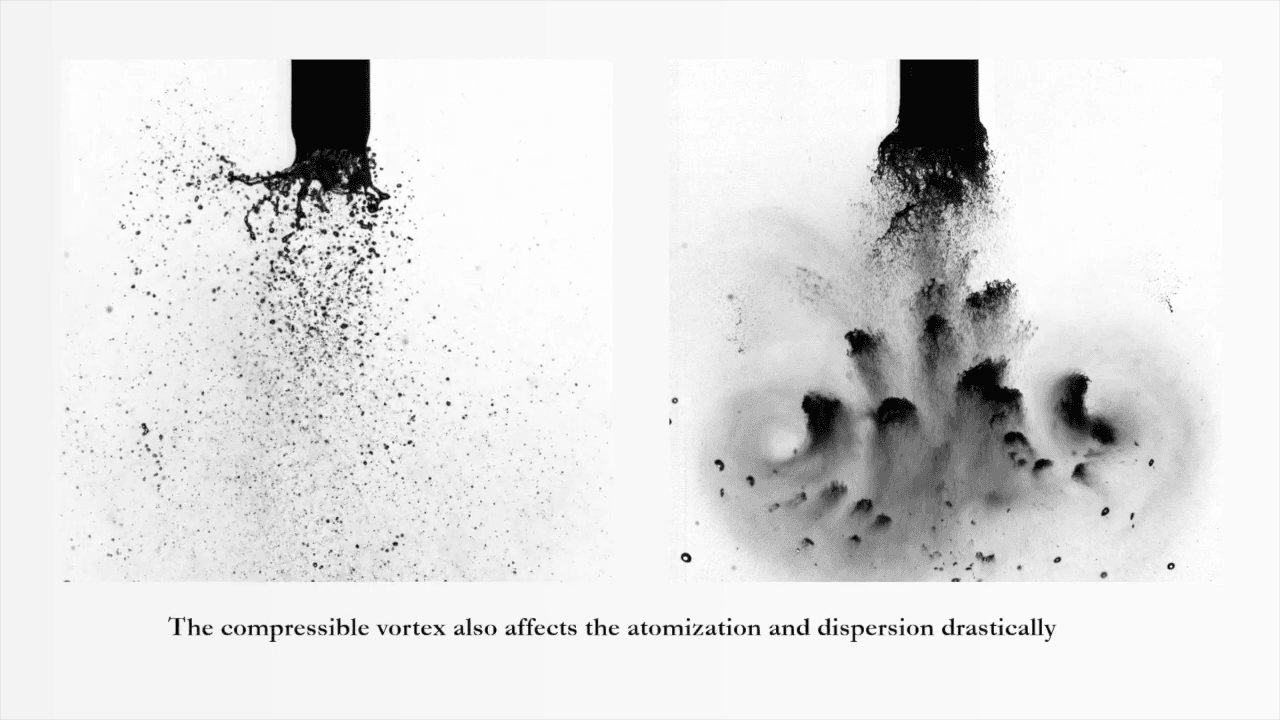
Breaking a jet of liquid into droplets lies at the heart of many industrial processes: spray painting, fuel injection, and asthma inhalers, to name a few. Here, researchers are looking at a different method of breaking up a liquid jet: shooting a shock wave along its length. The poster shows five different snapshots of the jet’s response. There are, variously, mists of fine droplets, wavy distortions of the jet, sheets, ligaments, and droplets of many sizes. (Image credit: S. Rao et al.)
Research poster showing black and white images of liquid jets after a shock wave passed along the length of each jet.
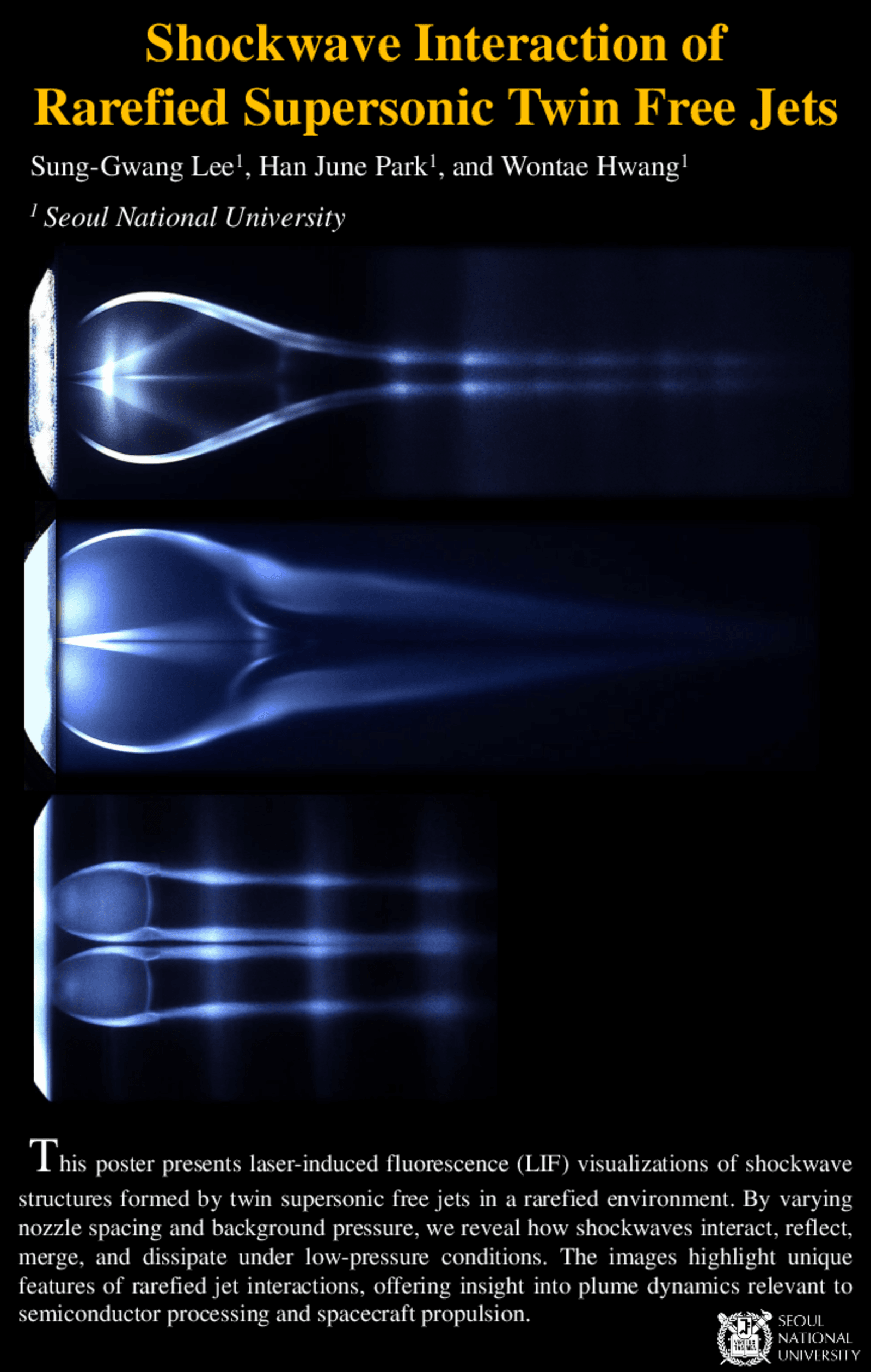
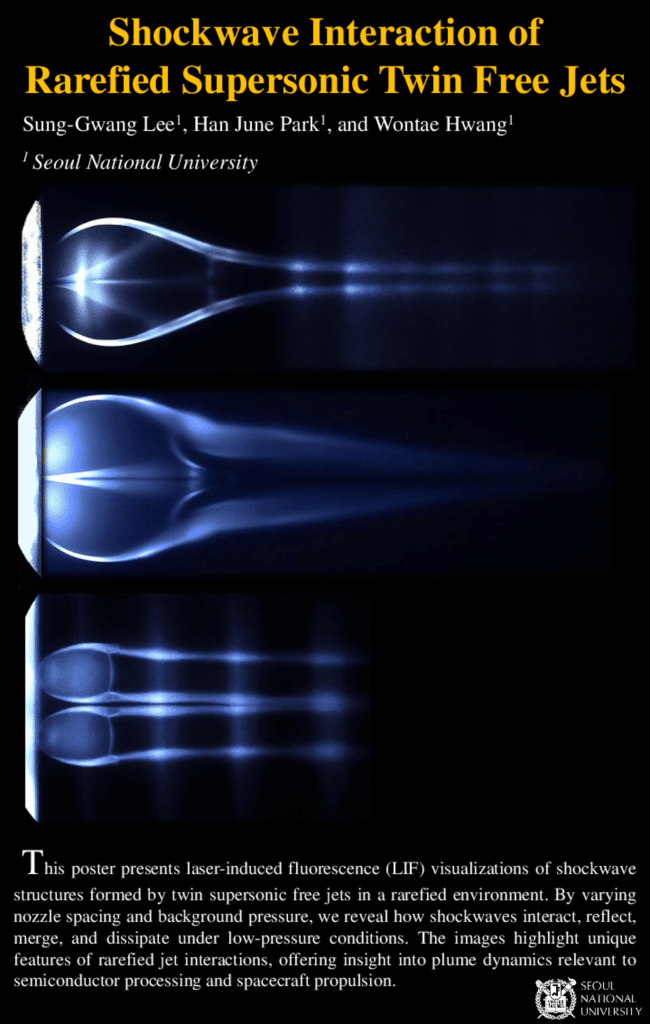
When supersonicjets get emitted into rarefied air, they behave differently than they do in regular atmospheric conditions. Here, researchers picture three different configurations these jets can take. In the top image, the jets are close enough together that they appear to merge into a narrow supersonic jet. In the middle image, the jets are not quite as close together. They merge but form what appears to be a subsonic wake. In the final image, the jets are far enough apart that they don’t merge, although they do appear to “lean in” toward one another. (Image credit: S. Lee et al.)
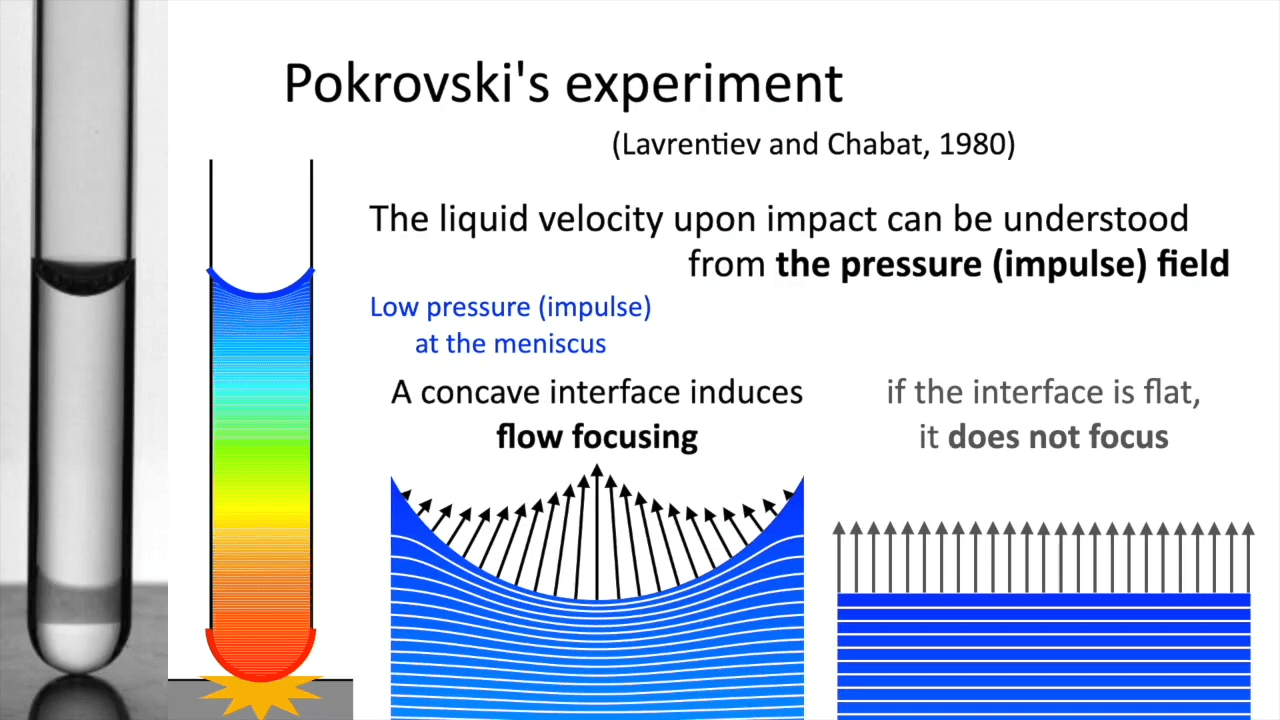
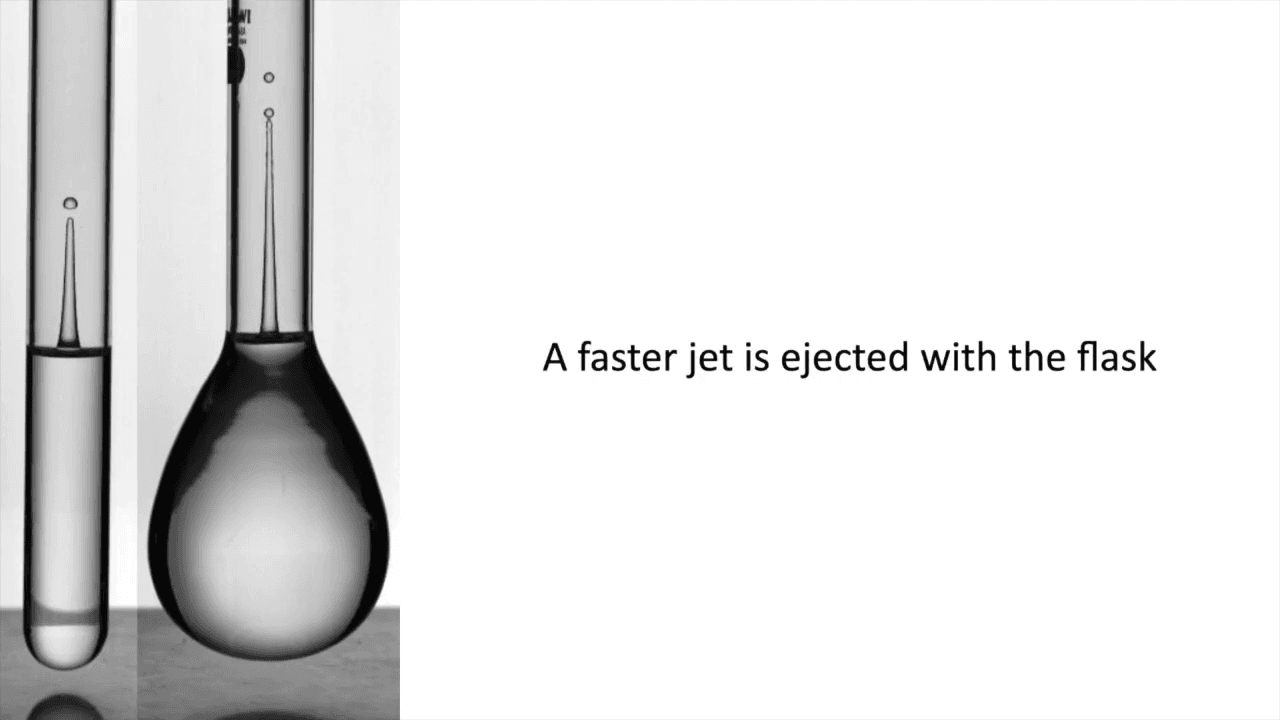
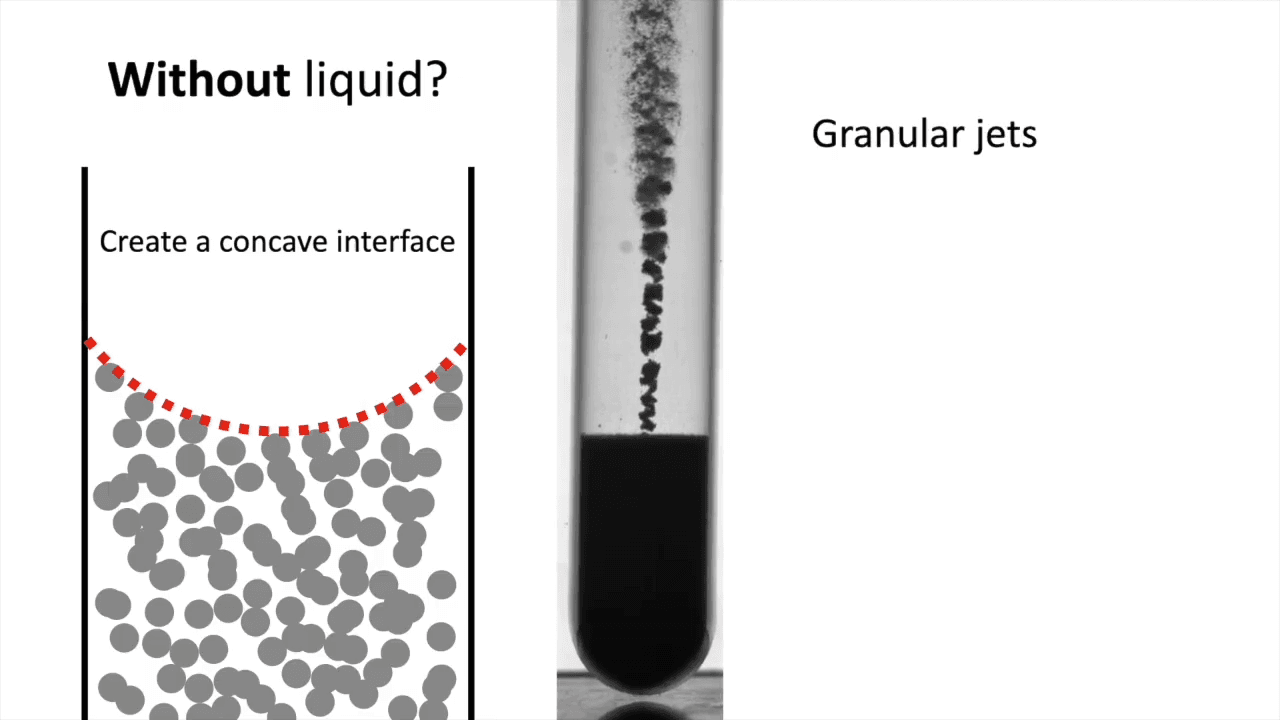
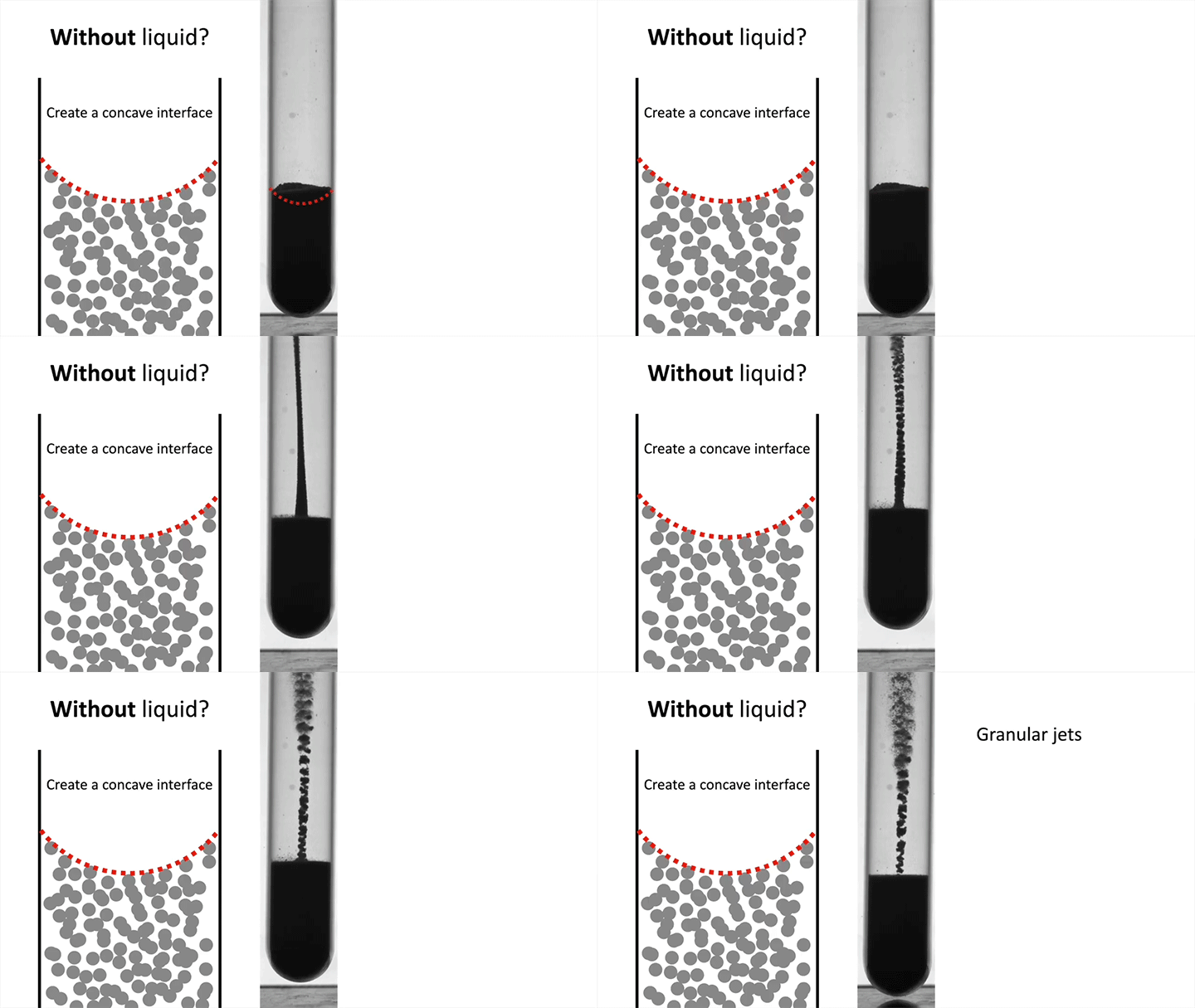
When a test tube of liquid hits a surface, the curvature of the meniscus focuses the rebounding fluid into a jet. In this video, researchers show some of the many variations they’ve explored on these experiments–from changing the depth of the fluid and the shape of the container, to changing the working fluid to honey or to dry grains. It’s a nice introduction to a fascinating phenomenon! (Video and image credit: H. Watanabe et al.; research credit: H. Watanabe et al. and K. Kobayashi et al.)
Animation showing how granular jets form in a test tube impact.
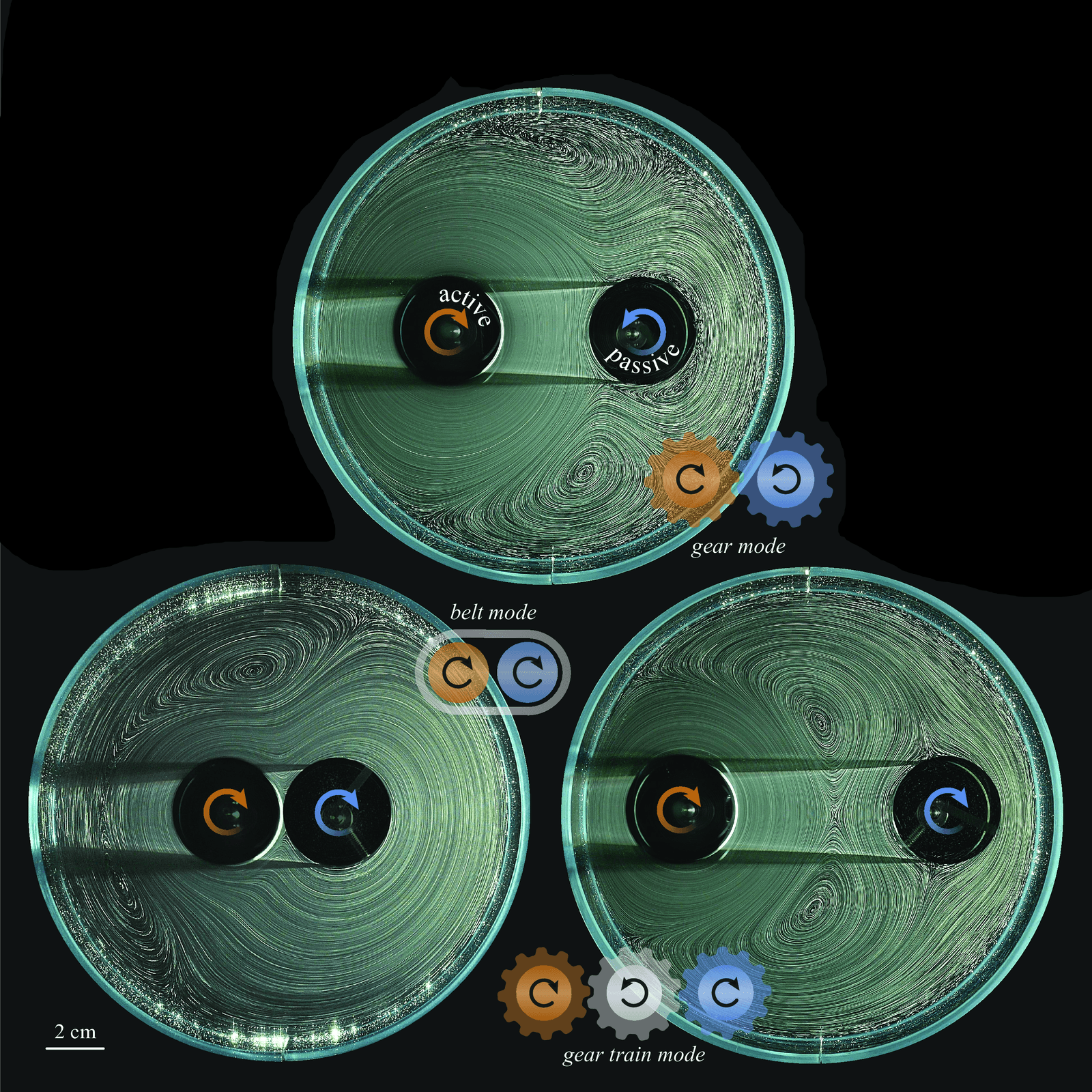
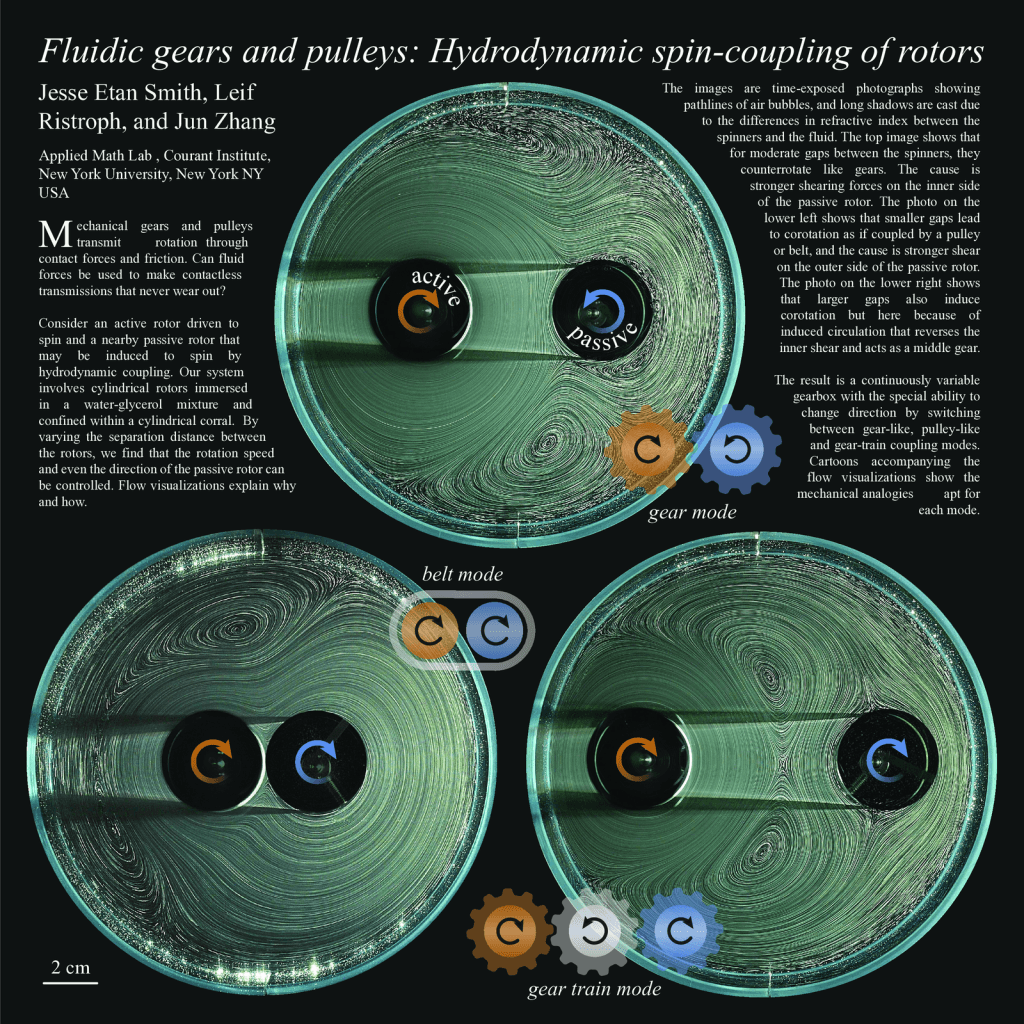
In mechanical systems, gears and pulleys transmit rotation from one location to another. Here, researchers explore a fluid dynamical version of such systems. The set-up consists of two rotors contained in a cylindrical corral filled with a water-glycerin mixture. One of the rotors is active, marked here with orange; the other (blue) one is passive, meaning that it can rotate due to the forces on it but it is not actively driven by a motor.
The three flow visualizations illustrate different configurations the rotors can take on, depending on their separation distance. In the top image, the rotors have a moderate separation distance and the passive one rotates opposite of the active one. That rotation direction is set by the high-shear flow on its inner side. If the rotors are close together (left image), they rotate in the same direction, aided by strong shear on the outside edge of the passive rotor; this mimics being linked with a belt. And, finally, if the rotors are widely separated, they also corotate, with the fluid in between acting like a virtual gear linking them. (Image credit: J. Smith et al.)
Research poster showing how an active and a passive rotor can be paired through hydrodynamic interactions.
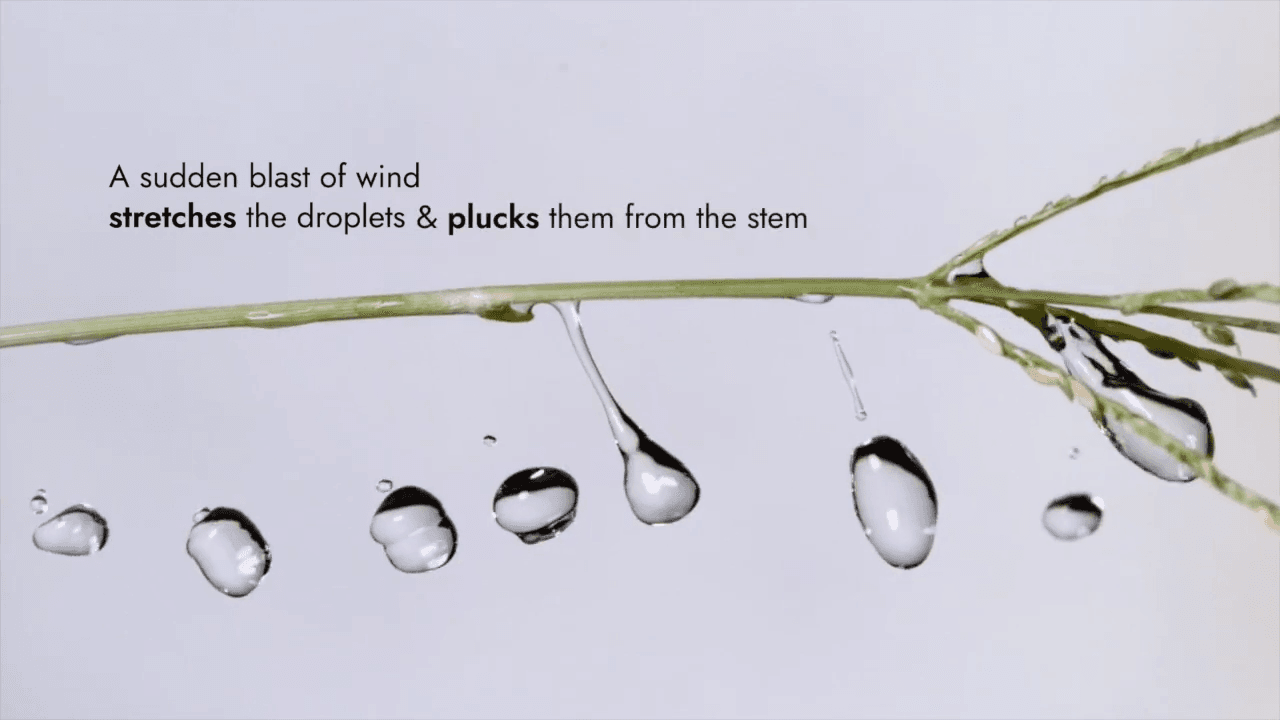
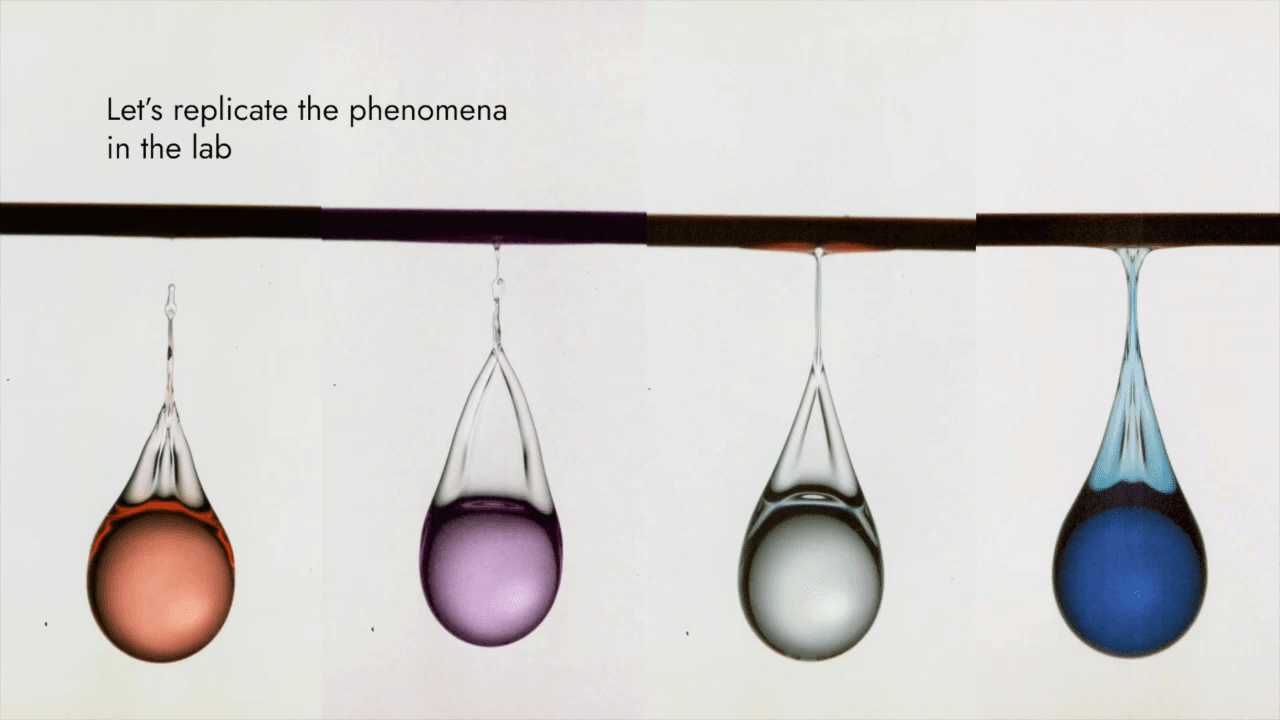
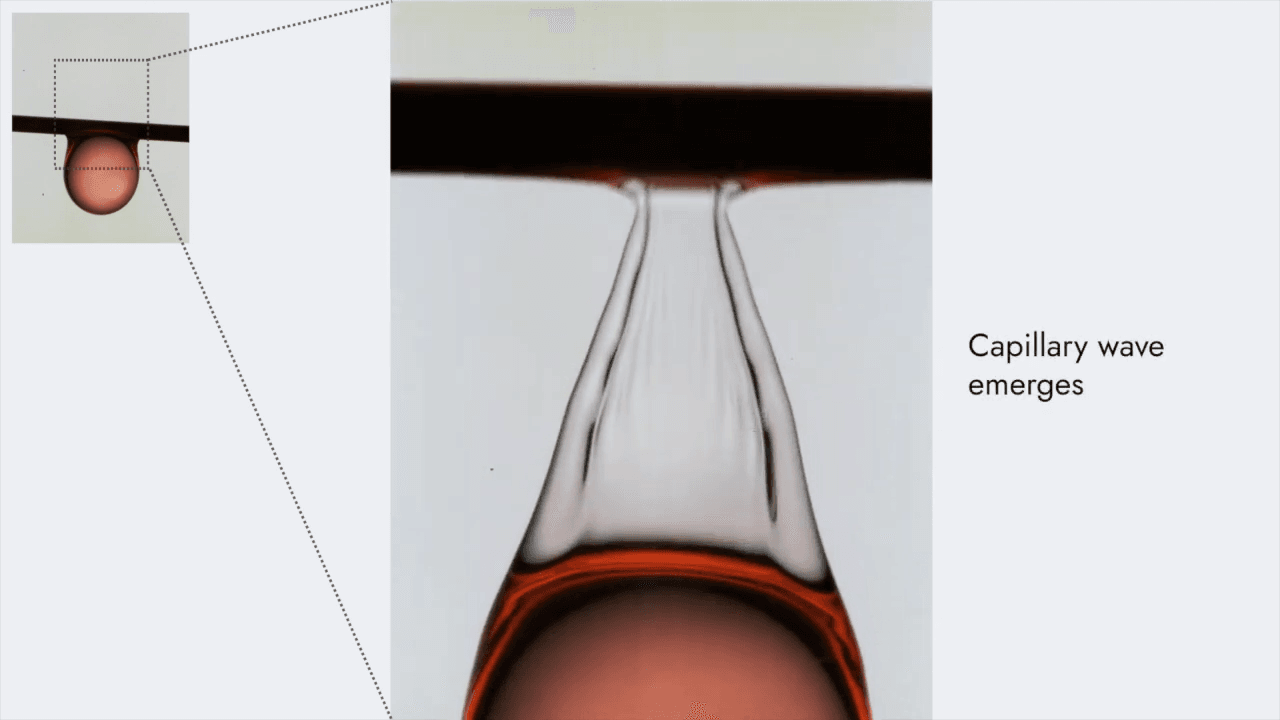
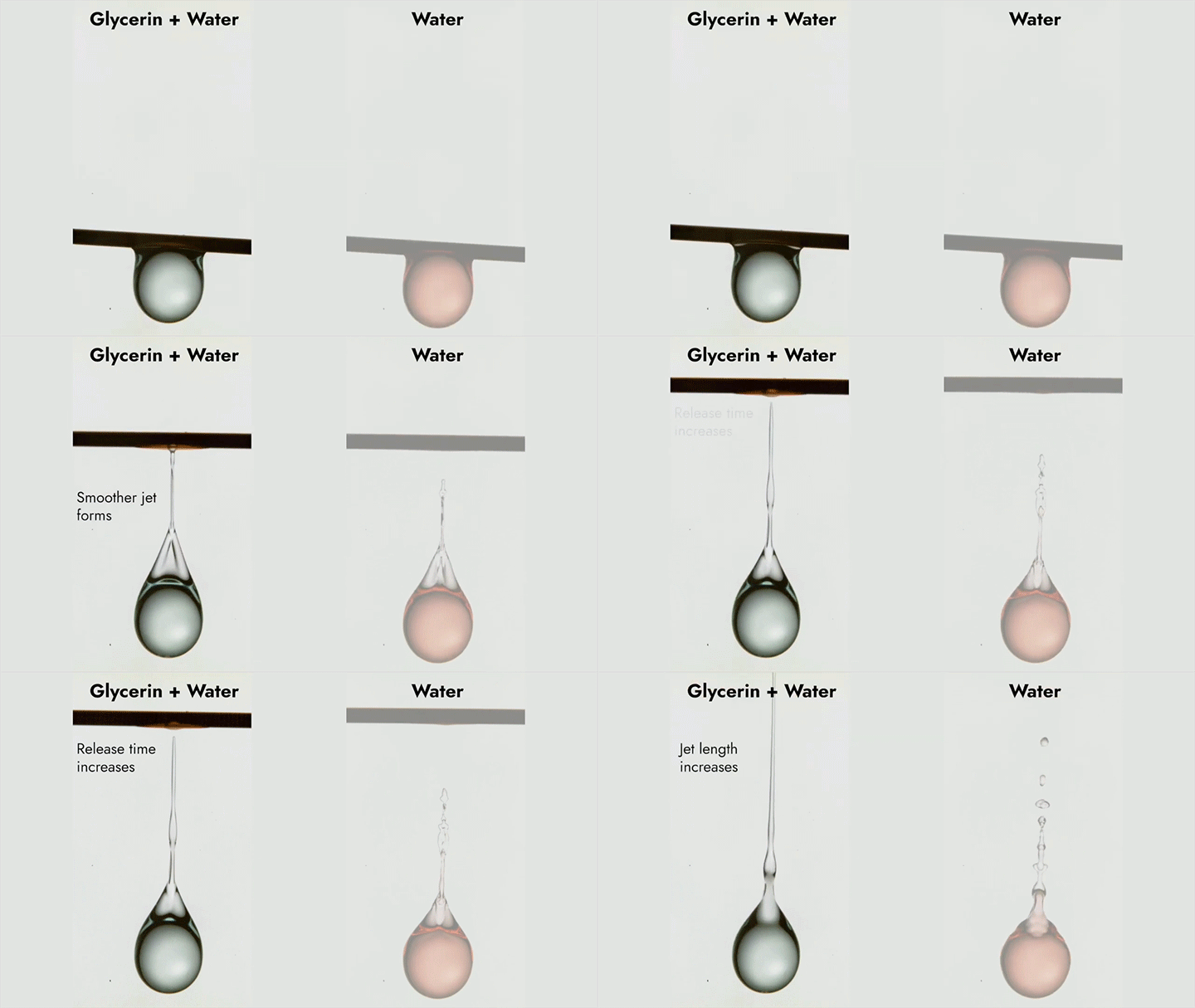
A sudden breeze can pluck droplets hanging from a stem. Here, researchers recreate that phenomenon in the laboratory. With a close-up view and high-speed images, we can enjoy every detail of the detachment and break-up. As the wire pulls away, it drags a liquid sheet off the droplet. The thicker rims on either side of the sheet eventually collide, creating a jet that stretches, deforms, and, at last, breaks. (Video and image credit: D. Maity et al.)
Animation of two droplets getting plucked, one made of glycerin+water (left) and one of water (right).
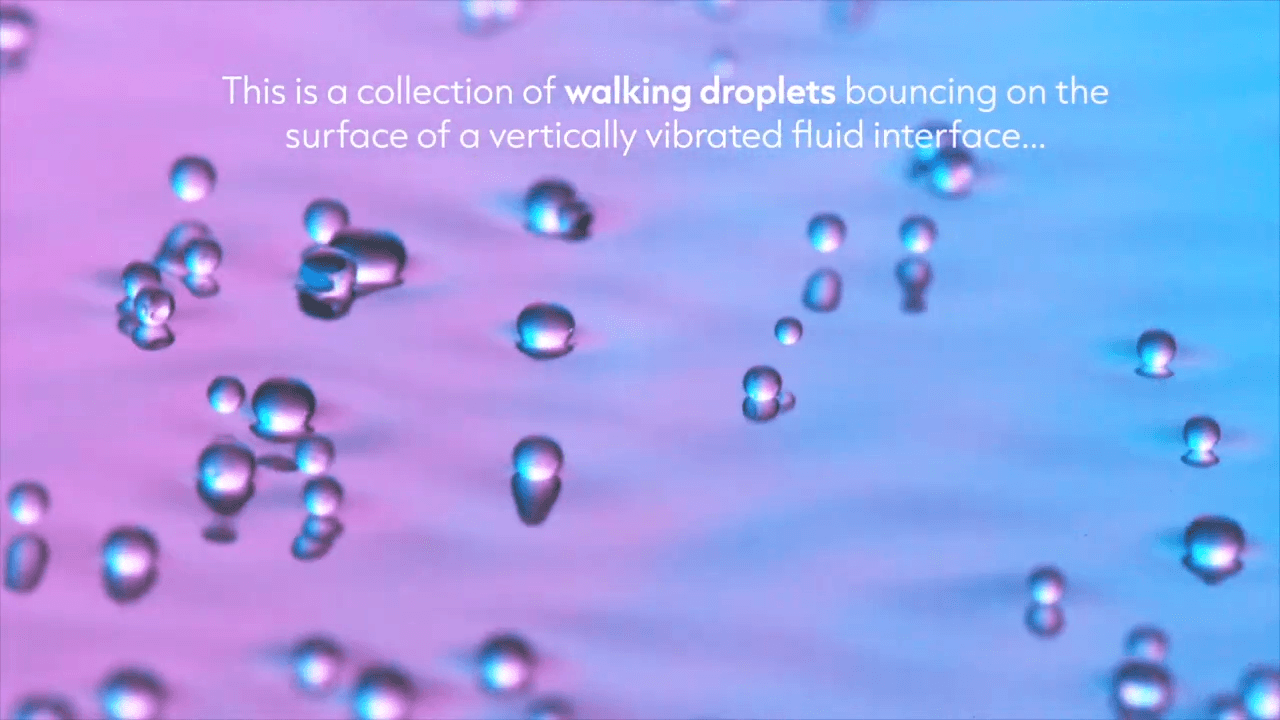
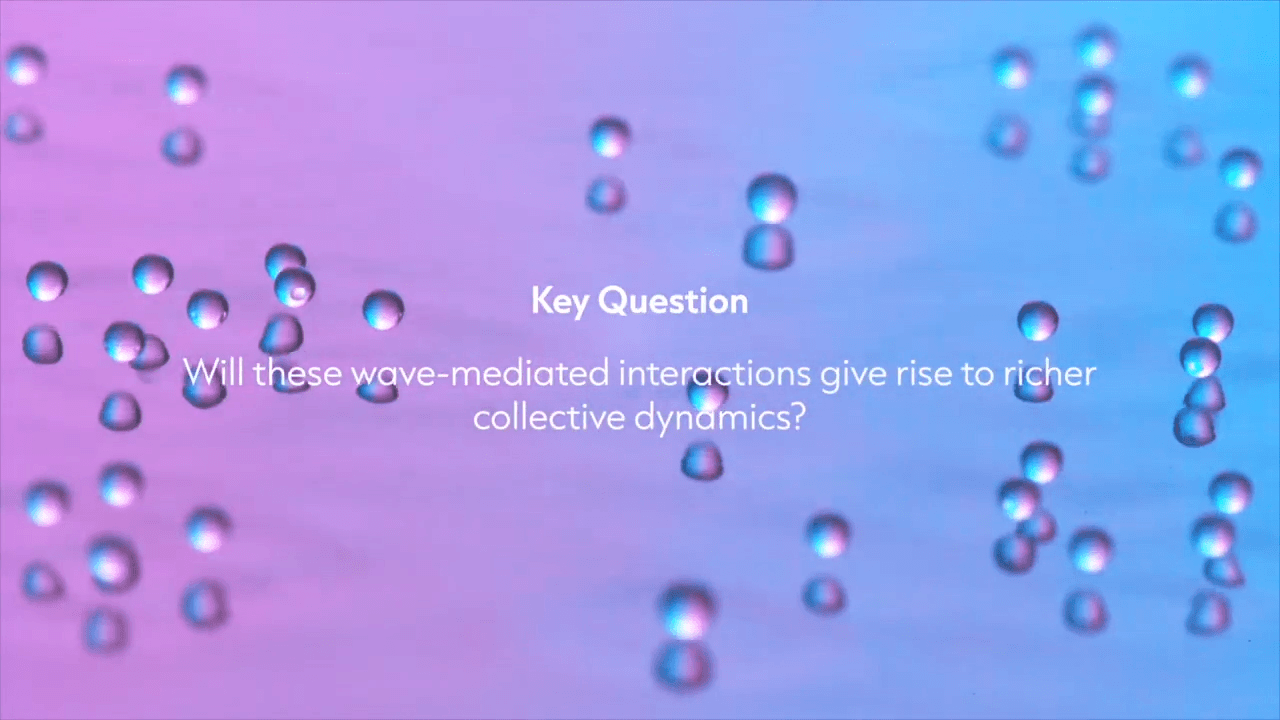
On a vibrating fluid, droplets can bounce and interact in complex ways. Here, researchers demonstrate some of the peculiar dynamics of these wave-guided droplets, showing how they can do things like pair up in waltzes. To keep the droplets from coalescing with one another, they perform their experiments in a pressurized chamber; the higher air pressure makes it harder for the air film between droplets to drain during a collision, making the droplets unable to coalesce. Under these conditions, the authors show that the droplet-wave system has quantum-like statistics. (Video and image credit: J. Clampett et al.)
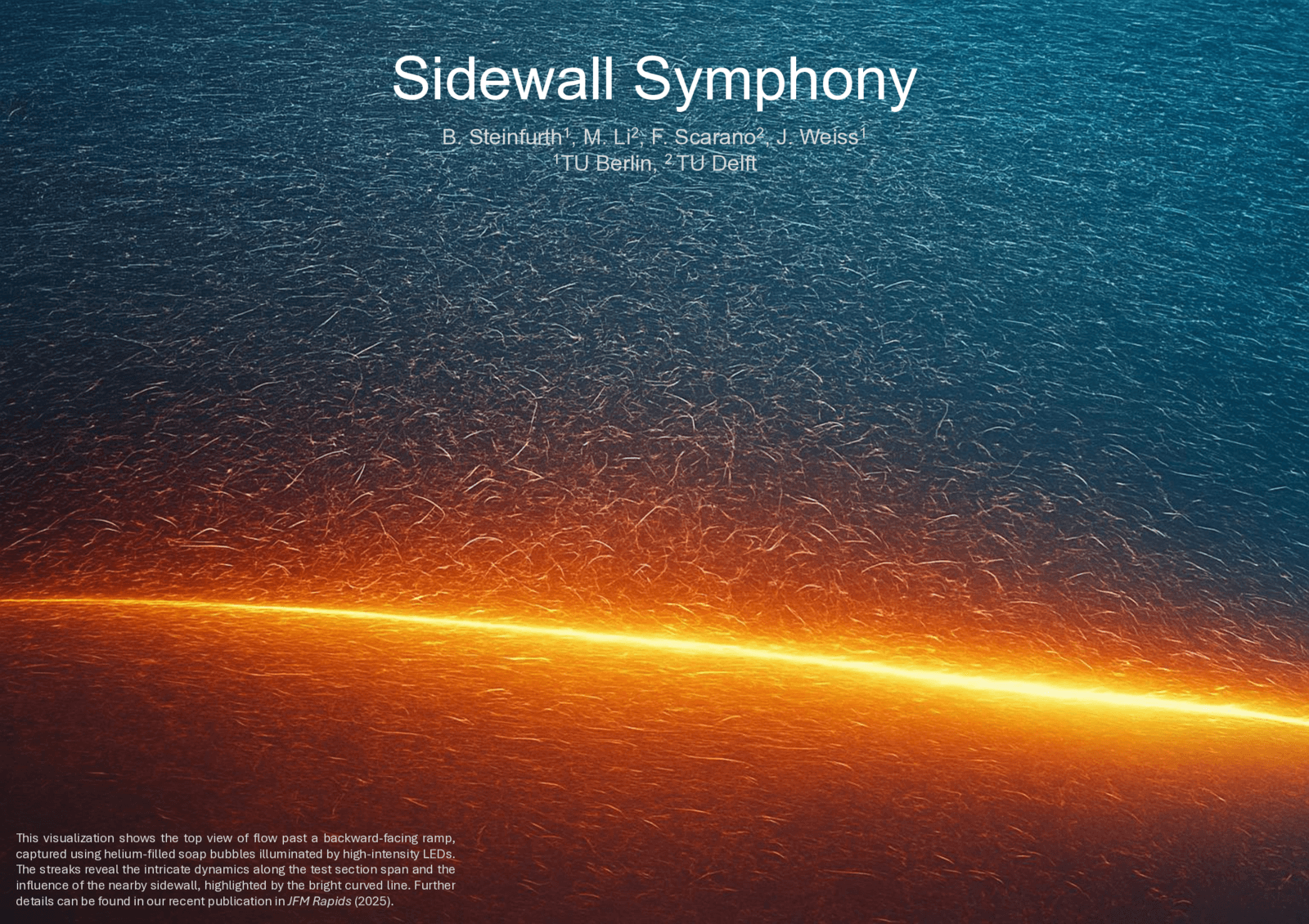
Flow visualization is both an art and science in fluid dynamics. Here, researchers were interested in studying the separation bubble that forms over a backward-facing ramp–a shape that shows up, for example, on an aircraft. In these areas, the flow over the surface separates, leaving an unsteady, recirculating bubble.
That’s the flow that researchers are visualizing here. They’ve done so by adding tiny helium-filled soap bubbles to the flow. With bright lights illuminating the bubbles, each one leaves a streak in a photograph, showing where the bubble moved during the time the camera’s shutter was open. Although images like these are beautiful, they can also be analyzed by computers to extract the underlying flow that created the image. (Image and research credit: B. Steinfurth et al.; see also here)
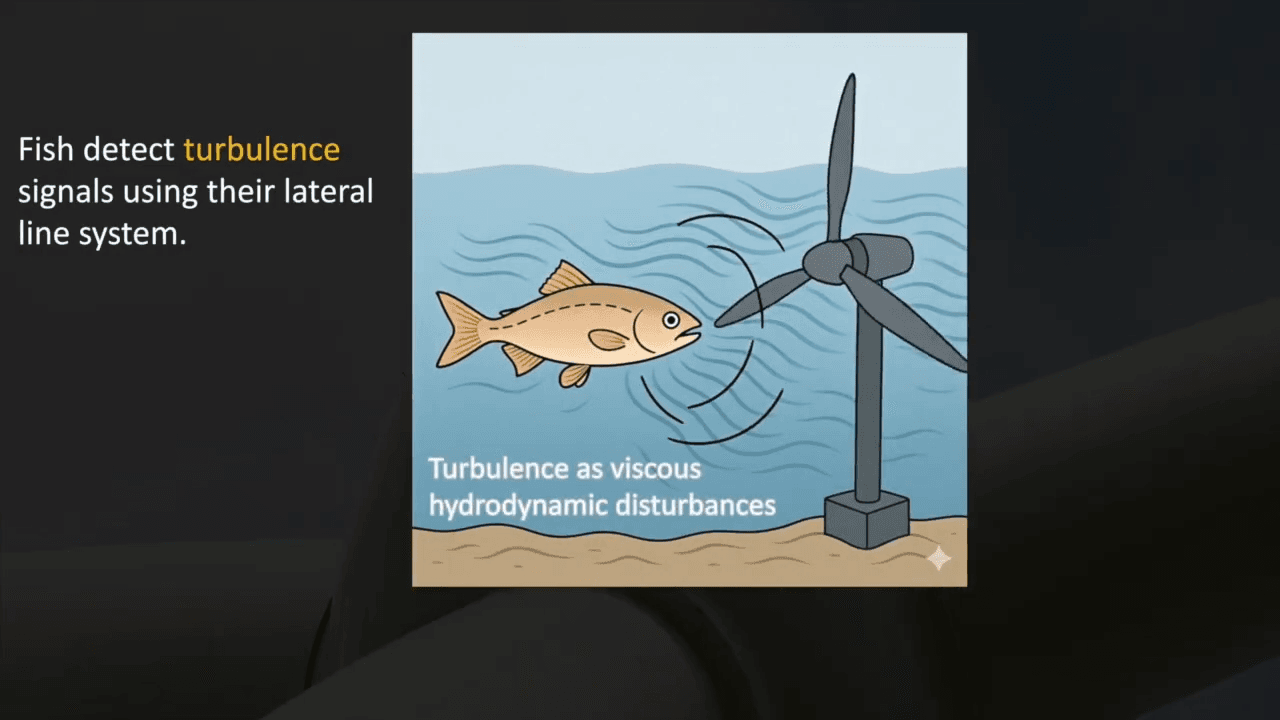
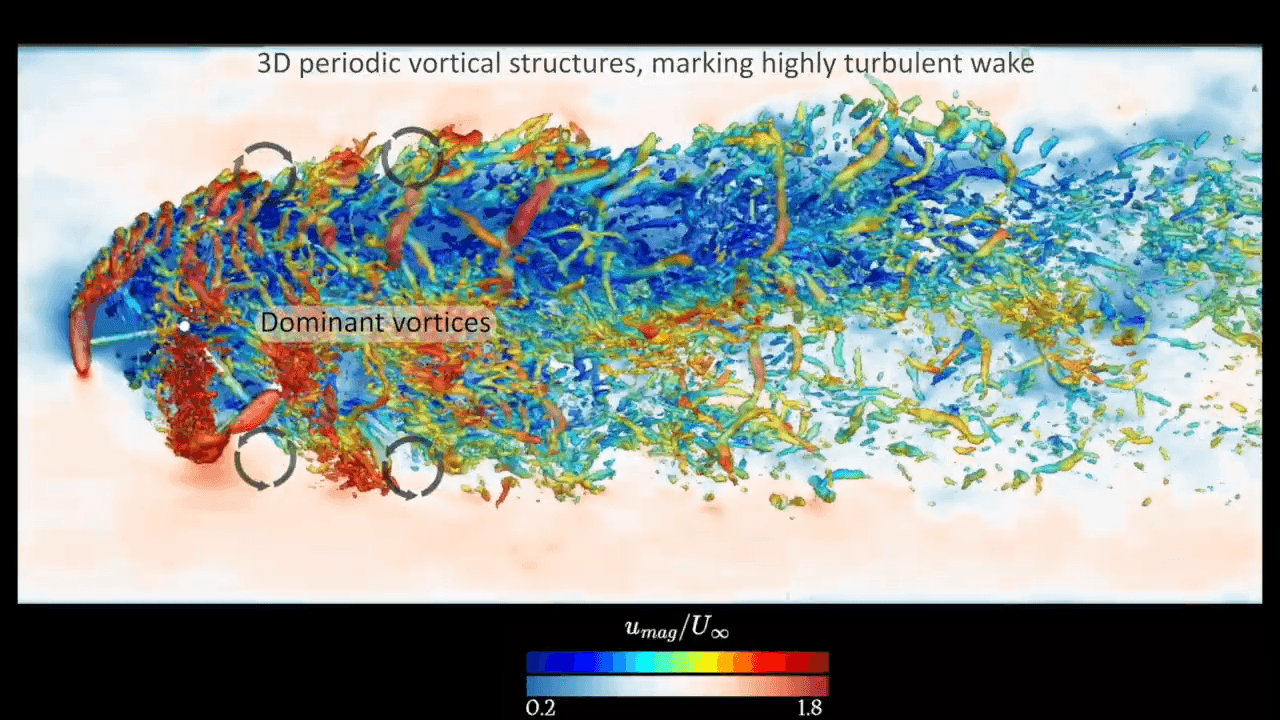
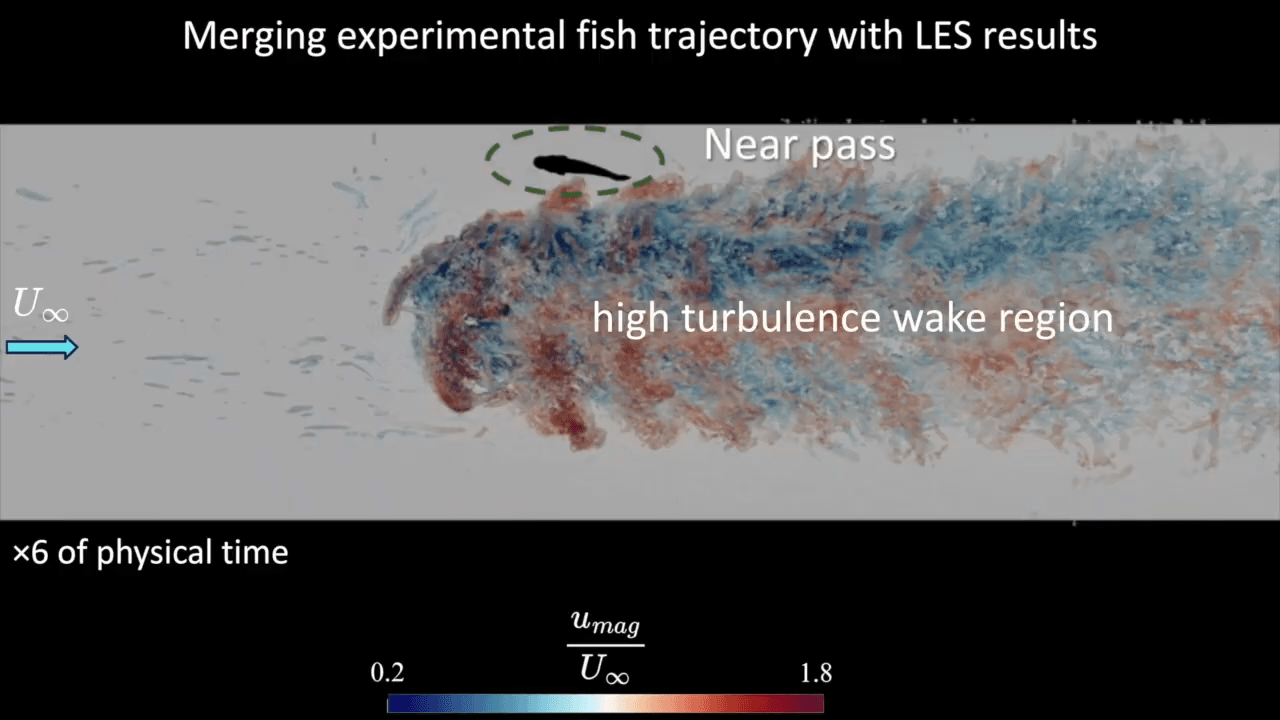
Fish detect turbulence in the water around them; among other things, this helps them avoid colliding with objects. Here, researchers are looking to understand how fish interact with underwater turbines. Experiments give them a set of trajectories that actual fish follow when dealing with the experimental turbine. But to understand what the fish is detecting, the researchers build a digital facsimile of the turbine and use Large Eddy Simulation (LES) to calculate the turbine’s wake.
By overlaying the fish trajectories onto the simulated flow structures, they can better understand what flows the fish is and is not comfortable with. That knowledge helps engineers design turbines with smaller ecological impact. (Video and image credit: H. Seyedzadeh et al.)
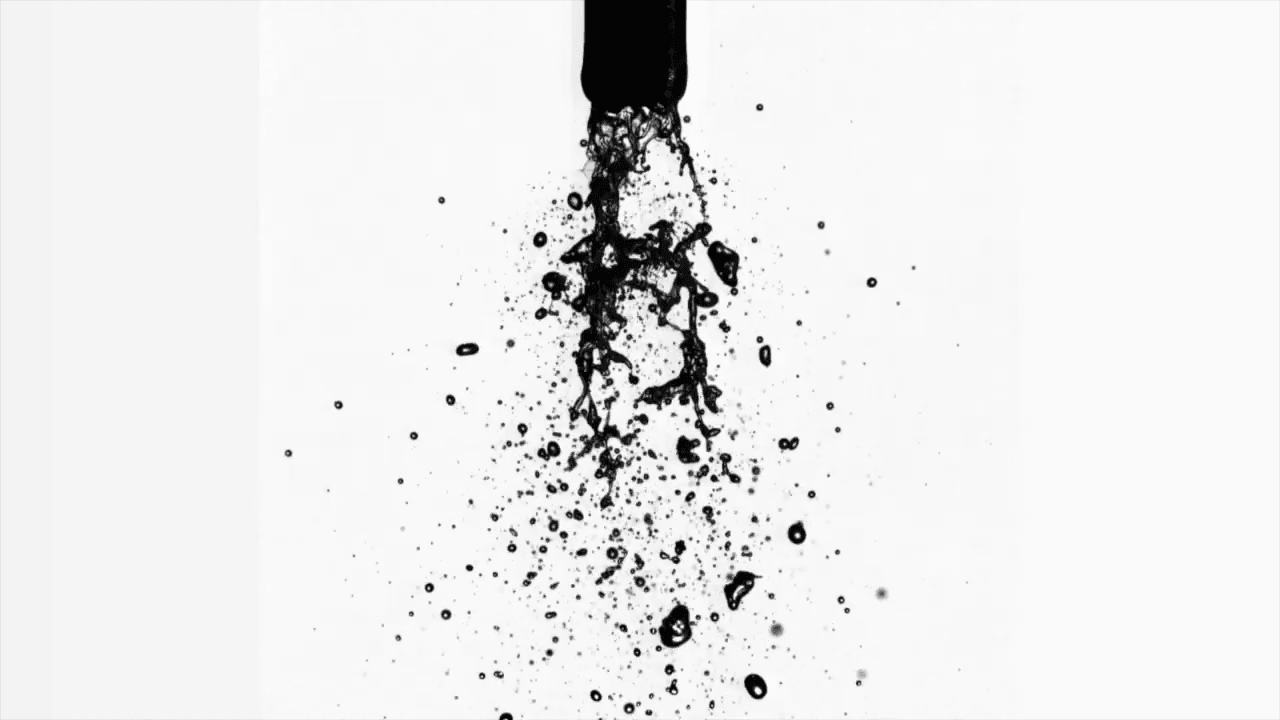
Many industrial processes break a fluid jet into droplets, like spray painting and ink-jet printing. Here, researchers examine an effervescent fluid jet made up of both liquid and gas. Like a fluid-only jet, this fizzy jet forms sheets, bags, ligaments, and droplets. As it breaks down, it creates a range of droplet sizes–both large and small. But when a shock wave passes, the jet and its droplets get atomized into even tinier droplets. (Video and image credit: S. Rao et al.)