Search results for: “transition”

  • Bow Shock Instability

    Bow Shock Instability

    There are few flows more violent than planetary re-entry. Crossing a shock wave is always violent; it forces a sudden jump in density, temperature, and pressure. But at re-entry speeds this shock wave is so strong the density can jump by a factor of 13 or more, and the temperature increase is high enough that it literally rips air molecules apart into plasma.

    Here, researchers show a numerical simulation of flow around a space capsule moving at Mach 28. The transition through the capsule’s bow shock is so violent that within a few milliseconds, all of the flow behind the shock wave is turbulent. Because turbulence is so good at mixing, this carries hot plasma closer to the capsule’s surface, causing the high temperatures visible in reds and yellows in the image. Also shown — in shades of gray — is the vorticity magnitude of flow around the capsule. (Image credit: A. Álvarez and A. Lozano-Duran)

    Fediverse Reactions
  • Predicting Yield

    Predicting Yield

    We’ve all experienced the frustration of ketchup refusing to leave the bottle or toothpaste that shoots out suddenly. These materials are yield stress fluids, which transition from solid-like behavior to liquid flow once the right amount of force is applied. A new study suggests that — despite their wide range of characteristics — these fluids share a universal relation: their yield transition (when they start to flow) depends on their characteristics when at rest. Interestingly, this relationship seems to hold not only for polymeric fluids like the one in the study but also nonpolymeric ones. (Image credit: haideyy; research credit: D. Keane et al.; via APS Physics)

    Fediverse Reactions
  • Featured Video Play Icon

    Dams Fill Reservoirs With Sediment

    Dams are critical pieces of infrastructure, but, as Grady shows in this Practical Engineering video, they are destined to be temporary. The reason is that they naturally fill with sediment over time. Rivers carry a combination of water and sediment; the latter is critical to healthy shorelines and stable ecology. But while sediment gets carried along by a fast-flowing river, slower flow rates allow sediment to fall out of suspension, as demonstrated in Grady’s tabletop flume. As his river transitions to a deeper, slower-flowing reservoir, sand falls out of the flow, building up colorful strata. The sand and water even create dynamic feedback loops, as seen with the dunes that form in his timelapse and march toward the dam.

    Any long-term plan for a dam has to deal with this inevitable build-up of sediment, and, unfortunately, it’s not a simple or cheap problem to address, as discussed in the video. (Video and image credit: Practical Engineering)

    Fediverse Reactions
  • “Kirigami Sun”

    “Kirigami Sun”

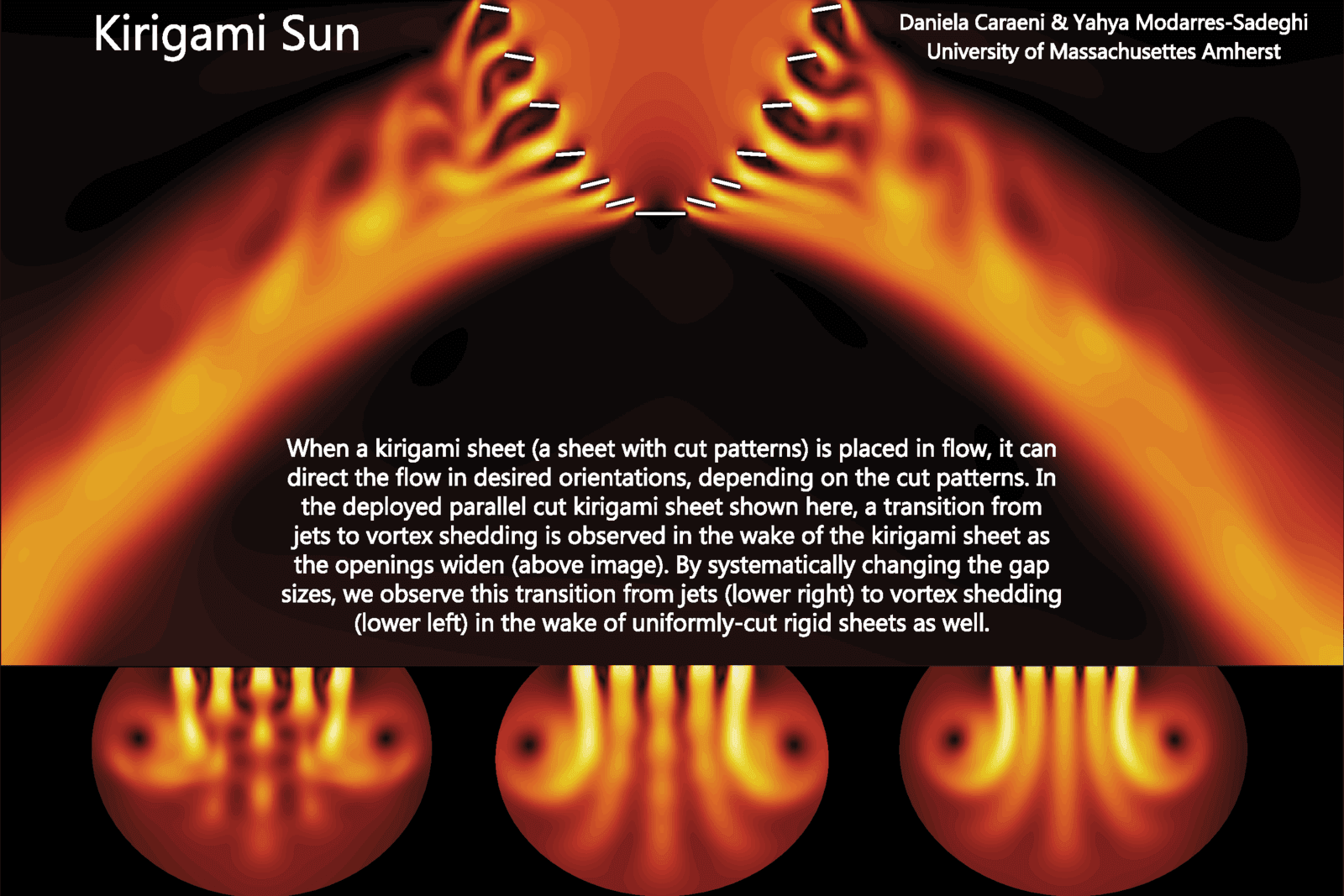
    Kirigami is a variation of origami in which paper can be cut as well as folded. Here, researchers look at flow through a cut kirigami sheet and how that flow changes with the cuts’ length. In the top central image, white lines mark the paper boundaries. As the cut gaps get larger, flow through them transitions from a continuous jet to swirling vortex shedding. Along the bottom, we see similar patterns emerge in the wake of uniformly-cut sheets, too. On the right, the flow comes through in jets; moving leftward, it transitions to an unsteady vortex shedding flow. (Image credit: D. Caraeni and Y. Modarres-Sadeghi)

    Fediverse Reactions
  • A New Mantle Viscosity Shift

    A New Mantle Viscosity Shift

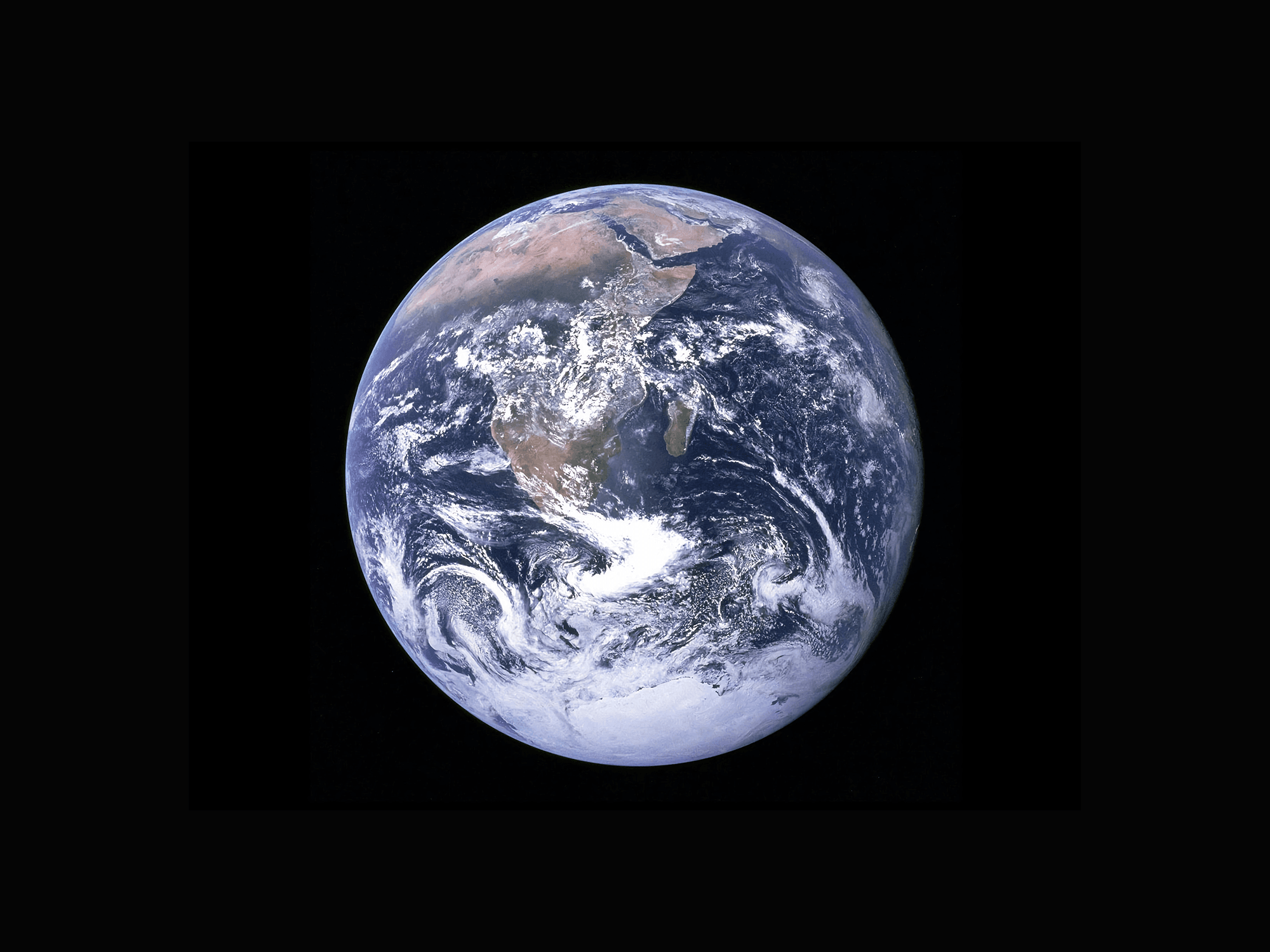
    The rough picture of Earth’s interior — a crust, mantle, and core — is well-known, but the details of its inner structure are more difficult to pin down. A recent study analyzed seismic wave data with a machine learning algorithm to identify regions of the mantle where waves slowed down. These shifts in seismic wave speed occur in areas where the mantle’s viscosity changes; a higher viscosity makes waves travel slower.

    The team found seismic wave speed shifts at depths of 400 and 650 kilometers, corresponding to known viscosity changes. But they found shifts at 1050 and 1500 kilometers, as well — the first time anyone has shown a global viscosity shift at those depths. Their analysis suggests a higher viscosity in this mid-mantle transition zone, which could affect how tectonic plates, which rely on these slow mantle flows, move. (Image credit: NASA; research credit: K. O’Farrell and Y. Wang; via Eos)

  • Herding Sheep

    Herding Sheep

    Flocks of birds, schools of fish, and herds of sheep all resemble fluids at times, and physicists have been trying to recreate their collective motion for decades. Many of these models simplify the animals into particles that follow simple rules based on the direction and speed of their neighbors. Over time, the models have grown more complex; for example, some might differentiate a “sheepdog” particle from “sheep” particles. And some models even tweak the “sheep” to account for the personality traits that real sheep show, like how skittish they behave toward a sheepdog. Physics World has a neat overview of several studies in this vein. (Image credit: E. Osmanoglu; via Physics World)

  • Junggar Basin Aglow

    Junggar Basin Aglow

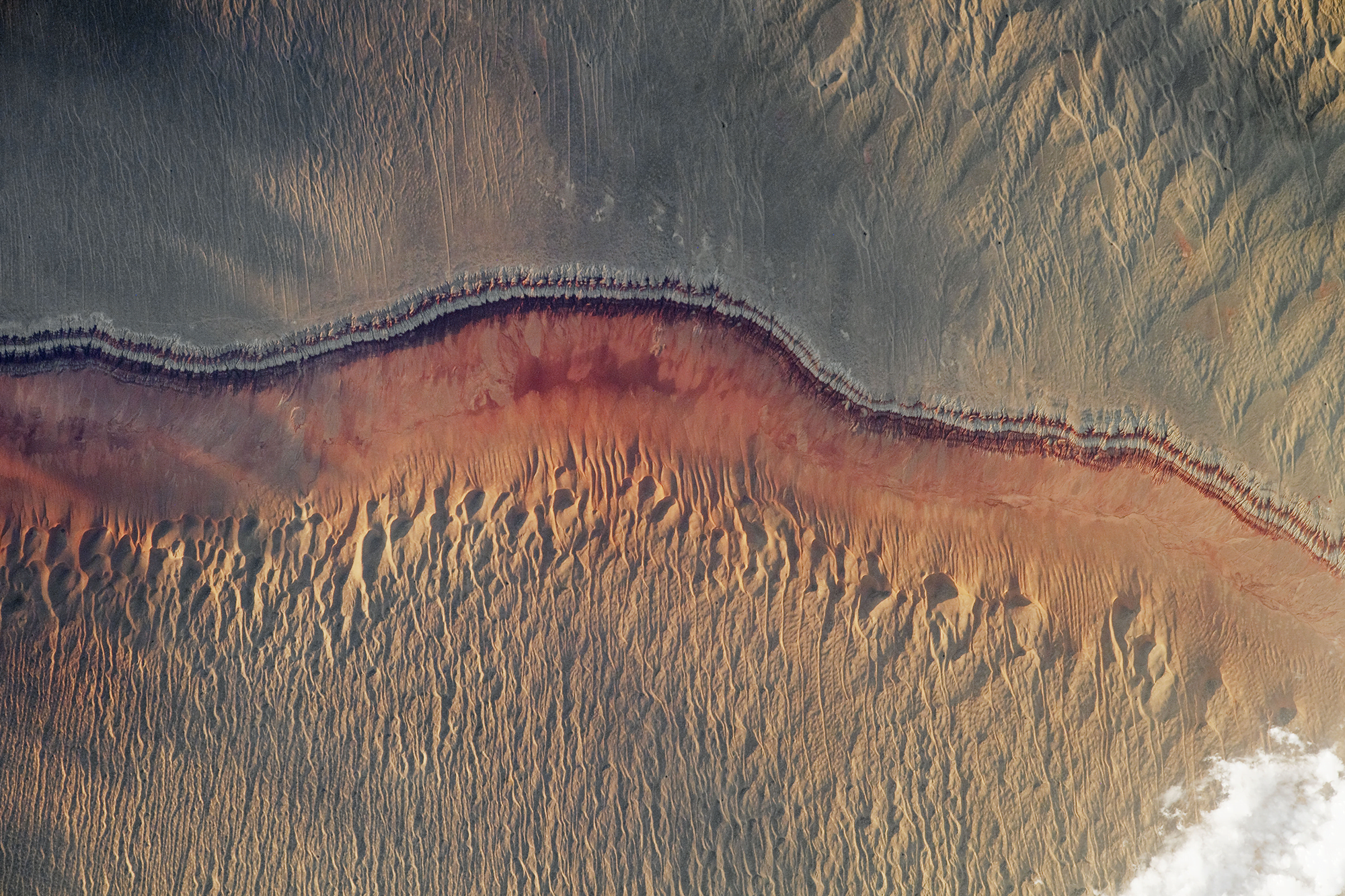
    The low sun angle in this astronaut photo of Junggar Basin shows off the wind- and water-carved landscape. Located in northwestern China, this region is covered in dune fields, appearing along the top and bottom of the image. The uplifted area in the top half of the image is separated by sedimentary layers that lie above the reddish stripe in the center of the photo. Look closely in this middle area, and you’ll find the meandering banks of an ephemeral stream. Then the landscape transitions back into sandy wind-shaped dunes. (Image credit: NASA; via NASA Earth Observatory)

  • Searching for Stability in Cleaner Flames

    Searching for Stability in Cleaner Flames

    Spiking natural gas power plants with hydrogen could help them burn cleaner as we transition away from carbon power. But burners in power plants and jet engines can be extremely finicky, thanks to thermoacoustic instabilities. As a flame burns, it can sputter and fluctuate in its heat output. That creates pressure oscillations (which we sometimes hear as sound waves) that reflect off the burner’s walls and return toward the flame, causing further fluctuations. This feedback loop can be destructive enough to explode combustion chambers.

    Adding hydrogen to a burner designed purely for natural gas can trigger these instabilities (above image), but researchers hope that by exploring fuel-mixtures and their effect at lab-scale, they can help designers find safe ways to adapt industrial burners for the cleaner fuel mixture. (Image and research credit: B. Ahn et al.; via APS Physics)

  • Tornadoes in a Bucket

    Tornadoes in a Bucket

    In nature, some powerful tornadoes form additional tornadoes within their shear layer. These subvortices revolve around the main tornado, causing massive destruction in their wake. In the laboratory, researchers create a similar multi-tornado system with a spinning disk at the bottom of a shallow, cylindrical layer of water. Depending on how fast the disk spins, different numbers of subvortices form around the main vortex.

    In this poster, researchers show the transition from a 3-subvortex system to a 2-subvortex one. Starting at the 12 o’clock position and moving clockwise, we see 3 subvortices arranged in a triangle. A sudden change in the disk’s rotation speed destabilizes the system, causing the subvortices to break down and shift into a new 2-subvortex configuration. As this happens, material that was isolated in each subvortex (darker blue regions) is suddenly able to mix. That suggests that a real-world multiple vortex tornado might suddenly shed debris if it lost enough angular momentum. Back in the lab, though, the shift to a stable 2-subvortex system once again isolates material in individual subvortices and prevents it from mixing with the rest of the flow. (Image and research credit: G. Di Labbio et al. 1, 2)

  • Featured Video Play Icon

    Serpents and Ouroboros

    Beads of condensation on a cooling, oil-slicked surface have a dance all their own in this video. Large droplets gobble up their fellows as they follow serpentine paths; each new droplet donates its interfacial energy to feed the larger drop’s kinetic energy. Eventually, the big drops switch to a circular path, like an ouroboros, the tail-eating serpent of mythology. This transition happens due to the oil shifted by the dancing droplets. You can recreate the effect at home by rubbing a thin layer of oil over glass and setting it atop a hot mug of your favorite beverage. (Video and image credit: M. Lin et al.; research credit: M. Lin et al.)