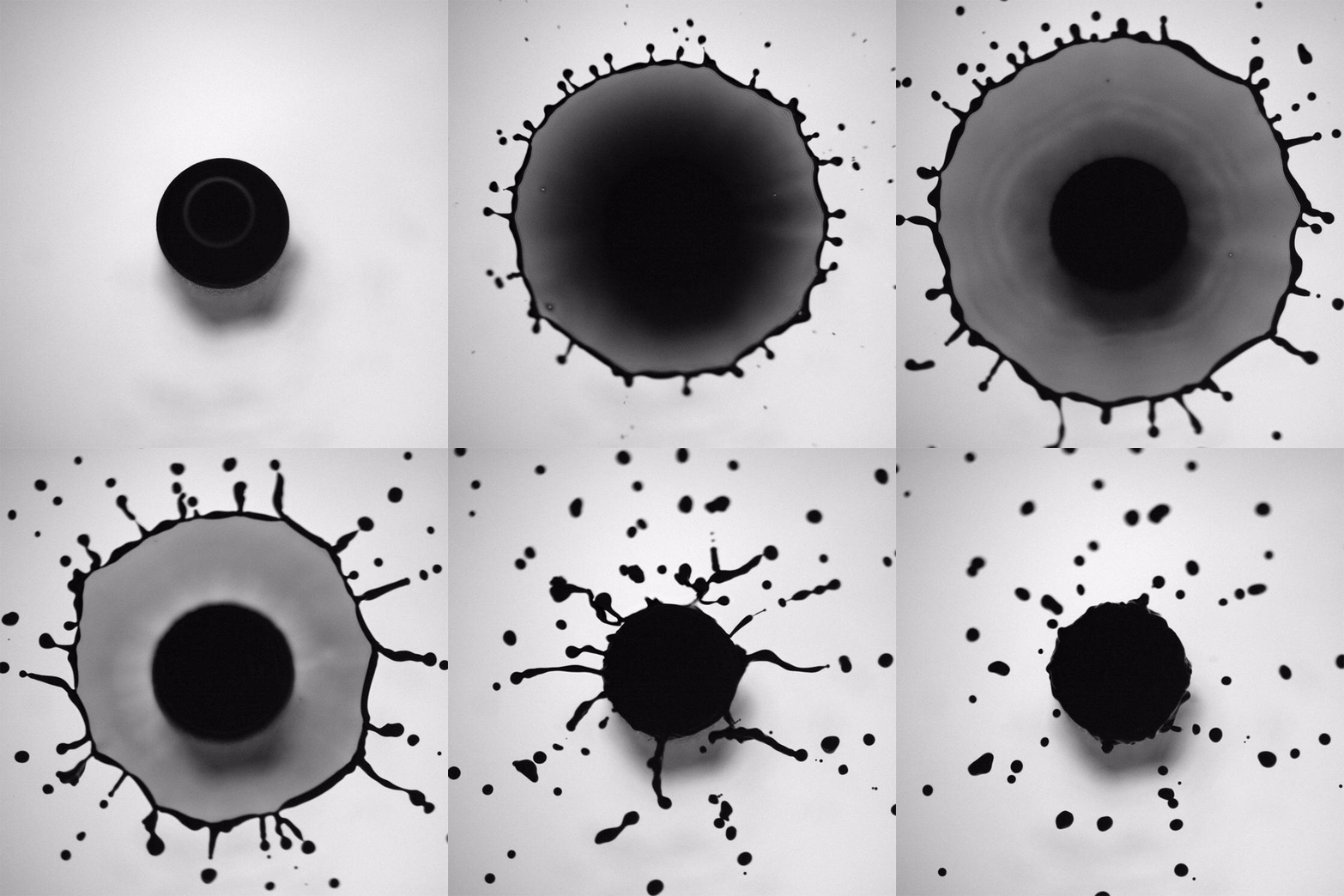
With planning for manned and unmanned missions to the Moon, Mars, and many asteroids underway, engineers are using numerical simulations to understand how spacecraft thrusters interact with planetary surfaces. Most practical data for this problem comes from the Apollo program and is of limited use for current missions. Recreating a Martian landing on Earth isn’t straightforward, either, given our higher gravity. Thus, supercomputers and numerical simulation are the best available tool for understanding and predicting how the plumes from a spacecraft’s thrusters will interact with a surface and what kind of blowback the spacecraft will need to withstand. (Video credit: U. Michigan Engineering; research credit: Y. Yao et al.; submission by Jesse C.)
Search results for: “art”

Self-Started Siphoning
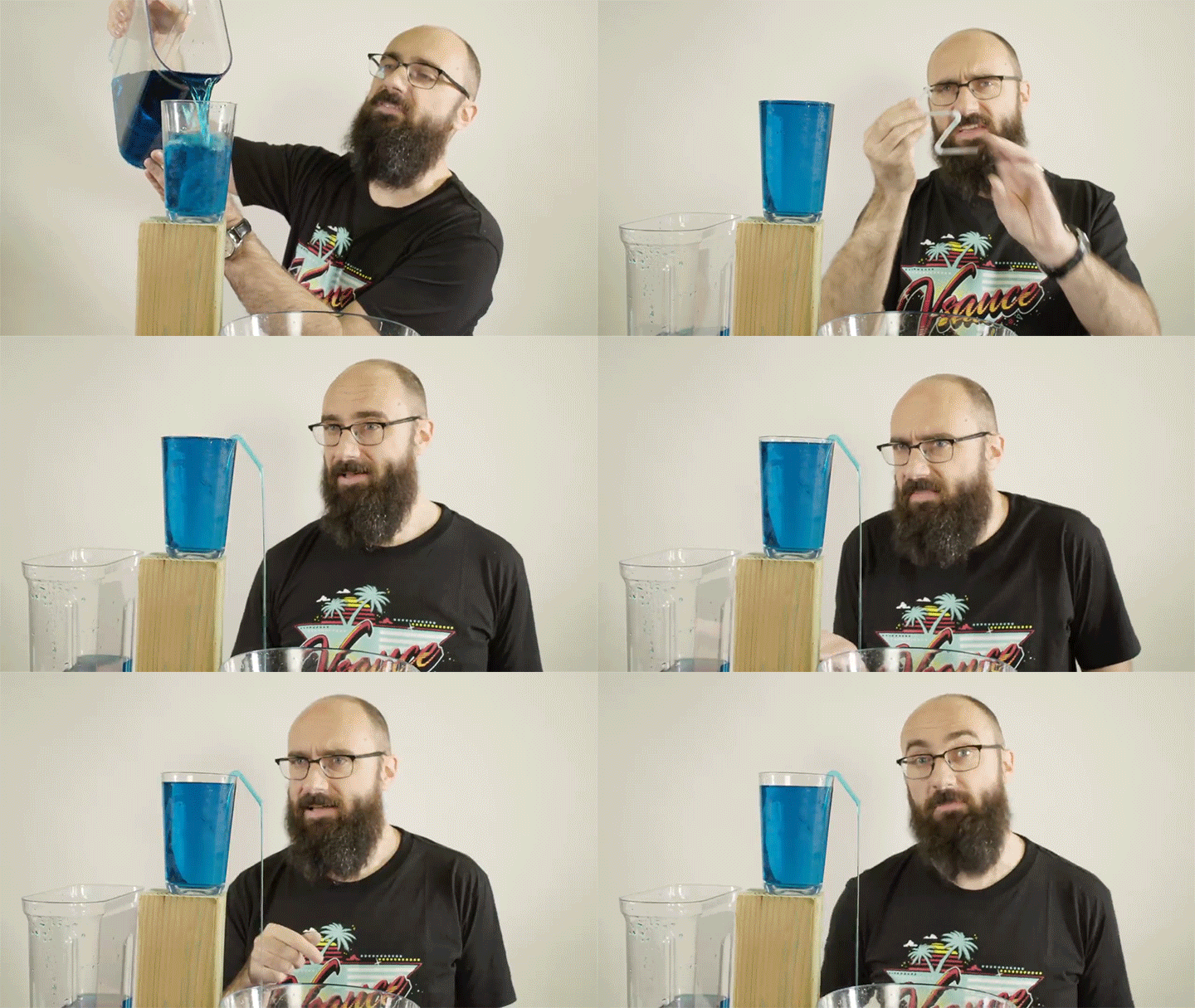
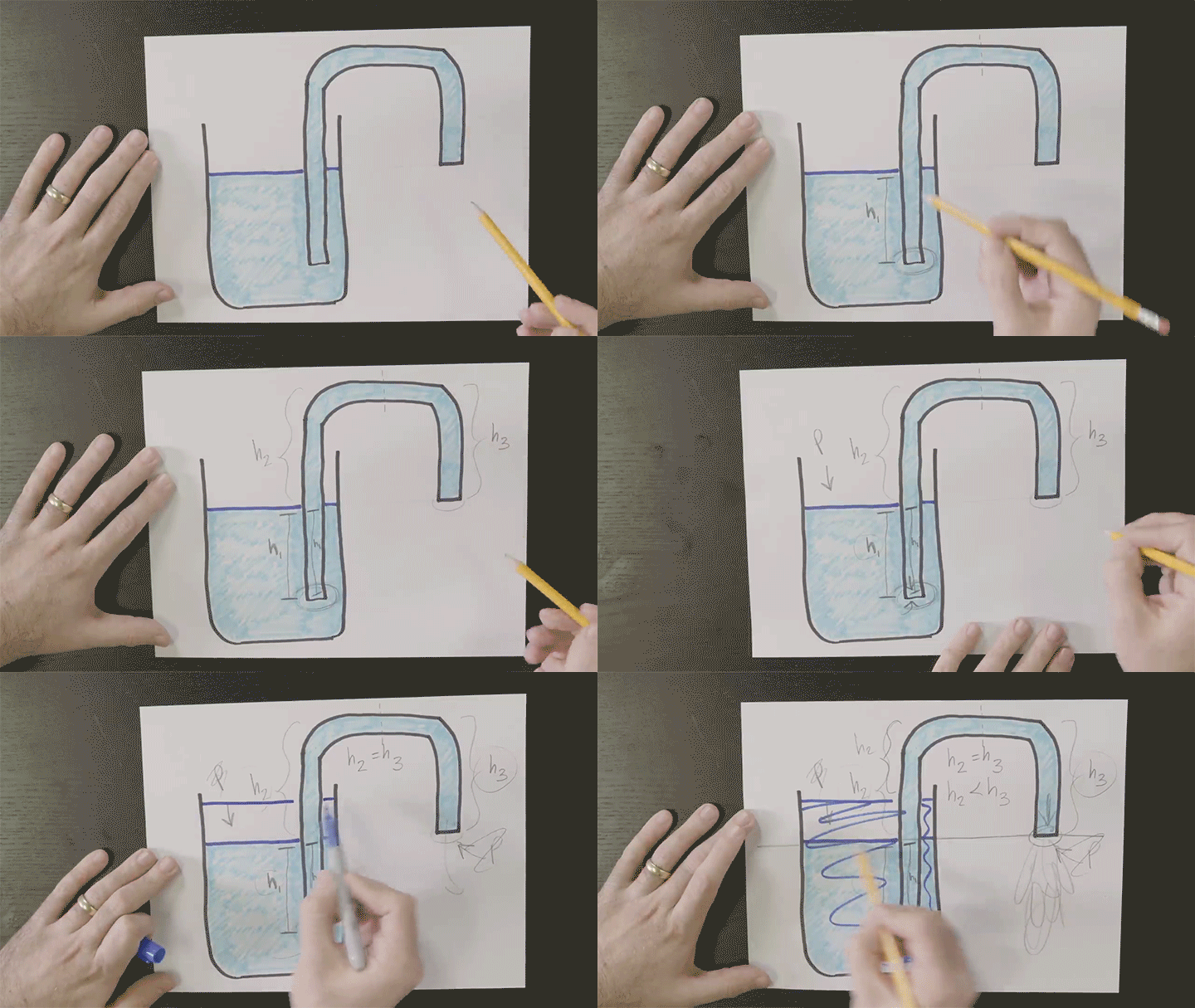
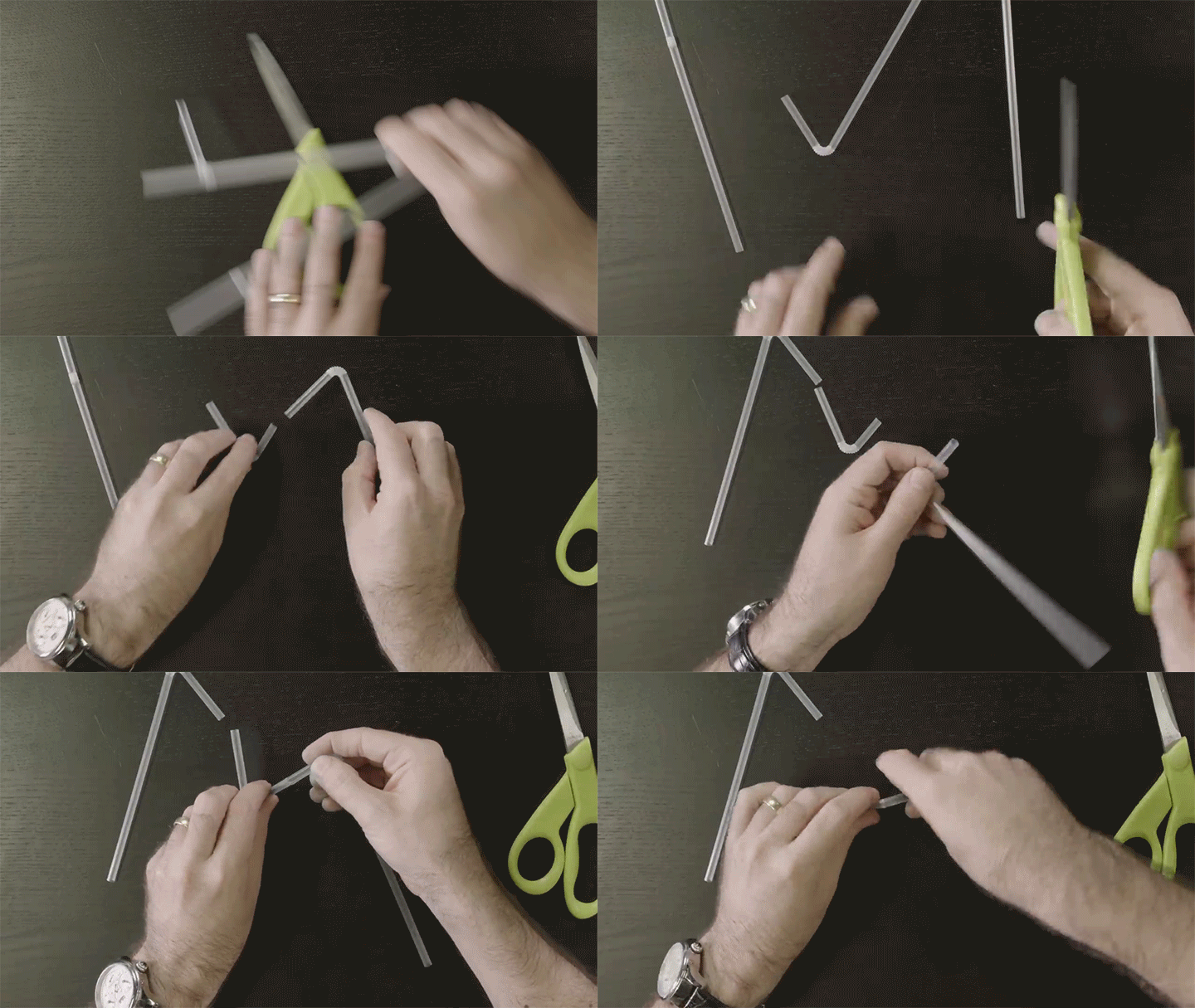
Here’s a fun activity you can do while you #StayHome: build a self-starting siphon. Michael from VSauce explains how in this video. Moving fluids from one location to another is almost always about pressure, and a siphon is no different. To get the water to flow, there must be unequal pressures driving the liquid to move from high pressure to lower pressure. This is the basic physics behind any siphon; the fun of a self-starting siphon comes from generating enough pressure imbalance to start flow without applying suction. (Video credit: D!NG/M. Stevens)

Artificial Microswimmers
Tiny organisms swim through a world much more viscous than ours. To do so, they swim asymmetrically, often using wave-like motions of tiny, hair-like cilia along their bodies. Mimicking this behavior in artificial swimmers is tough; how would you actuate so many micro-appendages? A new study offers a different method: inducing cilia-like waves using magnetic fields.
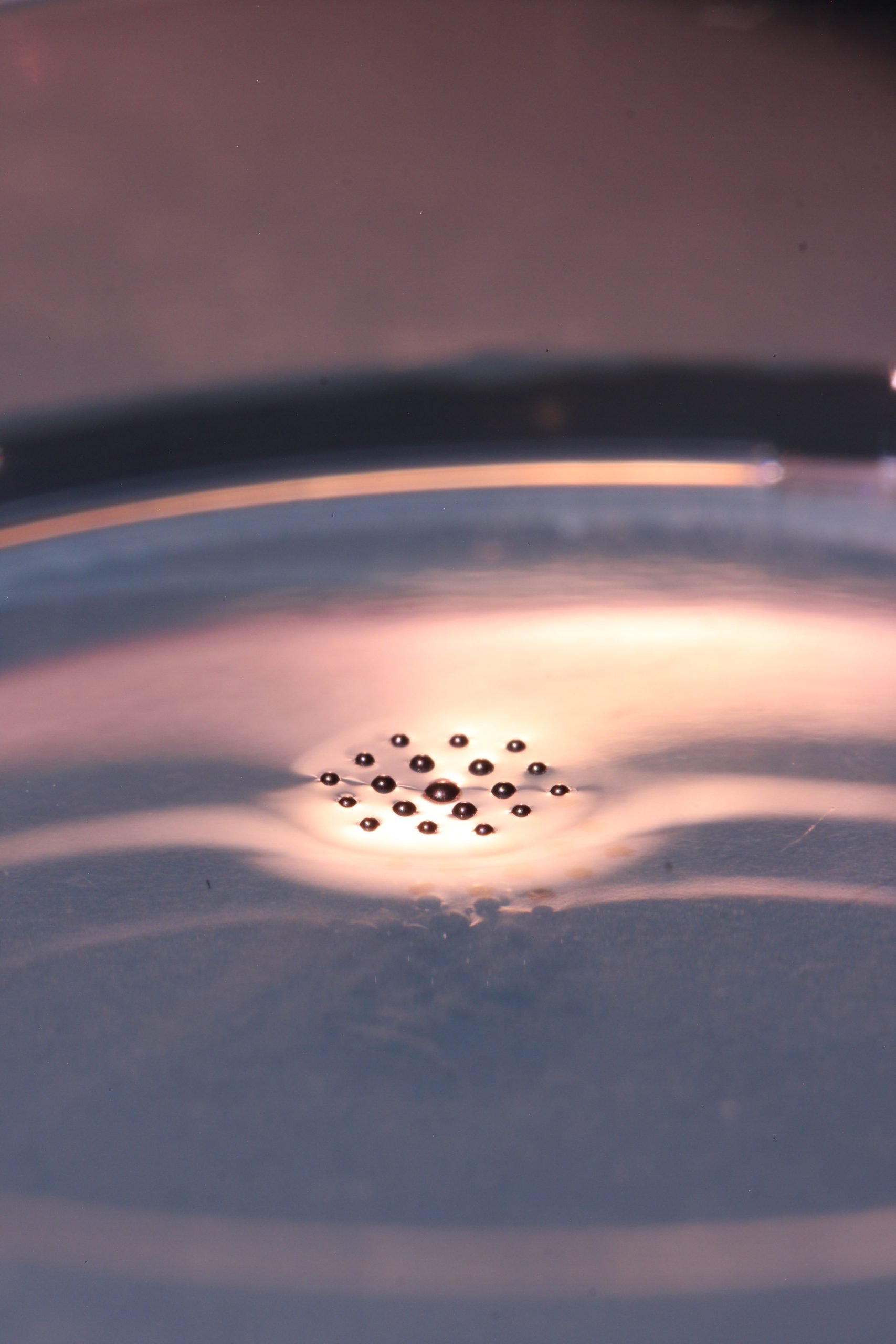
The researchers’ microswimmers are actually arrays of ferromagnetic particles. The Cheerios effect helps draw the particles together, while magnetic repulsion pushes them apart. Together, these forces help the particles assemble into crystal-like arrays.
To make the particles swim, the researchers shift the magnetic field. All of the outer particles of the array behave like individual cilia. As the magnetic field moves, the cilia-particles move in waves, much like their natural counterparts. Using this technique, the researchers were able to demonstrate both rotational and straight-line (translational) swimming. (Image, research, and submission credit: Y. Collard et al.)

Shedding Light on Martian Dust Storms
In 2018, Mars was enveloped by a global dust storm that lasted for months. Although such storms had been seen before, the 2018 storm offered an unprecedented opportunity for observation from five orbiting spacecraft and two operating landers. As researchers comb through that data, they’re gaining new insights into the mechanisms that drive these extreme events.
At NASA Ames, a team of researchers used observations of dust columns as input to a simulation of Mars’ global climate, then watched as the digital storm unfolded. Simulations like these have an important advantage over observations: the simulations allow scientists to track the transport of dust from one region to another.
That dust tracking is critical for some of the team’s results. They found feedback patterns between dust lifting and deposition in different regions. For example, early in the storm dust was largely supplied from the Arabia/Sabaea regions, but once that dust was deposited in the Tharsis region, it kicked off a massive lifting event from Tharsis that put twice as much dust into the atmosphere as had landed there. Later, dust deposited back in Arabia by the Tharsis lofting generated new dust uplifts. As long as more dust got lifted than deposited, the intense storms continued. (Image credits: NASA, T. Bertrand/A. Kling/NASA Ames; research credit: T. Bertrand et al.; see also JGR Planets and AGU; submitted by Kam-Yung Soh)
Ejecting Water from a Smartwatch
Making electronics water-resistant can be a challenge, but as this Slow Mo Guys video demonstrates, engineers have some clever ways to deal with unwanted liquids. The Apple Watch, for example, uses its speakers to eject water that gets into the watch during immersion. As seen above, the vibration of the speakers ejects most of the water as tiny droplets. Occasionally, surface tension makes this tough and drops instead coalesce on the watch’s surface. To counter this tendency, the speakers sometimes pause, allowing water to collect before they begin vibrating again. (Video and image credit: The Slow Mo Guys)

Exploring Martian Mud Flows
When looking at Mars and other parts of our solar system, planetary scientists are faced with a critical question: if what I’m looking at is similar to something on Earth, did it form the same way it does here? In other words, if something on Mars looks like a terrestrial lava flow, is it actually made of igneous rock or something else?
To tackle this question, a team of researchers explored mud flows in a pressure chamber under both Earth-like and Martian conditions. They found that mud flowed quite freely on Earth, but with Martian temperatures and pressures, the flows resembled lava flows like those found in Hawaii or the Galapagos Islands.
On Mars, mud begins boiling once it reaches the low pressure of the surface. This boiling cools it, causing the outer layer of the mud to freeze into an increasingly viscous crust, which changes how the mud flows. In this regard, it’s very similar to cooling lava, even though the heat loss mechanisms are different. (Video and research credit: P. Brož et al.; image credit: N. Sharp; see also P. Brož; submitted by Kam-Yung Soh)

Particle-filled Splashes
Adding particles to a liquid can significantly alter its splash dynamics, as shown in this new study. In the first image, a purely-liquid droplet spreads on impact into a thin liquid sheet that destabilizes from the rim inward, ripping itself into a spray of droplets. At first glance, the particle-filled droplet in the second image behaves similarly; it, too, spreads and then disintegrates. But there are distinctive differences.
During expansion, the particles increase the drop’s effective viscosity, meaning that the splash sheet does not expand as far. That apparent viscosity increase is also part of why the drops the splash sheds are bigger than those without particles. The other part of that story comes from the retraction, where the variations in thickness caused by the particles and their menisci create preferential paths for the flow. As a result, the particle-filled splash breaks up faster and into larger droplets compared to its purely-liquid counterpart. (Image and research credit: P. Raux et al.)