Lava spurts from the Fagradalsfjall volcano in Iceland in this award-winning photo by Riten Dharia. It’s always bizarre to see molten rock flowing in fountains and rivers because it’s so unlike our daily experiences. Some deeply buried areas of the Earth, including the outer part of the core, are often described as liquid rock, which brings to mind lava. But that’s not, in fact, what those regions are like. If you were to visit Earth’s outer core in some super-submersible, you would not find a sea of lava. Instead, you would find yourself surrounded by what seemed to be solid rock. That’s not to say that the outer core is solid — just that it flows on geological timescales that are far longer than any human’s lifetime! (Image credit: R. Dharia; via Gizmodo)
Search results for: “art”

How Large Particles Get in Sea Spray
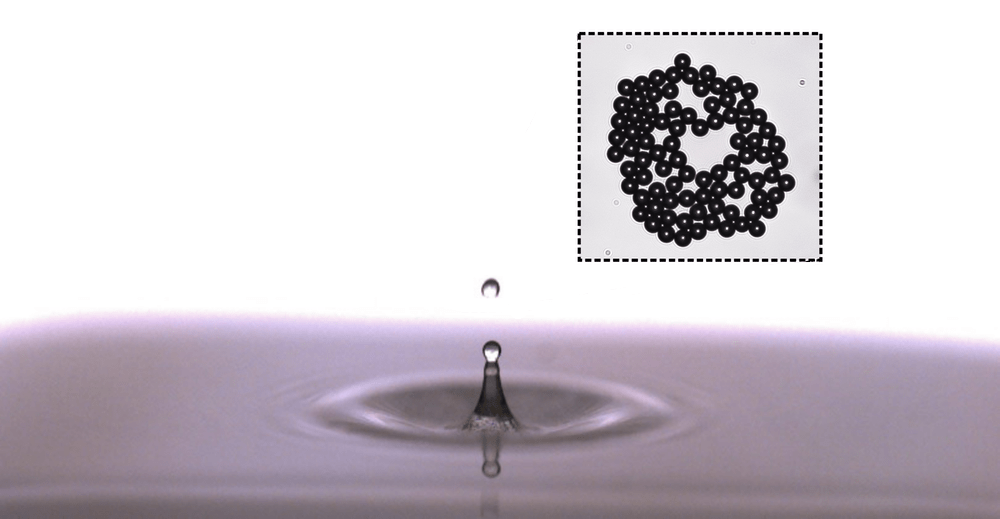
When bubbles burst at the ocean’s surface, they eject droplets that can carry high concentrations of contaminants like pollutants, viruses, and microplastics. Previous theories posited that only particles smaller than the microlayer surrounding the bubble could make their way into these drops, but new work shows otherwise.
As bubbles rise to the surface, they carry particles on their surface, collecting them to a concentration that’s even higher than the surrounding seawater. But which particles make it into the air depend on the details of what happens when the bubble pops. Previously, researchers assumed that the thin microlayer of fluid surrounding the bubble was uniform, but that turns out not to be the case. As the bubble pops, some regions of the microlayer stretch and thin, while others grow thicker. The thicker the microlayer, the larger the particles it can pull along. In their single-bubble experiments, the researchers found that 15- and 30-micrometer plastic beads — representing oceanic microplastics — appeared in high concentrations in ejected droplets.

This animated simulation shows how fluid along the edge of a bubble makes its way into ejected droplets. Green particles indicate fluid from the left half of the bubble; blue shows fluid from the right side. Environmental scientists are keen to understand these mechanisms because they link our oceans and atmosphere, potentially affecting rainfall, pollution spread, and epidemiology. (Image, video, and research credit: L. Dubitsky et al.; via APS Physics)

Shaping the Earth Through Cataclysm
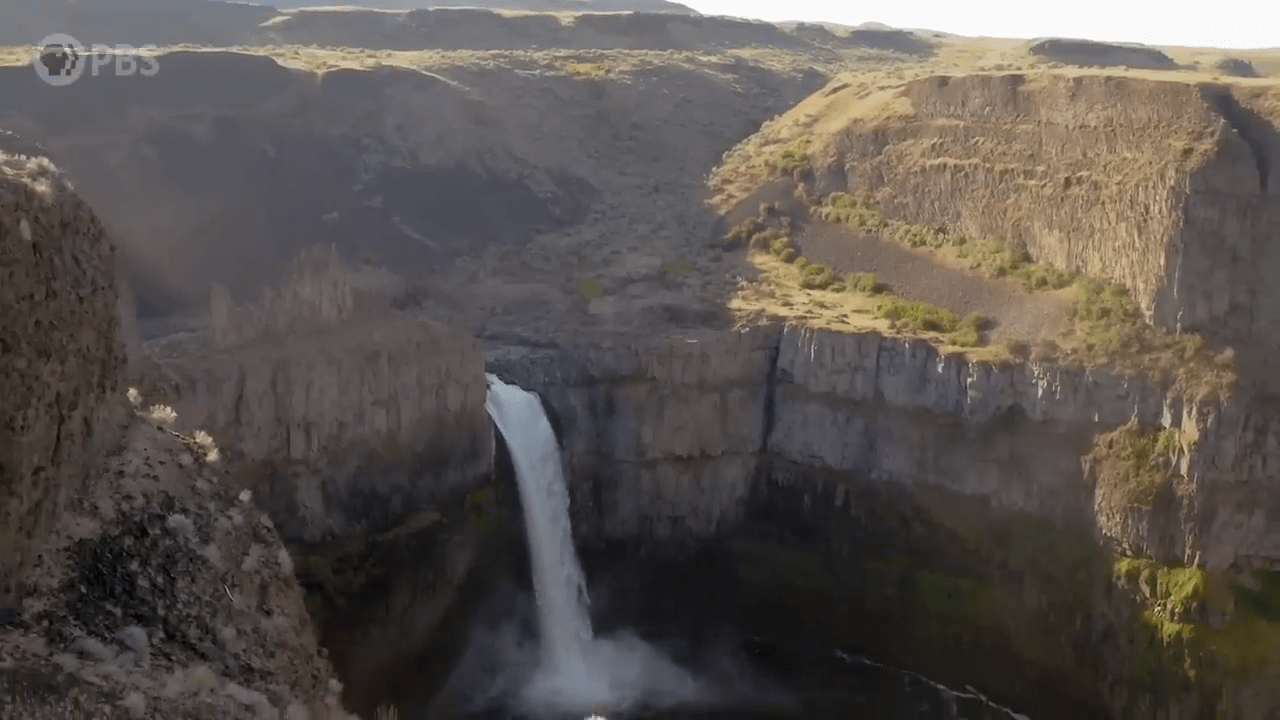
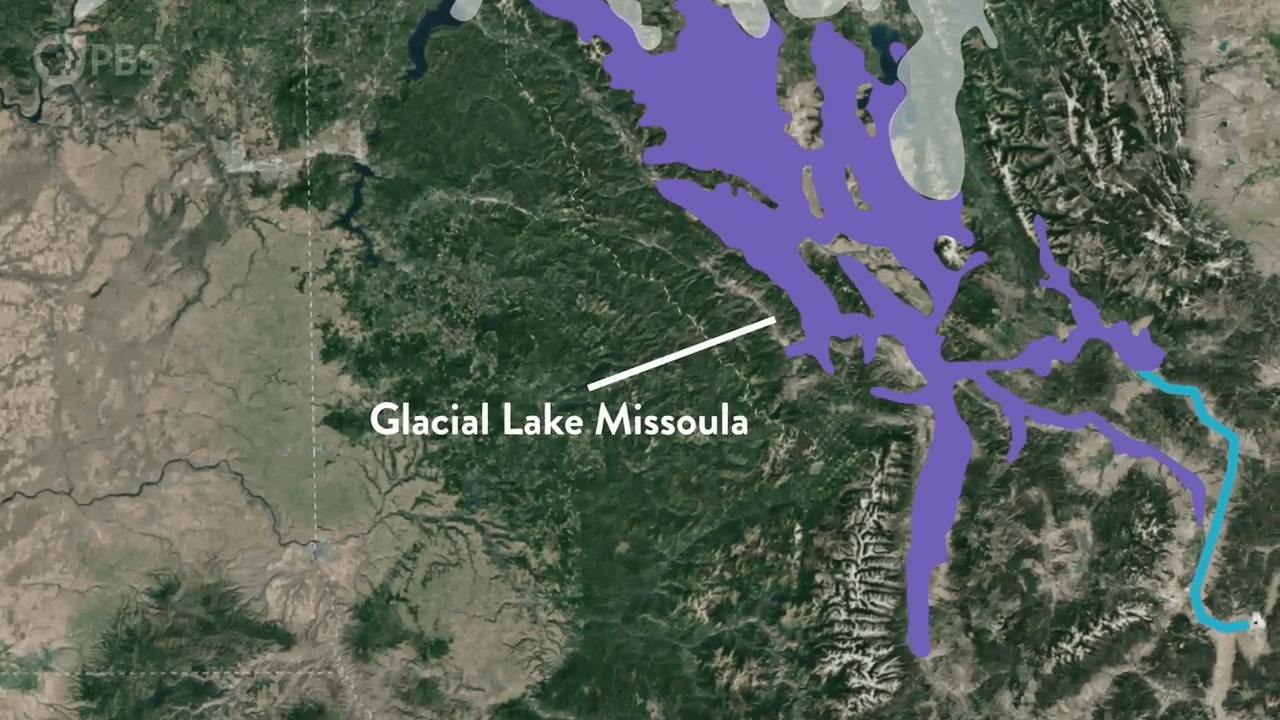
Though we often think of the Earth as changing slowly, some events are so catastrophic that they change the landscape irrevocably. Some 15,000 years ago, a massive lake covered what is now Missoula, Montana. Dammed in by a 2,000-foot-tall wall of glacial ice, this lake contained more water than Lakes Ontario and Erie combined. But when the ice dam broke, the lake drained in days, sending a deluge across the Pacific Northwest.
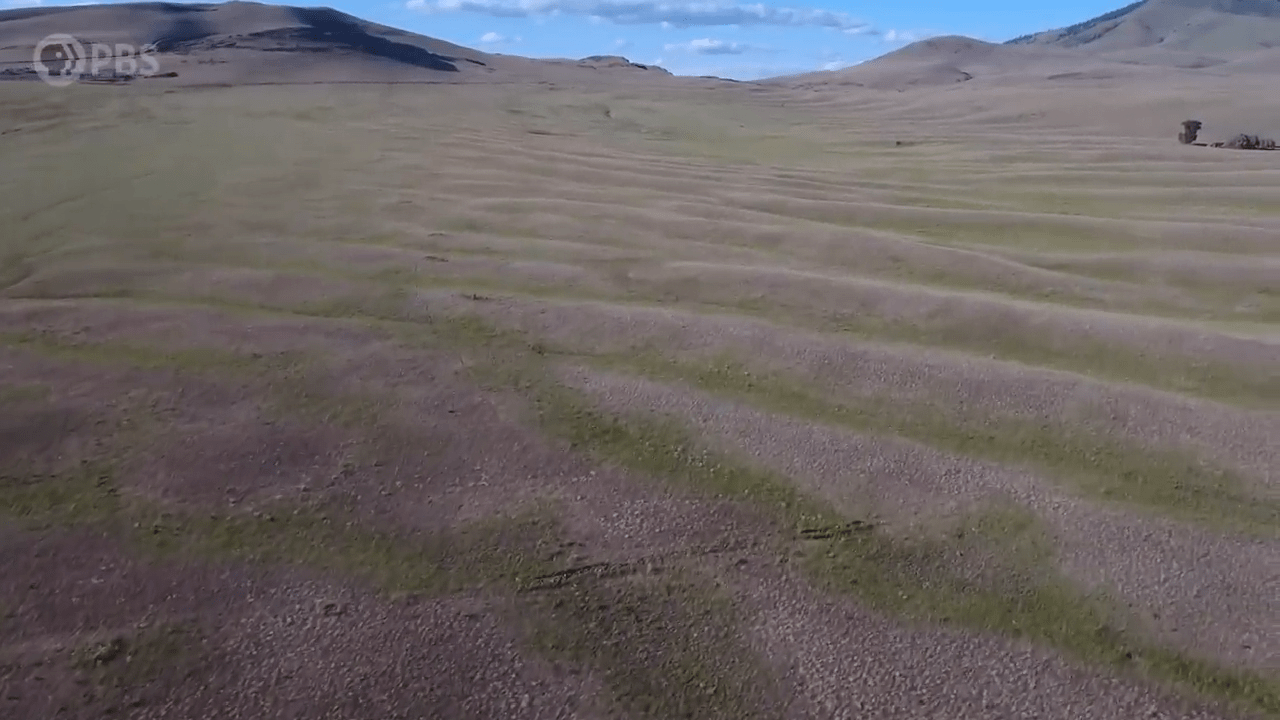
The floodwaters carved new canyons and waterfalls, left massive ripples in the landscape, and deposited rocks from thousands of kilometers away as they raged their way to the sea. It was one of the most massive floods the Earth has ever seen. And, incredibly, it happened over and over as the lake refilled and broke again. Check out this Be Smart video for even more of this incredible story. (Image and video credit: Be Smart)

Martian Wind Power
To support a crew on Mars, a landing site must offer resources like water and allow for sufficient power generation. Thus far, most analyses of this sort have focused on the possibilities of solar power, which is limited by day-and-night cycles and seasonal variations, and nuclear power, which carries some risk to the human crew. In a new report, researchers considered the possibilities of wind power on Mars.
Since Mars’s atmosphere is so much thinner than Earth’s, wind power has largely been overlooked as an energy source there. But researchers found that a commercially-rated wind turbine expected to produce 330 kW here on Earth could still output a respectable 10 kW on Mars. Since the target power needs for a crew are 24 kW, adding wind energy can boost a power system from providing 40% of needs from solar alone to 60-90% of the needed energy from combined solar and wind sources. A wind turbine is especially helpful in supplementing power needs at times when solar power wanes, like at night or during the Martian winter solstice. (Image credit: NASA; research credit: V. Hartwick et al.; via Physics World)

Listen to a Martian Dust Devil
A lucky encounter led the Perseverance rover to record the first-ever sound of a dust devil on Mars. The rover happened to have its microphone on (something that only happens a few minutes every month) just as a dust devil swept directly over the rover. Check out the video above to see and hear what Perseverance captured.
Using the rover’s instrumentation, researchers worked out that the dust devil was at least 118 meters tall and about 25 meters wide. The team was even able to determine the density of dust in the vortex from the sound of individual grain impacts captured in the acoustic signal! Serendipitous as the experience was, planetary scientists may now look to include microphones on more missions, since we now know how to get useful meteorological data from them. (Video credit: JPL-Caltech/NASA; image credit: LPL/NASA; research credit: N. Murdoch et al.; via AGU Eos; submitted by Kam-Yung Soh)

Martian Glaciers
On Earth, glaciers slide on lubricating layers of water, leaving complex landscapes like fjords and drumlins in their wake. Mars — though once home to enormous ice masses — lacks those geological features. Scientists assumed, therefore, that Martian ice stayed frozen and unmoving. But a new study demonstrates that is not the case.
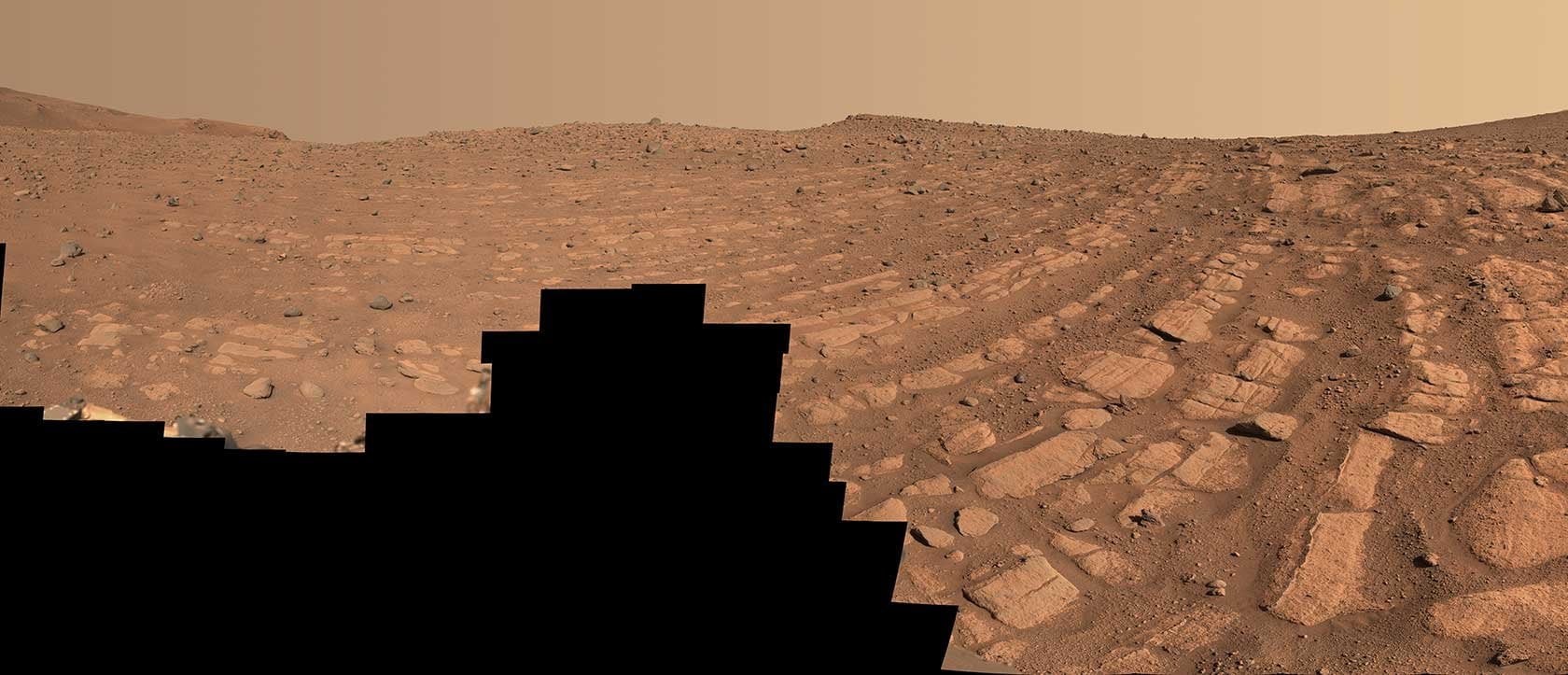
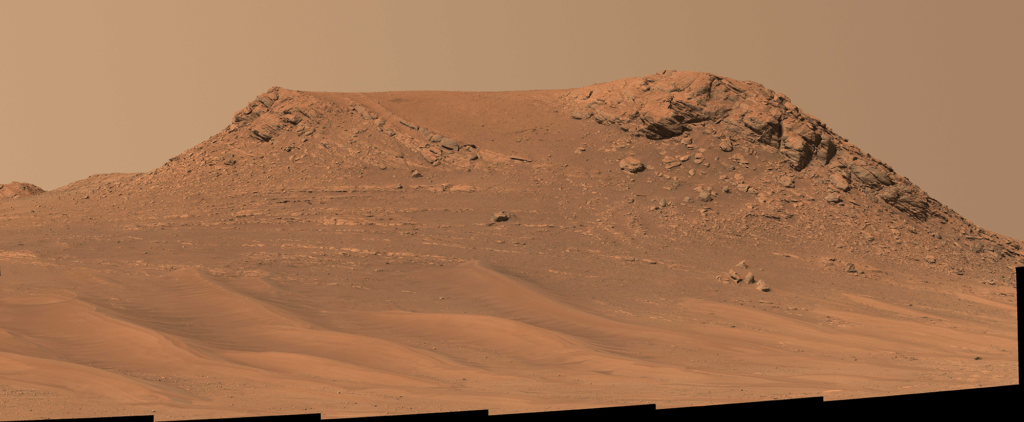
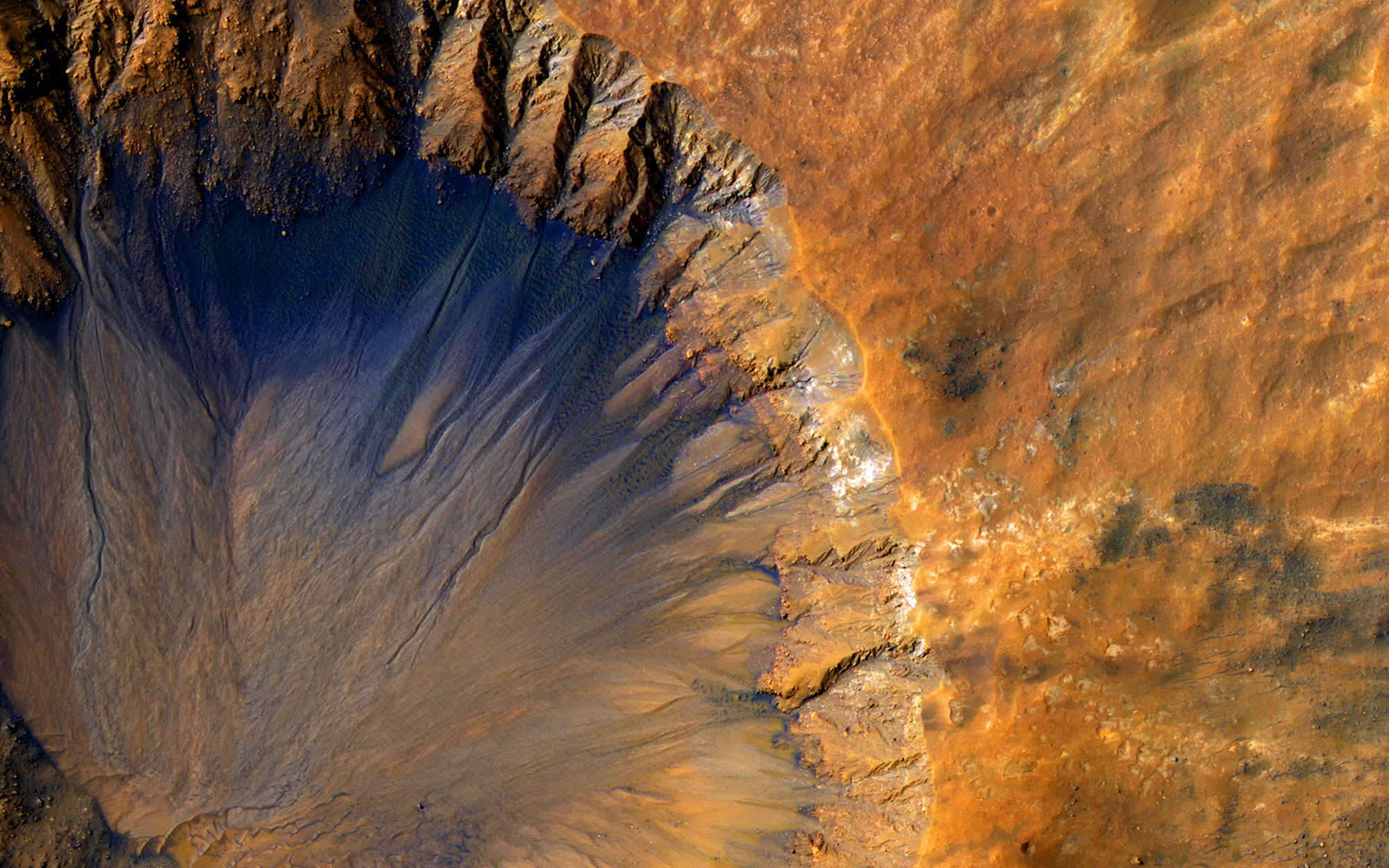
Researchers used computational modeling to simulate two identical glaciers: one under Earth-like conditions and one under the lower gravity of Mars. They found that Martian glaciers did indeed move, but Mars’s lower gravity, combined with better water drainage beneath the ice, meant that they moved exceedingly slowly. Martian glaciers did erode the landscape but into different features than on Earth. Instead of forming moraines and drumlins, a large Martian glacier would instead carve channels and eskar ridges, geological features found on Mars today. (Image credit: NASA/JPL-CalTech/Uni. of Arizona; research credit: A. Grau Galofre et al.; via AGU; submitted by Kam-Yung Soh)

“Art of Paint”
Filmmaker Roman De Giuli is always coming up with spectacular and visually fascinating new ways to manipulate ink and other liquids. In “Art of Paint,” he applies thin layers atop a custom plate that can be tilted in any direction. The results sometimes resemble acrylic paint pours, sometimes Marangoni flows, and sometimes look more like salt fingers or Rayleigh-Taylor instabilities. The extreme variety of forms is quite unique among these sorts of films and is well worth taking the time to view in fullscreen. (Image and video credit: R. De Giuli)