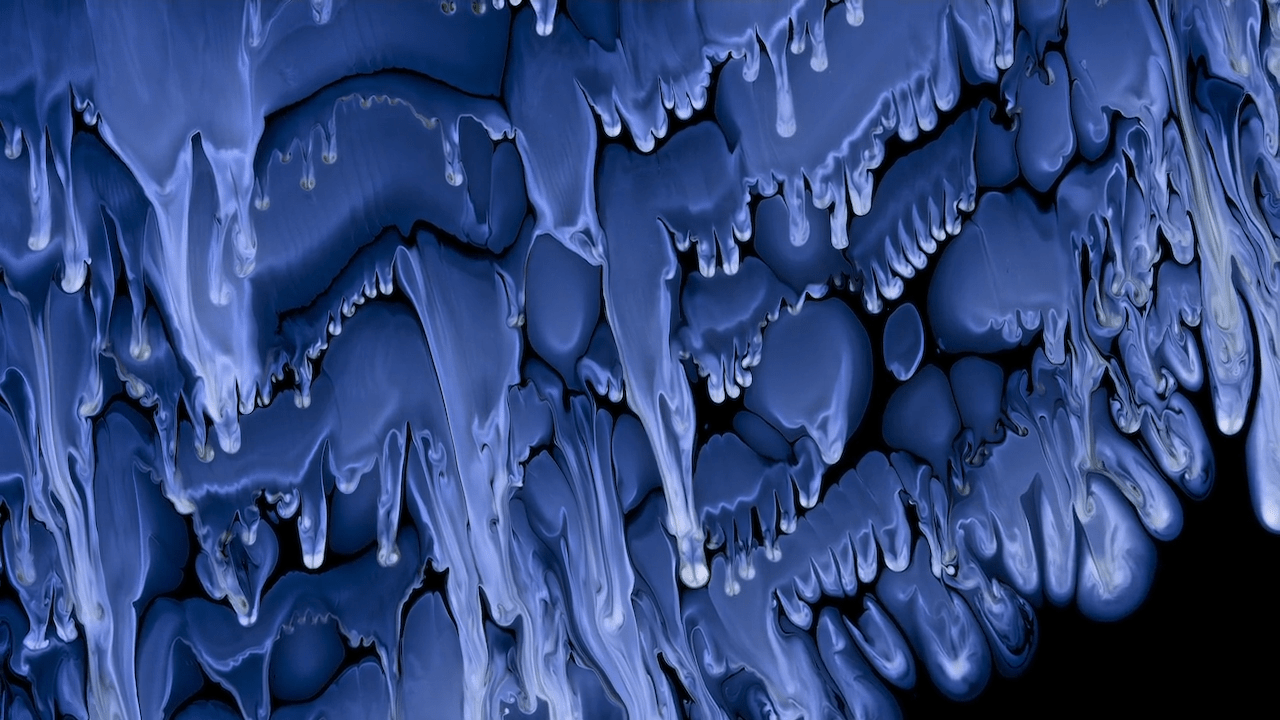
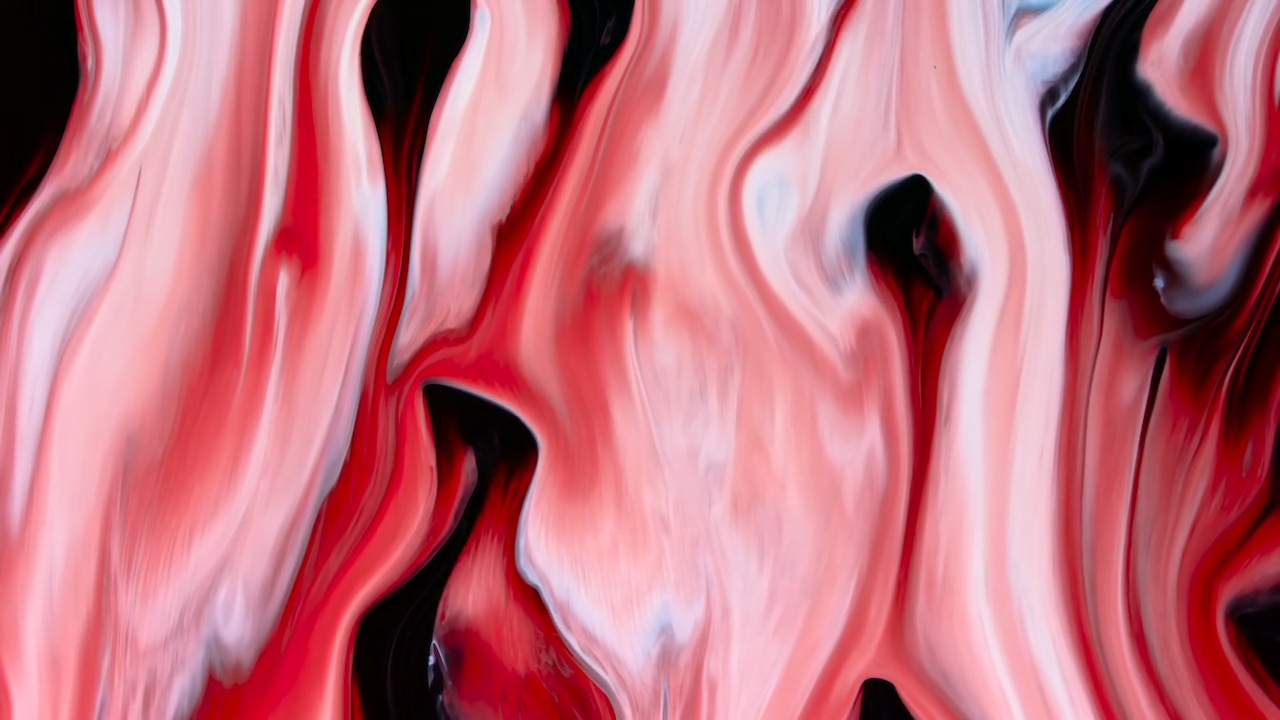
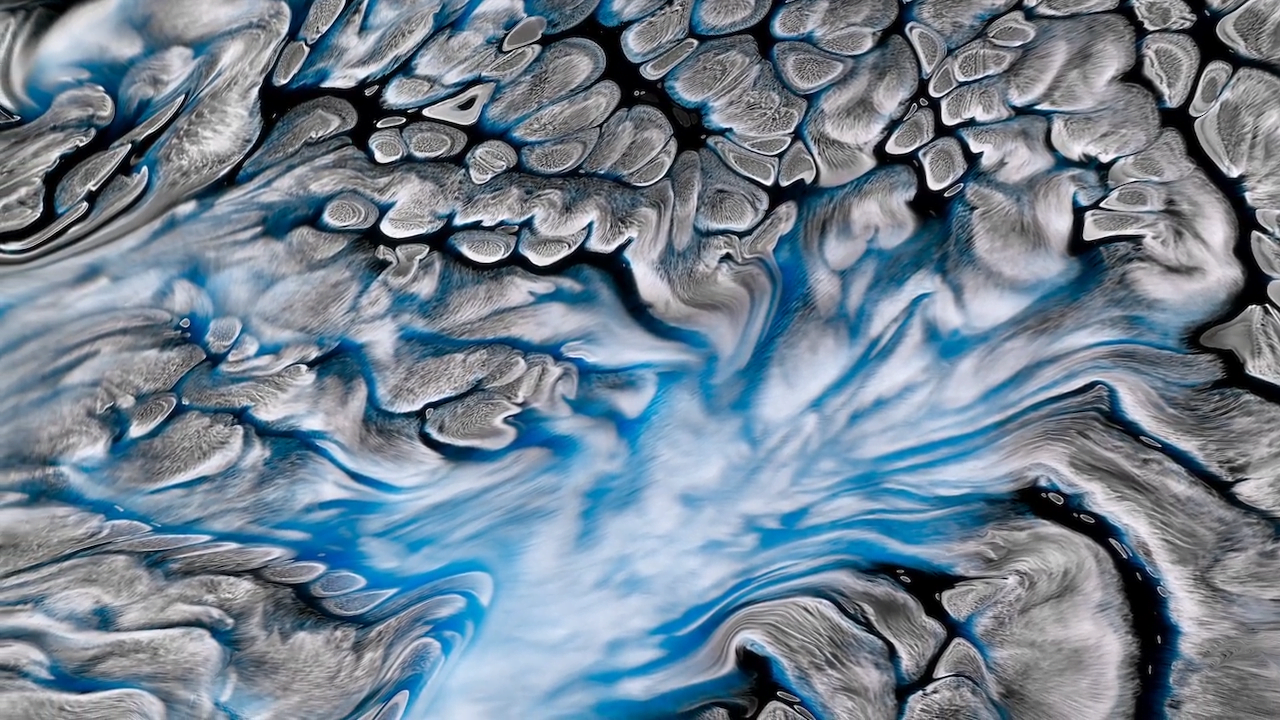
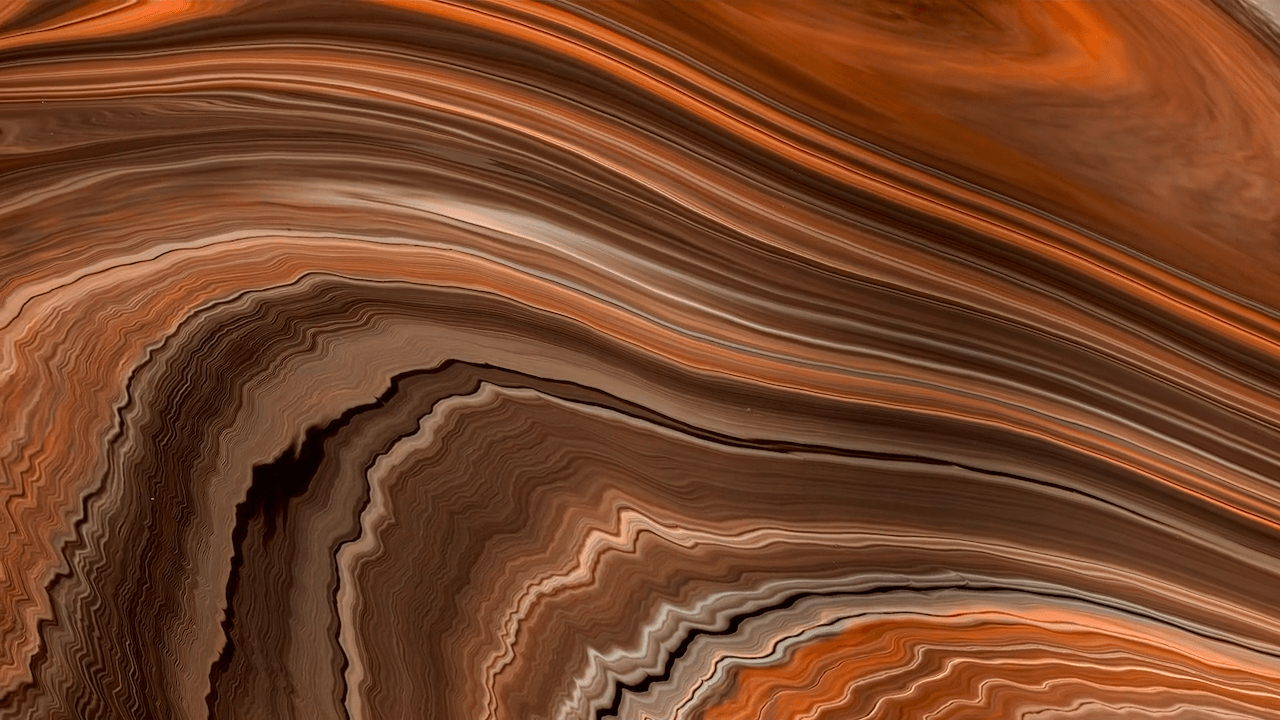
Pulling a solid object from a liquid bath can coat it in a thin layer of liquid. The thickness of the coating layer depends on the speed at which the object is removed. Introducing particles into the liquid bath adds a new dimension to the coating problem, namely the size of the particles. In this poster, researchers demonstrate some of the coatings possible in a mixture with particles of more than one size. It’s even possible, they note, to filter out particles of a certain size by carefully selecting the removal speed. (Image credit: D. Jeong et al.)
Search results for: “art”

Martian Flyover
Fly over a Martian crater in this incredibly detailed 8K video built from Mars Reconnaissance Orbiter imagery. Like Earth’s deserts, Mars is largely shaped by wind, and we get some fantastic views of sand ripples in this flyover. For reference, the vertical scale covered in the video image is roughly 1 kilometer. It’s pretty astounding to see this kind of detail from a spacecraft 250 kilometers away! (Video and image credit: S. Doran/NASA; via Colossal)


Morphing Particle Rafts
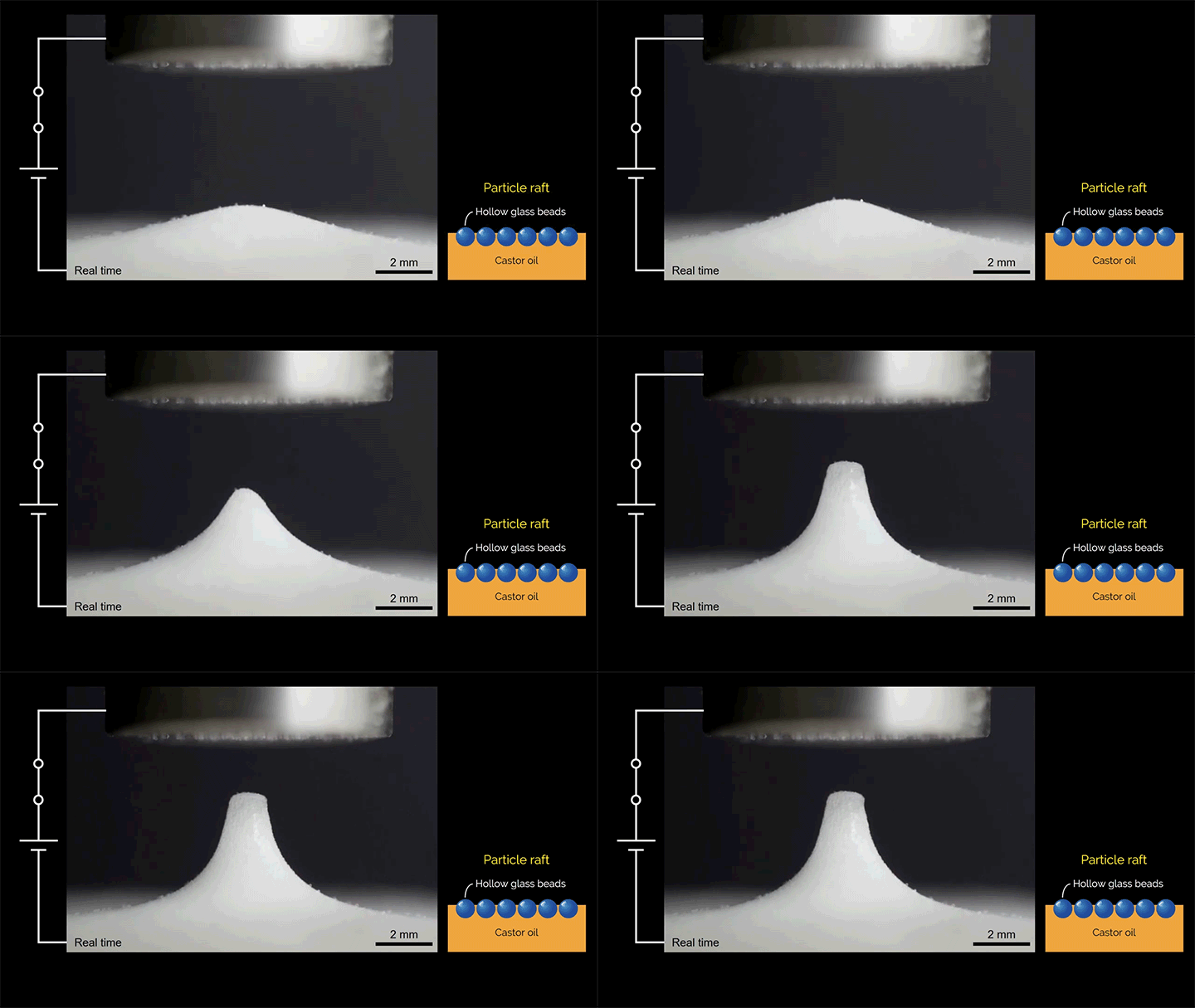
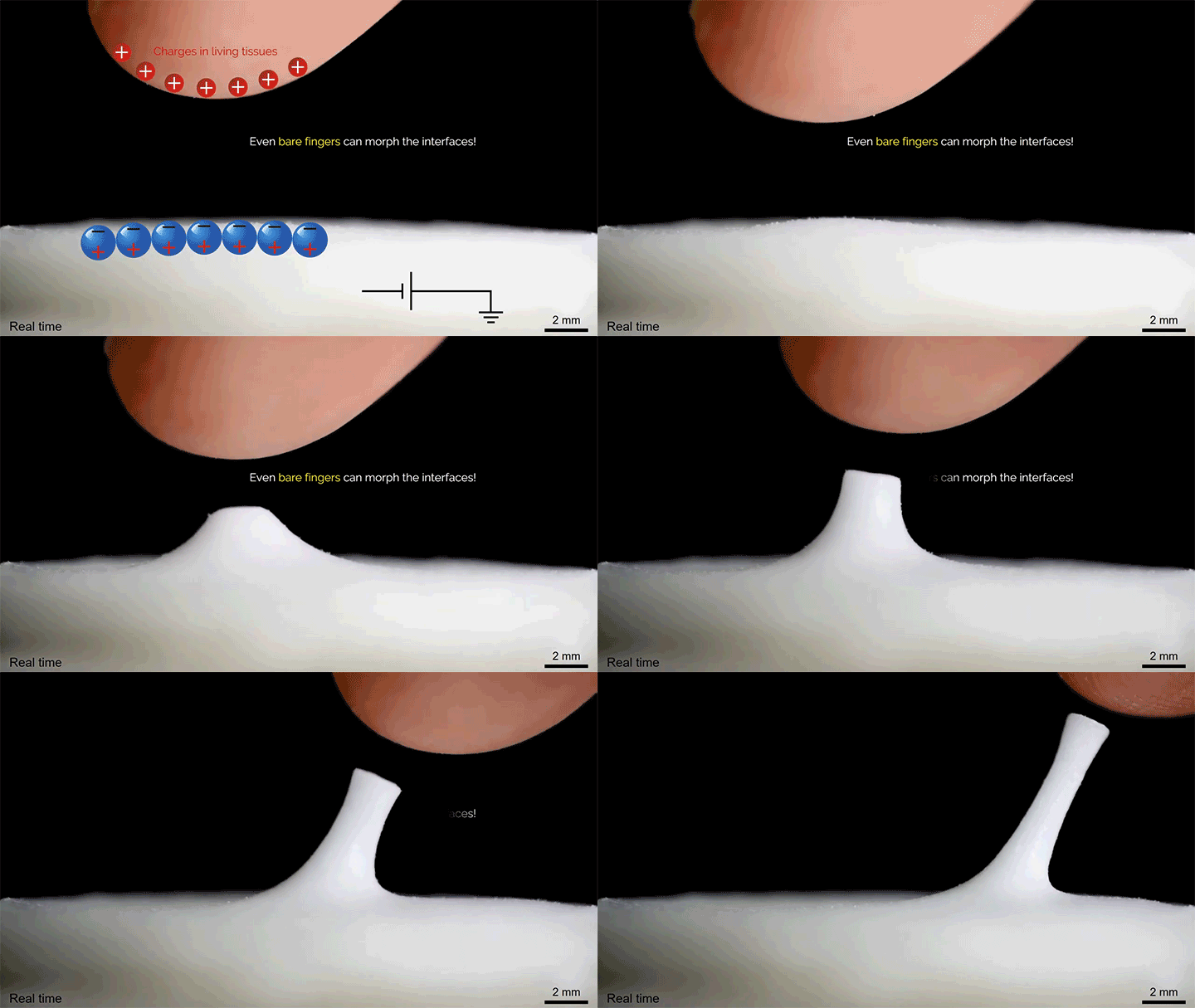
A layer of tiny glass beads sitting atop a pool of castor oil becomes a morphing surface in this video. Applying an electric field creates enough electrostatic force to draw the interface upward against the power of both gravity and surface tension. Moving the electric field — either by shifting the electrode or simply moving a finger over the surface — is enough to pull columns of fluid along! I could imagine this making some very cool human-machine interfaces one day. (Image and video credit: K. Sun et al.)

Inside a Super-Earth
When studying exoplanets, scientists often judge habitability by the possibility of liquid water on the planet’s surface. But there is more to Earth’s habitability than water. The liquid iron dynamo within our planet is critical for life here because it generates magnetic fields that protect the planet from harmful solar radiation. It’s been difficult to predict what the interiors of a bigger and more massive planet like a super-Earth would look like, but a recent study changes that.
Researchers at the National Ignition Facility used its high-powered lasers to subject liquid iron to conditions similar to those expected in a super-Earth’s core, including pressures as high as ~1000 GPa. That’s more than 3 times higher than pressures at the boundary where Earth’s liquid iron meets its solid core. Based on their findings, the team concluded that super-Earths likely have a similar interior structure to our planet, with a solid iron-heavy core surrounded by churning liquid iron capable of generating a protective magnetosphere. (Image credit: NASA; research credit: R. Kraus et al.; via Science)

Dripping With Particles
Adding just a little polymer to a fluid can make it viscoelastic and drastically change how it drips. A pure, viscoelastic fluid (left) necks down to a thin filament thanks to the polymers’ resistance to being stretched. But what happens when you add particles, too?
That’s the focus of this recent study, which adds particles of different sizes to dripping viscoelastic fluids. The researchers found that particles sped up how quickly the filament thinned and formed bead-like droplets. And larger particles (right) made the process even faster than small ones (middle), in experiments where the overall volume fraction of particles within the fluid matched. (Image and research credit: V. Thiévenaz and A. Sauret)

Martian Polar Troughs
Mars‘s northern pole is capped by a spiral-like pattern of deep troughs that are covered by carbon dioxide ice in winter but visible from orbit in summer. A new study posits that the spiral formed by wind erosion, exposing layer after layer of Martian geology.
The center of Mars’s polar cap is higher in the center than toward the edges, so katabatic winds — cold, dense flows beginning at high elevation — rush down from the pole. But because Mars spins, the Coriolis force causes those winds to flow in an anti-clockwise spiral. As those winds encounter depressions perpendicular to their path, they generate vortices that erode the depression. Eventually, a depression deepens, merges with other depressions, and forms a trough. According to this theory, the clockwise spiral of the troughs is a direct result of the katabatic winds flowing across them. Head over to Bad Astronomy or check out the original paper for more. (Image credit: ESA/DLR/FU Berlin/J. Cowart; research credit: J. Rodriguez et al.; via Bad Astronomy; submitted by Kam-Yung Soh)
Rainfall Beyond Earth
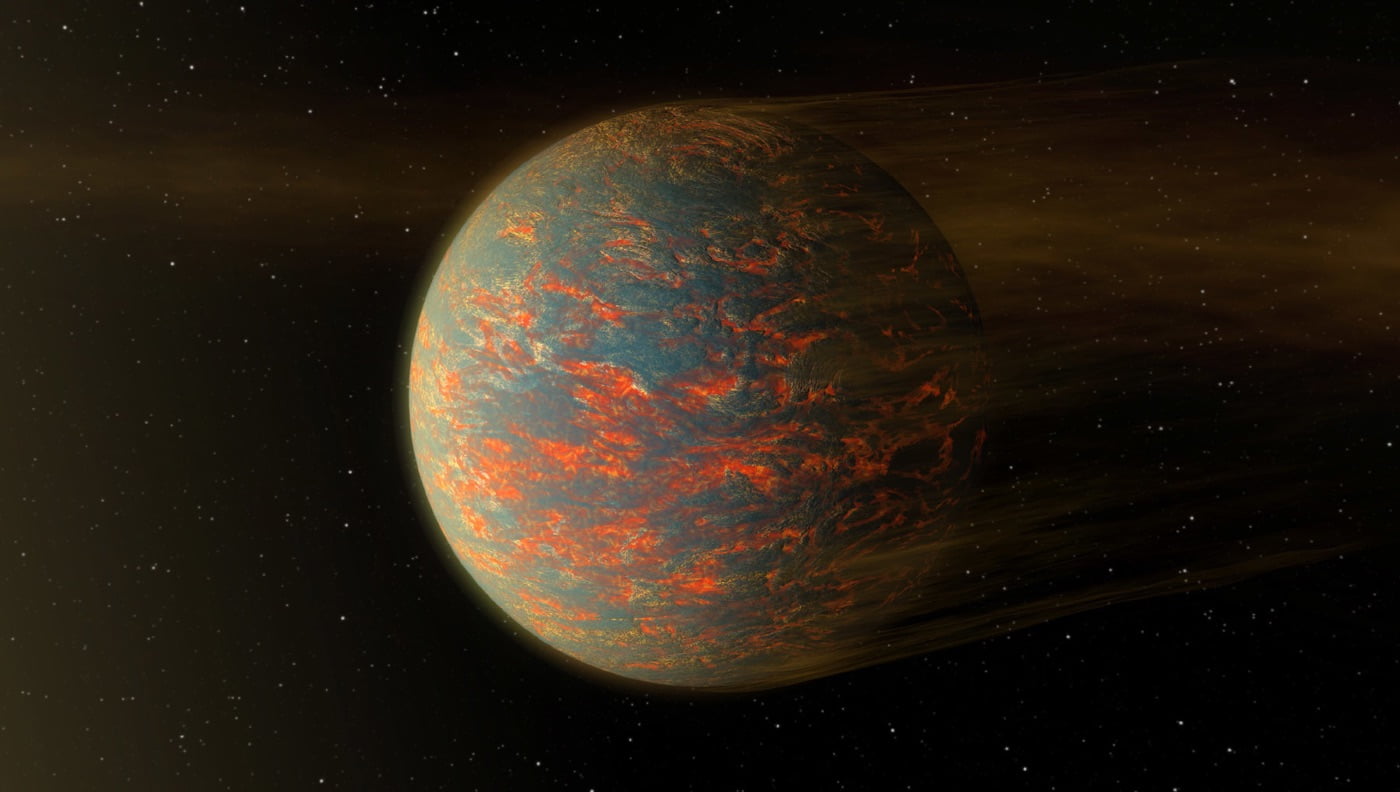
Rain is not unique to our planet: Titan has methane rain and exoplanet WASP 78b is home to iron rain (ouch). A new study examines rainfall across planets from the perspective of individual rain drops. The authors examine raindrop shape, terminal velocity, and evaporation rate as a function of droplet size for a wide range of known and speculated atmospheres.
They found that raindrops are surprisingly universal. Although planets with higher gravity tend to produce smaller raindrops, they found a remarkably narrow range for maximum drop size. That’s a pretty wild result, all things considered! The idea that iron, ammonia, methane, and countless other fluids falling through vastly different atmospheres all share very common characteristics is fascinating. (Image credit: NASA/JPL-Caltech/SwRI/MSSS/Brian Swift; research credit: K. Loftus and R. Wordsworth; via Science News; submitted by Kam-Yung Soh)