The scramjet–supersonic combustion ramjet–engine has been a holy grail of aerospace engineering for 50 years. It is an air-breathing engine with no moving parts capable of propelling crafts at hypersonic speeds beyond Mach 5. As indicated in the name, combustion in the scramjet occurs at supersonic speeds, where the heating due to air compression is sufficient to ignite fuel when injected into the engine. At present the record for the highest speed attained in scramjet flight is held by the NASA X-43A, which reached Mach 9.8 in 2004 after about 10 seconds of scramjet free-flight. The longest scramjet flight belongs to the Boeing X-51 Waverider with 140 seconds of burn time in a 2010 test flight. Few tests of these experimental hypersonic crafts have been completely successful; they represent the frontier of aerospace technology.
Search results for: “art”
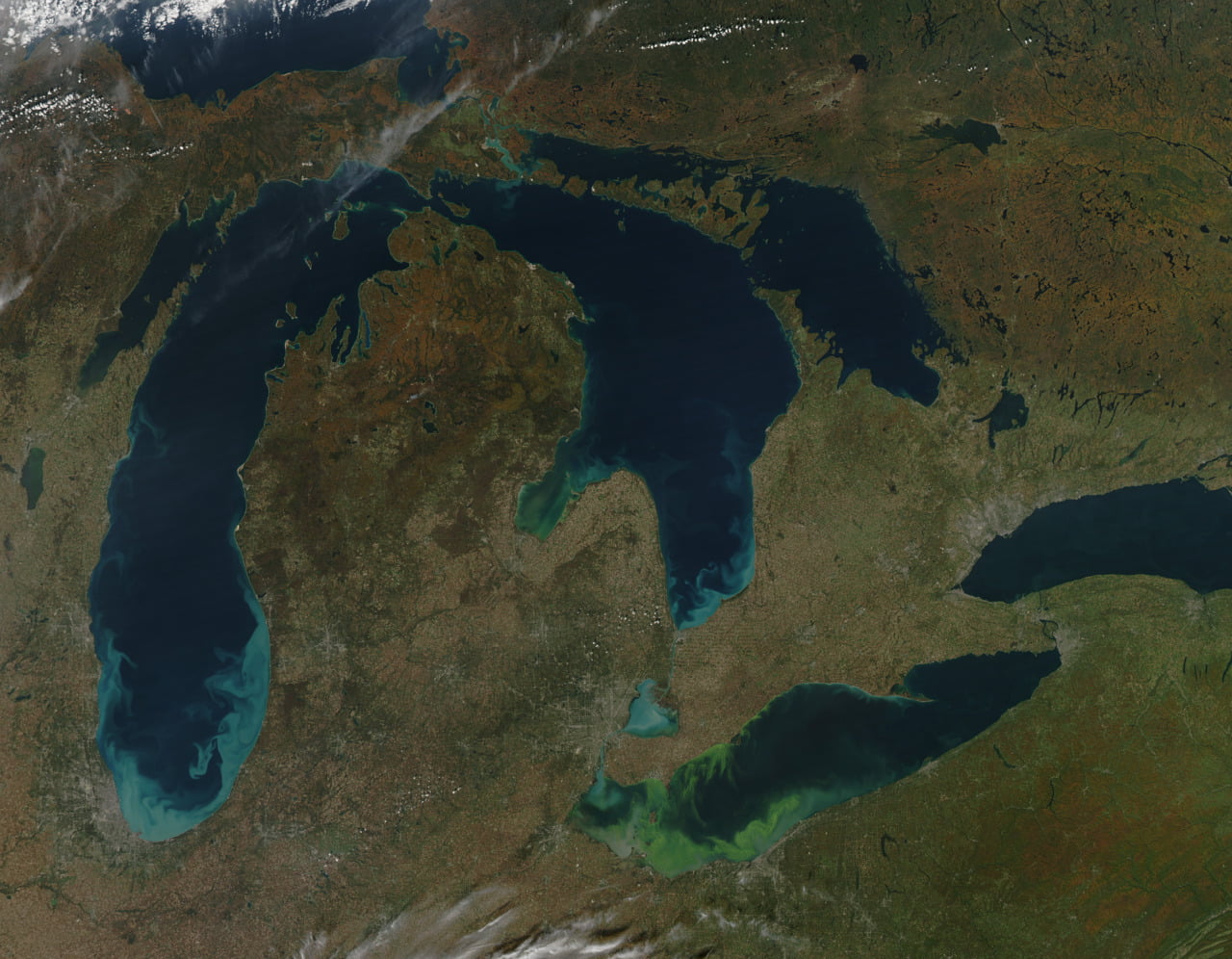
Stirred Up Sediment
Swirls of blue in the Great Lakes mark locations of recent autumn storms whose winds have stirred up sediment in the lakes. The silt and quartz sand acts as a tracer particle, making visible the circulation patterns of the lakes. In contrast, the green streaks mark locations of calmer winds and warmer temperatures where algae blooms have grown. Note the fundamental dissimilarity in their structures. Blue eddies turn over and mix in a fashion reminiscent of convective instabilities while the green blooms are far more uniform in structure. #

Coughing Contagions
Schlieren imaging has applications even in public health. This video demonstrates the spread of contagion via coughing with and without a mask on. Although air from the cougher’s lungs escapes the sides of the mask, it mostly rises on a thermal plume rather than projecting 1 to 2 meters forward in a turbulent jet as in the maskless case. Flu season is just starting. Don’t forget to get your flu shot!
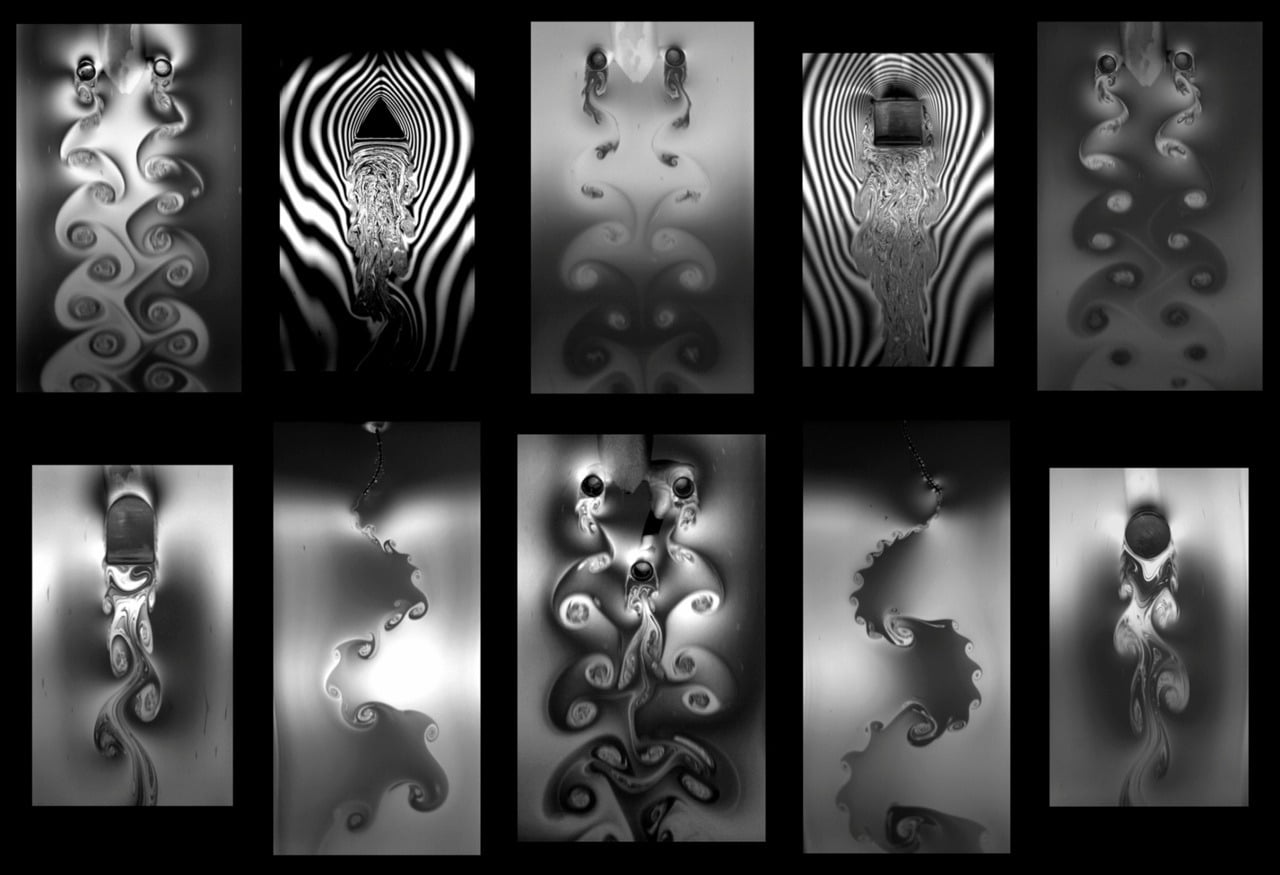
Soap Film Flow Viz
Flowing soap films provide an educational and beautiful method for visualizing the wakes of objects in two-dimensional flows. High-speed photography highlights the interference patterns on the soap film, providing detail without the necessity for the particulate tracking of other flow visualization methods. Highlights here include wakes behind bluff bodies, interacting cylinders, and flapping flags. (pdf) #
Aurora from the ISS
The solar wind, a rarefied stream of hot plasma ejected from the sun, constantly bombards Earth’s magnetic field. This results in the formation of the magnetosphere, which deflects most of these charged particles away from the earth. Some of them, however, are drawn toward the magnetic poles; when these charged particles strike the upper atmosphere, they cause the gases there to release photons, resulting in the lights we know as auroras. This animation shows the International Space Station flying through the aurora australis–the southern lights. The fluid-like motion of the aurora is no accident; though diffuse, the solar wind is still a fluid governed by magnetohydrodynamics.
Mixing in Space
Living here on earth, we are so accustomed to gravity’s effects on fluid behaviors that it’s not always obvious how microgravity will affect them. Here astronaut Richard Garriott demonstrates mixing and separating immiscible liquids in space.
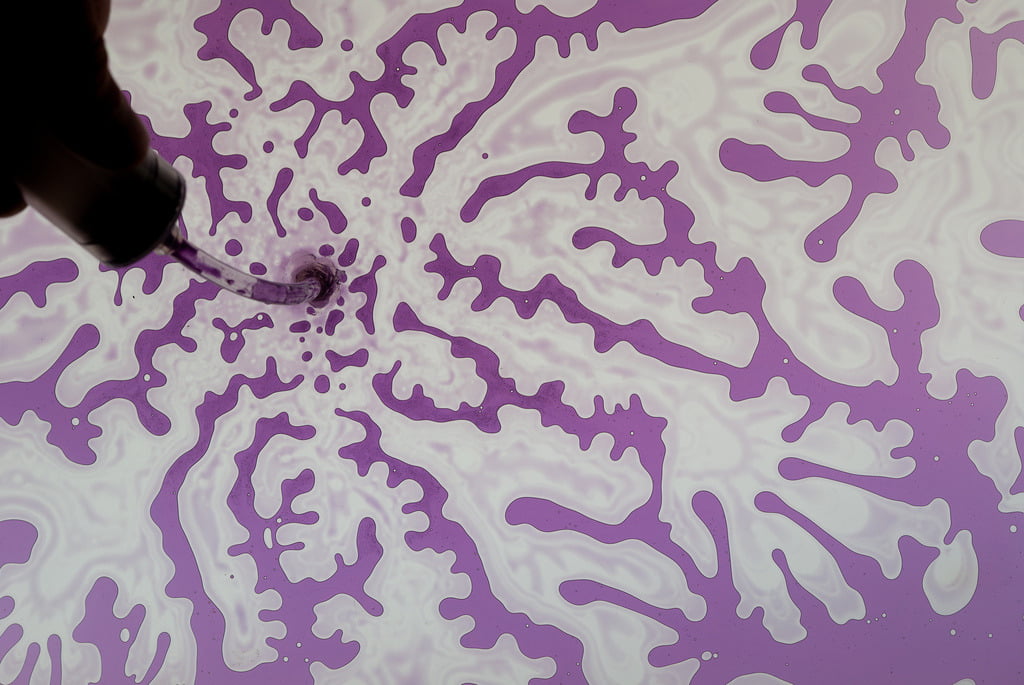
Flow Vis
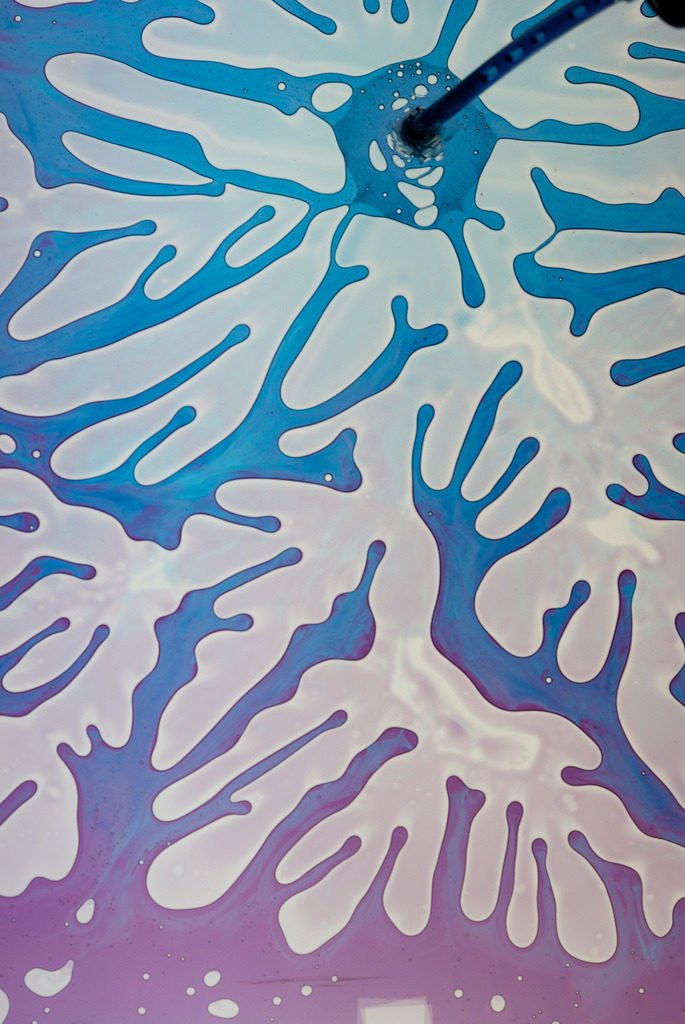
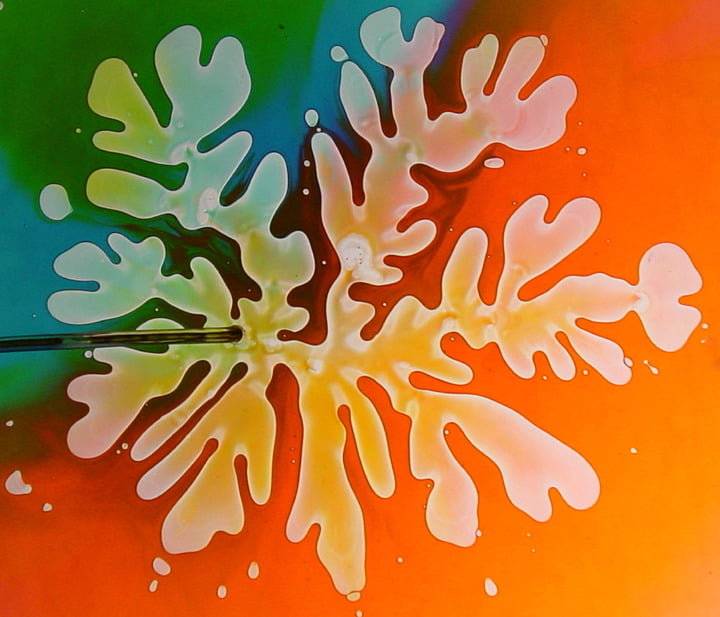

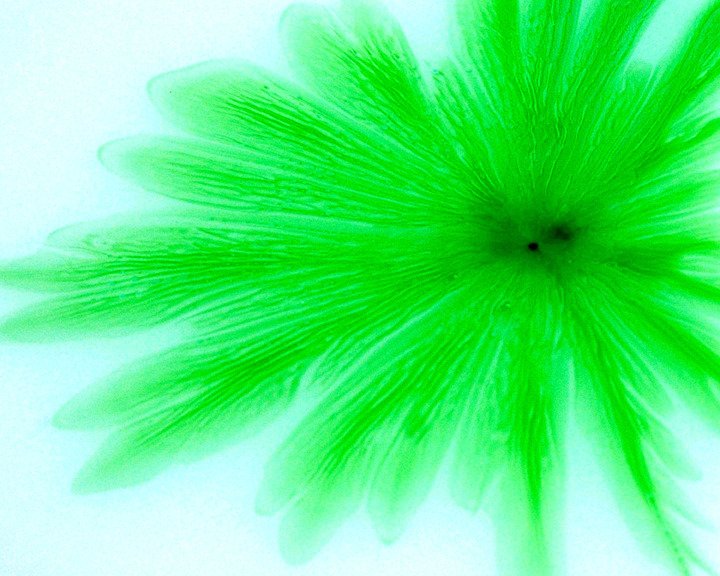
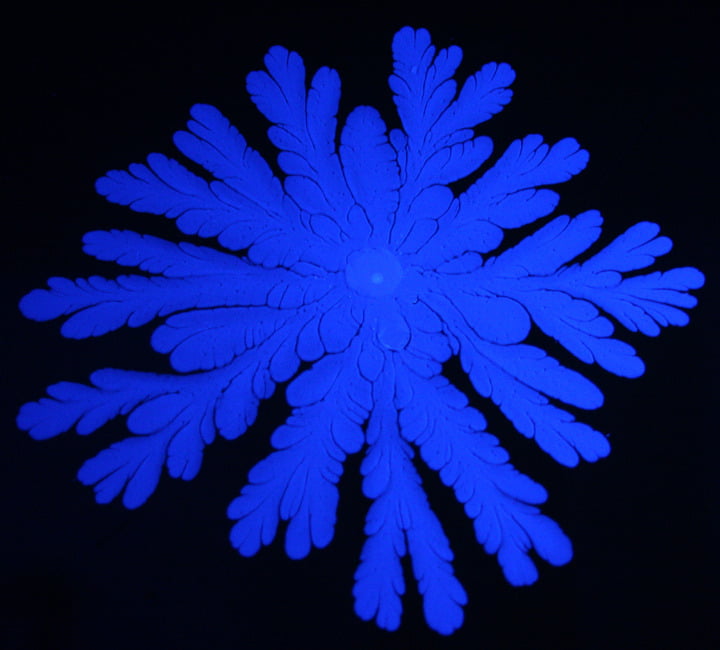
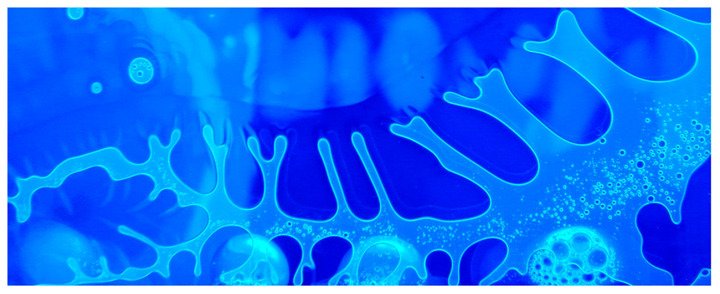
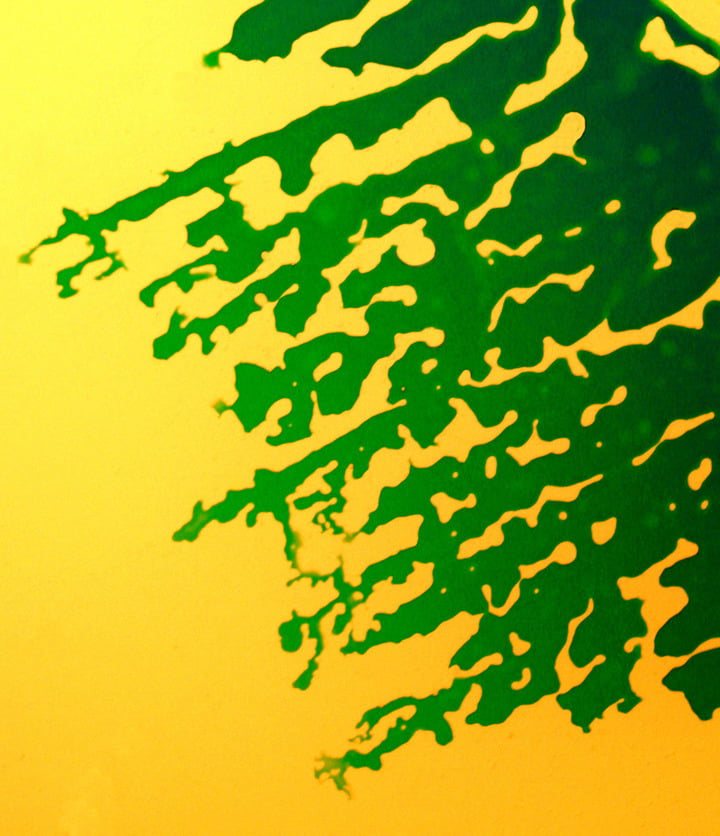
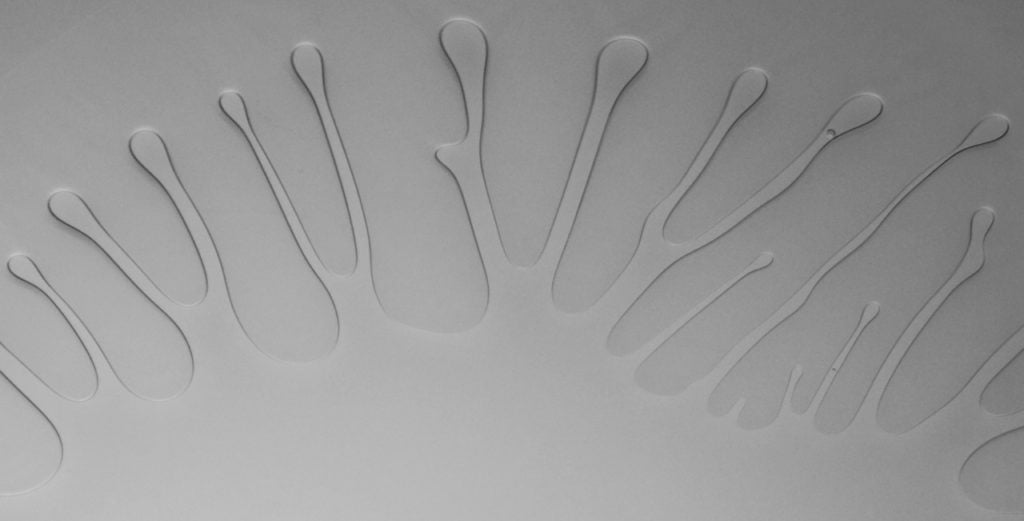
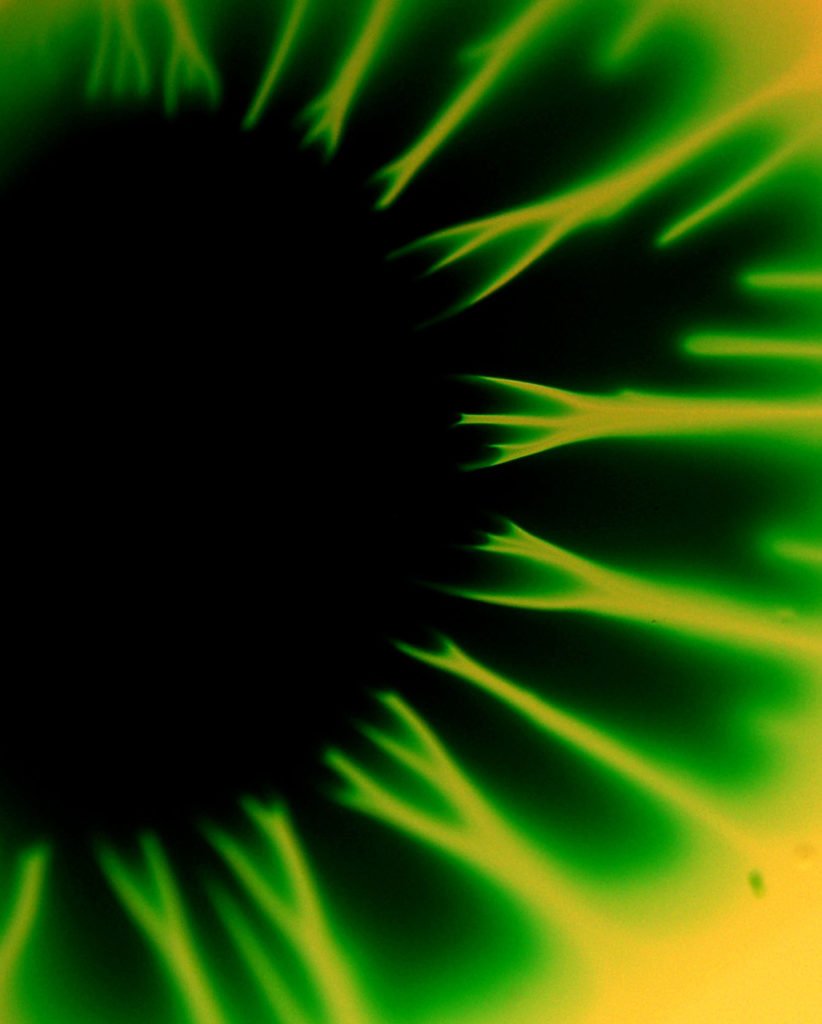
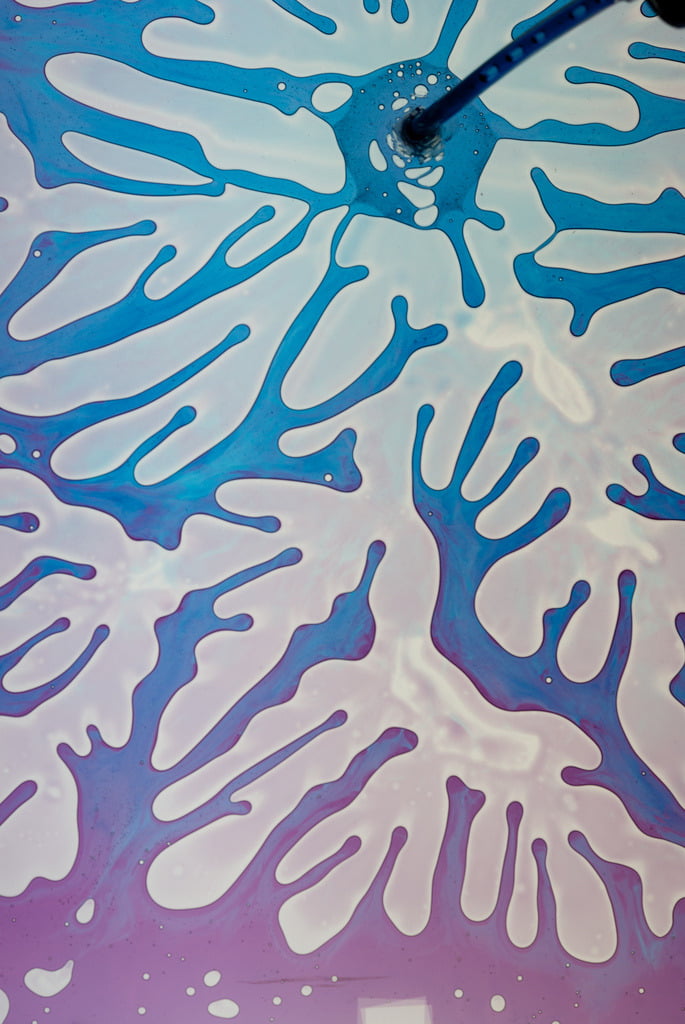
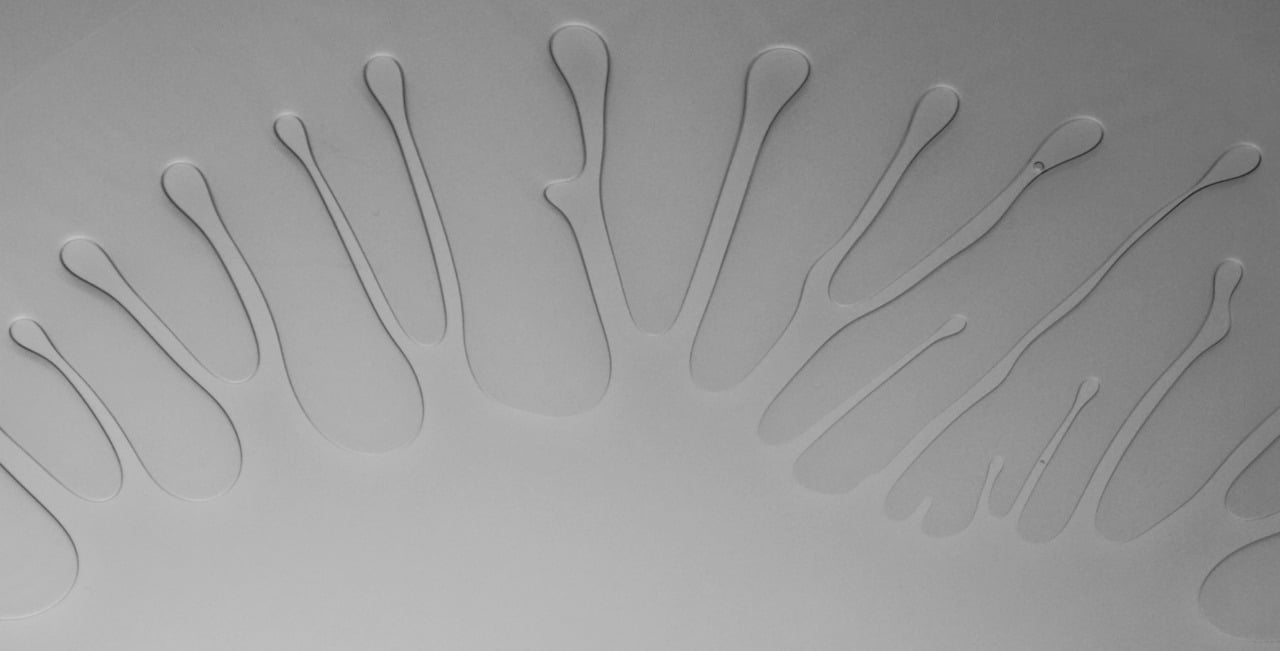
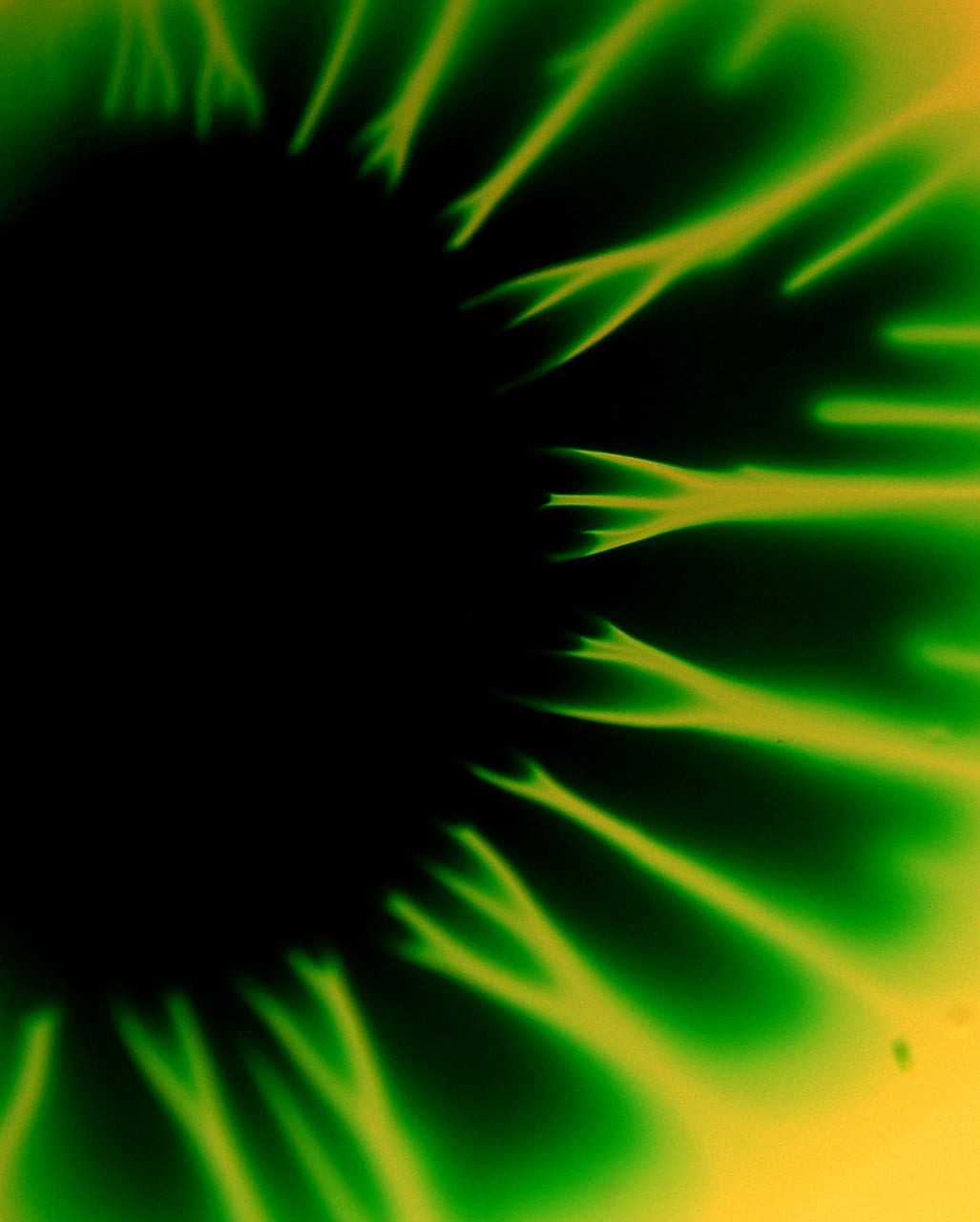
Place a viscous fluid in the gap between two plates of glass and you have created a Hele Shaw cell. If a less viscous fluid is then injected between the plates, a fascinating pattern of finger-like protrusions results. This is known as the Saffman-Taylor instability. Because of the relative simplicity of the set-up, it’s possible to create such experiments at home using common household fluids like glycerin, dish soap, dyed water, or laundry detergent. (Photo credits: Jessica Rosencranz, Jessica Todd, Laurel Swift et al, Andrea Fabri et al, Tanner Ladtkow et al, Mike Demmons et al, Trisha Harrison, Justin Cohee, and Erik Hansen)
Airfoil Boundary Layer
This video shows the turbulent boundary layer on a NACA 0010 airfoil at high angle of attack (15 degrees). Notice how substantial the variations are in the boundary layer over time. At one instant the boundary layer is thick and smoke-filled and in another we see freestream fluid (non-smoke) reaching nearly to the surface. This variability, known as intermittency, is characteristic of turbulent flows, and is part of what makes them difficult to model.

Impinging Without Coalescing

Three impinging jets of silicone oil rebound without coalescence due to thin-film lubrication between the jets. The motion of the oil replenishes the thin layer of air separating the streams. The same phenomenon keeps droplets from coalescing as well. (Photo credit: BIF Lab, Department of Engineering Science and Mechanics, Virginia Tech) #

Cloud Streets


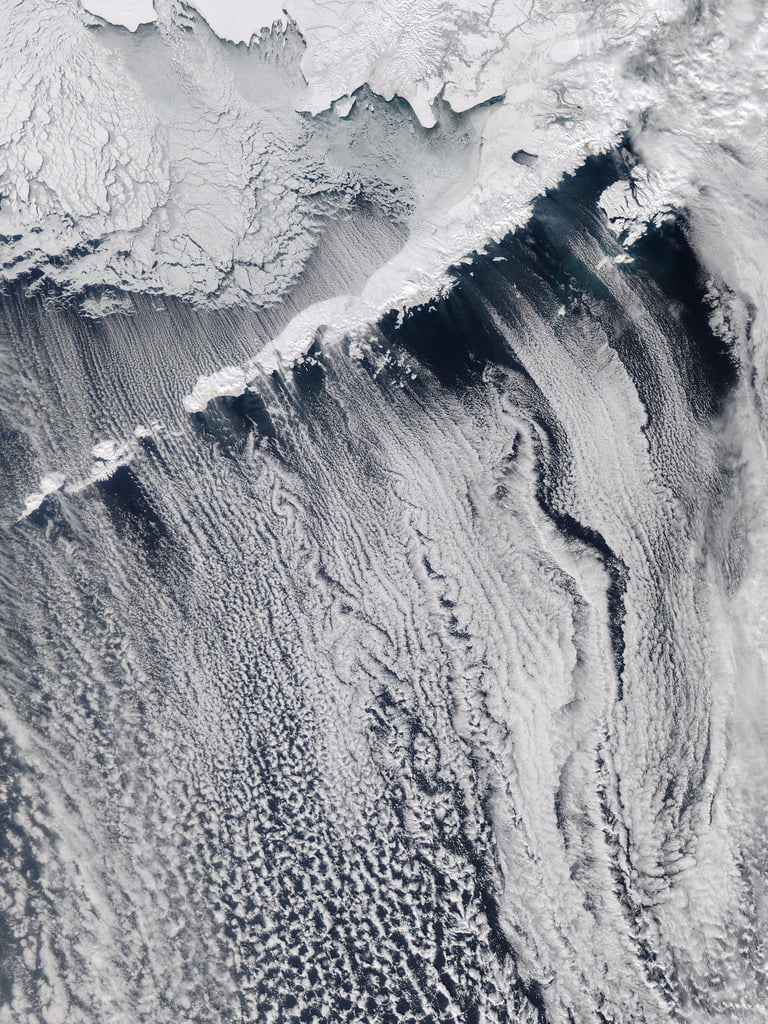
Cloud streets–long rows of counter-rotating air parallel to the ground in the planetary boundary layer–are thought to form as a result of cold air blowing over warm waters while caught beneath a warmer layer of air, a temperature inversion. As moisture evaporates from the warmer water, it creates thermal updrafts that rise through the atmosphere until they hit the temperature inversion. With nowhere to go, the warmer air tends to lose its heat to the surroundings and sink back down, creating a roll-like convective cell. (Photo credits: NASA Terra, NASA Aqua, and Tatiana Gerus)
