Category: Research

  • Studying Active Polymers Using Worms

    Studying Active Polymers Using Worms

    I’ve covered some odd studies in my time, but this might be the strangest: to understand how active polymers affect viscosity, researchers loaded drunk worms into a rheometer. Active polymers are long-chain molecules that, like worms, can move on their own using stored energy or by extracting energy from their surroundings. Their dynamics are tough to study, though, because individual polymers are almost impossible to observe while a suspension of them is being deformed.

    Enter the humble sludge worm. Often sold as fish food, these worms — like the polymers they’re meant to imitate — are individually quite wiggly but, given their size, are far easier to observe. Researchers placed them in a custom rheometer in a solution of water and observed how the worm mass responded when sheared by a spinning top plate (Image 3). Like active polymers, the worms exhibited shear-thinning; the faster the plate spun, the lower the worms’ viscosity, likely because the additional force helps align the worms.

    But how do active worms compare with passive ones? The obvious solution would be to repeat their tests with dead worms, but the researchers found a more humane method: by adding some alcohol to the water, they temporarily reduced the worms’ activity, allowing them to compare active and passive worms (Image 2). Once rinsed in water, the worms sobered up and returned to their normal activity levels.

    The researchers found that both the active and passive worms exhibited shear-thinning as the force on them increased, but the shear-thinning in the active worms was not as pronounced, presumably because the movements of individual worms prevented them from aligning smoothly. (Image and research credit: A. Deblais et al.; via Gizmodo and APS Physics)

  • Featured Video Play Icon

    Growing Metal Fingers

    Eutectic gallium-indium alloy is a room-temperature liquid metal with an extremely high surface tension. Normally, that high surface tension would keep it from spreading easily. But once the metal oxidizes, the surface tension drops. When that oxidation is combined with an electric field, the metal spreads into fingers. The higher the voltage, the more complex the fingering patterns. (Image and video credit: K. Hillaire et al.)

  • Capsule Impact and Bursting

    Capsule Impact and Bursting

    Nature and industry are full of elastic membranes filled with a fluid, from red blood cells to water balloons. A new study looks at how these capsules deform — and sometimes burst — on impact. The researchers created custom elastic shells that they filled with various fluids like water, glycerol, and honey, then used the impacts to build a model of capsule deformation.

    They found that there’s significant overlap between droplet impacts and capsule impacts, with a few key differences; instead of surface tension, capsules resist deformation through their elastic shell’s surface modulus — a combination of its elasticity and thickness. Capsules, unlike droplets, can also burst. To study this, the researchers used water balloons, which they were able to pre-stretch more easily than their custom shells. They found that their model could accurately predict the conditions under which the balloons burst.

    The authors hope the model will be helpful both in designing capsules intended to burst — like a fire-fighting projectile — and in creating safety measures to prevent capsule burst — like car-crash standards that protect from organ damage. (Image and research credit: E. Jambon-Puillet et al.; via Physics World; submitted by Kam-Yung Soh)

  • Unifying Sediment Transport Theory

    Unifying Sediment Transport Theory

    On windy days, streaks of snowflakes snake in the air above a mountaintop snowfield. And when snorkeling in the surf, you can watch the inbound waves sculpt underwater ripples in the sand. Both are examples of sediment transport, and scientists have struggled to understand why the physics of these grains seems to differ between air and water. We observe certain behaviors, like saltation, in air and very different behaviors for grains underwater.

    One of the key differences is how much erosion occurs for a given amount of shear. In air, the relationship is linear; double the shear stress and you double the sediment transport rate. But in water, the relationship is nonlinear, meaning a small change in the shear stress can have a much larger effect on the rate of transport.

    A new study suggests that these differences are really only skin deep. Through detailed simulations, the researchers showed that what really matters is the energy dissipation caused by collisions between grains. Whether the medium is air or water, there are two important regions in the flow: the bed region where particles experience little movement, and the overlying region where grains are energized and lifted by the flow. In this framework, the researchers found no difference in how energy is dissipated, regardless of the medium.

    So why do measured sediment transport rates vary between air and water? The authors concluded that the relationship between shear and transport rate is, indeed, nonlinear. It’s just that the wind here on Earth is too weak to reach that nonlinearity. (Image credit: snow – wisconsinpictures, sand – J. Chavez; research credit: T. Pähtz and O. Durán; via APS Physics; submitted by Kam-Yung Soh)

  • Sliding Foams

    Sliding Foams

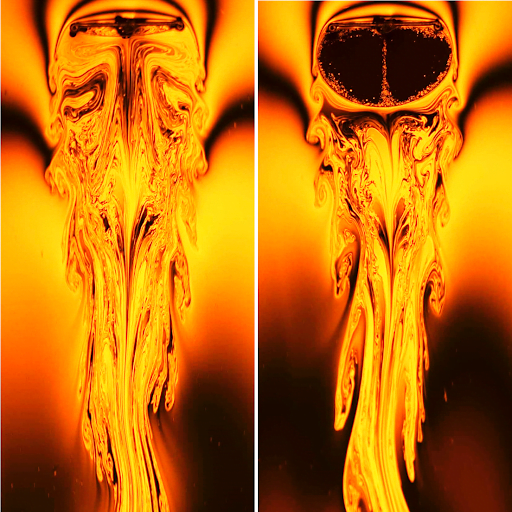
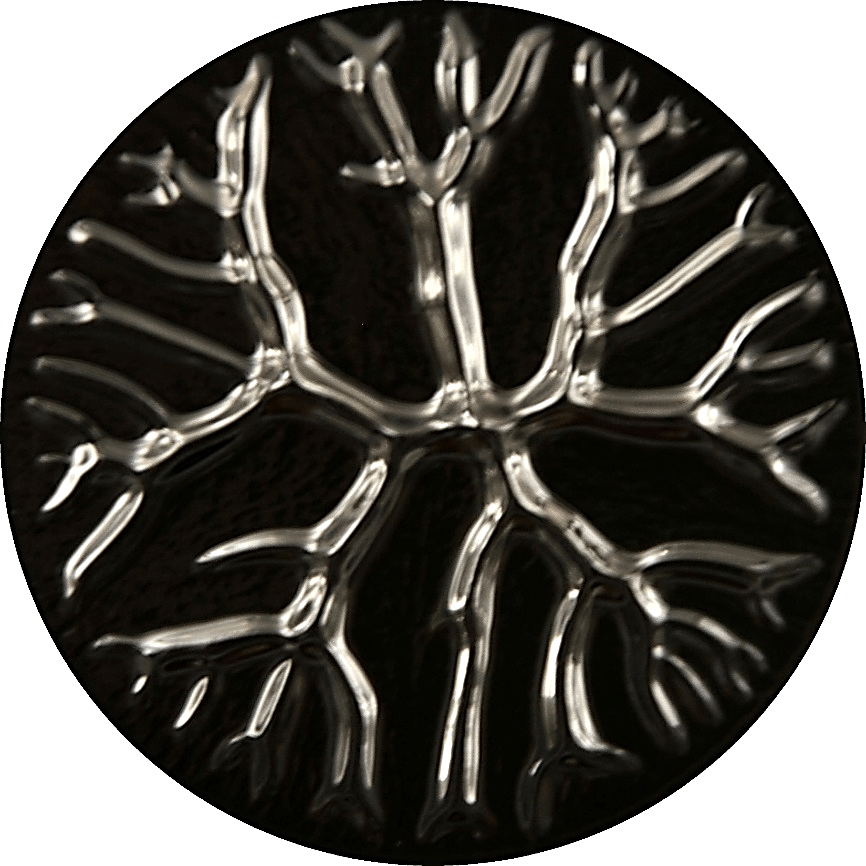
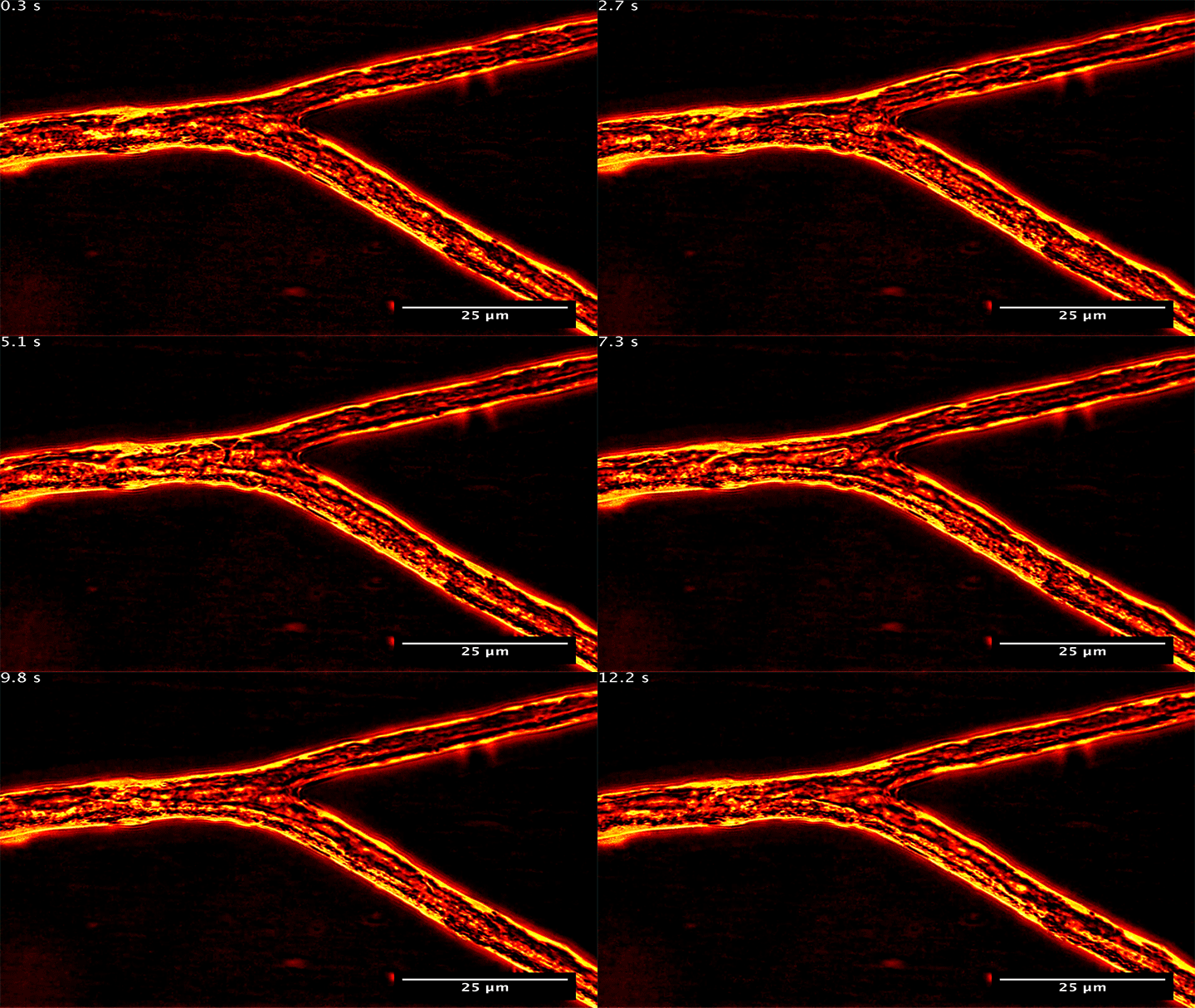
    What happens when a foam interacts with a sliding surface? That’s the question at the heart of this study, which finds three major regimes of foam-surface interaction. On smooth surfaces (Image 1), foams will simply slide against the wall without sticking or deforming. When surface roughness is about as large as the foam’s wall thickness (Image 2), the foam will stick to individual asperities, then slip to the next rough spot as the wall moves. But when the surface roughness is large compared to the foam wall (Image 3), the foam will remain anchored to the surface and all the shear from the wall’s movement goes into deforming the bulk of the foam.

    Researchers thus found they could change foam’s behavior by changing the surface roughness. They also looked at the reverse situation: a surface with fixed roughness — like, say, a human tongue — and how tuning the size of foam bubbles might alter perception and ease of swallowing. That’s what we’re looking at in the last image, where a spoon slides a foam along a surface with roughness similar to the human tongue. (Image and research credit: M. Marchand et al.)

  • Bristling Sharkskin Fights Separation

    Bristling Sharkskin Fights Separation

    The speedy shortfin mako shark has a secret weapon to fight drag: bristling denticles that line its fins and tail. Denticles are tiny, anvil-shaped enamel scales on the mako’s skin. In the photo above, each one is about 100 microns across. Under normal conditions, with flow moving over the shark from nose to tail, the denticles lie flat, providing no interference.

    But when sudden changes in flow near the shark’s skin cause water to begin moving in the opposite direction, the denticles flare up. Their rise interferes with the reversed flow, trapping it in small eddies beneath each denticle. Since that flow reversal is a precursor to the flow separating from the shark’s body, the bristling effectively cuts off flow separation before it can begin. The result is much less separation and much lower drag. Once the flow stops trying to move upstream, the denticles settle back into their original place. (Image credit: mako shark – jidanchaomian, denticles – J. Oeffner and G. Lauder, illustration – A. Lang, bristling – A. Lang et al.; research credit: A. Lang and A. Lang et al.; submitted by Kam-Yung Soh)

  • Steering as a Boxfish

    Steering as a Boxfish

    Coral reefs are full of odd-looking denizens, but one of the funniest-looking ones must be the boxfish. This family of fish lives up to its name; their bodies feature an angular, bony carapace that helps protect them. But you don’t have to be a fluid dynamicist to wonder how in the world they swim with that kind of shape.

    There’s actually disagreement in scientific circles as to whether the basic shape of a boxfish is stabilizing or destabilizing, in other words, whether the fish’s body shape will try to automatically turn or roll when flow moves past. A new study focuses instead on the role the fish’s tail fin serves. Through experiments (on a fish model) and simulations, the researchers showed that boxfish rely on their tail fins both as rudders and course-stabilizers.

    Living around coral reefs means that boxfish need to be highly maneuverable, and this research indicates that the fish’s body shape, combined with the stabilizing power of its tail, are key to its ability to quickly and easily turn in any direction. (Image credits: boxfish – D. Seddon, simulation – P. Boute et al.; research credit: P. Boute et al.; via NYTimes; submitted by Kam-Yung Soh)

  • Featured Video Play Icon

    Mixing Leidenfrost Drops

    When placed on a very hot, patterned surface, droplets will self-propel on a layer of their own vapor. Here, researchers use this to drive droplets to coalesce so that they can observe how well they mix. After their head-on collision, the merged droplets have two major forces fighting in them: surface tension, which tries to minimize the overall surface area; and gravity, which tries to flatten the large droplet. Together, these forces drive the large oscillations we see in the merged drop, and those oscillations help mix the liquid from the two original drops together. (Image, video, and research credit: Y. Chiu and C. Sun)

  • Breaking Up Granular Rafts

    Breaking Up Granular Rafts

    Particles at a fluid interface will often gather into a collection known as a granular raft. The geometry of the interface where it meets individual particles, combined with the surface tension, creates the capillary forces that attract these particles to one another. Colloquially, this is called the Cheerio’s effect; it’s the same physics that draws those cereal chunks together in your bowl.

    Once together, these granular rafts can be surprisingly difficult to break up. That’s the focus of a new study on erosion in granular rafts. As seen in the top image, the raft has to be moving quite quickly before individual beads get pulled away. The experimental set-up here is pretty neat, and it’s not apparent from the video, so I’ll take a moment to explain it. The particles you see are gathered at an interface between water and oil. To generate the movement we see, researchers take the metal cylinder seen at the left of the image and pull it downward. That curves the oil-water interface, effectively creating a hill for the raft to accelerate down.

    To focus in on the forces necessary to separate individual particles, the researchers also looked at a pair of particles (bottom image). With this set-up, they could more easily track the geometry of the contact line where the oil, water, and bead meet. What they found is that the attractive forces generated between the beads are two orders of magnitude larger than predicted by classical theory. To correctly capture the effect, they needed a far more precise description of the contact line geometry around a sphere than is typically used. (Image and research credit: A. Lagarde and S. Protière)

  • Featured Video Play Icon

    Shock Waves Drive Nova Brightening

    New observations of nova V906 Carinae have provided some of the first direct evidence that the observed brightening of these stellar objects is driven by shock waves. Novae form when hydrogen from a companion star settles onto a white dwarf. Once enough material accumulates, the white dwarf blows out the excess hydrogen in a donut-shaped shell moving about the speed of a typical solar wind.

    Next, another outflow — likely triggered by residual nuclear reactions on the dwarf’s surface — slams into the denser shell at about twice the speed. This collision triggers shock waves that emit light in the gamma and visible wavelengths. Weeks later, a third, even faster outflow expanded into the cloud, generating more shock waves and measurable flares. (Video credit: NASA Goddard; research credit: E. Aydi et al.)