Category: Research

  • Jumping Frost

    Jumping Frost

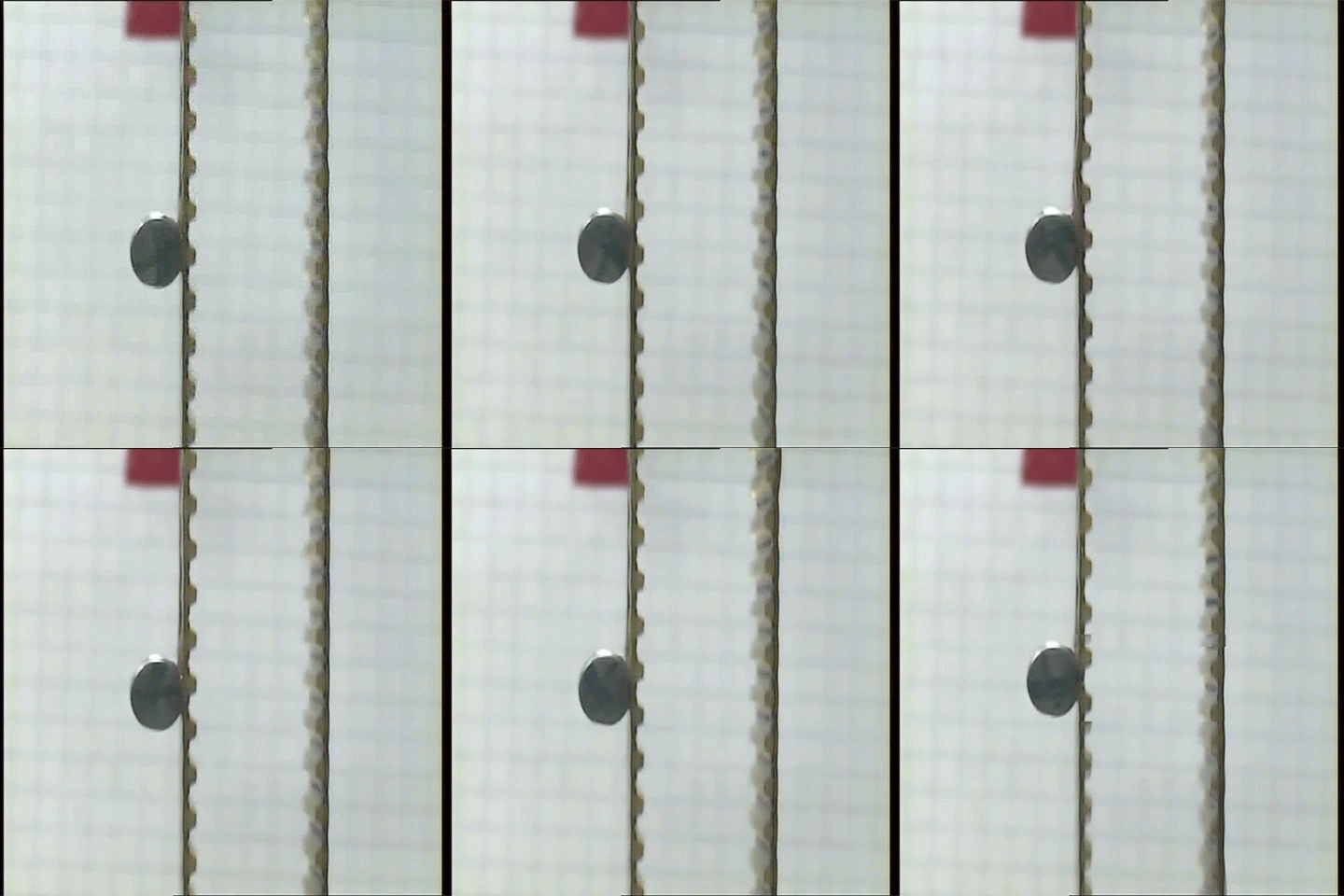
    Liquid water is easily electrically charged, due to its polar nature. That’s why rubbing a comb is enough to deflect a stream of water. Ice is harder to charge, but it can happen, especially when there are temperature gradients across the ice.

    That’s the key behind this study of jumping frost. When ice crystals grow on a surface much colder than their surroundings, positive charges gather in the colder region, leaving the dendritic branches of the ice negatively charged. When researchers brought liquid water near the charged ice crystals, the water became charged, too. Positive charges in the water attracted the negatively-charged dendrites, causing the ice crystals to jump off the surface.

    Studies like this help us better understand cloud and rain formation and may one day lead to new ways of de-icing surfaces. (Image credit: frost – Miriams-Fotos, figure – R. Mukherjee et al.; research credit: R. Mukherjee et al.; via ChemBites; submitted by Kam-Yung Soh)

    Figure showing snapshots of dendritic ice as it jumps off a surface due to electrostatic charge.
  • Freezing Splats

    Freezing Splats

    In fluid physics, there’s often a tug of war between different effects. For droplets falling onto a surface colder than their freezing point, the hydrodynamics of impact, sudden heat transfer, and solidification processes all compete to determine how quickly and in what form droplets freeze.

    The images above form a series based on changing the height from which the droplet falls. Each image is divided into two synchronized parts. On the left, we see a visible light, top-down view of the freezing droplet; on the right, we see an infrared view of freezing. As the height of impact increases, the shape of the frozen drop becomes more elaborate, moving from a flat splat with a small conical tip all the way to one with a concentric double-ring in its center. (Image and research credit: M. Hu et al.)

  • Chaotic Mixing in Porous Media

    Chaotic Mixing in Porous Media

    One of the peculiar characteristics of viscous, laminar flows is that they are reversible. Squirt dye into glycerin, stir it one way, then the opposite direction, and the dye returns to its initial position. But this neat trick only works in simple geometries; in a more complex environment, like the pores between packed gravel, flows cannot make their way back to their initial state.

    That’s the idea at the heart of this new study of mixing in porous media. Researchers took a bed of packed beads and pushed a slow, steady flow of dye into the bed. Then they steadily withdrew fluid to reverse the flow and observed how the dye they’d injected appeared at the surface of the bed (top image). If the flow were perfectly reversible, we’d expect the dye to return to its injection point. But instead the dye is spread chaotically across the surface, giving researchers a snapshot of the chaotic mixing taking place between beads. (Image and research credit: J. Heyman et al.; via APS Physics)

  • The Sounds of Leidenfrost Stars

    The Sounds of Leidenfrost Stars

    On a hot surface, droplets can float on a layer of their own vapor and vibrate in star-like shapes. These so-called Leidenfrost stars also make noise, with distinct beats that match the oscillations of the vapor layer beneath them. Researchers found that the frequency of the sound shifts with droplet size, increasing as the drop size decreases. Physically, the droplets act much like a wind instrument! (Image and research credit: T. Singla and M. Rivera; via APS Physics)

  • Acidic Sea Spray

    Acidic Sea Spray

    As waves crash and break, they generate a spray of droplets — known as aerosols — that make their way into the atmosphere. Researchers investigated the chemistry of these aerosol droplets by generating spray in a wave tank filled with ocean water. They found that aerosol droplets are far more acidic than the ocean they come from, and the smaller the droplet, the more acidic it is. This acidification happens in a matter of minutes, as acidic gases interact with the spray. Their findings will be critical for accurately modeling the climate connections between our oceans and atmosphere. (Image credit: Elle; research credit: K. Angle et al.; via OceanBites; submitted by Kam-Yung Soh)

  • Spiderwebs and Stratocumulus Clouds

    Spiderwebs and Stratocumulus Clouds

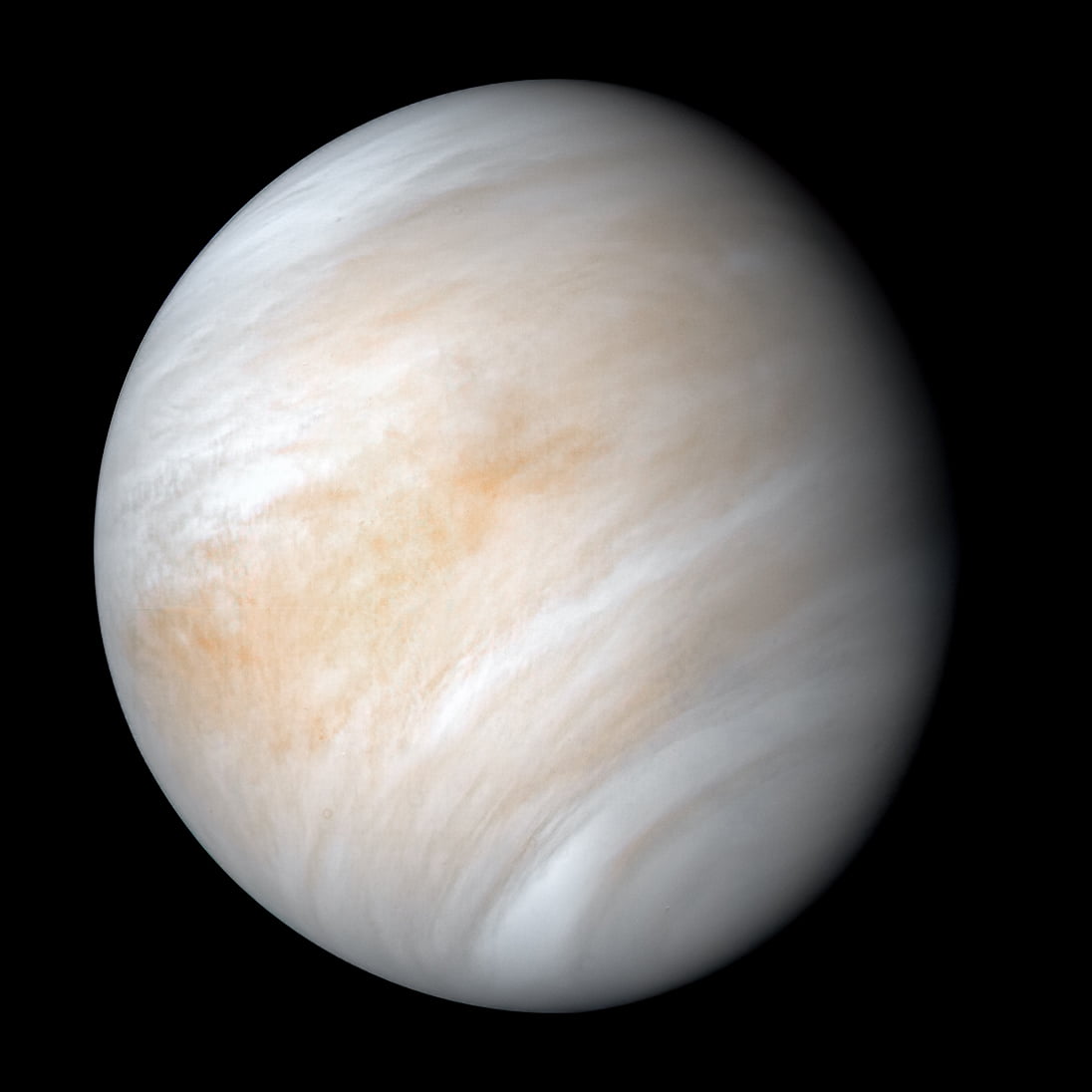
    Stratocumulus clouds cover about 20% of Earth’s surface at any given time, and they form distinctive patterns of lumpy cells separated by thin slits. Because of their interconnectedness, researchers nicknamed these narrow regions spiderwebs. New simulations show that evaporative cooling along the cloud tops drives the formation of these spiderwebs (Image 2). Without it (Image 3), the cloud pattern looks very different. (Image credits: featured image – L. Dauphin/MODIS, others – UConn ME 3250; research credit: G. Matheou et al.)

  • The Fluidity of Worm Blobs

    The Fluidity of Worm Blobs

    The aquatic blackworm forms blobs composed of thousands of individual worms for protection against evaporation, light, and heat. The worms braid themselves together (Image 1). Once a blob forms, it is extremely viscoelastic, displaying properties both solid and fluid in nature (Image 2).

    The worm blobs act like a collective; they bunch up to prevent evaporation that would desiccate the worms. Under intense light, the blob contracts (Image 3). The worms also prefer colder temperatures (again, to prevent evaporation) and will move toward the colder side of a temperature gradient. Under dim light, they’ll move individually, but in brighter light, the worms move collectively as a blob (Image 4).

    To do so, worms on the colder side of the blob pull toward the cold, whereas worms elsewhere in the blob wiggle (Image 5). Their wiggling helps lift the blob and reduce its friction so that the pulling worms can move the blob in the right direction. For more, check out this excellent thread by one of the authors. (Image and research credit: Y. Ozkan-Aydin et al.; via S. Bhamla; submitted by Maximilian S.)

  • Jellyfish Make Their Own Walls

    Jellyfish Make Their Own Walls

    When we walk, the ground’s resistance helps propel us. Similarly, flying or swimming near a surface is easier due to ground effect. Most of the time swimmers don’t get that extra help, but a new study shows that jellyfish create their own walls to get that boost.

    Of course, these walls aren’t literal, but fluid dynamically speaking, they are equivalent. Over the course of its stroke, the jellyfish creates two vortices, each with opposite rotation. One of these, the stopping vortex, lingers beneath the jellyfish until the next stroke’s starting vortex collides with it. When two vortices of equal strength and opposite rotation meet, the flow between them stagnates — it comes to halt — just as if a wall were there.

    In fact, mathematically, this is how scientists represent a wall: as the stagnation line between a real vortex and a virtual one of equal strength and opposite rotation. It just turns out that jellyfish use the same trick to make virtual walls they can push off! (Image and research credit: B. Gemmell et al.; via NYTimes; submitted by Kam-Yung Soh)

  • Why Food Sticks to Nonstick Pans

    Why Food Sticks to Nonstick Pans

    Whether you’re cooking with ceramic, Teflon, or a well-seasoned cast iron pan, it seems like food always wants to stick. It’s not your imagination: it’s fluid dynamics.

    As the thin layer of oil in your pan heats up, it doesn’t heat evenly. The oil will be hotter near the center of the burner, which lowers the surface tension of the oil there. The relatively higher surface tension toward the outside of the pan then pulls the oil away from the hotter center, creating a hot dry spot where food can stick.

    To avoid this fate, the authors recommend a thicker layer of oil, keeping the burner heat moderate, using a thicker bottomed pan (to better distribute heat), and stirring regularly. (Image and research credit: A. Fedorchenko and J. Hruby)

  • When Honey Flows Faster Than Water

    When Honey Flows Faster Than Water

    With its high viscosity, no one would ever pick honey to beat water in a race. But a new study shows there’s at least one circumstance where honey wins: inside a narrow, superhydrophobic tube with one or both ends closed. Inside these specially coated tubes a narrow cushion of air stays between the drop and the wall, reducing friction and increasing flow speed for both fluids.

    But when one or both ends of the tube are blocked, the drops can only move when air squeezes past. In less viscous fluids, like water, the researchers found rapid internal flows inside the drop. These flows pressed the surface of the drop outward, reducing the air cushion and making it harder for air to squeeze past so that the drop could flow. In contrast, honey showed very little internal flow and so was able to flow through the tubes ten times faster than water! (Image and research credit: M. Vuckovac et al.; via Physics World; submitted by Kam-Yung Soh)