Liquids flowing down a fiber can form bead-like droplets that may sit symmetrically (a) or asymmetrically (b) on the fiber. In general, the asymmetric droplets appear as surface tension increases or as the fiber diameter increases. The pattern of the droplets changes with flow rate. Within each subfigure, the flow rate increases from left to right. At low flow rates, we see only one or two large droplets migrating down the fiber. At moderate flow rates, a regular pattern of drops emerges. And at high flow rates, droplets coalesce on the fiber to form drops large enough that they fall and sweep up the downstream droplets. (Image and research credit: C. Gabbard and J. Bostwick)
Category: Research

Rainfall Beyond Earth
Rain is not unique to our planet: Titan has methane rain and exoplanet WASP 78b is home to iron rain (ouch). A new study examines rainfall across planets from the perspective of individual rain drops. The authors examine raindrop shape, terminal velocity, and evaporation rate as a function of droplet size for a wide range of known and speculated atmospheres.
They found that raindrops are surprisingly universal. Although planets with higher gravity tend to produce smaller raindrops, they found a remarkably narrow range for maximum drop size. That’s a pretty wild result, all things considered! The idea that iron, ammonia, methane, and countless other fluids falling through vastly different atmospheres all share very common characteristics is fascinating. (Image credit: NASA/JPL-Caltech/SwRI/MSSS/Brian Swift; research credit: K. Loftus and R. Wordsworth; via Science News; submitted by Kam-Yung Soh)

The Two-Faced Splash
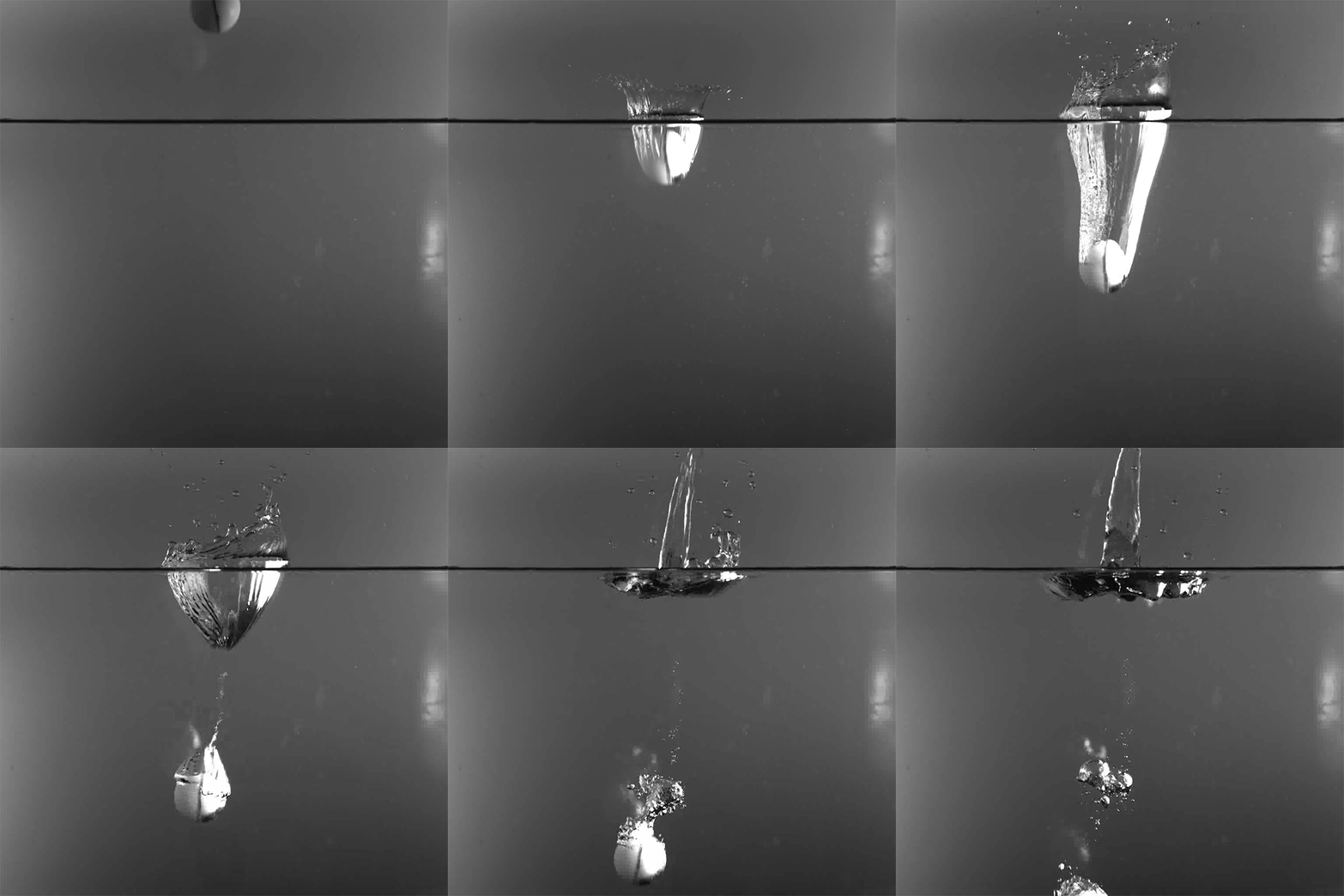
The way a sphere enters water depends on its size, speed, and surface properties. A hydrophilic (water-attracting) sphere behaves differently than a hydrophobic (water-repelling) one. But what happens when the object’s surface properties aren’t uniform?
That’s the situation we see above. The dark line marks the two hemispheres of the sphere and their differing surface properties. To the left, the sphere is hydrophilic; to the right, it is hydrophobic. When the sphere hits the water, both the splash and underwater cavity quickly become asymmetric. On the hydrophobic side, the cavity wall is smooth, but the cavity is rough on the hydrophilic side. In the end, the asymmetries create a horizontal force that pushes the sphere sideways. (Image and research credit: D. Watson et al.)

Collective Motion in Grains


Flocks of birds and schools of fish swarm in complicated collective motions, but groups of non-living components can move collectively, too. In this Lutetium Project video, we learn about grains that, when vibrated, self-propel and form complex collective motions similar to those seen in groups of living organisms.
A key feature of the grains is their lack of symmetry. To be self-propelling, they must have a well-defined orientation, defined by a different front and back. The grains also have the freedom to move in a direction that is not the same as the direction they’re oriented in. This allows the grains to rotate, which enables them to perform the large-scale motions seen in the experiments. (Video and image credit: The Lutetium Project; research credit: G. Briand et al.)

Snapping When Swollen
The Venus flytrap snaps shut on its hapless prey by swelling cells in its leaves with water. Under the added pressure of a fly’s footstep, the leaves’ snapping instability triggers, trapping the insect. Researchers are using similar physics to create jumping and snapping polymer gels, like the one seen below.

To trigger the behavior, researchers soaked their polymer-based gel strips and shells in a solvent of n-hexane, which easily permeated the material and made it swell up. As the solvent evaporates from the swollen gel, the polymer material changes shape, sometimes in smooth bends and sometimes in abrupt snaps. The group was able to harness those snaps to have their materials descend slopes and climb ladders — all without motors, batteries, or external sources of energy. (Image credit: plant – A. Dénes, shell – Y. Kim et al.; research credit: Y. Kim et al.; via Physics World)

Predicting Meteotsunamis
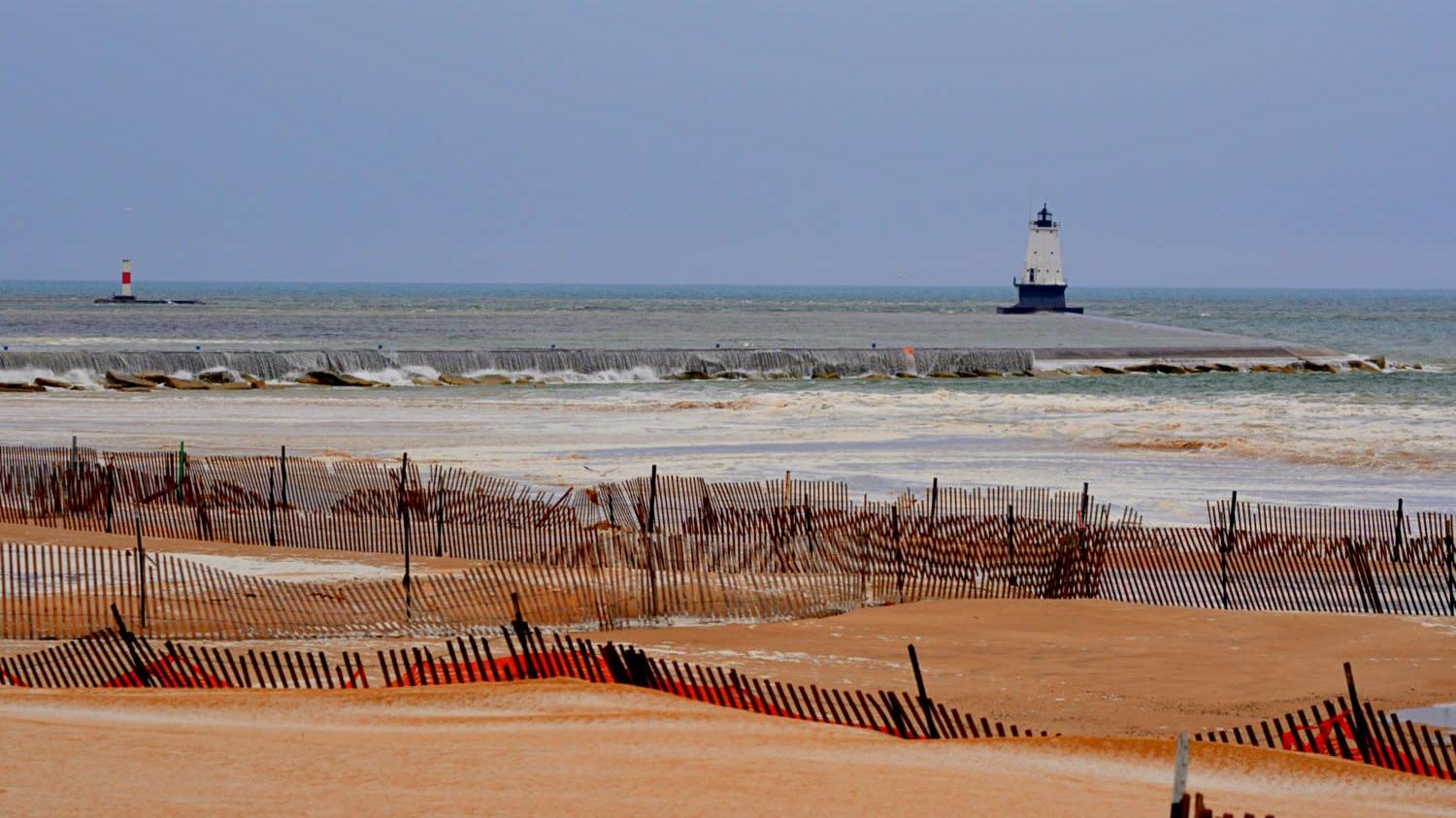


Meteotsunamis, or meteorological tsunamis, are large waves driven by weather rather than seismic energy. Although they occur along shorelines throughout the world, forecasters have very little infrastructure in place to predict or detect them. But a new study of an April 2018 meteotsunami on Lake Michigan (pictured above) has provided evidence that existing models may be able to forecast these events.
The Lake Michigan meteotsunami was driven by an atmospheric gravity wave, which carried with it a substantial pressure drop. Most of the time such waves travel faster or slower than water waves, and there is little to no interaction. But on this day, the atmospheric wave and the water waves were traveling at the same speed in the same direction, creating a resonance that strengthened the water wave.
Using existing National Oceanic and Atmospheric Administration (NOAA) models, researchers were able to reconstruct the event digitally, with results that agreed well with observations. That success means that forecasters may be able to predict the events ahead of time, potentially saving lives. (Image credit: D. Maglothin; research credit: E. Anderson and G. Mann; via Gizmodo)

Jovian Auroras
Like Earth, Jupiter is home to polar auroras that light the sky as charged particles interact with the planet’s magnetosphere. A recent paper identifies interesting features in the aurora that appear similar to expanding vortex rings (see inset below). Although the researchers cannot yet identify the origin of the rings, they hypothesize that the process begins at the far edges of Jupiter’s magnetosphere where it interacts with the incoming solar wind. One theory posits that shear flows and Kelvin-Helmholtz instabilities where the magnetosphere and solar wind meet drive the phenomenon. (Image credit: Jupiter – NASA, ESA, and J. Nichols, aurora features – NASA/SWRI/JPL-Caltech/SwRI/V. Hue/G. R. Gladstone/B. Bonfond; research credit: V. Hue et al.; via Gizmodo)

Flying Spiders Use Electric Fields


Many species of spider fly with a technique calling ballooning. We’ve touched on spider flight before, but more recent research adds a new dimension to the phenomenon. Researchers showed that spiders can actually use electrical fields in their flight. When isolated from flow or outside electrical fields, researchers found that spiders would still begin ballooning behaviors when subjected to electrical fields similar to those found in nature. The spiders were even able to take off in the artificial environment, using the electrostatic force between the surrounding fields and their negatively charged silk strands. While electrical fields alone were enough to get spiders aloft, the team thinks spiders in nature likely still use a combination of electrostatic force and aerodynamic drag in order to travel the vast distances spiders have been known to cover. (Video and image credit: BBC; research credit: E. Morley and D. Robert)

Airborne Aerosol Transmission of COVID-19
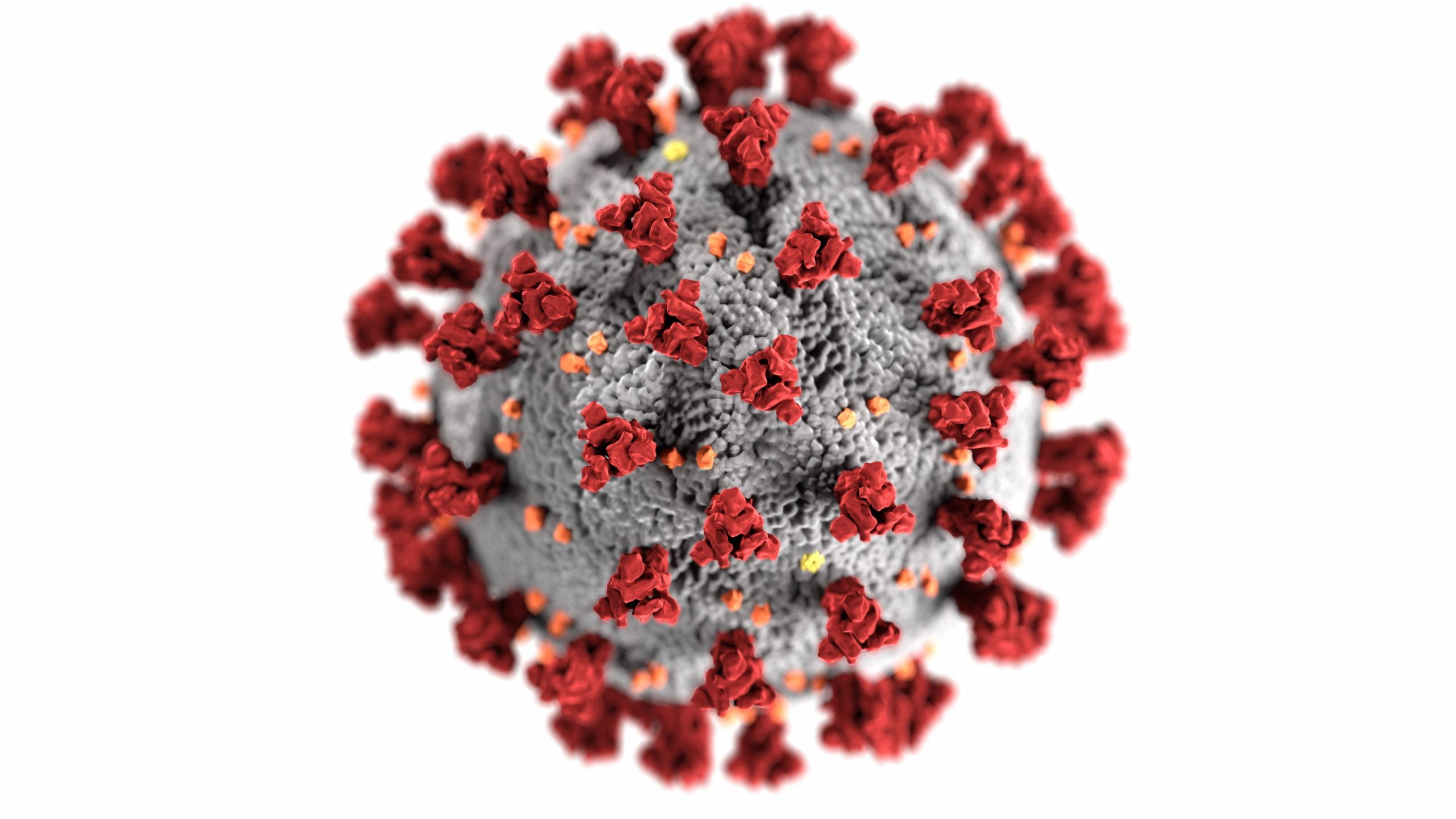
Early in the COVID-19 pandemic health officials resisted the idea that the novel coronavirus was transmissible through tiny aerosol droplets rather than larger, non-buoyant droplets. One case that made headlines and helped shift opinion was that of an outbreak among patrons of a Guangzhou restaurant traced to a single, pre-symptomatic patient zero. The pattern of who became sick at the carrier’s table and those nearby made little sense unless the restaurant’s air flow played a role in spreading the virus.
This paper studies the incident in detail, using an in-house computational fluid dynamics (CFD) code to simulate both airflow in the restaurant and the paths aerosol droplets would follow in that environment. It takes into account flow from the air conditioner and the warm air rising from customers. The study’s predictions of which areas would have the highest concentrations of virus-laden aerosols matches well with the actual pattern of the outbreak. The authors hope that tools like theirs can help prevent future outbreaks by indicating the most dangerous paths for transmission and measures that can block those. (Image credit: Center for Disease Control; video, research, and submission credit: H. Liu et al.)

Oil-Coated Bubbles
Bubbles in industrial applications are often more complicated than a simple pocket of air surrounded by water. Here researchers investigate the formation of an air bubble coated in oil before it rises through water. The photo above shows a series of snapshots as the bubble forms. Initially, a droplet of oil sits pinned on the surface. As air gets injected, the oil stretches around the growing bubble. Eventually, buoyancy pulls the bubble off the injector, creating a rising air bubble coated in oil. The team found that oil-coated bubbles could grow much larger than those in water alone. (Image and research credit: B. Ji et al.)