Here, a Soyuz rocket takes off in 2023, carrying three of the Expedition 70 crew to the International Space Station. This initial stage of the Soyuz launch vehicle uses four identical rocket boosters lashed around the second stage core. Each of the boosters has a rocket engine with four combustion chambers (and thus four exhaust nozzles) of its own. That creates the fiery flurry of engine plumes seen here. Most of the exhaust plumes are directed downward to provide the thrust needed to lift the rocket, but you can see a few angled slightly to either side to help stabilize the launch vehicle as it rises. (Image credit: NASA)
Category: Phenomena

The Solar Corona in Stunning Detail


The ESA’s Solar Orbiter captured this beautifully detailed video of our sun‘s corona last September. The Solar Orbiter took this footage from about 43 million kilometers away, a third of the distance between the sun and the Earth. Scattered across the visible surface are fluffy, lace-like features known as coronal moss. Along the curving horizon, gas spires called spicules stretch up to heights of 10,000 kilometers. The video also highlights a “small” eruption of plasma that is nevertheless larger than the entire Earth. We can even see evidence of coronal rain, denser and darker clumps of plasma that gravity pulls back toward the sun. (Video and image credit: ESA; via Colossal)
Making Magnetic Crystals From Ferrofluids
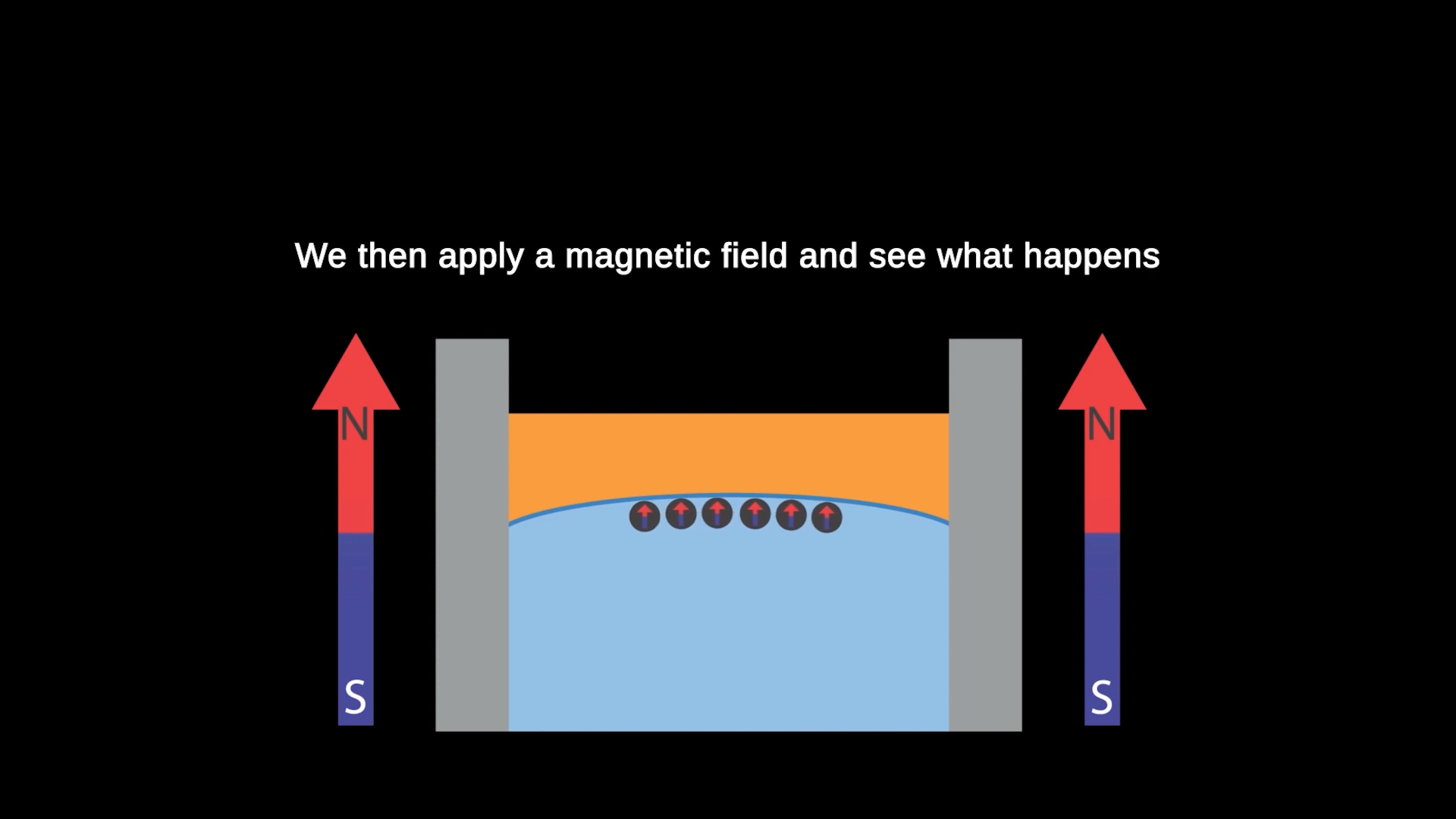
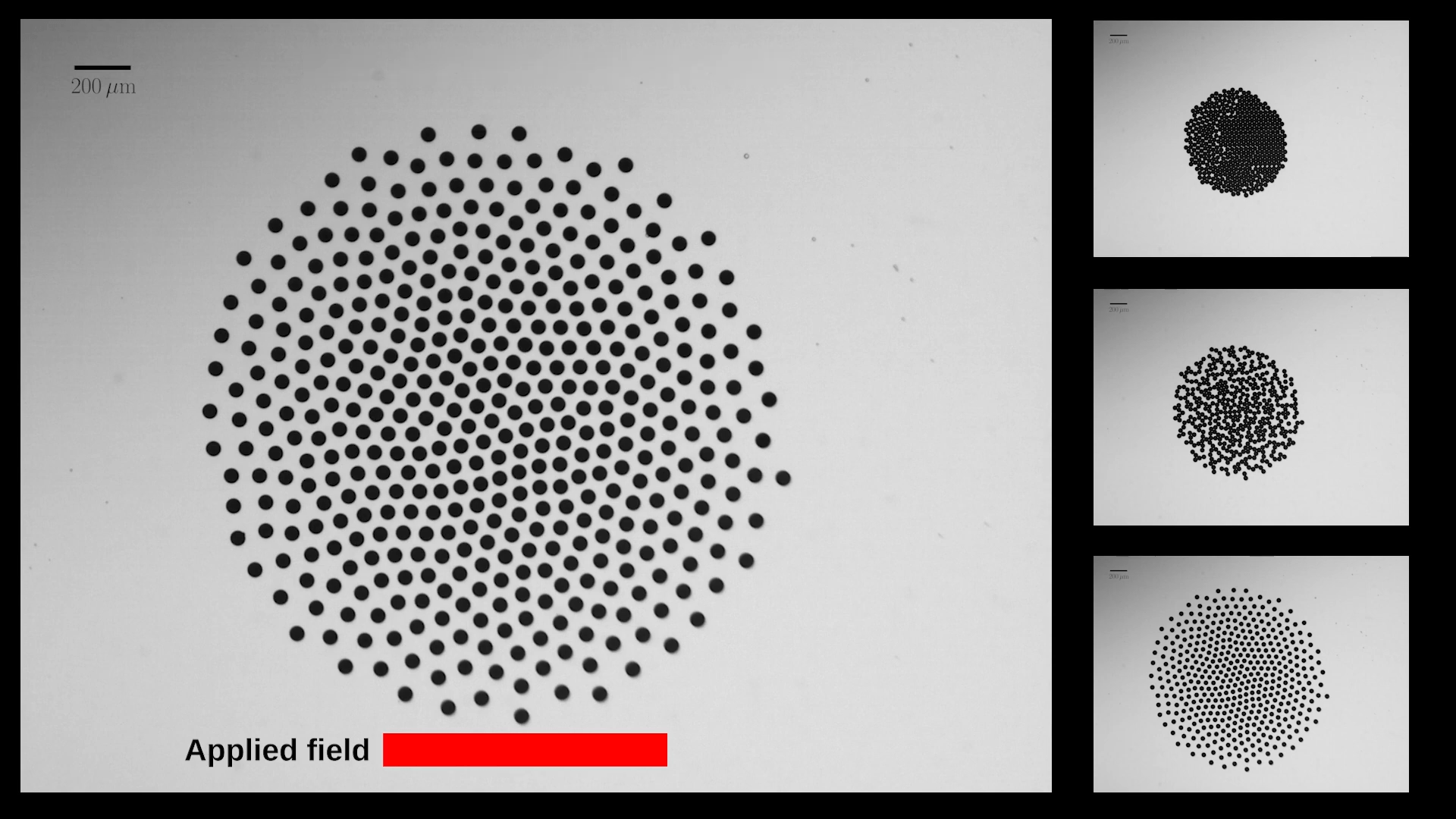
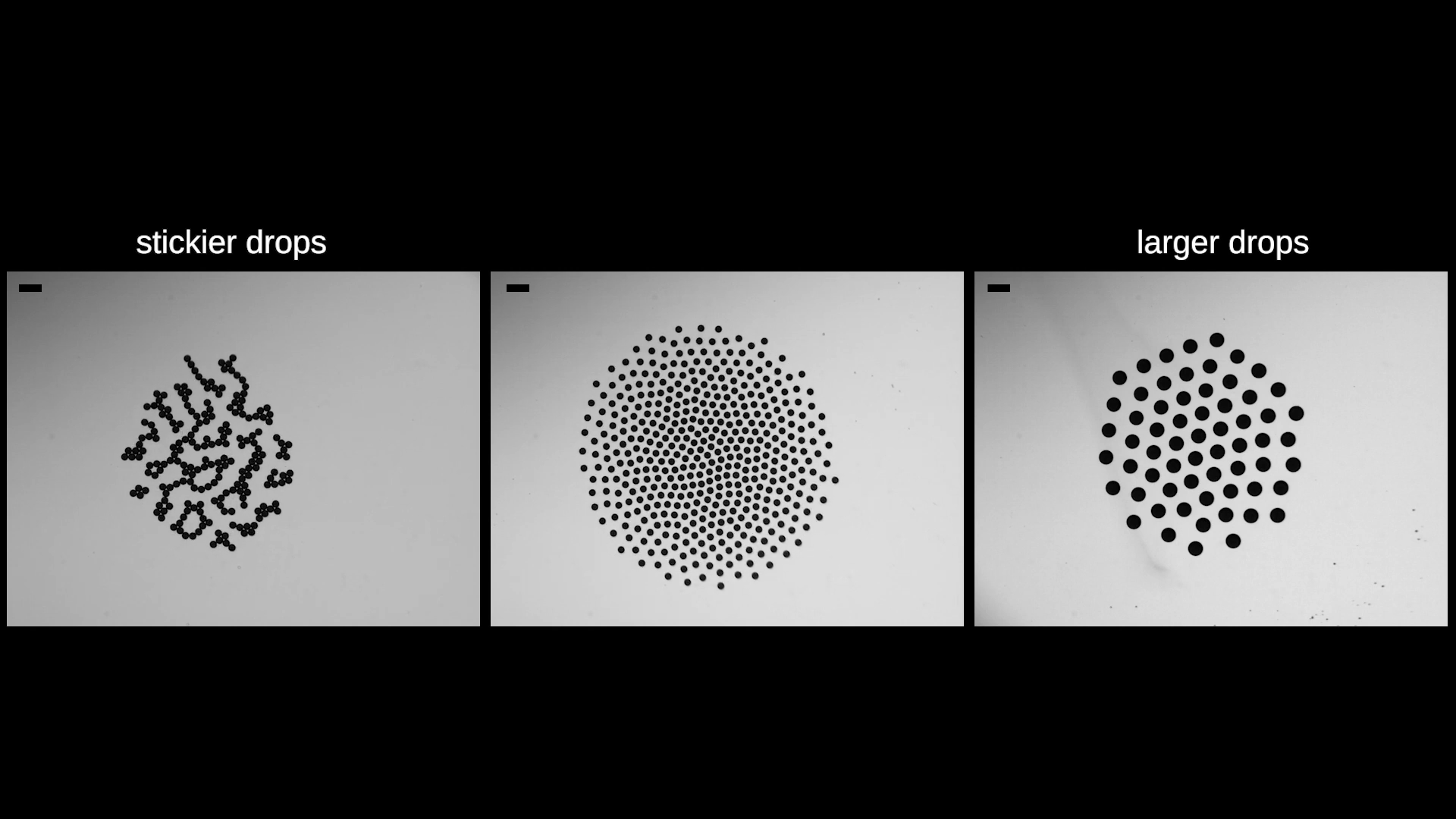
Ferrofluids are a great platform for exploring liquids and magnetism. Here, researchers trap ferrofluid droplets along an oil-water meniscus and then apply a magnetic field that makes the drops repel one another. The results are crystalline patterns formed from magnetic droplets. For a given patch of drops, increasing the magnetic field’s strength pushes drops further apart. But changing the drops’ size and levels of self-attraction also shifts the patterns. Check out the video to see the crystals in action. (Video and image credit: H. Khattak et al.)

A Comet’s Tail
A comet‘s tail changes from day-to-day depending on how much material the comet is losing and how strong the solar wind it’s facing is. This image sequence shows Comet 12P/Pons-Brooks over nine days in 2024 from March 6th (top) through March 14th (bottom). The variations in the comet’s appearance are striking; some days show nearly no tail while others have long plumes with swirls of turbulence. It’s a reminder that, even if they appear unchanging in the moment you see one, a comet is in constant flux. (Image credit: Shengyu Li & Shaining; via APOD)
How We Got Atoms From Brownian Motion


In 1827, botanist Robert Brown observed an odd jittery motion of particles as he watched grains of pollen floating in water under his microscope. He saw the random motion also with inorganic — which is to say definitely Not Alive — particles as well. But it was Einstein nearly 80 years later who figured out how to connect this observable motion to atoms. Einstein realized Brown’s particles were being constantly jostled by atomic collisions, and, with a little work, we could use those moving particles to determine Avogadro’s number. Steve Mould walks you through the whole story in this video. (Video and image credit: S. Mould)

Our Sun’s Corona Unfurled
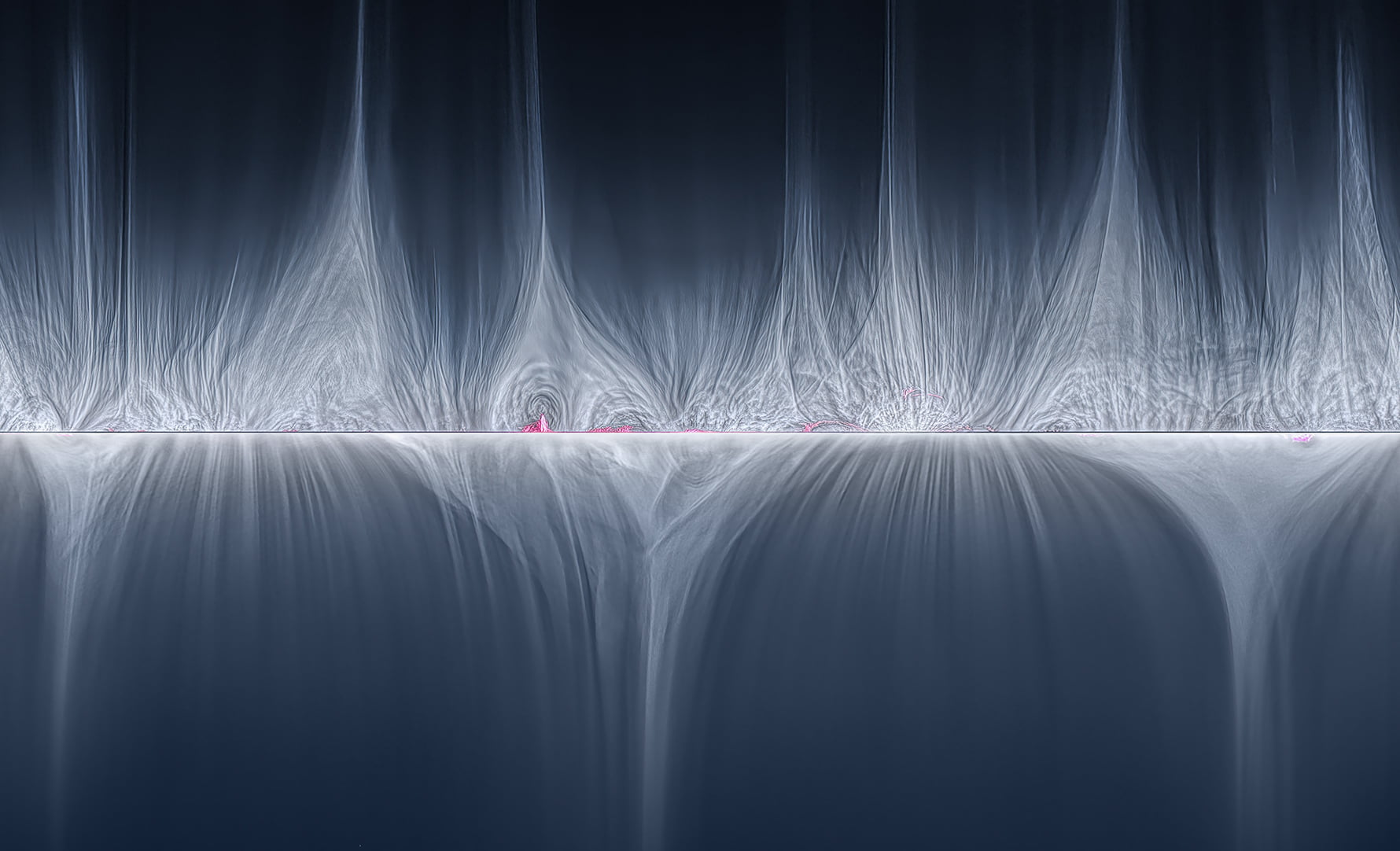
This clever image is actually two solar eclipses stacked atop one another. The bottom half of the image shows the sun‘s corona — its wispy, dramatic outer atmosphere — during the a 2017 total solar eclipse, and top half shows a 2023 total solar eclipse. In both, the corona has been unwrapped from around the sun’s circumference and project instead into a rectangle.
The 2017 eclipse took place near the minimum of the sun’s solar cycle and appears relatively tranquil. The 2023 eclipse, in contrast, came near solar cycle’s maximum and shows a far more chaotic and turbulent environment. Notice the bright pink solar prominences dotting the mid-line and the field of shadowy plasma loops above them. (Image credit: P. Ward; via APOD)

Microfluidics in Medicine
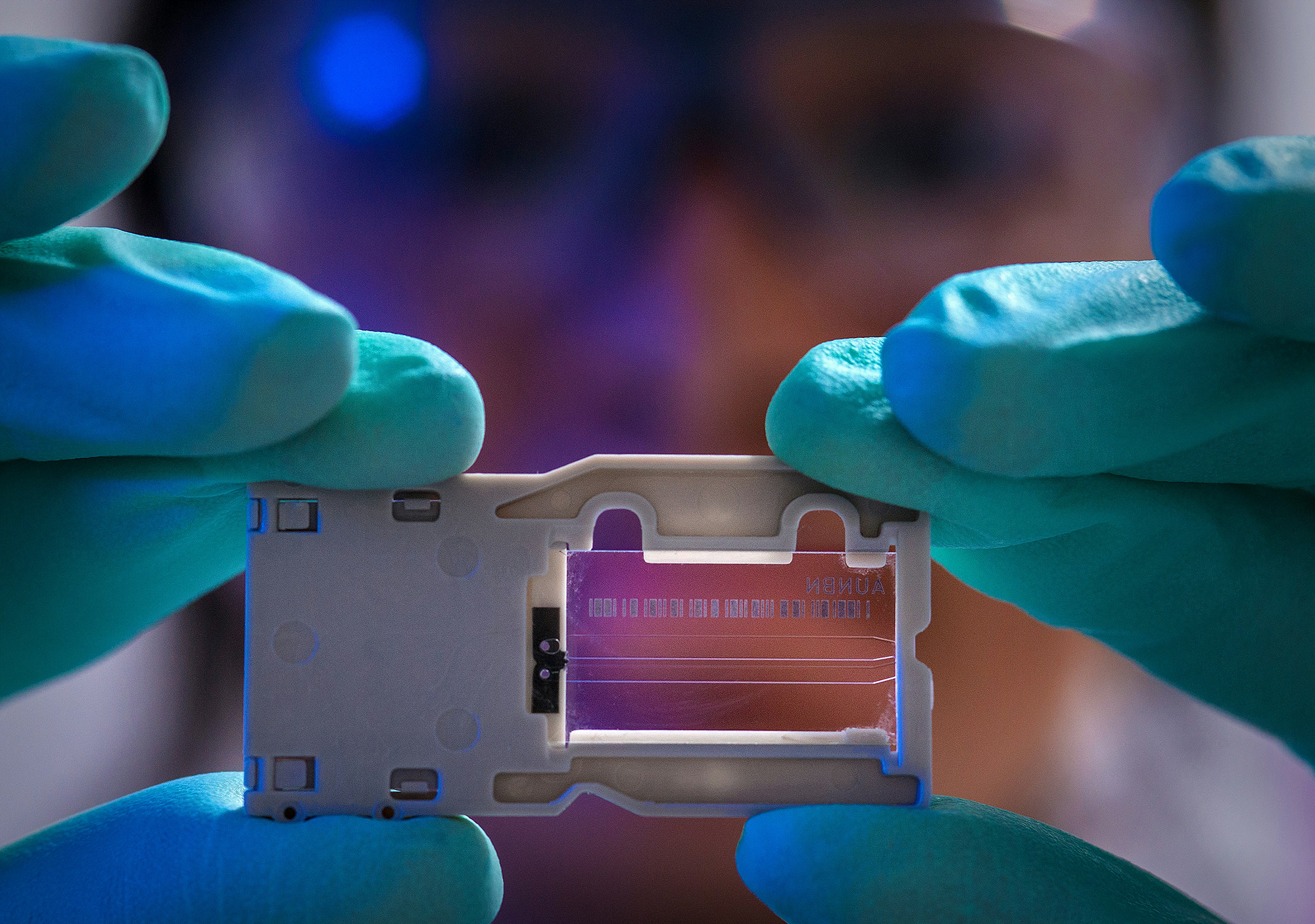
In the late 1990s and early 2000s, the Human Genome Project spent years decoding DNA from a handful of donors. The work was painstaking and slow, given DNA sequencing technology of the time. Today the same analysis goes much faster (and is much cheaper), thanks largely to microfluidic devices that automate steps that once had to be done by hand. Microfluidic devices have also made their way into medical diagnostics — pregnancy tests, at-home COVID tests, and blood glucose strips used by diabetics are common examples — as well as experimental biology. The Scientists has a nice review covering some of the many ways these devices have revolutionized the field. (Image credit: CDC; see also The Scientist; submitted by Marc A.)
Exciting a Flame in a Trough


A viewer sent Steve Mould his accidental discovery of this odd flame behavior. In these 3D-printed troughs, a flame lit in lighter fluid will rocket around the track repeatedly as it burns the local supply of gaseous lighter fluid. As Steve shows in his video, this system is an excitable medium and the trick works for a whole array of 3D-printed shapes. Check out the full video above. (Video and image credit: S. Mould)

Gigapixel Supernova
Eleven thousand years ago, a star exploded in the constellation Vela, blowing off its outer layers in a spectacular shock wave that remains visible today. Today’s image is a piece of a 1.3-gigapixel composite image of the supernova remnant, captured by the Dark Energy Camera of the Víctor M. Blanco 4-meter Telescope at Cerro Tololo Inter-American Observatory in Chile. Below is a labeled version of the image, identifying the original star — now a fast-spinning pulsar that packs our sun’s mass into an object only kilometers across — its shock wave, and other features. To explore the full-sized image, see NOIRLab. (Image credit: CTIO/NOIRLab/DOE/NSF/AURA; via Colossal)

A labeled version of the image shows the shock wave and other features. How Ferns Spread Themselves


Ferns don’t rely on pollen and pollinators to spread. Instead, they use a little water and a lot of ingenuity, as shown in this video from Deep Look. Peer underneath a fern and you’ll find leaves dotted with spores. As they mature, water evaporates from the sporangium, eventually triggering a catapult that launches the spores. Those spores grow little gametophytes that produce the fern’s sperm and eggs; given a little rain or a nice puddle, the sperm and eggs can find each other and trigger the birth of a new baby fern. (Video and image credit: Deep Look)