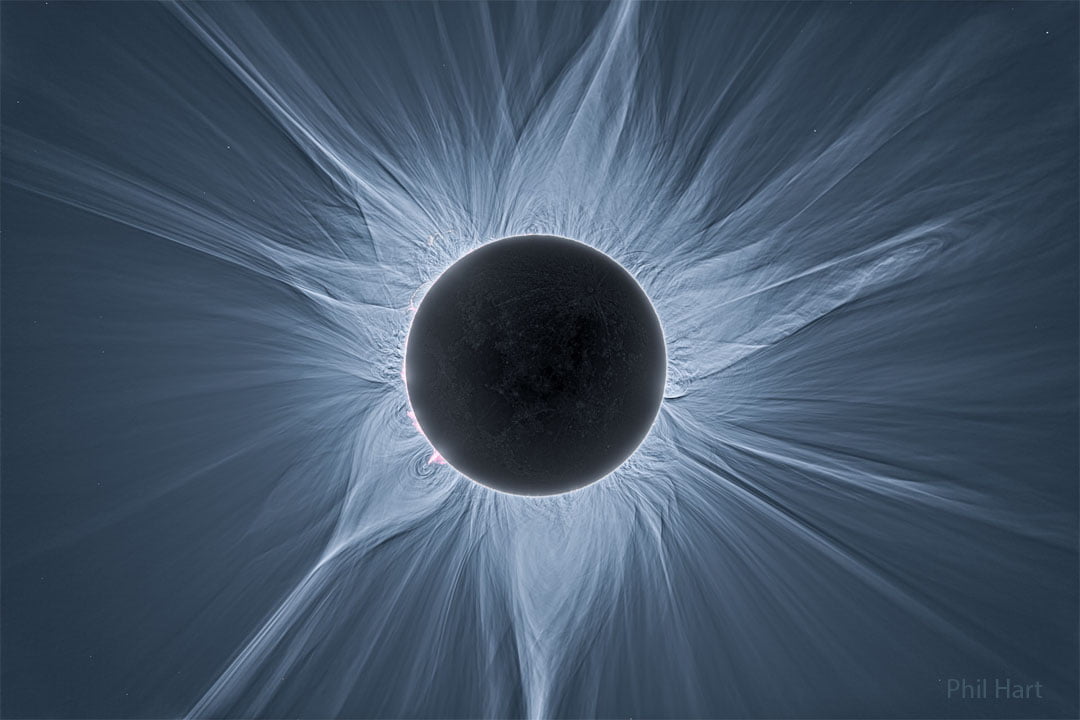
The sun’s corona — its outer atmosphere — is usually impossible to see, since it’s far outshone by the rest of the sun. But during a total solar eclipse, the moon blocks out all but the vibrant, wispy corona. Getting a detailed image of the corona is tough; it’s constantly shifting. For this image, engineer Phil Hart used 5 main cameras, 4 refractors, 2 laptops, and plenty of digital image processing to capture some incredible details of the plasma and hot gases dancing along the sun’s magnetic field lines. You can learn about the awesome effort behind this image — and see more awesome photos from the eclipse — at his site. (Image credit: P. Hart; via APOD)
Category: Phenomena

Sediment Swirls
Turbulent flows feature swirling eddies over a range of sizes — the larger the size range, the higher the Reynolds number. In this satellite image, sediment highlights these eddies in shades of turquoise, showing off the complexity of the flows created where rivers, ocean, and tides meet. The eddies we see here stretch from kilometers in width down to a handful of meters, but the flow’s turbulence persists down to millimeter-scales before viscosity damps it out. (Image credit: L. Dauphin; via NASA Earth Observatory)
Fediverse Reactions
-

Toying With Density and Miscibility


Steve Mould opens this video with a classic physics toy that uses materials of different densities as a brainteaser. Two transparent, immiscible liquids fill the container, along with beads of a couple different densities. When you shake the toy, the liquids emulsify, creating a layer with an intermediate density. As the two liquids separate, the emulsified middle layer disappears, causing the beads (which have densities between that of the two original liquids) to come together.
The rest of the video describes the challenges of expanding this set-up into three immiscible liquids and four sets of beads. Along the way, Steve had to contend with issues of miscibility, refractive index, and even chemical solvents. It’s amazing, sometimes, what it takes to make a seemingly simple idea into reality. (Video and image credit: S. Mould)

Paris 2024: Clearing the Air
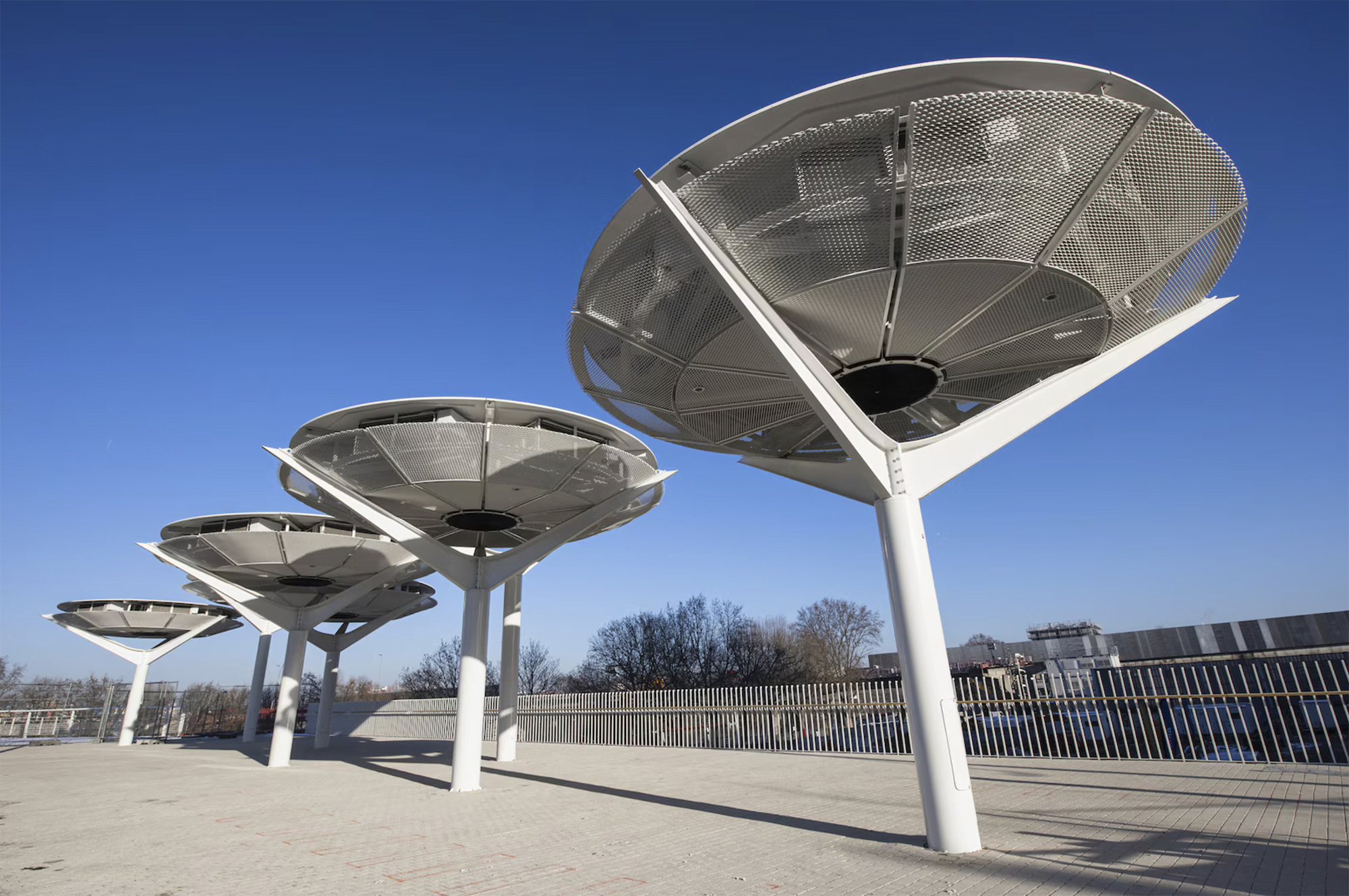
A quartet of mushroom-shaped structures tower nearly 6 meters above the Olympic Village. Known as Aerophiltres, these devices filter particulates out of the air to provide cleaner air for the Village, despite its proximity to major roadways. There’s no need to change out the filters in the Aerophiltres, though, because they don’t have any. Instead, the devices ionize fine particles, encourage them to clump together, and then capture them on highly-charged metal plates. A fan near the base sucks polluted air in through the top and expels clean air at the ground level. According to the engineers, the system is capable of removing 95% of particulates and producing nine Olympic-sized swimming pools’ worth of clean air each hour. Compared to traditional systems — which require lots of power to suck air through filters that get progressively more clogged — the Aerophiltres are energy efficient, highly effective, and easy to maintain. (Image credit: SOLIDEO/C. Badet; via DirectIndustry)
Related topics: How manta rays filter without clogging, making artificial snow, and building whitewater rafting courses
Catch our past and ongoing Olympic coverage here.

Paris 2024: Tennis Racket Physics
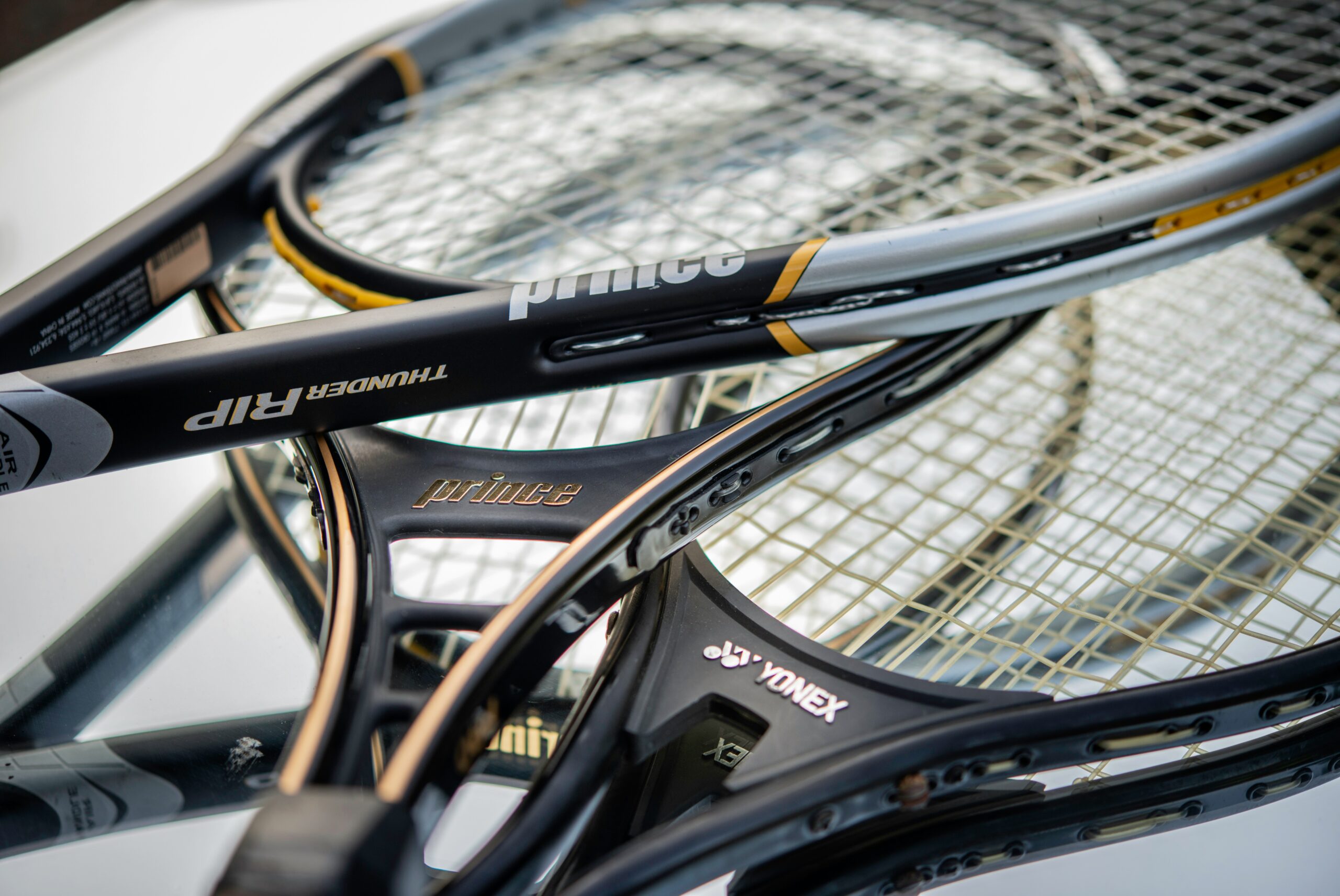
Like many sports that feature balls, spin plays a big role in tennis. By imparting a topspin or backspin to a tennis ball, players can alter the ball’s trajectory after a bounce and, using the Magnus effect to alter lift around the ball, change how it travels through the air. For example, a ball hit with backspin can dive just after the net, forcing an opponent to scramble after it. How much spin a player can impart depends on the speed of the racket’s head. Competitive rackets are carefully engineered — in terms of weight, string tension, and frame stiffness — to translate the kinetic energy of a player’s swing into the ball. But aerodynamics also play a role: new rackets designed to minimize drag hit the market 15-20 years ago, promising drag reductions up to 24% compared to previous rackets. That gives a player more swing speed and higher spins at a lower energy cost. (Image credit: C. Costello)
Related topics: The Magnus effect in table tennis and in golf; the reverse Magnus effect
Check out more of our ongoing and past Olympic coverage here.

Paris 2024: Beach Versus Indoor Volleyballs


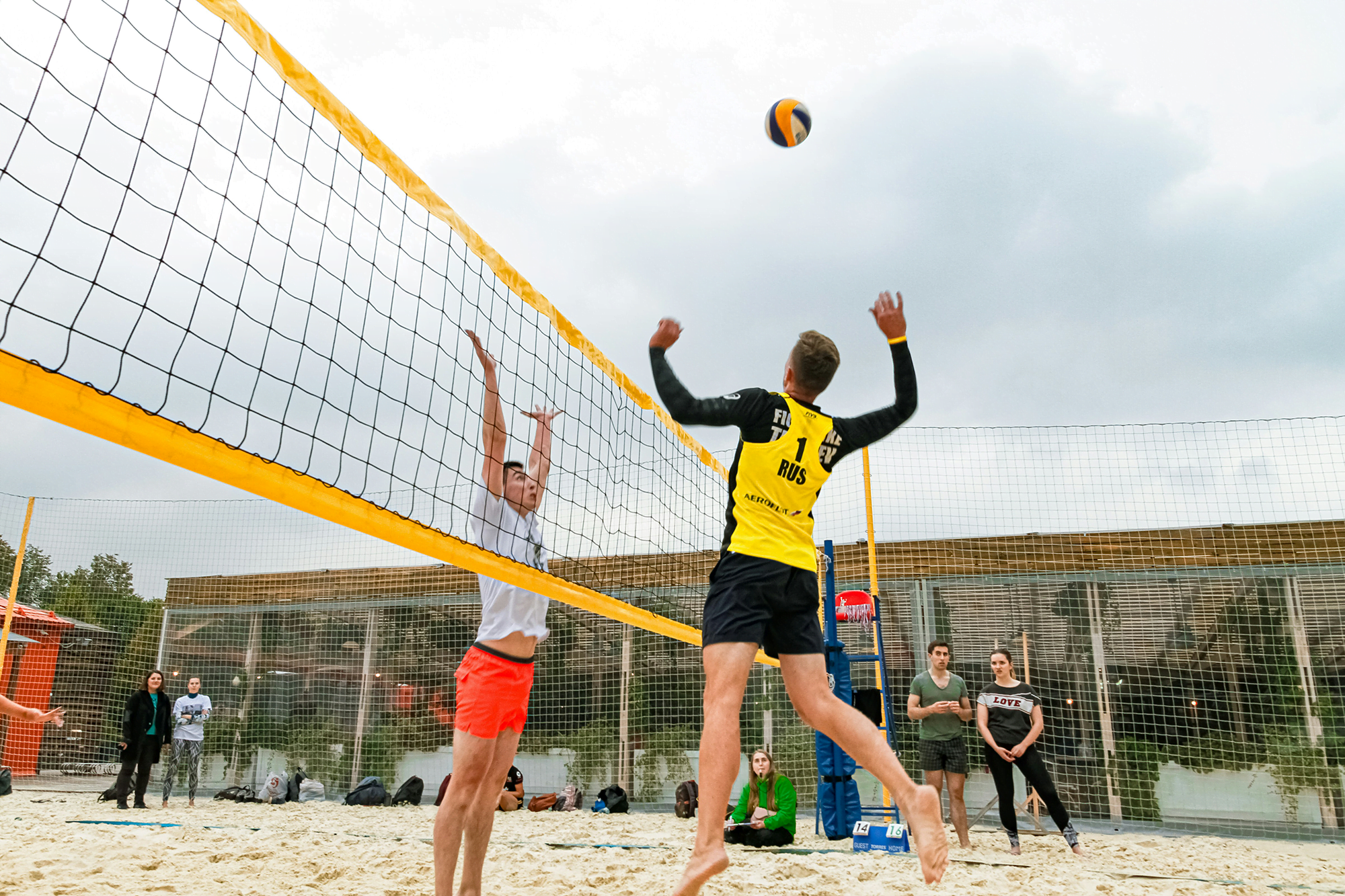
Some of the differences between beach volleyball and indoor volleyball are obvious, like the number of players allowed — two versus six — and the courts — a smaller sand court versus a bigger indoor court. But there are subtle and significant differences in the balls themselves. Both beach and indoor volleyballs used for competition are required to weigh between 260 and 280 grams, but the expected diameter of the balls differs by about 1 centimeter, with beach volleyballs coming out slightly larger. The balls differ in their surface roughness, too, with indoor models being smoother, even before in-game wear.
Although these differences seem minor, they can make a significant impact in the game. Volleyball regulations don’t specify a ball’s expected surface roughness or how many panels they should be made with. As in football, these seemingly cosmetic changes can strongly affect airflow around the ball and change its trajectory. Regulations require that all balls used in a given match be uniform, but that still requires athletes to potentially adjust to the behavior of a new ball at each competition. (Image credits: I. Garifullin, C. Chaurasia, C. Oskay, and M. Teirlinck)
Related topics: How smoothness and panel design affect a football, volleyball aerodynamics, and vortex generators on cycling skinsuits
For more ongoing and past Olympic coverage, click here.
Junggar Basin Aglow
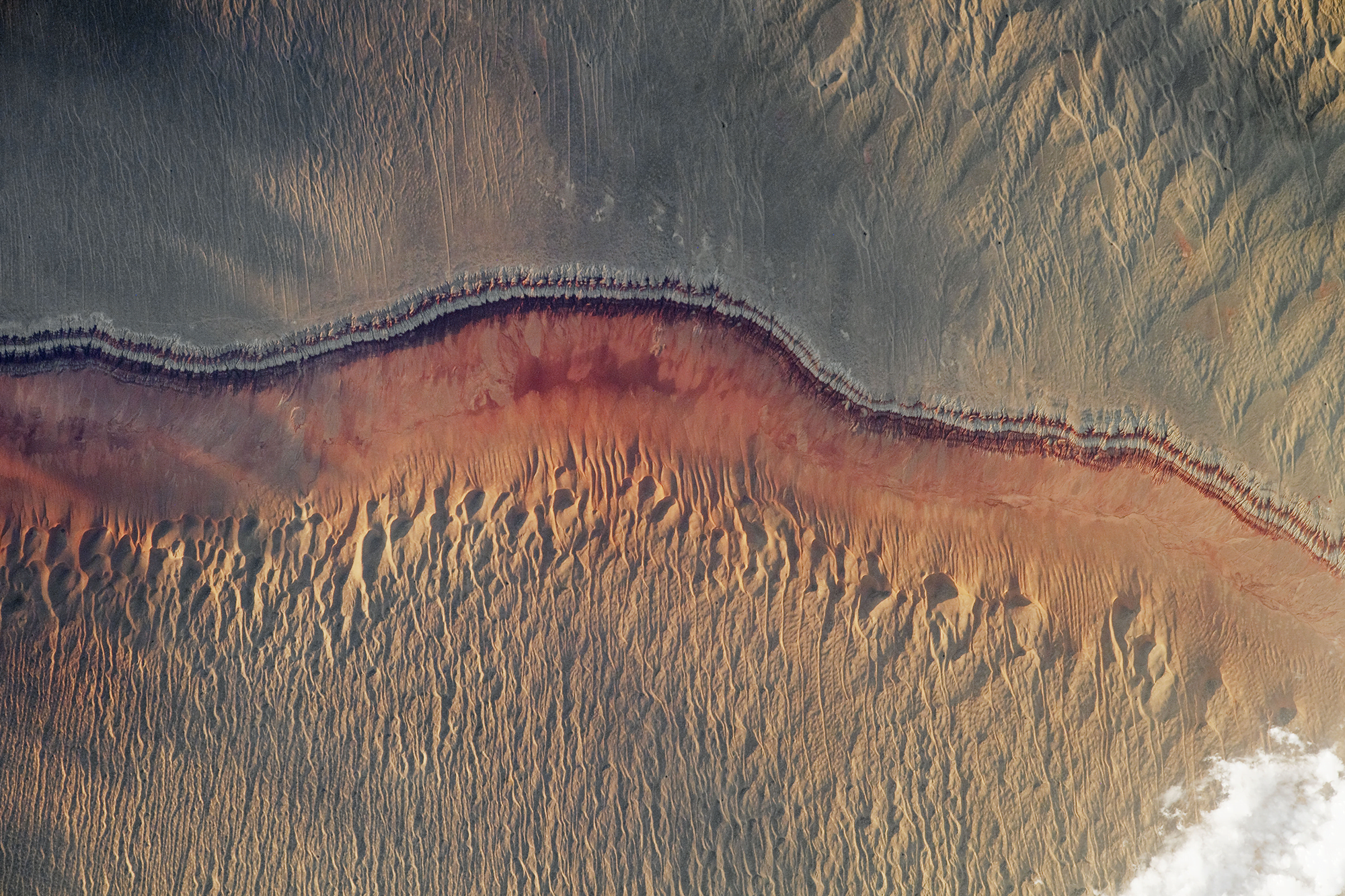
The low sun angle in this astronaut photo of Junggar Basin shows off the wind- and water-carved landscape. Located in northwestern China, this region is covered in dune fields, appearing along the top and bottom of the image. The uplifted area in the top half of the image is separated by sedimentary layers that lie above the reddish stripe in the center of the photo. Look closely in this middle area, and you’ll find the meandering banks of an ephemeral stream. Then the landscape transitions back into sandy wind-shaped dunes. (Image credit: NASA; via NASA Earth Observatory)

Solar Filament Eruption
From Earth, we rarely glimpse the violent flows of our home star. Here, a filament erupts from the photosphere creating a coronal mass ejection, captured in ultraviolet wavelengths by the Solar Dynamics Observatory. This particular eruption took place in 2012, and, while it was not aimed at the Earth, it did create auroras here a few days later. Eruptions like these occur as complex interactions between the sun’s hot, ionized plasma and its magnetic fields. Magnetohydrodynamics like these are particularly tough to understand because they combine magnetic physics, chemistry, and flow. (Image credit: NASA/GSFC/SDO; via APOD)
Playing With Water in 2D Containers


Once again Steve Mould is putting his prototyping skills to use to work out what goes on inside tricky containers. Here he looks at a “magic” wizard’s cup where — like the assassin’s teapot — cleverly placed holes in the side of the cup can block or allow air’s escape. In the wizard’s cup this lets the wizard refill the cup at will.
He also takes a look at how draining works, using tracer particles and a video editing effect that “echoes” previous frames in a video. For the tracer particles, this algorithm effectively visualizes pathlines in the flow. Areas with faster-moving fluid have longer pathlines that are closer together, whereas slow-moving regions have short pathlines. (Video credit: S. Mould)

The Real Butterfly Effect
The butterfly effect — that the flapping of a butterfly’s wings in Brazil can cause a tornado in Texas — expresses the sensitivity of a chaotic system to initial conditions. In essence, because we can’t possibly track every butterfly in Brazil, we’ll never perfectly predict tornadoes in Texas, even if the equations behind our weather forecast are deterministic.
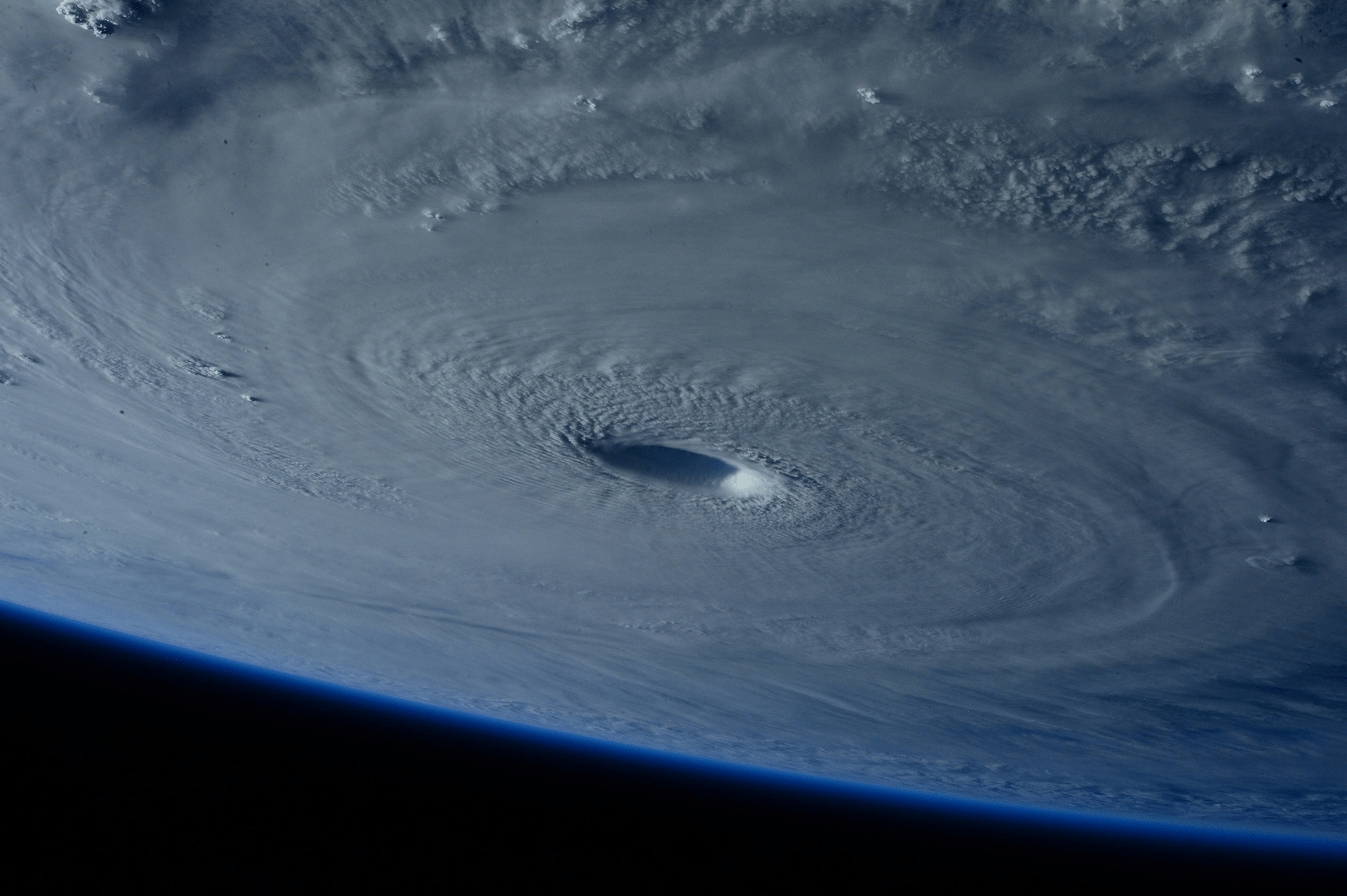
But this interpretation doesn’t fully capture the subtleties of the situation. With fluid dynamics, the small scales of a flow — like the turbulence in an individual cloud — are linked to the largest scales in the flow — for example, a hurricane. For short times, we’re actually quite good at predicting those large scales; our weather forecasts can distinguish sunny days and cloudy ones a week out. But at smaller scales, the forecast errors pile up quickly. No one can forecast that an individual cloud will form over your house three days from now. And because the small scales are linked to the larger scales, the uncertainties from the small scale cascade upward, limiting how far into the future we can reliably predict the weather.
And, unfortunately, drilling down to capture smaller and smaller scales in our models can’t fix the problem, unless our initial uncertainties are identically zero. To get around this problem, weather forecasters instead use ensemble forecasting, where they run many simulations of the weather with slightly different initial conditions. Those differences in initial conditions let the forecasters play with those initial uncertainties — how accurate is the temperature reading from that station? How reliable is the instrument reporting that humidity? How old is the satellite data coming in? Once all the forecasts are run, they can see how many predicted sunny days versus rainy ones, which ones resulted in severe weather, and so on. Often the probabilities we see in our weather app — like 30% chance of rain — depend on factors including how many of the forecasts resulted in rain.
Unfortunately, this butterfly effect permanently limits just how far into the future we can predict weather — at least until we fully understand the nature of the Navier-Stokes equations. For much more on this interesting aspect of chaos, check out this Physics Today article. (Image credit: NASA; see also T. Palmer at Physics Today)
Fediverse Reactions
-