Category: Art

  • Vanishing Spirits: Aging

    Vanishing Spirits: Aging

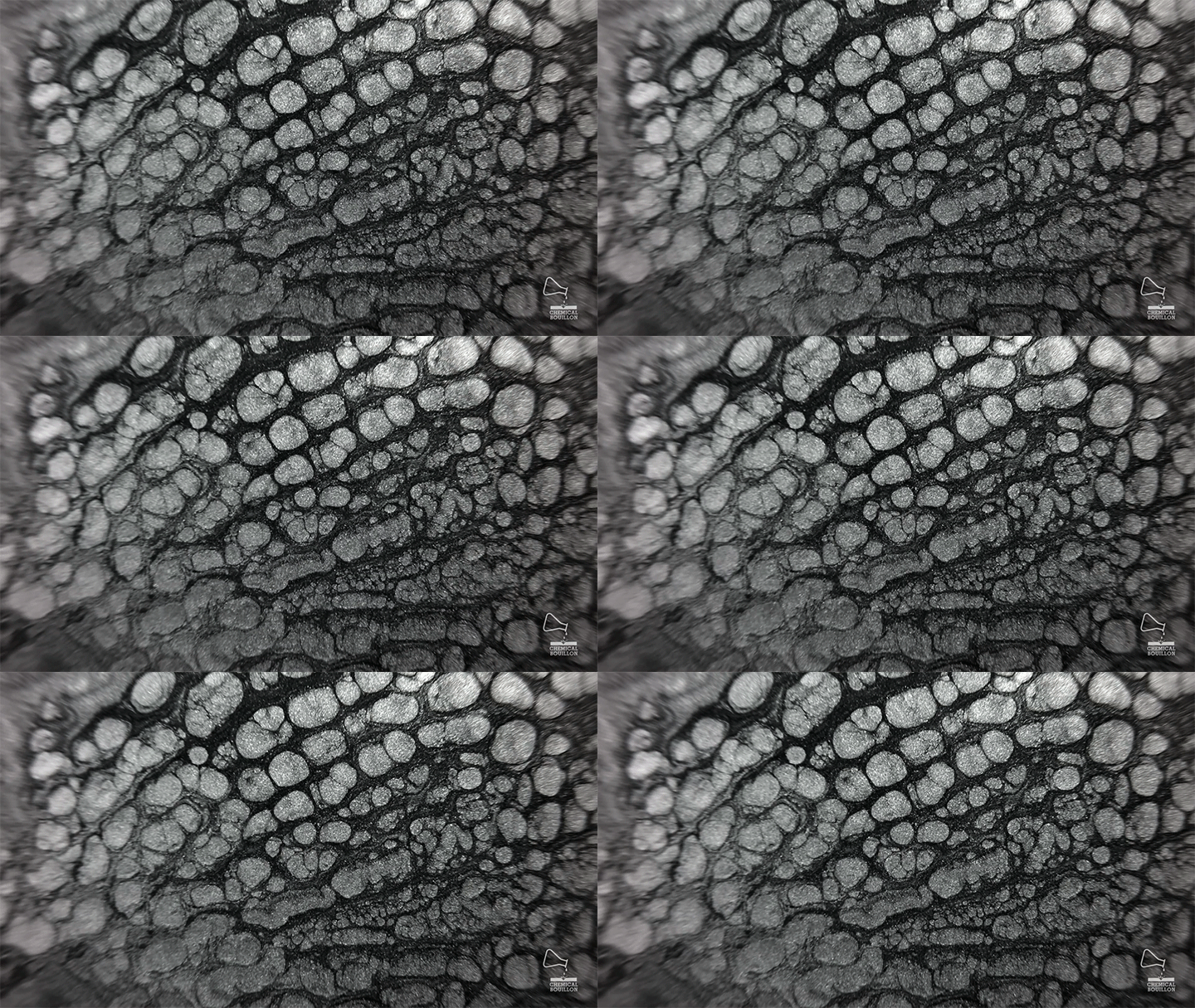
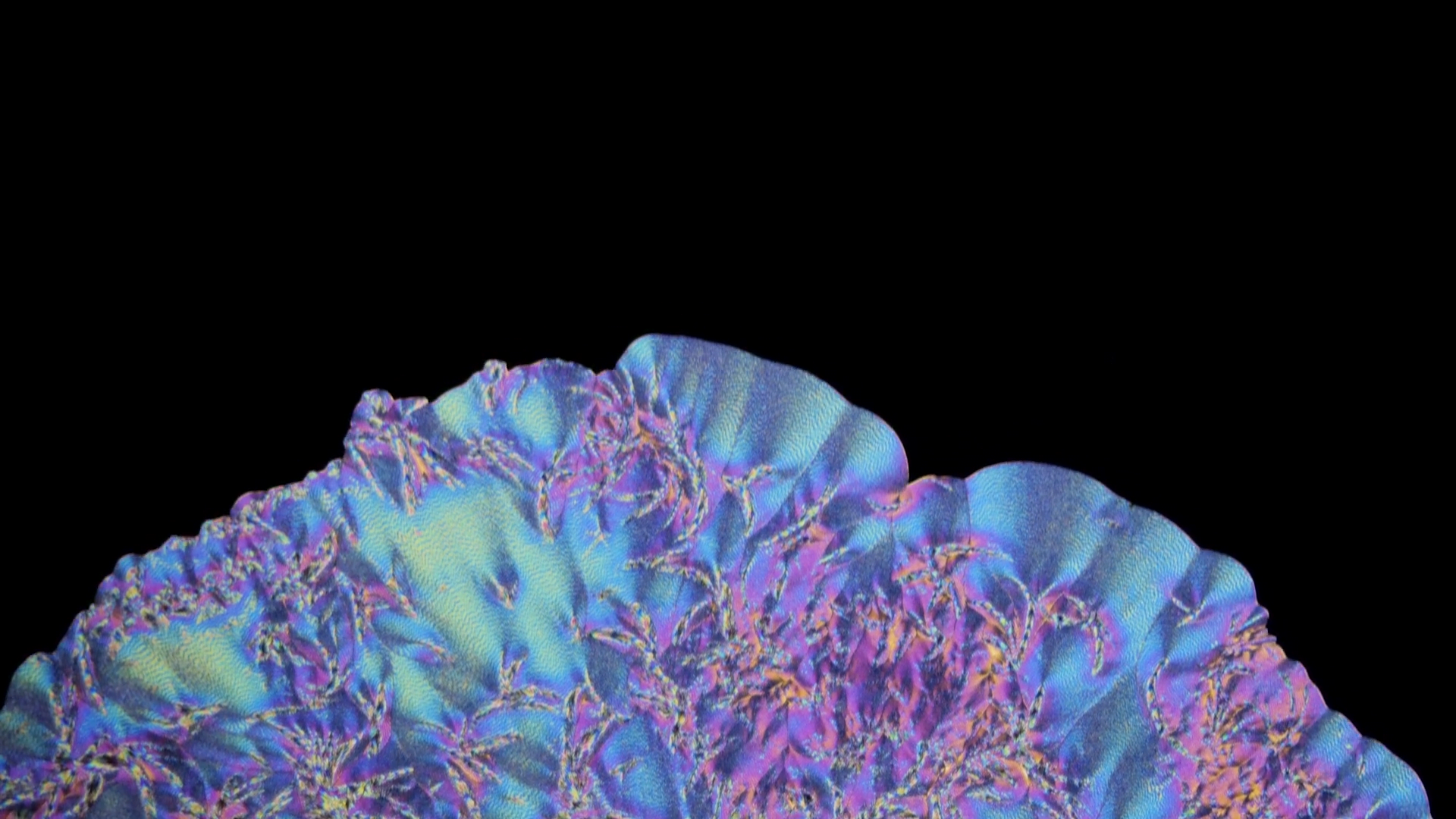
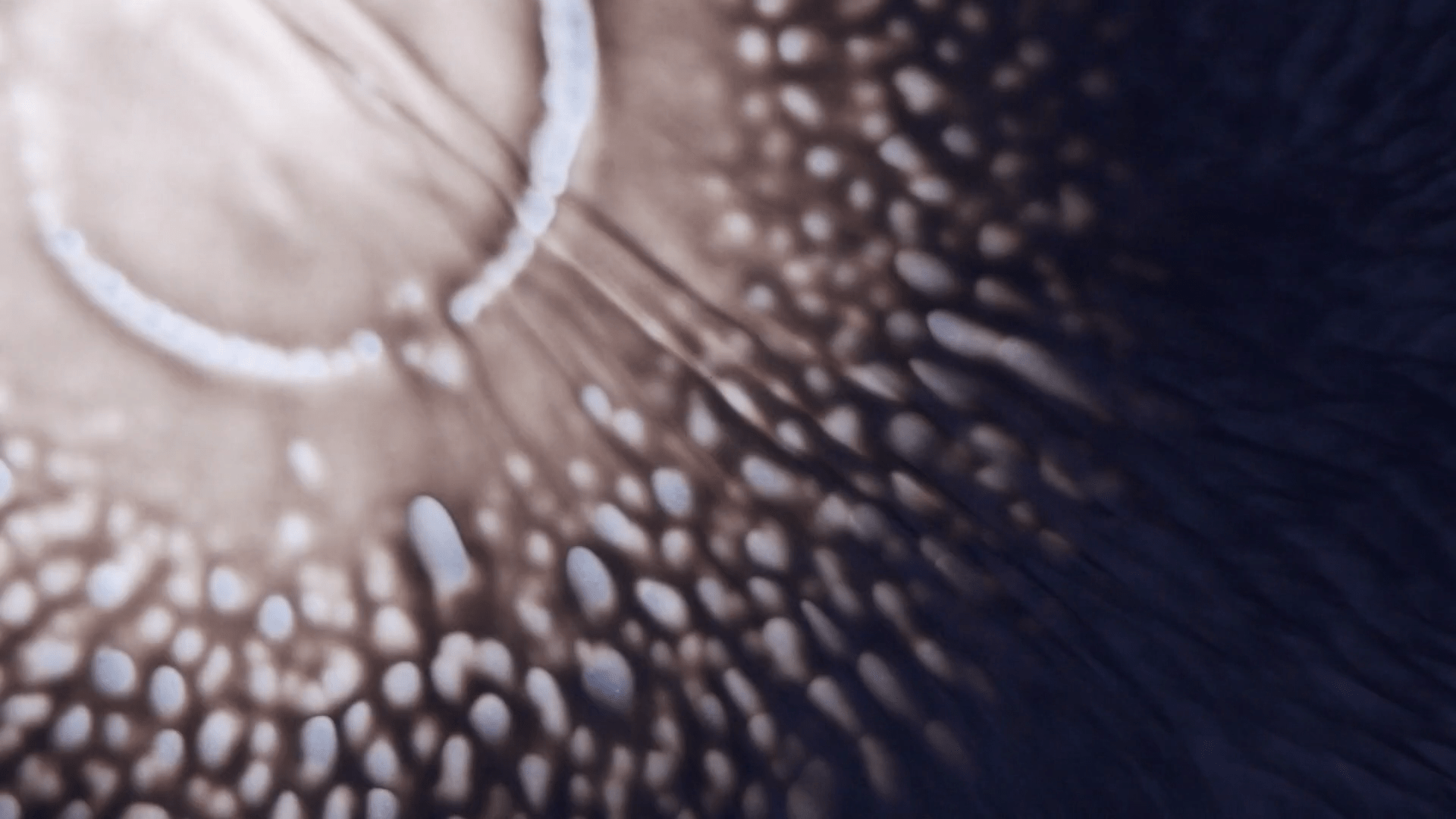
    The necessary ingredients for scotch whisky’s evaporation patterns are alcohol, surfactants, and polymers; some of those components are absorbed during the spirit’s aging in oak casks. Photographer Ernie Button explored how long it takes for whisky to absorb enough of these chemicals by photographing the stains left by samples aged between 1 and 5 weeks in an oak cask. He found that it takes about 5 weeks for the scotch patterns to begin emerging.

    The aging process for scotch and other cask-aged spirits depends on the fluid’s flow through the porous grain of the oak. Evaporation plays a significant role in the process, so the aging process differs based on environmental conditions. For example, distillers in the dry, high-altitude climate of Colorado must use climate-controlled storage, whereas Scottish distillers use a more humid natural climate to their advantage.

    Another major factor in the aging process is the charred oak cask itself. Some whiskys, like American bourbon, always use a brand new barrel, whereas scotch is often aged in a previously-used cask. With older casks, absorption of molecules from the wood takes longer, which is why scotch is typically aged for much longer than some other types of whisky. (Image, research, and submission credit: E. Button; see also)

  • Vanishing Spirits: Rice-Based Whisky

    Vanishing Spirits: Rice-Based Whisky

    In yesterday’s post, photographer Ernie Button showed us that barrel-aged gin can leave behind an evaporation pattern remarkably similar to scotch whisky. But even among whiskys not every spirit uses the same grains.

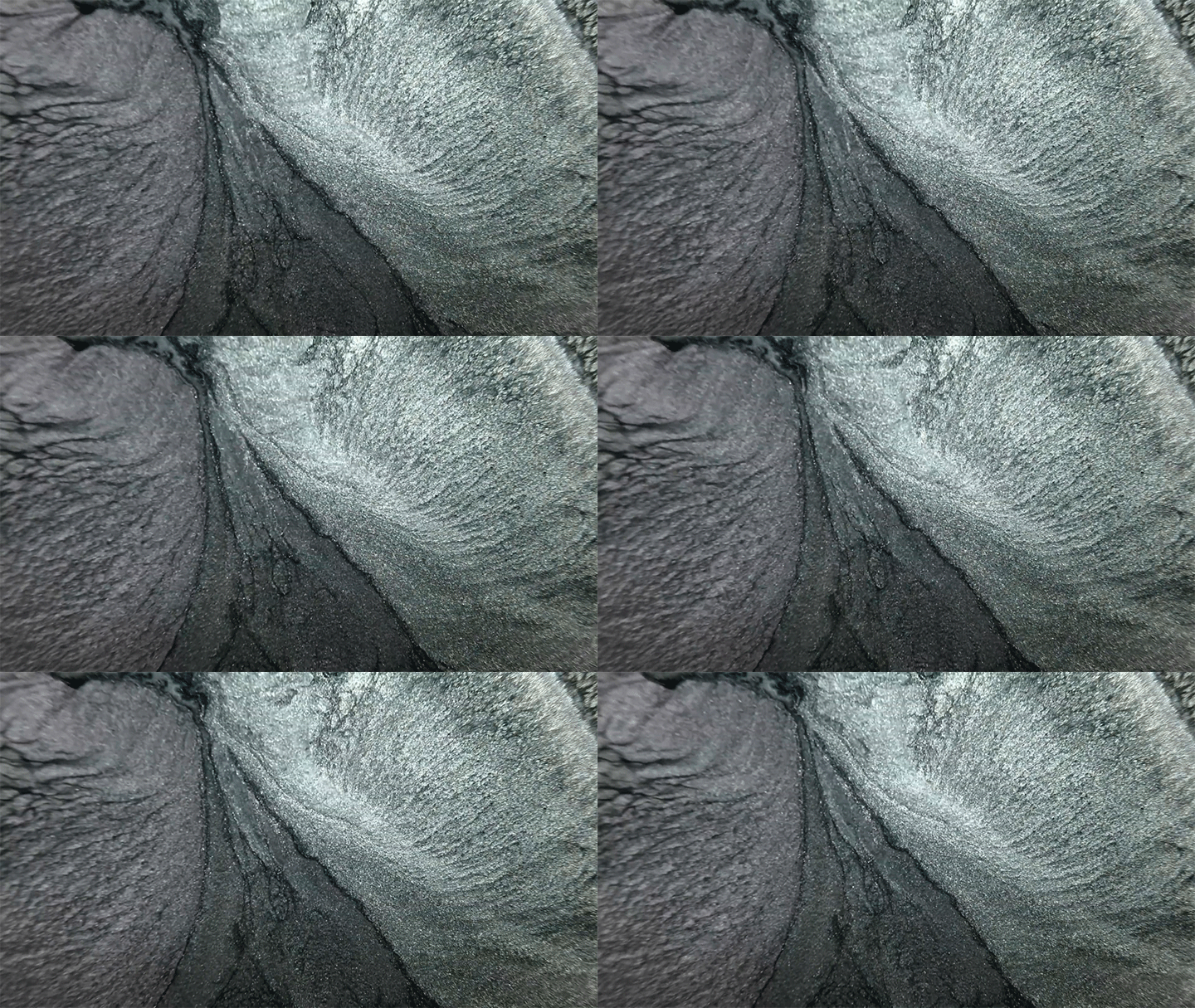
    Here we see patterns left behind by a 10-year-aged, rice-based whisky. The stains are entirely different than those of (barley-based) scotch. The rice leaves behind stains with distinct regions, including a radially uniform rim and an interior reminiscent of satellite photos. Presumably the interaction of rice and the cask leaves the whisky with surfactants and polymers that behave rather differently than those of scotch.

    It takes time for spirits to take on character from the casks they’re aged in. Tomorrow we’ll take a look at just how much aging is necessary for scotch’s patterns to emerge. (Image, research, and submission credit: E. Button; see also)

  • Vanishing Spirits: Gin

    Vanishing Spirits: Gin

    Photographer Ernie Button has spent years exploring the patterns left by evaporating scotch. A team of researchers found that the uniformity of scotch whisky’s stain requires three ingredients: alcohol to drive concentration gradients, surfactants to pull particulates away from the drop’s edge, and polymers to help stick particles to the glass.

    Button wondered whether other spirits might produce similar patterns, and, indeed, some do. The photos above are stains left behind by evaporated gin that’s been aged for a year in oak casks. The patterns are extremely similar in appearance to those from aged scotch whiskies, suggesting that the same fluid dynamical effects are at play here, despite the difference in liquor. But do all grain spirits make these patterns? Check back tomorrow to find out. (Image, research, and submission credit: E. Button; see also)

  • Featured Video Play Icon

    Dengue Dengue Dengue

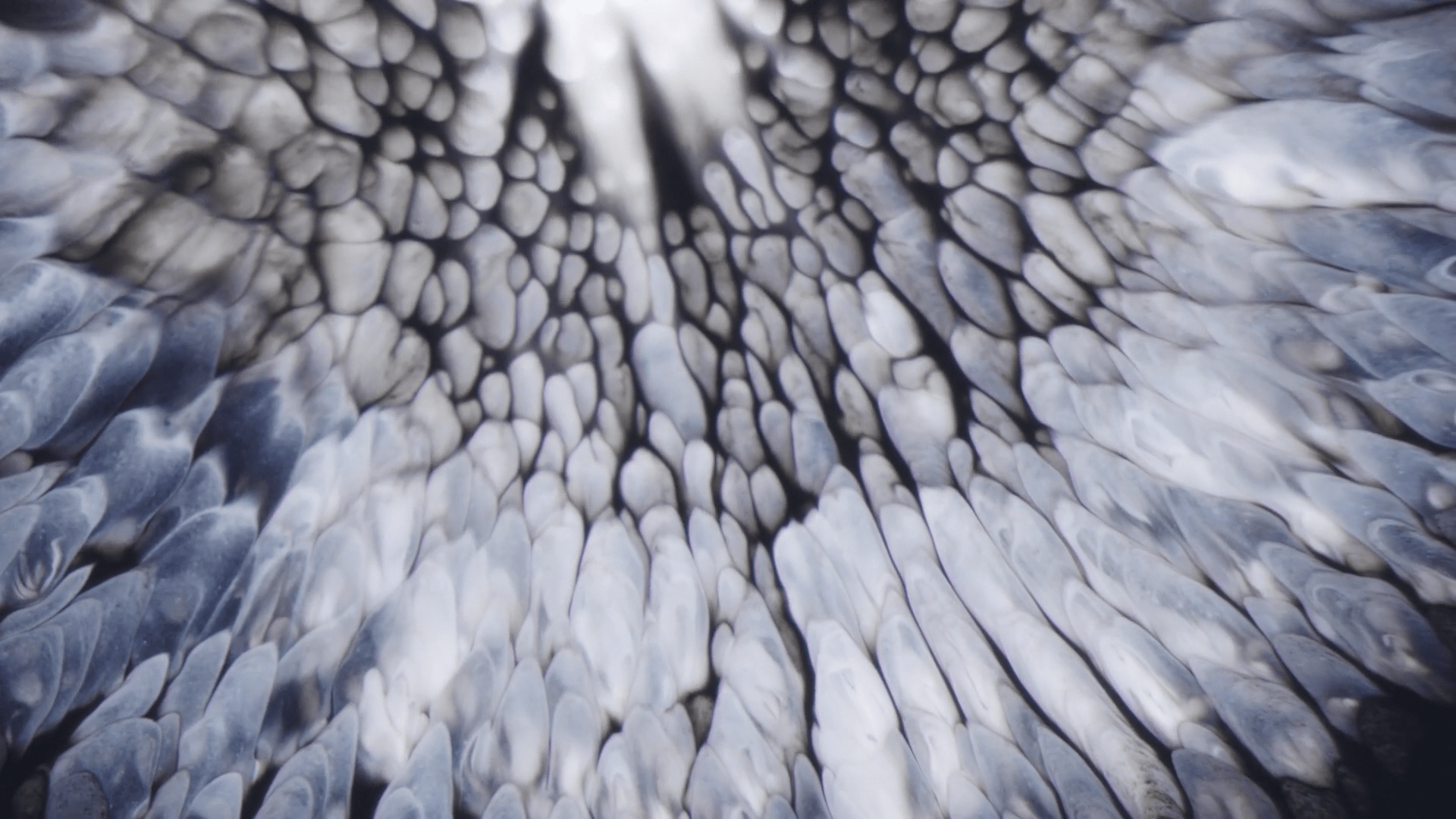
    Musical duo Dengue Dengue Dengue create live audio/visual performances with fluid dynamics. Their visuals are created by adding various liquids and dyes atop an illuminated background. To add extra dynamism, they sometimes use a sheet of plastic to cover and pump the liquids, creating a pseudo-Hele-Shaw cell where they can trigger fluid instabilities in time to the music. The full performance in this video is nearly an hour long, but at least take some time to scrub through and see a few different sections. (Video credit: Dengue Dengue Dengue/Espacio Fundación Telefónica Lima; submitted by Tania S.)

  • Density Drift

    Density Drift

    This colorful photo shows three fluids — oil, water, and dish soap — illuminated by the rainbow reflection of a CD. The differing densities of each fluid creates a stratification with water sandwiched between dish soap on the bottom and oil on the top. Because the dish soap is miscible in water, it leaves a smudgy blur against the background, whereas the immiscible oil creates bubble-like lenses at the top. (Image credit: R. Rodriguez)

  • Featured Video Play Icon

    Precipitation

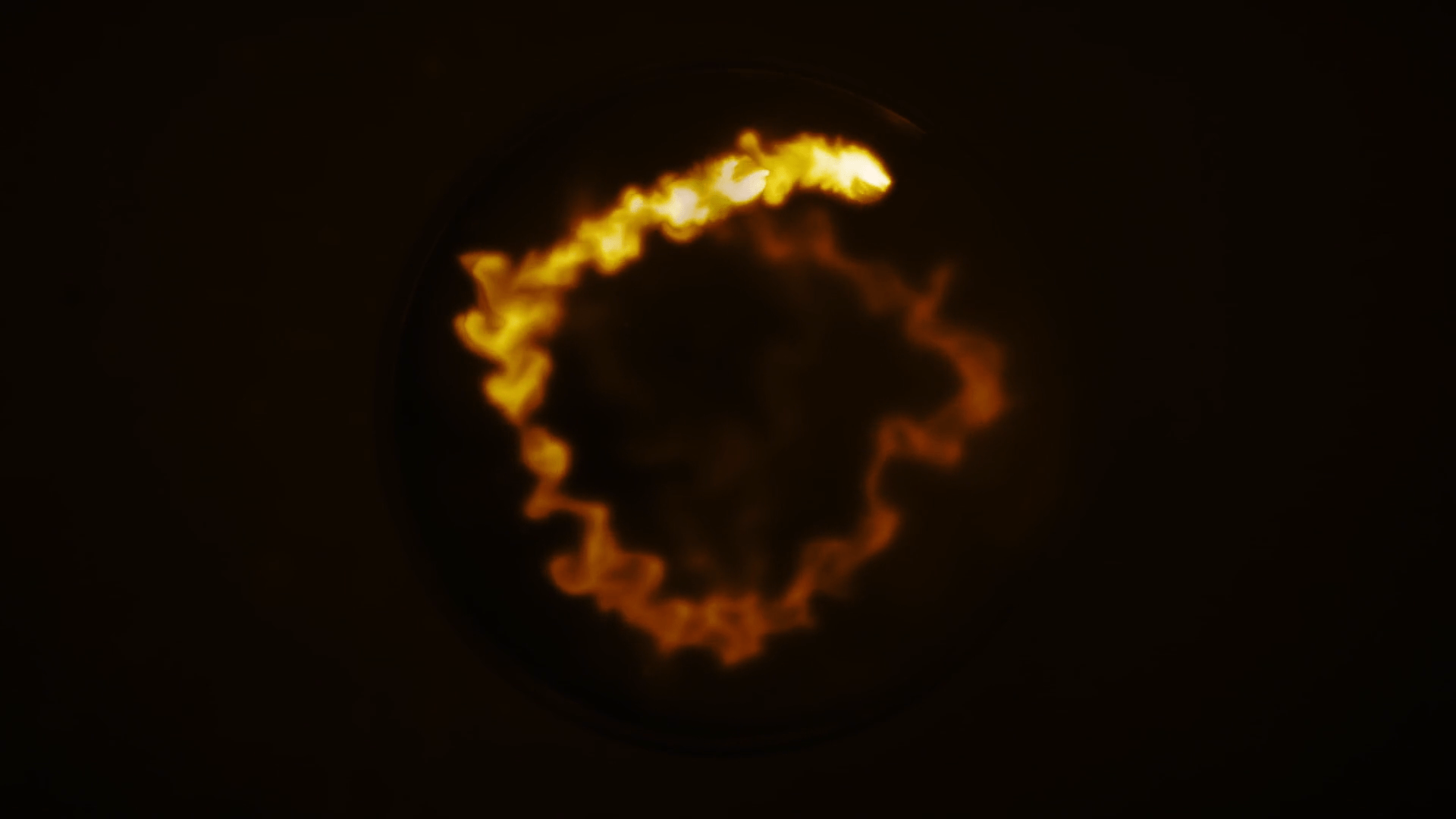
    Chemistry and fluid dynamics often go hand-in-hand. Here chemical reactions produce visible precipitates as one chemical drops into the other. The shapes that form are distinctly fluid dynamical, with vortex rings, plumes, and instabilities all appearing.

    In many applications, chemical reactions and fluid dynamics are tied inextricably to one another because the rate of chemical reaction depends on local concentrations driven by fluid dynamics, and the fluid motion is itself influenced by those concentration gradients. This is why reacting flows, like those found in combustion, are among the hardest topics in fluids. (Image and video credit: Beauty of Science)

  • Featured Video Play Icon

    “Monsoon 6”

    The stunning power and beauty of our atmosphere comes to life in Mike Olbinski’s latest short film, “Monsoon 6”. Over the years, I’ve probably watched dozens of Olbinski’s videos, yet he still captures sequences that make me exclaim aloud as I watch. In this one, some of my favorites are the microburst at 2:17 and the development of mammatus clouds at 3:20. How mammatus clouds form is still very much an area of active research; I don’t know if Olbinski’s footage sheds light on their formation, but it is supremely awesome to watch! (Image and video credit: M. Olbinski)

  • Freezing Waves

    Freezing Waves

    Vibrate a liquid, and you’ll get a pattern of standing waves known as Faraday waves. In this project, artist Linden Gledhill adds a twist to the usual view of these waves by capturing them in plastic. As the polymer liquid vibrates, Gledhill uses a flash of UV light to cure the polymer, freezing the wave pattern. Check out the original video for an even better look. (Image, video, and submission credit: L. Gledhill, 1, 2, 3, 4)

  • Featured Video Play Icon

    “The Unseen Sea”

    San Francisco’s picturesque fogs form “The Unseen Sea” in Simon Christen’s timelapse. Viewed at the right speed, the motion of clouds becomes remarkably ocean-like, with standing waves and surges against the hillside like waves crashing on a beach. Clouds in air don’t have the same surface tension effects as water waves in air, but, for the most part, the physics of their motion is the same, which is why they look so alike. (Image and video credit: S. Christen)

  • Featured Video Play Icon

    Coalescing Drops

    This year’s Nikon Small World in Motion competition was won by fluid dynamics! The first place video shows droplets on a superhydrophobic surface coalescing. The droplets are a mixture of water and ethanol. Their initial merger creates a ripple of waves that’s followed by a ghostly vortex ring that jets into the interior. Previous research on coalescence during impact shows jets driven by surface tension but the jet here doesn’t appear to be confined to the surface. (Image and video credit: K. Rabbi and X. Yan; via Nature; submitted by Kam-Yung Soh)

    Droplets on a superhydrophobic surface coalescing.