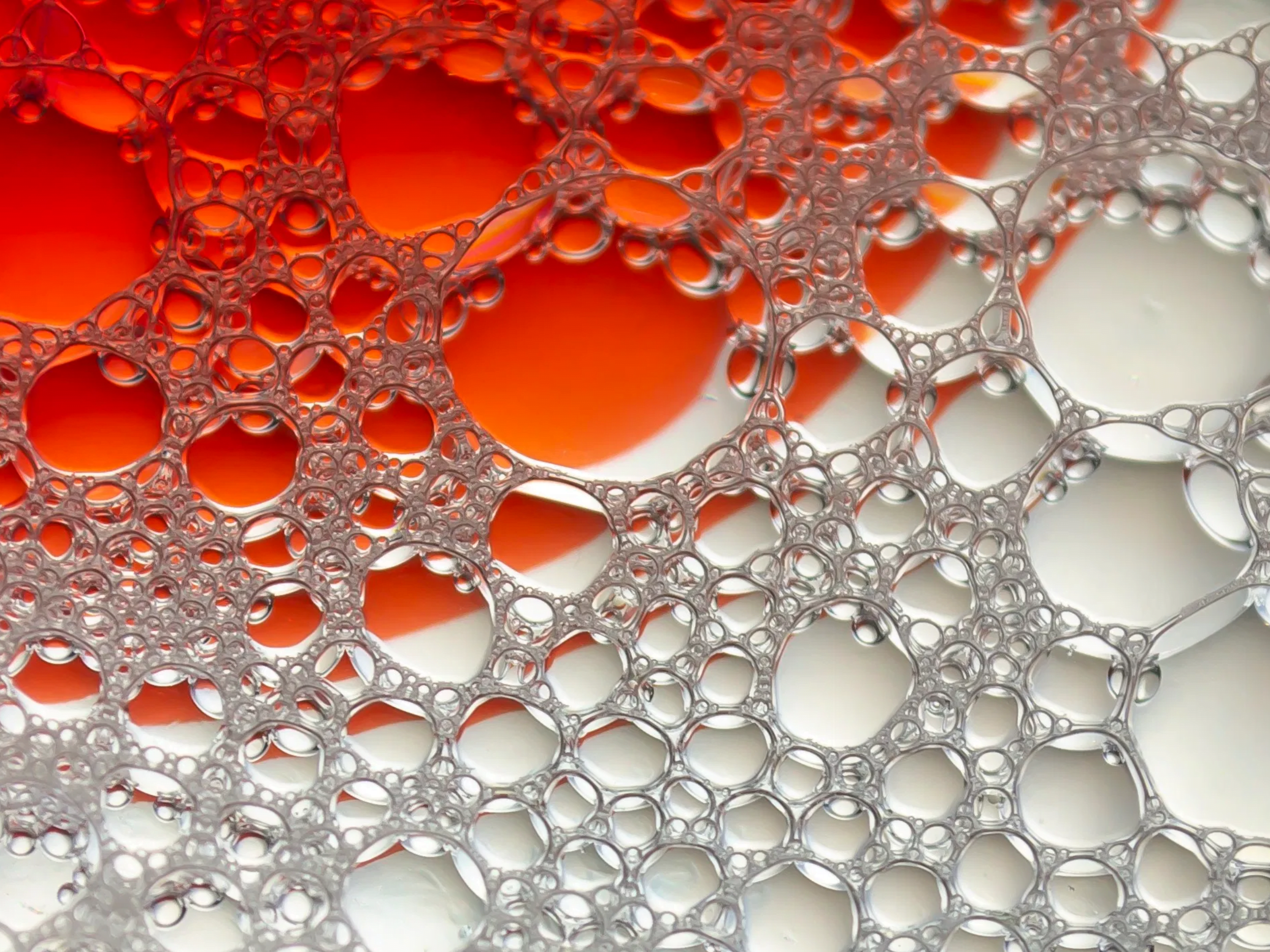
Sandro Bocci’s short film “Flux Capacitor” explores the geometry and dynamics of soap films. When you dip wire models into soapy solution, the films that cling to the model can form complicated shapes as surface tension works to minimize the overall surface area. Bocci’s macro photography highlights the intense flows going on in the narrow regions where films meet. It’s a different take on soap films and neat to see! (Image, video, and submission credit: S. Bocci et al.)
Category: Art

“Mini Planets”

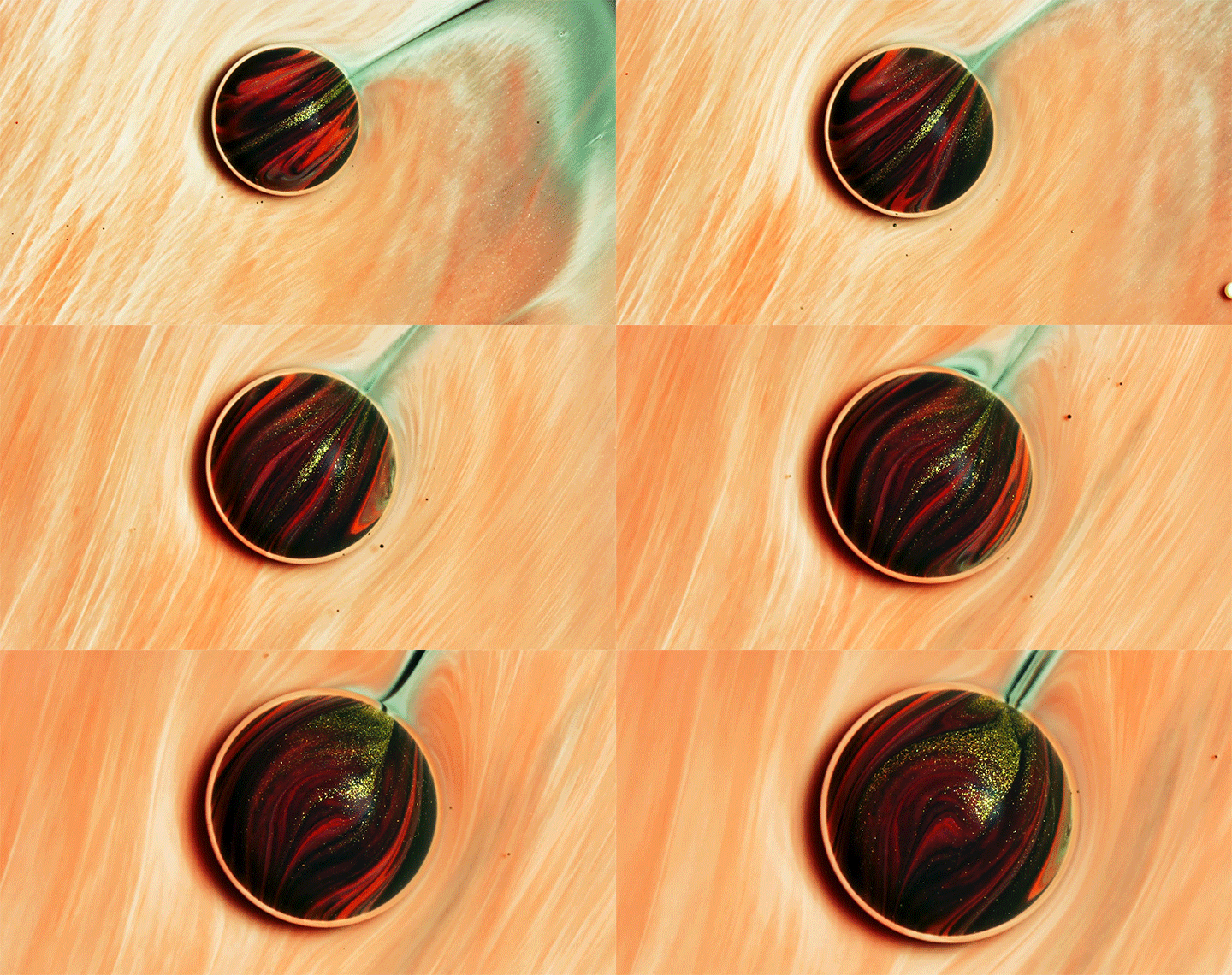


In Thomas Blanchard’s “Mini Planets” oil-coated paint droplets swirl on colorful backgrounds. With band-like streaks, they truly do look like miniature planets rotating. I love that a few of them even have distinctive vortices! (Image and video credit: T. Blanchard)
“Satellike”


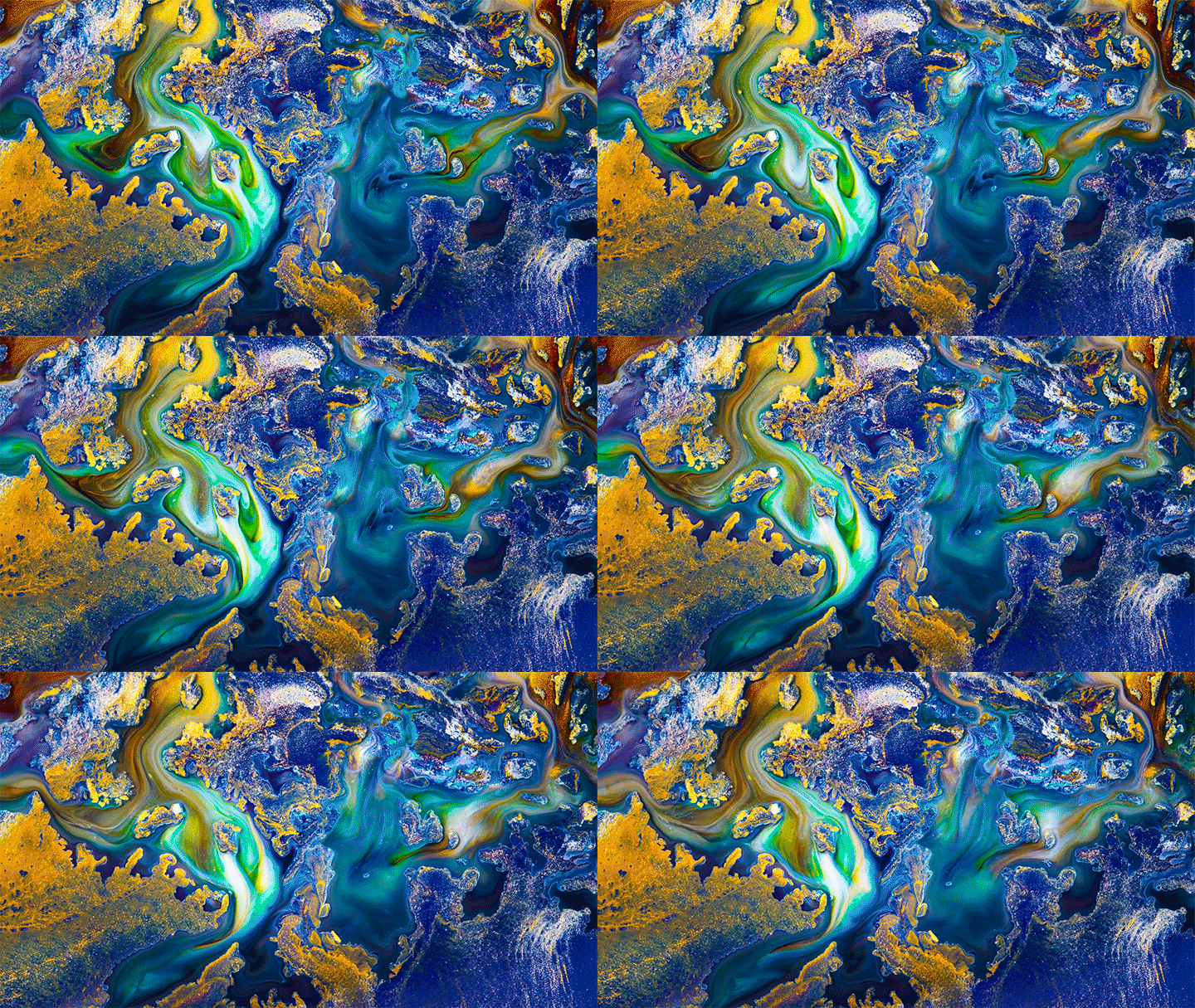
When watching Roman De Giuli’s “Satellike,” you may think you’re looking at satellite imagery of Earth. In reality, each sequence is a combination of watery ink and dried paint on paper. You can see some behind-the-scenes glimpses of the process and the artworks that inspired the work here. (Image and video credit: R. De Giuli; submitted by Mark S.)
“Chocolate Lullaby”


In this music video for the song “Chocolate Lullaby,” the Macro Room team feature all kinds of fluid dynamical phenomena. It begins with pouring viscous fluids, which, like honey or cake batter, fold and stack before they spread. From there things get significantly less viscous and more turbulent. There’s some neat coalescence, billowing streams colliding, and some gorgeous turbulence. Enjoy! (Image and video credit: Macro Room)

“Catalysis”


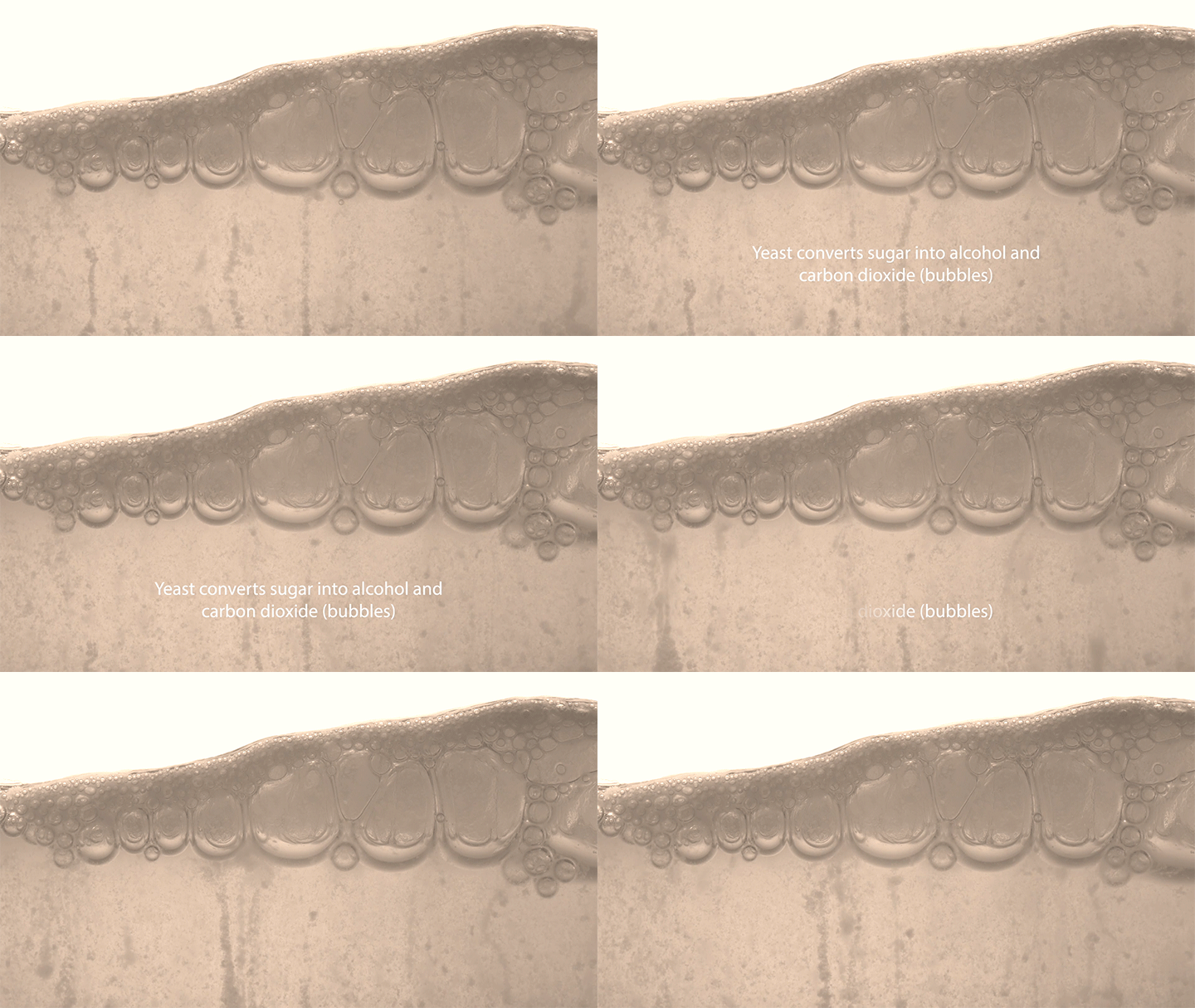
Catalysts speed up chemical reactions without being consumed themselves. In “Catalysis” the Beauty of Science team shows 5 different examples of catalytic reactions, from acetone oxidation to yeast fermentation. The film is full of bubbles, sparks, and wave-like pulses of chemical reaction. As always, it’s a lovely glimpse of processes we’re not used to watching so closely. (Image and video credit: Beauty of Science)

Bubble Array
Surface tension tries to minimize a bubble‘s surface area, which is why bubbles assume a spherical shape. But when many bubbles clump together, a curved interface is not always the most energy efficient one. In this case, bubbles can take on many shapes and sizes while still minimizing the overall surface energy. Take a close look at this image and see what shapes you discover! (Image credit: M. Adil)

Sunset Swirls
This gorgeous photograph of Kelvin-Helmholtz clouds was taken in late December in Slovenia by Gregor Riačevič. The wave-like shape of the Kelvin-Helmholtz instability comes from shear between two fluid layers moving at different relative speeds. Here on Earth, clouds like these are often short-lived, but we see similar structures in the atmospheres of gas giants like Jupiter and Saturn. (Image credit: G. Riačevič; submitted by Matevz D.)
“Mist and Water”


Years ago, I drove through the Blue Ridge Mountains on a wet and misty New Year’s Day. The fog that clung to the dark trees made the whole world quiet and surreal. And although Mike Olbinski’s “Mist and Water” takes place on the opposite side of the country in Oregon, that’s what the video reminds me of. So take a few minutes to enjoy the calm of mist and water flowing in this beautiful short film. (Image and video credit: M. Olbinski)

Vanishing Spirits: Aging


The necessary ingredients for scotch whisky’s evaporation patterns are alcohol, surfactants, and polymers; some of those components are absorbed during the spirit’s aging in oak casks. Photographer Ernie Button explored how long it takes for whisky to absorb enough of these chemicals by photographing the stains left by samples aged between 1 and 5 weeks in an oak cask. He found that it takes about 5 weeks for the scotch patterns to begin emerging.
The aging process for scotch and other cask-aged spirits depends on the fluid’s flow through the porous grain of the oak. Evaporation plays a significant role in the process, so the aging process differs based on environmental conditions. For example, distillers in the dry, high-altitude climate of Colorado must use climate-controlled storage, whereas Scottish distillers use a more humid natural climate to their advantage.
Another major factor in the aging process is the charred oak cask itself. Some whiskys, like American bourbon, always use a brand new barrel, whereas scotch is often aged in a previously-used cask. With older casks, absorption of molecules from the wood takes longer, which is why scotch is typically aged for much longer than some other types of whisky. (Image, research, and submission credit: E. Button; see also)

Vanishing Spirits: Rice-Based Whisky


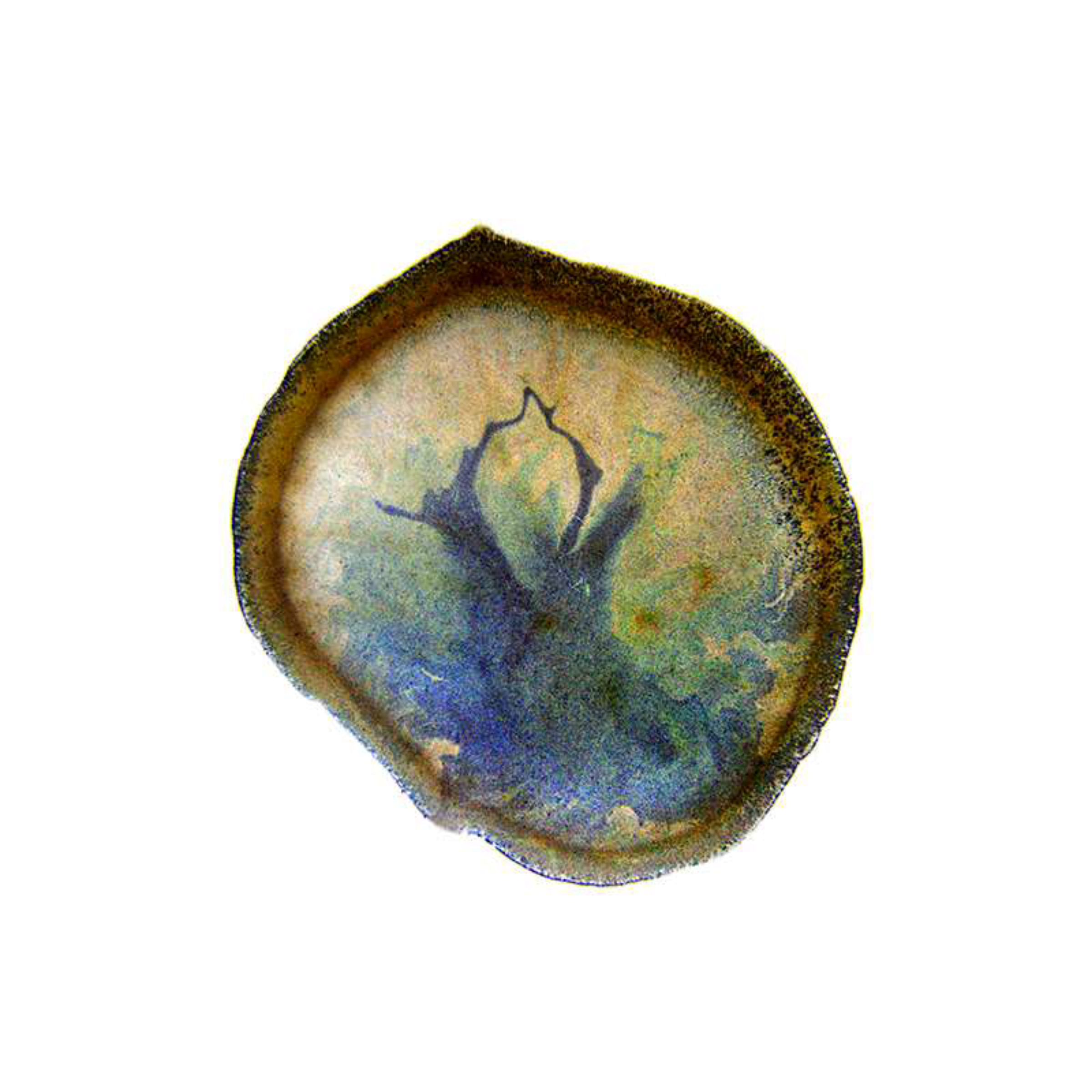
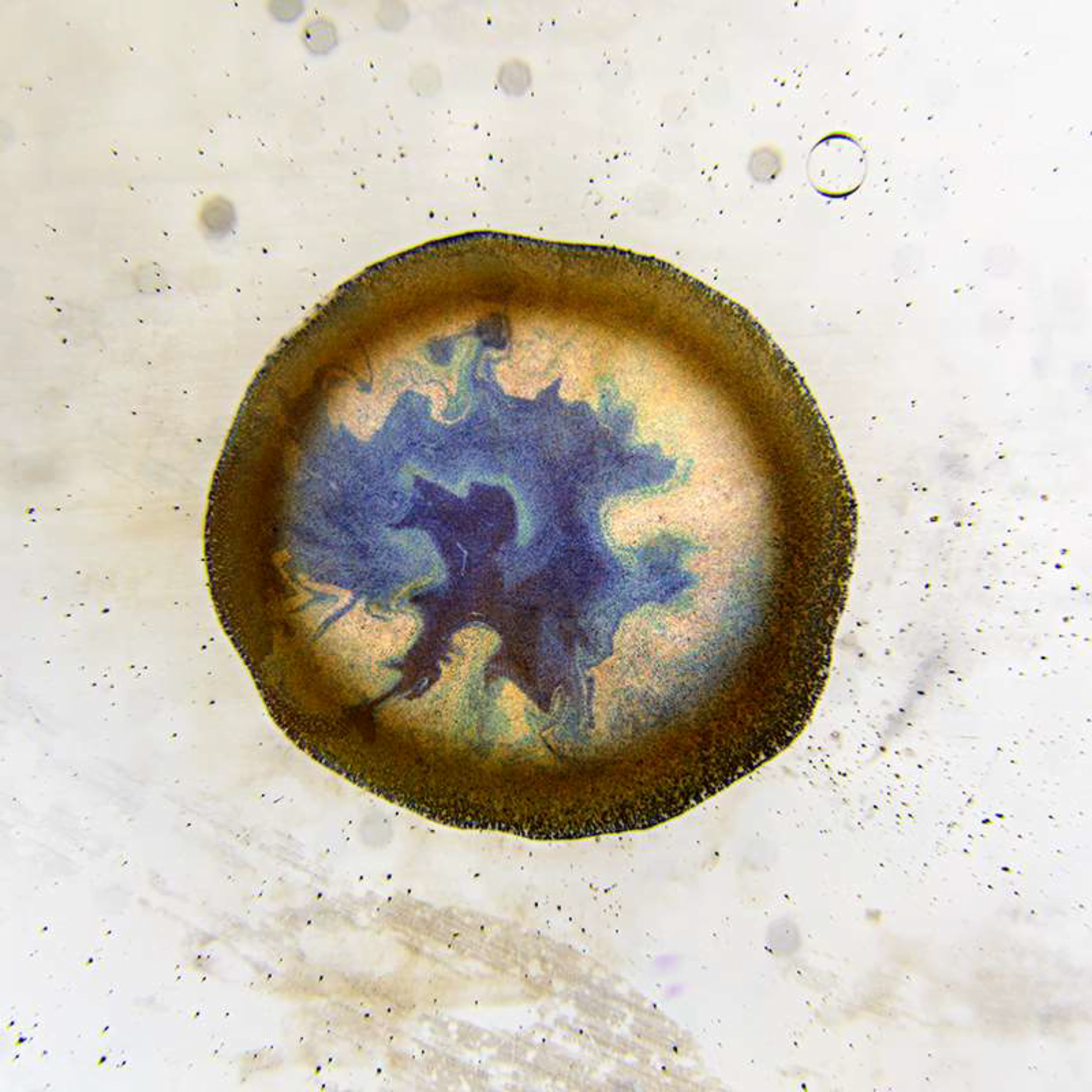
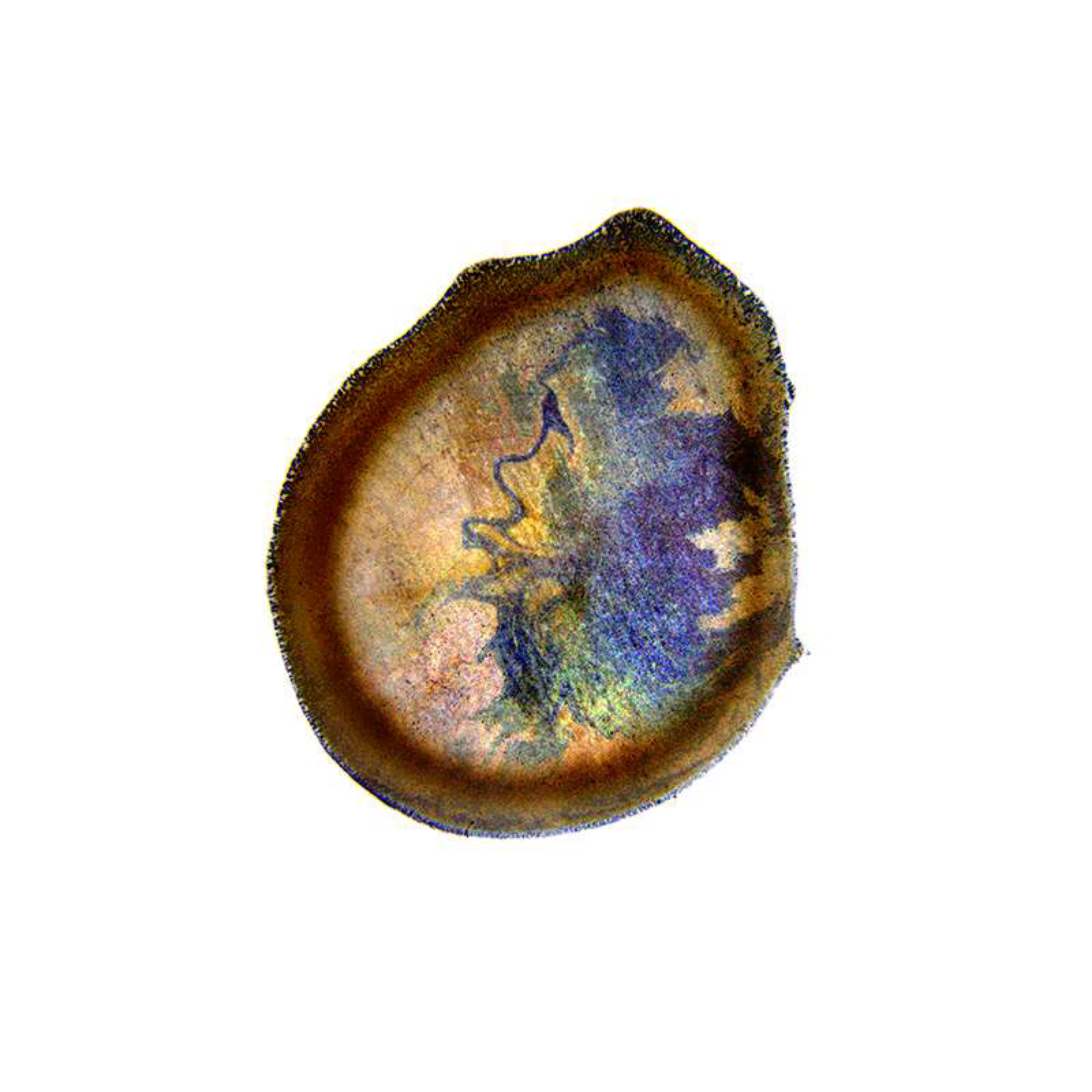

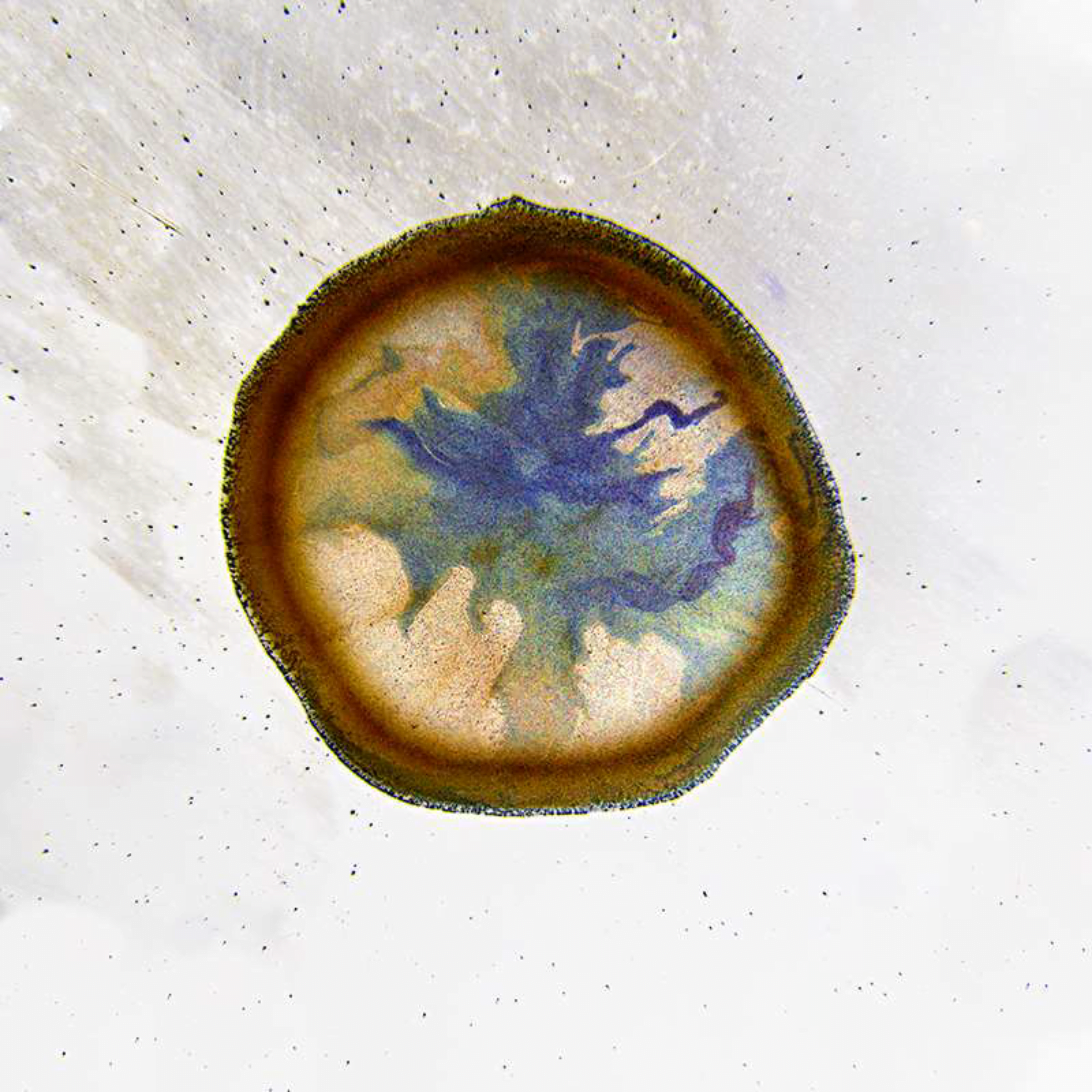
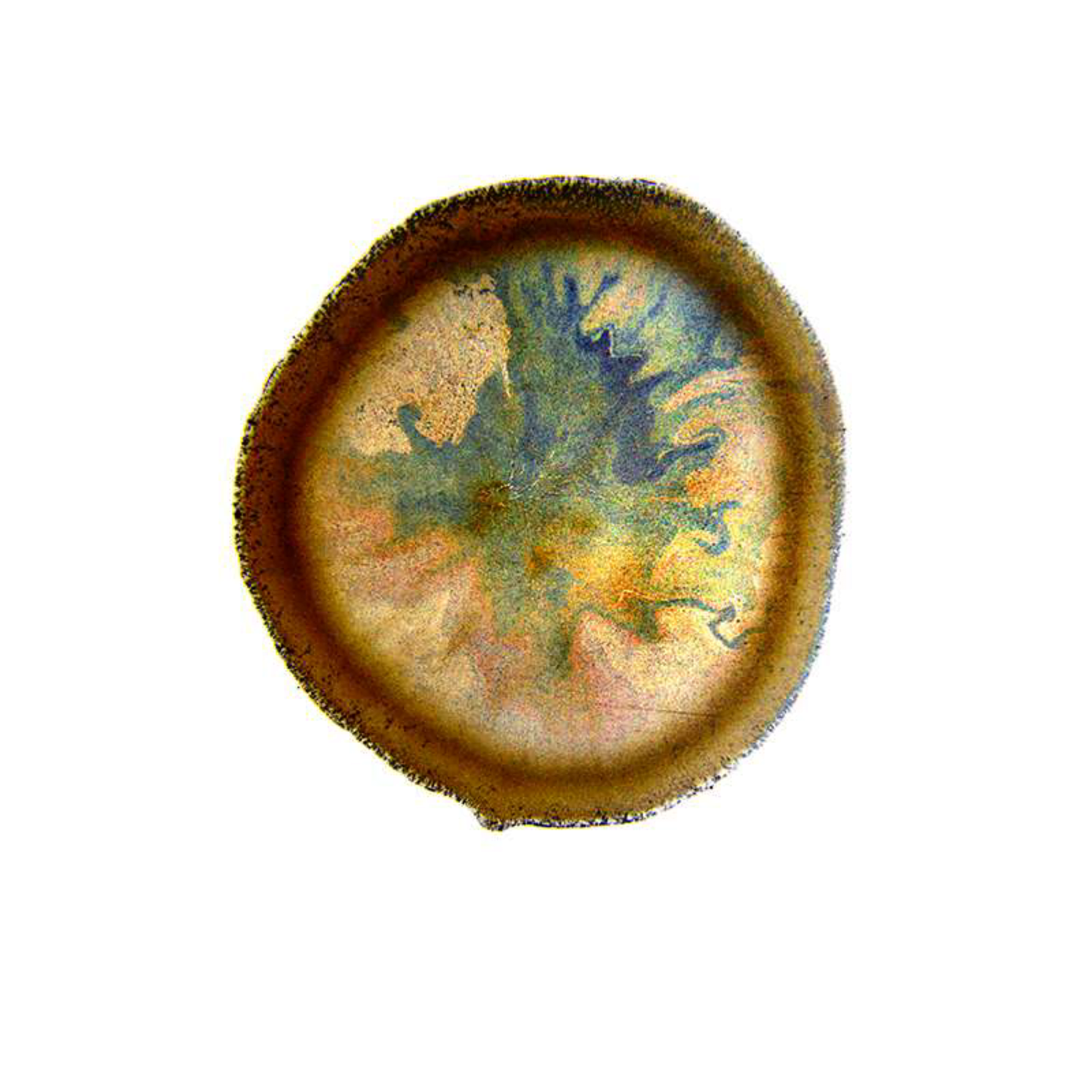


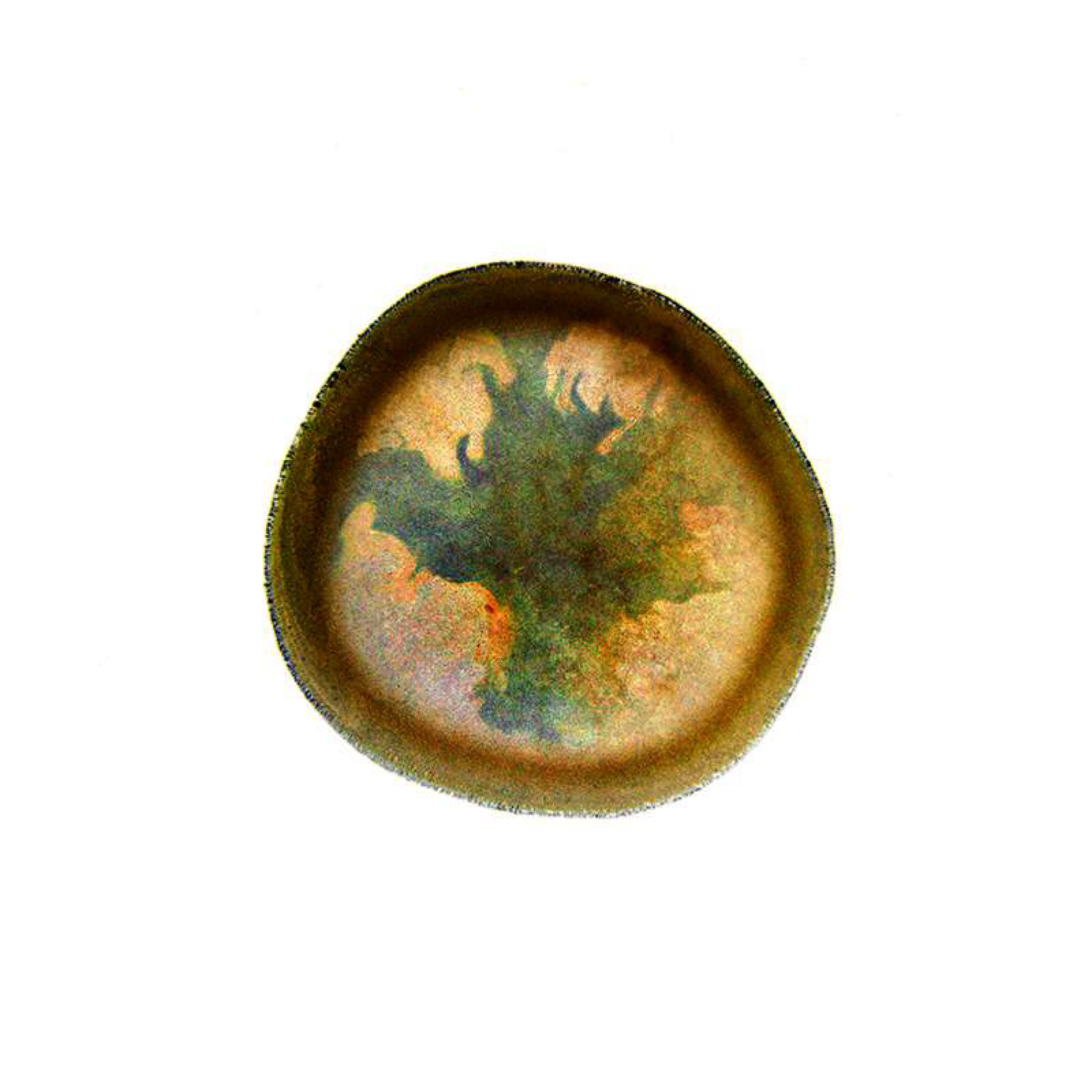


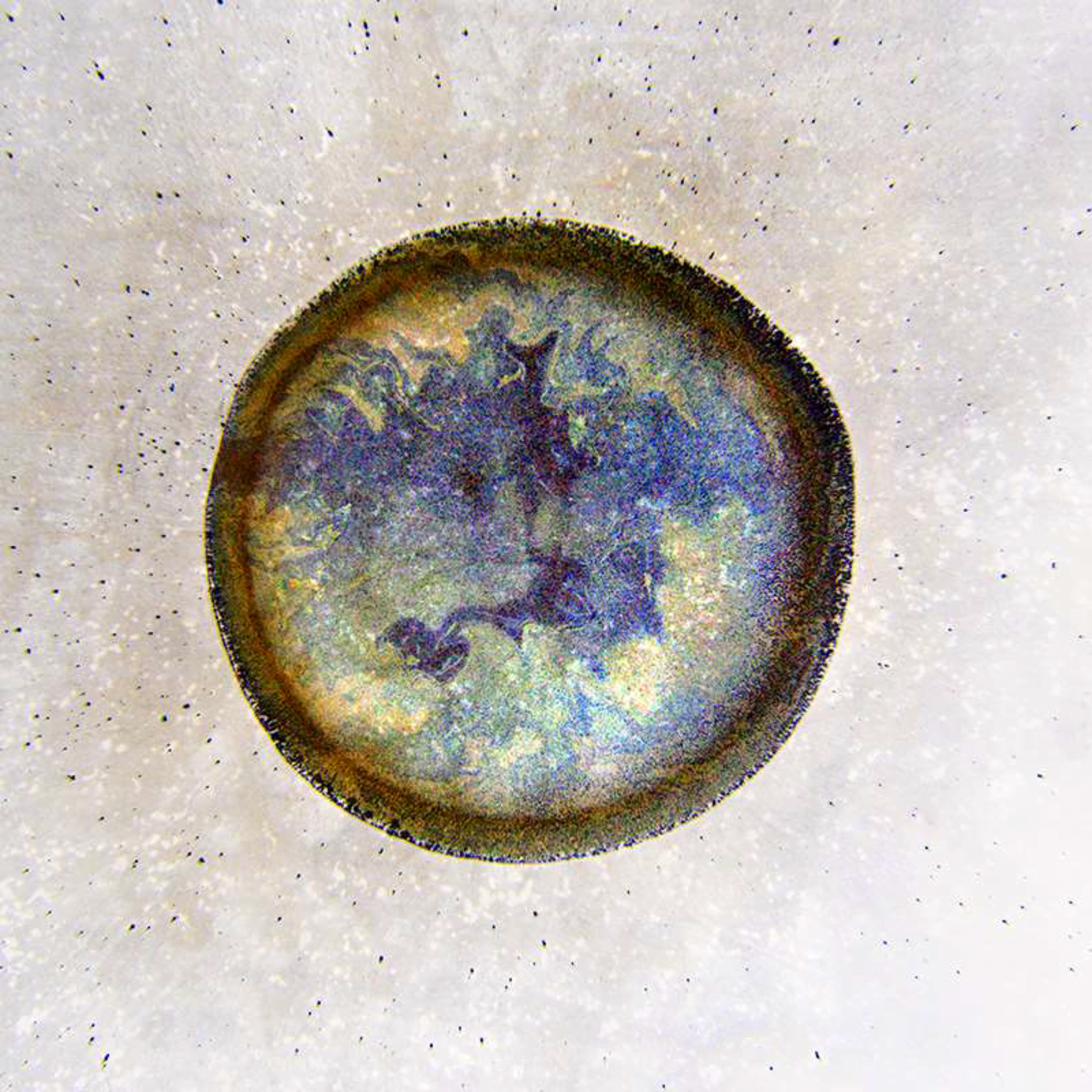
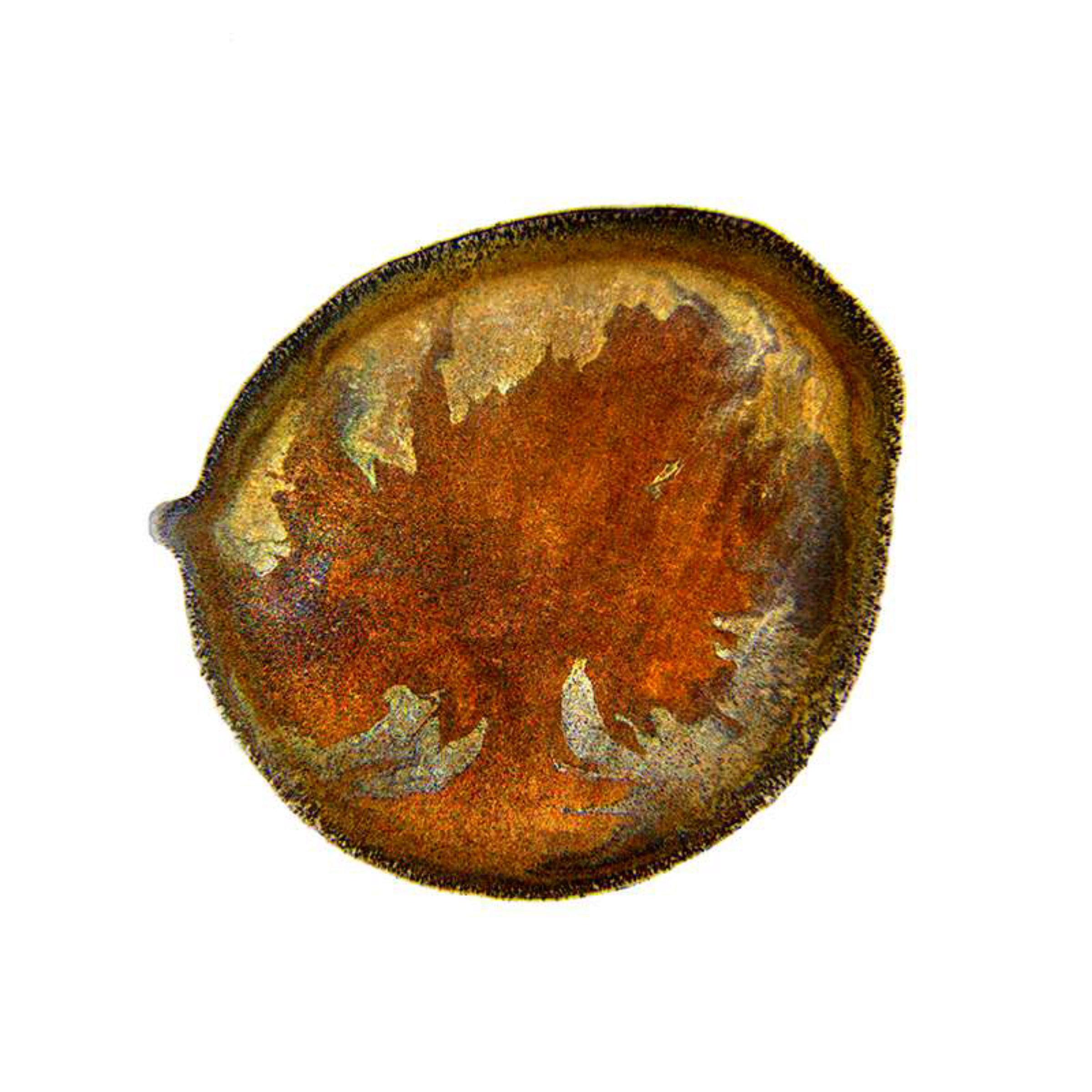
In yesterday’s post, photographer Ernie Button showed us that barrel-aged gin can leave behind an evaporation pattern remarkably similar to scotch whisky. But even among whiskys not every spirit uses the same grains.
Here we see patterns left behind by a 10-year-aged, rice-based whisky. The stains are entirely different than those of (barley-based) scotch. The rice leaves behind stains with distinct regions, including a radially uniform rim and an interior reminiscent of satellite photos. Presumably the interaction of rice and the cask leaves the whisky with surfactants and polymers that behave rather differently than those of scotch.
It takes time for spirits to take on character from the casks they’re aged in. Tomorrow we’ll take a look at just how much aging is necessary for scotch’s patterns to emerge. (Image, research, and submission credit: E. Button; see also)