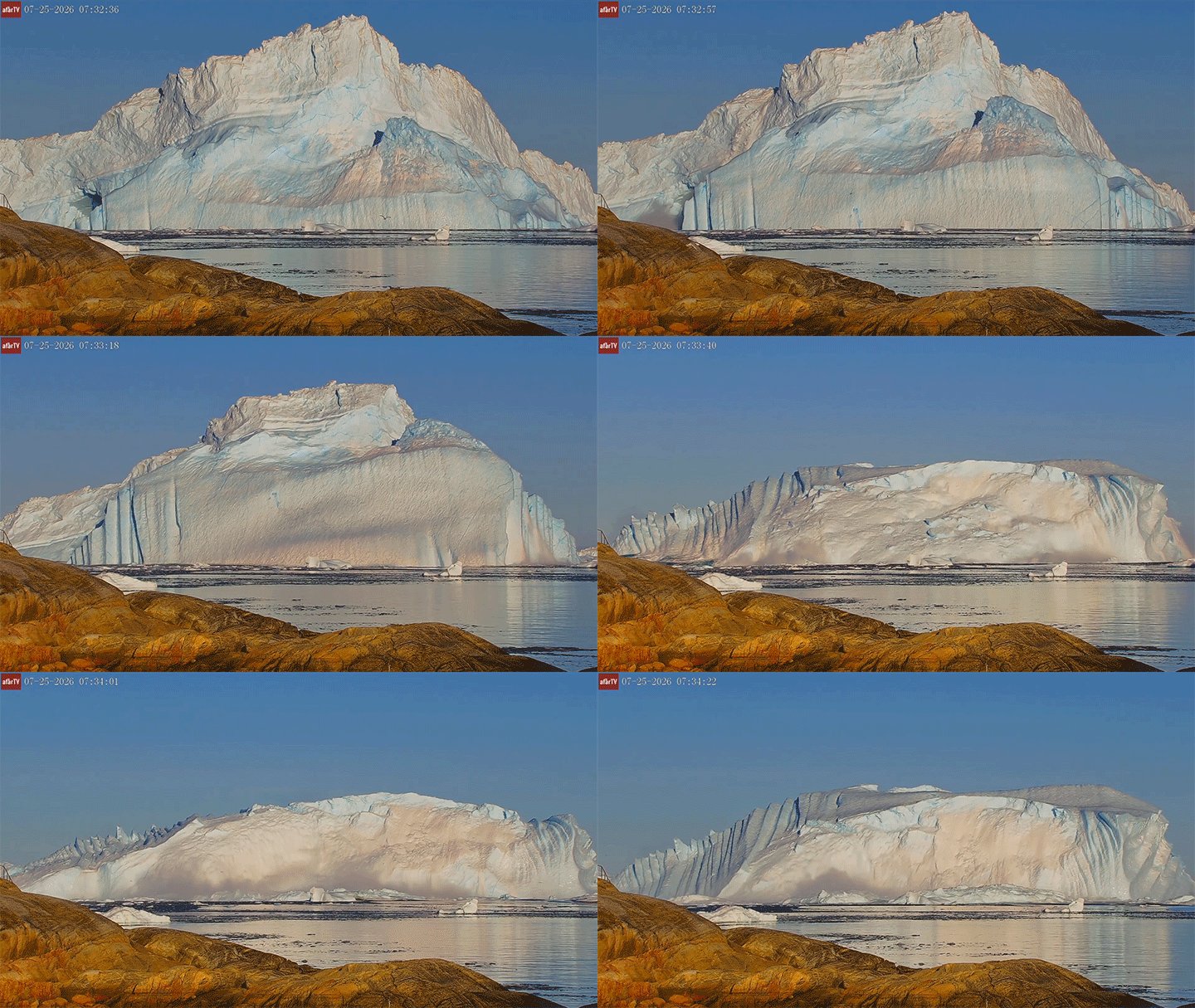
Footage of a massive iceberg flipping in Greenland has gone viral. The feat took place off the coast of Ilulissat and was caught on a nearby livestream camera. Icebergs shift like this because they melt unevenly, with submerged areas melting faster. As the underwater shape of the iceberg changes, the buoyant forces shift relative to the iceberg’s center of mass, and it flips, eventually settling into a (temporarily) stable orientation. This situation is simpler in the lab version, though; as the video here shows, real icebergs can also rapidly lose mass if they start breaking apart. That, too, can necessitate a flip. (Video and image credit: AfarTV; via Colossal)
Tag: buoyancy

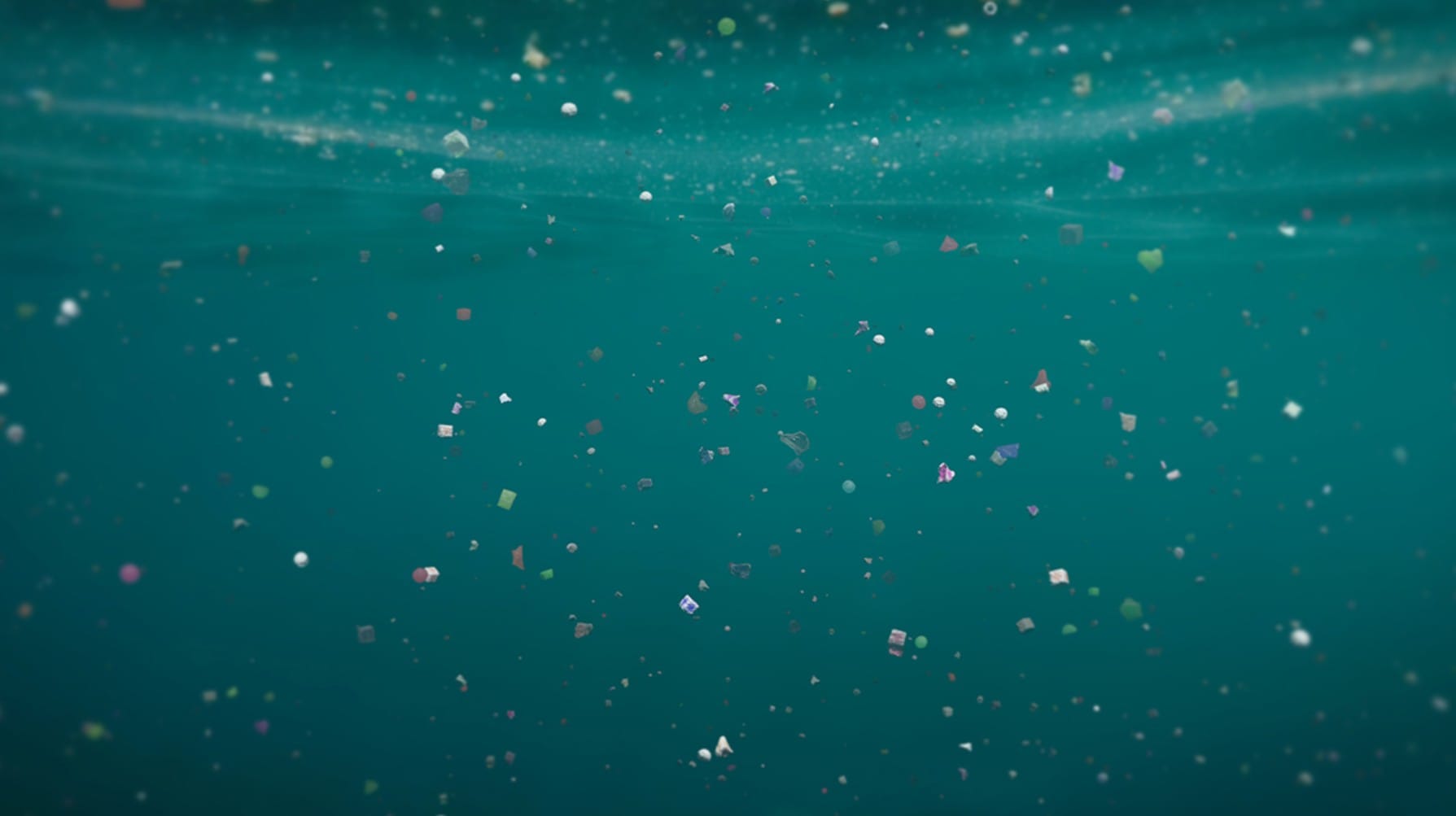
Microplastics in the Water Column
Of the more than 9 billion metric tons of plastic that’s been produced, a mere 9% has been recycled. About 12% has been incinerated, and the remainder is just out there–in our homes, our landfills, and, unfortunately, in our oceans. Exactly where all the plastic is continues to be an active question of research.
Plastic’s density is similar to that of water; some versions are a little denser than water, and some are a little lighter. So whether a piece of plastic floats at the ocean surface or sinks to the bottom depends on several factors, including its density, size, and shape. A large, dense plastic–think laundry detergent bottles–can float if it displaces enough water; after all, metal ships float!
But as sunlight and abrasion breaks that big container into smaller fragments, their buoyancy shrinks. Eventually, these small, millimetric pieces sink, carrying our pollution to ecosystems we once thought remote. Some of the highest rates of microplastic ingestion are found in nonmigratory species living between 1200 and 1500 meters below the surface. We may never visit those depths, but our garbage does. (Image credit: iStock/dottedhippo; via Eos)
Fediverse Reactions
-

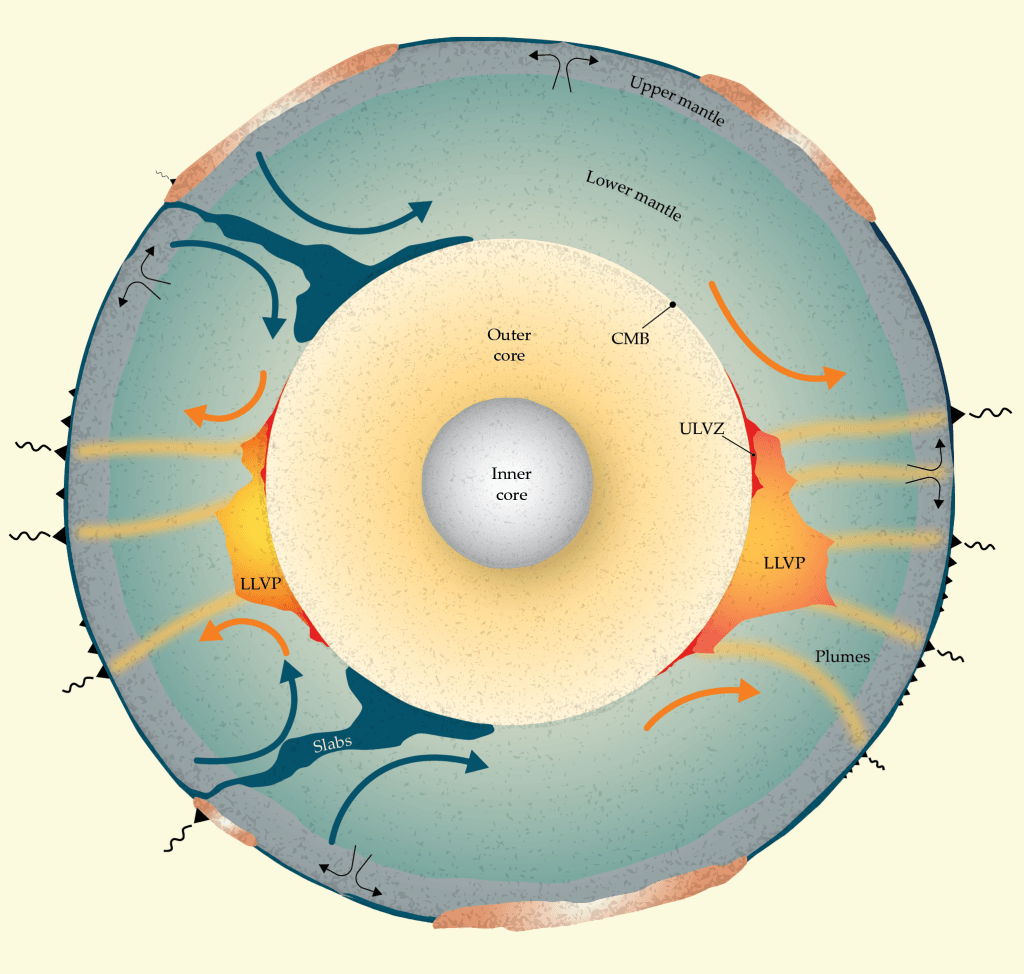
Convection Inside the Mantle
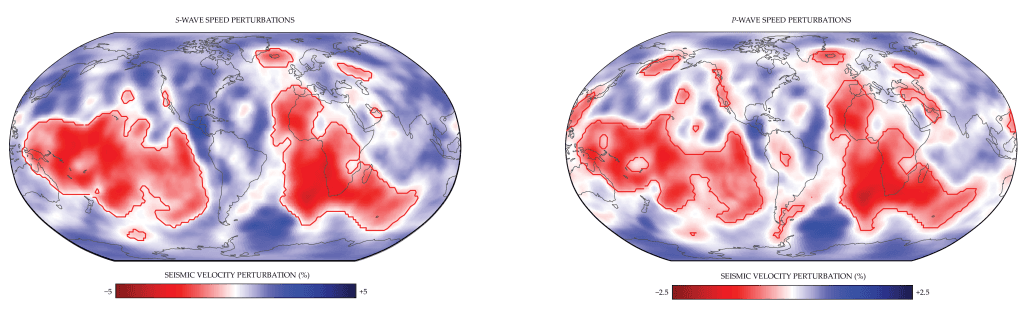
Most of what we know about Earth’s interior comes from observing how seismic waves–mostly from earthquakes–bounce around. As our observations have gotten better–more seisometers, better imaging techniques–scientists have identified two large anomalies sitting near the bottom of the mantle. Known as large low-velocity provinces, or LLVPs, these zones take up continent-sized areas beneath parts of Africa and the Pacific.

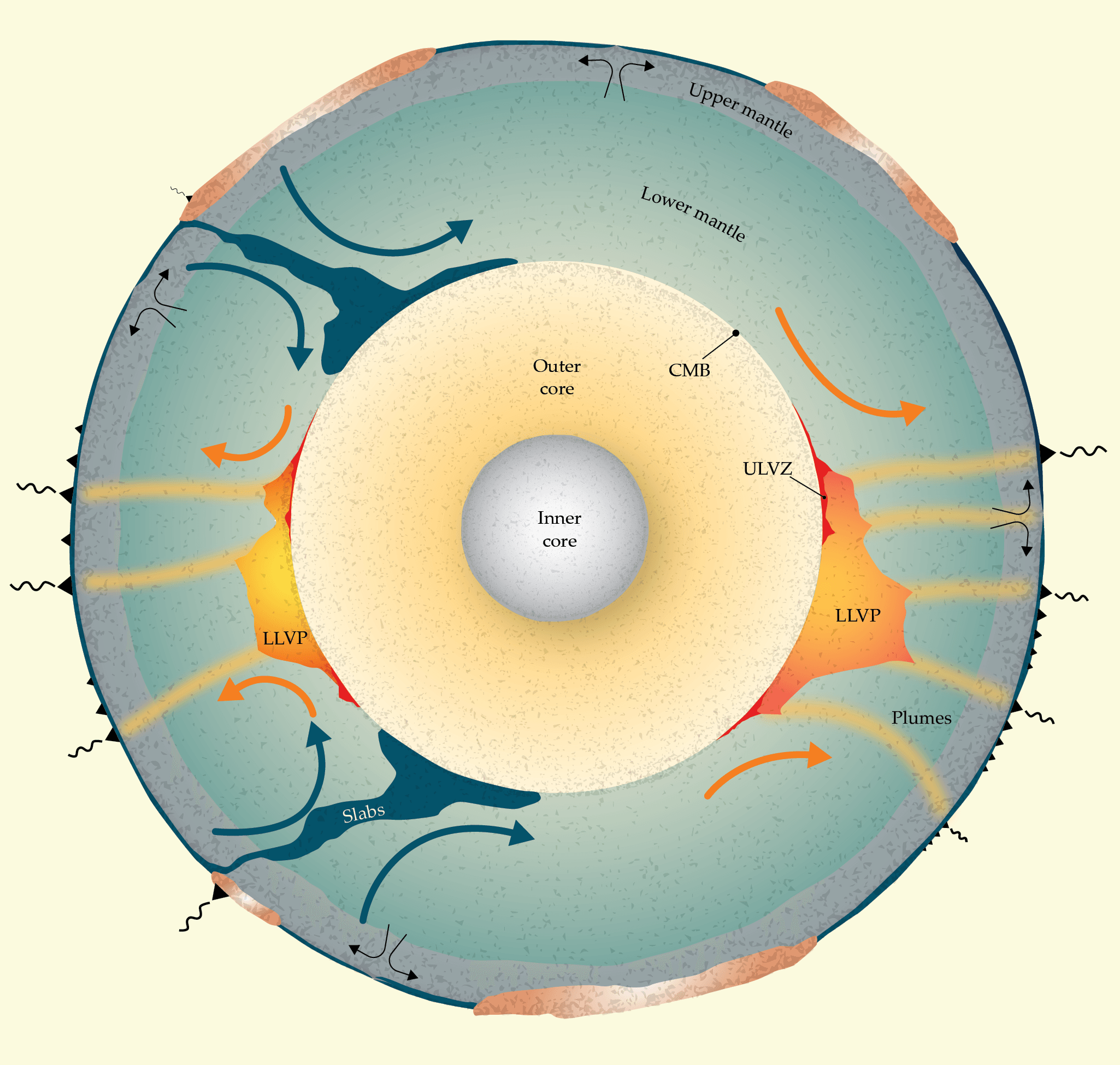
Seismic waves show lower speeds in large, continent-sized zones that sit beneath Africa and the Pacific. These large low-velocity provinces (LLVPs) are outlined in red. The LLVPs are hot, which would normally make them buoyant, but their stationary nature suggests they are made up of extremely dense material. Narrow plumes of hot material make their way up from the LLVPs to form volcanic hotspots like those that made the Hawaiian and Galapagos Islands. Balancing that upward convection is the downward convection of former tectonic material carried into the mantle at subduction zones.
What the LLVPs are made of remains an active research question. One suggestion is that they contain remnants of Theia, the planet thought to have impacted the proto-Earth to form our Moon. (Image credits: E. Garnero and C. Richardson; see also Physics Today)

Illustration showing convection in the Earth’s inner mantle. Former tectonic material subducts downward in dark blue zones. The large low-velocity provinces (LLVPs) are shown in orange. Hot-spot volcanic activity is seen at the surface (black triangles) above narrow plumes that lift material from the LLVPs toward the surface. Fediverse Reactions
-

Melting Can Propel Icebergs
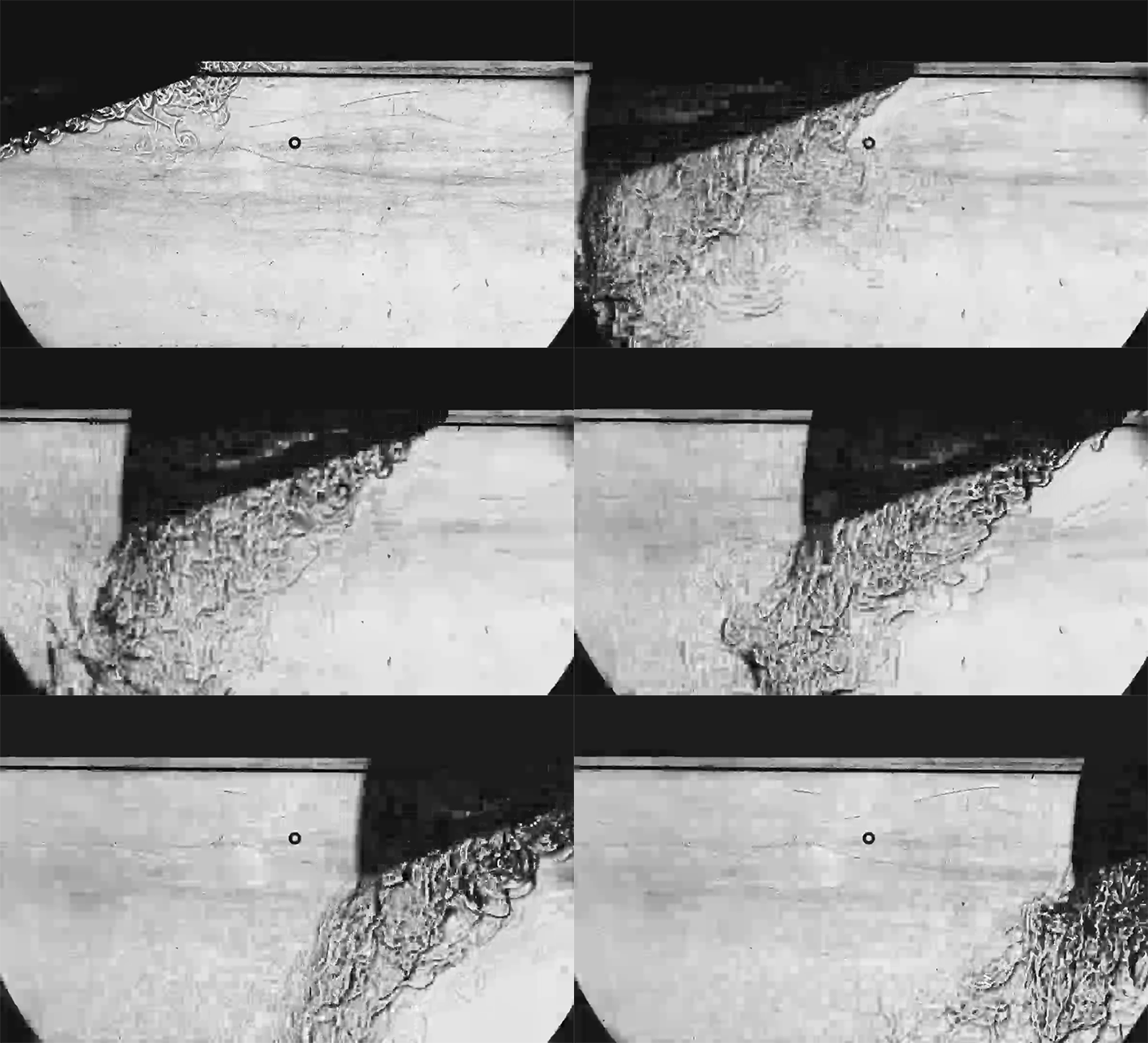
Icebergs have long served as a metaphor for not knowing what’s going on beneath the surface. Studies like today’s are a reminder of why that is. Researchers found that asymmetric icebergs–shaped, in this case, like a right triangular prism–can self-propel as they melt. Their shape forces cold, dense meltwater to slide down the surface, generating a sinking plume that propels the ice as a whole. The team demonstrated this effect in both fresh- and saltwater. For icebergs wandering into warm waters, the effect is particularly strong and may reach levels about 10% of the magnitude of dominant propulsive forces like wind. (Image and research credit: M. Berhanu et al.; via APS)
Fediverse Reactions
-

Fire From Below

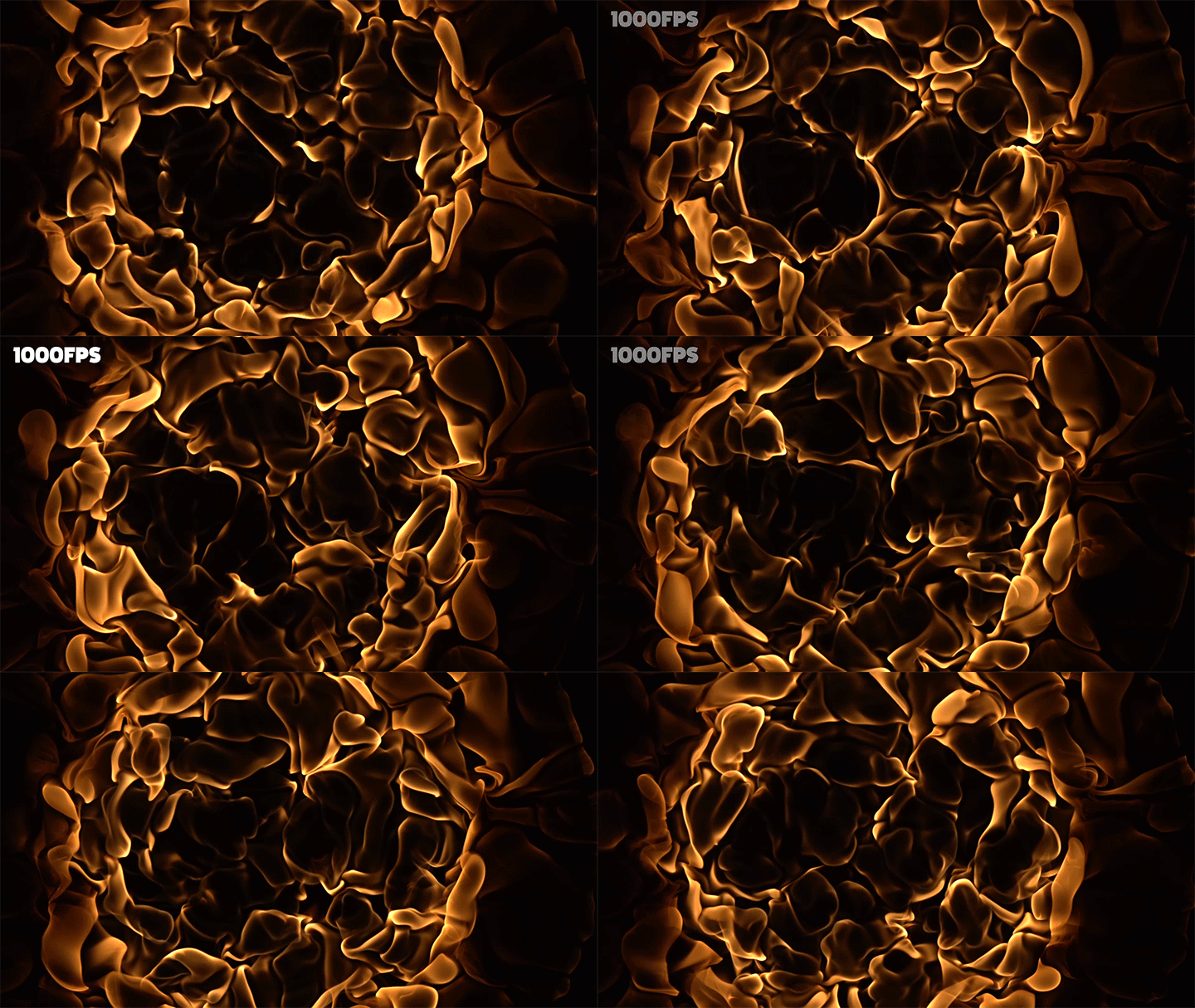
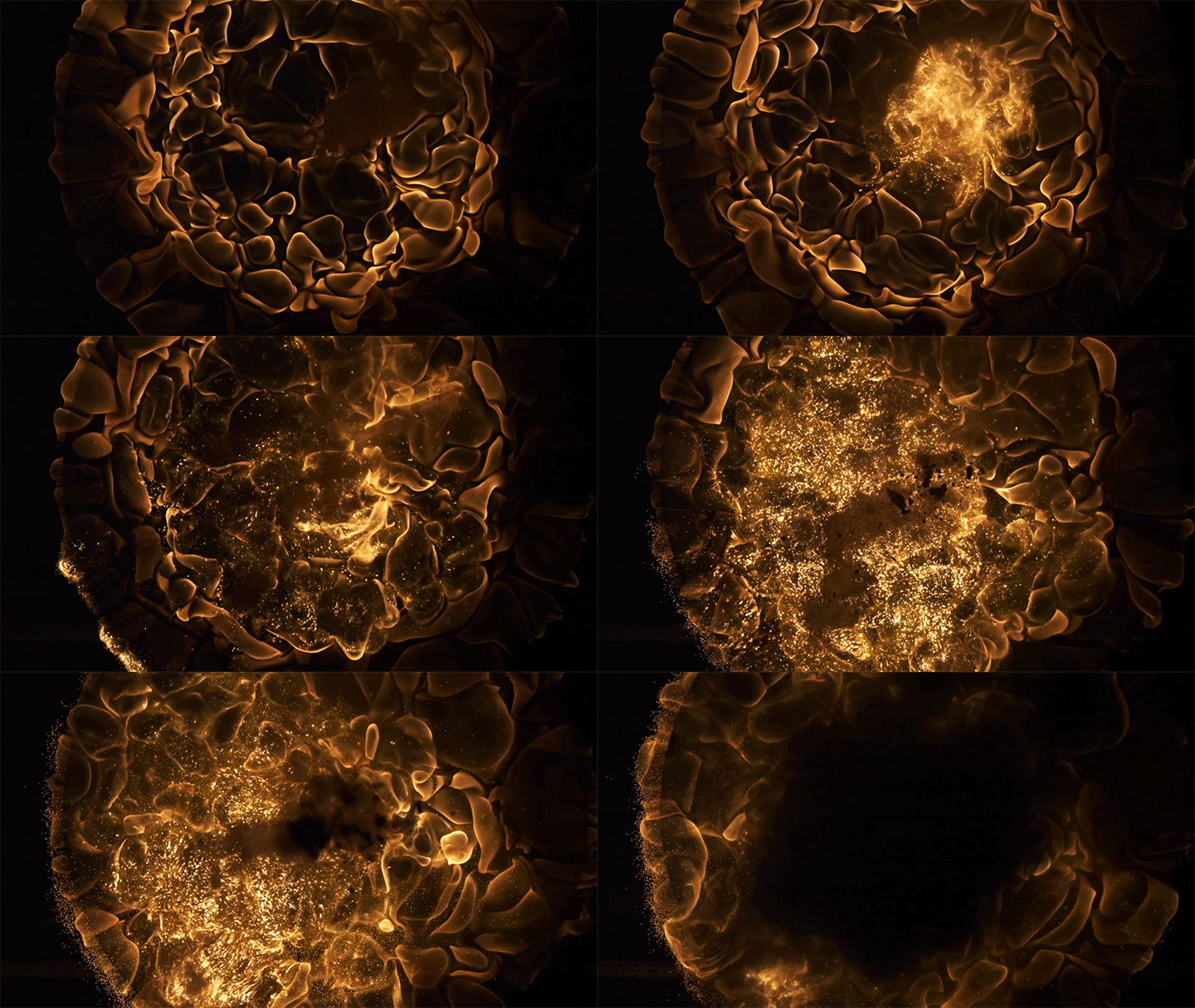
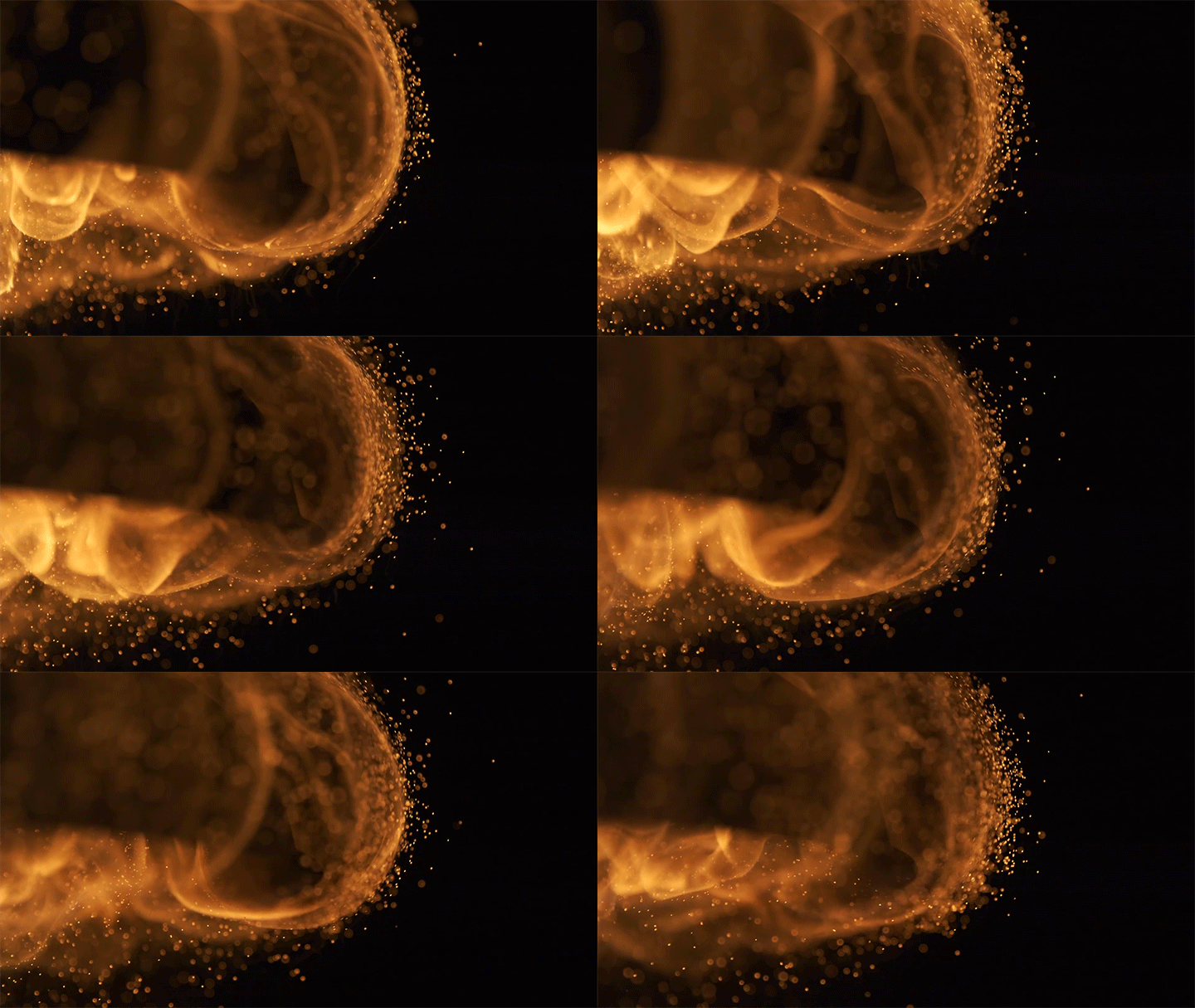
A slight change in perspective can do wonders. In this video, the Slow Mo Guys look at a burning flame from below. They accomplish this by mounting a gas grill upside-down. This small change means that buoyancy can’t simply lift heat and exhaust gases away from the flame source. Instead, the flow pushes out and around the edges of the grill.
The views are, as always, amazing. The billowing flames are mesmerizing–often closer to laminar than turbulent. And the added spectacle of cinnamon combusting in the later segments really does make for the kind of visuals you’d expect in a sci-fi movie. (Video and image credit: The Slow Mo Guys)
Fediverse Reactions
-

Mixing Bubble Caps
When bubbles form atop the ocean or in our cups, they typically live short lives. Although the bubble can exchange fluid with the pool below, this only happens at the foot of the bubble cap. There, thinner patches form and, due to their buoyancy, rise up along the bubble’s surface. Over time, these lighter, thinner patches reduce the amount of fluid in the cap–causing the bubble to thin and eventually burst.

Here, researchers show that thinning–visible in the dark blue plumes rising up the bubble cap–when there’s no turbulence in the surrounding air. But as turbulence outside the bubble increases, the thinner patches stretch and deform across the cap. In the image series, turbulence increases moving from top to bottom. (Image credit: T. Aurégan and L. Deike)
Floating Bridges
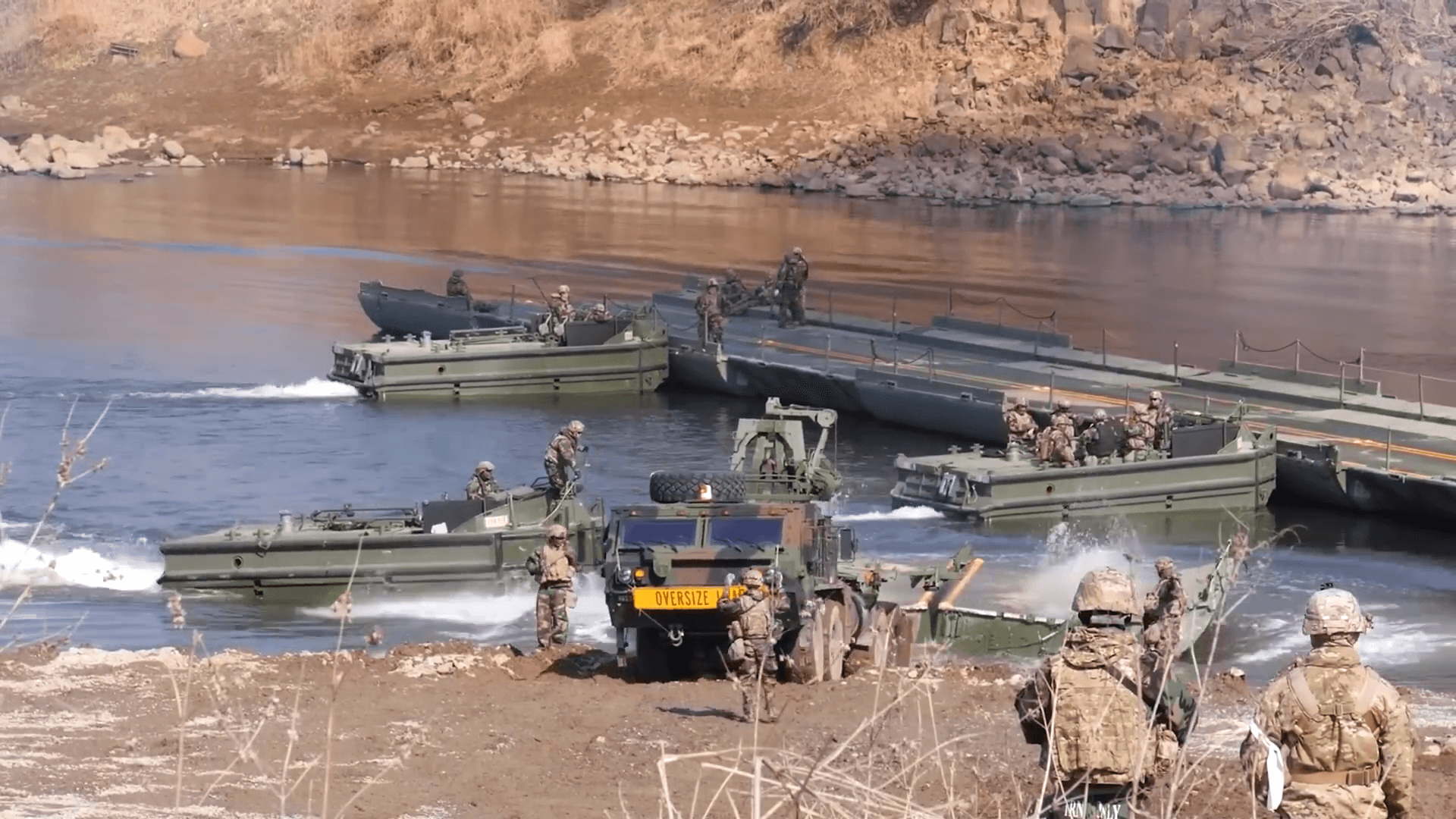
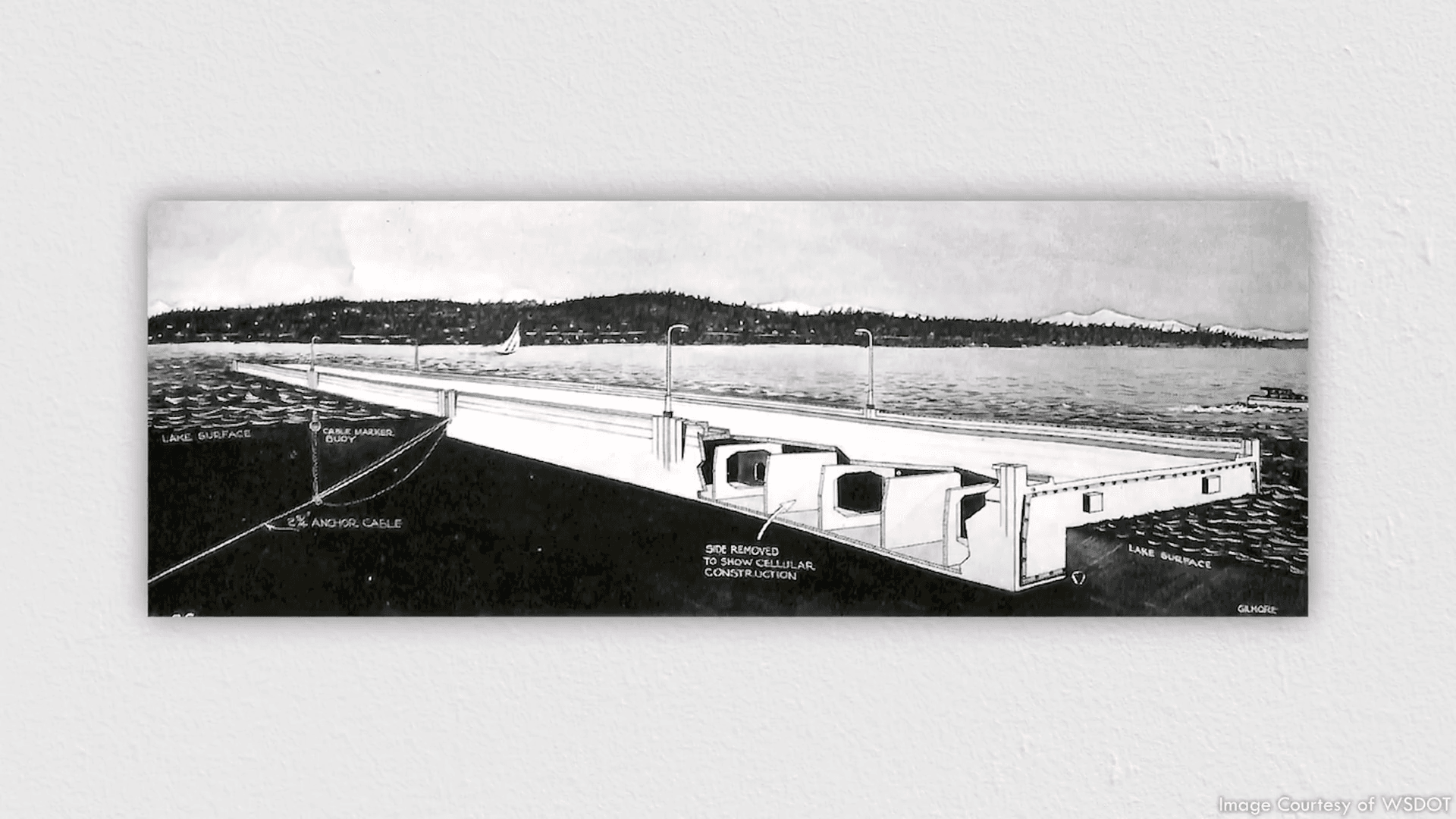
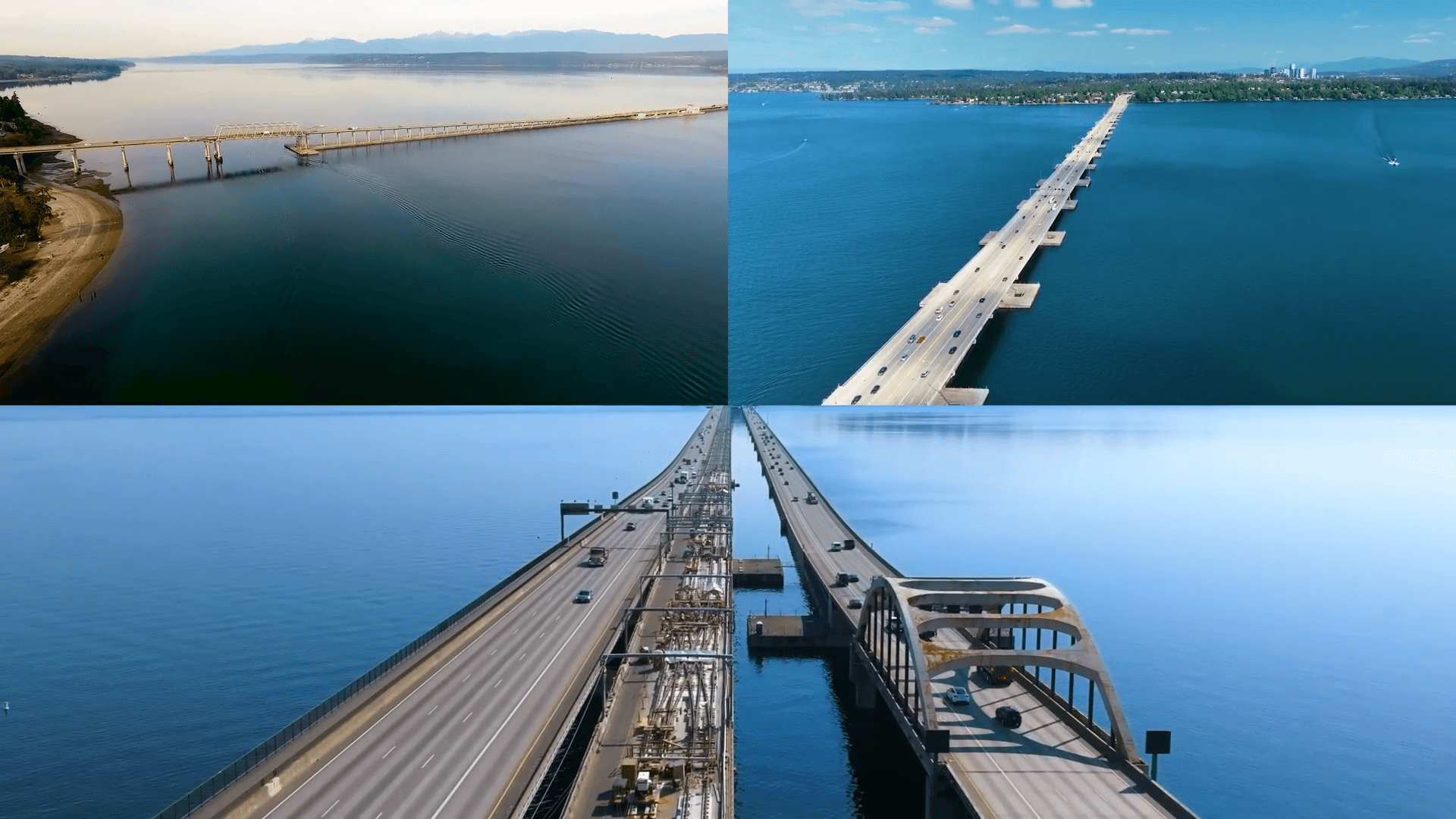
For most of history, floating bridges have been temporary structures, often used by militaries crossing water, but over the course of the twentieth century, engineers learned to build more permanent floating bridges. These structures require very particular conditions–calm waters, minimal ice, and so on–but they can be great options for crossing lakes where the traditional anchoring options for a bridge just don’t exist. In this Practical Engineering video, Grady discusses some of the challenges and innovations of these unusual bridges. (Video and image credit: Practical Engineering)
Fediverse Reactions
-
Dissolution and Crystallization
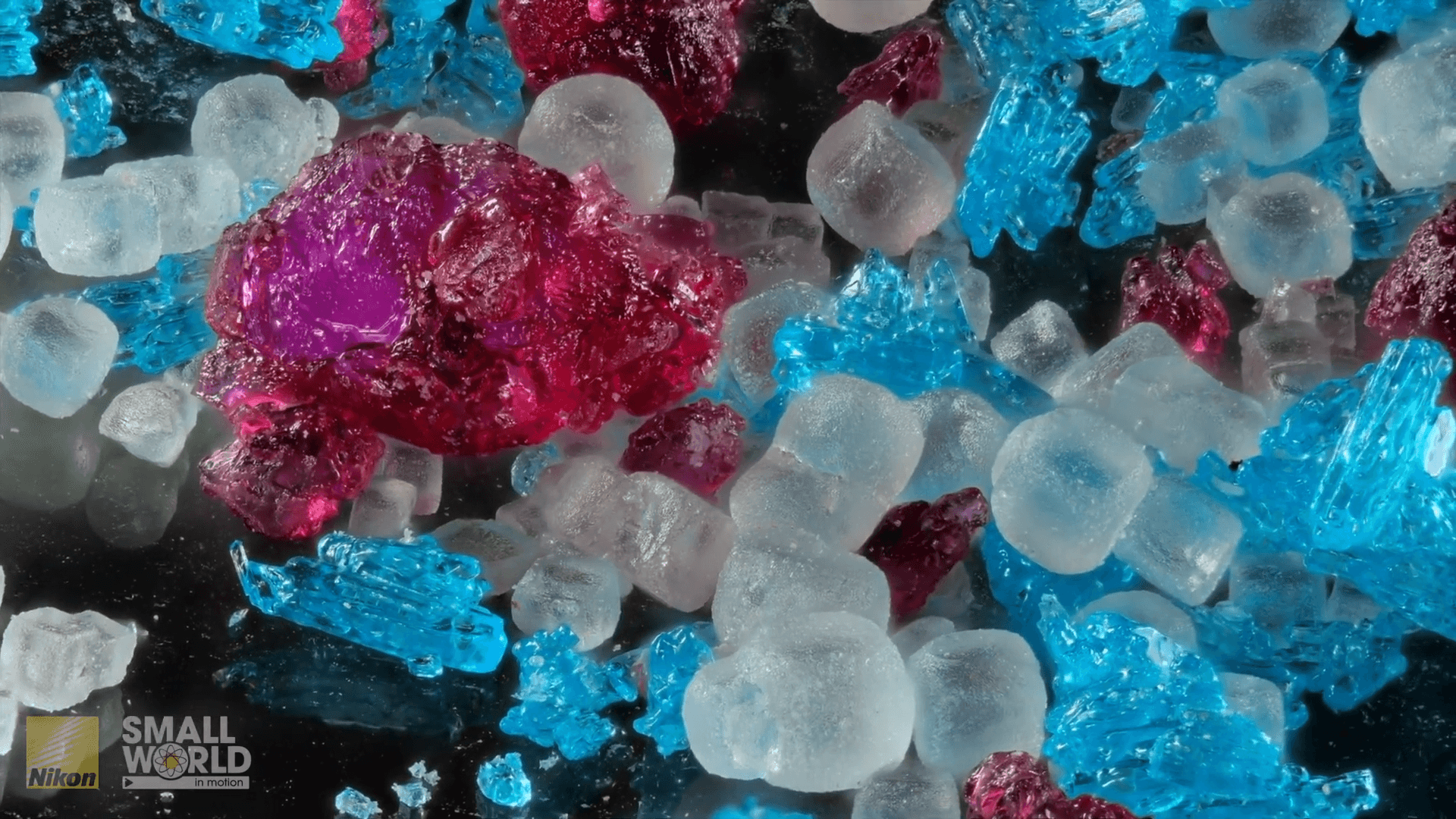
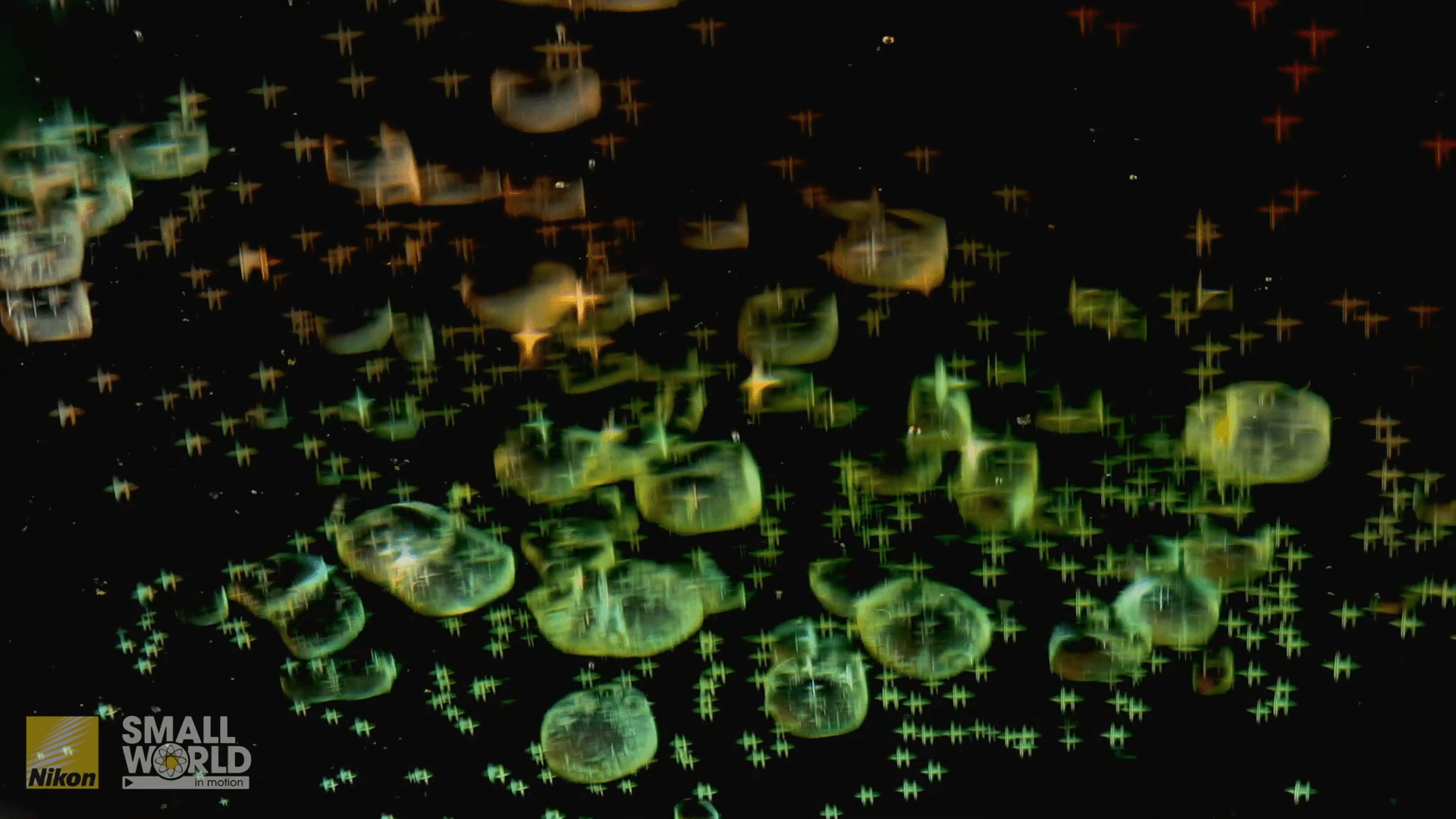
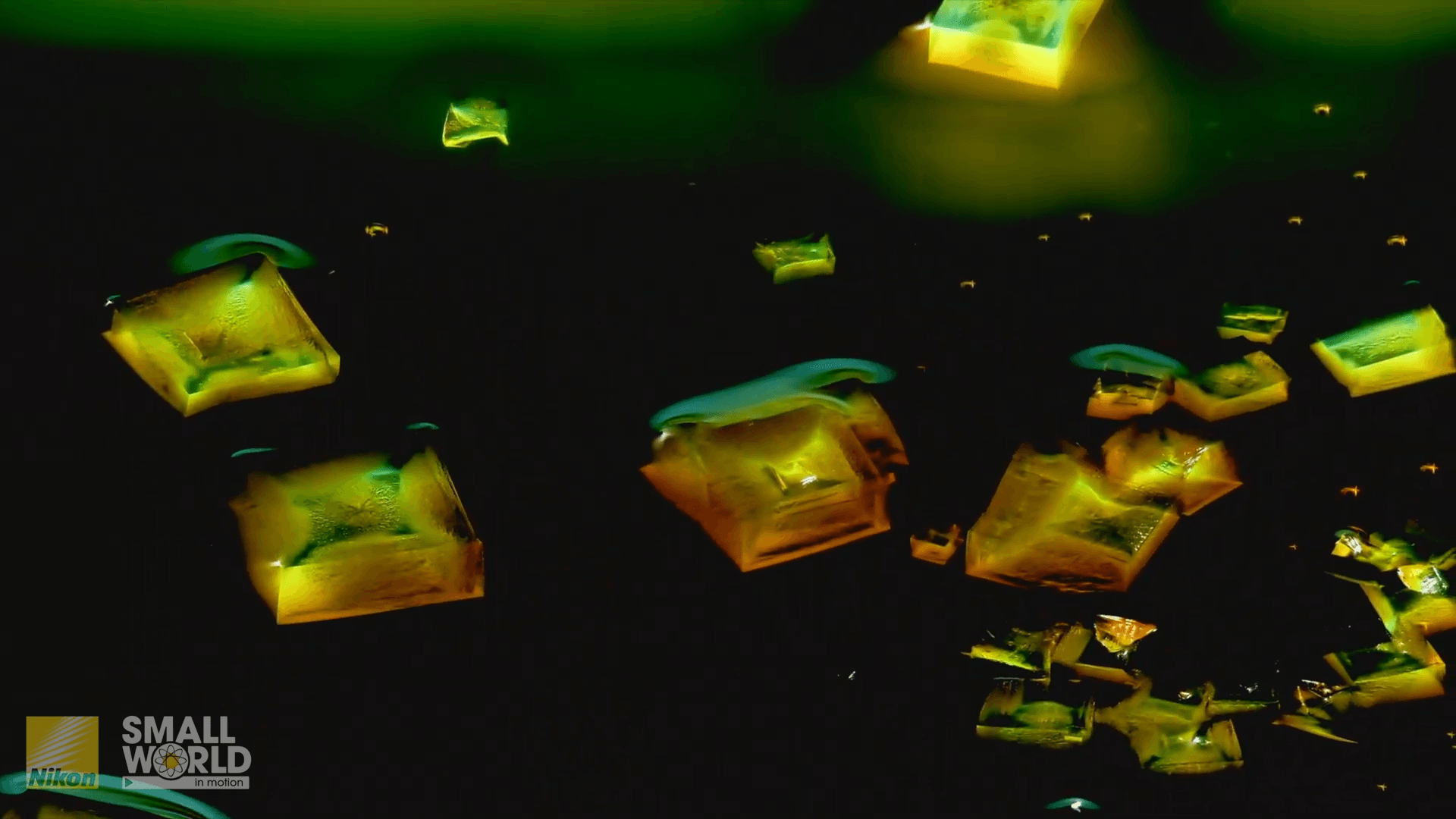
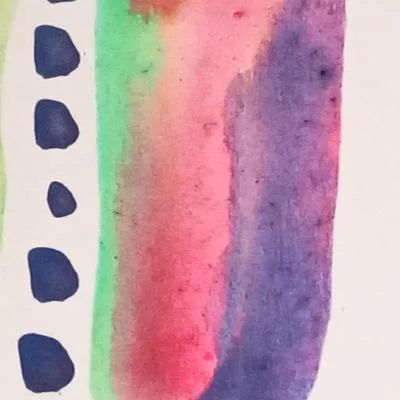
A colorful assortment of salts dissolve and recrystallize in this microscopic timelapse video by retired engineer Jay McClellan. Every step is a gorgeous rainbow of color as the cobalt, copper, and sodium chlorides dissolve, mix, and change. Though we don’t see what’s going on in the water, fluid dynamics are a critical component of both dissolution and crystallization. In the former, concentration gradients change the water’s density, driving buoyant flows. For the latter, crystallization comes out of evaporation, where surface tension often determines where solid particles get left behind. (Video and image credit: J. McClellan; via Colossal)
Dispersing Pollutants via Smokestack


In our industrialized society, pollutants are, to an extent, unavoidable. Even with technologies to drastically reduce the amount of pollutants leaving a factory or plant, some will still get released. It’s up to engineers to make sure that those released spread out enough that their overall concentration does not pose a risk to public health. In this Practical Engineering video, Grady explains some of the physics and engineering considerations that go into this task.
As he demonstrates, taller smokestacks speed up the buoyant exhaust plume (to an extent), which exposes the plume to higher winds, greater turbulence, and, thus, quicker dispersal. But atmospheric conditions and even nearby buildings all affect how a plume spreads. (Image and video credit: Practical Engineering)
Fediverse Reactions
-
Seeking Randomness


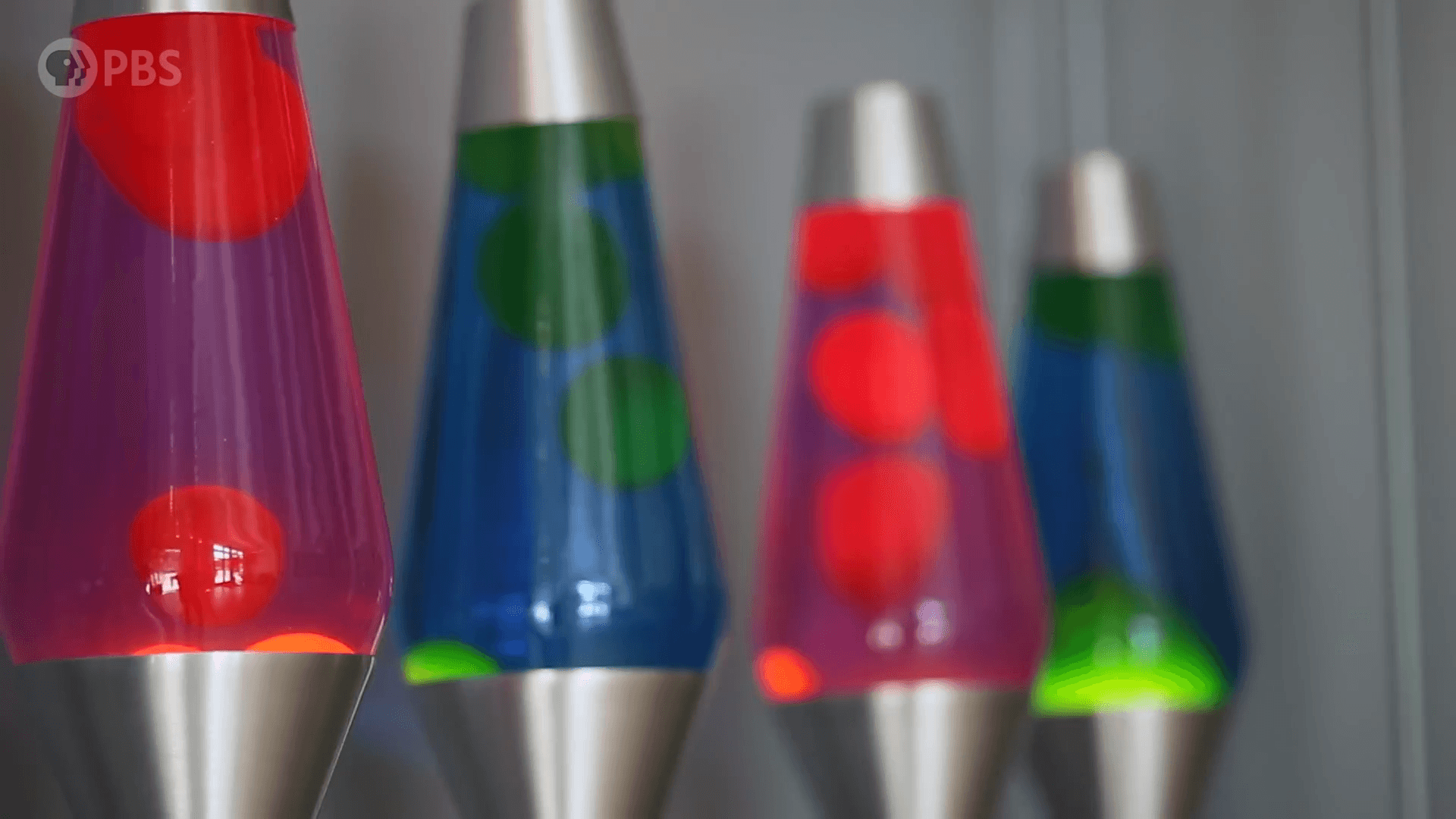
Securing information on the Internet requires a lot of random numbers, something computers are not good at creating on their own. This need for random input raises an important philosophical and practical question: what is randomness? How can we be sure that something truly is random, or is it enough for a system to be practically random? Joe explores these questions in this Be Smart video, which shows off how companies use systems — including fluid dynamical ones like lava lamps and wave machines — to generate random numbers for encryption. (Video and image credit: Be Smart)
Fediverse Reactions
-