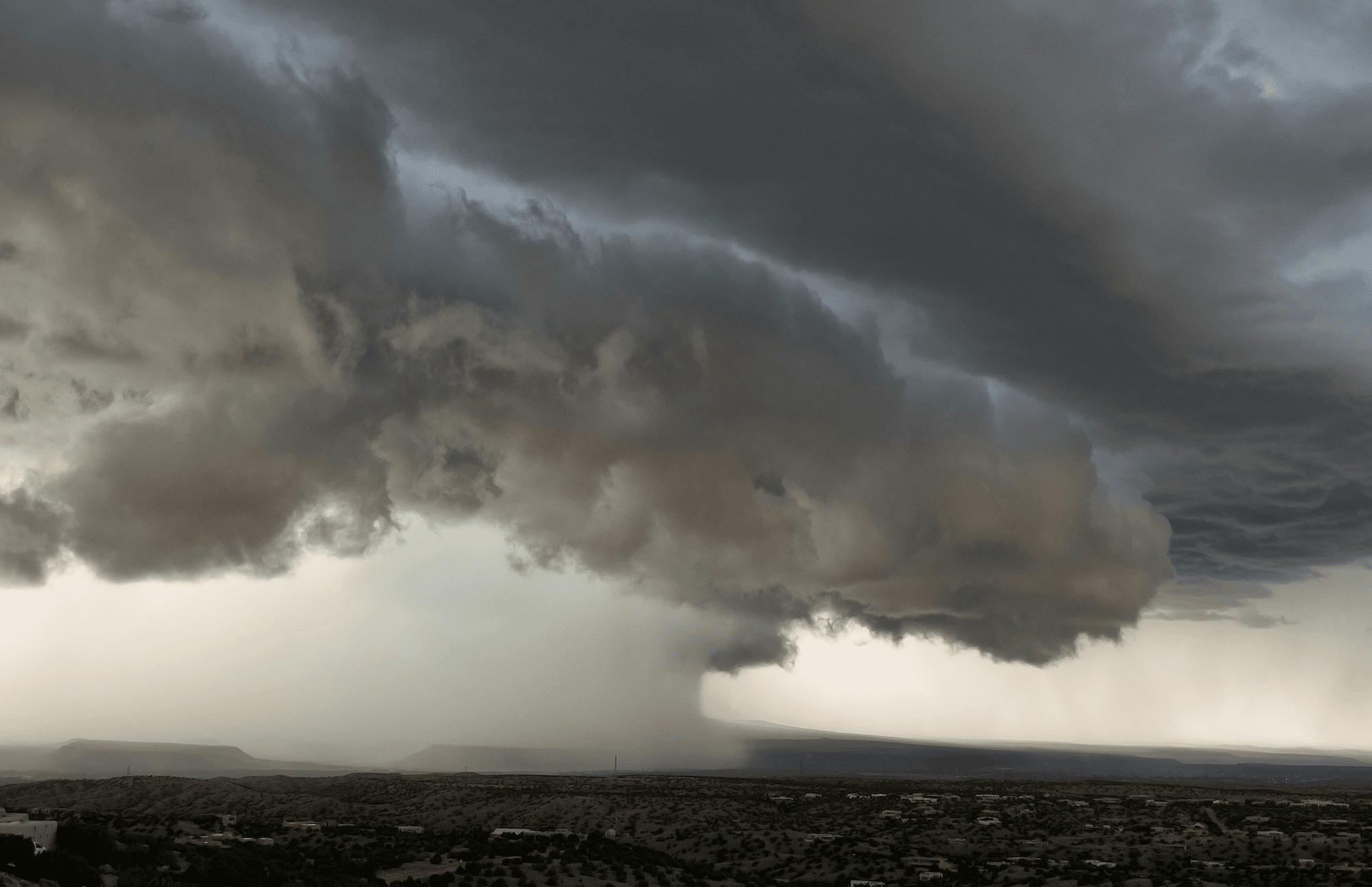
Realistically modeling rainfall remains an extremely difficult problem. To be practical, results have to be on the scale of kilometers; no one is looking to find out whether rain will fall from one specific cloud over their head. But making that prediction depends on physics that happens at the microscale, where droplets tens of microns in size are condensing, colliding, and eventually growing large enough to fall as rain. A new study takes a look at three machine-learning models that could help describe those microscale physics with less computational overhead.
The researchers used three different algorithms, all trained on high-quality simulations of microdroplet physics. The goal here was to represent the complex, nonlinear physics reflected in those results with an algorithm that’s less complicated and less computationally expensive than the methods used to create the training data. The team then tested the trained algorithms to see how they performed in conditions that were different than their training data.
They found that the model with the best performance–in terms of giving more accurate predictions in the test cases–was actually the simplest of the three models. So it may be possible to get reasonable results for rain microphysics from simpler, easier-to-compute algorithms. The team does warn, though, that all of the models need more work before they’d be ready to add to commercial-grade weather prediction software. (Image credit: J. Fowler; research credit: E. de Jong et al.; via Eos)



Leave a Reply