Tag: rainfall

  • Surviving Rainfall

    Surviving Rainfall

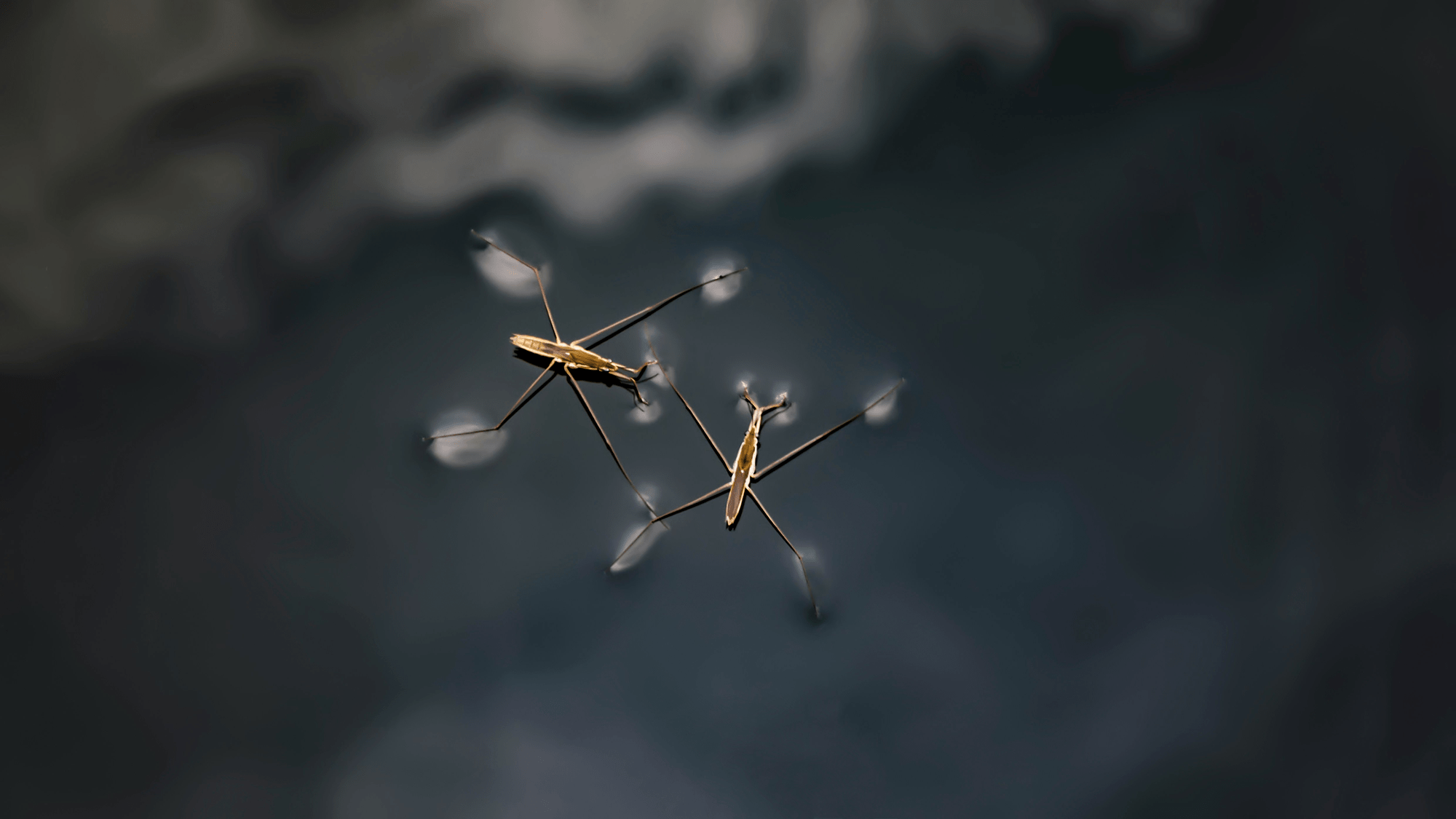
    Water striders spend their lives at the air-water boundary, skittering along this interfacial world. But what happens when falling rain destroys their flat existence? That’s the question that motivated today’s research study, which looks water striders subjected to artificial rain.

    Although the water drops themselves are far heavier than the insects, the water doesn’t strike hard enough to injure the insects. Neither a direct impact nor the forces from a neighboring impact, the researchers found, were enough to pose a problem for the water strider’s exoskeleton. Instead, they’re more likely to get flung or submerged, as follows:

    The initial impact of a raindrop creates a large crater. Depending on the position of the insect relative to the point of impact, this may fling the insect away or pull it down into the cavity.
    The initial impact of a raindrop creates a large crater. Depending on the position of the insect relative to the point of impact, this may fling the insect away or pull it down into the cavity.

    When the drop hits, it creates a big crater in the water’s surface. Insects to the outside of the splash get flung outward, while those closer to the point of impact ride the crater wall downward. As the crater collapses, it forms a thick jet that pushes nearby water striders up with it.

    As the initial cavity collapses, it creates a large jet that can push the strider into the air.
    As the initial cavity collapses, it creates a large jet that can push the strider into the air.

    As that initial jet collapses, it forms a second crater, which — being smaller and narrower — collapses much faster than the first one. That action, researchers found, often submerges a water strider caught in the crater.

    The first jet's collapse creates a second crater, and it's this one that tends to trap and submerge the water striders underwater.
    The first jet’s collapse creates a second crater, and it’s this one that tends to trap and submerge the water strider underwater.

    Fortunately for the insect, their water-repellent nature means they’re covered in a thin bubble of air that lets them survive several minutes underwater. That’s time enough for the water strider to rescue itself. (Image credit: top – H. Wang, animations – D. Watson et al.; research credit: D. Watson et al.; via APS Physics)

  • Rain-Driven Prey Capture

    Rain-Driven Prey Capture

    Pitcher plants often entice their insect victims with sweet nectar before trapping them in inescapable viscoelastic goo. But some species go even further. Nepenthes gracilis, a species native to Southeast Asia uses its leafy springboard to lure its prey. Once an ant crawls to the underside of the leaf, a falling rain drop will spell its doom. When drops hit the leaf, it deflects down and jerks up, thanks to its shape and stiffness. The motion catapults insects into the pitcher, where digestive fluids await. While we’ve seen some fast-moving plants before, this is a rare example of a plant with an externally-driven speed mechanism. With it, the pitcher plant doesn’t have to wait or expend any metabolic effort to reset for the next insect. (Image credit: GFC Collection/Alamy; research credit: A. Lenz and U. Bauer; via New Scientist)

  • Featured Video Play Icon

    Where Does Stormwater Go?

    Stormwater management is one of the biggest municipal challenges towns and cities face. Urban surfaces are largely impermeable, preventing rainwater from soaking into the ground. Instead roads, ditches, and channels collect water and, typically, divert it as quickly as possible into natural waterways.

    In contrast, wild landscapes tend to slow water run-off, filtering it into the water table, soaking it up with vegetation, and distributing it across a larger area. Recently, cities have started using low-impact development strategies, like rooftop gardens and rainwater collection, to mimic natural landscapes in urban ones. (Image and video credit: Practical Engineering)

  • Rainfall Beyond Earth

    Rainfall Beyond Earth

    Rain is not unique to our planet: Titan has methane rain and exoplanet WASP 78b is home to iron rain (ouch). A new study examines rainfall across planets from the perspective of individual rain drops. The authors examine raindrop shape, terminal velocity, and evaporation rate as a function of droplet size for a wide range of known and speculated atmospheres.

    They found that raindrops are surprisingly universal. Although planets with higher gravity tend to produce smaller raindrops, they found a remarkably narrow range for maximum drop size. That’s a pretty wild result, all things considered! The idea that iron, ammonia, methane, and countless other fluids falling through vastly different atmospheres all share very common characteristics is fascinating. (Image credit: NASA/JPL-Caltech/SwRI/MSSS/Brian Swift; research credit: K. Loftus and R. Wordsworth; via Science News; submitted by Kam-Yung Soh)

  • How Rainfall Can Spread Pathogens

    How Rainfall Can Spread Pathogens

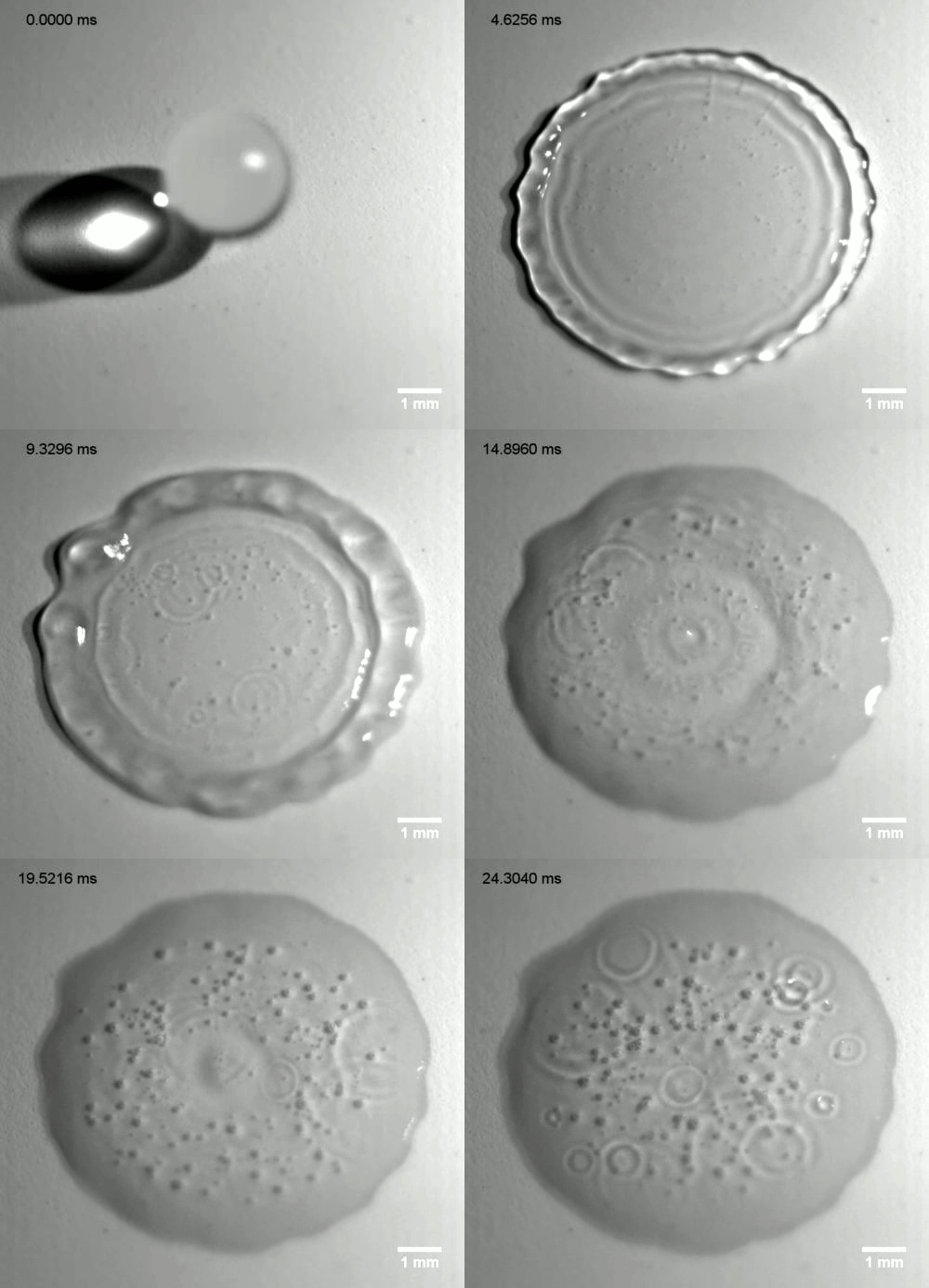
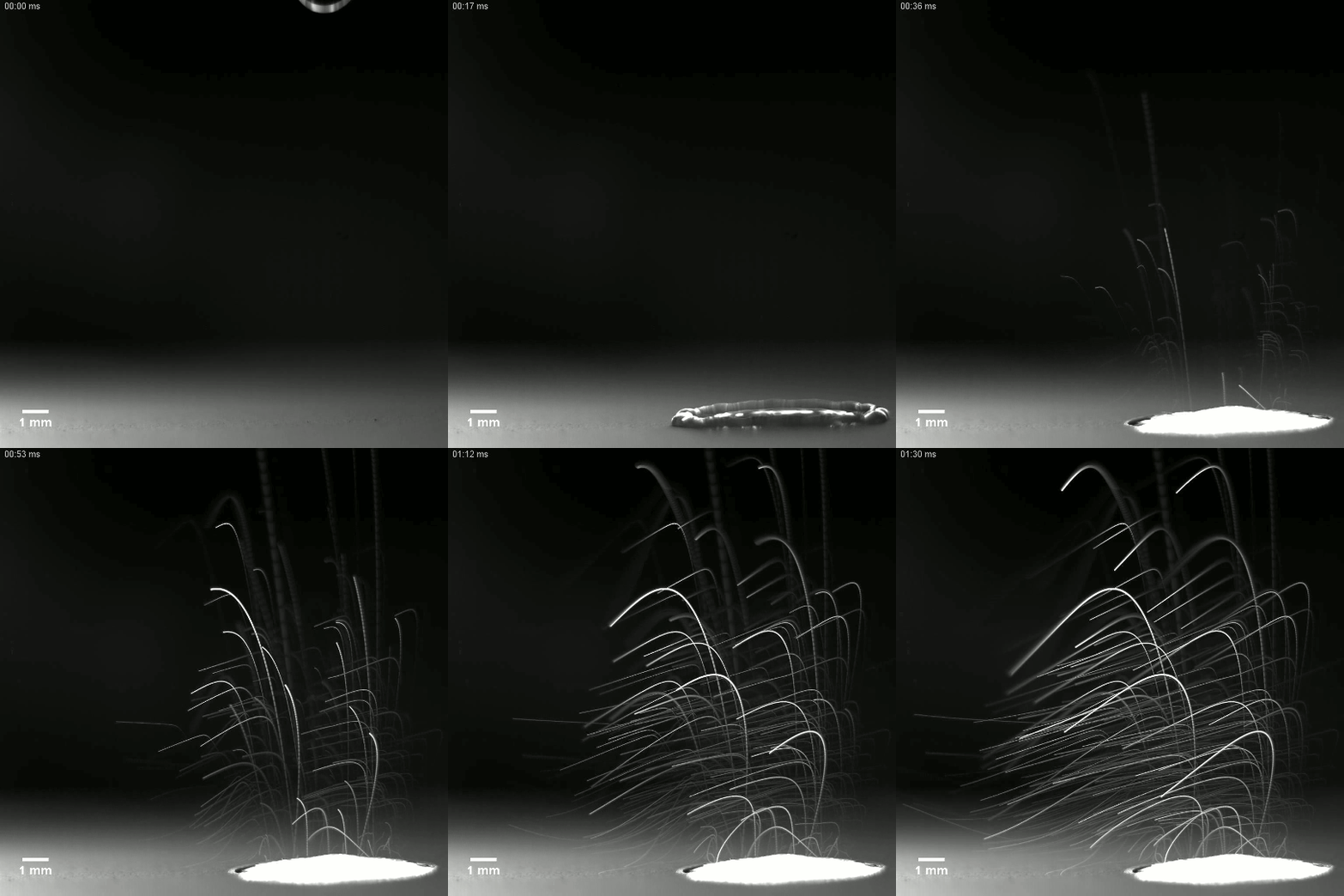
    Rainfall may provide a mechanism for soil bacteria to spread. A new study examines how raindrops hitting infected soil can eject bacteria into the air. When drops fall at the rate of a light rainfall, they form tiny bubbles after impact (upper left). Those microbubbles rise to the top of the water and burst, sending extremely tiny droplets – or aerosols – spraying up into the air (upper right). Soil bacteria can hitch a ride on these aerosols, staying alive for up to an hour while the wind transports them to fresh, new soil. The researchers found that the most aerosols were produced when soil temperature was about 86 degrees Fahrenheit (30 degrees Celsius) – the temperature of tropical soils. Depending on the conditions, a single raindrop could aerosolize anything from zero to several thousands of soil bacteria. (Image and research credit: Y. Joung et al.; video credit: MIT News)

  • Raindrops in Puddles

    Raindrops in Puddles

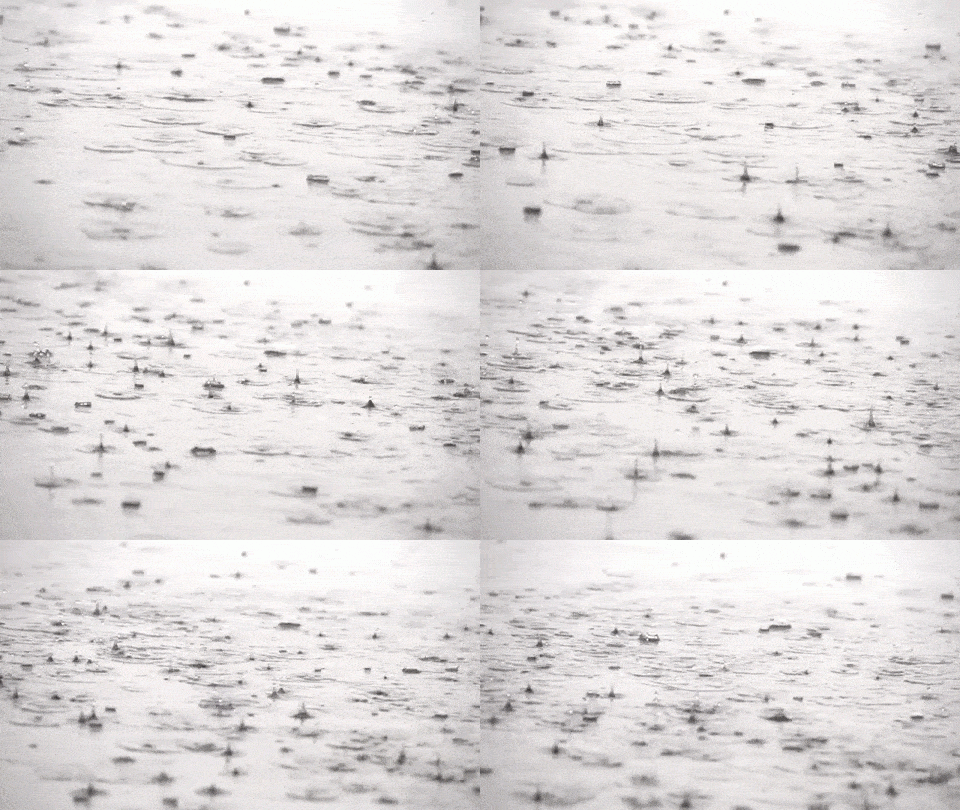
    Watching rain drops hit a puddle or lake is remarkably fascinating. Each drop creates a little cavity in the water surface when it impacts. Large, energetic drops will create a crown-shaped splash, like the ones in the upper animation. When the cavity below the surface collapses, the water rebounds into a pillar known as a Worthington jet. Look carefully and you’ll see some of those jets are energetic enough to produce a little satellite droplet that falls back and coalesces. Altogether it’s a beautifully complex process to watch happen over and over again. (Image credit: K. Weiner, source)

    ——————

    Help us do some science! I’ve teamed up with researcher Paige Brown Jarreau to create a survey of FYFD readers. By participating, you’ll be helping me improve FYFD and contributing to novel academic research on the readers of science blogs. It should only take 10-15 minutes to complete. You can find the survey here.

  • Featured Video Play Icon

    Rain-spread Pathogens

    Like humans, plants can spread pathogens to one another. Although scientists had observed correlations between rainfall and the spread of diseases among plants, this study is one of the first to look at the fluid dynamics of leaf and rainfall interaction. When a raindrop hits a leaf, it doesn’t simply splash as it would against an immobile surface. The impact of the drop deforms the leaf, and the plant’s rebound significantly affects the trajectory and size of the resulting droplets. Depending on factors like the leaf’s stiffness, a large drop, carrying many pathogens, may rebound and splatter onto a neighboring leaf. Other leaves tend to catapult out many smaller droplets, which may fly farther afield but carry fewer pathogens. For more, check out the press release or the original research paper. (Video credit: Massachusetts Institute of Technology; research credit: Bourouiba Research Group)