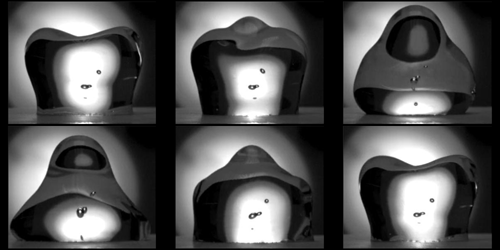
Year: 2022

  • The Delta Series

    The Delta Series

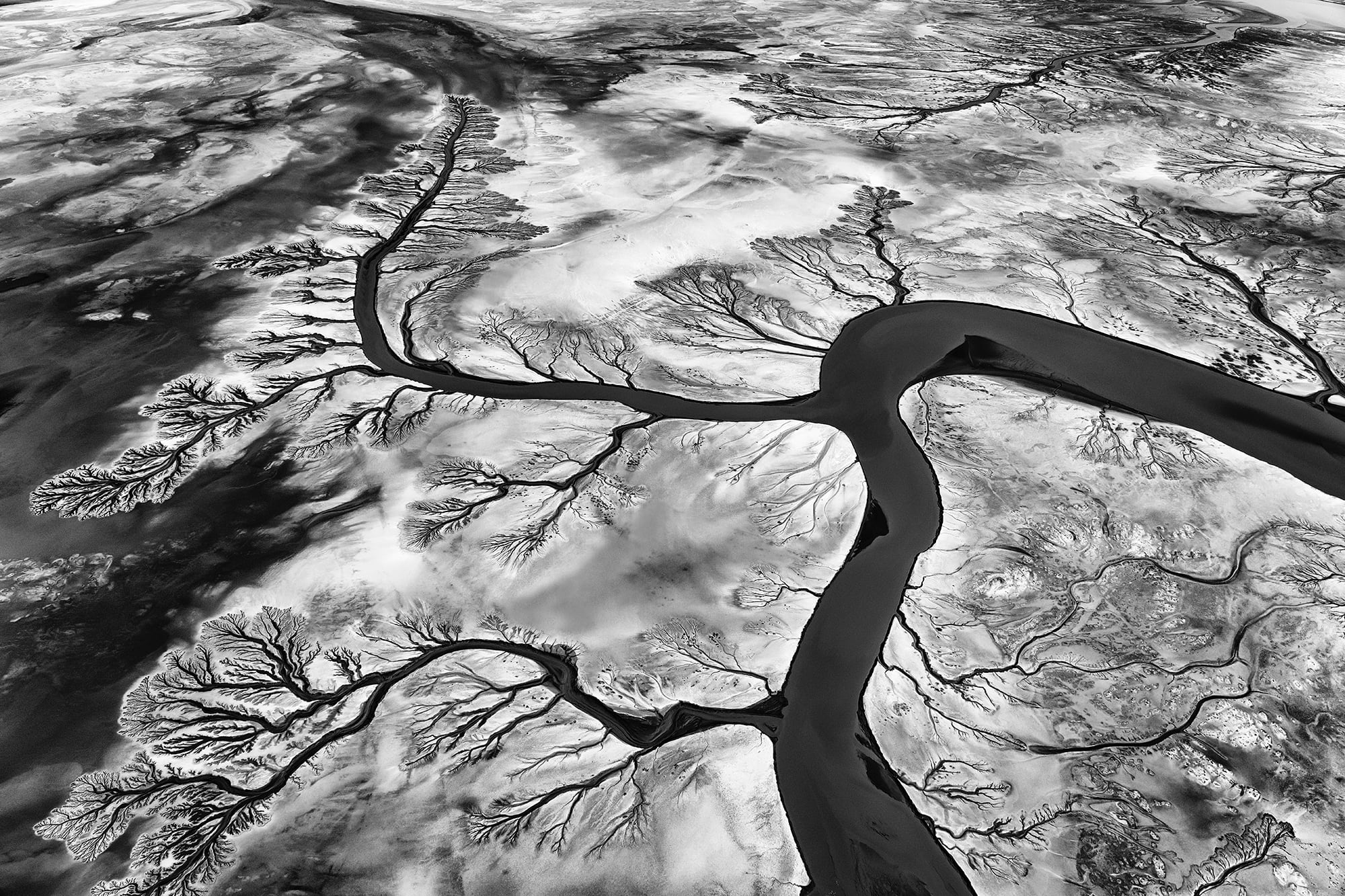
    It’s easy in the rush of our daily lives to forget just how dynamic rivers are. In his “Delta Series” conservation photographer Paul Nicklen explores that ever-changing nature from above the Colorado River delta. With the ongoing megadrought in this region and ever-increasing demands for more water, the Colorado no longer flows to the ocean. It trickles its way to a tired end near Baja, Mexico, where its last gasp is not enough to sustain ecosystems that relied on the river’s irrigation long before us. Nicklen’s work is a beautiful portrait of the fractal, tree-like patterns of a slowing river. Find more of Nicklen’s work on his website and Instagram. (Image credit: P. Nicklen; via Colossal)

  • Turbulence in Accretion Disks

    Turbulence in Accretion Disks

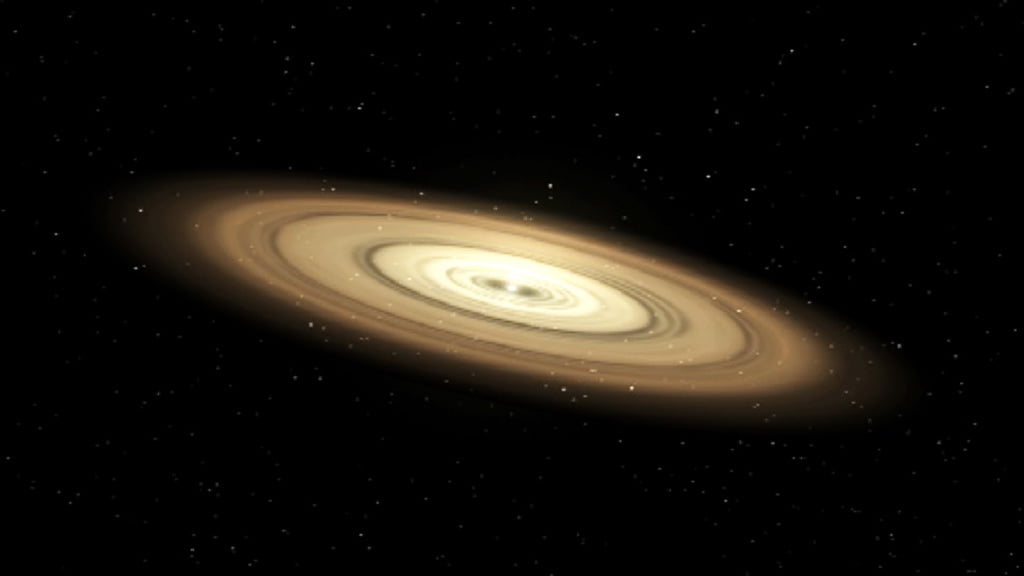
    Accretion disks form everywhere, from around young, planet-building stars to massive black holes. As matter circles in the disk, it slowly loses angular momentum and falls inward toward the central gravitational body. But the details of this process have long vexed astronomers. The low-viscosity environment of gas and dust in accretion disks simply is not sufficient to account for the level of angular momentum lost. Turbulence is expected to provide a boost to the effect, but neither astronomical observations or Taylor-Couette experiments have shown how.

    A new study uses a liquid metal, confined in a disk using radial and vertical electrical fields. Unlike prior experiments, this set-up creates a more gravity-like force to rotate the liquid. With it, researchers can tune both the rotation speed and the level of turbulence. They found that turbulence is, indeed, responsible for the loss of angular momentum that transports mass inward — even at the limit of zero intrinsic viscosity.

    Unfortunately, the apparatus isn’t a perfect analog for astrophysical disks; in the experiment, the turbulence originates from secondary flows that aren’t present in real systems. So while the team demonstrated that turbulence can drive the accretion disk’s behavior, it can’t pinpoint where that turbulence originates in real accretion disks. (Image credit: NASA; research credit: M. Vernet et al.; via Physics World)

  • Summer Melt

    Summer Melt

    A warm summer in 2022 has resulted in record melting on Svalbard. Located halfway between the Norwegian mainland and the North Pole, more than half of Svalbard is normally covered in ice. But with glaciers in retreat and firn — a surface layer of compressed porous snow — melting, pale blue ice is getting direct exposure to the sun and warm air temperatures. The result has been melting 3.5 times larger than the average melt between 1981 and 2010. Look closely and you’ll find deep blue meltwater ponds dotting the ice, too. The run-off of meltwater has likely carried extra sediment into the surrounding waters, accounting for some of the paler water colors along the coast. (Image credit: J. Stevens/USGS; via NASA Earth Observatory)

  • Landslide-Triggered Tsunamis

    Landslide-Triggered Tsunamis

    After the 2018 Anak Krakatoa eruption, a tsunami that ricocheted through the surrounding waters, killing hundreds on nearby islands. The source of that tsunami was a small landslide. Once the air cleared and researchers could assess how much material slid into the ocean, they were shocked that such a small volume created so much destruction.

    Now new efforts are revealing the linkage between landslides and the waves they make. Researchers released glass beads into a tank of water, observing the waves that form as the beads run out. Depending on the relative initial height of the beads compared to the water depth, they observed three different kinds of waves. Not only that, they were able to connect the granular mechanics of the landslide to the hydrodynamic formation of waves, allowing predictions of the waves that will form for a given landslide.

    Currently, the predictive model isn’t sophisticated enough to handle a geometry as complex as that of the Anak Krakatoa landslide, but it’s an important step toward understanding — and potentially mitigating the damage of — future oceanside landslides. (Image and research credit: W. Sarlin et al.; via APS Physics; submitted by Kam-Yung Soh)

  • Featured Video Play Icon

    Fire Ant Rafts

    When you run into a fire ant, you’re in for a bad day. But if you run into a colony-sized raft of fire ants, well, that’s going to be a very bad day. These insects evolved to survive Amazonian floods, and that prowess has helped them spread far from their original homes. When waters start rushing into their home, the ants set out on a rescue mission, pulling their young out. The ants lash themselves and the youngsters together with their own bodies and form a floating raft. Thanks to the hydrophobic hairs on the larvae and ants, they trap a layer of air near their bodies. This helps them breathe, even if they’re on the bottom of the raft. Learn lots more about fire ants, including how they act as fluid, over here. (Image and video credit: Deep Look)

  • A Comet’s Tail Swept Away

    A Comet’s Tail Swept Away

    On Christmas Day 2021, Comet Leonard put on a show in our skies. Though the comet was a pale streak to the naked eye, photographer Gerald Rhemann caught a striking event: the moment part of the comet’s tail disconnected from its body. The solar wind swept the comet’s gas and dust away. Though I’ve talked about the fluid dynamics of comets before, this image is the most stunning example I’ve seen. It’s no wonder that it won the top prize at the Astronomy Photographer of the Year competition. (Image credit: G. Rhemann; via Colossal; see also APOTY)

  • Aerosols and Instruments

    Aerosols and Instruments

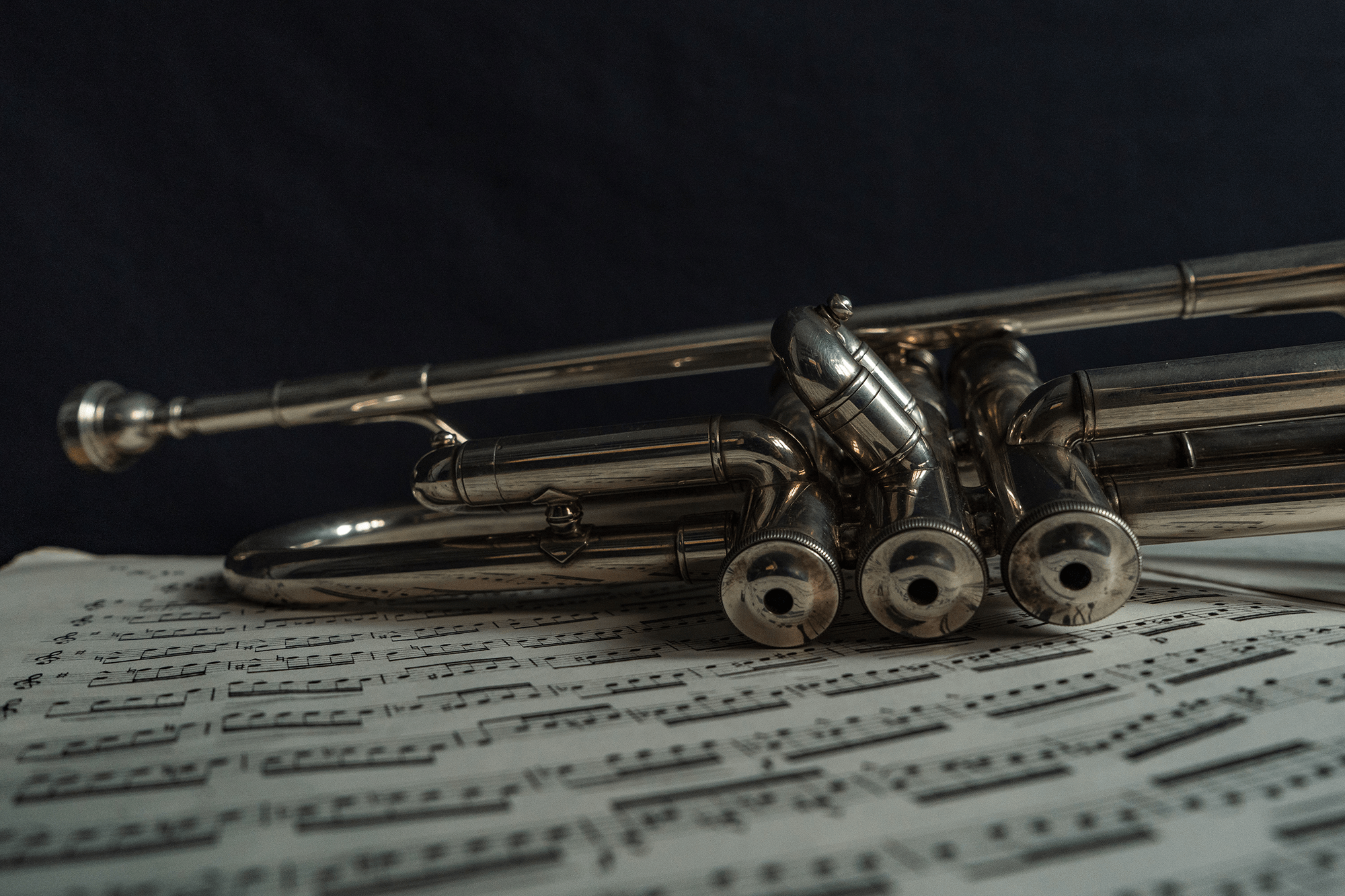
    Although COVID has disrupted all of our lives, orchestras saw particular disruption, as little was known about how instruments spread aerosol droplets. In this recent study, a team looked at many wind instruments, as played by professional musicians, for the aerosol load and air flow each instrument creates. They found that, on the whole, wind instruments — like flutes, clarinets, trumpets, and others — create aerosol loads comparable to normal speech. The air flow from each instrument comes primarily from the bell (for brass instruments) or tone holes (for woodwinds) and has a much lower velocity than coughing or sneezing. As a result, the flow decays away to the background air-flow after about 2 meters. (Image credit: trumpet – E. Awuy, trombone – Q. Brosseau et al.; research credit: Q. Brosseau et al.)

    Flow from the bell of a trombone disrupts artificial fog.
    As a musician plays a scale on their trombone, flow from the bell is revealed through artificial fog and laser illumination.
  • “Keeping Our Sheet Together”

    “Keeping Our Sheet Together”

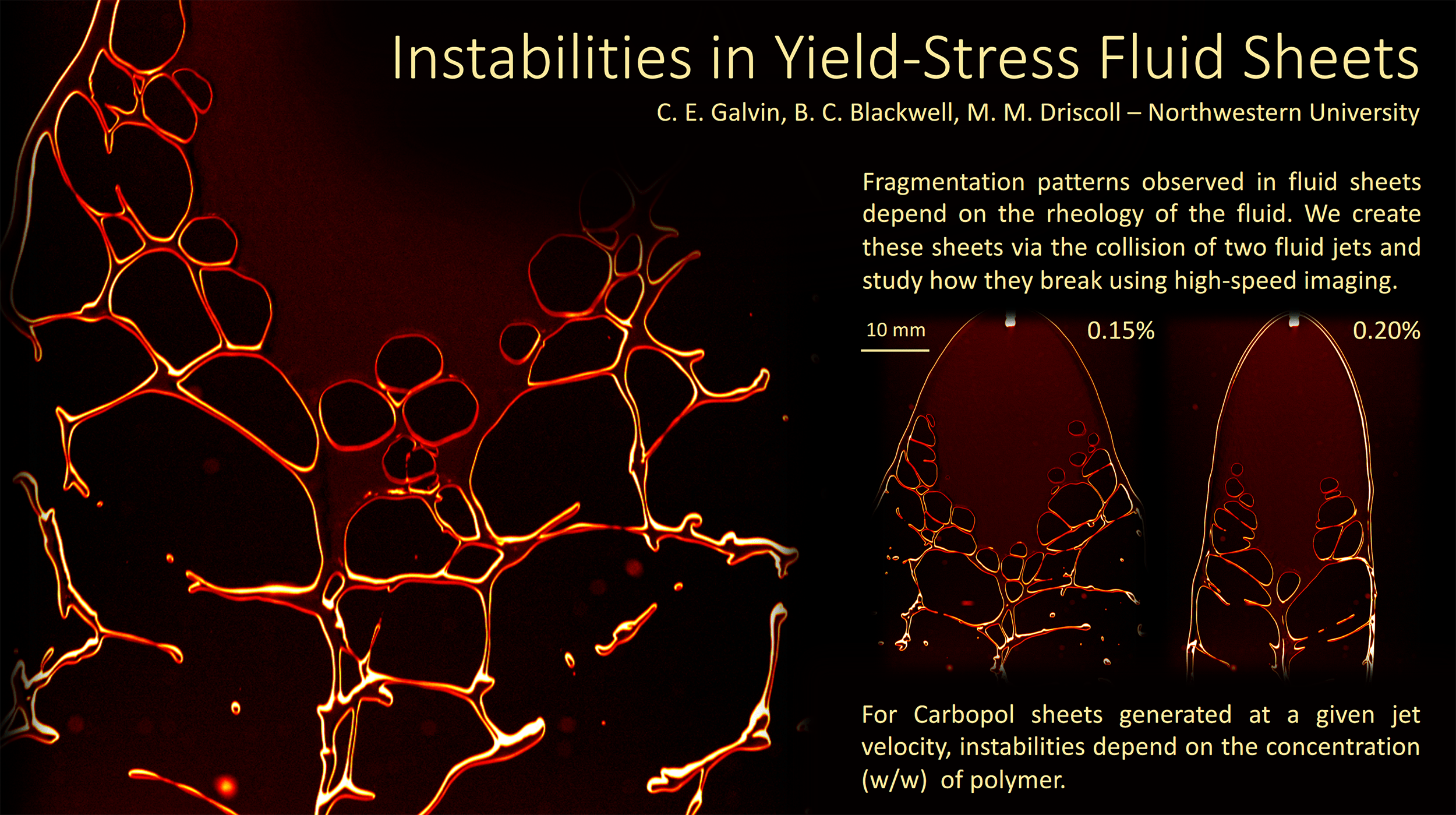
    When two liquid jets collide, they form a falling liquid sheet. Here researchers explore how that sheet breaks up when the liquids involved contain polymers. The intact areas of the sheet show as dark red or almost black. The edges of the sheet appear in brighter red and yellow, outlining the holes that form and grow during breakup. The type of breakup observed depends on the concentration of polymer in the liquid. (Image credit: C. Galvin et al.)

  • Free Contact Lines

    Free Contact Lines

    How a simple drop of water sits on a surface is a strangely complicated question. The answer depends on the droplet’s size, its chemistry, the roughness of the surface, and what kind of material it’s sitting on. Vetting the mathematical models that describe these behaviors is especially difficult since droplets often get stuck, or “pinned,” along their contact line where water, air, and surface meet.

    To get around this issue, researchers sent their experiment to the International Space Station, asking astronauts to run the tests for them. Without gravity‘s influence squishing drops, the astronauts could use much larger droplets than they could on Earth. Larger drops are less likely to get pinned by a stray surface defect, so on the space station, astronauts could place droplets on a vibrating platform and observe their contact line freely moving as the drop changed shape. Under these conditions, the experiment tested many surfaces with different wetting characteristics, thereby gathering data to test models we cannot easily confirm on Earth. (Image and research credit: J. McCraney et al.; via APS Physics)

  • Featured Video Play Icon

    Pistol Shrimp Snaps

    Gram for gram, few animals can match the power of a pistol shrimp’s snap. When its claw closes, the shrimp ejects a jet of water so fast that the water pressure drops below the vapor pressure, causing a cavitation bubble. Like other cavitation bubbles, this one is short-lived, growing and collapsing (and sending out shock waves!) in less than a millisecond. That’s enough to knock any predator or prey for a loop. (Image and video credit: Ant Lab)