Australian photographer Ray Collins captures some of the most impressively dynamic photographs of ocean waves I’ve ever seen. The textures of the water range from glassy smooth to scaled to violent sprays of droplets. You can easily get lost in every image. For more, check out his website and Instagram. (Image credits: R. Collins; via Colossal)
Year: 2022

Sound Makes Stickier Bandages
Keeping wounds safe and clean is hard when bandages are so prone to coming off. A team of researchers may have found a solution, though, using ultrasound to enhance adhesion. For their technique, they applied a layer of adhesive primer to the skin and covered it with a hydrogel bandage. Then they used an ultrasound transducer to generate cavitation bubbles in the primer. As the bubbles grew and collapsed, the primer and hydrogel pulled toward the tissue, creating adhesive bonds up to 100 times greater than without ultrasound. The extra adhesion had staying power, too, with between two and ten times more fatigue resistance than the bandage and adhesive alone. The researchers hope their technique will aid tissue repair, wound management, and attaching wearable electronics. (Image and research credit: Z. Ma et al.; via Physics World)

Flow Between Fibers
Two vertical fibers, with a gap left between them, form a playground for flow in this Gallery of Fluid Motion video. If the fiber spacing is small enough, the flow will form a stable liquid sheet that runs the full length of the fibers. With a little more distance, though, the fluid forms intermittent bridges, whose spacing depends on flow rate. And when the fibers are not perfectly vertical, even more complex flows are possible. I love how a seemingly simple situation begets such complexity! (Image and video credit: C. Gabbard and J. Bostwick)

Escaping the Sun
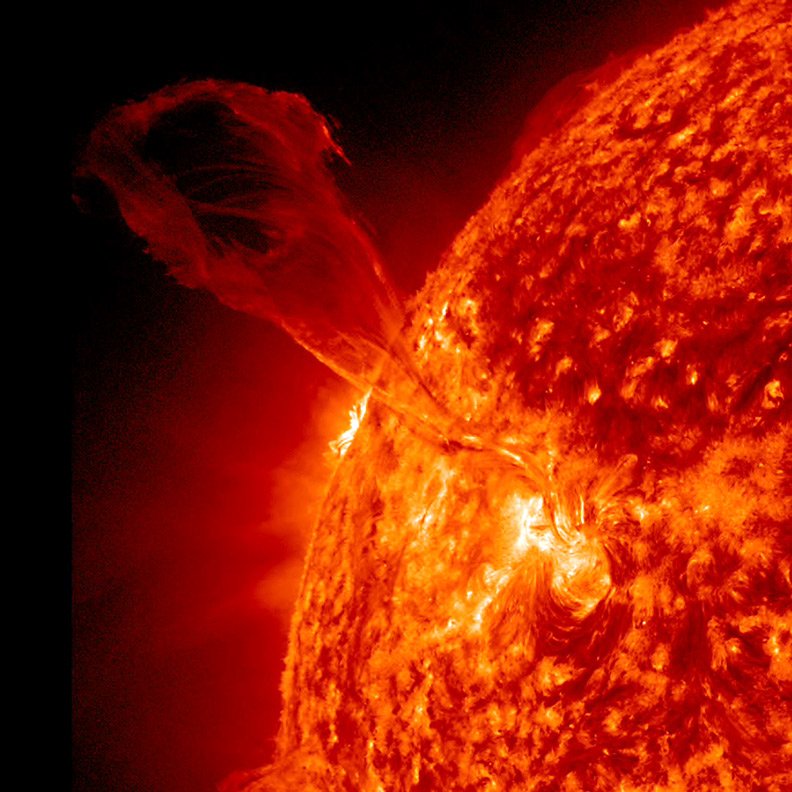
One enduring mystery of the solar wind — a stream of high-energy particles expelled from the sun — is how the particles get accelerated in the first place. The sun frequently belches out spurts of plasma, but without further momentum, that material simply falls back to the sun’s surface under the star’s gravity. Mechanisms like shock waves can further accelerate particles that are already moving quickly, but they cannot explain how the particles get going in the first place.
A recent study used supercomputers to tackle this challenging problem in turbulent plasma physics. Each simulation tracked nearly 200 billion particles, requiring tens of thousands of processors. The results showed that turbulence itself provides the necessary initial acceleration and serves as the first step to getting particles moving fast enough to escape the sun. (Image credit: NASA SDO; research credit: L. Comisso and L. Sironi; via Physics World)

Recreating the Rings of Power Opening
Everyone loves a good title sequence, especially when they feature neat visuals. Many who watched “The Rings of Power” zeroed in immediately on their use of cymatics — visuals born from the vibrations of sound. In the video above, Steve Mould delves into the physics behind cymatics and recreates patterns similar to those in the show’s opening, which was a mixture of CGI and live action.
For Tolkien fans, the opening sequence holds additional layers of meaning; in Tolkien’s mythology, the universe is born from song, and many of the patterns shown in the opening — the two trees, Fëanor’s star, and the Silmarils themselves — are drawn directly from Tolkien’s myths. In a way, the opening sequence tells the story of the creation of Arda and the rise of Sauron’s predecessor, Melkor/Morgoth, and all the events that led to the show itself. It’s incredibly cool, both from a physics perspective and a literary one. (Image and video credit: S. Mould)

“Crystallizing Epsom Salts”
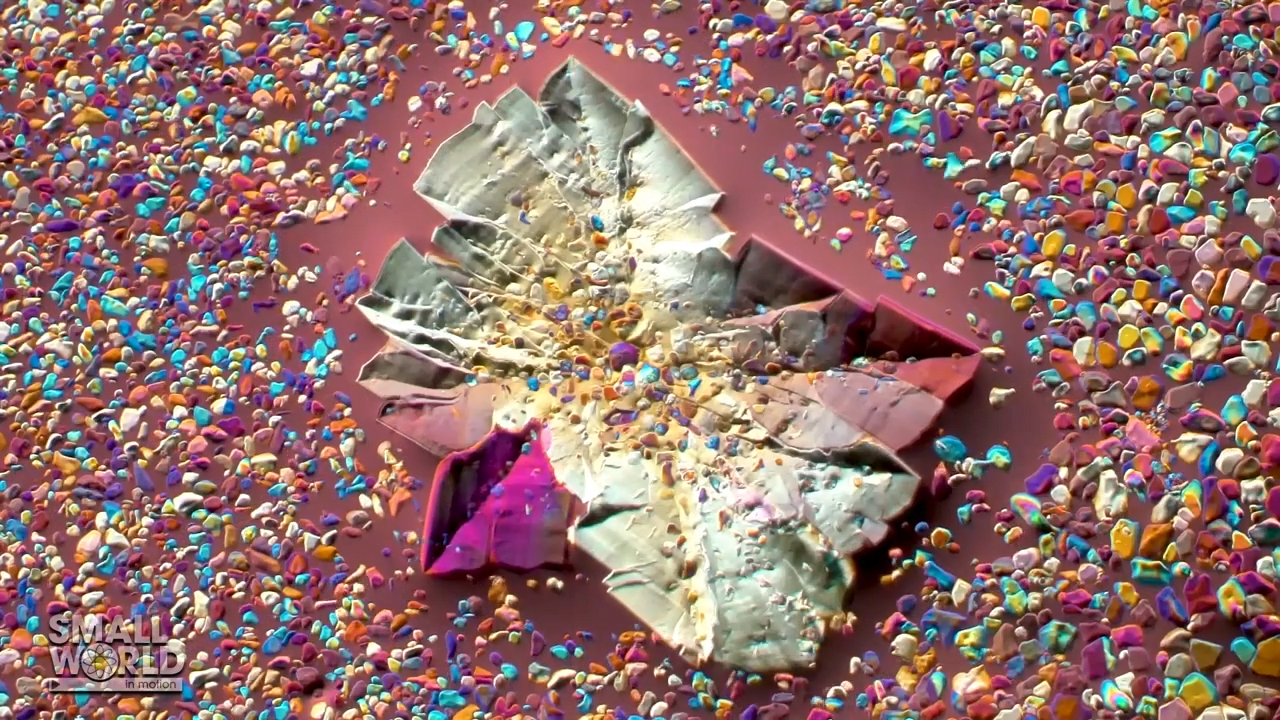
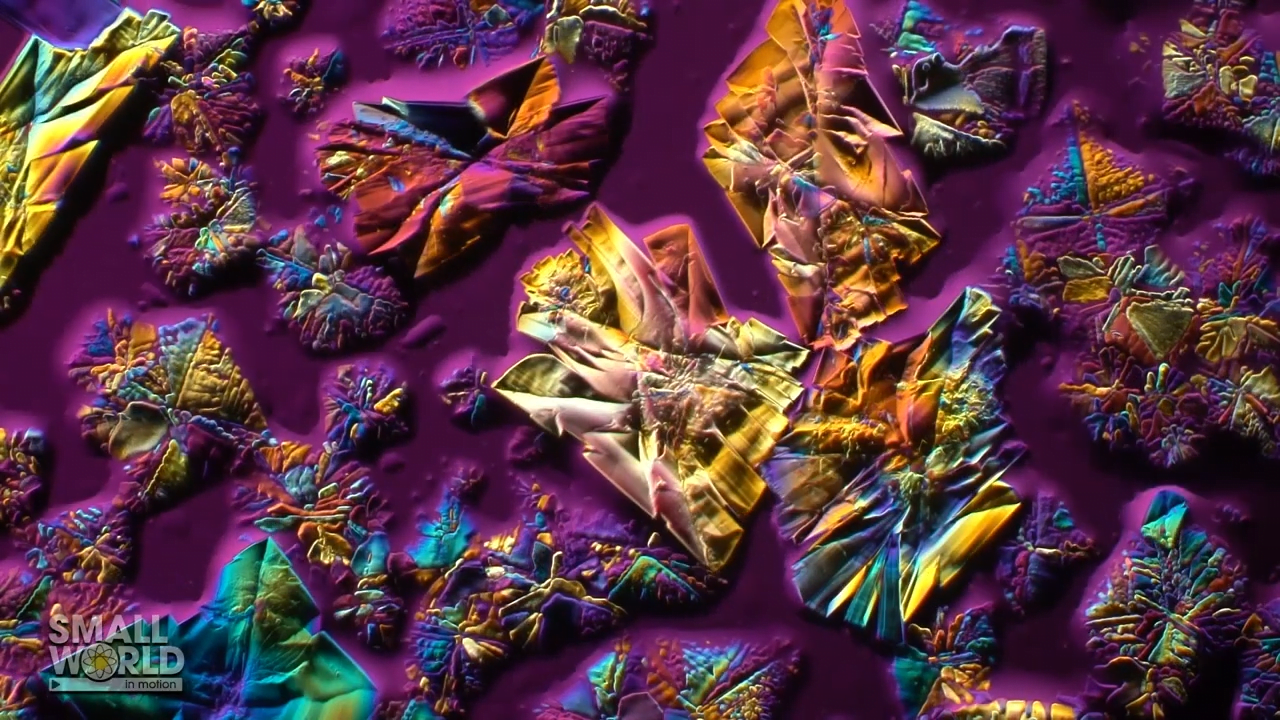
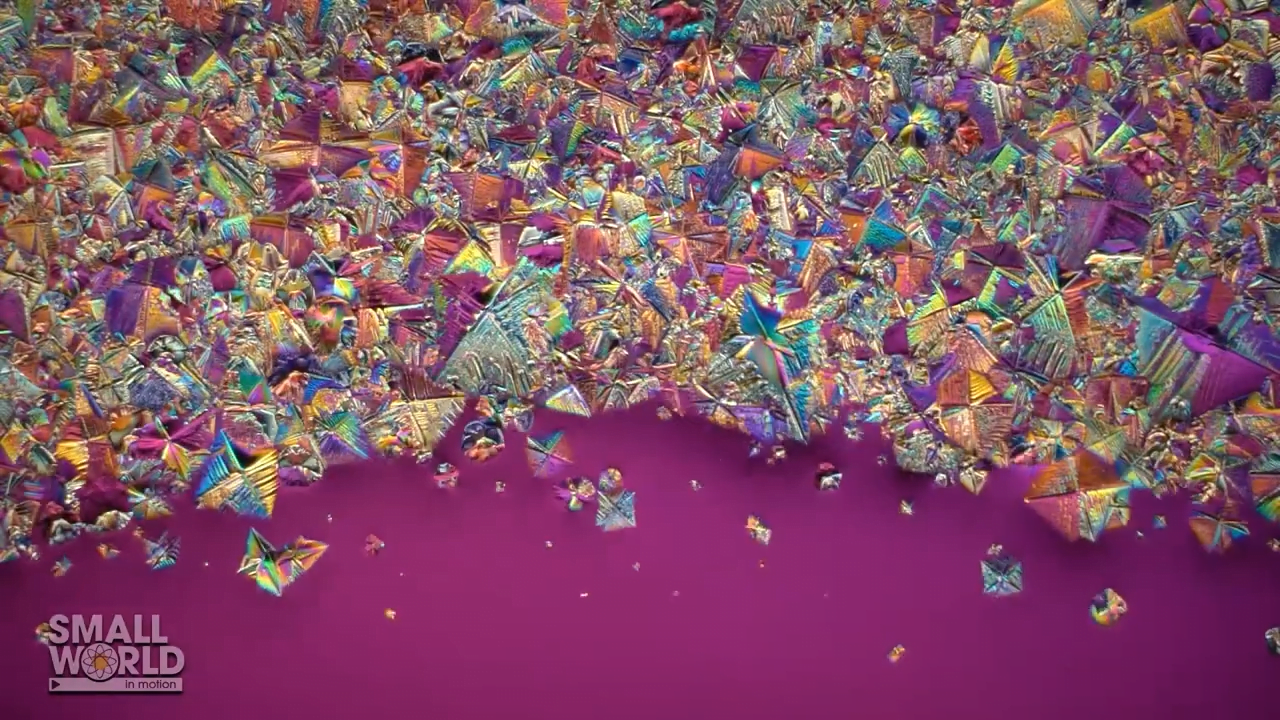
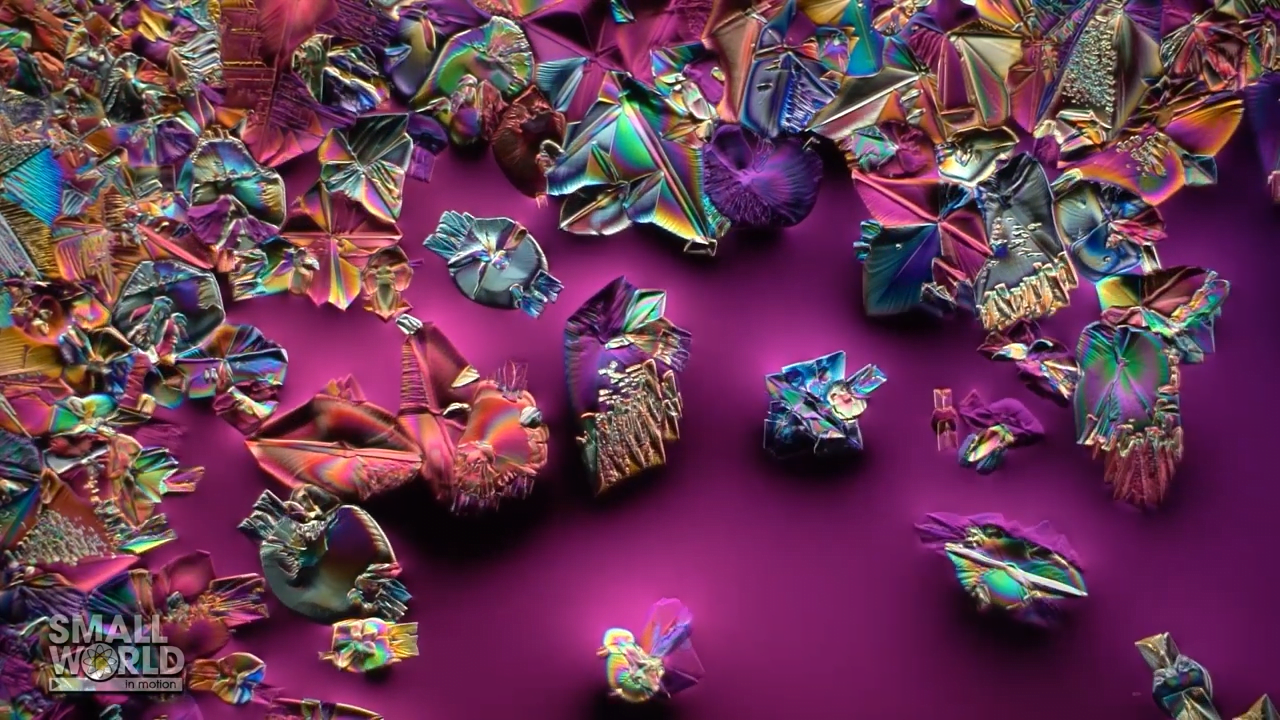
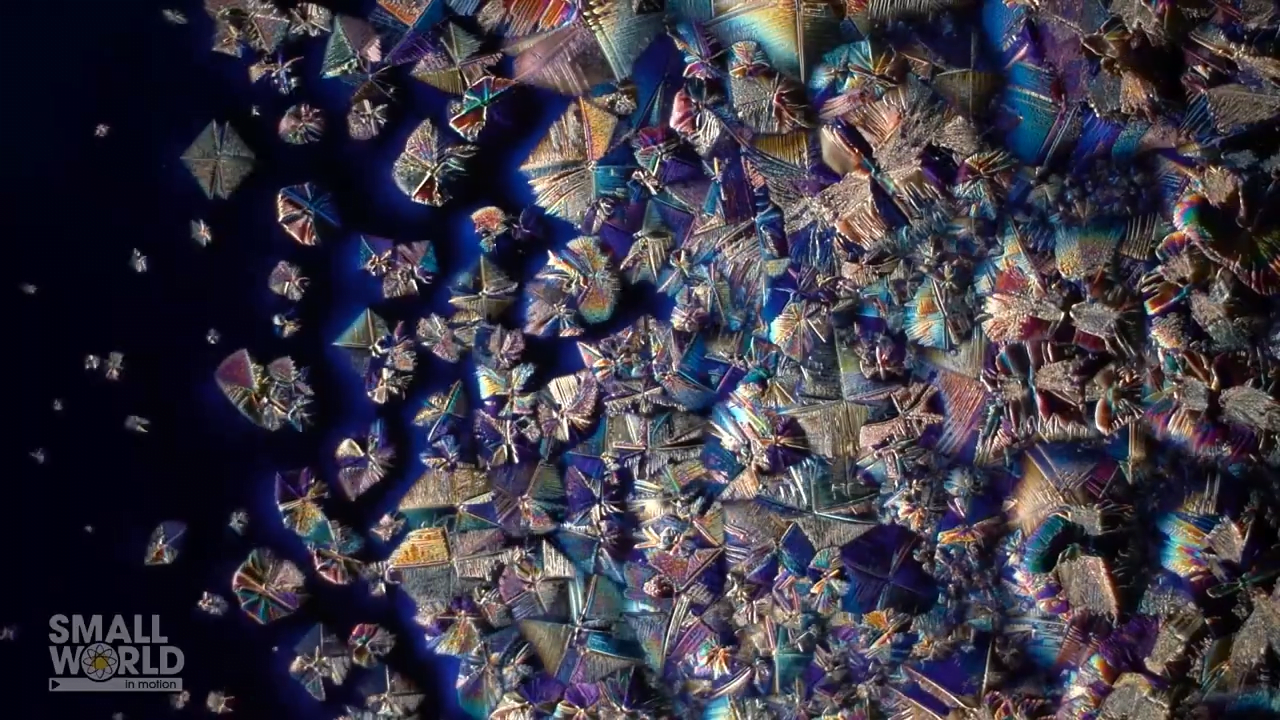
Candy-colored crystals emerge from a salty liquid in this macro video of Epsom salt crystallization by Karl Gaff. The video was an honorable mention in the 2022 edition of the Nikon Small World in Motion competition. The wild colors in the video come from illumination with polarized light, which makes the crystals appear different colors depending on the orientation of their atoms. (Image and video credit: K. Gaff; via 2022 Nikon Small World in Motion Competition)

Testing Full-Size Engines
Engineers can often use small-scale models to test the physics of their creations, but sometimes there’s no substitute for going large. In this photo, we see a full-size commercial engine used on an airplane, mounted at the Instituto Nacional de Tecnica Aeroespacial (INTA) in Madrid.
Behind the engine, in red, is an optical rig used for a brand-new measurement technique that allows engineers to directly measure the carbon dioxide emissions of the engine as it runs. The optical frame is 7 meters in diameter and uses 126 beams of near-infrared laser light to probe the engine’s exhaust without interrupting the flow. It’s the first chemically specific imaging of a full-scale gas turbine like those found on commercial aircraft. Given the high carbon emissions associated with air travel, the technique will be important for engineers building greener aircraft engines. (Image and research credit: A. Upadhyay et al.; via The Engineer; submitted by Simon H.)

Moths and Beetles in Flight
Watching insects take flight in high-speed video is always mesmerizing. So often their wings look too small and fragile to lift their bulbous bodies, but they manage the feat easily. I especially like to watch how much their wings flex during each up- and downstroke. So often we think that stiffer wings — like those on airplanes — are better for flight, yet nature demonstrates at so many sizes that flexibility is better, especially in flapping flight. A flexible wing can maximize lift in the downstroke and curl to minimize drag on the upstroke. Even wings that fold away, as many beetle wings do, can do the job of lifting an insect once shaken out. (Image and video credit: Ant Lab)

Droplet Bounce
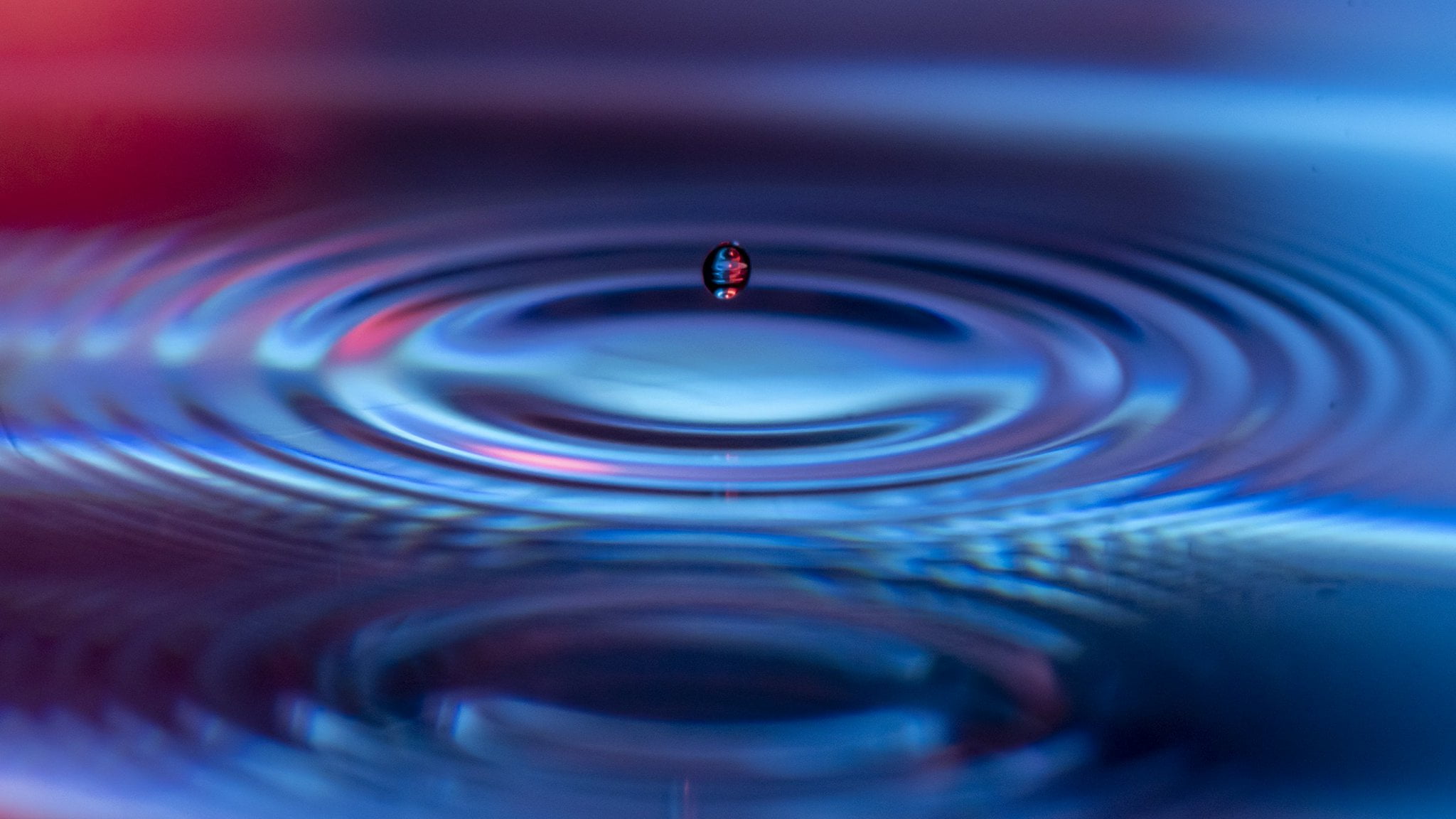
A droplet falling on a liquid bath may, if slow enough, rebound off the surface. Its impact sends out a string of ripples — capillary waves — on the bath’s surface and sends the droplet itself into jiggling paroxysms. A new pre-print study delves into this process through a combination of experiment, simulation, and modeling. Impressively, they find that the most of the droplet’s initial energy is not dissipated during impact. Instead it’s fed into the capillary waves and droplet deformation that follow. (Image and research credit: L. Alventosa et al.; via Dan H.)

A droplet falls on a bath, partially coalesces and rebounds. The process repeats until the droplet is small enough to coalesce completely. 
Chemical Flowers
These “flowers” blossom as two injected chemicals react in the narrow space between two transparent plates. The chemical reaction produces a darker ring that develops a streaky outer edge due to competition between convection and chemical diffusion.
To show how gravity affects the instability, the researchers repeated the experiment on a parabolic flight. In microgravity conditions, no instability formed. That’s exactly what we’d expect if convection (i.e. flow due to density differences) is a major cause. No gravity = no convection. In contrast, under hypergravity conditions, the instability was initially spotty before developing streaks. (Image and video credit: Y. Stergiou et al.)