Month: May 2021

  • Featured Video Play Icon

    Collective Motion in Grains

    Flocks of birds and schools of fish swarm in complicated collective motions, but groups of non-living components can move collectively, too. In this Lutetium Project video, we learn about grains that, when vibrated, self-propel and form complex collective motions similar to those seen in groups of living organisms.

    A key feature of the grains is their lack of symmetry. To be self-propelling, they must have a well-defined orientation, defined by a different front and back. The grains also have the freedom to move in a direction that is not the same as the direction they’re oriented in. This allows the grains to rotate, which enables them to perform the large-scale motions seen in the experiments. (Video and image credit: The Lutetium Project; research credit: G. Briand et al.)
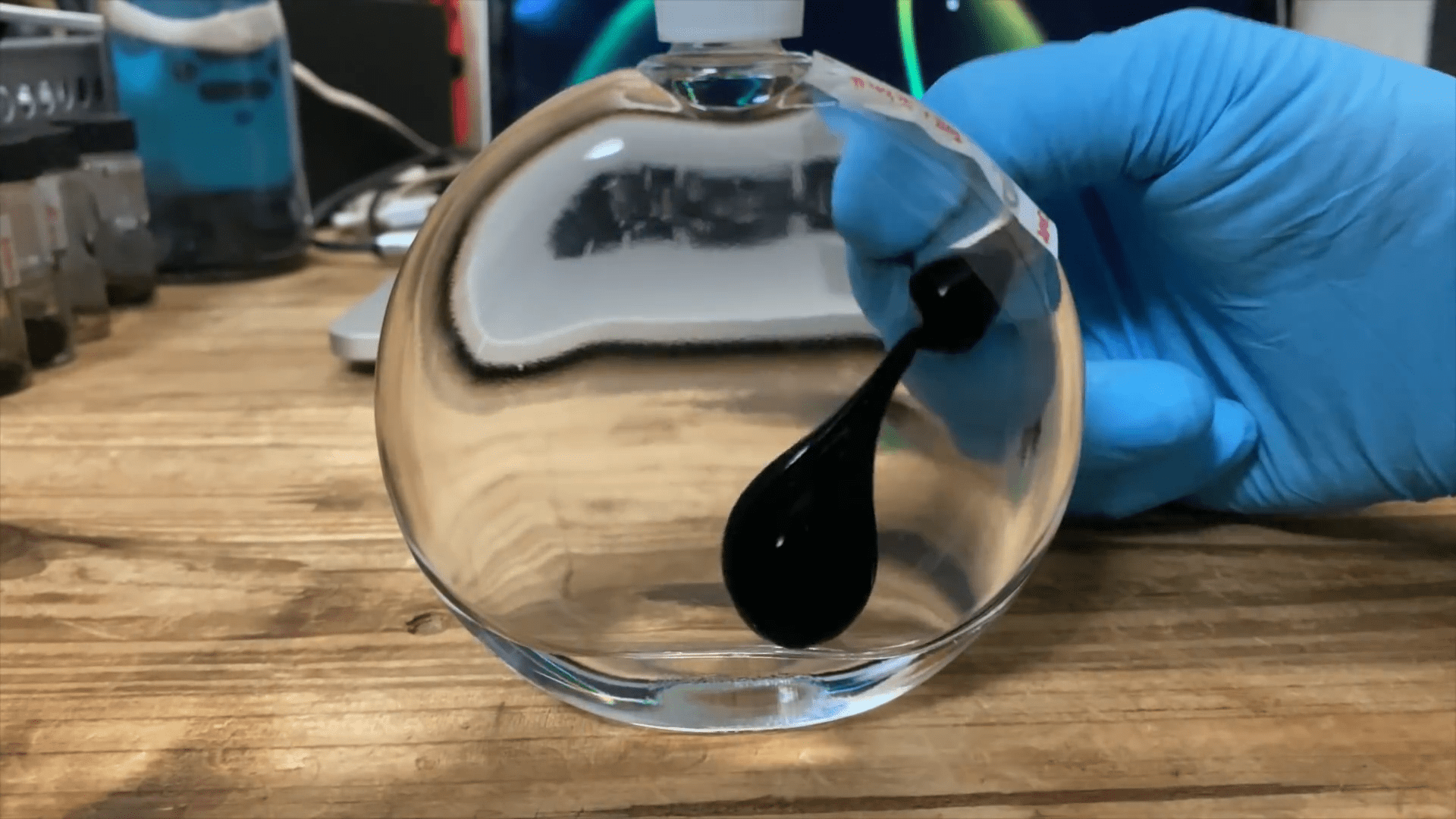
  • Featured Video Play Icon

    Visualizing Music With Ferrofluids

    Here’s an ultra-cool DIY project: a Bluetooth speaker with ferrofluid music visualization! The music playing through the speaker drives an electromagnet, which causes the magnetic ferrofluid to pulse and shred in time with the music. Check out the video to see the project in action plus footage of the build coming together. (Video and image credit: DAKD Jung; via Gizmodo)

  • Bubbles Rising

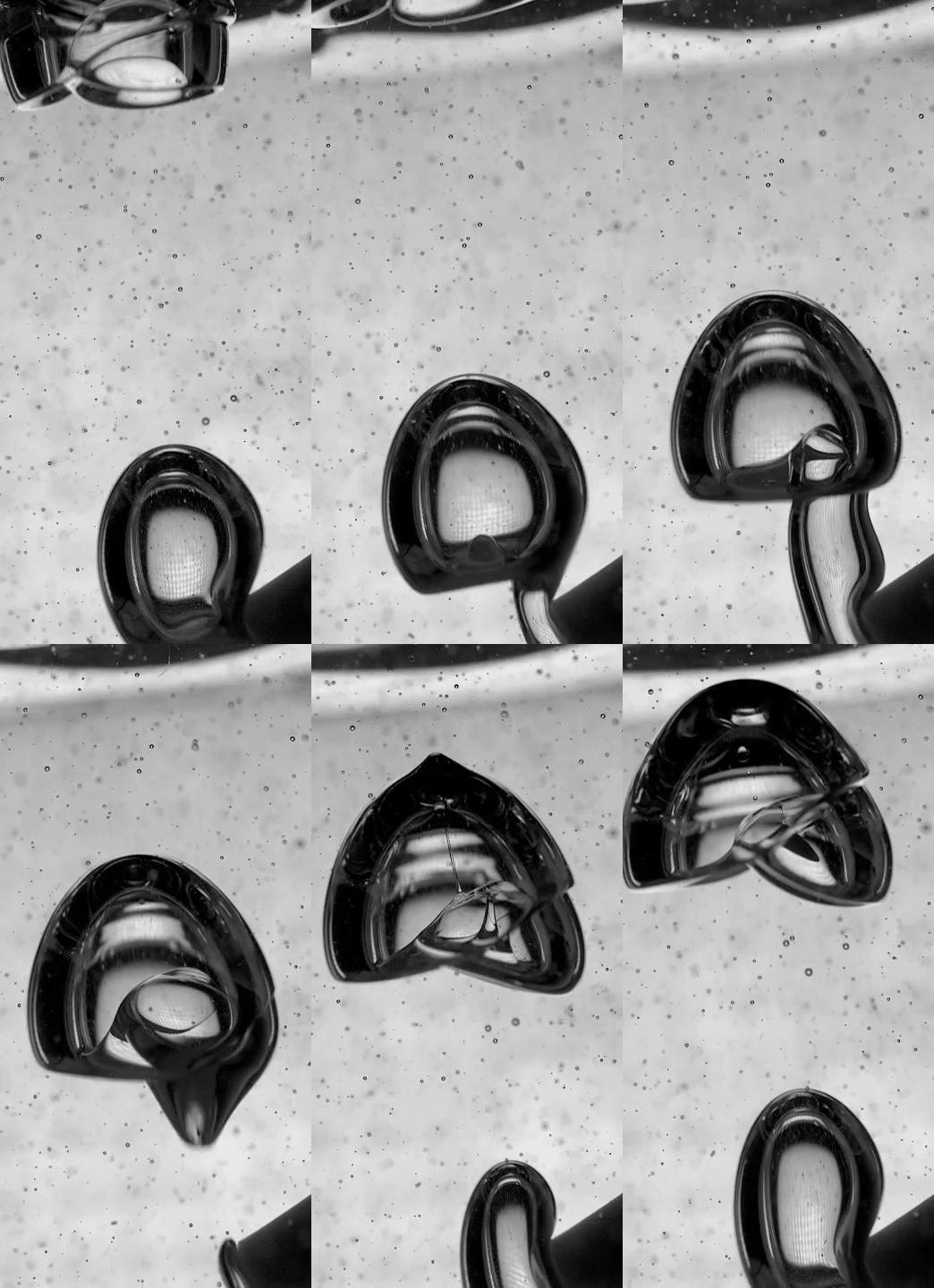
    Bubbles Rising

    Here we see high-speed video of air bubbles rising through sesame oil. The flow rate of air is just right for one bubble to catch up to and merge with the previous bubble. As it the trailing bubble pinches off from the valve, it shoots a small jet through itself and into the prior bubble. For information on how to recreate this and related experiments, check out this article. (Image credit: C. Kalelkar and S. Paul, source; see also C. Kalelkar)

  • Snapping When Swollen

    Snapping When Swollen

    The Venus flytrap snaps shut on its hapless prey by swelling cells in its leaves with water. Under the added pressure of a fly’s footstep, the leaves’ snapping instability triggers, trapping the insect. Researchers are using similar physics to create jumping and snapping polymer gels, like the one seen below.

    This jumping polymer shell exploits snapping that occurs as it dries out.

    To trigger the behavior, researchers soaked their polymer-based gel strips and shells in a solvent of n-hexane, which easily permeated the material and made it swell up. As the solvent evaporates from the swollen gel, the polymer material changes shape, sometimes in smooth bends and sometimes in abrupt snaps. The group was able to harness those snaps to have their materials descend slopes and climb ladders — all without motors, batteries, or external sources of energy. (Image credit: plant – A. Dénes, shell – Y. Kim et al.; research credit: Y. Kim et al.; via Physics World)

  • Featured Video Play Icon

    Breaking Ocean Currents

    Our global ocean currents move enough water to dwarf the flow of all Earth’s rivers. This worldwide circulation is driven largely by density and the movements of cold, salty water versus warmer, fresher water. The pump behind this action lies in the North Atlantic, where cold, salty water sinks down in the Atlantic Meridional Overturning Circulation, or AMOC. Among other things, AMOC is responsible for Western Europe’s relatively mild climate compared to similarly northern lands.

    Unfortunately, as our world warms, AMOC gets weaker. That means less cold water sinking in the North Atlantic and a smaller driving force behind global oceanic circulation. There is even a small but real chance that global warming breaks our ocean current system entirely and drastically changes climates around the world in ways that cannot be easily fixed. Watch the full video to learn more. (Video and image credit: It’s Okay To Be Smart)

  • Predicting Meteotsunamis

    Predicting Meteotsunamis

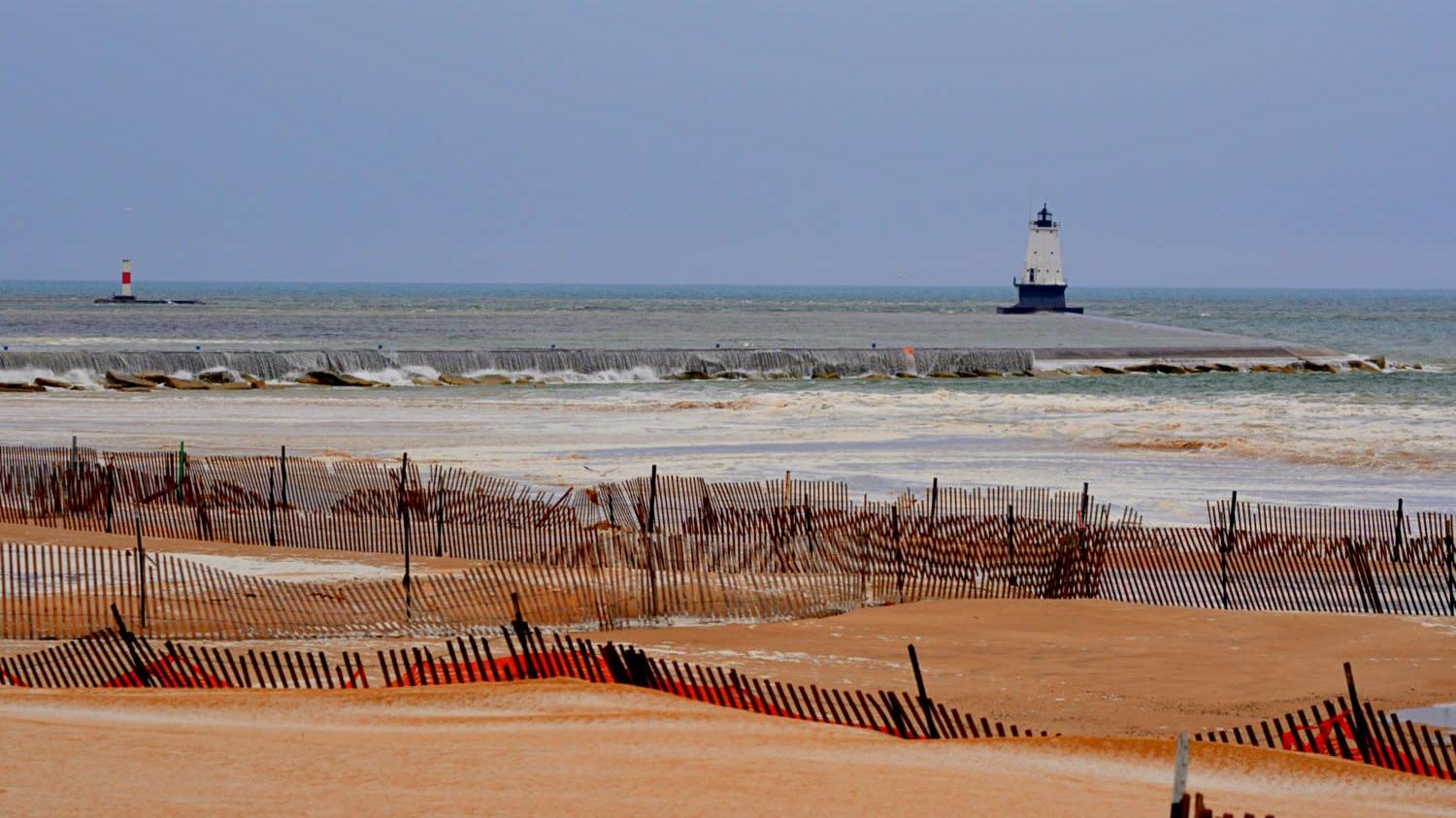
    Meteotsunamis, or meteorological tsunamis, are large waves driven by weather rather than seismic energy. Although they occur along shorelines throughout the world, forecasters have very little infrastructure in place to predict or detect them. But a new study of an April 2018 meteotsunami on Lake Michigan (pictured above) has provided evidence that existing models may be able to forecast these events.

    The Lake Michigan meteotsunami was driven by an atmospheric gravity wave, which carried with it a substantial pressure drop. Most of the time such waves travel faster or slower than water waves, and there is little to no interaction. But on this day, the atmospheric wave and the water waves were traveling at the same speed in the same direction, creating a resonance that strengthened the water wave.

    Using existing National Oceanic and Atmospheric Administration (NOAA) models, researchers were able to reconstruct the event digitally, with results that agreed well with observations. That success means that forecasters may be able to predict the events ahead of time, potentially saving lives. (Image credit: D. Maglothin; research credit: E. Anderson and G. Mann; via Gizmodo)

  • Featured Video Play Icon

    “Le Temps et l’Espace”

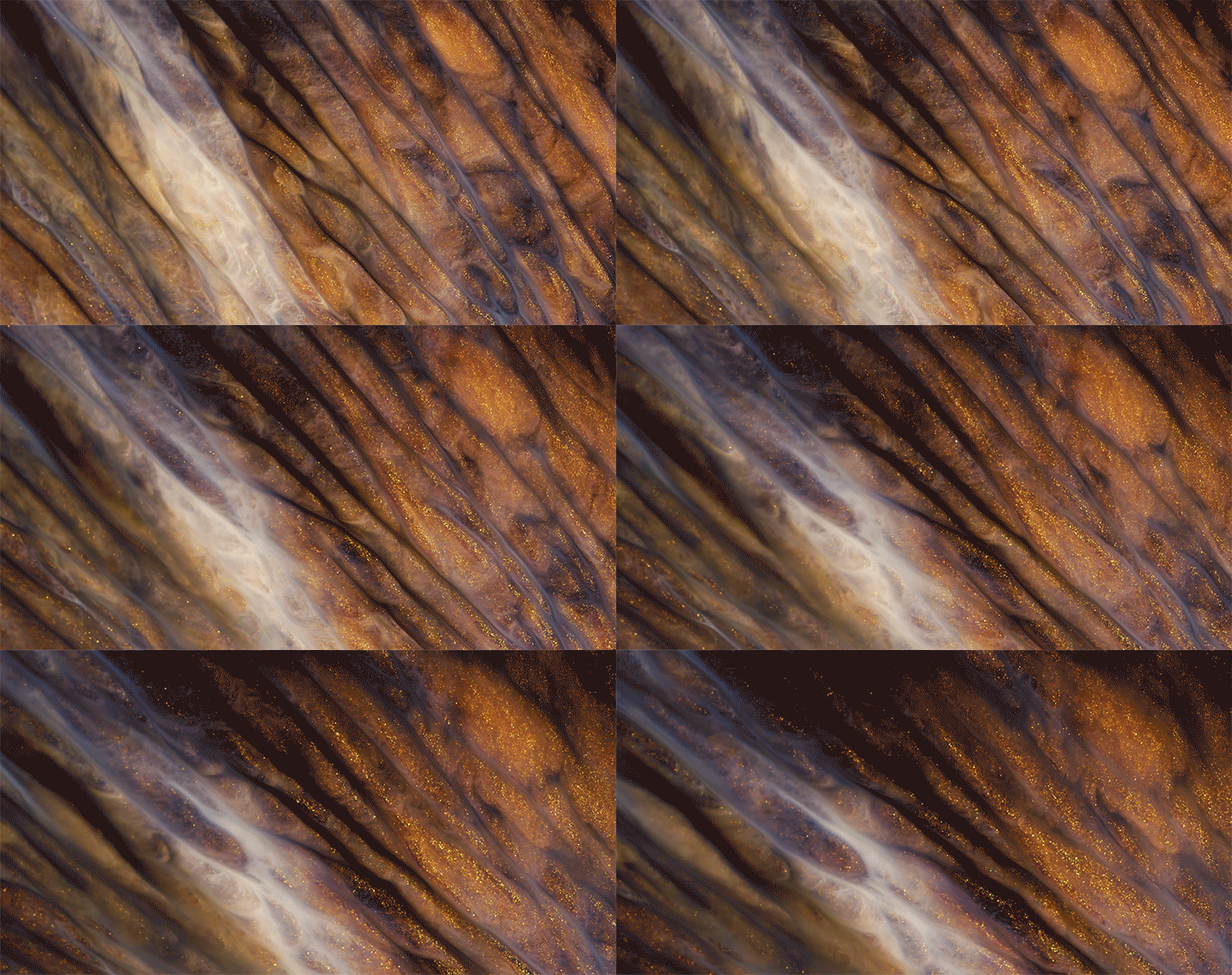
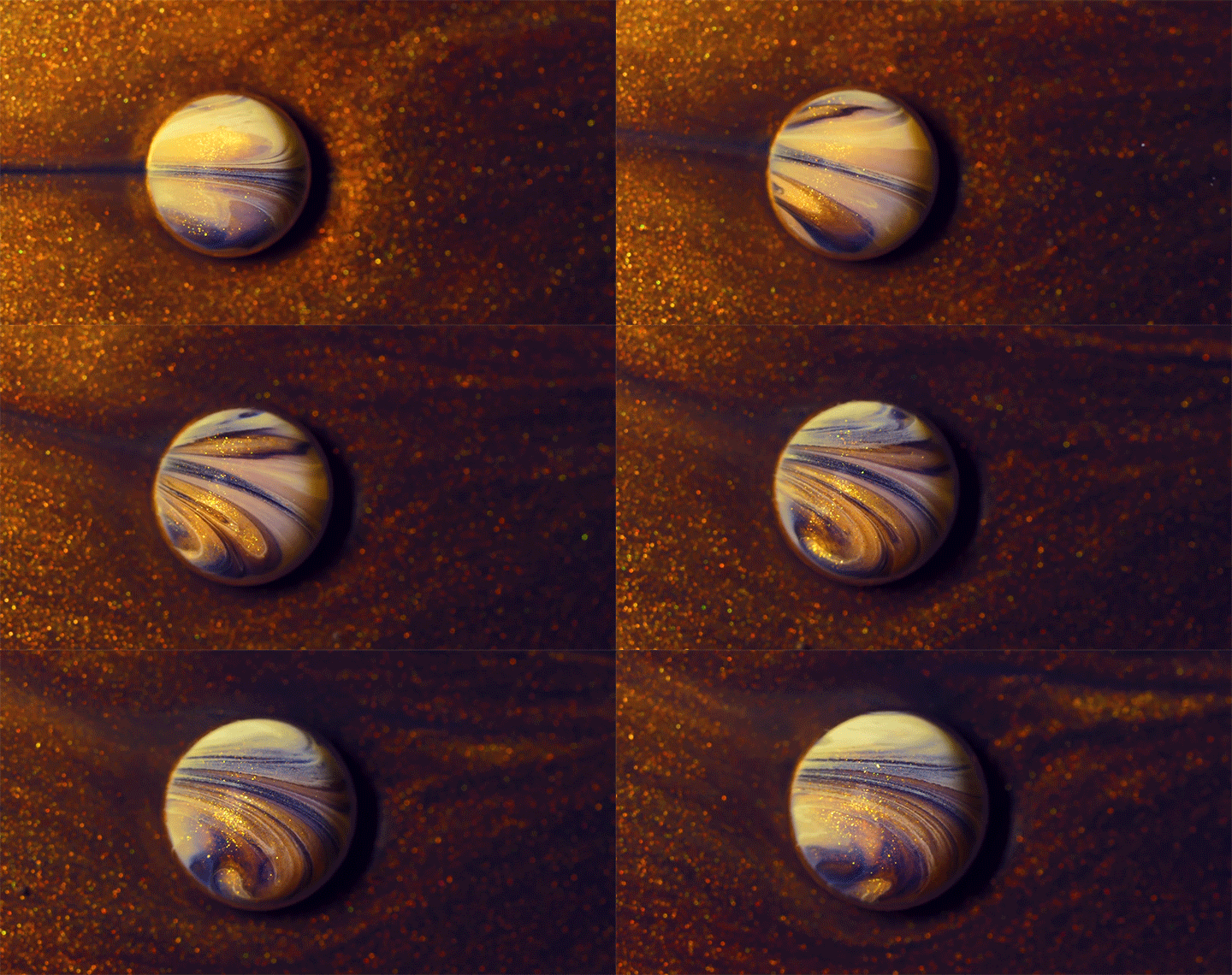
    Filmmaker Thomas Blanchard creates a slow and dreamy fluid landscape in “Le Temps et l’Espace”. Made with ink and paints, the visuals are beautiful and serene. For similar works, be sure to check out the “fluids as art” tag! (Image and video credit: T. Blanchard)

  • Snail Locomotion

    Snail Locomotion

    Snails and other gastropods move using their single muscular foot and a viscoelastic fluid they secrete. Muscular waves in the foot run from tail to head and are transmitted to the ground through the thin, sticky mucus layer without the snail ever fully detaching from the surface. The characteristics of this mucus layer are critical to the snail’s locomotion. As a movement cycle begins, the mucus behaves like an elastic solid. As the muscular wave approaches, it shears the fluid, increasing its stress and ultimately reaching the yield point, where the gel begins to flow. Once the wave passes, the mucus quickly transitions back to its elastic solid behavior. The net result of each cycle is an asymmetric force that propels the snail forward while keeping it adhered to whatever surface it’s crawling on.

    Many animals rely on similarly complex fluids to move, attack prey, defend against predators, or enable their reproduction. Check out this review article for more examples. (Image credit: A. Perry; see also P. Rühs et al.; submitted by Pascal B.)

  • Jovian Auroras

    Jovian Auroras

    Like Earth, Jupiter is home to polar auroras that light the sky as charged particles interact with the planet’s magnetosphere. A recent paper identifies interesting features in the aurora that appear similar to expanding vortex rings (see inset below). Although the researchers cannot yet identify the origin of the rings, they hypothesize that the process begins at the far edges of Jupiter’s magnetosphere where it interacts with the incoming solar wind. One theory posits that shear flows and Kelvin-Helmholtz instabilities where the magnetosphere and solar wind meet drive the phenomenon. (Image credit: Jupiter – NASA, ESA, and J. Nichols, aurora features – NASA/SWRI/JPL-Caltech/SwRI/V. Hue/G. R. Gladstone/B. Bonfond; research credit: V. Hue et al.; via Gizmodo)

    Diagram showing an inset of Jupiter's northern aurora, with further insets showing the expanding ring features.
  • Featured Video Play Icon

    Inside the Blockage of the Suez Canal

    In March 2021, the world watched as the Ever Given container ship got stuck in the Suez Canal, disrupting global shipping for more than a week. In this Practical Engineering video, Grady delves into some of the phenomena that may have played a role in the incident of the ship that launched a thousand memes.

    Heavy container ships displace a lot of water, and in a narrow, shallow canal, there isn’t much space left for that water to go. To squeeze by, the water must speed up, which (per Bernoulli’s law) creates a pressure drop and suction force on the ship. For a ship too close to a canal bank, that suction will pull the ship further to the side, increasing its chances of lodging in the bank. (Video and image credit: Practical Engineering)