Getting wet can be a problem for many animals. A wet insect could quickly become too heavy to fly, and a wet bird can struggle to stay warm. But these animals have a secret weapon: tiny, multi-scale roughness on their wings, scales, and feathers that helps them shed water. Watch the latest FYFD video to learn how! (Image and video credit: N. Sharp; research credit: S. Kim et al.)
Category: FYFD Video

Plant Week: Dandelions in Flight
To kick off Plant Week here on FYFD, we’re taking a closer look at that ubiquitous flower: the dandelion. Love ‘em or hate ‘em, these little guys manage to get just about everywhere, thanks in part to their amazing ability to stay windborne for up to 150 km! To do that, the dandelion uses a bristly umbrella of tiny filaments, known as a pappus, that can generate more than four times the drag per area of a solid disk. Its porosity – all that empty space between the filaments – is also key to its stability; it helps create and stabilize a separated vortex ring that the seed uses to stay aloft. Check out the full video below! (Image and video credit: N. Sharp)

Agnes Pockels: Surface Science Pioneer
Today’s FYFD video tells a story I’ve wanted to share for a couple of years now. It’s about the life and work of Agnes Pockels, a woman born in the mid-nineteenth century who, despite a lack of formal scientific training, made major contributions to the understanding of surface tension and to the experimental apparatuses and methodologies used in surface chemistry in general. She accomplished all of this not in a scientific lab, but from her kitchen.
Pockels’ story is one of curiosity, determination, and meticulous scientific inquiry. Chances are that you’ve never heard of her, but you really should. Check out the full video below to learn more! (Image and video credit: N. Sharp)

The Boston Molasses Flood
Today marks the 100th anniversary of the Boston Molasses Flood, and to commemorate this bizarre disaster, I’ve made a video about the key findings from my research with colleagues at Harvard University. Check it out below!
And, if you’re still hankering to learn more about the Molasses Flood, here are some recent articles and interviews on the subject:
– Boston.com
– NBC News
– New England News Collective
– Historium Unearthia podcast(Video and image credits: N. Sharp)

Underwater Snakes, Gusty Flying, and Microswimmers
If you like your fluid dynamics with a healthy dose of biology, this video’s for you! Learn about the hydrodynamics of snake strikes, how birds fly in gusty crosswinds, and the mathematical underpinnings of a microswimmer’s journey. This is the final video in our FYFD/JFM collaboration featuring research from the 2017 APS DFD meeting. If you missed any of the previous videos, you can see them all here. Which one is your favorite? Would you like to see the series continue? Let me know in the comments or on Twitter! (Image and video credit: N. Sharp and T. Crawford)

Dinosaurs, Propellers, and Hiding Objects
The latest FYFD/JFM video is out, and it’s all about the interactions between structures and flows! We learn about plesiosaur-inspired underwater robots, how turbulence affects air-water interfaces, and how adding a tail can help hide an object in a flow. If you missed one of the previous episodes in this series, you can find them all here. (Image and video credit: T. Crawford and N. Sharp)

Bioinspiration, Underwater Sniffing, and Mixing Toothpaste
In this month’s FYFD/JFM video, we explore some intersections between the animal kingdom and our own lives. Learn about designing better buildings with inspiration from termites; see the fascinating superpower of the star-nosed mole; and learn what goes into products like the toothpaste you (hopefully) use daily. All this and more in the latest video! Missed one of our previous ones? Good news: we’ve got you covered. (Image and video credit: N. Sharp and T. Crawford)

Flying Beetles, Stinging Nettles, and Jellyfish
In the latest JFM/FYFD video, we tackle some of the less pleasant aspects of summer weather: stopping invasive insects, understanding how plants dispense poison, and looking at the physics behind jellyfish stings. And if you’ve missed any of our previous videos, we’ve got you covered. (Image and video credit: T. Crawford and N. Sharp)

Swimming, Cycling, and Sailing
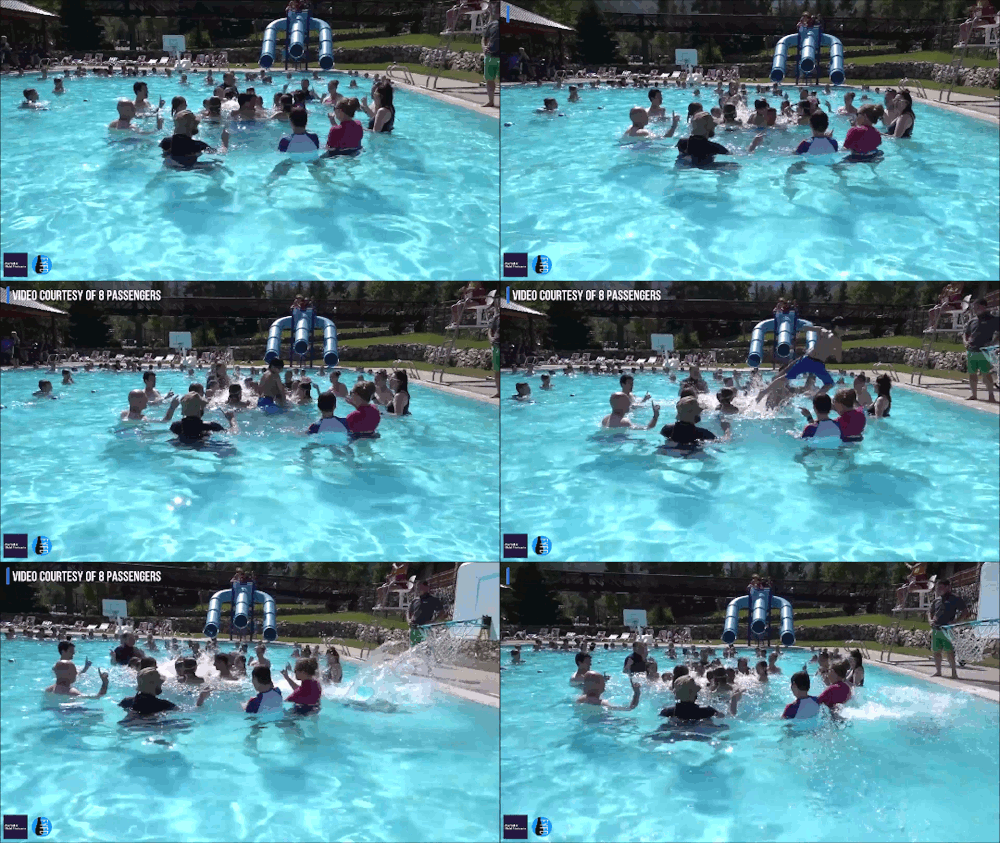
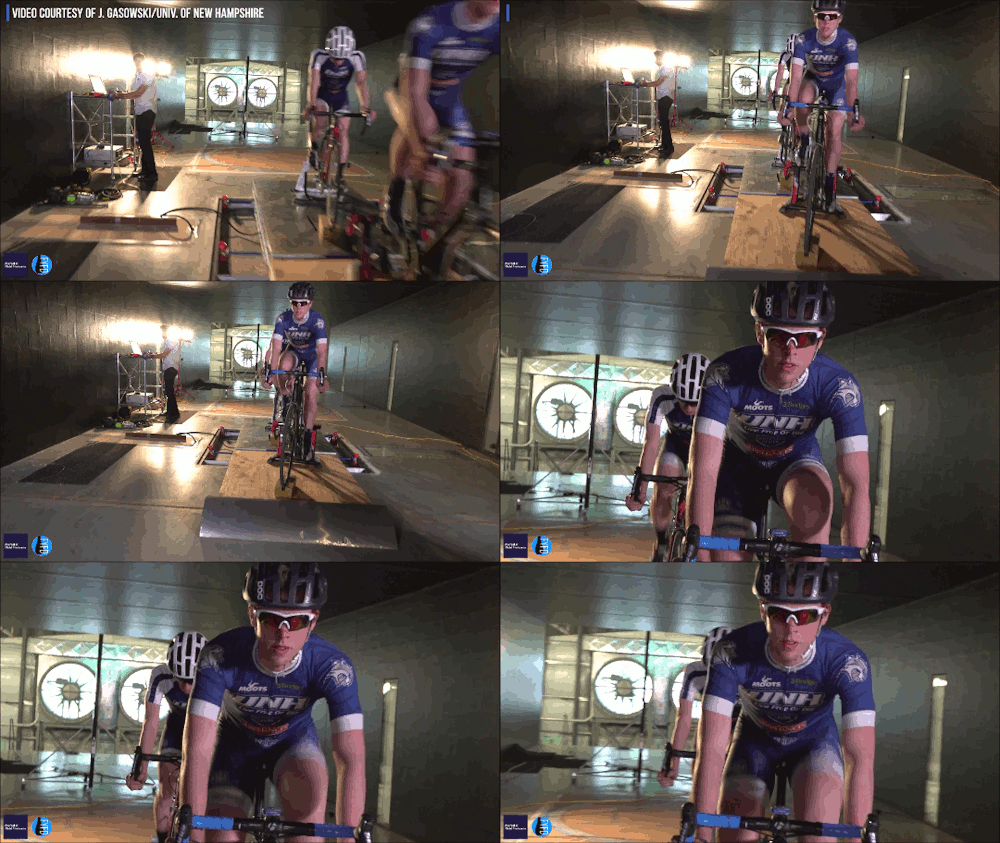
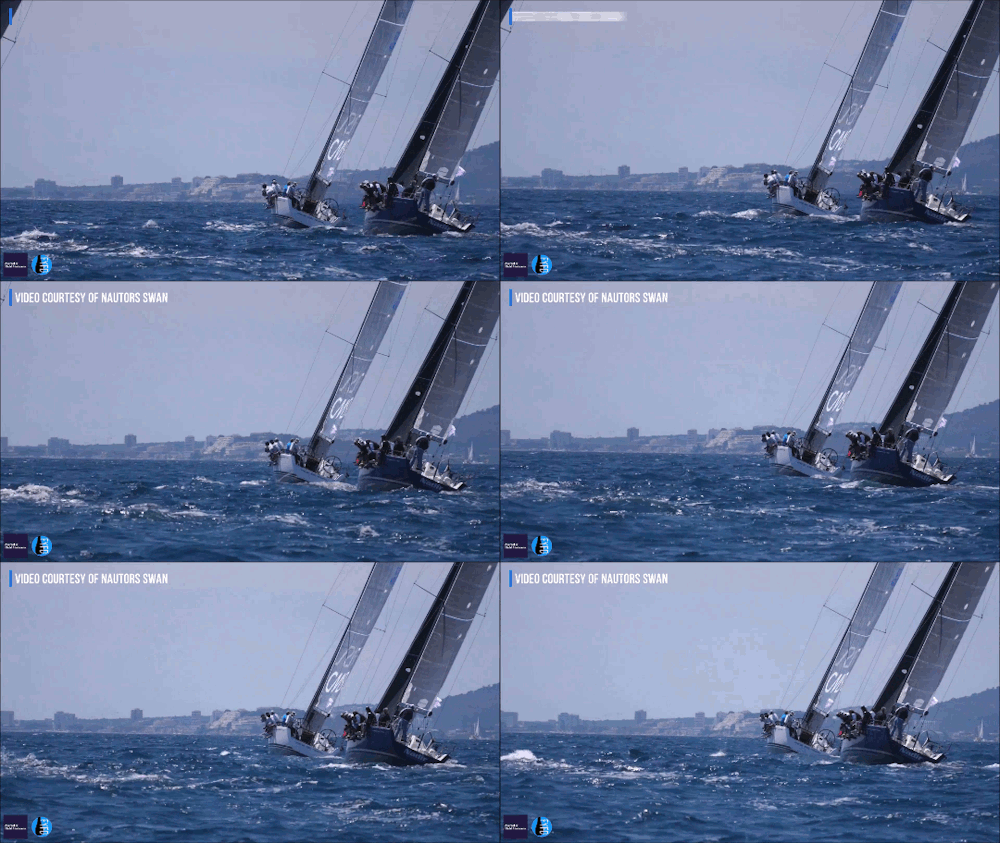
Summer brings with it lots of great sports, and whether you love riding a bike, sailing a boat, or just hanging out at the pool, our latest FYFD/JFM video has something for you. Want even more sports physics? Check out the Olympic series we did for the London and Rio games. And if you’re looking for more of the latest fluids research, don’t miss the rest of our video series. (Video and image credit: N. Sharp and T. Crawford)

Tornadoes, Fire, and Ice
It’s time for another look at breaking fluid dynamics research with the latest FYFD/JFM video! This time around, we tackle some geophysical fluid dynamics, like listening to the sounds newborn tornadoes make below the range of human hearing; studying how melting ice affects burning oil spills; and how salt sinking from sea ice affects the ocean circulation. Check out the full video below for much more! If you’ve missed any of the previous videos in the series, you can check them out here. (Image and video credit: T. Crawford and N. Sharp)