Month: November 2018

  • Featured Video Play Icon

    “If I Say”

    The new Mumford & Sons single “If I Say” features a fluid-dynamical music video. It’s full of dendritic fingers and flowing colors – likely from combinations of inks, paints, and other fluids. Although the fingers are reminiscent of the viscosity-dependent Saffman-Taylor instability, these appear to be driven by variations in surface tension between the different fluids. That’s a major feature throughout the video; although some of the flow is caused by the syringes depositing fluids, much of it seems to be a Marangoni effect, where flow moves away from areas of low surface tension to ones with higher surface tension. (Video credit: Mumford & Sons; filmed by P. Hofstede; via Katie M.)

  • Vortex Dome

    Vortex Dome

    Are you staring into the eye of a hurricane or watching the spin of a simple desk toy? Part of the beauty of fluid dynamics is recognizing how similar they both are. This is high-speed footage of a toy known as a “Vortex Dome,” which contains a fluid filled with tiny mica particles that react to local forces and allow users to “see” the flow. Before the video begins, the toy has been spinning for long enough that the fluid inside rotates as if it were a solid body. Then an unseen hand sets the disk spinning in the opposite direction and we observe what happens.

    Fluid at the outer edge of the toy has to immediately change direction due to friction with the wall. That change in momentum slowly passes from the wall inward as viscosity between one layer of fluid to the next passes that signal. This creates the rolls we see in the first animation. Initially, those rolls are smooth, but they quickly roughen as disturbances in them grow into full-blown turbulence. Meanwhile, viscosity continues to pass the change in rotation inward, ultimately swallowing the entire interior of the toy. Left spinning indefinitely, the disturbances will eventually quiet out and the entire fluid will spin as one. (Image and video credit: D. van Gils)

  • Ricequakes

    Ricequakes

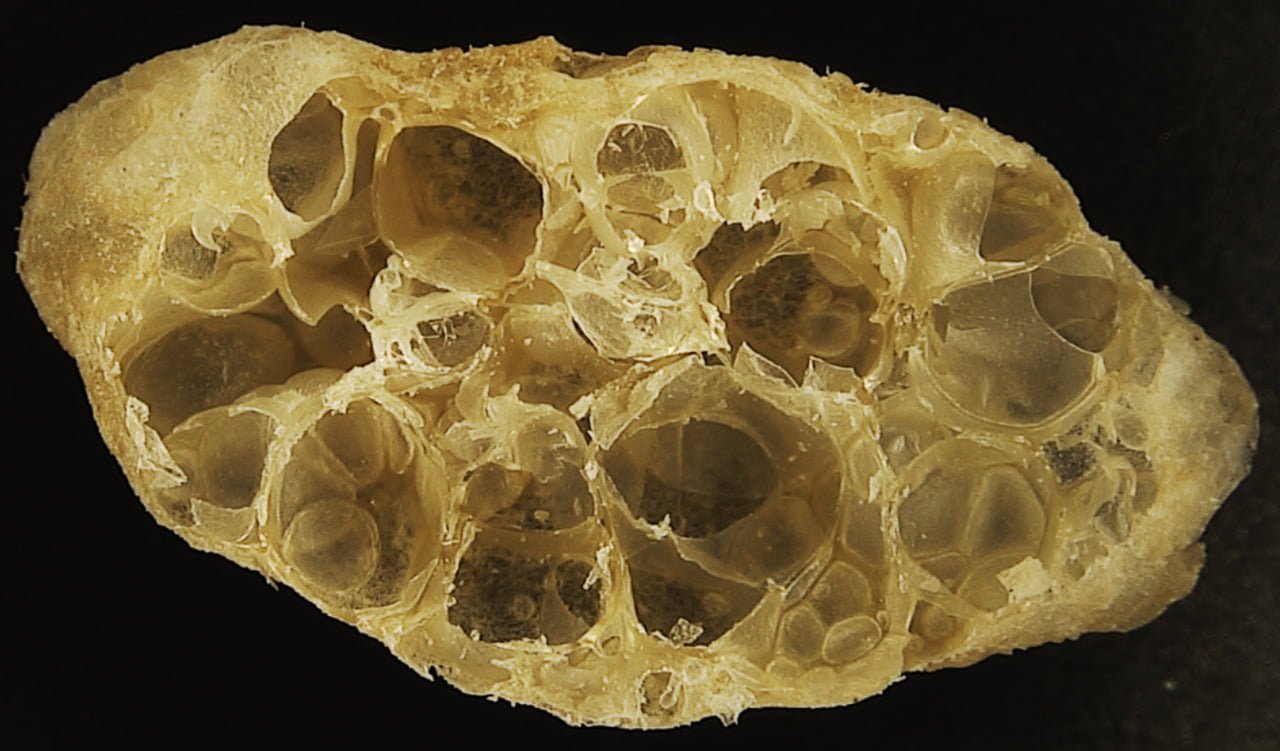
    Rockfill dams, sinkholes, ice shelves, and other geological features often consist of brittle, porous materials that are partially submerged. Over time, pressure and chemical reactions with the fluid around them can cause these structures to collapse, but it can take many, many years. 

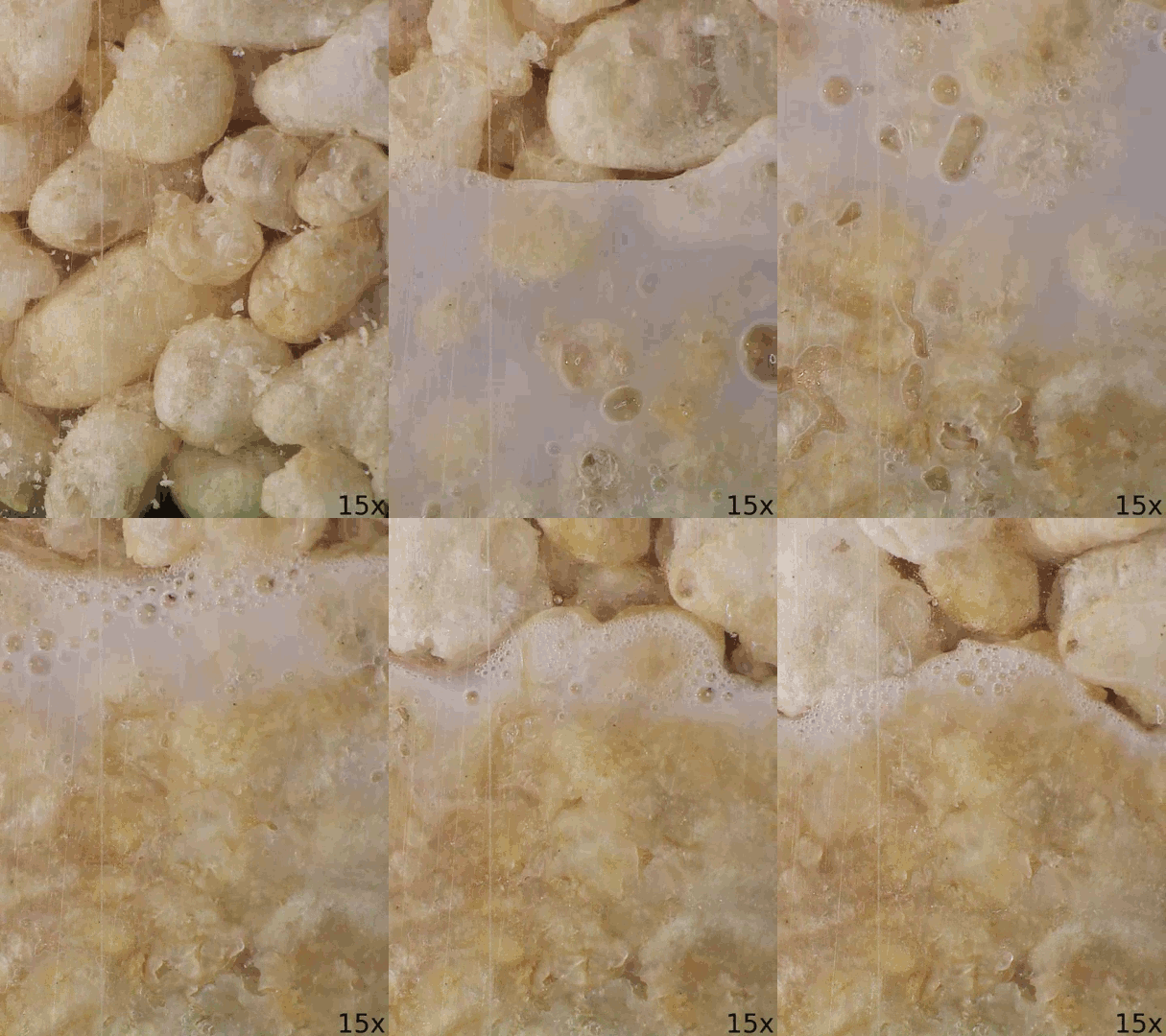
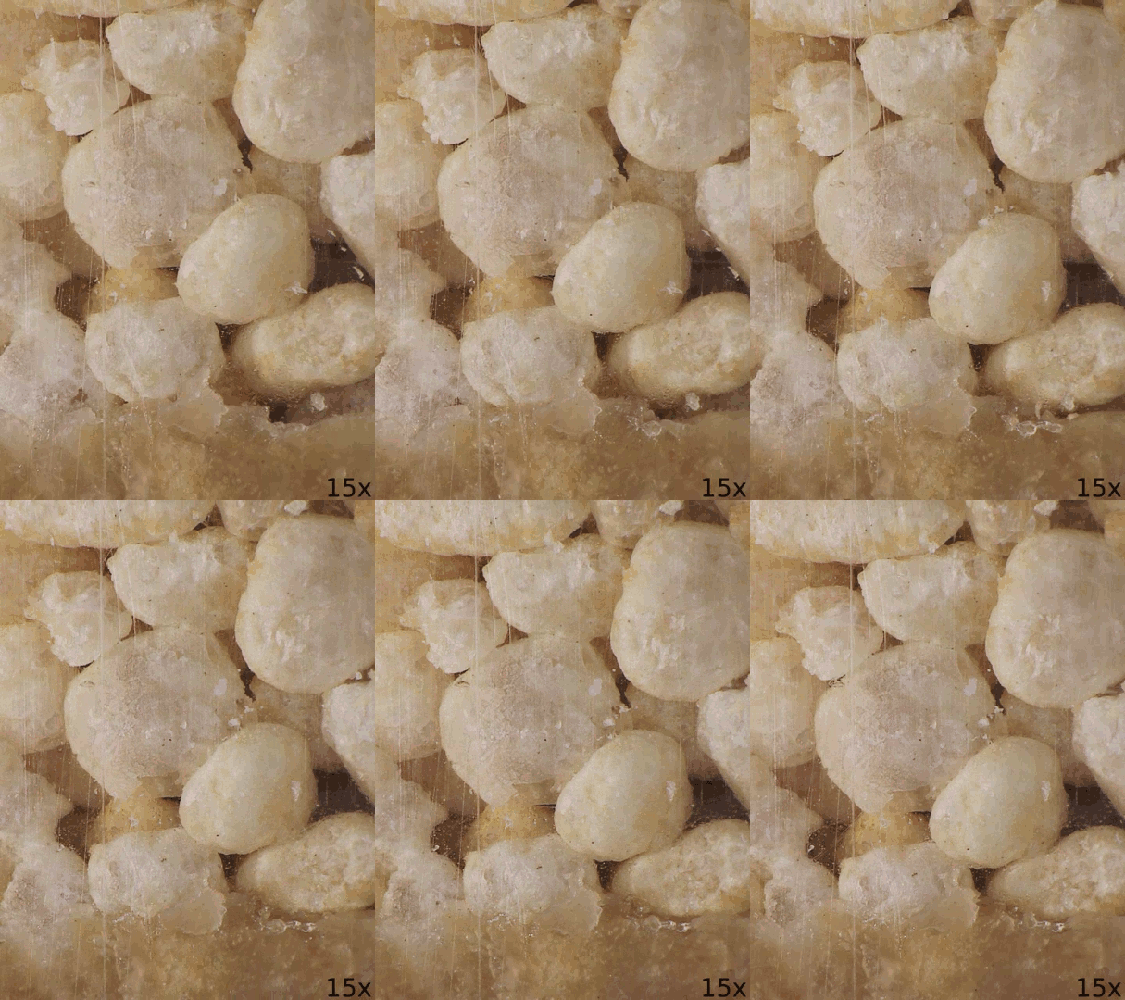
    To study the physics behind this, researchers have turned to a new model: puffed rice cereal. Like their counterparts in nature, puffed rice grains contain micropores that slowly soften and get crushed after being wetted. Researchers filled their test container with puffed rice and put it under pressure to give the whole stack a constant stress. Then they injected milk in the bottom section of the container. After an immediate collapse in the wet material (lower left), the remaining grains collapsed slowly in a series of “ricequakes”. 

    As the micropores compacted, the cereal let out audible cracks that corresponded with the motion of a crushing wavefront (lower right). The time between ricequakes increased linearly and depended on pore size. The relationship was so consistent, researchers found, that they could predict how long the puffed rice stack had been wet simply by listening to the time between crackles! Experiments like these offer scientists an exciting chance to understand geological physics that would otherwise take up to millions of years to observe. (Image and research credit: I. Einav and F. Guillard; via Physics World; submitted by Kam-Yung Soh)

  • Namibia From Above

    Namibia From Above

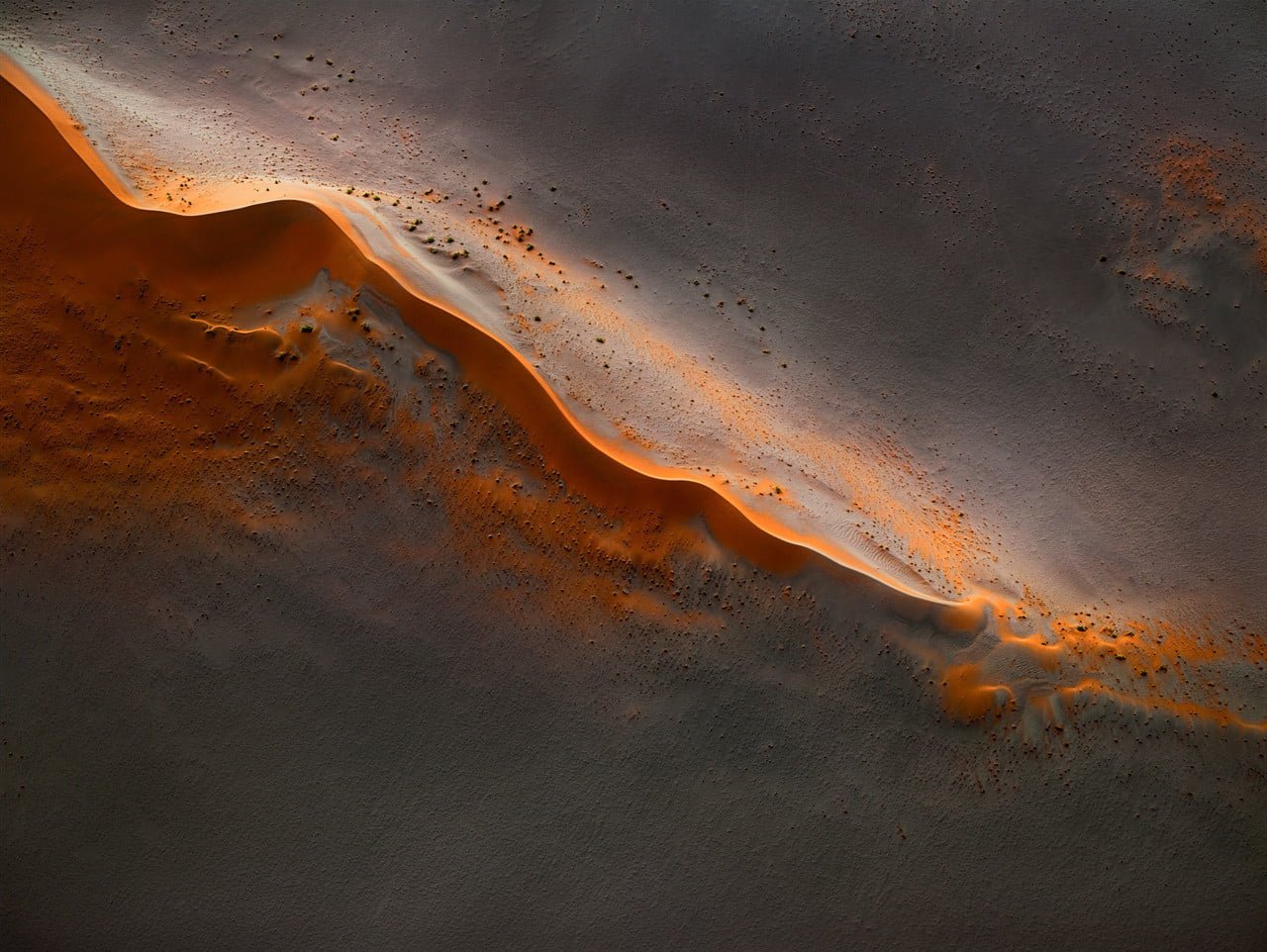
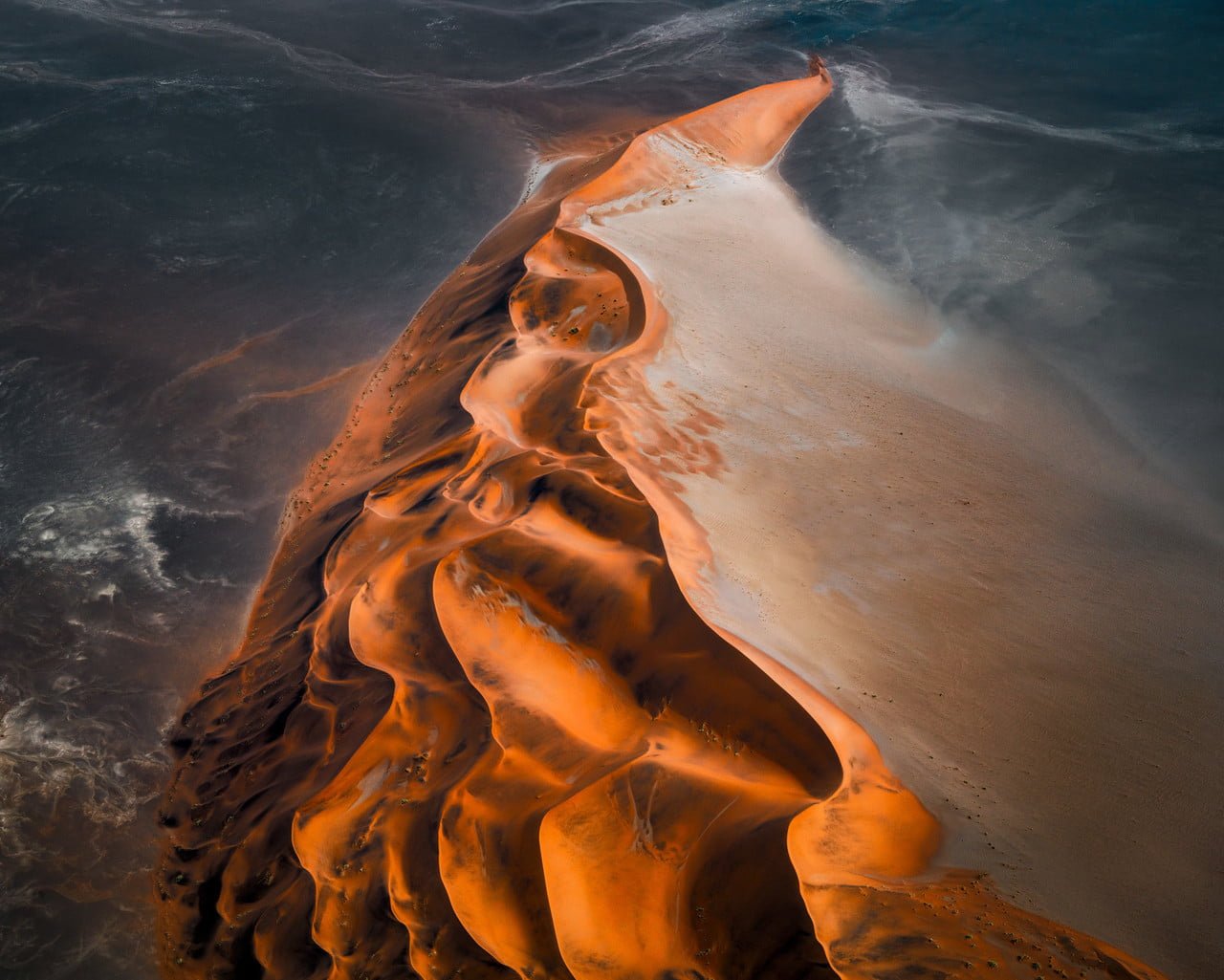
    From above, we see an all-new perspective on the flows of air and water that shape our world. Although they look like abstract art, these aerial photographs of Namibia by Leah Kennedy show rippling dunes and spreading fingers of water. Linear dunes like these grow when the prevailing winds are always from the same direction. Over time, rivers meander, always seeking new drainage paths. Patterns like these are probably driven by periodic flooding. (Image credit: L. Kennedy; via Colossal)

  • Forming Asteroids

    Forming Asteroids

    Amidst the swirling gas and dust surrounding young stars, asteroids and planets form. Just how these bodies come together – especially before they are massive enough to exert any significant gravitational potential – is an open question. Researchers are trying to better understand the physics involved by studying how clusters of granular material behave when impacted. 

    Above you see footage from two experiments. Both take place in a drop tower under vacuum conditions. That means the effects of air drag and gravity are removed, just like in space. On the left, the cluster is made up of soft clumps of dust; on the right, the cluster contains hard glass beads. Surprisingly, the researchers found that the two different materials behave the same way. They were able to describe both sets of impacts with exactly the same model. This suggests there may be an underlying universal behavior behind all of these granular materials, though the researchers note more experiments are needed. (Image and research credit: H. Karsuragi and J. Blum; via APS Physics)

  • Making Waves in Cold Atoms

    Making Waves in Cold Atoms

    If you take a glass of water and tap on the side of it, you’ll generate waves on the water’s surface. The form of the waves depends on surface tension and gravity, and viscosity governs how quickly the waves fade away. In a recent experiment, researchers performed an equivalent tap for a container of ultra-cold atoms, and the results they found were odd indeed.

    The researchers used lithium-6 atoms chilled so close to absolute zero that they could form a superfluid. The “glass” they were contained in consisted of intersecting laser beams, and the “tap” came from toggling the intensity of one of the lasers. This created rippling waves through the atoms that the group could observe.

    Measuring at various temperatures, the group found that the waves in the atoms always decayed the way one expects for a classical fluid like water. Even when the atoms transitioned into a superfluid, the wave decay did not change. Since superfluids are considered to have zero viscosity, you’d expect their waves to decay more slowly, but it turns out, that’s not the case! (Image credit: F. Mittermeier; research credit: M. Zwierlein et al., see also; via Physics; submitted by Kam-Yung Soh)
  • Featured Video Play Icon

    Rivers in the Sky

    The water cycle is quite a bit more complicated than what we learn in elementary school, and the environment around us contributes to that cycle in invisible but vital ways. In this video, Joe Hanson of It’s Okay to Be Smart pulls back the veil on this in the context of the Amazon river basin and how the Amazon rainforest itself creates an atmospheric river that carries more water than its namesake river.

    Trees release water into the air almost constantly as they transpire. And to trigger that water to fall as rain, trees can release other compounds that serve as a nucleus around which raindrops can form. The condensing raindrops form clouds, which lower the air pressure and create winds, thereby creating an atmospheric river flowing from the Atlantic back up the Amazon River. That stream carries rain that feeds the rainforest and the Amazon River, continuing the cycle. (Video and image credit: It’s Okay to Be Smart)

  • Turbulent Skies

    Turbulent Skies

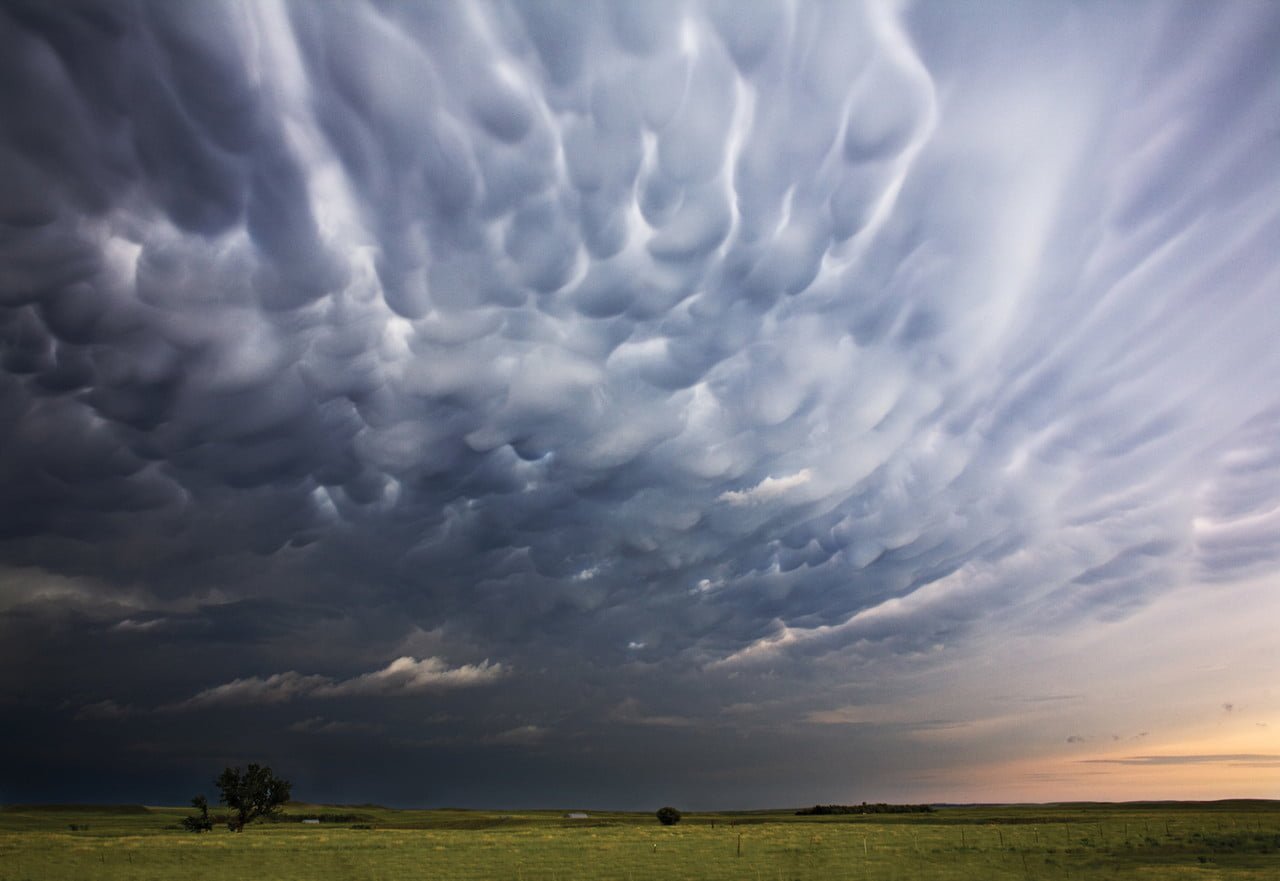
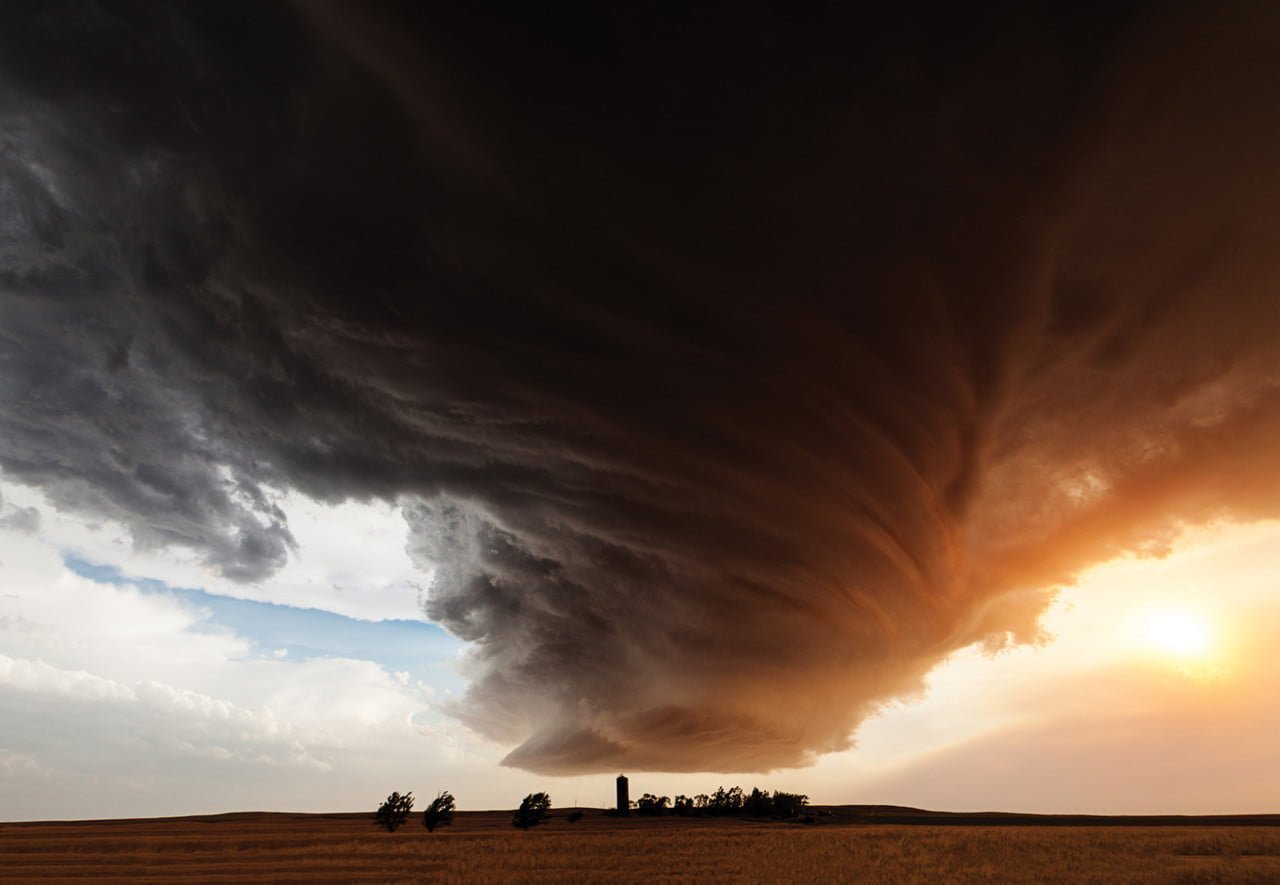
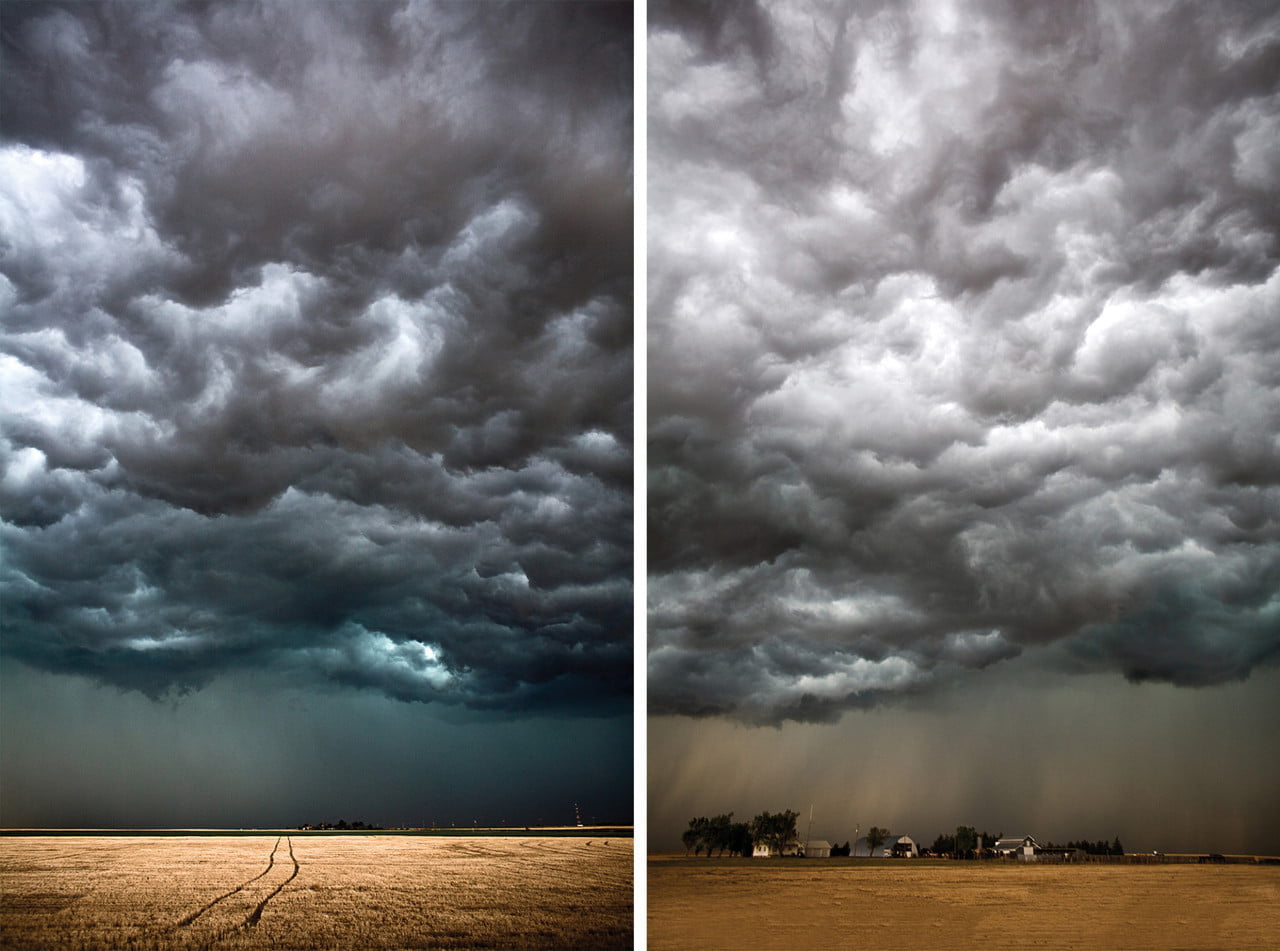
    The atmosphere above us is a thin layer enclosing our planet, but it roils with activity and energy. Photographer Camille Seamon captures the grandeur of our turbulent skies in her storm shots. These dramatic atmospheric vistas – including mammatus clouds (top), swirling supercells (middle), and turbulent storm clouds (bottom) – are all driven by the flow of heat and moisture. (Image credit: C. Seaman; via Colossal)

  • Growing Droplets

    Growing Droplets

    The moisture in clouds eventually condenses into droplets that grow into raindrops and fall. Some steps in this process are well understood, but others are not. In particular, scientists have struggled with the problem of how droplets grow from about 30 microns to 80 microns, where they’re big enough to start falling and merging.

    Laboratory experiments and numerical simulations (below) have shown that turbulence can help drive small water drops together. When droplets are tiny and light, they simply follow the air flow. But when they’re a little heavier, turbulent eddies (seen in orange below) act like miniature centrifuges, flinging larger water droplets (shown in cyan below) out into clusters, where they’re more likely to collide with one another.

    Although this effect has been seen in experiments and simulation, it’s been difficult to capture in clouds themselves. But a new set of test flights (above) confirms that this mechanism is present in the wild as well! (Image credit: UCAR/NCAR Earth Observing Laboratory, P. Ireland et al., source; research credits: M. Larsen et al., P. Ireland et al.; via APS Physics; submitted by Kam-Yung Soh)

    image
  • Using Instabilities for Manufacturing

    Using Instabilities for Manufacturing

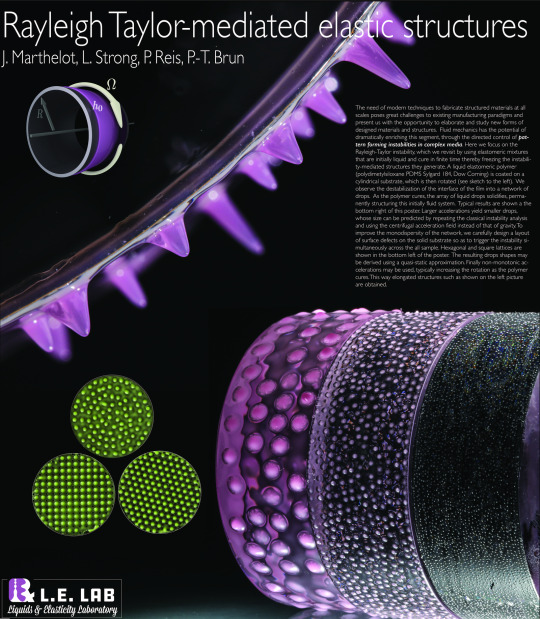
    Manufacturing textured, flexible surfaces can be difficult, but researchers are exploring ways to use fluid dynamical instabilities to make the process easier. They begin with a pourable polymer mixture that cures and solidifies over time. By putting the mixture on a cylinder and rotating it, engineers trigger the Rayleigh-Taylor instability – the same instability that makes dense fluids sink into lighter ones. Here, the instability is driven not only by gravity but by the added acceleration caused by centrifugal force. It causes the fluid film to drain and form arrays of droplets, which then cure into dimples. The researchers can control the size, shape, and spacing of the droplets by changing parameters like the spin rate. And by repeating the process multiple times on the same piece, they can build up spikier shapes, like the ones shown on the poster below. (Image and research credit: J. Marthelot et al., poster)

    image

    Reminder for those at the APS DFD meeting! My talk is tonight at 5:10PM in Room B206. You’ll probably want to come early if you want a seat!