Month: October 2018

  • Oobleck Under Impact

    Oobleck Under Impact

    Fluids like air and water are Newtonian, which means that the way they deform does not depend on how the force on them gets applied. Many other fluids, however, are non-Newtonian. How they behave depends on how force is applied to them. The Internet’s favorite non-Newtonian fluid is probably oobleck, a mixture of cornstarch and water with some fairly extreme properties. When deformed quickly, like when struck with a bat, oobleck doesn’t flow; it shatters.

    What’s happening at the microscopic level is that the cornstarch particles in the oobleck are jamming together. They simply cannot move quickly and avoid one another. When they jam together, the friction between them goes way up and so does the apparent viscosity of the oobleck. Because it doesn’t have time to flow, all that energy goes into breaking off “solid” chunks instead. Once they hit the ground, the pieces of oobleck will puddle, just like any other liquid. (Image and video credit: Beyond the Press; via Nerdist)

  • Making Champagne for Space

    Making Champagne for Space

    Humanity’s ongoing quest to enjoy beloved beverages in space has a new entry: champagne. French champagne maker Mumm has announced a new line with specially designed bottles to dispense champagne in microgravity. The bottles feature an internal piston that allows users to release the contents from the bottle in a controlled manner. Rather than pouring the champagne, one dispenses a blob which can then be caught in the special cups that go with it. They’re shaped somewhat like a miniature coupe. 

    It certainly looks like a fun way to celebrate in microgravity, although it’s unclear to me that they’ve tested the after effects of consumption. Historically, astronauts have avoided carbonated beverages in orbit because the lack of gravity can cause unpleasant side effects with all those bubbles. (Image credits: Mumm Champagne, source; via Wired)

  • Supernumerary Bows

    Supernumerary Bows

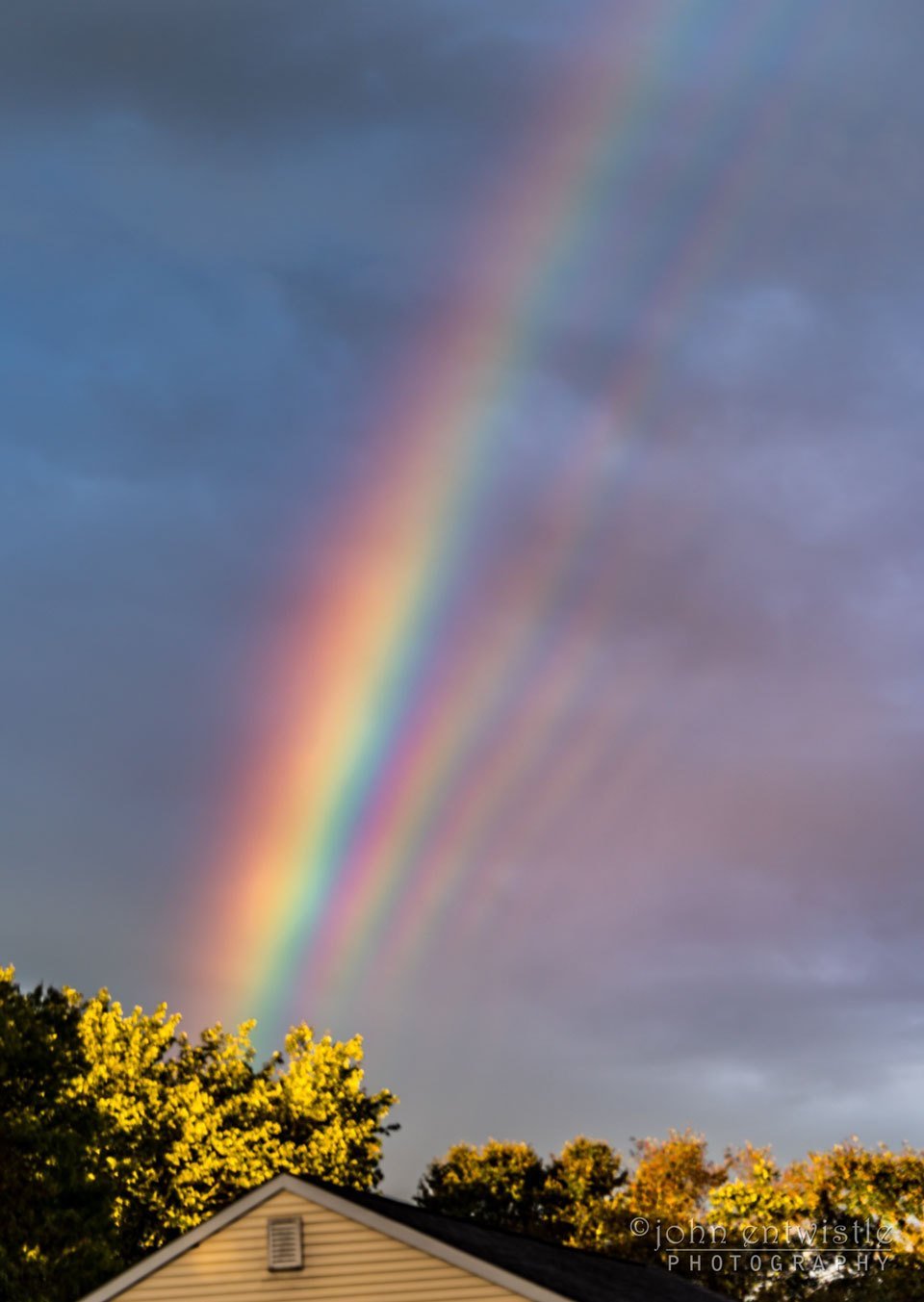
    After the rain of Hurricane Florence came the rainbow, or rainbows, in this case. Photographer John Entwistle captured this image of a rainbow with several additional supernumerary bows. The inner fringes seen here form when light passes through water droplets that are all close to the same size; given the spread seen here, the droplets are likely smaller than a millimeter in diameter. Supernumerary rainbows cannot be explained with a purely geometric theory of optics; instead, they require acknowledging the wave nature of light. (Image credit: J. Entwistle; via APOD; submitted by Kam-Yung Soh)

  • Featured Video Play Icon

    Flying on Flexible Wings

    Bats are incredible and rather unique among today’s fliers. Like birds, they flap to produce their lift and thrust, but where birds have relatively stiff wings, a bat’s wings are flexible. The thin webbing of skin stretched between the bat’s finger joints has muscles inside it that fire as the mammal flaps. This means that the bat may actively control just how stiff its wing is as it flies.

    Compared to other natural and manmade fliers, the bat is incredibly agile and stable, able to recover from wind gusts in less than a full wingbeat cycle. They also have some incredible acrobatic capabilities. When preparing to perch, a bat loses almost all of its aerodynamic lift but still manages to maneuver itself so it flips over and grabs hold. Check out the full video above to learn more about these fascinating animals. (Video and image credit: Science Friday; research credit: S. Swartz and K. Breuer)

    Editor’s Note: I’ll be travelling through the end of the month with limited email access. The blog should continue posting uninterrupted, but if you contact me, just know it may be awhile before I can get back to you. Thanks! – Nicole

  • Inside Avalanches

    Inside Avalanches

    Avalanches have traditionally been difficult to model and predict because of their complex nature. In the case of a slab avalanche, the sort often triggered by a lone skier or hiker, there is a layer of dense, cohesive snow atop a layer of weaker, porous snow. The presence of the skier can destabilize that inner layer, causing a fracture known as an anticrack to propagate through the slab. Eventually, it collapses under the weight of the overlying snow and an avalanche occurs.

    What makes this so complicated is that the snow behaves as both a solid – during the initial fracturing – and as a fluid – during the flow of the avalanche. Researchers are making progress, though, using new models capable of simulating the full event (shown above) by leveraging techniques developed and used in computer animation for films. That’s right – the physics-based animation used in films like Frozen is helping researchers understand and predict actual avalanche physics! (Image and research credit: J. Gaume et al.; via Penn Engineering; submitted by Kam-Yung Soh)

  • The Livers of Our Rivers

    The Livers of Our Rivers

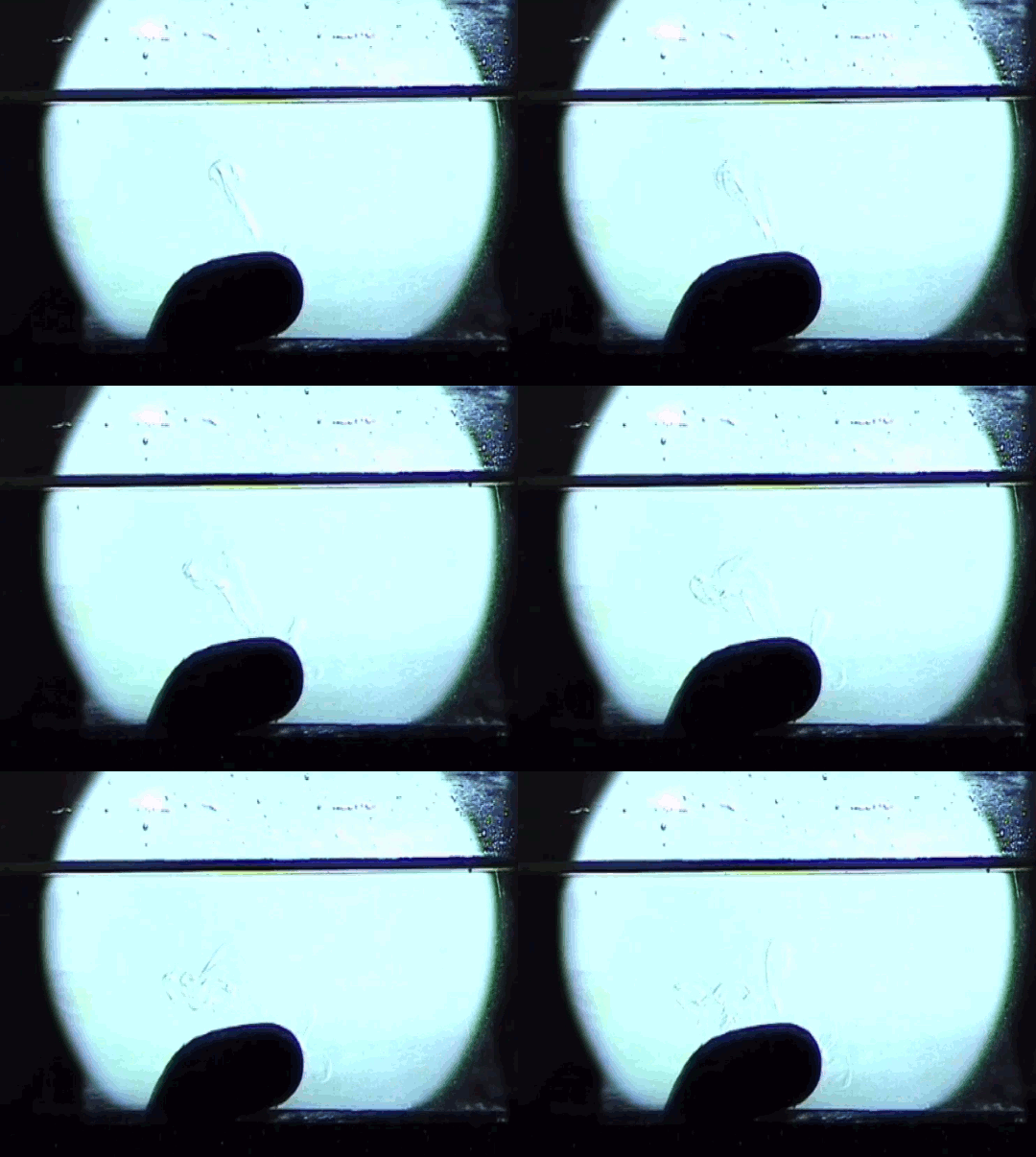
    To the naked eye, mussels and other bivalves don’t appear to be doing much. But these filter feeders are hard at work. The mussel takes in water through its incurrent siphon (on the right side in this image), and tiny cilia move the water through its gills, which filter out plankton and other edibles. Wastewater flows out the exacurrent siphon, seen here as the plume coming out the top of the mussel.

    Mussel species are important indicators of the health of both fresh and marine water bodies. Because they’re stationary and they are constantly processing the water, the health of these bivalves is indicative of the ecosystem’s overall health. (Image credit: S. Allen, source)

  • Merging Black Holes

    Merging Black Holes

    At the heart of many galaxies, including our own, lies a supermassive black hole millions of times the mass of our sun. Scientists have yet to observe the merger of two such black holes, but using simulations, they are trying to learn what such collisions might look like. Simulations like the one shown here require combining relativity, electromagnetism, and, yes, fluid dynamics to capture what happens during the in-spiral.

    Supermassive black holes like these are surrounded by gas disks that flow around them. Magnetic and gravitational forces heat the gas, causing it to emit UV light and, at times, high energy X-rays, both of which may be observable.

    Gravitational wave detectors, similar to LIGO, may also measure evidence of supermassive black hole mergers, but physicists expect that will require a next-generation observatory, like the space-based LISA to be launched in the 2030s.   (Image and video credit: NASA Goddard; research credit: S. d’Ascoli et al.; submitted by @lh7)

  • Featured Video Play Icon

    The Actual Shape of Raindrops

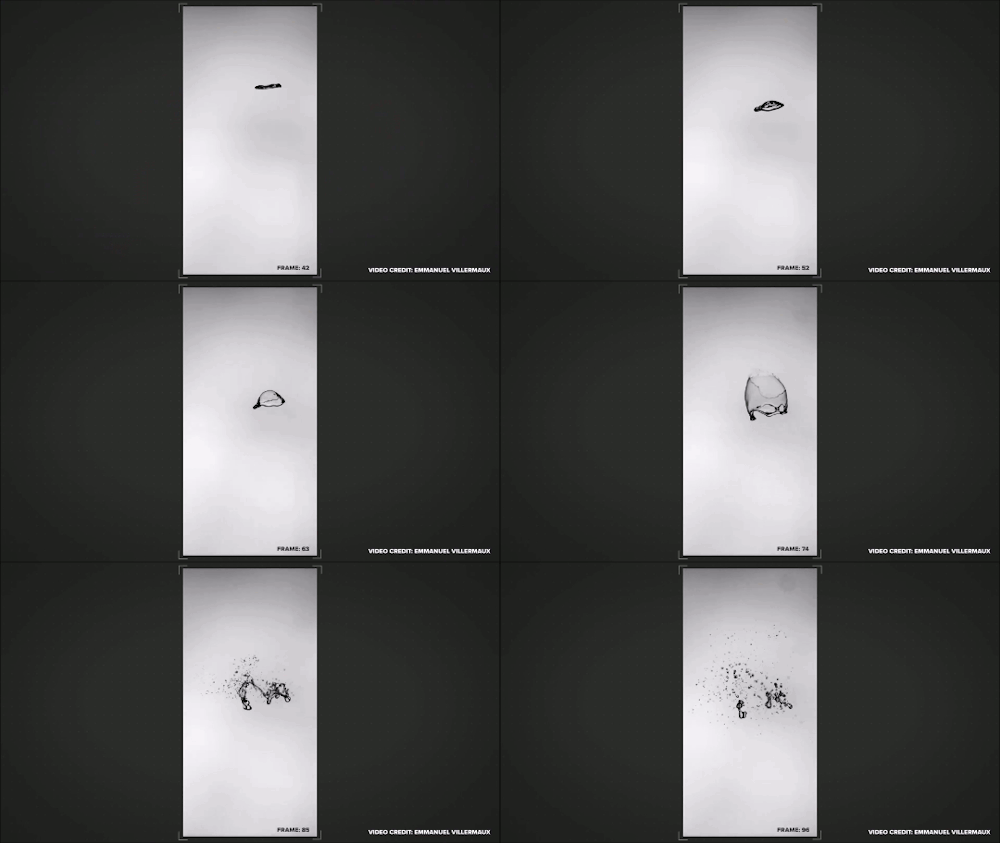
    If you imagine the shape of a raindrop, you probably think of a tear drop shape, but the reality of rain is much more complicated. It’s Okay to Be Smart has a great primer on the subject that takes a look at the forces on a raindrop and shows you the actual shape they take, which depends largely on their size.

    Small raindrops tend to coalesce together over time and get larger and progressively flatter. When the drop’s volume gets too large (below), it balloons up like a parachute. Researchers call this a bag. Stretched into a film, the drop’s surface tension is no longer able to win its fight against aerodynamic forces, and the drop shreds into smaller droplets. (Video and image credit: It’s Okay to Be Smart)

  • Kelly Slater’s Surf Ranch

    Kelly Slater’s Surf Ranch

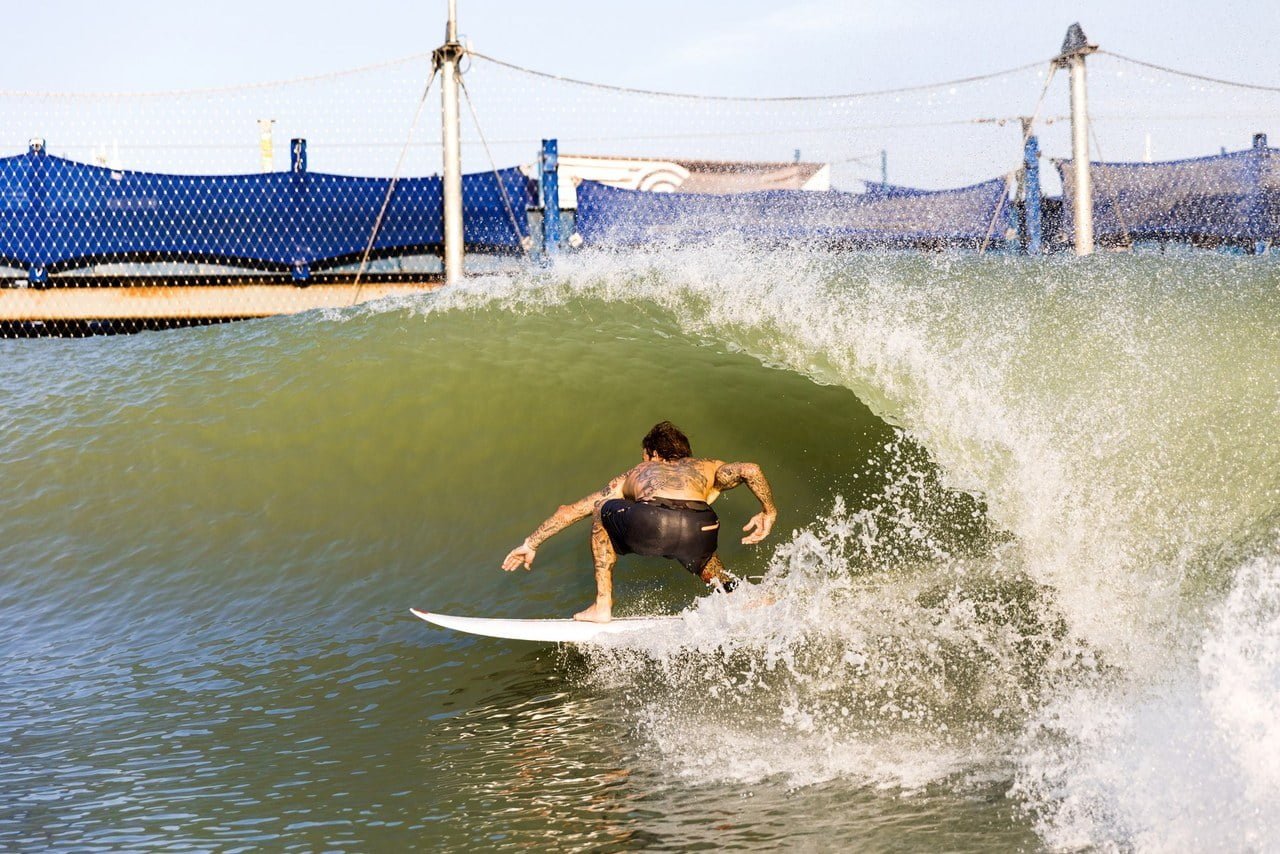
    Many of us who grew up visiting water parks instead of ocean beaches have spent time bobbing in a wave pool. They’ve been around for decades. But a new generation of wave pools are aiming for a different goal: the perfect surf wave. One of the foremost current facilities is Kelly Slater’s Surf Ranch, shown above. Here a hydrofoil (draped in blue tarps on the left) is pulled along an artificial lagoon to create dozens of wave profiles, all engineered to give surfers a long ride on the perfect solitary wave.

    Other facilities, like the surf ranch used by USA Surfing in Waco, Texas, design their waves with different goals in mind. The Waco wave pool uses air pressure to drive their waves, and aims for a larger quantity of shorter waves. They’re designed to help young surfers practice skills they’re working on, and to give them a place where they can experience waves like those they’ll face in the upcoming 2020 Olympics in Tokyo. (Image credit: R. Young/WIRED; CNet, source; submitted by Lionel V.)

  • Watery Veins

    Watery Veins

    Glacial river veins wend and meander through these aerial photographs of Iceland by photographer Stas Bartnikas. Rivers naturally change their course over time, but here seasonal melts and the slow grinding of glaciers adds further chaos to the scene. Captured from above, these landscapes show the scars of past flows. (Image credit: S. Bartnikas; via Colossal)