Month: December 2010

  • Reader Question

    aeronode-deactivated20130828 asks:

    What’s your academic/professional background? (Just curious.)

    Fair question! I am a fourth-year PhD student in aerospace engineering, focusing (naturally) on fluid dynamics. I have a bachelor’s and master’s degree, both also in aerospace engineering. My master’s thesis focused on turbulence and my current work is in high-speed aerodynamics.
  • Tubercles and Turbines

    Tubercles and Turbines

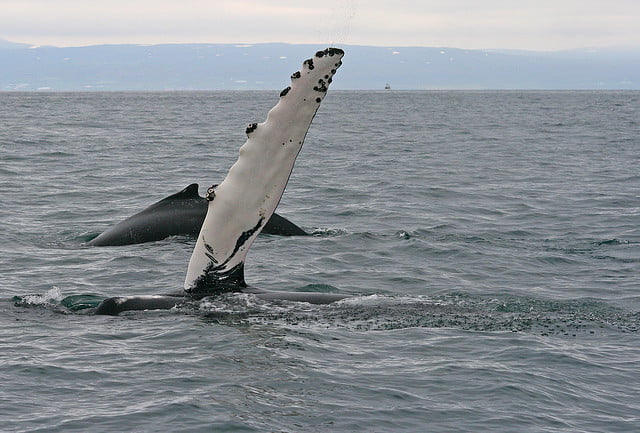
    The flippers of humpback whales include bumps–called tubercles–on their leading edges. The tubercles create vortices that prevent the boundary layer from separating, which causes stall and a loss of lift. New research shows that adding similar bumps to the leading edge of tidal turbine blades results in greater energy production at low flow speeds compared to conventional designs. See Scientific American for more. #

  • Featured Video Play Icon

    Microgravity Water Films

    In this video astronaut Don Pettit demonstrates some interesting laminar flow effects using a water film in microgravity. By using a film, fluid motion is essentially confined to two dimensions. This is important because it prohibits the development of turbulence, which is a purely three-dimensional phenomenon. Doing the experiment in microgravity allows Pettit to leave the experiment for a long period of time without buoyant effects or similar disturbances. When he first stirs the film, the tracer particles show some signs of what looks like turbulent mixing, but soon the film rotates uniformly with streaks of gray caused by different concentrations of tracer particles. Pettit notes that he allowed the film to rotate overnight and it eventually all turned milky white. This is the effect of molecular diffusion of the tracer particles; without turbulence, the only way for mixing to occur is through the random motion of molecules. See more of Pettit’s Saturday Morning Science videos for additional microgravity fluid mechanics.

  • Featured Video Play Icon

    Seeing the Invisible

    Schlieren photography is a common experimental flow visualization technique, especially in supersonic flows (where it enables one to see shock waves). Here the Science Channel’s “Cool Stuff: How It Works” show explains the technique and shows some examples from everyday life.

  • The ABCs of Physics

    The ABCs of Physics

    b=buoyancy is part of Ashley JM’s photo set The ABCs of Physics. In her words:

    Buoyancy is what causes less dense objects to float in a more dense fluid, such as a helium balloon in air. There is a buoyant force that pushes up on the object, equal to the weight of the displaced fluid.

    That little diagram up there is called a force diagram, they can be even more daunting than equations at times. This one shows that the buoyant force up on the balloon is equal to the force of tension in the string, this keeps the balloon in equilibrium.

    Be sure to look at the rest of her physics photos! # (via physicsphysics)